Arc Flash | Protection Standards
BS EN ISO 11611 Standard | Arc Flash & Protective Clothing Standards
September 9th, 2021
BS EN ISO 11611 Standard Arc Flash & Protective Clothing Standards
BS EN ISO 11611
Arc Flash & Protective Clothing Standards
BS EN ISO 11611 Standard is the European Standard for protective clothing for use in welding and allied processes. Within BS EN ISO 11611 Arc Flash Clothing Standard there are a series of tests – the most important of which are described in ISO 6942, ISO 9150, ISO 15025 and EN 1149-2. ISO 11611 has two classes – if the fabric passes all the tests, it is designated as Class 1 and if the fabric receives a Class 2 rating for the ISO 6942 and ISO 9150 tests, it is designated as Class 2.
- Class 1 – Lower Hazard Welding Applications
- Class 2 – Higher Hazard Welding Applications
EXPLAINING THE DIFFERENT TESTS
ISO 6942: This is a test method for assessing fabrics and fabric combinations exposed to radiant heat. In this test, a fabric sample is exposed to radiant heat (infrared rays). The temperature on the reverse (unexposed) side of the sample is registered using a calorimeter. Subsequently, the length of time the sample can remain exposed before its temperature rises by 24°C is measured.
This test is also used for EN 531C and has two different classes as follows:
- Class 1 temperature increase occurs after ≥ 7 seconds
- Class 2 temperature increase occurs after ≥ 16 seconds.
ISO 9150: Determining the behaviour of fabrics when exposed to small spatters of molten metal. In this test, droplets of molten metal are spattered on a vertically suspended fabric sample. The number of droplets it takes to cause an increase in temperature of 40°C on the reverse side of the sample is determined. This test also has two classes as follows:
- Class 1 ≥ 15 droplets of molten metal
- Class 2 ≥ 25 droplets of molten metal.
ISO 15025: The test method for limited flame spread. The test consists of applying a flame to a fabric sample for 10 seconds. To pass the test, the after flame & smoulder times and formation of holes must be within the tolerances (set in the standard). This test is also used for EN 531A. The application of a flame can take place in two ways:
- in procedure A (leads to Class A1), the flame is applied horizontally (similarly to EN 470 and EN 531)
- in procedure B (leads to Class A2), the flame is applied laterally.
EN 1149-2: This is a test method for measuring the electrical resistance of a fabric sample and determining whether an electrical charge passes through the sample from the outside to the inside. For further information on this EN Standard please refer to the EN1149 section.
TYPICAL EXAMPLES OF PROCESSES VERSUS CLASS OF CLOTHING
Criteria for choice on the basis of the type of process
CLASS 1
Manual welding operations during which small amounts of spatter or droplets of molten metal are formed
– Gas welding
– TIG welding
– MIG welding
– Micro plasma welding
– Soldering brass
– Spot welding
– Shielded electrode MMA welding
CLASS 2
Manual welding operations during which large amounts of spatter or droplets of molten metal are formed, e.g.:
– MMA welding (using alkaline or cellulose electrodes)
– MAG welding (with CO2 or mixed gasses)
– MIG (high-voltage) welding
– Flux-cored arc welding
– Plasma cutting
– Gouging
– Oxygen cutting
– Thermal spraying
Criteria for choice on the basis of the type of work
CLASS 1
Operating machines, e.g.
– Oxygen cutting machines
– Plasma cutting machines
– Resistance pressure welding machines
– Thermal spraying
– Welding tables
CLASS 2
Operating machines, e.g.:
– In enclosed spaces
– When welding/cutting operations require reaching above head height or take place in comparable difficult positions
BS EN 1149-5 | Standard Overview
Protective clothing. For welding & allied processes. Basic safety requirements.
This International Standard specifies minimum basic safety requirements and test methods for protective clothing including hoods, aprons, sleeves, and gaiters that are designed to protect the wearer’s body including head (hoods) and feet (gaiters) and that are to be worn during welding and allied processes with comparable risks. For the protection of the wearer’s head and feet, this International Standard is only applicable to hoods and gaiters. This International Standard does not cover requirements for feet, hand, face, and/or eye protectors.
This type of protective clothing is intended to protect the wearer against spatter (small splashes of molten metal), short contact time with flame, radiant heat from an electric arc used for welding and allied processes, and minimizes the possibility of electrical shock by short-term, accidental contact with live electrical conductors at voltages up to approximately 100 V d. c. in normal conditions of welding. Sweat, soiling, or other contaminants can affect the level of protection provided against short-term accidental contact with live electric conductors at these voltages.
For adequate overall protection against the risks to which welders are likely to be exposed, personal protective equipment (PPE) covered by other International Standards should additionally be worn to protect the head, face, hands, and feet.
Guidance for the selection of the type of welders clothing for different welding activities is detailed in Annex A.
Standard Status | Current, Under Review
Published | 2015
➡ Standards | RIS-3279-TOM | IEC 61482-2 | BS EN 1149-5 | BS EN ISO 20471 | BS EN ISO 14116 | BS EN ISO 11612 | BS EN 13034 | BS EN 342 | BS EN 14404 | BS EN 343 | HSG47
BS EN ISO 11611:2007
BS EN ISO 11611:2007 specifies minimum basic safety requirements and test methods for protective clothing including hoods, aprons, sleeves and gaiters that are designed to protect the wearer’s body including head (hoods) and feet (gaiters) and that are to be worn during welding and allied processes with comparable risks.
Clothing & Garments
Protecting Workers Against the Dangers of Arc Flash
Thorne & Derrick stock and supply the most extensive range of Arc Flash PPE, Clothing & Protective Garments – should you require any further information, sample garments for field test and trial or a quotation please do not hesitate to contact us.

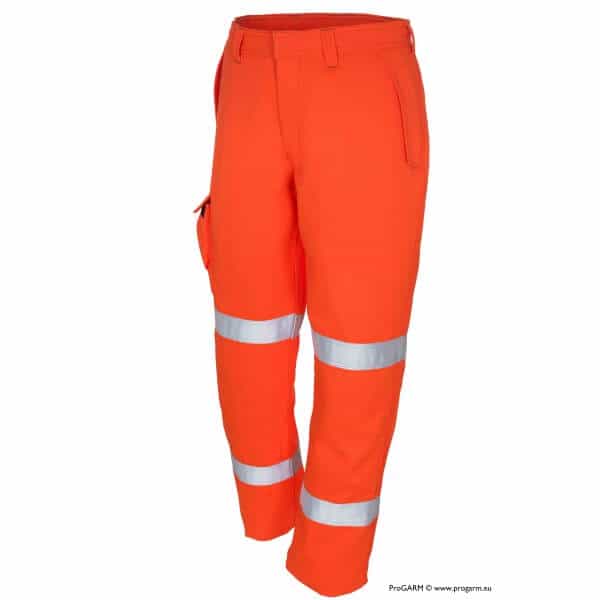
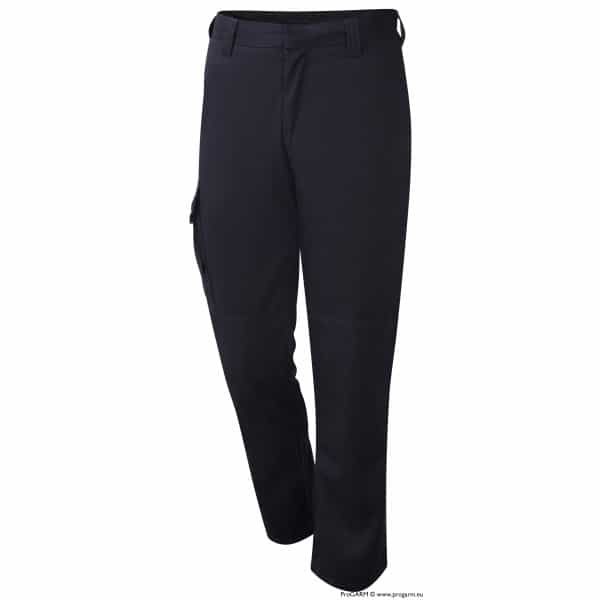
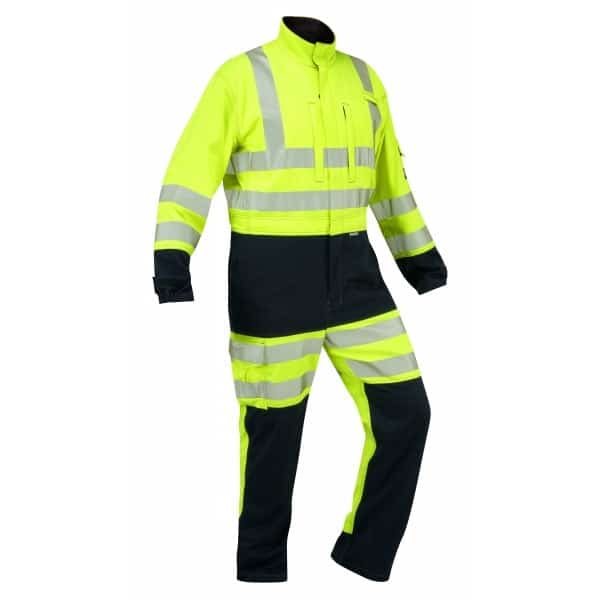
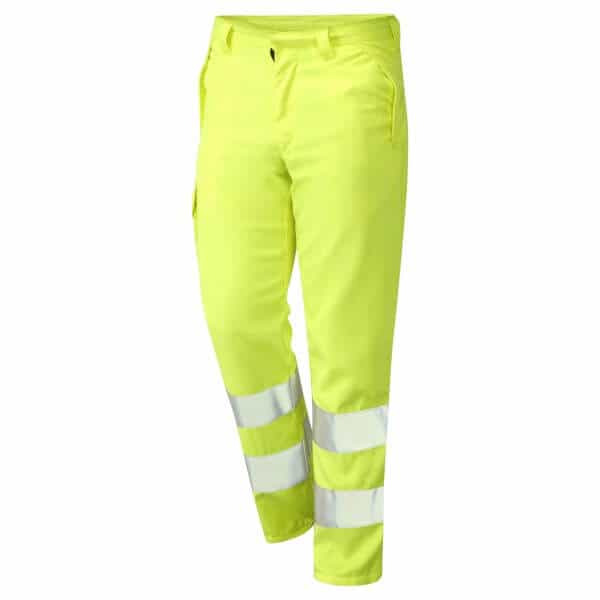

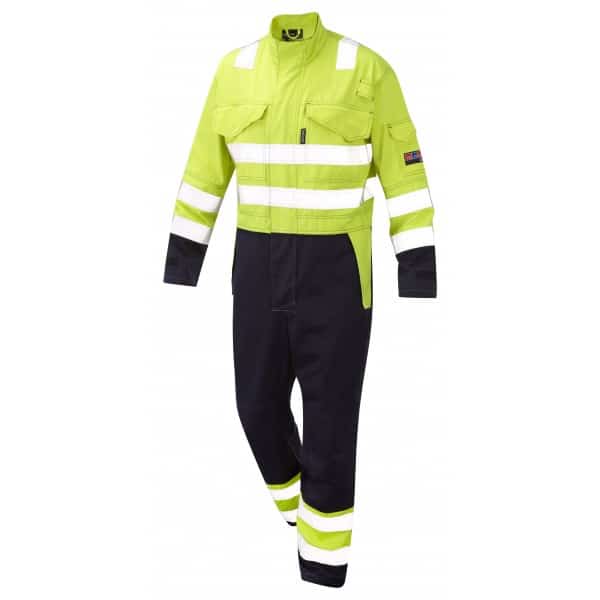
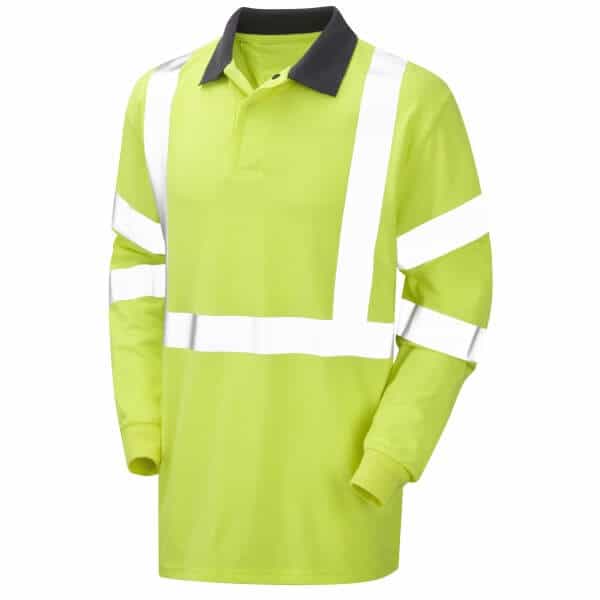

Thorne & Derrick International supply arc flash clothing and protection equipment including coveralls, gloves, helmets, face shields and general head-to-toe PPE is used to protect against flashover – complete range of insulating matting is also available for worker protection when exposed to energised electrical switchgear and transformers.
Typical applications include LV, HV & EHV cable jointing and terminating, fuse pulling, switchgear commissioning, racking circuit breakers, electrical switching and live working on medium and high voltage electricity networks.
T&D are national distributors LV, MV & HV Cable Installation, Jointing, Substation & Electrical Equipment – we service UK and global businesses involved in cable installations, cable cleating, cable jointing, substation, overhead line and electrical construction at LV, 11kV, 33kV and EHV.
Since 1985, T&D have established an international reputation based on SERVICE | INTEGRITY | TRUST.

Electrical Safety Equipment & Cable Accessories for the Maintenance of Low, Medium & High Voltage Power Systems
BS EN 1149-5 Standard | Arc Flash & Protective Clothing Standards
July 28th, 2021BS EN 1149-5 Standard Arc Flash & Protective Clothing Standards
BS EN 1149-5
Arc Flash & Protective Clothing Standards
BS EN 1149-5 is the European Standard for garments that protect against electrostatic discharge in areas where there is a risk of explosion (ATEX Environments) such as petrochemical refineries and fuel distribution companies.
Annex II, art. 2.3. of the ATEX directive 99/92/CE concerning the protection of workers likely to be exposed to the risk of explosive atmospheres says: “Workers must be provided with appropriate working clothing consisting of materials which do not give rise to electrical discharges that can ignite explosive atmospheres”. The outer fabric of these garments are therefore made from antistatic materials and components.
Under the scope of the PPE manufacturers Directive 89/686/EEC a series of EN Standards have been developed relating to electrostatic properties. We note the key parts of these standards as follows that relate to the protective garments that ProGARM® produces.
View further information about Arc Flash Clothing Standards.
This series of Articles published in conjunction with ProGARM are written to enable the industry to carefully ensure their garments and clothing are correctly specified to provide appropriate levels of protection against arc flash dangers, risks and hazards.
BS EN 1149-5 | Standard Overview
Protective clothing. Electrostatic properties. Material performance and design requirements.
This European Standard specifies material and design requirements for electrostatic dissipative protective clothing, including hoods and caps, used as part of a total earthed system, to avoid incendiary discharges, where the minimum ignition energy of an explosive atmosphere is not less than 0,016 mJ. In the context of this European Standard, a total earthed system is one in which personnel and other conductors are connected to earth via a resistance of less than 108Ω. The material and design requirements do not presume adequate earthing of additional equipment worn or carried in contact with clothing, e.g. breathing apparatus, etc. If such additional equipment is required to be earthed, other requirements beyond the scope of this European Standard may be necessary. The scope of this standard does not include electrostatic dissipative protective gloves or footwear that are separate and not integral parts of garments. The material and design requirements may not provide sufficient protection in oxygen enriched flammable atmospheres.
NOTE Additional information about oxygen enriched flammable atmospheres can be found in CEN/CLC/TR 16832:2015 [1]. This European Standard is not applicable for protection against mains voltages.
Standard Status | Current
Published | 2018
➡ Standards | RIS-3279-TOM | IEC 61482-2 | BS EN ISO 11611 | BS EN ISO 20471 | BS EN ISO 14116 | BS EN ISO 11612 | BS EN 13034 | BS EN 342 | BS EN 14404 | BS EN 343 | HSG47
EN 1149-5:2008 PERFORMANCE REQUIREMENTS
Antistatic PPE is certified to EN1149-5 as this standard covers the performance requirements of the garments and refers to the choice of 2 different test methods (EN1149-1 or EN1149-3).
EN 1149-1:2006 MEASUREMENTS OF SURFACE RESISTIVITY
Antistatic PPE is certified to EN1149-5 as this standard covers the performance requirements of the garments and refers to the choice of 2 different test methods (EN1149-1 or EN1149-3).
EN 1149-3:2004 MEASUREMENTS OF SURFACE RESISTIVITY
This test method is referenced for materials for which the electrostatic dissipative behaviour is based on core conducting fibres but can also be used for surface conducting materials.
In the EN1149 series, there is also an EN1149-2 (measurement of the electrical resistance through a material; the vertical resistance) which is used as a test method in EN ISO 11611 (welders clothing) and which is also mentioned in Annex H of EN 469:2005. A further part of EN1149 is under development which will cover the testing of the full garment – this part of the standard is EN1149-4.
Clothing & Garments
Protecting Workers Against the Dangers of Arc Flash
Thorne & Derrick stock and supply the most extensive range of Arc Flash PPE, Clothing & Protective Garments – should you require any further information, sample garments for field test and trial or a quotation please do not hesitate to contact us.
Thorne & Derrick International supply arc flash clothing and protection equipment including coveralls, gloves, helmets, face shields and general head-to-toe PPE is used to protect against flashover – complete range of insulating matting is also available for worker protection when exposed to energised electrical switchgear and transformers.
Typical applications include LV, HV & EHV cable jointing and terminating, fuse pulling, switchgear commissioning, racking circuit breakers, electrical switching and live working on medium and high voltage electricity networks.
T&D are national distributors LV, MV & HV Cable Installation, Jointing, Substation & Electrical Equipment – we service UK and global businesses involved in cable installations, cable cleating, cable jointing, substation, overhead line and electrical construction at LV, 11kV, 33kV and EHV.
Since 1985, T&D have established an international reputation based on SERVICE | INTEGRITY | TRUST.
Electrical Safety Equipment & Cable Accessories for the Maintenance of Low, Medium & High Voltage Power Systems
Arc Flash Clothing Standards | EN Standards for Arc Flash Protection
July 27th, 2021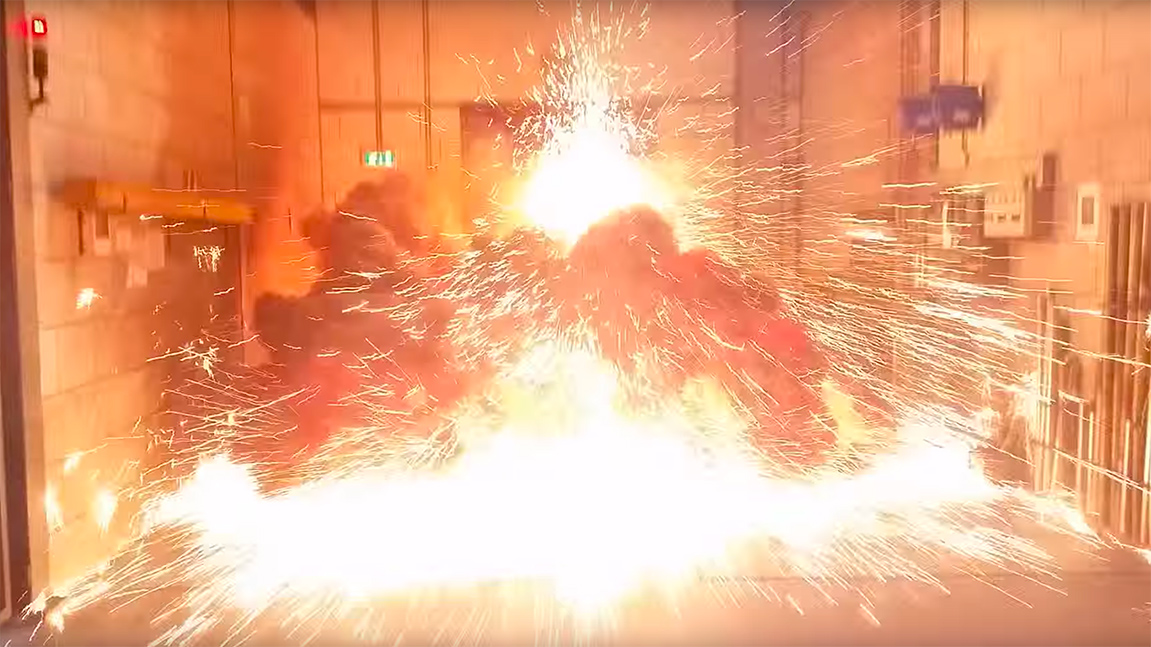
Arc Flash Clothing Standards
Arc Flash Clothing Standards
EN Standards
Purchasing arc flash products which conform to EN Standards guarantees your team is protected.
Depending on which sector you operate in, the Arc Flash Clothing Standards according to EN Standards that matter to your business may differ slightly if your industry requires arc flash clothing. However, it’s vital that you equip your team with protective clothing that conforms to IEC 61482. This is the international standard applicable to Arc Flash and flash fire hazard protection. All ProGARM arc flash garments are rigorously tested to the Open Arc and Box Arc methods, providing protection across our range.
EN ISO 11612 certified garments provide protection against heat and flame.
Protection Against Arc Flash | Clothing & Garments
This protects against hazards including radiant heat, convective heat and splatters of molten metal, although it is not a substitute for clothing made to withstand high temperatures for longer periods of time. The specifications for each standard that ProGARM arc flash garments conform to are provided both on our website and in our brochure. You can be sure that you’re equipping your team with clothing designed to protect them in the field, whichever sector you operate in.
FIND OUT MORE ABOUT Arc Flash Clothing Standards
BS EN 1149-5
The European Standard for garments that protect against electrostatic discharge in areas where there is a risk of explosion (ATEX Environments) such as petrochemical refineries and fuel distribution companies. For further information see BS EN 1149-5 Standard.
BS EN ISO 11611
ProGARM products are certified in accordance with this EN Standard to protect workers in welding processes by subjecting fabrics to a series of tests. For further information see BS EN ISO 11611 Standard.
BS EN ISO 20471
The international standard that specifies the requirements for hi vis clothing ensuring the wearer is more noticeable in hazardous situations during the day, as well as at night. For further information see Standard BS EN ISO 20471.
BS EN ISO 14116
Clothing manufactured to this standard is made from flame retardant materials so that if the material comes into contact with a flame, it will only continue to burn for a limited amount of time. After removal from the flame, the material will stop burning. For further information see BS EN ISO 14116 Standard.
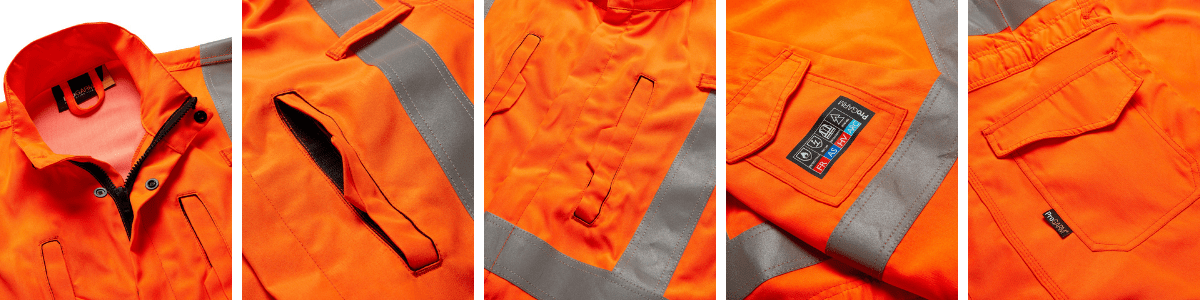
RIS-3279-TOM Tested Arc Flash Coveralls (Hi-Vis Orange) | ProGARM 4693
BS EN ISO 11612
The requirements apply to clothing intended for a wide range of application which offer limited flame spread and provide protection against various hazards including Radiant Heat, Convective Heat and splatters of Molten Metal. For further information see BS EN ISO 11612 Standard.
BS EN 13034
Garments manufactured in accordance with this EN Standard are suitable for use in environments where there may be a risk of chemical splashes but where a total chemical barrier is not required. For further information see BS EN 13034 Standard.
BS EN 342
This EN Standard specifies the requirements and test methods for garments and clothing combinations designed to protect the wearer in a cold environment (characterised by a combination of humidity, wind and air temperature lower than -5 °C). For further information see BS EN 342 Standard.
BS EN 14404
This EN Standard relates to trousers and coveralls which offer kneepad pockets to protect the wearer when kneeling. For further information see BS EN 14404 Standard.
BS EN 343
This EN Standard specifies the requirements and test methods for materials and the seams of protective clothing that has been designed to give protection against rain, snow, mist and ground moisture. For further information see BS EN 343 Standard.

IEC 61482-2
Specifies requirements and test methods applicable to materials and garments for protective clothing worn by electrical workers to protect them against the thermal hazards of electric Arc. For further information see IEC 61482-2 Standard.
RIS-3279-TOM
The high visibility standard that applies to the rail industry in the UK and ensures rail workers on or near the trackside are sufficiently visible to trains or other traffic approaching at speed. For further information see RIS-3279-TOM Standard.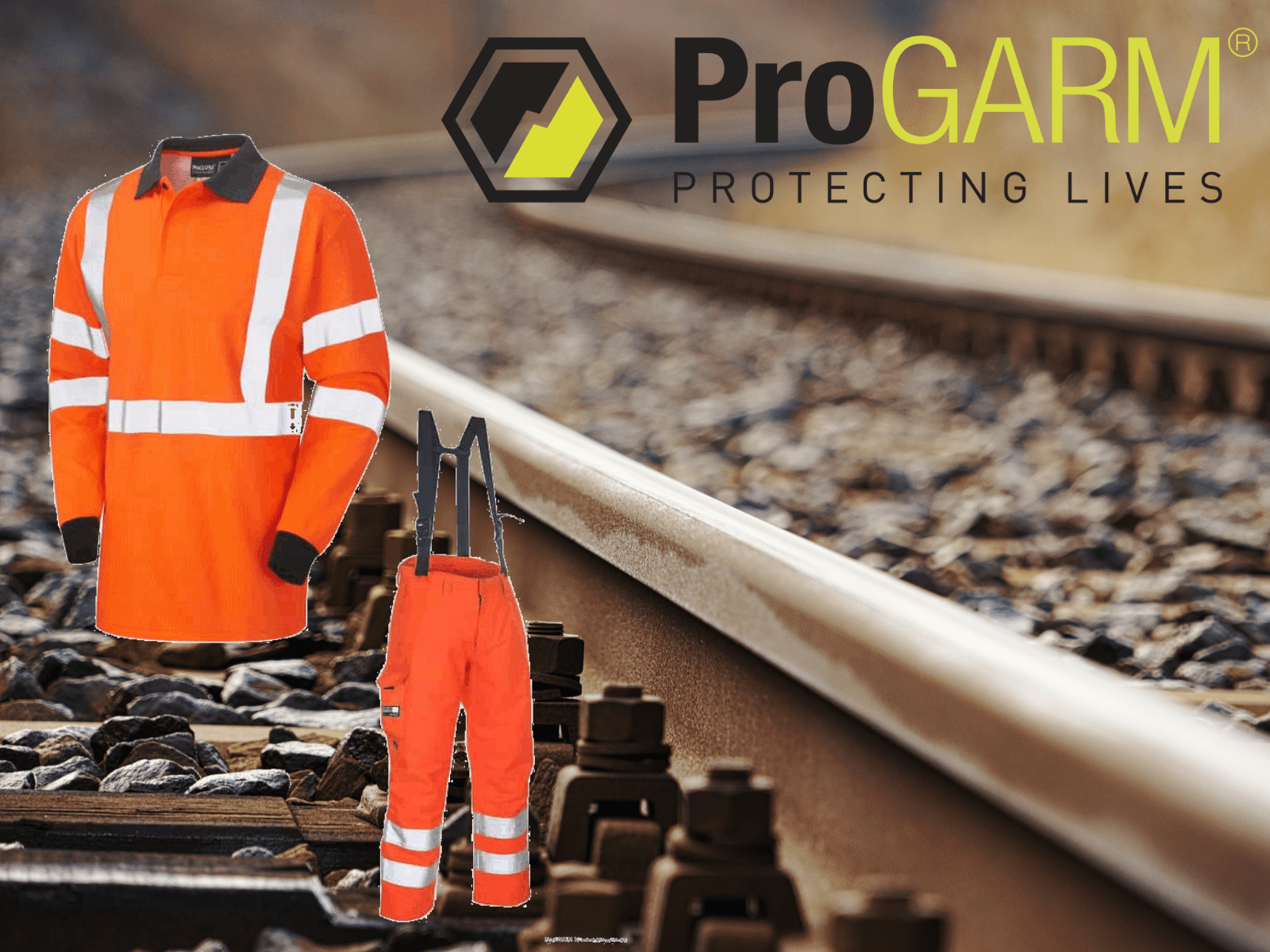
Arc Flash Learning & Resources

Thorne and Derrick are proud to be distributors of ProGARM arc flash clothing and protection.
We can help – should you require arc flash calculators or advice on the type of clothing and protection available please do not hesitate to contact us.
Thorne & Derrick International supply arc flash clothing and protection equipment including coveralls, gloves, helmets, face shields and general head-to-toe PPE is used to protect against flashover – complete range of insulating matting is also available for worker protection when exposed to energised electrical switchgear and transformers.
Typical applications include LV, HV & EHV cable jointing and terminating, fuse pulling, switchgear commissioning, racking circuit breakers, electrical switching and live working on medium and high voltage electricity networks.
T&D are national distributors LV, MV & HV Cable Installation, Jointing, Substation & Electrical Equipment – we service UK and global businesses involved in cable installations, cable cleating, cable jointing, substation, overhead line and electrical construction at LV, 11kV, 33kV and EHV.
Since 1985, T&D have established an international reputation based on SERVICE | INTEGRITY | TRUST.

RIS-3279-TOM Standard | Arc Flash & Protective Clothing & Standards
June 30th, 2021RIS-3279-TOM Standard Arc Flash & Protective Clothing Standards
RIS-3279-TOM
Arc Flash & Protective Clothing Standards
RIS-3279-TOM (formerly GO-RT 3279) is a high visibility standard that only applies to the rail industry in the UK, as opposed to the EU-Wide nature of other EN standards. The aim is to ensure that rail workers on or near the trackside are sufficiently visible to trains approaching at speed or any other traffic.
Thorne & Derrick provide competitive prices and fast delivery for the complete range of arc flash clothing and accessories designed to protect people and save lives.
View further information about Arc Flash Clothing Standards.
RIS-3279-TOM | Standard Overview
Protective clothing. Electrostatic properties. Material performance and design requirements.
High visibility clothing is the fundamental principle behind the UK Rail Industry Standard. This is based on the European Norm EN 20471:2013, and garments must comply to Class 2 High Visibility, the middle of a three class range. The standard states the following: ‘high visibility clothing worn by people on the lineside or on or near the line should conform to a single standard for the colour and luminance of background material and that this standard will accord with the detail contained within BS EN 20471:2013 high visibility clothing – Test methods and requirements (ISO 20471:2013).’
Stated in the standard is that: ‘the colour specific requirements within this standard conform to the range specified within BS EN 20471 clause 5.1.2.’ In order to confine this to a specific orange colour, and to prevent the selection of a colour at the red end of the spectrum, the precise chromaticity co-ordinates for the colour are specified as: Fluorescent orange, X:0.588, Y:0.371. with a luminance factor of at least 0.4. The accepted tolerance in colour is as laid out in EN 20471. However, there is no tolerance for the luminance factor.
Also stipulated in RIS-3279-TOM is the need of retro-reflective materials, with photometric and physical performance aligned with EN 20471.
Mentioned in RIS-3279-TOM is the accepted use of a mini vest where the nature of the work being carried out will not obscure the high visibility clothing, and thus reduce the surface area’ that is visible. The same applies to company logos; these are permitted where they do not compromise the surface area of background colour, and compensation may have to be made for this.
➡ Standards | BS EN 1149-5 | IEC 61482-2 | BS EN ISO 11611 | BS EN ISO 20471| BS EN ISO 14116 | BS EN ISO 11612 | BS EN 13034 | BS EN 342 | BS EN 14404 | BS EN 343 | HSG47

Hi vis and Flame Resistant polo shirt in unique VXS+ blend of fibres developed to meet the requirements of RIS-3279-TOM for workers on or near the trackside.
Arc Flash Clothing With RIS-3279-TOM Approvals
The ProGARM® Hi-Vis Orange Collection features a range of 100% VXS+ inherent garments tested for minimal shrinkage, low colour washout and for long-standing protection against Arc Flash incidents. All garments are certified for use in Rail environments with the Rail Industry Standard, RIS-3279.
With a comprehensive range of arc workwear for both Men and Women, and with the ProGARM lifetime-seam guarantee, you can be confident of long-lasting protection.
Arc Clothing part number Cal Rating
| Lightweight Arc Waterproof Jacket | ProGARM 9422 | 25 Cal |
| Lightweight Arc Waterproof Trouser | ProGARM 9622 | 25 Cal |
| Ladies Arc Polo Shirt | ProGARM 5292 | 6 Cal |
| Ladies Arc Coverall | ProGARM 4692 | 8 Cal |
| Ladies Arc Flash Trouser | ProGARM 4614 | 8 Cal |
| Arc Flash Jacket | ProGARM 4608 | 10 Cal |
| Arc Coverall | ProGARM 4690 | 8 Cal |
| Arc Flash Trouser | ProGARM 4616 | 8 Cal |
| Waterproof Salopette | ProGARM 9660 | 47 Cal |
| Arc Waterproof Jacket | ProGARM 9440 | 47 Cal |
| Arc Polo Shirt | ProGARM 5290 | 6 Cal |
| Arc Sweatshirt | ProGARM 5648 | 21.6 Cal |
➡ Contact Thorne & Derrick for further information about the above arc flash garments with RIS-3279-TOM approvals.
Clothing & Garments
Protecting Workers Against the Dangers of Arc Flash
Thorne & Derrick stock and supply the most extensive range of Arc Flash PPE, Clothing & Protective Garments – should you require any further information, sample garments for field test and trial or a quotation please do not hesitate to contact us.
Thorne & Derrick International supply arc flash clothing and protection equipment including coveralls, gloves, helmets, face shields and general head-to-toe PPE is used to protect against flashover – complete range of insulating matting is also available for worker protection when exposed to energised electrical switchgear and transformers.
Typical applications include LV, HV & EHV cable jointing and terminating, fuse pulling, switchgear commissioning, racking circuit breakers, electrical switching and live working on medium and high voltage electricity networks.
T&D are national distributors LV, MV & HV Cable Installation, Jointing, Substation & Electrical Equipment – we service UK and global businesses involved in cable installations, cable cleating, cable jointing, substation, overhead line and electrical construction at LV, 11kV, 33kV and EHV.
Since 1985, T&D have established an international reputation based on SERVICE | INTEGRITY | TRUST.
Electrical Safety Equipment & Cable Accessories for the Maintenance of Low, Medium & High Voltage Power Systems