uploaded by Chris Dodds - Thorne & Derrick Sales & Marketing Manager
What To Consider When Jointing Cables With Various Types Of Conductor
A common question posed by LV cable jointers concerns the conductor jointing of dissimilar metals or core construction in underground cable joints.
Thorne & Derrick can make recommendations to overcome the potential problems encountered when cable jointing aluminium to copper cables and provide guidance on best practice to avoid potential corrosion problems within resin cable joints up to 3.3kV.
Typical applications could involve the transition cable jointing of BS5467 XLPE SWA copper conductor to existing imperial PILC SWA aluminium conductor cables in an underground application (or direct burial) in a cable trench.
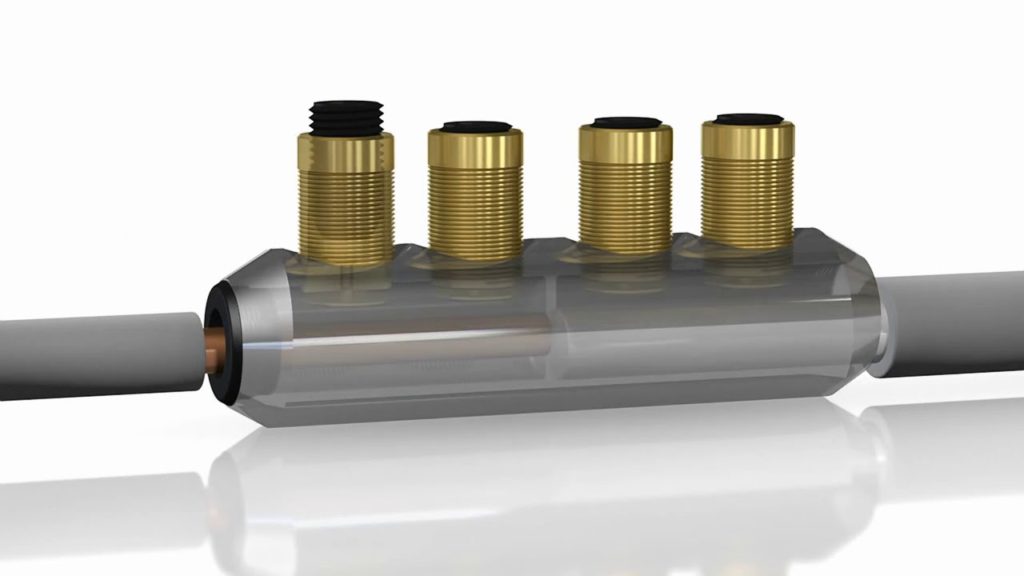
3.3kV cable joints utilising heat shrink technology and mechanical shearbolt connectors are available for the jointing of power cables up to 3.3kV in accordance with IEC 60228 and IEC 60502 – this includes the cable jointing of circular to sectoral conductors.
Similarly mechanical style conductor connectors are commonly used to joint conductors with divergent cross section areas – often called “reducer connectors” the shearbolt type connectors permits the “step-down” jointing of cables within the range accommodation of the connector.
Where crimp connectors from manufacturers such as Cembre are “dead-sized” and specified to connect “like-for-like” sized metric conductors the mechanical connector allows improved cable application ranges.
Mechanical shearbolt connections, such as Pfisterer, provide quick to install options for jointing dissimilar conductor types and constructions, whether circular, sectoral, stranded or solid – suitable for power systems at 3.3kV, 11kV, 33kV and up to 66kV.
Pfisterer Sicon connectors are used by Jointers to provide immediate and reliable connection of all types of cable conductors.
The range-taking nature of mechanical connectors allow the jointing of different cross section area conductors together without resort to crimp tooling.
For atmospheric action to result in cable corrosion both moisture and oxygen must be present within the cable joint.
Galvanic action results in corrosion when 2 dissimilar metals in an electrolytic series, such as copper and aluminium, are in physical contact.
This contact could be caused by the compression or crimping of aluminium and copper conductors together causing any moisture present to act as an electrolyte. In this situation, the copper becomes a cathode and receives the positive charge and the aluminium becomes the anode receiving a negative charge.
The resultant current flow attacks the aluminium leaving the copper unharmed.
Cable joints utilising Scotchcast Resins are trusted to provide uninterrupted power supply to electrical infrastructure in industrial and hazardous area locations – specialist application and chemical formula resins are available including hydrocarbon resistant, flame retardant, submersible and zero halogen types.
Cable Jointing For Industrial & Hazardous Areas Up To 3.3kV
To avoid bi-metallic corrosion caused by the connecting of the copper to aluminium conductors, 3M Scotchcast LVI resin cable joints can be used – 3M cable joints are fully encapsulated with either 3M Scotchcast 470W Resin for industrial cable installations or 3M Scotchast 1402FR Resin for cables being jointed in hazardous areas.
The pouring of the cable jointing resin into the shell eliminates air voids driving out moisture eliminating the basic requirements for galvanic reaction and cable corrosion to occur.
3M Scotchcast Resin LVI-1 Type Cable Joints For Low Voltage Power Cables
LV Cable Joints (Low Voltage Cables)
Thorne & Derrick stock and distribute LV Joints in Cold Shrink, Heat Shrink or Resin Cast technologies – multicore and multi-pair cable joints are available for immediate backfill and energisation of Low Voltage power, control and instrumentation cables 600V/1000V 3.3kV.
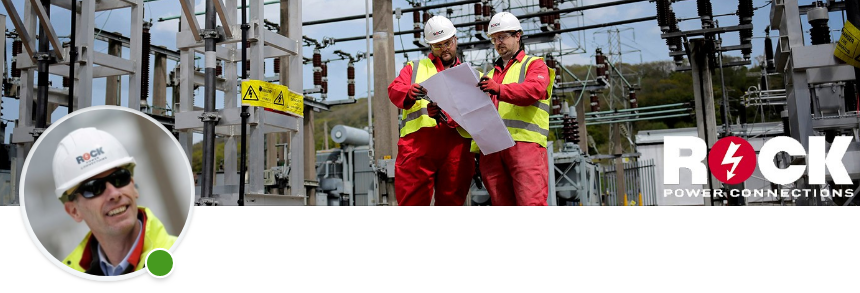
Co-Owner and Operations Director at Rock Power Connections
uploaded by Chris Dodds - Thorne & Derrick Sales & Marketing Manager
Lets put the Cable Jointing cat amongst the pigeons……..
Question: Has Triplex Killed The Jointer?
The universally respected BICC Generation of crème de la crème Cable Jointers experienced on jointing XLPE, fluid-filled and gas type cables might bemoan the modern industry trend, or nose-dive, towards polymeric power cable systems.
Recently nicknamed the Triplex Tripe Age on Linked-In by a former BICC’er.
Paper Lead is in vogue no more, Triplex is the new PILC and Plastic is here to stay.
Face facts, it’s unstoppable but as we hurtle headlong down BS7870 street does that mean we can all become Jointers overnight?
Yes, we know plastic is damaging the Planet and is bad for our environment but is it also messing with our Jointers? Or is plastic fantastic?
Polymeric cables have become increasingly simpler to strip, prepare and joint but surely Competency remains vital to safeguard industry standards?
What role have the Jointer Training Centres to play in this?
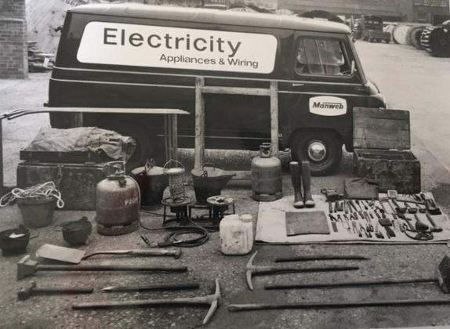
The days of metal pots, compound buckets, burners with heater, whackers for backfilling, picks and shovels is long gone. It’s 2018.
The drift away from paper insulated lead covered cables (PILC) started last century with the almost global adoption of modern polymeric type cables – this has heralded the introduction of precision engineered Jointers Tools to ensure efficient cable preparation of medium-high voltage cables.
Allegedly this has removed the skill, dexterity and Craft out of the Art of Jointing Cables?
For what it is worth here’s my two penn’orth.
The “roll-up roll-up”, pay your £2K andin 4 days timeyou can start your new career as a Cable Jointer message is frankly undermining confidence, reputation and the earning potential of the experienced Jointer.
Familiarisation is not Competency.
But the issued Paperwork can dupe some Recruiters sometimes into booking “Jointers” onto projects they are not yet adequately qualified or trained to undertake.
Many have not invested in the tool-set never mind the skill-set. Believe me, on an average day I receive 10-15 LinkedIn Direct Messages from non-electricians aspiring to become Cable Jointers under the influence of often misleading social media messages.
There is no fast-track to achieve the workmanship and skills levels of most of the Jointers we meet here on LinkedIn – Great Jointers and Great Guys.
Sorry but some Training Centres will take “all-comers” while others screen/vet potential Trainees via CV scrutiny – that’s an important distinction.
Another more important stand-out for me is peer attitude – some will nurture, care passionately and graft daylong to maintain Jointing industry standards through the sharing of their extensive skills and experience with their staff. Supporting their career paths and fuelling their ambition while getting them to knuckle under and earn their spurs.
People like Reece James.
So to answer the question Has Cable Jointing Moved On?
Read Reece James thoughts:
“Ok I’m going to be controversial here but Cable Jointing has moved on.
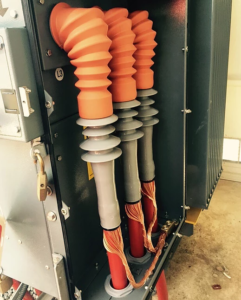
11kV Cable End Termination
As an apprentice trained DNO Cable Jointer who can work on old and new HV and LV lead cables, compound end boxes, do sweated cable joints and lead plumbing yes it did take years to learn the trade properly. However with new plastic Triplex cables, shearbolt connectors etc an experienced electrician can go on a short duration jointing course and learn how to joint / terminate cables to an excellent standard. I’ve shadowed a few of my staff before authorising them, giving them a few extra tips but the standard of there work is top notch. No, they are not fully rounded cable jointers like in the old days but on the cables they have been trained on and with on job experience there is no issue with the quality of there cable jointing work. It’s all down to the person and if they take pride in their work.
I remember the odd DNO trained jointer who did not care and turned out rough cable joints because they were in a rush. I just think it is unfair to tarnish all new (short training course) cable jointers with the same brush. I do however think there needs to be a minimum level of competence for someone doing these cable jointer training courses and in my experience a trained electrician is a good starting point!”
Meet Reece James MIET
♦ Bio
I am a highly motivated and experienced professional who is passionate about the electricity distribution industry and developing people. I have over 30 years experience in the electrical power industry, with the last 5 years as Operations Director of Rock Power Connections, which I Co-founded in 2012.
I have worked on various projects from LV connections to new EHV primary substation builds up to 400kV and have acted as Consultant Project Manager for many large developers, introducing competition, increased value and risk management for all their utility connections / requirements. I pride my self on my excellent customer service and relentless drive to deliver and exceed the customer’s expectations and my down to earth approach to business.
Developing my team and watching them succeed is one of my biggest motivations.
Who Are Rock Power Connections?
Rock Power Connections are power connection experts, specialising in independent electrical connections up to 33kV and DNO services up to 132kV – Lloyds accredited as part of the National Electricity Registration Scheme (NERS) and CHAS accredited.
Rock Power provides solutions from initial enquiry through design of electrical networks, construction (cable laying, jointing, substation installation), commissioning and final adoption of assets to DNO or Independent Distribution Network Operator (IDNO).
Working on behalf of a broad range of commercial developers to install new connections and repair / replace old equipment across sectors from retailers to residential, factories to farms – building and maintaining low, medium and high voltage cables and networks.
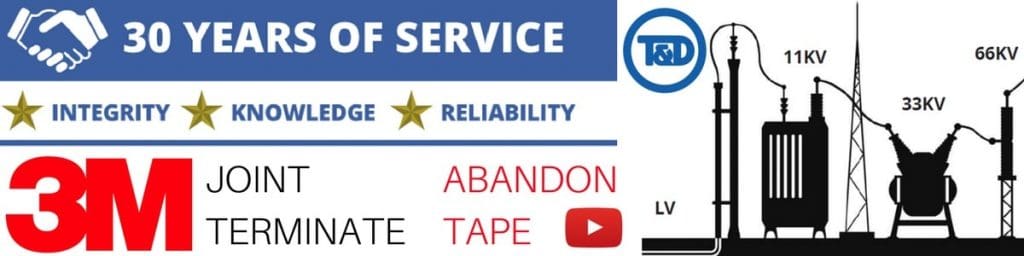
Hover over our Interactive Electricity Grid to learn more about our product ranges – T&D are Specialist Distributors to DNO’s, ICP’s and NERS Registered Providers of LV, MV & HV Jointing, Earthing, Substation & Electrical Eqpt.
3M Scotch tapes are used to cable joint, splice, repair damaged cables, seal and protect cables against abrasion, fire and corrosion – this includes protection of LV-HV (11kV-33kV) cables and connections.
Please contact T&D should you require assistance with selecting the correct 3M Scotch tape.
The 3M video explains the benefits of using Scotch electrical tape over alternative tapes.
Extreme Heat or Cold Applications For Scotch Tapes
Watch the video to see how Scotch tapes perform and endure installation and service conditions at temperatures down to 0°F and up to 220°F temperatures with cracking or unwinding. Scotch tapes will not degrade overtime when subject to temperature extremes, weathering, moisture or chemicals.
3M Scotch tapes demonstrate strong adhesion and excellent durability ensuring they are ideal for permanent jobs such as insulating and protecting electrical cable connections – once wound properly it remains wound.
3M Scotch tapes can also be used in zero degree temperatures and withstands high temperature up to 220ºF unlike other vinyl electrical tapes which would crack and unwind.
A greater stretch and tape elasticity provides a smooth, professional wrap and the coloured coded and fade resistant design ensures permanent and clear cable identification using 3M Scotch vinyl electrical tapes.
Scotch Tapes Manufactured By 3M Electrical For Professionals
The Scotch brand of PVC vinyl electrical tapes, manufactured by 3M Electrical, provide distinct competitive advantages over unbranded poor quality tapes which may have a superficial low price but actual high cost associations – since plastic vinyl tapes hit the mass-market in the 1940’s 3M Scotch has been the choice brand of the professional electrician for tapes with excellent electrical and mechanical properties.
For instance, 3M Scotch Super 33+ is the market-leading “fit and forget” vinyl electrical tape for providing cable protection, insulation and repair in industrial and hazardous area installations – this includes chemical (resists acids and alkalies), offshore (resists abrasion and corrosion) and industrial outdoor (resists UV ultraviolet light) applications.
As standard Scotch 33+ is coloured black so for colour-coding, phase marking and identification applications go with 3M Scotch 35 – same product specification as Scotch 33+ but with a colour spectrum of red, yellow, blue, brown, grey, white, green, orange and violet.
For cold weather and extreme low temperature applications select 3M Scotch 88 for continuous service down to 0 Degrees Celsius – Scotch 88 by 3M features excellent pliability and adhesion.
A varnished cambric tape is “off-the-shelf” for high puncture and cut-through resistance with Class A thermal stability – contact sales and ask about 3M Scotch 2510 for further information.
The protection of medium/high voltage cables and joints demands heavy-duty electrical tapes – substandard and under specified tapes pose risk and danger to power systems and life. Here, upgrade your tape choice to 3M Scotch 22, recommended by 3M Electrical for outer sheath and cable jacket protection or repairs to high voltage power cables and joints with rubber or polymeric cables. That’s XLPE and EPR in “cables-speak”.
Where cost is King but a good quality and general purpose PVC electrical tape is required contact us to place an order for 3M Temflex 1500.
All 3M Electrical Tapes are super stretch and strong for holding power in place without fail.
Due to the physical properties of 3M Scotch the tapes provide moisture-tight, chemical resistant electrical sealing of cables, connections and cable joints.
So overall, Thorne & Derrick distribute an extensive range of electrical tapes including fire proofing tapes with arc protection, see 3M Scotch 77 and high specification fire resistant tapesmanufactured by Nexans.
Cold Shrink – invented by 3M over 40 years ago and now the preferred technology for heat-free jointing, terminating, sealing and abandonment of LV HV cables
We hope you find this video informative and educational, contact T&D for technical support, quotations and stock availability for 3M Scotch Electrical Tape.
➡ Visit 3M Electrical for further information about joints, terminations, tapes and insulation to seal, repair, splice and connect LV MV HV cables.
This video by 3M Electrical shows the benefits of using 3M Cold Shrink compared to heat shrink cable accessories to insulate, joint, repair and terminate cables.
3M cold shrink tubes utilise a unique cold applied delivery system which is designed to make cable jointing, insulating, termination and abandonment as simple as possible without any of the inherent workplace risks associated with “hot-working” and using naked flames to activate heat shrink type cable accessories.
Cold shrink reduces the risk of damaging XLPE cable insulation caused by scorching or over-heating of the cable by the jointer. No cooling time is required before energising cables.
Cold Shrink Benefits
Installation is fast and an easy one-step installation process:
Labour Savings – enables installation of cable accessory in 1/3 of the time or less compared to heat shrink equivalents
Tooling– no special heating tools or “hot-work” work permits required
Compact – smooth profile cold shrink limits volume displacement on cable tray where congregated cable joints are located
Outdoor – resistant to weathering for continued outdoor service in environmental and exposed locations
User Friendly – easy to learn and train with less installation steps
Depending on the application cold shrink is available manufactured in EPDM Rubber or Silicone – contact us to discuss your application.
Cold Shrink creates a static and stable cable seal that does not expand or contract with the cable under thermal cycling of LV-HV cables, potentially leading to the creation of voids between the cable accessory and the cable which could lead to a joint or termination failure.
Cold Shrink – invented by 3M over 40 years ago and now the preferred technology for heat-free jointing, terminating, sealing and abandonment of LV HV cables
We hope you find this video informative and educational, contact T&D for technical support, quotations and stock availability for 3M Cold Shrink.
Trust Cold Shrink
Low Cable Failure Rates*:
– 0.067% for Cold Shrink Cable Joints & Cable Splices
– 0.022% for Cold Shrink Terminations
* Data based upon U.S. failure data of U.S. manufactured 3M Cold Shrink Medium Voltage Cable Accessories between 2009 and 2012.
3M
Should you require support about selecting the correct 3M Cold Shrink product range for use with low, medium or high voltage cables please contact us – a complete range of Cold Shrink cable joints and terminations is available for MV-HV cables, including 11kV/33kV.
➡ Visit 3M Electrical for further information about 3M cable joints, terminations, tapes and insulation to seal, repair, splice and connect LV MV HV cables.
Request a Quote Call Us: +44 (0)191 410 4292 Stokbord cable protection covers are rigid HDPE protection boards designed to be installed above buried cables in trenches. They are manufactured and designed by Centriforce to provide strong mechanical protection...
Restoring transformer termination integrity with LoviSil When a major site recently experienced a fault on an 11kV transformer termination, the challenge was clear: restore the system quickly, safely and without the expense/disruption of full PILC cable replacement. Upon investigation,...







 experienced Jointer.