Arc Flash Helmets Explained: Types, Ratings & Safety Standards
Published 06 Nov 2026

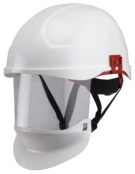
Arc flash helmets are specialist safety helmets used with arc-rated face shields to help protect electrical workers against the thermal effects of an electric arc. Unlike standard industrial safety helmets, a suitable arc flash head protection system includes components designed and tested for specified electrical arc hazards.
For electricians, cable jointers, switchgear engineers and maintenance teams, head and face protection is an important part of electrical safety. However, the correct helmet and visor combination must be selected according to the risks identified for the task.
Arc flash helmets are available with different designs, including integrated retractable visors and separate helmet-mounted face shields. Furthermore, some systems incorporate chin and neck protection for additional coverage.
Thorne & Derrick supply arc flash PPE and electrical safety equipment, including specialist helmet and visor solutions from manufacturers such as CATU and ProGARM.
This guide explains how arc flash helmets work, the difference between helmet and visor ratings, relevant safety standards and how to select suitable protection.
Quick Navigation
- What Is an Arc Flash Helmet?
- Why Is Arc Flash Head Protection Important?
- Arc Flash Helmet Components
- Arc Flash vs Standard Safety Helmets
- Arc Flash Helmet Ratings Explained
- Arc Flash Helmet Safety Standards
- Types of Arc Flash Helmets and Visors
- How to Choose an Arc Flash Helmet
- Applications and Industries
- Inspection and Maintenance
- Common Selection Mistakes
- CATU and ProGARM Arc Flash Helmets
- Frequently Asked Questions
- Conclusion
What Is an Arc Flash Helmet?
An arc flash helmet is a protective helmet forming part of a head and face protection system designed for work involving an assessed electrical arc hazard.
Depending on its design, the system may include an arc-rated visor, chin protection and other approved accessories. Together, these components help protect the wearer against specified thermal and mechanical hazards.
However, not every industrial safety helmet provides arc flash protection. The complete assembly must have the appropriate tested performance for the intended application.
What Does an Arc Flash Helmet Protect Against?
A suitable helmet and visor system may provide protection against:
- Arc flash thermal exposure: Helps reduce the risk of burns to covered areas of the face and head.
- Flying particles: Provides mechanical protection where appropriately tested.
- Impact hazards: The helmet shell protects against specified head impact risks.
- Electrical contact: Electrically insulating helmets provide protection within their certified limitations.
- Optical hazards: Suitable face shields filter specified harmful radiation.
- Molten metal: Selected visors provide protection against specified hot material hazards.
Importantly, the level of protection depends on the actual product, certification and correct use.
Why Is Arc Flash Head Protection Important?
An electrical arc can release intense thermal energy in a very short period. As a result, anyone exposed to the incident may suffer serious burns and other injuries.
The head and face are particularly vulnerable because they may be close to electrical equipment during inspection or operation.
Therefore, suitable face and head protection may be necessary where the risk assessment identifies a residual arc flash hazard.
What Happens During an Arc Flash?
An arc flash occurs when electrical current passes through an unintended path, often involving ionised air. Depending on the fault conditions, the arc can release heat, intense light and hot particles.
For example, an electrical fault inside switchgear may expose a nearby worker to significant thermal energy.
However, incident severity depends on several factors, including the available fault current, clearing time, equipment arrangement and working distance.
Can an Arc Flash Helmet Prevent Injuries?
Arc flash head protection can reduce certain injuries when properly selected and worn. Nevertheless, it cannot prevent an electrical fault or guarantee protection against every hazard.
For this reason, employers must prioritise electrical risk reduction, including safe isolation and suitable engineering controls.
Arc flash PPE is the last line of defence, not a substitute for safe electrical working procedures.
What Are the Main Components of an Arc Flash Helmet?
An arc flash helmet system may contain several protective components. Each contributes to the overall protection and usability of the equipment.
Protective Helmet Shell
The helmet shell provides mechanical head protection. Depending on its certification, it may also offer electrical insulation for specified applications.
However, an impact-rated helmet is not automatically an electrically insulating helmet.
Arc-Rated Face Shield
The visor is an important part of the assembly because it provides thermal protection for the covered facial area.
Furthermore, suitable face shields provide optical filtering and protection against specified mechanical hazards.
However, the visor must be compatible with the helmet and any other required components.
Chin and Neck Protection
Some arc flash helmet systems include chin guards, neck protection or arc-rated fabric components.
These features can extend coverage beyond the face shield itself. Nevertheless, the complete arrangement must meet the protection requirements identified by the risk assessment.
Helmet Harness and Adjustment
An adjustable harness helps maintain a secure fit during use. In addition, compatible chin straps may be required for certain working conditions.
Correct sizing and adjustment are important because a poorly fitted helmet may move during the task.
Arc Flash Helmets vs Standard Safety Helmets
A standard industrial safety helmet and an arc flash helmet system may look similar. However, their tested protective capabilities can differ significantly.
For example, a conventional hard hat may provide head impact protection without having an arc-rated face shield.
Therefore, an industrial helmet should not be assumed suitable for arc flash exposure simply because it meets a general helmet standard.
Arc Flash Helmet Comparison
| Feature | Standard Safety Helmet | Arc Flash Helmet System |
|---|---|---|
| Head Impact Protection | Provided according to the helmet’s certification. | Provided according to the helmet’s certification. |
| Arc Flash Thermal Protection | Not automatically provided. | Provided by appropriately rated and tested components. |
| Face Protection | May require a separately selected visor. | Includes a suitable arc-rated face shield. |
| Electrical Insulation | Only where specifically certified. | Only where the helmet is certified for electrical insulation. |
| Chin and Neck Coverage | Not normally part of a basic hard hat. | Available on selected approved assemblies. |
Although some electrically insulating safety helmets can form part of an arc flash assembly, the complete combination must be suitable for the intended use.
Arc Flash Helmet Ratings Explained
Arc flash helmet and visor specifications may include an energy rating expressed in cal/cm² or an arc protection class.
However, these values come from different test methods. Consequently, they should not be treated as interchangeable.
What Does cal/cm² Mean?
Calories per square centimetre (cal/cm²) is a unit used to express incident energy.
For example, some arc-rated face shields have tested ratings of 12, 24 or 36 cal/cm².
Nevertheless, these figures must be interpreted according to the applicable test method and the manufacturer’s certification.
A visor rating does not mean the wearer can safely withstand every electrical arc event at that energy level.
What Is an Arc Protection Class?
Arc Protection Classes describe performance under specified box test conditions.
For example, the traditional box test arrangements include:
- APC 1: A specified box test using a 4kA test current.
- APC 2: A specified box test using a 7kA test current.
However, the complete test requirements are more detailed than these current values.
Furthermore, an APC classification cannot be directly converted into a particular cal/cm² rating.
Can You Compare Different Arc Flash Visors by Rating Alone?
Not reliably. Although a stated arc rating is important, the overall protection depends on the complete assembly and its intended application.
For example, engineers should also check the area of coverage, mechanical protection, optical performance and compatibility with the helmet.
Therefore, PPE selection should follow the risk assessment and relevant product certification rather than one rating alone.
Arc Flash Helmet Safety Standards Explained
Several standards are relevant to electrical head and face protection. However, each addresses different performance requirements.
Consequently, a helmet and visor system may need evidence of conformity with more than one standard.
IEC 62819 – Electric Arc Eye, Face and Head Protection
IEC 62819:2022 covers performance requirements and test methods for eye, face and head protection against the effects of an electrical arc.
The standard considers thermal, optical and mechanical hazards. In addition, it covers protective systems that may combine several devices.
EN 397 – Industrial Safety Helmets
EN 397 addresses requirements for industrial protective helmets.
For example, it includes performance requirements relating to mechanical head protection.
However, conformity with EN 397 alone does not establish the arc flash thermal performance of a complete helmet and visor assembly.
EN 50365 – Electrically Insulating Helmets
EN 50365 addresses electrically insulating helmets for specified electrical work.
Therefore, it is relevant when the work requires a helmet with certified electrical insulation properties.
However, electrical insulation and arc flash thermal protection are different performance characteristics.
ASTM F2178 – Arc-Rated Eye and Face Protection
ASTM F2178 is used to assess the arc rating of eye and face protective products under its defined test method.
For example, a manufacturer may provide an arc rating in cal/cm² based on appropriate testing.
GS-ET-29 – Electrical Arc Face Protection
GS-ET-29 has also been used for testing protective face shields against electrical arc hazards.
In particular, it appears in the certification documentation of various established arc flash visor products.
However, manufacturers may reference different editions or newer standards. Therefore, the exact product certification should be checked before purchase.
Types of Arc Flash Helmets and Visors
Arc flash head protection is available in several configurations. The correct design depends on the work environment, required coverage and protective performance.
Integrated Arc Flash Helmets
An integrated arc flash helmet incorporates a compatible face shield within the helmet assembly.
For example, some CATU designs include retractable visors and additional protective fabric components.
These arrangements can offer convenient storage and deployment of the face shield. However, users must follow the manufacturer’s instructions for correct positioning.
Helmet-Mounted Arc Flash Visors
A separate visor can be mounted to a compatible safety helmet using an approved attachment system.
For example, this arrangement may allow replacement of the visor or selected components when permitted by the manufacturer.
Nevertheless, different brands and models must not be combined without confirming compatibility.
Arc Flash Hoods
Arc flash hoods provide a different head and face protection arrangement.
Depending on the design, they may offer extended coverage around the head and neck.
However, a hood is not automatically interchangeable with a helmet-mounted visor. The required protection and complete PPE arrangement must be assessed.
How to Choose the Correct Arc Flash Helmet
Choosing an arc flash helmet and visor requires more than checking the product’s arc rating.
First, identify the electrical hazards associated with the task. Then, establish the required protective performance and other workplace risks.
Finally, check the certification and compatibility of the complete helmet and visor assembly.
Step 1 – Review the Electrical Risk Assessment
The risk assessment should identify the potential electrical arc exposure and relevant working conditions.
Where necessary, a suitable arc flash study may provide information to support the selection process.
Step 2 – Confirm the Required Head and Face Coverage
Different tasks may require different coverage arrangements. For example, the assessment may identify the need for chin, neck or additional facial protection.
Therefore, the complete PPE system must address the relevant exposure rather than relying only on a helmet shell.
Step 3 – Check the Product Standards and Ratings
Review the manufacturer’s technical documentation and relevant certification.
In particular, confirm any arc rating, protection class, electrical insulation performance and mechanical protection requirements.
Step 4 – Confirm Fit, Visibility and Compatibility
Workers need suitable visibility and comfort to carry out tasks safely.
Furthermore, helmets may need to work with approved hearing protection, prescription eyewear or other PPE.
However, accessories must not compromise the certified protection of the assembly.
Arc Flash Helmet Selection Checklist
Where Are Arc Flash Helmets Used?
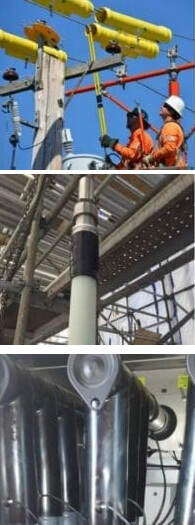
Arc flash helmet systems are used in electrical workplaces where a risk assessment identifies the need for suitable head and face protection.
For example, electrical engineers may require protection during specific switching, inspection or maintenance tasks.
Electrical Utilities and Power Distribution
Utility engineers work with electrical infrastructure including substations, switchgear and power distribution equipment.
Consequently, certain tasks may require arc flash PPE as part of the approved safe working arrangements.
Industrial Electrical Maintenance
Industrial facilities often contain electrical distribution equipment and motor control systems.
For example, maintenance engineers may require suitable protection when undertaking authorised work involving an identified arc flash risk.
Rail and Infrastructure
Rail and infrastructure contractors may work around electrical equipment and power distribution systems.
However, the appropriate PPE depends on the specific activity and assessed hazard rather than the sector alone.
Renewable Energy and Power Generation
Solar, wind and battery energy storage installations contain electrical equipment with different operating characteristics.
Therefore, electrical risk assessments must consider the particular system and task when specifying protective equipment.
How to Inspect and Maintain Arc Flash Helmets
Arc flash helmets and visors must remain in suitable condition throughout their service life.
However, exposure to sunlight, chemicals, heat or physical damage can affect some protective components.
Therefore, users should follow the manufacturer’s inspection, cleaning and replacement instructions.
Check the Helmet Before Use
Before work begins, inspect the helmet shell, visor and retention system.
Look for visible damage, including cracks, distortion, damaged attachments or other defects that could affect protection.
Clean the Visor Correctly
Use the cleaning method approved by the manufacturer.
For example, unsuitable solvents or abrasive materials may damage protective coatings or optical surfaces.
Consequently, cleaning products should be selected according to the specific visor instructions.
When Should an Arc Flash Helmet Be Replaced?
Helmets may require replacement after an impact, electrical arc exposure, damage or the end of their approved service life.
Furthermore, some products have manufacturer-defined expiry or retirement conditions.
Therefore, always check the complete assembly rather than assuming every component has the same service life.
Common Arc Flash Helmet Selection Mistakes
Incorrect PPE selection can leave workers exposed to hazards that their equipment was not designed to address.
Some common mistakes include:
Certification and Rating Mistakes
- Using a standard hard hat alone: Impact protection does not automatically provide arc flash thermal protection.
- Confusing electrical insulation with arc rating: These are different protective properties.
- Comparing APC and cal/cm² directly: Different test methods cannot be converted into equivalent ratings.
- Selecting by the highest rating alone: Coverage, visibility and the assessed hazard also matter.
Fit and Maintenance Mistakes
- Mixing incompatible components: Unapproved helmet and visor combinations may compromise protection.
- Ignoring chin and neck exposure: The risk assessment must consider the required coverage.
- Using a damaged visor: Scratches or other damage may affect protective performance.
- Ignoring service life: Manufacturer replacement and retirement instructions must be followed.
- Incorrect visor positioning: The visor must be worn correctly during the relevant exposure.
Ultimately, the complete protective system must match the task and the manufacturer’s approved configuration.
CATU and ProGARM Arc Flash Helmets from Thorne & Derrick
Thorne & Derrick supply specialist arc flash head and face protection for electrical installation and maintenance applications.
Our existing product information includes helmet and visor solutions from CATU Electrical and ProGARM.
ProGARM 2696 Arc Flash Helmet and Visor
The ProGARM 2696 Arc Flash Helmet and Visor is described in our existing product information as a 36 cal/cm² head and face protection system.
Its published specification also references Class 2 box test performance and relevant helmet and visor standards.
However, customers should confirm current certification, availability and suitability before ordering.
CATU MO-180-ARC Integrated Arc Flash Helmet
The CATU MO-180-ARC range includes integrated helmet and visor arrangements.
For example, the original CATU product information describes a retractable face shield and additional protective components.
As with any electrical PPE, the exact model and tested performance must be checked against the required application.
Other Arc Flash Helmet and Visor Options
Explore our wider Arc Flash Helmets and Visors page for additional product references.
However, some older ProGARM models have been discontinued or superseded. Therefore, availability and suitable replacement products must be confirmed before specification.
What Information Should You Provide?
When enquiring about an arc flash helmet, provide the required head and face protection criteria from the electrical risk assessment.
In addition, details about the work environment, required standards and any compatible PPE will help identify suitable options.
Arc Flash Helmets – Frequently Asked Questions
These answers cover common questions about arc-rated helmets, face shields and electrical protection requirements.
Arc Flash Helmet Protection FAQs
Q1. What is an arc flash helmet?
An arc flash helmet is part of a protective head and face assembly used where an electrical arc hazard has been identified. For example, it may combine a certified helmet with an arc-rated visor and additional protective components.
Q2. Is an arc flash helmet different from a normal safety helmet?
Yes. A standard helmet may provide impact protection without an arc-rated visor. By contrast, an appropriate arc flash assembly includes tested components designed to address specified electric arc hazards.
Q3. What does 12 cal/cm² mean on an arc flash visor?
The rating describes incident-energy-related performance under the applicable test method. However, it does not guarantee protection against every electrical arc incident. Therefore, the visor must be selected using the relevant risk assessment.
Q4. What is an APC 2 arc flash visor?
APC 2 indicates performance under specified Class 2 box test conditions. Nevertheless, the classification should not be treated as equivalent to a particular cal/cm² rating.
Q5. Can an ordinary face shield protect against arc flash?
Not automatically. Although a general face shield may provide impact or splash protection, it must also have the appropriate arc protection performance for the intended application.
Selection and Maintenance FAQs
Q6. Are arc flash helmets electrically insulating?
Some arc flash helmet systems include electrically insulating helmet shells. However, electrical insulation must be confirmed through the helmet’s relevant certification and does not automatically follow from its arc rating.
Q7. Do arc flash helmets need chin protection?
Chin and neck protection may be required depending on the risk assessment and selected protective arrangement. Therefore, the complete system should provide the necessary coverage for the task.
Q8. Can I fit an arc flash visor to any safety helmet?
No. The visor, attachment system and helmet must form a compatible arrangement. Consequently, customers should use only combinations approved by the relevant manufacturer.
Q9. How long does an arc flash helmet last?
Service life depends on the manufacturer’s instructions, the product and its condition. In addition, damage, environmental exposure or an electrical incident may require earlier replacement.
Q10. Which safety standards apply to arc flash helmets?
Relevant standards may include IEC 62819, EN 397, EN 50365 and applicable visor test standards. However, the exact requirements depend on the helmet, visor and intended application.
Q11. How do I choose the correct arc flash helmet?
First, review the electrical risk assessment. Next, identify the required protective rating, coverage and helmet performance. Finally, confirm the certification and compatibility of the complete assembly.
Conclusion – Choosing Arc Flash Helmets
Arc flash helmets help protect electrical workers against specified head and face hazards when correctly selected and worn.
However, not every safety helmet or visor provides suitable protection against electrical arcing. Therefore, the complete assembly must meet the requirements identified by the relevant electrical risk assessment.
For example, arc ratings, helmet electrical insulation, visor coverage and component compatibility all influence product selection.
Furthermore, regular inspection and correct maintenance help preserve the intended protective performance throughout the equipment’s service life.
Thorne & Derrick supply arc flash helmets, visors and electrical PPE for suitable utility, industrial and electrical infrastructure applications.
For assistance selecting suitable protection, contact our technical sales team with your required specifications and application details.