What Is an Access Chamber? Types, Uses & Benefits
Published 02 Nov 2026
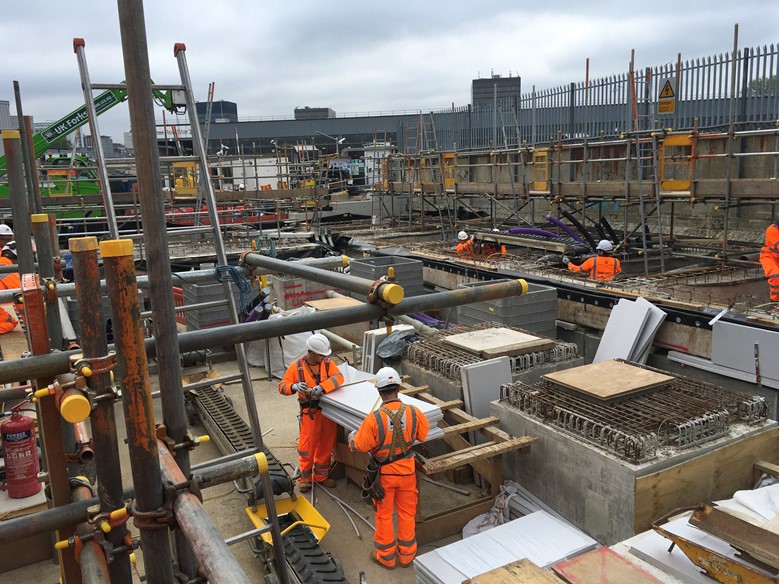
An access chamber is an underground structure that provides access to buried cables, cable ducts and utility networks. These chambers allow contractors to install, inspect and maintain cables without excavating the entire underground route.
Common installation locations include roads, footpaths, substations and industrial facilities. In addition, many telecommunications and power distribution projects use these structures to provide designated access points along buried networks.
Also known as underground access chambers, cable access chambers or utility access chambers, they form an important part of modern infrastructure.
Traditional chambers often use brickwork or concrete. However, modern systems can also incorporate modular or sectional components manufactured from glass-reinforced plastic (GRP), high-density polyethylene (HDPE) or polypropylene.
As a result, contractors can choose from different construction methods to suit the installation conditions. Modular designs may also simplify handling and reduce the amount of on-site construction.
Thorne & Derrick supply Cubis STAKKAbox underground chamber systems for electrical utilities, civil engineering contractors and infrastructure projects, including selected LV, MV and HV power cable applications.
This guide explains how these structures work, the different types available and their role in underground cable networks. Furthermore, it covers chamber selection, materials, installation considerations and the benefits of modular designs.
Quick Navigation
- What Is an Access Chamber?
- How Does an Underground Chamber Work?
- Main Chamber Components
- What Are Access Chambers Used For?
- Different Types of Underground Chambers
- Access Chambers vs Draw Pits vs Manholes
- Chamber Construction Materials
- Cubis STAKKAbox Chamber Systems
- Chambers in Power Distribution
- Benefits of Modular Chambers
- Choosing the Correct Chamber
- Related Cable Infrastructure Products
- Frequently Asked Questions
- Conclusion
What Is an Access Chamber?
An access chamber is a below-ground enclosure that provides access to underground cables, ducts or other utility services. It allows authorised personnel to reach designated sections of a buried network for installation, inspection and maintenance.
For example, electricity distribution networks may include these structures along underground cable duct routes. Telecommunications networks and major infrastructure projects also use similar arrangements.
Most chambers have an access cover at ground level. Depending on the design, they may also contain duct openings, cable supports and other infrastructure components.
Why Do Underground Networks Need Access Points?
Buried cables and ducts can extend over considerable distances. Consequently, contractors need suitable locations where they can access the network without excavating the entire route.
These access points can also support future cable installation and maintenance. However, each structure must provide enough space for its intended purpose.
Quick Summary – Underground Access Chambers
How Does an Underground Access Chamber Work?
An underground chamber provides a designated opening into a buried utility network. Contractors can use this access point to reach cable ducts and other infrastructure.
For example, an electricity network may have several buried ducts connecting two substations. At selected points, chambers provide access for cable installation or future maintenance.
In addition, the chamber may offer working space for suitable cable pulling equipment. However, its internal dimensions must accommodate the intended activities.
Example – Underground Cable Duct Network
Consider an electrical distribution route connecting two substations.
Power cables may run through protective underground cable ducting. Along the route, contractors can use designated access points to reach the duct openings.
Depending on the design, these locations may support:
- Cable Pulling: Access to duct openings during installation.
- Cable Inspection: Inspection of accessible cables and infrastructure.
- Route Changes: Accommodation of cable direction changes where sufficient space exists.
- Future Installation: Access to available ducts for additional cables.
- Maintenance: Access to selected network components without excavating the entire route.
Can Every Chamber Accommodate Cable Joints?
No. Some installations only need access to cable ducts. By contrast, cable jointing may require significantly more space and specialist arrangements.
Therefore, designers must confirm the required dimensions, cable bending radius and working clearances before selecting a chamber.
What Are the Main Parts of an Access Chamber?
Underground chambers contain several basic structural components. However, their exact construction depends on the chamber system and intended application.
For example, a modular design may use separate wall sections. Meanwhile, a preformed system may arrive as a complete structural unit.
Underground Chamber Components Explained
| Component | Purpose |
|---|---|
| Chamber Walls | Form the enclosure and resist specified surrounding ground and installation loads. |
| Modular Sections | Allow contractors to assemble the chamber to the required dimensions and depth. |
| Access Cover and Frame | Provide access at ground level and withstand the specified surface loading. |
| Duct Entries | Provide openings for underground cable ducts. |
| Chamber Base | Provides the specified foundation or lower arrangement, sometimes including drainage provisions. |
| Cable Supports | Support and organise cables where the installation requires them. |
Does Every Chamber Need the Same Components?
No. For example, one installation may require cable supports, while another only needs access to duct openings.
Similarly, drainage arrangements depend on the chamber design and surrounding ground conditions.
Therefore, engineers should select components according to the approved installation requirements.
What Are Access Chambers Used For?
Underground access structures serve several purposes across electrical, telecommunications and civil infrastructure projects.
Although the applications differ, they share one objective: providing access to designated sections of buried networks.
1. Underground Electrical Cable Networks
Electrical distribution networks may incorporate chambers along LV, MV and HV cable routes.
For example, contractors can use these locations during cable installation or inspection. In addition, the access points may support future network modifications.
2. Substations and Grid Connections
Substations often connect to underground power and control cable systems.
Consequently, access points may be required near duct routes, cable entry locations and other designated infrastructure.
However, the chamber must suit the electrical design and required maintenance activities.
3. Telecommunications and Fibre Optic Networks
Telecommunications networks also rely on underground ducts and access structures.
For example, chambers provide access to fibre optic cables and telecommunications infrastructure.
Furthermore, suitable designs may accommodate approved cable storage or connection arrangements.
4. Highways and Transport Infrastructure
Highways and transport networks contain buried electrical and communications services.
Typical applications include road lighting, communications equipment and infrastructure monitoring systems.
However, surface loading is particularly important in these environments. Therefore, the chamber and cover must suit the specified traffic conditions.
5. Renewable Energy and Industrial Sites
Solar farms, battery energy storage sites, wind farms and industrial facilities frequently use buried cable networks.
As a result, these projects may require chambers for cable installation, inspection or future network changes.
What Are the Different Types of Access Chambers?
Underground chambers are available in several construction formats. The most suitable design depends on the installation conditions and project requirements.
Sectional Chambers
Sectional chambers use individual sections that installers stack to achieve the required depth.
As a result, contractors can construct the chamber in stages. This approach may be useful where burial depths vary across a project.
Modular Chamber Systems
Modular chambers use interconnecting components to create the required chamber dimensions.
For example, some systems arrive as flat-pack components for assembly on site.
Consequently, modular construction may offer advantages in locations with limited access or handling space.
Preformed Chambers
Preformed chambers arrive as prefabricated units or larger structural sections.
Therefore, they may reduce the amount of construction required at the installation location.
However, access, lifting arrangements and excavation dimensions must suit the selected product.
Concrete and Brick-Built Chambers
Traditional chambers use concrete, brickwork or other approved construction materials.
These systems remain relevant for projects requiring bespoke dimensions or particular structural characteristics.
For example, a specialist infrastructure installation may require a custom-designed concrete chamber.
Structural Chambers
Structural chambers must withstand the loads associated with their installation environment.
These may include ground pressure, backfill and surface traffic loads.
Therefore, engineers must verify the complete chamber, frame and cover assembly against the project requirements.
Access Chambers vs Draw Pits vs Manholes – What’s the Difference?
The terms access chamber, cable draw pit, inspection chamber and manhole sometimes describe similar underground structures.
However, their precise meaning depends on the network and intended function.
Underground Access Structures Compared
| Structure | Typical Purpose |
|---|---|
| Access Chamber | Provides access to underground utility infrastructure. |
| Cable Draw Pit | Provides an access point during cable pulling and installation. |
| Inspection Chamber | Supports inspection and maintenance, commonly within drainage and utility systems. |
| Manhole | May provide personnel access, depending on its size, construction and approved use. |
Can Personnel Enter an Underground Chamber?
Not automatically. The name of a chamber does not confirm whether personnel entry is permitted.
Instead, the installation must provide suitable access and meet the applicable safety requirements.
Furthermore, underground entry may involve confined-space hazards. Therefore, personnel must follow the appropriate risk assessments and safe working procedures.
What Are Underground Access Chambers Made From?
Manufacturers use different materials to produce underground access structures.
Material selection affects component weight, construction methods, durability and structural performance.
GRP Chamber Systems
Glass-Reinforced Plastic (GRP) is a composite material used in selected structural and modular designs.
For example, some Cubis STAKKAbox systems use GRP components to provide modular construction.
HDPE Chambers
High-Density Polyethylene (HDPE) is a polymer used in selected lightweight and preformed systems.
However, its suitability depends on the specific product design and structural requirements.
Polypropylene Chamber Components
Polypropylene (PP) is another polymer used in modular underground systems.
As with other materials, the manufacturer determines the permitted applications and installation requirements.
Concrete and Masonry Construction
Traditional chambers often use precast concrete, in-situ concrete or brickwork.
For example, bespoke civil engineering installations may require particular structural dimensions or construction methods.
Which Material Should You Choose?
The correct choice depends on ground conditions, loading, chamber dimensions and the approved installation design.
Although lighter components can simplify handling, weight should not be the only consideration.
Therefore, engineers must also assess structural performance, durability and environmental suitability.
Cubis STAKKAbox Access Chambers
Cubis STAKKAbox is a range of modular and sectional systems used in underground utility infrastructure.
These products offer alternatives to traditional brick-built chambers. However, individual ranges use different materials and construction methods.
Thorne & Derrick supply STAKKAbox products for applications including electrical distribution, telecommunications, highways and infrastructure projects.
Cubis STAKKAbox Product Ranges
| Range | Description |
|---|---|
| ULTIMA | Structural GRP chamber system for underground access applications. |
| ULTIMA Connect | Modular GRP components that provide flexible chamber construction. |
| Fortress | HDPE system with structural sections for utility applications. |
| Modula | Modular chamber construction using polymer components. |
| Quad | Sectional system for selected telecommunications and utility networks. |
| RapidSTACK | GRP modular system designed for efficient assembly. |
How Do STAKKAbox Systems Differ?
Different ranges offer different dimensions, materials and construction arrangements.
For example, one system may provide modular interlocking sections, while another uses a different structural design.
Therefore, product selection must follow the manufacturer’s specifications and project requirements.
Explore the complete Cubis STAKKAbox product range.
Why Are Access Chambers Important in Power Distribution?
Underground electricity networks connect substations, transformers, switchgear and other equipment through buried cable routes.
Consequently, access points can play an important role in cable installation and future maintenance.
Low Voltage Cable Networks
LV distribution systems may require access to cable ducts, service connections or routing points.
For example, a chamber can provide a designated location for planned cable installation activities.
11kV and 33kV Cable Networks
For 11kV and 33kV cable systems, suitably designed chambers may support cable pulling operations and access to underground ducts.
However, the structure must provide sufficient space for the required cable bending radius and installation clearances.
High Voltage Cable Infrastructure
Major HV cable routes may require specially engineered access or receiving structures.
These installations can have more demanding spatial and structural requirements.
Therefore, a standard utility chamber should not automatically be selected for HV cable jointing or specialist installation equipment.
What Are the Benefits of Modular Access Chambers?
Modular construction can offer several advantages compared with traditional building methods.
However, the actual benefits depend on the chamber system and site conditions.
1. Flexible Chamber Dimensions
Modular sections allow contractors to build suitable chamber footprints and depths within the approved product range.
As a result, the same system may accommodate different installation requirements.
2. Reduced On-Site Construction
Prefabricated sections can reduce the need for traditional brickwork or concrete construction.
Consequently, some projects may require fewer site-based construction operations.
3. Easier Component Handling
Selected polymer and GRP components are lighter than comparable traditional construction elements.
Therefore, they may simplify handling and installation where site conditions permit.
4. Integration With Existing Networks
Some modular designs allow installers to assemble the chamber around existing duct infrastructure.
However, the installation must follow the manufacturer’s approved methods.
5. Flexible Duct Entry Positions
Selected systems allow contractors to form duct entry openings on site.
As a result, the chamber can accommodate different duct arrangements within its approved design limits.
6. Potential Installation Time Savings
Modular construction may reduce installation time by limiting traditional construction work.
Nevertheless, excavation, ground preparation, backfilling and lifting requirements still influence the overall programme.
Are Modular Chambers Always Faster to Install?
Not necessarily. Although modular construction offers practical advantages, project conditions vary.
For example, difficult ground conditions or complex duct arrangements may affect installation time.
Therefore, any programme or cost savings should be assessed against the complete project specification.
How to Choose the Correct Underground Access Chamber
Selecting the correct chamber involves more than choosing an opening large enough for the cable ducts.
Instead, engineers must consider structural loads, dimensions, cable requirements and future access.
Step 1 – Confirm the Required Dimensions
First, establish the internal clear opening, external footprint and required depth.
In addition, consider the working space needed for cable installation or maintenance.
Step 2 – Check the Installation Environment
Next, identify whether the chamber will sit beneath a footpath, highway, industrial site or another location.
For example, a chamber beneath a trafficked road may face different loading requirements from one in a pedestrian area.
Step 3 – Review Cable and Duct Requirements
Then, confirm the number, size and position of the cable ducts.
Furthermore, check cable bending radii and any necessary installation clearances.
Step 4 – Confirm Structural and Asset Owner Requirements
Finally, review the loading criteria, ground conditions and applicable project approvals.
Where necessary, the asset owner may specify particular chamber systems or construction requirements.
Access Chamber Selection Checklist
For additional technical information, read our Underground Cable Access Chambers Design and Installation Guide.
Related Underground Cable Infrastructure Products
Underground chamber systems form part of wider power cable and utility networks.
Therefore, contractors may also require cable ducts, sealing equipment and specialist cable installation products.
Explore Related Product Categories
- Underground Chamber Systems – Cubis STAKKAbox modular and sectional products.
- Cable Ducting – buried duct systems for cable protection and routing.
- Cable Duct Seals – suitable sealing systems for duct entries and penetrations.
- Cable Pulling and Laying Equipment – specialist installation tools and equipment.
- Cable Protection Covers – protective products for buried power cable infrastructure.
Access Chambers – Frequently Asked Questions
The following answers cover common questions about underground utility access, construction methods and cable infrastructure applications.
General Questions
Q1. What is an access chamber?
An access chamber is an underground structure that provides access to buried cables, cable ducts and utility services. For example, it may support installation, inspection or maintenance activities.
Q2. What is the purpose of an underground cable access chamber?
Its purpose is to provide access to designated sections of a buried network. Depending on its design, the chamber may support cable pulling, inspection, maintenance or future modifications.
Q3. What is the difference between an access chamber and a draw pit?
An access chamber is a general term for an underground utility access structure. By comparison, a cable draw pit usually refers to an access point used during cable pulling. However, the terms may overlap.
Q4. Where are access chambers installed?
Common locations include roads, footpaths, substations, industrial sites and data centres. In addition, contractors use them across telecommunications and renewable energy infrastructure.
Q5. What materials are access chambers made from?
Manufacturers use GRP, HDPE, polypropylene, concrete and masonry. Therefore, the correct material depends on structural loading, installation conditions and project requirements.
Design and Installation Questions
Q6. What is a modular access chamber?
A modular design uses prefabricated components that contractors assemble on site. As a result, it may offer greater flexibility in construction and chamber dimensions.
Q7. Are underground access chambers waterproof?
Not necessarily. Some systems allow drainage rather than providing complete watertight containment. Therefore, designers must confirm the water management requirements for each installation.
Q8. Can access chambers be used for high voltage cables?
Yes, suitably engineered structures may support MV and HV cable networks. However, chamber dimensions, structural performance and project approvals must suit the application.
Q9. What is a STAKKAbox access chamber?
STAKKAbox is a range of modular and sectional underground chamber systems manufactured by Cubis. Different ranges offer different materials, dimensions and construction methods.
Q10. How do you choose the correct chamber size?
First, confirm the duct configuration and required internal dimensions. Next, check cable bending radii and installation clearances. Finally, verify loading, depth and future access requirements.
Conclusion – Understanding Underground Access Chambers
Underground access chambers provide important access points within buried power cable, telecommunications and utility networks.
For example, they can support cable installation, inspection, maintenance and future infrastructure modifications.
However, different projects require different chamber designs. Traditional concrete and masonry construction remains suitable for many applications, while modular GRP and polymer systems offer alternative installation methods.
Furthermore, chamber selection must consider structural loading, cable duct configuration, ground conditions and the relevant asset owner’s requirements.
Therefore, the complete chamber system should be selected according to the approved installation design.
Thorne & Derrick supply Cubis STAKKAbox underground chamber systems for electrical utilities, contractors and infrastructure projects.
For assistance selecting suitable equipment, contact our technical sales team with your chamber dimensions, loading requirements, duct configuration and project details.