Underground Cable Burial Depth: UK Installation Considerations
Published 02 Nov 2026
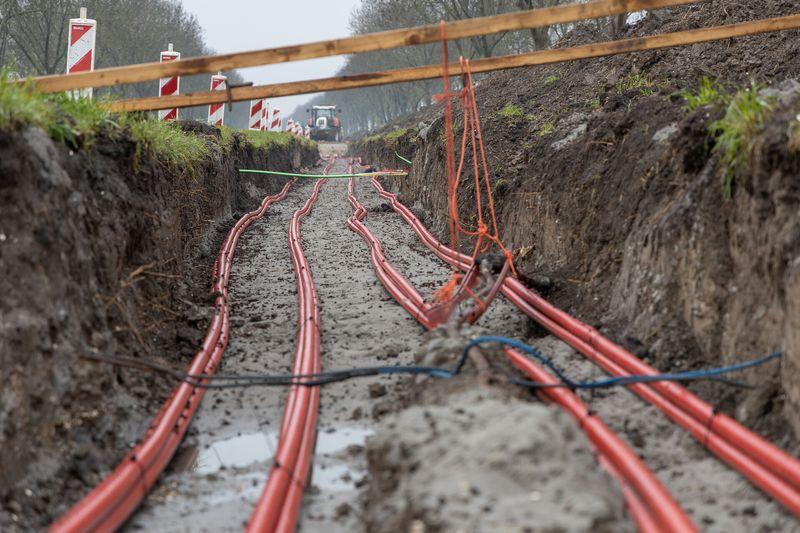
Underground cable burial depth is the distance below ground level at which an electrical cable or cable duct is installed to reduce the risk of mechanical damage and provide suitable protection throughout its operating life. In the UK, the required depth depends on the installation location, cable voltage, ground conditions, applicable standards and electricity network operator requirements.
For LV, 11kV, 33kV and higher-voltage power cables, burial depth is a critical consideration when designing underground electrical networks, installing cables through trenches or ducts, and planning future excavation work.
Although commonly referenced burial depths include 450mm, 600mm and 750mm, these figures must not be treated as universal legal minimums. The appropriate depth depends on the cable system, location and specific installation requirements.
For electrical contractors, utilities, independent connection providers (ICPs), civil engineers and infrastructure developers, understanding UK cable burial guidance helps improve installation safety, protect underground electrical assets and reduce the risk of accidental cable strikes.
Thorne & Derrick supply LV, MV and HV cable ducting, underground cable protection covers and tiles and cable warning tapes for underground electricity distribution and infrastructure installations.
Quick Answer: How Deep Should Electrical Cables Be Buried In The UK?
In the UK, underground electrical cables must be installed at a depth sufficient to avoid damage from reasonably foreseeable disturbance of the ground. There is no single burial depth that applies universally to all LV, MV and HV cable installations.
For utility installations, commonly referenced Street Works UK/NJUG recommendations include:
- LV electricity cables in footways and verges: 450mm recommended minimum.
- LV electricity cables beneath carriageways: 600mm recommended minimum.
- HV electricity cables in footways and verges: recommended depth range beginning at 450mm and extending to 1,200mm.
- HV electricity cables beneath carriageways: recommended depth range of 750–1,200mm.
These figures describe recommended utility installation practice, not universal requirements for every electrical cable. The applicable depth may differ according to the network operator, project specification, voltage, ground conditions and foreseeable risks.
For private electrical installations governed by BS 7671, the designer must determine a suitable burial depth based on the installation conditions and the protection required.
UK Underground Cable Burial Regulations & Guidance
Underground electrical cable installation in the UK is governed by a combination of electrical safety requirements, applicable installation standards, utility industry guidance and project-specific specifications.
It is important to distinguish between a legally binding requirement, a standard applicable to a particular installation and an industry recommendation.
BS 7671: Requirements For Buried Electrical Cables
BS 7671, the UK Requirements for Electrical Installations, addresses the mechanical protection and identification of cables buried in the ground.
Its requirements include installing buried cables at a sufficient depth to avoid damage from reasonably foreseeable disturbance.
BS 7671 also addresses suitable protective cable construction, the use of qualifying conduits or ducts, and route identification using warning tape or cable covers.
Importantly, BS 7671 does not prescribe one minimum burial depth for all electrical cables. The designer must evaluate the circumstances of the installation.
Street Works UK & NJUG Guidance
The National Joint Utilities Group (NJUG), now associated with Street Works UK guidance, provides recommendations for the positioning and identification of underground utility apparatus.
These guidelines include recommended minimum depths for electrical cables in footways, verges and carriageways.
The recommendations help coordinate electricity cables with other underground services, including gas, water and telecommunications infrastructure.
However, utility guidance does not replace the requirements of the relevant electricity network operator or an approved cable installation design.
Electricity Network Operator Requirements
Distribution Network Operators (DNOs), Independent Distribution Network Operators (IDNOs) and other network owners may specify particular installation arrangements for their cable systems.
These can include requirements covering:
- Cable burial depth for LV, 11kV and 33kV networks.
- Cable trench dimensions and separation between circuits.
- Approved cable ducting and protective systems.
- Sand bedding and backfill requirements.
- Warning tapes and cable protection covers.
- Crossings and special locations, including roads and other utilities.
- As-built records and installation documentation.
For utility network connections, the approved network owner specification should be established before excavation or cable installation begins.
Recommended Underground Cable Burial Depths In The UK
The following table summarises commonly referenced Street Works UK/NJUG burial recommendations for underground electricity cables.
These depths relate to utility apparatus in the specified locations and should not be applied automatically to private installations, agricultural land, substations or special engineering projects.
These are recommended utility depths, measured from the finished surface to the crown or highest point of the buried apparatus. The applicable network specification and installation design take precedence. HV ranges must not be interpreted as a universal depth for all 11kV, 33kV or EHV cable systems.
The actual installed depth may need to be greater because of road construction, agricultural activities, loading, ground conditions, other utilities or specific mechanical protection requirements.
Low Voltage Cable Burial Depth
Low voltage cable burial depth depends on whether the cable is being installed as part of a public electricity network, a private electrical installation or another infrastructure system.
For LV utility electricity cables, the commonly referenced Street Works UK/NJUG recommendations are 450mm in footways and verges and 600mm beneath carriageways.
These values provide a useful reference for utility installations but do not automatically determine the correct depth for every site.
How Deep Should Electrical Cables Be Buried In A Garden?
For a domestic garden installation, the required depth depends on foreseeable activities and the level of mechanical protection provided.
Electrical Safety First guidance notes that approximately 500mm may be reasonable for avoiding damage from general gardening activities, although greater depths can be necessary where more substantial ground disturbance is expected.
This is guidance rather than a universal statutory minimum.
Gardens used for deep cultivation, landscaping, construction or other activities involving significant excavation may require different protective arrangements.
Do Armoured Cables Still Need To Be Buried At A Suitable Depth?
Yes. Steel wire armoured cables provide mechanical protection, but armouring does not eliminate the need to consider burial depth, cable identification and foreseeable ground disturbance.
The cable must remain suitable for the installation conditions and be protected against damage that could reasonably be anticipated.
Where unarmoured cables are used, the applicable electrical installation requirements may permit installation within a suitable protective conduit or duct providing equivalent mechanical protection.
11kV Cable Burial Depth: UK Distribution Networks
11kV cables are widely used throughout UK medium voltage distribution networks, including substations, industrial installations, renewable energy projects and utility infrastructure.
The required burial depth is normally established by the relevant electricity network operator or approved project specification.
Although 600mm is frequently referenced in 11kV cable installation discussions, this is not a universal minimum applicable to every location or network.
Higher burial depths may be required beneath carriageways, where excavation activity is foreseeable, at crossings or where ground conditions demand additional protection.
What Affects The Required Depth Of An 11kV Cable?
- Network operator requirements – the applicable DNO, IDNO or asset owner specification.
- Location – footway, carriageway, open land, substation or industrial site.
- Cable construction – direct-buried or ducted cable arrangements.
- Ground conditions – soil characteristics, settlement and anticipated loading.
- Other underground services – proximity and crossings involving different utilities.
- Cable protection – approved warning tapes, protection tiles and duct systems.
- Thermal performance – the effect of surrounding ground and installation arrangement on cable current rating.
For cable installations in ducts, Thorne & Derrick supply 11kV power cable ducting and associated underground cable protection products.
33kV, 66kV & 132kV Cable Burial Depth
33kV, 66kV and 132kV cable installations are normally designed as part of utility, transmission, renewable energy or major infrastructure projects.
These installations can involve substantial cable dimensions, specialist joint bays, thermal design requirements, multiple single-core cables and complex cable route crossings.
Consequently, the appropriate burial depth must be determined through the relevant engineering design rather than using a generic voltage-to-depth conversion.
33kV Cable Burial Depth
For 33kV distribution systems, the installation depth may depend on the network owner specification, cable route, trench design and the required mechanical protection.
Projects may require special arrangements at cable joint bays, utility crossings, substations and areas exposed to traffic or future excavation.
Approved protective covers, including suitable 33kV cable protection covers, can form part of the specified underground cable protection system.
66kV & 132kV Cable Burial Depth
For 66kV, 132kV and other EHV systems, burial depth is typically considered alongside thermal performance, cable spacing, cable bonding arrangements, joint bay construction and future access requirements.
Greater depth does not automatically mean a better electrical installation. Excessive burial depth can affect heat dissipation and may influence cable current-carrying capacity.
The complete installation arrangement should therefore be assessed by suitably qualified cable system designers.
Cable Burial Depth In Different Installation Locations
The location of an underground electrical cable is one of the main factors influencing burial depth and protective measures.
Footways & Verges
Utility cable routes in footways and verges are commonly designed using recognised positioning guidance, taking account of existing buried services and access requirements.
For LV electricity cables, Street Works UK/NJUG guidance recommends a minimum depth of 450mm.
Roads & Carriageways
Carriageways introduce additional considerations because of traffic loading, road construction and future highway maintenance.
Utility guidance recommends 600mm for LV electricity cables and a 750–1,200mm range for HV electricity cables beneath carriageways.
Special crossings or highway authority requirements may call for alternative arrangements.
Agricultural Land
Buried electrical cables crossing agricultural land require particular consideration because ploughing, cultivation, drainage works and other agricultural activities can disturb the ground to significant depths.
Greater burial depths or additional engineered protection may be required, depending on the agricultural activity and relevant utility or landowner agreement.
No single depth should be assumed suitable for every agricultural application.
Industrial Sites & Substations
Industrial sites and substations may contain concentrated underground cable routes, cable trenches, cable ducts, joint bays and connections to electrical plant.
Burial depth must be coordinated with other services, equipment foundations, ground loading and planned maintenance activities.
Solar Farms, Wind Farms & Battery Storage Sites
Renewable energy installations frequently require buried LV and MV cables connecting inverters, transformers, substations and grid connection equipment.
Route depth and protection must account for vehicle movements, agricultural activities where applicable, site drainage, soil conditions and the relevant electrical design.
How Is Underground Cable Burial Depth Measured?
In recognised utility positioning guidance, burial depth is commonly measured vertically from the finished ground or road surface to the crown of the buried apparatus — its highest point.
For a cable installed directly in the ground, this generally means the top of the cable. For a cable within a duct, the measurement may refer to the top of the duct where the applicable specification defines depth to the buried duct apparatus.
These measurements should not be confused with the total excavation depth.
Burial Depth vs Trench Depth
Cable burial depth describes the cover above the installed cable or apparatus.
Cable trench depth is the total depth of the excavation, which may also accommodate cable diameter, bedding and other required installation layers.
For example, a trench containing a large power cable and a specified bedding layer may need to be deeper than the required cover above the cable.
The approved trench cross-section should identify all relevant dimensions, including the measurement datum.
Direct Burial vs Underground Cable Duct Installation
Underground electrical cables may be installed directly in the ground or within protective cable ducts, depending on the cable design and installation requirements.
Both methods must provide suitable protection for the anticipated service conditions.
Direct-Buried Electrical Cables
In direct-buried installations, a cable is installed within a prepared trench using an approved bedding, backfill and protection arrangement.
The cable construction must be suitable for direct burial, and the installation must satisfy relevant mechanical protection and identification requirements.
Direct burial may be used for suitable LV, MV and HV cable systems where the cable and installation specification permit it.
Underground Cable Ducting
Cable ducting provides a protected route through which cables can be installed, either during construction or as part of a later cable pulling operation.
Ducts can provide mechanical protection, improve route organisation and support cable replacement or future installation where the duct arrangement is suitable.
However, installing a cable within a duct does not automatically eliminate the need for adequate burial depth.
The duct must meet the applicable mechanical performance requirements and be suitable for the surrounding ground conditions.
BS EN 61386-24 Underground Ducting
BS EN 61386-24 addresses the performance requirements for conduit systems buried underground.
Underground conduits and ducts may be classified according to their resistance to impact and compression.
Suitable Type N450 and N750 ducting systems can be used for buried applications where their performance meets the requirements of the installation.
The duct classification must not be confused with the depth at which it must be installed. For example, a Type N750 duct designation does not mean that every such duct must be buried at 750mm.
For more information, read our What Is Cable Ducting? technical guide or explore the LV, MV and HV cable duct range.
Cable Protection Covers, Tiles & Underground Warning Tapes
Burial depth is only one part of a suitable underground cable protection strategy.
Warning tapes, cable protection covers, protective ducting and route marking can help identify buried electrical infrastructure and reduce the risk of accidental damage.
Underground Cable Warning Tapes
Cable warning tapes are installed above buried electrical cables or ducts to provide a visual warning during subsequent excavation.
They may carry messages such as CAUTION ELECTRIC CABLE BELOW and are positioned according to the approved installation requirements.
Warning tape provides identification rather than significant physical resistance against mechanical excavation.
See our range of underground cable warning tapes.
Cable Protection Tiles & Covers
Protective cable covers are installed above electrical cable routes to provide a visible indication of buried services and additional mechanical protection.
Depending on the system, these may include heavy-duty plastic cable covers, protection tiles or approved concrete covers.
Suitable products are selected according to the required protection performance, cable voltage, network operator specification and installation conditions.
Tapetile & Stokbord Cable Protection
Tapetile cable protection products can provide warning and protection for suitable underground utility cable applications.
Stokbord cable covers are used in selected higher-voltage applications where robust protective covers are specified.
For example, some UK utility specifications distinguish between warning tapes for LV cable systems and protective covers for certain higher-voltage cable routes.
The required cover type and its position must follow the approved installation specification rather than relying on voltage alone.
Explore the full range of cable protection covers, tiles and tapes.
Cable Trench Design & Installation Considerations
Correct underground cable installation requires more than excavating a trench to a specified depth.
The trench design must accommodate the cable construction, bedding, mechanical protection, thermal requirements, other buried utilities and the intended installation method.
Cable Bedding & Backfill
Appropriate bedding and backfill help support the cable and reduce the risk of mechanical damage from unsuitable surrounding materials.
The required materials and layer dimensions should be identified in the project specification.
For power cables, the thermal characteristics of bedding and backfill can also influence cable current-carrying capacity.
Cable Spacing & Thermal Performance
Underground power cables generate heat during normal electrical operation.
Burial depth, ground thermal resistivity, cable spacing and installation arrangement all influence heat dissipation.
For MV and HV cable circuits, these factors should be considered as part of the approved cable system design and rating calculations.
Ground Conditions & External Loading
Different soil and ground conditions may require different protection or installation arrangements.
Ground movement, settlement, heavy vehicle loading, agricultural cultivation and future construction activity can all influence cable route design.
Cable Crossings & Other Buried Utilities
Where electrical cables cross or run alongside gas, water, telecommunications or other services, the design must account for the applicable utility requirements and safe working arrangements.
Burial depth cannot be considered independently of separation, protection and future access.
Duct Sealing & Water Ingress
Underground cable ducts may become exposed to groundwater, sediment or other environmental contaminants.
Suitable cable ducting and associated sealing systems can help protect cable entries and limit unwanted migration of water, gas or debris where specified.
The sealing arrangement must be suitable for the duct dimensions, cables, environmental conditions and required performance.
Why Existing Underground Cable Depths Must Never Be Assumed
Published cable burial guidance describes recommended installation practice. It does not guarantee the depth of existing cables.
The HSE’s HSG47 – Avoiding Danger From Underground Services guidance explains that underground electricity cables can be found at varying depths, including locations shallower than normally expected.
Changes to ground levels, previous construction activity, alterations to cable routes and incomplete installation records can all affect the accuracy of assumed cable positions.
Consequently, a cable that was originally installed at the recommended depth may not remain at that depth relative to the current surface.
How Should Existing Buried Cables Be Located?
Before excavation, the work should be planned using relevant service plans, suitable cable locating equipment and recognised safe excavation procedures.
HSE guidance emphasises:
- Planning the work – identifying potential buried services and relevant asset owners.
- Obtaining service plans – reviewing available information before excavation.
- Using locating devices – tracing and marking possible cable routes using suitable equipment and trained personnel.
- Safe excavation – using appropriate excavation methods to locate and expose services.
- Repeated checks – recognising that plans and locating equipment have limitations.
Read our existing HSG47 underground services safety guide for further information about working near buried utilities.
Common Underground Cable Burial & Installation Mistakes
Incorrect assumptions about burial depth and cable protection can create avoidable safety risks and compromise underground electrical infrastructure.
Common mistakes include:
- Treating 450mm or 600mm as a universal legal minimum – actual requirements depend on the installation and applicable guidance.
- Using voltage alone to select burial depth – ground conditions, location and approved network requirements must also be considered.
- Ignoring the applicable DNO specification – utility network installations may have particular approved trench arrangements.
- Confusing trench depth with cable cover depth – the two measurements are not necessarily the same.
- Assuming ducting removes the need for suitable burial depth – duct mechanical performance and installed location must still be assessed.
- Omitting cable warning systems – routes may require warning tapes, protective covers or other identification measures.
- Ignoring thermal performance – cable burial conditions can affect current-carrying capacity.
- Failing to record installed cable positions – inaccurate or incomplete records increase future excavation risks.
- Assuming existing cables are at their original specified depth – actual depths may differ.
Correct cable installation requires coordinated electrical, civil engineering and utility design rather than reliance on a single standard trench depth.
Underground Cable Burial Depth: Installation Checklist
Before constructing an underground cable route, contractors and engineers should confirm the applicable installation requirements and site conditions.
Underground Cable Protection Products From Thorne & Derrick
Thorne & Derrick supply LV, MV and HV cable protection, ducting and installation equipment for underground electricity distribution networks, substations, industrial facilities, renewables and infrastructure projects.
Our range supports the installation, protection, identification and maintenance of underground electrical cable systems.
- LV, MV & HV Cable Ducting – underground cable protection ducts for suitable LV, 11kV, 33kV and higher-voltage applications.
- Cable Protection Covers & Tiles – Tapetile, Stokbord and other cable protection systems for underground electrical infrastructure.
- Underground Cable Warning Tapes – visual warning and identification tapes for buried electrical cables and utility services.
- Concrete Cable Covers – physical protection and identification for suitable buried electricity cable systems.
- Concrete Cable Indicator Posts – marker posts for identifying underground utility routes and associated infrastructure.
- Cable Marker Blocks – concrete identification products for buried utility services and cable routes.
- Cable Duct Accessories – associated duct sealing, cable pulling and protection products for underground installations.
For projects requiring specific cable duct sizes, utility approvals or protection arrangements, the correct products should be selected according to the approved cable route design and asset owner requirements.
Underground Cable Burial Depth FAQs
Q: How deep should electrical cables be buried in the UK?
A: There is no universal minimum burial depth for every electrical cable installation in the UK. BS 7671 requires sufficient depth to avoid reasonably foreseeable damage. Utility guidance recommends 450mm for LV cables in footways and verges and 600mm beneath carriageways, but the applicable installation requirements must be confirmed.
Q: What is the minimum burial depth for an LV cable?
A: Street Works UK/NJUG guidance recommends 450mm for LV utility cables in footways and verges and 600mm beneath carriageways. These are recommended utility depths, not a single statutory minimum applicable to every LV installation.
Q: How deep should an 11kV cable be buried?
A: The required burial depth for an 11kV cable depends on the network operator specification, installation location and approved cable route design. There is no universal depth applicable to every 11kV installation. Depth, cable protection and surrounding ground conditions must be considered together.
Q: What is the burial depth for a 33kV cable?
A: 33kV cable burial depth is usually determined by the relevant utility or project engineering specification. It may vary according to ground conditions, cable construction, protection requirements, route location and thermal design. A generic 33kV depth should not be applied without checking these requirements.
Q: Does BS 7671 specify a minimum cable burial depth?
A: BS 7671 does not provide one universal numerical minimum burial depth for all installations. Buried cables must be installed at a sufficient depth to avoid damage from reasonably foreseeable disturbance and must satisfy the applicable mechanical protection and identification requirements.
Q: Can electrical cables be buried directly in the ground?
A: Yes, where the cable is suitable for direct burial and the installation complies with applicable electrical, mechanical and environmental requirements. Appropriate bedding, depth, protection and cable identification may be required. Other installations use suitable underground cable ducts.
Q: Is cable warning tape required above buried electrical cables?
A: Applicable electrical installation requirements include identifying buried cable routes using suitable warning tapes or cable covers. The correct type and position depend on the installation standard, utility specification and required protection arrangement.
Q: Does cable ducting reduce the required burial depth?
A: Suitable ducting can provide mechanical protection, but it does not automatically justify a reduced burial depth. The installation must satisfy the applicable electrical requirements and account for the duct classification, ground conditions and foreseeable mechanical disturbance.
Q: How is underground cable burial depth measured?
A: Utility guidance commonly measures depth vertically from the finished surface to the crown or highest point of the buried apparatus. The relevant cable or duct installation specification should confirm the exact measurement reference.
Q: Can existing underground cables be shallower than the recommended depth?
A: Yes. Existing cables may be shallower than expected because of historic installation practices, changes in ground level or alterations to underground infrastructure. HSE guidance states that cable depth must never be assumed during excavation. Safe locating and excavation procedures are essential.
Conclusion
Underground cable burial depth is an important consideration when installing electrical cables beneath footways, carriageways, agricultural land, substations, industrial sites and infrastructure projects.
In the UK, there is no universal statutory minimum depth that applies to every buried power cable. The correct installation depth depends on BS 7671 requirements, Street Works UK/NJUG guidance, DNO specifications, site conditions and the approved engineering design.
For LV utility cables, commonly referenced recommended depths include 450mm in footways and verges and 600mm beneath carriageways. For 11kV, 33kV and higher-voltage systems, the applicable depth must be established using the relevant network and project requirements.
Appropriate cable protection is equally important. Approved ducting, warning tapes, protective covers, bedding and accurate route records all help reduce the risk of damage to underground electrical infrastructure.
Thorne & Derrick supply LV, MV and HV cable ducting, underground cable protection covers, warning tapes and associated installation products for electrical utilities, contractors, renewable energy installations and infrastructure projects throughout the UK and internationally.