Why Do Underground Cable Ducts Become Blocked? Causes, Prevention & Testing
Published 02 Nov 2026
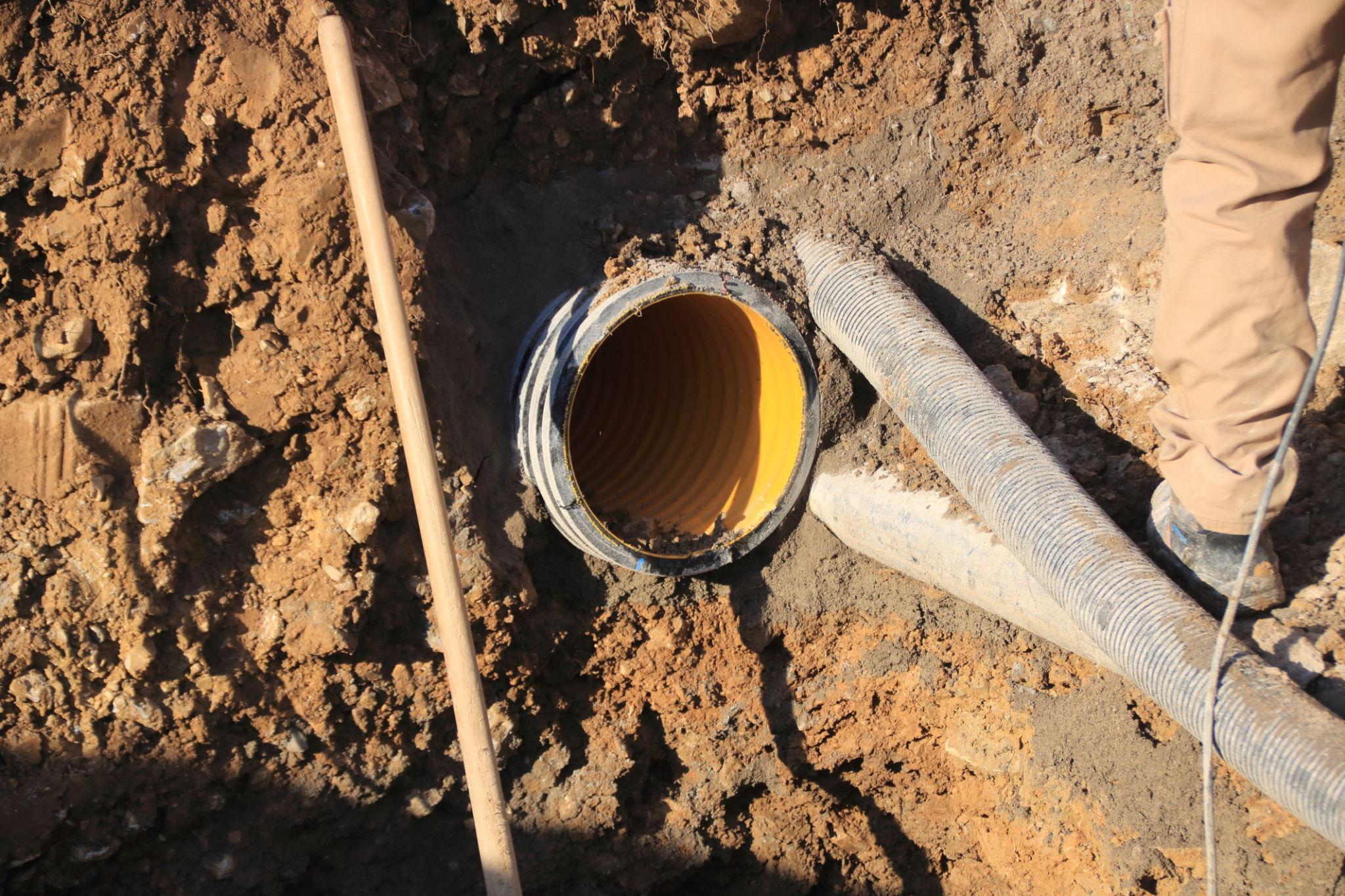 Underground cable ducts become blocked when soil, sand, silt, construction debris or other materials obstruct the cable route, or when the duct itself becomes damaged, compressed or displaced. These obstructions can prevent cable installation, increase pulling tension and potentially damage the outer sheath of LV, MV and HV power cables.
Cable ducts are widely used to protect and route electrical cables through underground infrastructure, including substations, industrial sites, utilities, renewable energy projects, roads and distribution networks. However, a duct that appears suitable from the surface may contain hidden restrictions that are only discovered when a cable pulling operation begins.
Common causes of blocked cable ducts include construction debris entering open duct ends, sediment accumulating following water ingress, collapsed or distorted duct sections, incorrectly aligned duct joints and damage caused by ground movement or external loading.
Identifying the cause is important because not every duct blockage can be removed by cleaning. While brushes and foam pigs may clear loose material, physically damaged ducts may need to be repaired or replaced before cables can be safely installed.
This technical guide explains why underground cable ducts become blocked, how cable duct cleaning and proving are carried out, and what engineers and contractors should consider before installing cables into an underground duct route.
Thorne & Derrick supply cable duct cleaning brushes, steel and polypropylene duct proving mandrels, foam pigs and duct rods for preparing and checking cable routes before installation.
Quick Answer: Why Do Underground Cable Ducts Become Blocked?
Underground cable ducts typically become blocked because of loose debris, waterborne sediment or physical damage to the duct structure. Sand, stones, mud and construction materials can accumulate inside an open duct, while ground settlement, inadequate installation support or external loading can cause the duct to deform.
Other potential causes include misaligned duct joints, excessively tight bends, damaged couplers and foreign objects entering the route during construction.
The solution depends on the underlying problem. Loose material may be removable using suitable duct cleaning equipment. A collapsed or significantly displaced duct normally requires physical investigation and an approved repair or replacement arrangement.
What Causes Underground Cable Ducts To Become Blocked?
Underground cable ducts are designed to provide a continuous route for electrical cables, but their internal condition can be affected during installation and throughout service.
A blockage may develop before the cable has been installed or after a duct route has remained unused for an extended period.
Importantly, the term duct blockage can describe two different problems: material physically obstructing an otherwise intact duct, or a restriction caused by damage to the duct itself.
The Most Common Causes Of Blocked Cable Ducts
- Construction debris – stones, sand, concrete residue or discarded material entering an open duct.
- Mud and silt – sediment collecting after water enters the duct.
- Collapsed duct sections – physical deformation reducing or closing the internal passage.
- Misaligned duct joints – displaced or incorrectly connected sections creating an internal obstruction.
- Sharp bends or kinks – local restrictions affecting the passage of pulling equipment or cables.
- Ground settlement – movement affecting duct alignment and integrity.
- External loading – pressure from traffic, construction equipment or unsuitable backfill.
- Root intrusion – roots entering through damaged duct joints or openings in certain ground conditions.
- Foreign objects – materials inadvertently left inside the duct during construction or maintenance.
The correct response should always be based on the identified restriction rather than simply applying greater pulling force.
Construction Debris, Mud & Sediment Inside Cable Ducts
Loose construction material is one of the more straightforward causes of underground cable duct obstruction.
During trench construction, duct laying, backfilling or subsequent site works, soil and other materials may enter ducts that have not been properly capped or protected.
How Does Debris Enter A Cable Duct?
Common entry points include:
- Unsealed duct ends during construction.
- Open ducts in cable pits and joint bays.
- Damaged or incorrectly assembled couplers.
- Broken duct sections exposed to surrounding soil.
- Temporary openings left unprotected during staged installations.
Small amounts of material may initially appear insignificant. However, debris can collect at low points, bends and joints, eventually restricting the passage available for the cable.
Can Construction Debris Damage A Power Cable?
Yes. Stones, sharp objects and other foreign materials can damage cable sheaths if a cable is pulled through the affected duct.
Loose debris may also increase resistance during pulling, particularly where it becomes trapped between the cable and duct wall.
Before cable installation begins, the duct should be inspected and prepared using the appropriate cleaning and proving methods.
Thorne & Derrick supply duct cleaning brushes and foam pigs for suitable duct and pipe cleaning applications.
Collapsed, Crushed & Misaligned Underground Cable Ducts
Not all cable duct blockages are caused by loose material. A duct can also become physically restricted when its shape or alignment changes.
Duct deformation may occur because of ground settlement, excessive external loading, inadequate bedding, unsuitable backfill or damage during construction.
Collapsed Or Crushed Cable Ducts
A collapsed cable duct may have a reduced internal diameter, an oval-shaped cross-section or a section that has closed sufficiently to prevent cable passage.
Even where a duct remains partially open, its remaining clearance may be insufficient for the proposed cable and pulling arrangement.
Cleaning equipment cannot restore the structural capacity of a crushed duct.
Misaligned Duct Joints
Underground duct routes often contain multiple duct lengths connected using couplers or other approved joining arrangements.
If sections become displaced or are assembled incorrectly, the joint may create an internal edge or step.
This can obstruct mandrels, duct rods or pulling equipment and may create a snagging point for the cable sheath.
Tight Bends & Kinked Duct Routes
A cable duct can also become unsuitable because of its route geometry.
An excessively tight bend may obstruct the proving device or prevent installation of a cable with the required minimum bending radius.
The permitted bend radius must be checked against the cable construction and planned pulling method.
A successful visual inspection of the duct ends does not confirm the condition of the complete route. Restrictions may be located beneath roads, structures or other inaccessible sections.
Water Ingress & Long-Term Cable Duct Deterioration
Water entering underground cable ducts can carry sand, fine soil particles and other material into the route.
Where water movement slows, sediment may settle and accumulate, particularly at low points or changes in direction.
Over time, this material can reduce the usable internal space and contribute to cable installation problems.
Does Water Inside A Duct Always Mean It Is Blocked?
No. The presence of water does not automatically mean a cable duct is physically blocked or structurally defective.
Some buried duct systems may become wet because of their environment, while others are designed or sealed to prevent particular forms of ingress.
The important questions are whether the duct remains suitable for the intended cable installation, whether sediment has accumulated and whether the required environmental protection has been maintained.
Why Cable Duct Sealing Matters
Suitable cable duct sealing systems can help limit unwanted entry of water, dirt and other contaminants at specified openings or penetrations.
Temporary duct plugs can also protect unused routes during construction or before cables are installed.
Permanent sealing arrangements may be required where ducts enter substations, switchgear buildings, basements and other electrical infrastructure.
Thorne & Derrick supply cable duct seals and sealing systems for suitable LV, MV and HV cable installations.
The selected seal must be compatible with the duct, cable arrangement, expected environmental conditions and approved project specification.
How Do Engineers Identify A Blocked Underground Cable Duct?
Blockages may be discovered during route inspection, duct rodding, cleaning, mandrel proving or cable installation.
The first step is to establish whether the restriction is caused by removable debris, a localised obstruction or structural damage to the duct.
Common Signs Of A Blocked Cable Duct
- A duct rod cannot pass through the expected route.
- A proving mandrel stops before reaching the receiving end.
- A cleaning brush collects significant debris.
- A foam pig becomes obstructed or returns contaminated.
- Unexpected resistance occurs during approved testing.
- Inspection reveals damaged duct sections or poorly aligned joints.
- Water, soil or foreign material is found inside a duct intended to be clear.
These symptoms do not necessarily identify the precise root cause. Further inspection may be necessary.
Can A Duct Rod Locate A Blockage?
Duct rods can be used to establish a route and introduce draw ropes or other suitable equipment.
If a rod encounters an obstruction, its progress may help indicate that the duct is restricted.
However, the distance at which a rod stops does not always identify the exact location or nature of the defect, particularly on routes containing bends.
Where necessary, specialist inspection or location methods may be used to investigate the affected section.
Explore our range of cable duct rods and conduit rods.
When Is A Duct Camera Useful?
A suitable duct inspection camera may help identify damaged couplers, deformation, root intrusion, deposits or other restrictions.
Camera inspection may be useful where conventional proving repeatedly fails or the location and cause of the obstruction remain uncertain.
Assessment should be carried out using equipment and procedures appropriate to the duct size, route and site conditions.
How Are Underground Cable Ducts Cleaned Before Cable Installation?
Cable duct cleaning removes suitable loose material from the duct route before cables are installed.
Cleaning methods depend on duct construction, internal diameter, length, condition and the type of contamination present.
Duct Cleaning Brushes
Duct brushes are cylindrical cleaning tools designed to remove dirt and other loose debris from the inside of suitable cable ducts.
They may be pulled through a duct using an approved draw rope or introduced with suitable duct rodding equipment.
The brush diameter and construction must be compatible with the duct and required cleaning method.
Thorne & Derrick supply duct cleaning brushes for various duct sizes and installations.
Foam Pigs
Foam pigs are flexible cleaning devices used in suitable ducts and pipes to move or remove loose contaminants and fluids.
Depending on the product and application, they may be pushed through using an approved pressure system or pulled mechanically.
Foam pig selection must account for the duct’s internal diameter, bends, condition and cleaning requirements.
See our range of foam pigs for cleaning ducts and pipes.
Can Cleaning Remove Every Type Of Blockage?
No. Duct cleaning is intended for compatible removable contamination. It cannot correct serious crushing, displaced joints, structural collapse or inappropriate route geometry.
If cleaning equipment repeatedly stops at the same position, or if the duct appears physically damaged, the route should be assessed before further work proceeds.
Forcing cleaning equipment through an unidentified restriction may damage the equipment or worsen the defect.
What Is Cable Duct Proving?
Cable duct proving is the process of checking that a duct provides the required internal clearance for a specified installation.
A proving device, commonly called a mandrel, is passed through the duct using an approved method.
If the correctly specified mandrel passes through the complete section in accordance with the required test procedure, the duct has satisfied that particular clearance check.
How Does A Duct Proving Mandrel Work?
Mandrels are manufactured in different dimensions and materials, including steel and polypropylene.
The proving device is selected according to the duct’s internal diameter, the relevant project specification and the required test method.
A restriction may prevent the mandrel from passing through the complete route.
Potential causes include:
- Collapsed or oval-shaped duct sections.
- Misaligned couplers or damaged joints.
- Obstructions caused by debris or foreign objects.
- Excessively tight bends for the proving device.
- Internal projections reducing usable clearance.
What Size Mandrel Is Needed For Duct Proving?
There is no universal mandrel size or single percentage allowance suitable for every duct installation.
Different approved specifications define different mandrel diameters, lengths and testing procedures.
For example, some installations specify a mandrel diameter as a percentage of the duct’s internal bore, while others define a fixed diameter allowance.
The required mandrel must be selected using the actual project specification, not an assumed rule of thumb.
Thorne & Derrick supply steel and polypropylene duct proving mandrels in a range of sizes.
Does Passing A Mandrel Mean The Duct Is Ready For Cable Pulling?
A successful proving test demonstrates that the duct has satisfied the specified passage or clearance check.
It does not automatically confirm that the duct is free of every sharp edge, correctly sized for the cable or suitable for the complete installation.
Other considerations may include:
- Cable outside diameter and required duct clearance.
- Minimum cable bending radius.
- Cable pulling tension and sidewall pressure.
- Condition of the duct internal surface.
- Compatibility with joints, couplers and duct entries.
- Additional approved inspection or acceptance tests.
The final assessment must therefore consider the complete cable installation requirements.
Duct Cleaning vs Duct Proving vs Cable Pulling
Although closely related, duct cleaning, duct proving and cable pulling serve different purposes.
The sequence and number of tests should follow the approved installation procedure. Some specifications require cleaning and proving at different stages, including after duct construction and immediately before cable installation.
What Happens If An Underground Cable Duct Fails Proving?
A failed proving test indicates that the duct has not satisfied the relevant clearance requirement.
The cause should be investigated before the cable pulling operation proceeds.
Step 1: Stop & Assess The Restriction
Do not assume that applying additional pulling force will overcome the problem safely.
Establish the test conditions, location of the obstruction and whether the correct proving equipment has been used.
Step 2: Determine Whether The Blockage Is Removable
If the restriction consists of loose debris, an approved cleaning operation may be suitable.
Where the obstruction appears structural, a more detailed inspection may be required.
Step 3: Investigate Structural Defects
Collapsed ducts, misaligned joints and other physical damage may require excavation, replacement or another approved engineering repair.
Cleaning tools should not be used as a substitute for repairing structural defects.
Step 4: Repeat The Required Tests
After cleaning or rectification, the duct should be re-inspected and re-proved according to the applicable project requirements.
Results should be recorded where required for quality assurance and handover.
How Can Blocked Cable Ducts Damage LV, MV & HV Cables?
A blocked or restricted duct can create mechanical risks when an electrical cable is pulled through the route.
The severity depends on the cable construction, obstruction, applied force and installation method.
Outer Cable Sheath Damage
Sharp debris, internal projections and damaged couplers may score, cut or tear the cable’s protective outer sheath.
Damage to the sheath can compromise environmental protection and may require assessment or repair before energisation.
Excessive Pulling Tension
A restriction can increase the force required to move the cable through the duct.
Where pulling tension becomes excessive, mechanical stress may affect the cable or its pulling attachment.
Cable Bending & Sidewall Pressure
Distorted duct routes and inappropriate bends can affect the curvature of the cable during installation.
At bends, pulling tension can also generate sidewall pressure against the duct wall.
These conditions must be assessed alongside the cable’s permitted mechanical limits.
Cable Installation Delays
A blocked duct can interrupt work, require further investigation and create the need for cleaning or civil engineering repairs.
For major 11kV, 33kV and HV cable installations, discovering a duct defect during the cable pull can be substantially more disruptive than identifying it during route preparation.
For a wider explanation of cable installation methods and associated equipment, read Cable Pulling & Laying Into Ducts.
How Can Underground Cable Duct Blockages Be Prevented?
Preventing duct blockages begins during route design and duct installation, rather than immediately before the cable pull.
Correct Duct Installation
Ducts should be installed using the approved bedding, alignment, jointing, backfill and protective arrangements.
Correct installation helps limit deformation, movement and damage that could later restrict the internal passage.
Protect Open Duct Ends
Unused or temporarily exposed duct openings should be protected using suitable caps or plugs.
This helps reduce the entry of loose soil, stones, construction debris and other foreign materials.
Inspect & Prove Ducts At The Required Stages
Where specified, ducts should be checked during construction, after installation and before cable pulling.
Early detection of obstructions can help avoid more disruptive rectification later in the project.
Use Appropriate Duct Sealing
Approved sealing systems can limit unwanted migration of water, sediment and other contaminants at specified locations.
The sealing method must be appropriate for the duct and whether cables are installed or the route remains empty.
Maintain Accurate Route Records
Recording duct routes, locations, joints, spare ducts and relevant test results helps future installation and maintenance work.
Records can also assist investigation where a previously installed duct becomes obstructed.
Underground Cable Duct Inspection Checklist
Before installing LV, MV or HV cables into an underground duct, contractors should confirm the duct route is suitable for the proposed installation.
Cable Duct Cleaning, Proving & Installation Equipment From Thorne & Derrick
Thorne & Derrick supply a specialist range of duct cleaning equipment, cable duct proving tools and cable pulling accessories used by electrical contractors, utilities, industrial operators and infrastructure teams.
These products support duct preparation, inspection and installation of LV, MV and HV power cables.
- Duct Cleaning Brushes – cylindrical brushes for removing suitable loose dirt and debris from cable ducts.
- Steel & Polypropylene Duct Proving Mandrels – devices for checking internal duct clearance using the specified proving method.
- Foam Pigs – flexible cleaning products for suitable duct and pipe applications.
- Duct Rods & Conduit Rods – tools used for rodding ducts and introducing draw ropes.
- LV, MV & HV Cable Ducting – protective underground duct systems for suitable power distribution and infrastructure applications.
- Cable Duct Seals – sealing systems for approved underground duct entries, penetrations and electrical installations.
- Cable Pulling Equipment For Ducts – associated equipment used for cable installation into prepared duct routes.
Selection should be based on duct dimensions, material, condition, route geometry, installation requirements and the approved cleaning or proving method.
Blocked Underground Cable Ducts FAQs
Q: What causes an underground cable duct to become blocked?
A: Common causes include soil, sand, mud, silt, construction debris, damaged joints, duct deformation and collapsed sections. A blockage may also occur because of excessive bends or internal restrictions.
Q: How do you identify a blocked cable duct?
A: A blockage may be identified when duct rods, brushes or proving mandrels cannot pass through the expected route. Further inspection may be required to determine whether the restriction is caused by debris or physical duct damage.
Q: Can a blocked underground cable duct be cleaned?
A: Many obstructions caused by loose dirt or debris can be removed using suitable duct cleaning methods. However, crushed, collapsed or misaligned ducts may require physical repair or replacement.
Q: What is cable duct proving?
A: Cable duct proving is the process of checking that a duct provides the required passage clearance. A specified mandrel or other approved proving device is passed through the duct to check for restrictions.
Q: What size mandrel is used for cable duct proving?
A: The mandrel size depends on the internal duct diameter and applicable project specification. Different specifications use different diameter allowances and lengths, so there is no universal mandrel size suitable for every cable duct.
Q: What is the difference between duct cleaning and duct proving?
A: Duct cleaning removes suitable loose material. Duct proving checks that the duct meets a specified internal clearance requirement. Both may be required before cable installation, depending on the approved project procedure.
Q: Can water cause a cable duct blockage?
A: Water can carry soil and sediment into a duct, where material may accumulate and restrict the route. However, water inside a duct does not automatically mean the duct is blocked or damaged.
Q: What should happen if a duct mandrel gets stuck?
A: The proving operation should be stopped and the cause investigated. The restriction may be caused by loose debris, an incorrect mandrel, a damaged joint or duct deformation. Approved rectification and repeat testing may be necessary before cable installation.
Q: Can blocked ducts damage 11kV and 33kV cables?
A: Yes. A restriction can increase pulling tension or expose a cable to sharp edges and other mechanical hazards. Depending on the conditions, this may damage the outer sheath or other cable components. Approved duct inspection and installation procedures help reduce these risks.
Q: How can underground cable duct blockages be prevented?
A: Prevention measures include correct duct bedding and installation, proper joint alignment, protection of open duct ends, suitable cleaning and proving, approved sealing and accurate route records.
Conclusion
Underground cable duct blockages can develop because of construction debris, waterborne sediment, damaged duct joints, ground movement or structural deformation.
Loose obstructions may be removable using suitable brushes, foam pigs or other approved cleaning methods. However, collapsed, crushed or misaligned ducts may require physical investigation and repair before cable installation proceeds.
Cable duct proving provides an important check of the route’s internal clearance, but the complete cable installation must also account for cable diameter, bending radius, pulling forces and the condition of the duct.
For LV, 11kV, 33kV and higher-voltage cable projects, correct route preparation helps reduce the risk of cable sheath damage, unplanned delays and potentially costly remedial works.
Thorne & Derrick supply duct cleaning brushes, foam pigs, duct proving mandrels, duct rods, cable ducting and associated cable pulling equipment for electrical utilities, infrastructure contractors, renewable energy projects and industrial installations.
Contact our technical sales team with your duct diameter, route details and installation requirements to discuss suitable duct preparation and proving equipment.