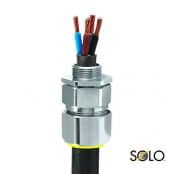
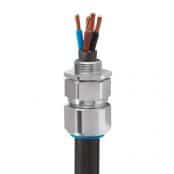
Cable Glands Explained | Types & Selection
Published 23 Jul 2026
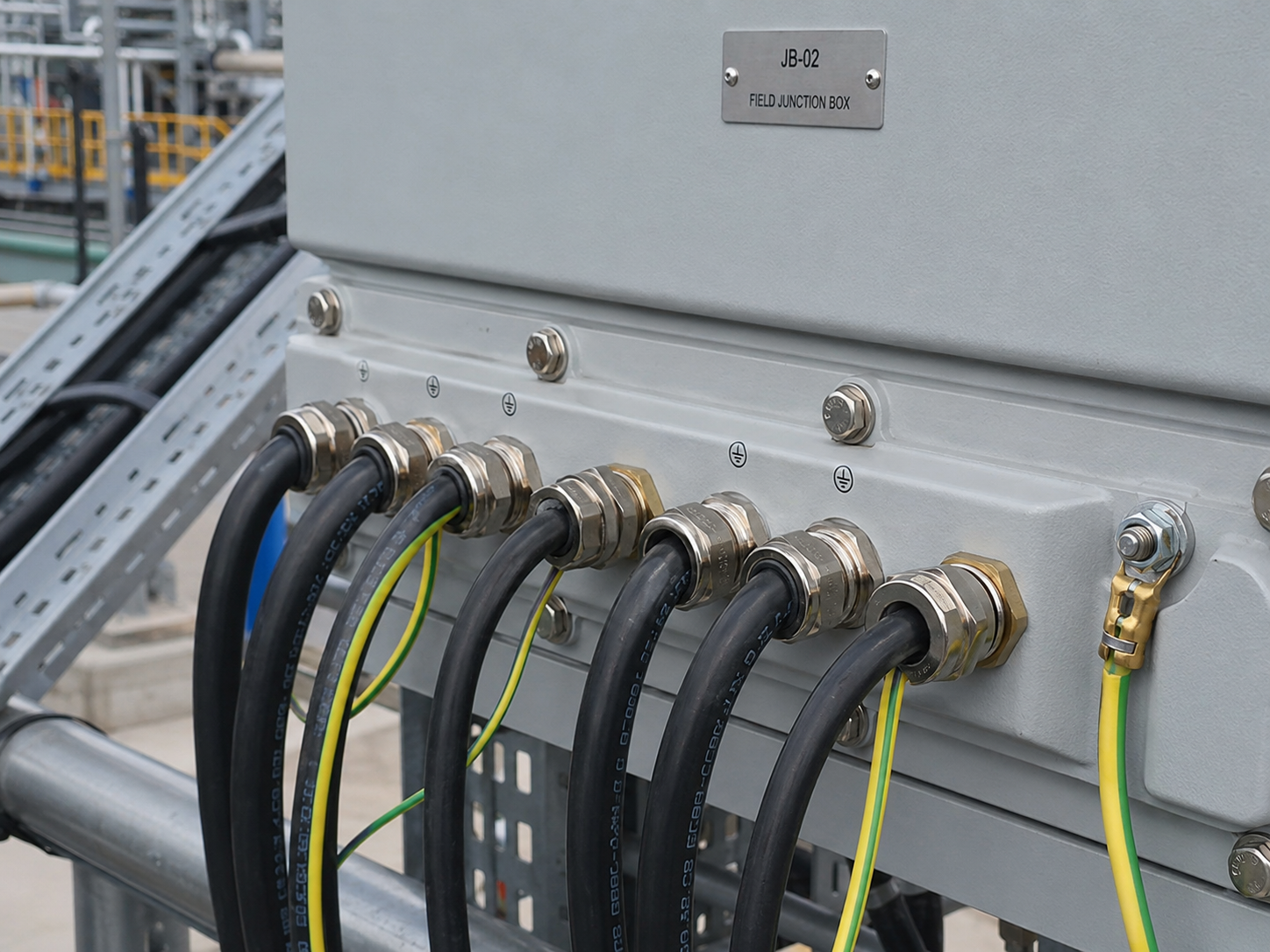
Cable glands are mechanical cable entry devices used to secure, seal and protect cables where they enter electrical equipment, enclosures, junction boxes, control panels, motors, switchgear, lighting, instrumentation and hazardous area equipment.
In simple terms, a cable gland provides a controlled entry point for the cable. Depending on the cable type and application, the gland may provide cable retention, environmental sealing, armour clamping, earth continuity, strain relief, ingress protection and explosion protection certification.
Cable glands are used across LV, MV and HV electrical installations, including industrial plants, utilities, substations, process facilities, offshore platforms, petrochemical sites, rail infrastructure, renewable energy projects, commercial buildings and hazardous area installations.
Thorne & Derrick supply cable glands for industrial, hazardous area and high voltage applications, including CMP cable glands, Prysmian glands, ATEX cable glands, armoured cable glands, unarmoured cable glands, brass glands, stainless steel glands and cable gland kits.
Quick Answer: What Are Cable Glands?
Cable glands are fittings used to terminate and secure cables where they enter electrical equipment or enclosures. They help seal the cable entry, retain the cable mechanically and protect the installation from dust, moisture, impact, vibration and environmental conditions.
For armoured cables, the cable gland may also clamp the armour and provide earth continuity. For hazardous area equipment, certified cable glands may be required to maintain the explosion protection concept of the enclosure or equipment.
What Are Cable Glands?
A cable gland is a component fitted to the entry point of an electrical enclosure or item of equipment. It allows a cable to enter the enclosure while maintaining the required mechanical and environmental protection.
Without a suitable cable gland, a cable entry can become a weak point in the installation. Water, dust, gas, chemicals or contaminants may enter the enclosure, and the cable may not be properly retained against pulling, vibration or movement.
Cable glands are commonly used on:
- Junction boxes
- Control panels
- Motors and pumps
- Switchgear
- Lighting equipment
- Instrumentation equipment
- Hazardous area enclosures
- Industrial power distribution equipment
The correct gland depends on the cable construction, equipment entry, installation environment, required IP rating, material, certification and whether the cable is armoured or unarmoured.
What Do Cable Glands Do?
Cable glands can perform several functions at the same time.
Not every cable gland provides every function. A simple unarmoured gland may provide sealing and retention, while an armoured hazardous area barrier gland may provide sealing, retention, armour clamping, earth continuity and Ex certification.
Types Of Cable Glands
Cable glands are available in many types because cable construction and installation environments vary widely.
Common cable gland types include:
- Unarmoured cable glands – for cables without armour, braid or metallic mechanical protection.
- Armoured cable glands – for SWA, AWA, braided, strip armoured or tape armoured cables.
- Industrial cable glands – for general industrial power, control and instrumentation applications.
- Hazardous area cable glands – certified glands for explosive atmospheres and ATEX/IECEx equipment.
- Barrier cable glands – glands that use a sealing compound or barrier seal where required by the protection concept or installation standard.
- High temperature cable glands – for installations exposed to elevated temperatures.
- EMC cable glands – designed to support electromagnetic compatibility and screen continuity.
- Corrosion-resistant cable glands – often stainless steel or nickel-plated brass for harsh environments.
View cable glands for industrial, hazardous area and MV/HV applications.
Armoured vs Unarmoured Cable Glands
One of the most important selection decisions is whether the cable is armoured or unarmoured.
For example, a gland for a multicore SWA cable may not be the correct option for a single-core AWA cable, braided cable or lead sheath cable. The armour type, bedding diameter, outer sheath diameter and environmental sealing requirement should all be checked.
For CMP SWA gland options, see CMP CW cable glands for steel and aluminium wire-armoured cables.
CMP Cable Glands
CMP cable glands are widely used across industrial, hazardous area, onshore, offshore, power, control, instrumentation and MV/HV cable installations. They are a major cable gland manufacturer and a key part of the Power & Cables gland range.
CMP gland ranges include products for:
- Armoured cables
- Unarmoured cables
- Braided cables
- Lead sheath cables
- SWA and AWA power cables
- Industrial installations
- Hazardous areas
- Medium and high voltage systems
Common CMP cable gland families include CW glands, BW glands, A2 glands, E1W, E2W, CXT, SOLO, ZEN, Triton and barrier gland ranges. The correct range depends on the cable construction, equipment certification, sealing method and installation environment.
View CMP cable glands from Thorne & Derrick.
ATEX & Hazardous Area Cable Glands
Hazardous area cable glands are used where cables enter equipment installed in potentially explosive atmospheres. These environments may be found in oil and gas, petrochemical, chemical, pharmaceutical, offshore, tank storage, fuel handling, grain processing and other hazardous-area industries.
In hazardous areas, the cable gland must be compatible with the equipment protection concept, cable type and hazardous area classification. A standard industrial cable gland is not automatically suitable.
Hazardous area cable gland considerations include the following:
- ATEX and IECEx certification
- Zone 1 or Zone 2 requirements
- Ex d, Ex e, Ex nR or Ex ta protection concepts
- Armoured or unarmoured cable construction
- Barrier or non-barrier sealing requirements
- Ingress protection and environmental sealing
- Material suitability for corrosion or offshore conditions
For hazardous area applications, see ATEX cable glands for Zone 1 and Zone 2 hazardous areas.
Cable Gland Materials
Cable gland material should be selected according to the environment, mechanical requirement, corrosion risk, cable type and equipment material.
For corrosive onshore or offshore locations, protective finishes or 316 stainless steel glands may be required depending on the environment.
Locknuts, Earth Tags, Shrouds & Accessories
Cable glands are often installed with accessories. These accessories help secure the gland, provide earth bonding, protect the gland body or adapt the gland to the enclosure entry.
Common cable gland accessories include:
- Locknuts – used to secure the gland to an enclosure when a threaded entry is not available.
- Earth tags – used to provide an earth bonding connection at the gland entry.
- Shrouds – used to provide additional environmental protection over the gland body.
- Sealing washers – used to help maintain ingress protection at the enclosure entry.
- Reducers – used where the gland thread is smaller than the equipment entry.
- Adaptors – used where thread conversion or entry size adjustment is required.
- Stopping plugs – used to close unused entries in an enclosure.
Cable gland kits are commonly ordered with a locknut, earth tag and shroud where these accessories are required for the installation.
How To Select Cable Glands
Selecting the correct cable gland requires accurate cable and site information. A gland should not be selected from thread size alone.
For CMP ranges, see CMP industrial cable glands.
Common Cable Gland Mistakes
Cable gland selection mistakes can affect safety, sealing, certification and long-term reliability.
Common mistakes include:
- Selecting by thread size only – the gland must match the cable construction and cable dimensions.
- Using an unarmoured gland on an armoured cable – armoured cables require suitable armour clamping and continuity where required.
- Ignoring bedding diameter – the gland must fit the cable beneath the armour as well as the overall cable diameter.
- Using standard glands in hazardous areas – hazardous area equipment may require certified ATEX or IECEx glands.
- Choosing the wrong material – corrosive or offshore locations may need stainless steel or suitable protective finishes.
- Forgetting earth tags and bonding – earth continuity must be considered where the cable armour forms part of the earthing system.
- Poor shroud selection – shrouds must fit the gland and environmental conditions.
- Overlooking enclosure certification – the gland must not compromise the equipment’s IP rating or Ex certification.
- Incorrect installation torque or assembly – glands must be assembled in line with manufacturer instructions.
The correct gland should always be selected using cable data, equipment data and the installation environment.
Related Cable Gland Products
Cable glands are part of a wider cable termination and installation system.
- Cable Glands – industrial, hazardous area, ATEX and MV/HV cable glands.
- CMP Cable Glands – CMP glands for armoured, unarmoured, hazardous area and high voltage applications.
- CMP Industrial Cable Glands – BW, CW, A2, CXT, SOLO, E1W, E2W and other industrial gland ranges.
- ATEX Cable Glands – hazardous area cable glands for Zone 1 and Zone 2 applications.
- CMP CW Cable Glands – CW glands for steel and aluminium wire armoured cables.
- CMP Triton Cable Glands – hazardous area cable glands for armoured and braided cables.
- Hazardous Area Electrical Equipment – glands, cleats, joints and electrical equipment for explosive atmospheres.
- Cable Tools – cutting, stripping, crimping and installation tools for cable termination work.
Cable Glands FAQs
Q: What is a cable gland?
A: A cable gland is a fitting used to secure, seal and terminate a cable where it enters electrical equipment or an enclosure. It helps provide cable retention, environmental protection and strain relief.
Q: What do cable glands do?
A: Cable glands can provide sealing, mechanical retention, strain relief, ingress protection, armour clamping, earth continuity and certification integrity depending on the gland type and installation.
Q: What is an armoured cable gland?
A: An armoured cable gland is designed for cables with metallic armour, such as SWA, AWA, braid, strip or tape armour. It clamps the armour and may provide earth continuity between the cable armour and equipment.
Q: What are CMP glands?
A: CMP glands are cable glands manufactured by CMP Products. They are used for industrial, hazardous area, high voltage, armoured, unarmoured, braided and specialist cable termination applications.
Q: What is an ATEX cable gland?
A: An ATEX cable gland is a certified gland used with equipment installed in potentially explosive atmospheres. It must be suitable for the hazardous area zone, equipment protection concept and cable type.
Q: What is included in a cable gland kit?
A: A cable gland kit often includes the cable gland plus accessories such as a locknut, earth tag and shroud. The exact kit contents depend on the manufacturer and ordering reference.
Q: How do you choose the correct cable gland size?
A: Cable gland size should be selected using the cable bedding diameter, armour range, overall cable diameter, cable construction and equipment thread size. It should not be selected by thread size alone.
Q: Do cable glands need earth tags?
A: Earth tags may be required where an earth bonding connection is needed at the gland entry, particularly where the cable armour forms part of the earthing arrangement. The requirement depends on the installation design and equipment.
Conclusion
Cable glands are essential cable entry components used to secure, seal and terminate cables into electrical equipment and enclosures. They support cable retention, environmental protection, strain relief, armour clamping, earth continuity and hazardous area certification where required.
Correct cable gland selection depends on the cable type, armour construction, bedding diameter, overall cable diameter, thread size, installation environment, material, IP rating, certification and accessory requirements.
Thorne & Derrick supply industrial cable glands, CMP cable glands, armoured cable glands, ATEX cable glands and hazardous area cable glands for LV, MV and HV power, control, instrumentation and electrical equipment installations.