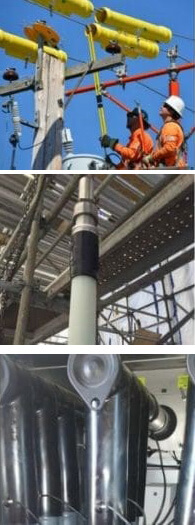
Crossbonding Cable Joints MV | 12kV 36kV
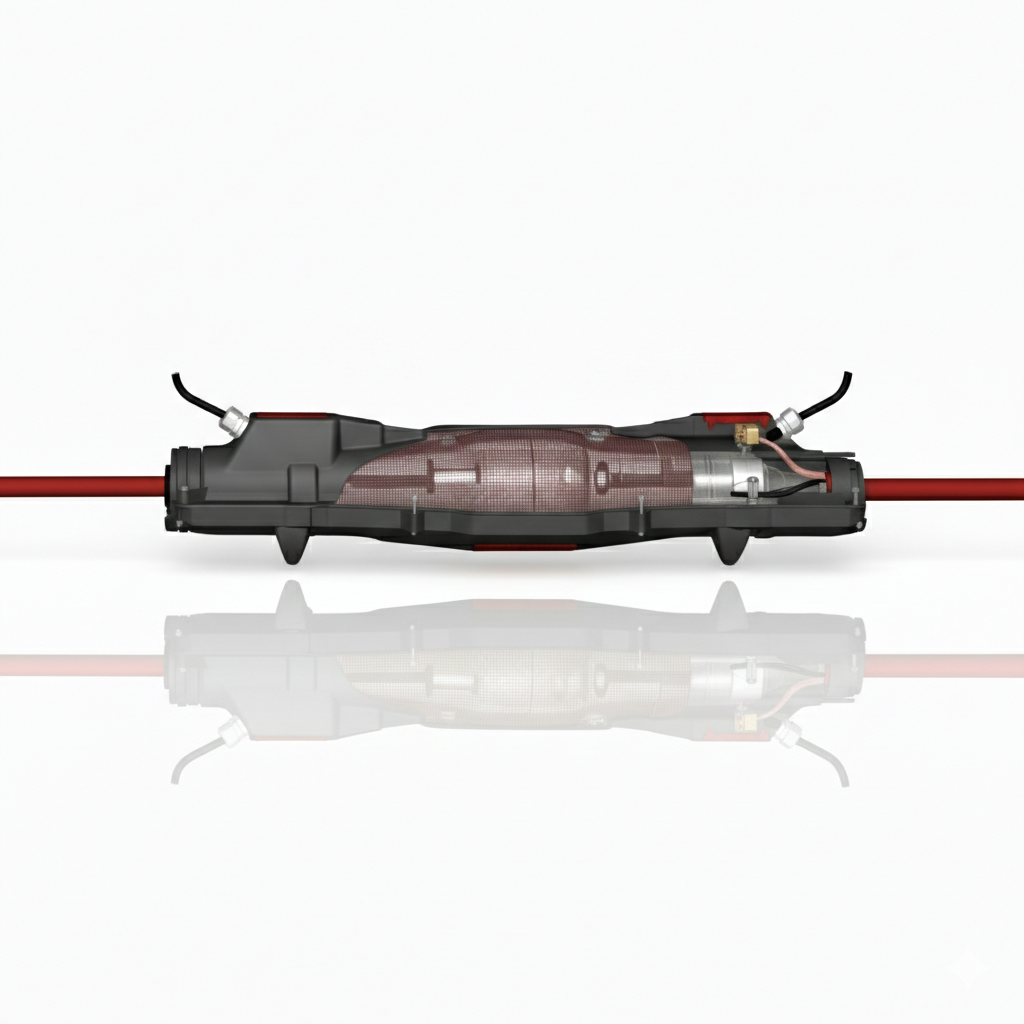

Lovink LoviSil® Crossbonding Cable Joint | MV 6/10 (12) kV – 18/30 (36) kV
Lovink LoviSil Medium Voltage Crossbonding Cable Joint
Suitable for single-core polymeric cables (XLPE/EPR)
Lovink Crossbonding Cable Joints 12 kV – 36 kV
Lovink Enertech Logo

Lovink LoviSil® Crossbonding Cable Joint | MV 6/10 (12) kV – 18/30 (36) kV

Lovink Enertech Logo

Product Code: LoviSil® Crossbonding Cable Joints (Module Selection Required)

12kV Crossbonding Cable Joints Available
24kV Crossbonding Cable Joints Available
36kV Crossbonding Cable Joints Available

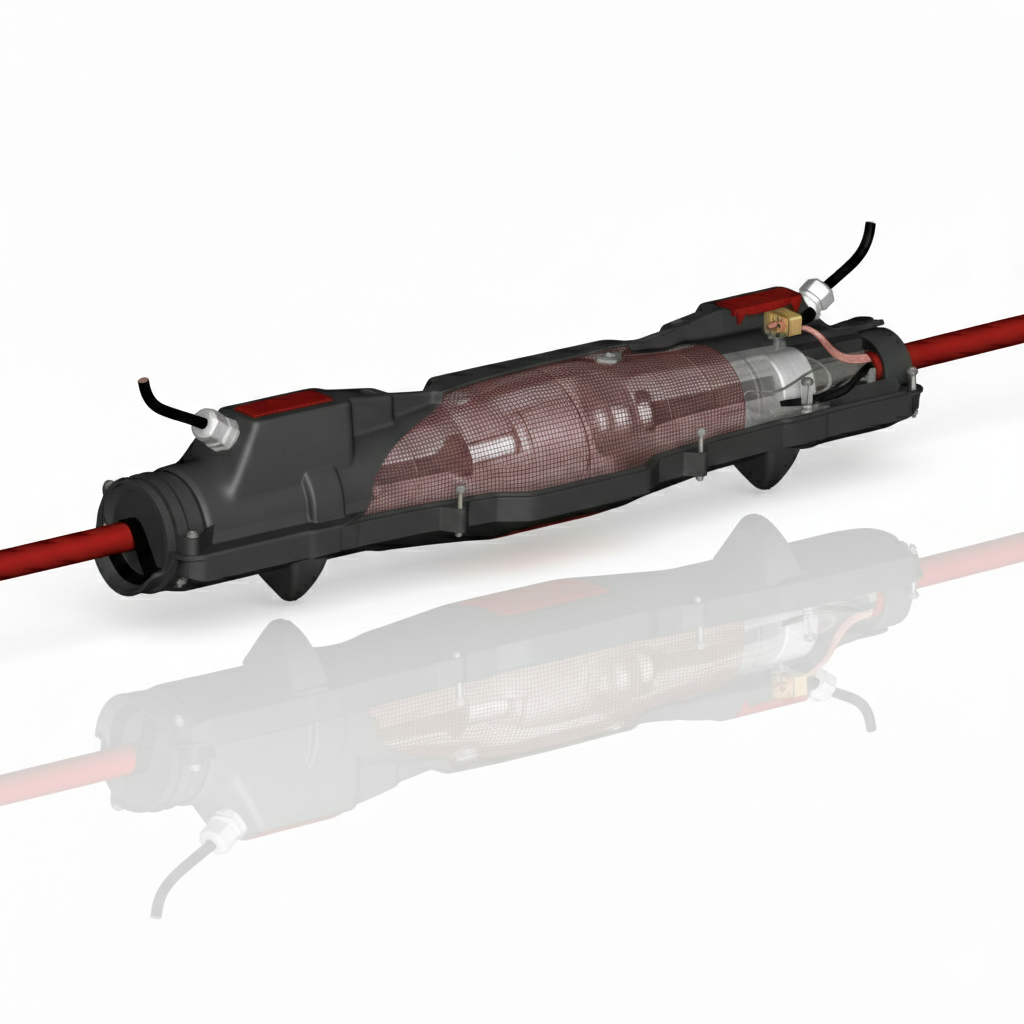
Lovink LoviSil® Crossbonding Straight Through Joint is purpose-designed for medium voltage (MV) underground cable systems where screen circulating currents and Ohmic losses must be minimised. Suitable for single-core polymeric cables (XLPE/EPR) from 12kV up to 36kV — commonly referred to as 11kV and 33kV networks — the joint integrates a flexible copper crossbonding conductor within the proven LoviSil® silicone insulated joint body.
Designed for long underground cable circuits, the system supports conductor sizes from 70 mm² up to 1,000 mm² (dependent on module selection: M75, M85 or M105) and provides a fully underground solution for reducing induced voltage imbalances between cable screens. By enabling effective crossbonding directly within the joint, network efficiency is improved while installation remains consistent with the universal LoviSil® jointing platform.

VIEW TECHNICAL SPECIFICATIONS


Polymeric crossbond joints (xlpe epr)

The Lovink LoviSil® Crossbonding Straight Through Joint is developed specifically for medium voltage underground networks where reduction of screen circulating currents and cable losses is critical. Unlike standard straight-through joints, this configuration incorporates an integrated flexible copper crossbonding conductor, enabling effective screen cross-connection within long 11kV and 33kV cable circuits.

Integrated LoviSil® Crossbonding Technology

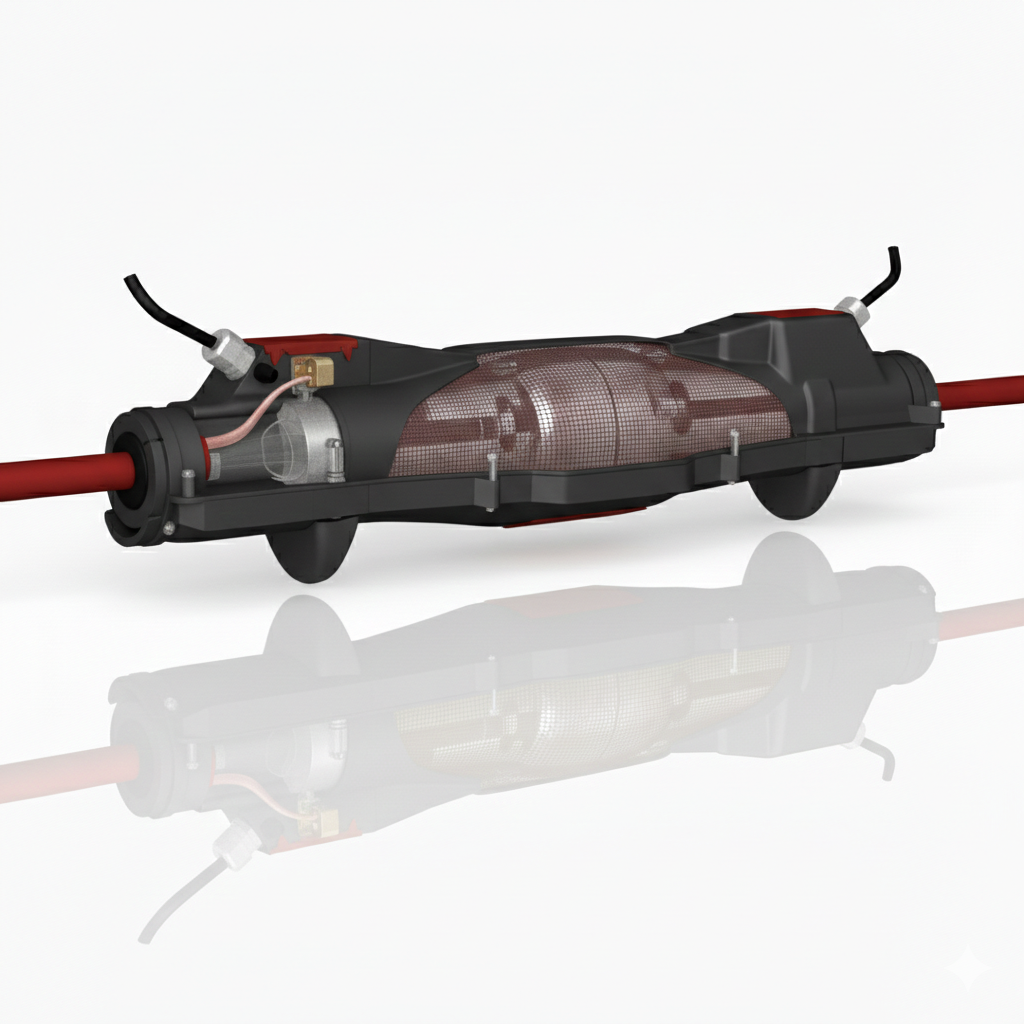
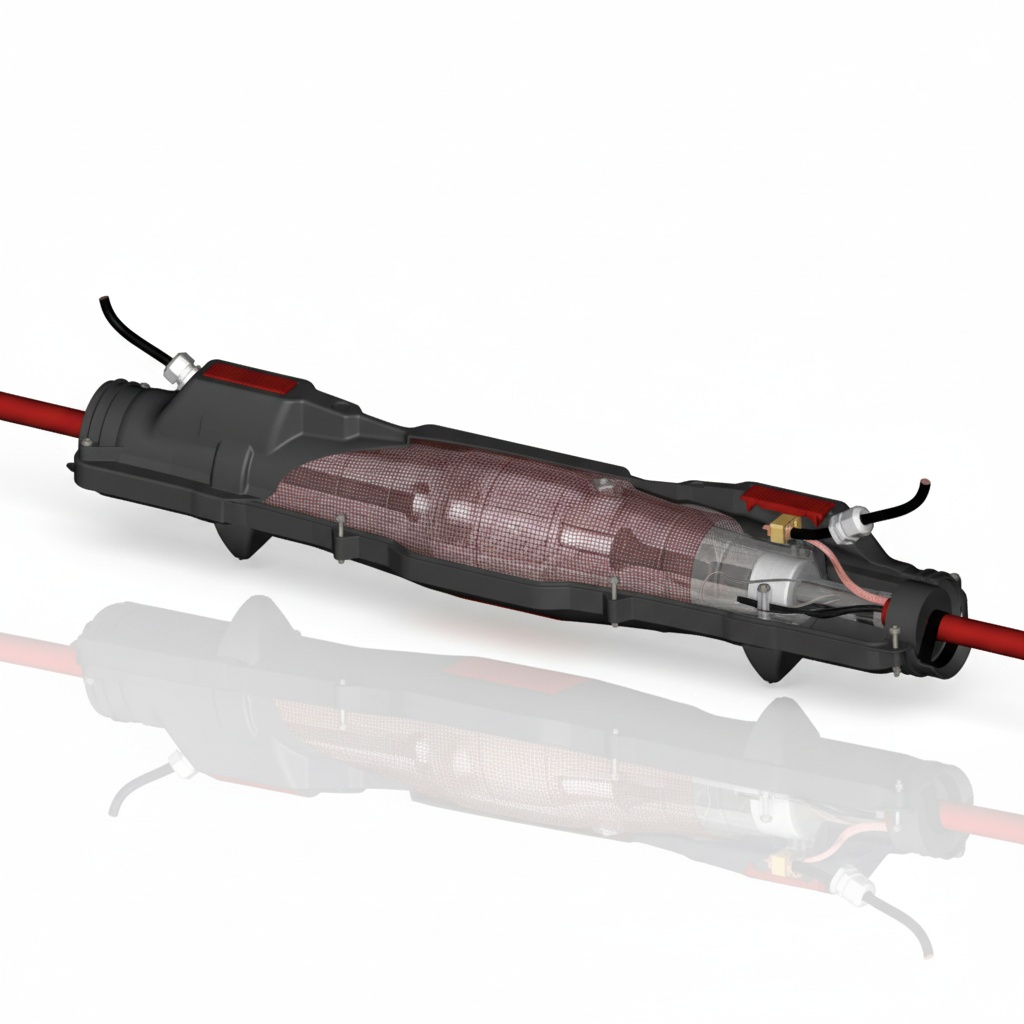
The joint forms part of the established LoviSil® modular platform, combining a durable outer shell, polyurethane resin encapsulation and fluid silicone insulation. The crossbonding conductor is securely connected to the cable screens and routed externally via sealed swivel outlets, creating a compact, fully underground solution without the need for separate link boxes. Installation follows the same consistent build-up method as other LoviSil® joints, with no heat shrinking, no soldering and no specialist tooling required.

12kV – 36kV Single-Core Polymeric Cables

Designed for single-core XLPE and EPR cables, the LoviSil® Crossbonding Joint supports medium voltage systems from 12kV up to 36kV (commonly referred to as 11kV and 33kV networks). Available in modular shell sizes (M75, M85 and M105), the system accommodates conductor sizes from 70 mm² to 1,000 mm², depending on cable dimensions and selected module. This makes it particularly suitable for long underground feeders, primary distribution circuits and industrial MV installations where efficiency and lifecycle performance are priorities.

Need the right Cable Joints for your MV cables? Speak to our trusted experts to confirm suitability for your 11kV / 33kV class network application (as well as cable type, insulation, sheath/armour construction and dimensions). Thorne & Derrick International provide technical advice, quotations and fast worldwide delivery for MV joints, medium voltage cable accessories and engineered power solutions.

Contact Our Experts


MV crossbonding Cable JOINTS – Technical Specifications

Lovink LoviSil® Crossbonding Straight Through Joint (MV) – Technical Specifications

Primary Keyword Crossbonding Cable Joint (Medium Voltage Straight Through Joint)
Voltage Rating 12kV – 36kV (commonly applied in 11kV and 33kV MV networks)
Cable Type Single-core polymeric cables (XLPE / EPR)
Conductor Size Range 70 mm² – 1,000 mm² (dependent on module and cable dimensions)
Available Joint Modules M75, M85, M105 modular shell sizes
Maximum Core Diameter Up to 105 mm (subject to selected module)
Crossbonding Conductor Integrated flexible copper conductor (typically 50 mm²) connected to cable screens
Installation Method Cold-applied modular system (no heat shrinking, no soldering)
Insulation & Sealing System LoviSil® fluid silicone insulation with polyurethane resin encapsulation and sealed outer shell
Standards & Testing Tested in accordance with HD 629 (CENELEC) and water pressure tested to 2 bar
  • Designed to reduce circulating screen currents and minimise Ohmic losses in long MV underground cable circuits.
  • Correct module selection (M75, M85 or M105) must be based on conductor size, outer sheath diameter and cable construction.
  • Suitable for 11kV and 33kV distribution systems where crossbonding is required for network efficiency and loss reduction.
  • For non-standard cable designs or project-specific configurations, technical guidance is recommended prior to ordering.

Application Range (Module Guide)

Module Voltage Class Cable Type Conductor Size (mm²) Max Core Ø (mm)
M75 12kV (11kV class) Single-core Polymeric (XLPE / EPR) 95 – 630 72
24kV Single-core Polymeric / Paper 95 – 240 72
M85 12kV (11kV class) Single-core Polymeric (XLPE / EPR) 800 – 1,000 82
24kV Single-core Polymeric (XLPE / EPR) 300 – 630 82
36kV (33kV class) Single-core Polymeric (XLPE / EPR) 70 – 500 82
M105 24kV Single-core Polymeric (XLPE / EPR) 800 – 1,000 105
36kV (33kV class) Single-core Polymeric (XLPE / EPR) 630 – 1,000 105
  • This guide supports selection of the correct crossbonding joint module for 11kV and 33kV underground cable systems.
  • Final suitability depends on outer sheath diameter, screen construction and overall cable dimensions.
  • All crossbonding joints are designed for single-core polymeric cables installed in long MV circuits where circulating current reduction is required.
  • For project-specific requirements or non-standard cable constructions, tailored module combinations may be available upon request.

Construction & Installation Notes (MV Crossbonding Joint)

Joint Construction Robust outer shell with polyurethane resin encapsulation and LoviSil® fluid silicone insulation for long-term underground performance
Crossbonding Integration Integrated flexible copper crossbond conductor connected to cable screens and routed externally via sealed swivel outlet
Installation Method Cold-applied modular build-up; no heat shrinking, no soldering and no specialist jointing equipment required
Modular Platform Universal LoviSil® base module combined with cable and resin modules (M75, M85, M105) for project flexibility
Testing & Environmental Protection Tested in accordance with HD 629 and water pressure tested up to 2 bar; designed for direct burial in challenging soil conditions

For optimal performance in 11kV and 33kV underground cable systems, confirm conductor size, outer sheath diameter, screen construction and overall cable dimensions before selecting the appropriate crossbonding joint module. Correct module selection ensures effective reduction of circulating screen currents and long-term MV network reliability.

Lovink Cable Joints – Selection Guide

Lovink MV Cable Joints (Quick Guide)

Cable Joint Type What it does (summary) Voltage Class Link
Transition Cable Joints MV transition connections between paper-insulated cables (PILC/PICAS) and polymeric cables (XLPE/EPR) for mixed networks and upgrades. 6/10 (12) kV – 18/30 (36) kV
(11kV / 33kV class)
View
Straight Cable Joints Straight-through MV joint for cable-to-cable connections (same cable type): polymeric-to-polymeric (XLPE/EPR) or paper-to-paper (PILC/PICAS), selection dependent. 6/10 (12) kV – 18/30 (36) kV
(11kV / 33kV class)
View
Stop-End Joints MV pot-end / termination solution that converts a standard joint into a fully insulated, sealed stop-end for energised cable systems (polymeric and selected paper-insulated). 6/10 (12) kV – 18/30 (36) kV
(11kV / 33kV class)
View
Branch Joints Creates MV tees / take-offs on distribution networks to form branch connections for 11kV and 33kV class systems (module selection dependent). 6/10 (11) kV – 18/30 (33) kV
(modules also shown up to 36kV)
View
Cable Repair Joints Repairs MV power cables where limited damage has occurred by replacing only the affected section (supports PILC/PICAS and XLPE/EPR, selection dependent). 6/10 (12) kV – 18/30 (36) kV
(11kV / 33kV class)
View
Extended Resin Cable Joints Extended outer-shell MV straight-through / transition joint providing additional bonding space and enhanced sealing for buried/ducted/high-moisture installs (PILC/PICAS and XLPE/EPR, selection dependent). 6/10 (12) kV – 18/30 (36) kV
(11kV / 33kV class)
View
Feed-In Cable Joints Enables direct connection of renewable or distributed power sources into existing underground MV cable systems (supports XLPE/EPR and PILC/PICAS, selection dependent). 6/10 (12) kV – 18/30 (36) kV
(11kV / 33kV class)
View
Loop Cable Joints Internal looping joint for underground MV distribution, allowing two outgoing cables to be connected within one joint (space/time-saving vs external looping). 6/10 (12) kV – 18/30 (36) kV
(11kV / 33kV class)
View
Oil Refill Cable Joints (PILC) Specialist MV joint for paper-insulated lead covered (PILC) cables, using an oil manifold + non-return valve to connect to an external reservoir and keep the paper dielectric oil-saturated. 6/10 (12) kV – 18/30 (36) kV
(11kV / 33kV class)
View
Crossbonding Cable Joints Controls induced screen voltages and reduces circulating currents in long single-core MV circuits by integrating a flexible copper crossbonding conductor within the joint body. 12kV – 36kV
(commonly 11kV / 33kV networks)
View
Compact Cable Joints Compact straight-through MV joint for polymeric insulated single-core cables (XLPE/EPR), using cold-shrink technology and a sealed resin-filled housing for moisture protection in confined installs. 6/10 (12) kV & 12/20 (24) kV
(often referenced as 11kV / 33kV class)
View
  • Voltage class references (e.g., “11kV / 33kV”) should always be matched to the actual cable system rating and the correct joint/module selection.
  • Final suitability depends on cable construction and dimensions (insulation type, sheath/armour, conductor size, and installation environment).

crossbonding cable Joints – Key Benefits

✔ Purpose-built Crossbonding Cable Joint for reducing circulating screen currents in medium voltage underground networks

✔ Minimises Ohmic losses in long 11kV and 33kV cable circuits, improving overall system efficiency

✔ Integrated flexible copper crossbond conductor eliminates the need for separate above-ground bonding arrangements

✔ Suitable for 12kV – 36kV systems (commonly 11kV and 33kV class networks)

✔ Supports large conductor ranges from 70 mm² up to 1,000 mm² via modular shell sizes (M75, M85, M105)

✔ Proven LoviSil® silicone insulation combined with polyurethane resin encapsulation for durable underground performance

✔ Cold-applied installation – no heat shrinking, no soldering and no specialist tooling required

✔ Fully underground solution tested to HD 629 and water pressure tested to 2 bar

✔ Modular LoviSil® platform simplifies project specification and reduces stockholding complexity

✔ Ideal for utility, renewable and industrial MV installations where loss reduction and lifecycle performance are priorities
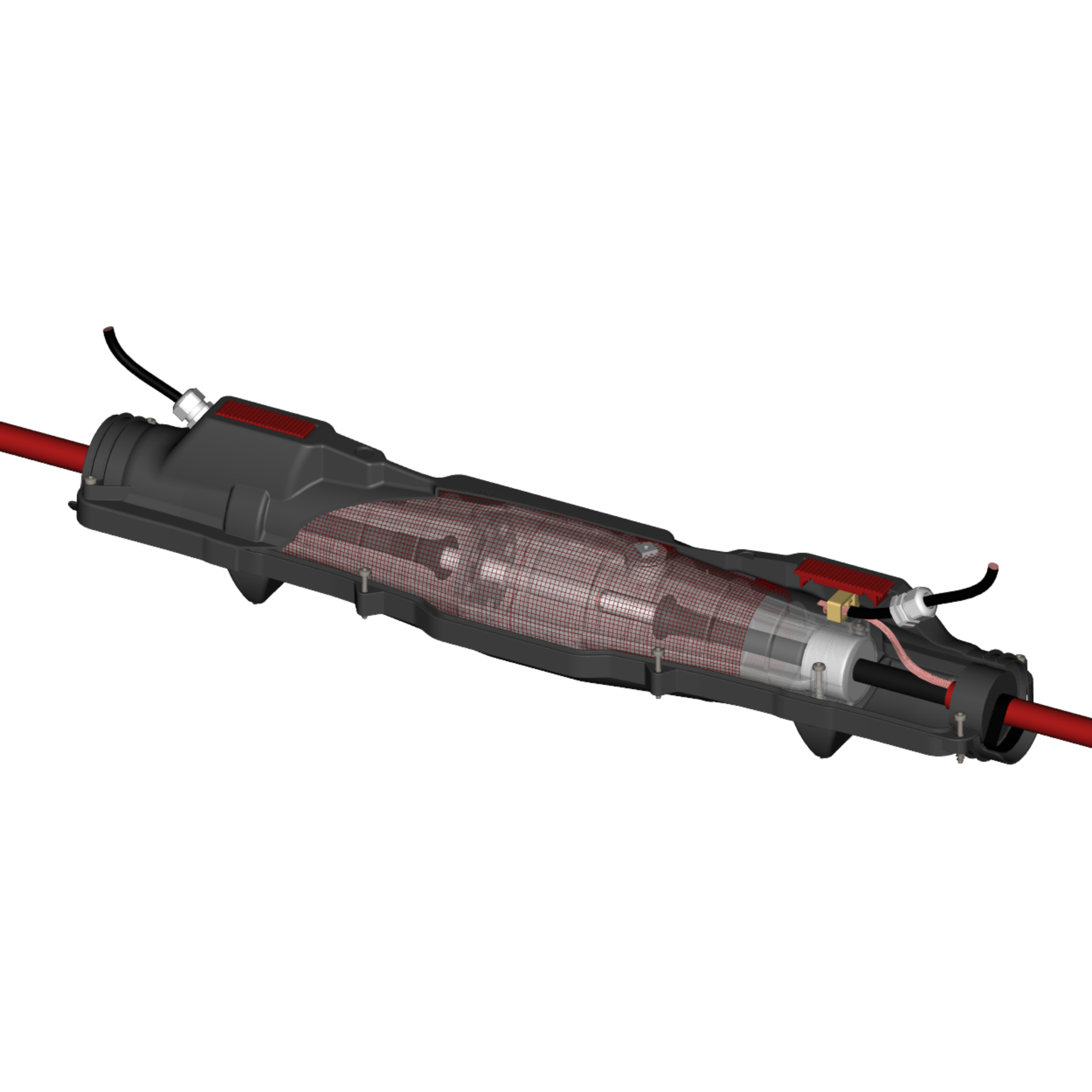
Crossbonding Cable Joints MV | 12kv 36kV

Applications

✔ Crossbonding of single-core XLPE / EPR medium voltage cables in long underground circuits

✔ Reduction of circulating screen currents in 11kV and 33kV distribution networks

✔ Utility MV feeders where cable loss reduction improves operational efficiency

✔ Primary and secondary substations with extended underground cable runs

✔ Industrial facilities, petrochemical sites and renewable energy connections requiring controlled screen bonding

✔ Underground MV cable systems where above-ground link boxes are undesirable or impractical

✔ Network reinforcement projects where induced voltage imbalance must be managed across cable sections

✔ Infrastructure installations prioritising lifecycle efficiency and reduced energy losses


Crossbonding cable JOINTs – Additional Information

LoviSil® Crossbonding Cable Joints for medium voltage underground networks (commonly referred to as 11kV and 33kV systems) are engineered to control induced screen voltages and reduce circulating currents in long single-core cable circuits. By integrating a flexible copper crossbonding conductor within the joint body, the system enables controlled screen connection between cable sections without the need for separate above-ground link boxes.

The joint utilises LoviSil® fluid silicone insulation as the primary dielectric medium. Unlike shrink-based technologies, the silicone remains liquid within the joint, flowing around the connection and filling voids to deliver uniform insulation. This supports stable electric field distribution and helps minimise the risk of partial discharge due to trapped air. In higher voltage applications up to 36 kV, geometric field control components are incorporated to maintain reliable performance under increased electrical stress.
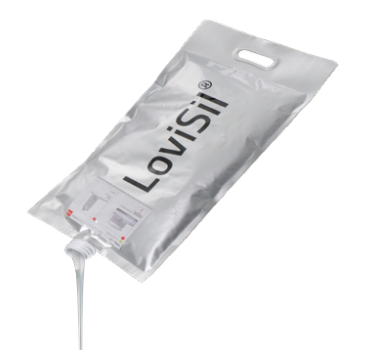
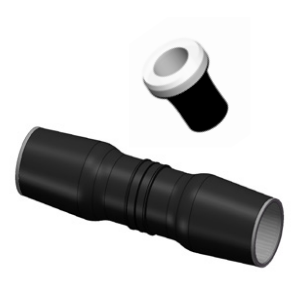
Integrated Crossbonding Conductor - MV Cable Joint

Integrated Crossbonding Design

The flexible copper crossbonding conductor is securely connected to the cable screens and routed externally through sealed swivel outlets. This creates a compact, fully underground solution for managing induced voltages across long MV cable sections.

Liquid Silicone Insulation - MV Crossbonding Joint

Void-Free Silicone Insulation

LoviSil® liquid insulation flows around the connector and stress control components, filling microscopic voids to deliver consistent dielectric performance. This supports long-term reliability in underground 11kV and 33kV cable systems.

Mechanical Protection and Testing - MV Cable Joint

Underground Protection & Compliance

The combined use of polyurethane resin and injection-moulded outer shells provides durable protection against moisture ingress and aggressive soil conditions. The system is tested in accordance with HD 629 and water pressure tested up to 2 bar for dependable underground performance.

Reduced cable losses: effective crossbonding lowers circulating screen currents in long MV circuits

Improved network efficiency: supports optimised performance of 11kV and 33kV underground systems

Fully underground solution: eliminates dependence on separate above-ground bonding infrastructure

Compact joint design: integrated field control and silicone insulation reduce build complexity

Low lifecycle cost: durable materials and reduced electrical losses contribute to improved total cost of ownership

Flame-free installation: no heat shrinking or soldering required, suitable for industrial and petrochemical environments

Data Sheets