Promoting Good Practices For Cable Products Following The Grenfell Tower Report
Published 21 Aug 2019

Article by BASEC | Article 1 of 10
Promoting Good Cable Specification Practices Following Grenfell
Choosing suitable electrical cables is an important part of building safety. However, cable specification requires more than checking a product’s price or basic electrical rating.
Specifiers must also consider fire performance, installation conditions and the relevant product standards.
Following the Grenfell Tower fire in June 2017, the construction industry faced increased scrutiny over building materials and fire safety.
In this article, BASEC explores the importance of cable quality, independent testing and good specification practices.
Thorne & Derrick collaborate with BASEC to raise awareness of electrical safety and encourage the selection of appropriately tested and certified cables.
We also thank BASEC for allowing us to republish this article as part of our 10-part cable quality series.
Why Does Cable Quality Matter?
Electrical cables run throughout buildings and connect essential systems.
For example, they distribute electricity and support fire alarms, emergency lighting, control equipment and communication networks.
Consequently, cable failure can affect both electrical reliability and building safety.
Furthermore, cables and their supporting systems may behave differently when exposed to fire.
Therefore, engineers must assess the performance required for each application rather than relying on general product descriptions.
The Grenfell Tower Fire and Building Safety
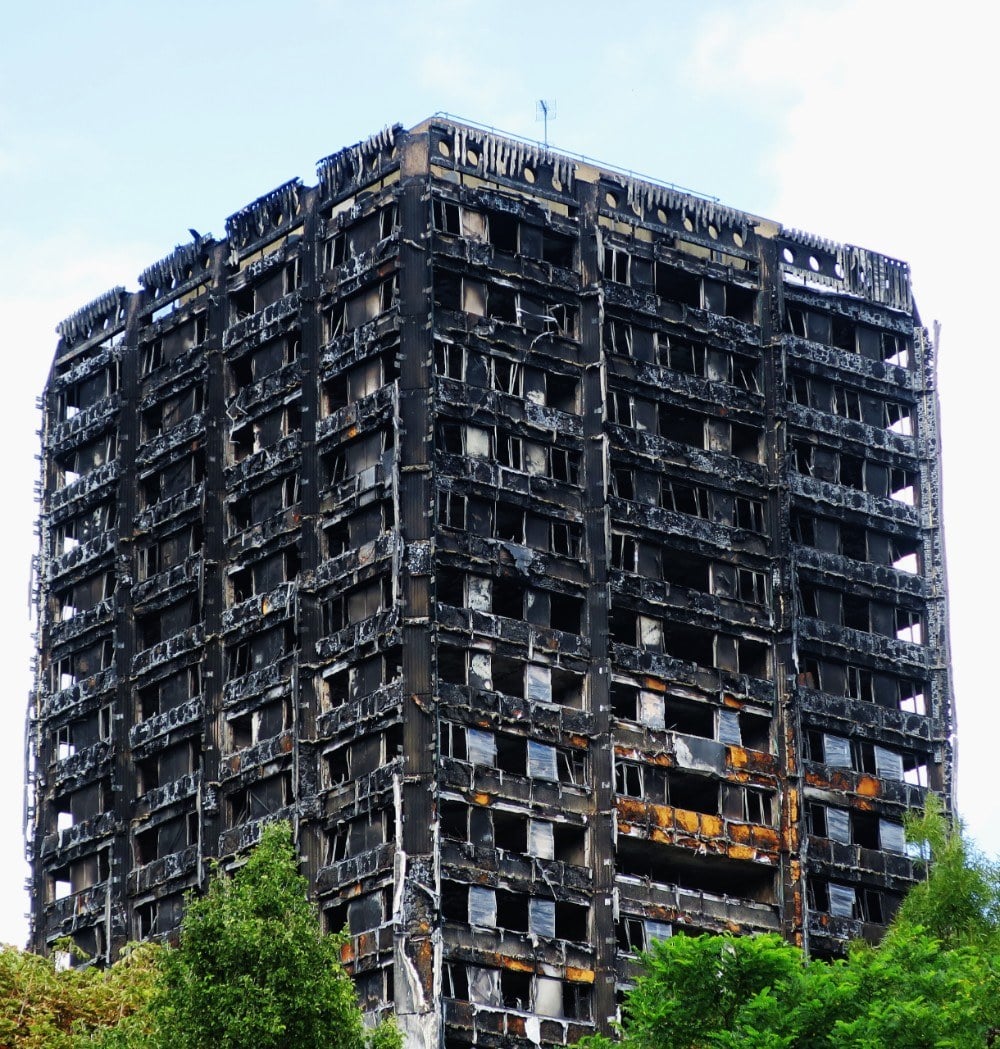
The Grenfell Tower fire raised serious questions about the design, construction and refurbishment of buildings.
Following the tragedy, the UK Government commissioned an independent review of building regulations and fire safety.
Dame Judith Hackitt led the review, which examined weaknesses in the regulatory system.
The Independent Review of Building Regulations and Fire Safety published its final report in 2018.
The Hackitt Report
The Hackitt Review identified significant weaknesses in the building safety regulatory system.
In particular, it highlighted problems involving accountability, competence and the management of building safety information.
Furthermore, the report called for a more effective approach to managing safety throughout a building’s life.
These findings reinforced the importance of responsible product selection and clear communication across the construction industry.
Considering the Building as a Complete System
A building contains many products that interact during normal operation and emergency conditions.
For example, external walls, insulation, windows, electrical installations and fire safety systems all contribute to its overall performance.
Therefore, designers must consider how these components work together.
In addition, the installation and maintenance of materials can influence building safety.
A product’s individual certification does not automatically establish the safety of the complete building system.
What Did Grenfell Highlight About Building Materials?
Investigations into the Grenfell Tower fire examined the materials and construction methods used during refurbishment.
These included aluminium composite material (ACM) cladding with a polyethylene core, alongside other elements of the external wall system.
The behaviour of combustible materials formed an important part of the investigation.
However, the causes and consequences of the fire cannot be attributed to one material alone.
The wider lesson for product specifiers is to understand how materials perform within the complete installation.
Furthermore, any decisions about building safety should reflect the findings of the relevant investigations and the applicable regulatory requirements.
Why Electrical Cable Fire Performance Matters
Electrical cables form part of a building’s infrastructure.
For example, power and communication cables may pass through multiple floors, rooms and service areas.
Therefore, their reaction to fire and installation conditions require careful consideration.
Reaction to Fire and Fire Resistance
Two important concepts are reaction to fire and fire resistance.
Although related, they describe different performance characteristics.
- Reaction to fire: How a cable contributes to fire development, including aspects such as flame spread, heat release, smoke and burning droplets.
- Fire resistance: A cable’s ability to maintain a required function for a specified period under defined fire test conditions.
For example, a fire-resistant cable may support a critical circuit during a fire.
However, specifiers must still check that the cable meets the requirements of the relevant system and installation.
Explore our fire-resistant cable range.
Why the Complete Installation Matters
Correct cable selection is only one part of fire safety.
For example, cables may also need suitable supports, containment, glands and other accessories.
Furthermore, installers must maintain the intended performance of fire compartments and penetrations.
Consequently, designers should assess the complete cable system rather than focusing only on an individual product.
Construction Products Regulation and Cable Fire Classification
The Construction Products Regulation (CPR) introduced a framework for assessing and declaring the reaction-to-fire performance of relevant construction products.
For cables within its scope, CPR classifications provide information about fire performance under specified test conditions.
From 1 July 2017, the European cable CPR requirements became applicable to relevant cables placed on the market.
However, the legislation applicable in a particular market depends on its jurisdiction and current regulatory framework.
Which Electrical Cables Fall Within CPR?
CPR requirements apply to cables within the relevant construction product scope.
For example, these may include cables intended for permanent installation in construction works.
Products can include suitable:
- Power distribution cables.
- Building wiring cables.
- Control and instrumentation cables.
- Communication cables.
- Optical fibre cables.
However, not every cable product falls within the same regulatory scope.
Therefore, manufacturers, importers and distributors must check the requirements applicable to the specific cable and market.
Understanding CPR Euroclasses for Cables
CPR uses a reaction-to-fire classification system for relevant cables.
Its main classes range from Aca to Fca, depending on the assessed performance.
In addition, some classifications include supplementary information about smoke, flaming droplets and acidity.
These classifications help specifiers compare particular fire performance characteristics.
However, the correct classification must reflect the project requirements and applicable regulations.
Cable Fire Testing Standards
The original BASEC article references several standards used within cable fire performance assessment.
These include:
- EN ISO 1716: Determination of gross heat of combustion.
- EN 50399: Fire testing of cables under specified conditions.
- EN 60332-1 series: Tests relating to vertical flame propagation for a single cable.
- EN 61034-2: Measurement of smoke density under defined conditions.
- EN 60754-2: Assessment of acidity and conductivity of gases evolved during combustion.
Different tests apply to different classification requirements.
Consequently, one individual test result does not establish every aspect of a cable’s fire performance.

Why Is Independent Cable Testing Important?
Independent testing provides evidence of a cable’s performance against specific requirements.
For example, a testing body may assess the cable’s reaction to fire or other specified properties.
Furthermore, certification schemes may include factory assessment and ongoing surveillance.
Therefore, buyers should check the actual scope of approval rather than relying on a certification logo alone.
Explore BASEC’s original guidance on CPR and minimum classes.
Cable Support Requirements and Fire Safety
Cable supports help maintain the position of electrical wiring systems.
However, unsuitable supports can fail when exposed to high temperatures.
For example, some plastic cable ties may soften or fail during a fire.
Consequently, cables could fall and create additional hazards.
BS 7671 Regulation 521.10.202
The original article highlighted an important change within the 18th Edition of BS 7671.
Regulation 521.10.202 addressed the risk of premature collapse of wiring systems in a fire.
The requirement extended beyond the previous focus on escape routes.
As a result, designers and installers needed to consider suitable support arrangements throughout electrical installations.
For current projects, installers must consult the latest applicable edition and amendments of BS 7671.
Using Suitable Cable Supports
Electrical installation designers may specify suitable:
- Stainless steel cable ties.
- Metal cable hangers.
- Metallic cable clips.
- Suitable cable cleats and containment systems.
- Other approved supports that meet the installation requirements.
However, not every metallic support offers the same performance.
Therefore, installers must select an arrangement suitable for the relevant cable system and installation conditions.
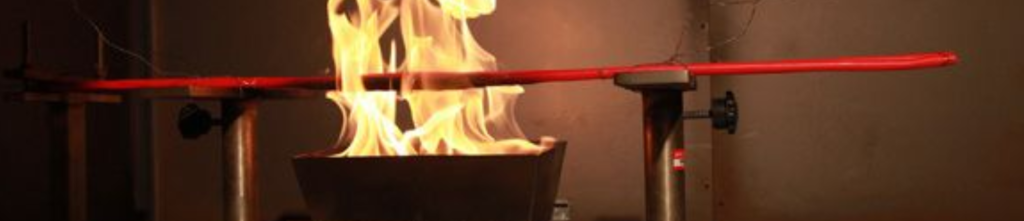
BASEC provides cable fire testing services for specified standards and applications.
Good Practices for Electrical Cable Specification
Correct cable specification requires a clear understanding of the intended application.
For example, cables in public buildings may face different requirements from cables in industrial equipment.
In addition, certain circuits must maintain their function under defined emergency conditions.
Therefore, the specification should identify the necessary electrical, mechanical and fire performance characteristics.
Consider the Complete Building Environment
A cable’s performance depends partly on where and how installers use it.
For example, cable systems may pass through protected routes, service risers or other building areas.
Furthermore, cables may operate alongside different construction materials.
Consequently, designers must consider the whole installation and the relevant building safety strategy.
BASEC provides independent cable testing and approval for applicable cable products.
BASEC’s Top Five Cable Specification Recommendations
The original BASEC article highlighted five practical recommendations for cable specifiers.
These focus on fire performance, independent testing, product awareness and communication.
1. Specify Cables with Suitable Fire Performance
First, determine the fire performance required for the intended installation.
For example, a particular building or circuit may require cables with specified reaction-to-fire characteristics.
Meanwhile, a safety-critical circuit may also need to maintain operation during defined fire conditions.
Therefore, specifiers must identify the appropriate standard and performance requirements.
Understand LSF and LSHF Cable Differences
The original BASEC article also emphasised the differences between Low Smoke and Fume (LSF) and Low Smoke Halogen Free (LSHF) cable descriptions.
These terms can indicate different material characteristics.
However, the label alone does not establish the cable’s complete fire performance.
For example, smoke generation, halogen content and flame propagation require different assessments.
Consequently, buyers should review the relevant test evidence and cable specification.
Explore our fire-resistant cable products.
2. Consider Performance Beyond the Minimum Requirements
Secondly, BASEC encouraged specifiers to consider whether higher-performance products would benefit the project.
However, selecting a higher classification does not automatically make a cable suitable for every application.
For example, a cable may achieve a particular reaction-to-fire class without meeting the required circuit integrity standard.
Therefore, additional performance should address an identified project need.
Furthermore, the design team must still check the applicable installation and building requirements.
3. Choose Independently Tested and Approved Cables
Thirdly, BASEC recommended selecting cables supported by appropriate independent testing and certification.
For example, a third-party assessment can provide additional evidence of compliance with specific standards.
In addition, product certification may involve ongoing manufacturing checks.
However, buyers should verify the exact products, standards and ratings covered by the approval.
Electrical and Mechanical Cable Performance
Fire performance is only one consideration during cable specification.
For example, a cable must also provide suitable electrical insulation and mechanical strength.
Furthermore, installation conditions may introduce bending, pulling and environmental stresses.
Therefore, specifiers should check that the complete product meets all relevant performance requirements.
4. Improve Awareness of Cable Fire Performance
Fourthly, BASEC highlighted the importance of education across the construction industry.
For example, contractors and buyers may encounter different cable classifications and product claims.
Without clear technical information, these differences can create confusion during procurement.
Consequently, training and product awareness can help teams make better specification decisions.
Understanding Certification and Product Claims
Specifiers should understand what a certificate demonstrates.
For example, a product approval may cover a particular cable construction or performance standard.
However, it may not cover every variation within the manufacturer’s range.
Therefore, checking certificate scope and product identification is essential.
In addition, supporting documentation should remain available throughout procurement and installation.
5. Encourage Communication Across the Supply Chain
Finally, BASEC encouraged better communication between everyone involved in construction projects.
This includes:
- Cable manufacturers.
- Distributors and stockists.
- Electrical consultants.
- Building designers and architects.
- Project engineers.
- Buyers and procurement teams.
- Electrical contractors and installers.
- Building owners and operators.
For example, early discussions can identify potential product availability or specification problems.
Furthermore, suppliers can help clarify technical requirements before products arrive on site.
As a result, project teams may avoid unsuitable substitutions and installation delays.
Learn more about the Thorne & Derrick and BASEC cable quality collaboration.

Verifying Cable and Building Material Quality
Product quality claims require supporting evidence.
For example, manufacturers may refer to compliance with a particular cable standard.
However, customers should establish whether valid testing and certification support the claim.
Furthermore, the documentation must relate to the exact product being supplied.
BASEC Cable Testing and Certification
BASEC provides independent testing and certification services for electrical cables.
The original article described its facilities for cable fire testing.
In particular, it highlighted equipment for tests associated with EN 50399 and the IEC 60332-3 series.
These tests assess specified aspects of cable performance under controlled conditions.
However, the applicable testing programme depends on the product and certification requirements.
CPR Testing and Classification
The original BASEC article reported more than 3,000 CPR tests and classification reports at the time of publication.
It also described BASEC’s role in conformity assessment under the applicable European CPR framework.
However, approval designations, notified body status and regulatory arrangements can change.
Therefore, customers should consult BASEC and the applicable regulatory records for current information.
BASEC Registered Stockist Scheme
The article also introduced BASEC’s Registered Stockist scheme.
This initiative aimed to strengthen quality assurance within the cable distribution process.
For example, assessments considered procurement and handling arrangements.
In addition, the scheme sought to improve confidence in cable products moving through the supply chain.
Consequently, it complemented product testing by addressing aspects of cable sourcing and distribution.
Why Good Cable Specification Requires More Than Certification
Certification provides important information about a cable’s assessed performance.
However, safe installation also depends on correct design and workmanship.
For example, a suitable cable can still suffer damage if installers exceed its minimum bending radius.
Likewise, incorrect supports or unsuitable accessories may affect the complete installation.
Therefore, project teams should address cable quality throughout the specification, procurement and installation process.
Electrical Cable Installation Considerations
Important checks include:
- Correct cable type and electrical rating.
- Required fire performance and applicable standards.
- Suitable cable routing and containment.
- Correct bending radius and pulling tension.
- Appropriate cable joints and terminations.
- Suitable cable support arrangements.
- Product identification and certification.
- Installation inspection and testing.
Furthermore, any changes during construction should follow the approved design and project procedures.
As a result, the completed installation is more likely to achieve its intended performance.
Conclusion – Improving Cable Quality and Building Safety
The Grenfell Tower tragedy reinforced the importance of effective building safety systems and responsible product selection.
However, good cable specification requires more than choosing a product with an appropriate label.
Specifiers must understand the applicable standards, installation conditions and performance requirements.
Furthermore, independent testing can provide valuable evidence about particular cable characteristics.
BASEC’s five recommendations encourage better technical decisions, clearer communication and stronger product awareness.
Ultimately, manufacturers, designers, distributors and installers all have important responsibilities.
By working together, they can support safer and more reliable electrical installations.
About BASEC – British Approvals Service for Cables
BASEC is an independent organisation providing testing and certification services for electrical cables.
Its activities help manufacturers demonstrate compliance with relevant product standards.
Furthermore, BASEC promotes greater awareness of cable quality throughout the electrical industry.
Cable Quality Seminars and Education
The original article highlighted BASEC’s educational seminars on cable quality.
These events aimed to help professionals understand electrical cable testing and certification requirements.
However, the event information relates to the original publication period.
Therefore, readers should check BASEC’s website for current training opportunities.
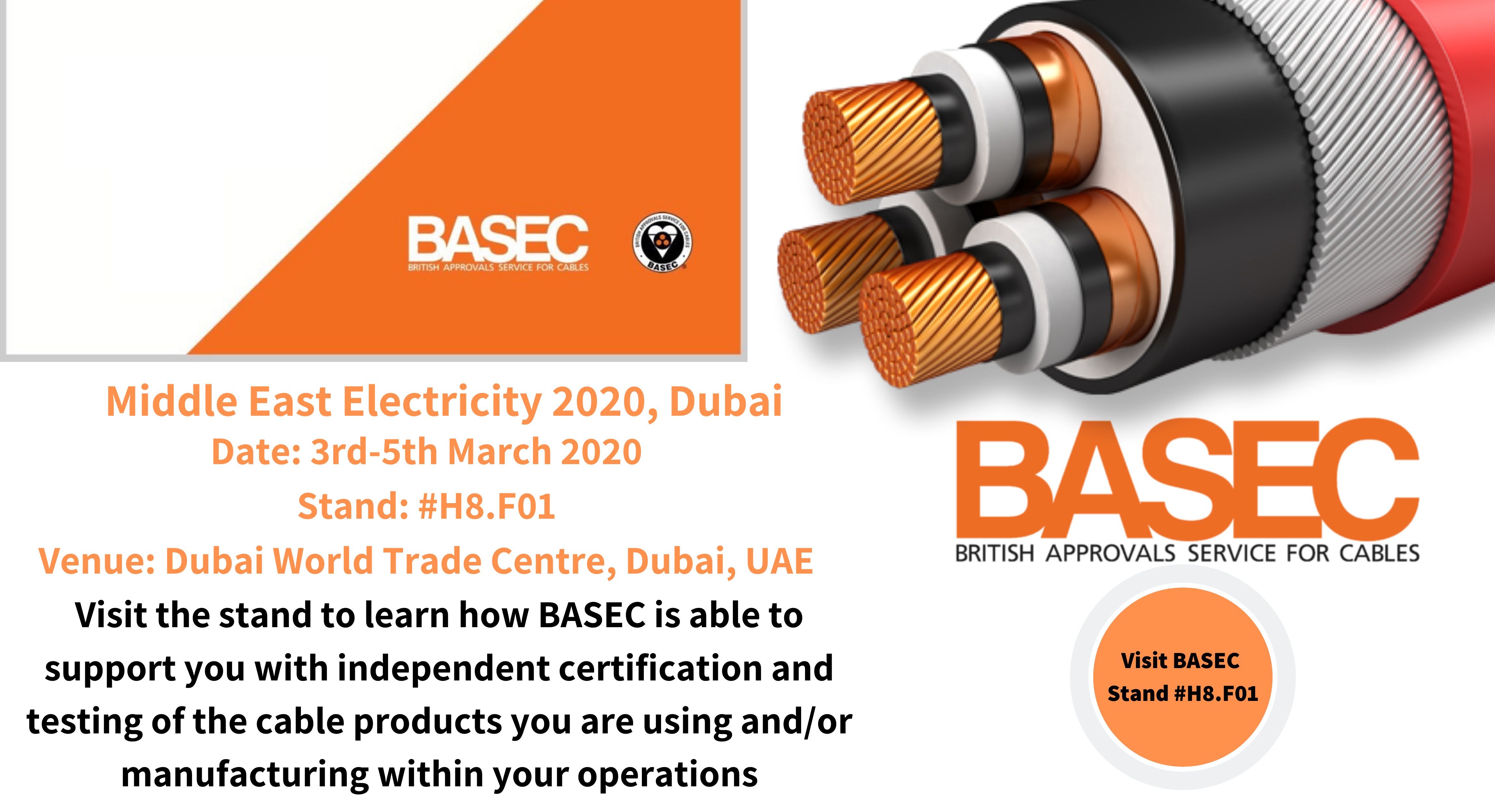
Middle East Electricity 2020, Dubai
How Is Electrical Cable Fire Performance Measured?
Different tests assess different aspects of electrical cable fire performance.
For example, some tests examine flame propagation or heat release.
Meanwhile, other tests assess smoke production or the release of particular combustion gases.
Consequently, engineers should review the relevant classification and supporting technical documentation.
Watch the BASEC Cable Fire Performance Video
The following video introduces cable fire performance and the importance of independent testing.
However, any historical statistics mentioned in the video should be checked against current evidence before use in present-day safety guidance.
Thorne & Derrick – Electrical Cable Accessories
Thorne & Derrick International supply specialist electrical equipment and cable accessories.
Our range supports low, medium and high voltage power distribution systems.
Furthermore, we work with utilities, contractors and industrial customers across a wide range of electrical infrastructure projects.
LV, MV and HV Cable Accessories
Our range includes:
- Slip-on cable terminations.
- Cold shrink cable terminations.
- Heat shrink cable terminations.
- Heat shrink and cold shrink cable joints.
- Nexans Euromold separable connectors.
- Surge arresters.
- Switchgear and transformer bushings.
In addition, we supply equipment for cable installation, electrical safety and maintenance.
Electrical Product Categories
Explore our specialist product range:
- Cable Duct Seals
- Cable Cleats and Supports
- Cable Glands
- Electrical Safety Equipment
- Arc Flash Protection
- Cable Jointing Tools
- Cable Pulling Equipment
- Earthing and Lightning Protection
- Electrical Feeder Pillars
- LV Cable Joints
- MV and HV Cable Joints and Terminations
Consequently, customers can source specialist products for electrical construction, installation and maintenance.