What We Learned from 3M Cable Jointing Training | Thorne & Derrick
Published 10 Apr 2026
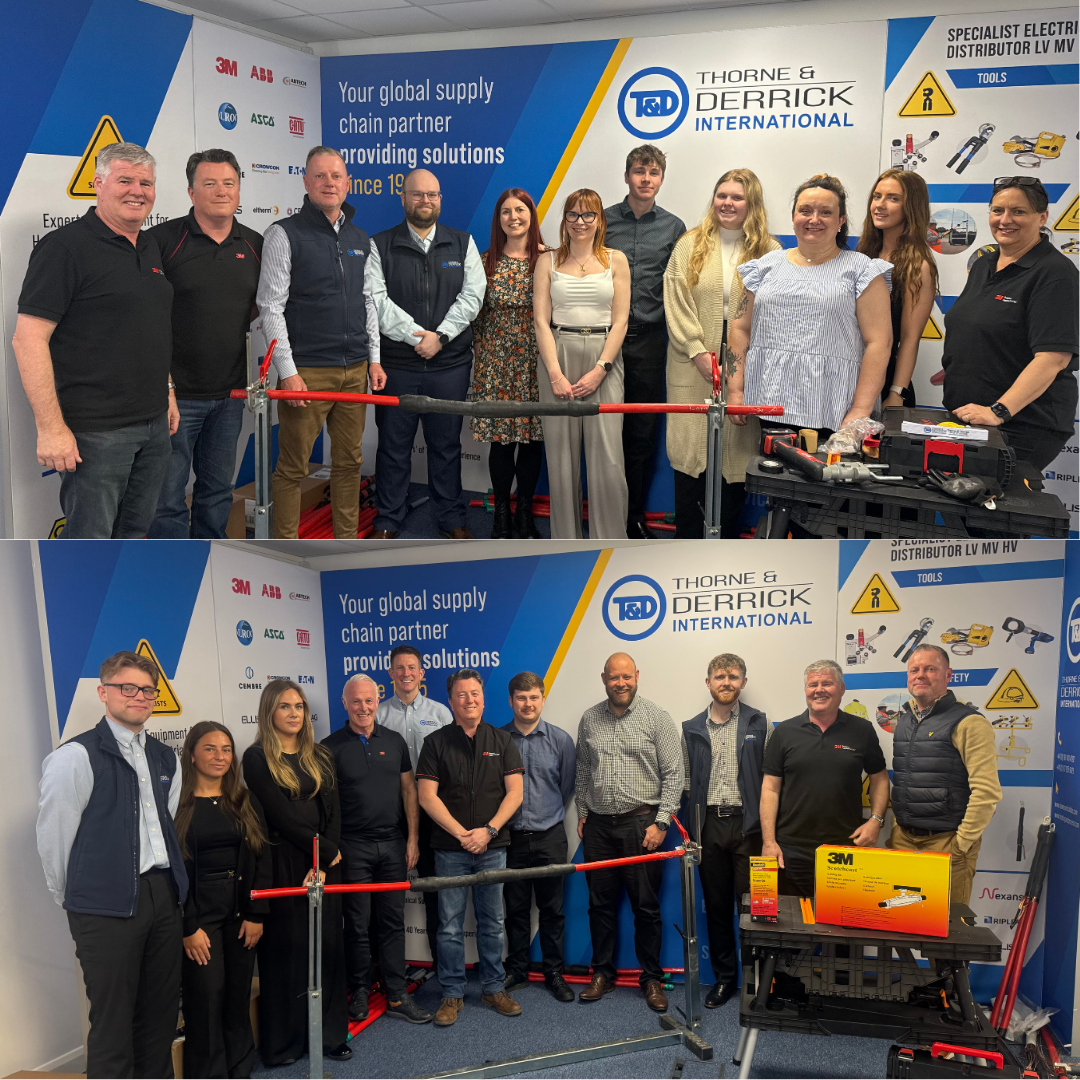
Thorne & Derrick Team Takes Part in 3M Cable Jointing Training
Continuous learning and hands-on experience are essential in the electrical industry especially when working with critical infrastructure across LV and MV systems. Recently, the Thorne & Derrick team took part in an in-depth 3M cable jointing training session, focusing on improving technical knowledge, product understanding and real-world application.
The session brought together team members from across the business, combining theory with practical demonstrations to strengthen confidence in specifying and supporting cable jointing and termination solutions.
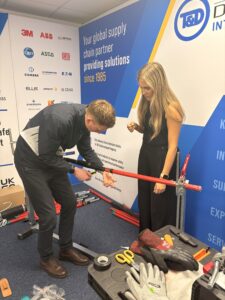
3M cable jointing training with the Thorne & Derrick Team
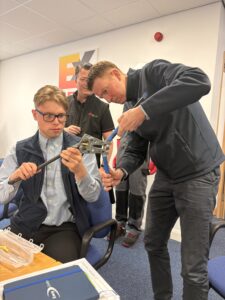
The training session provided an excellent opportunity for the team to step away from day-to-day roles and engage directly with the products and techniques used in the field.
From working with jointing materials to observing installation methods, the day focused on building a deeper understanding of how solutions perform in real-world environments.
Covering everything from tapes and resins to LV & MV joints and terminations, the session offered both technical insight and practical experience—bridging the gap between product knowledge and real-world application.
Understanding Cable Jointing in LV & MV Systems
Cable joints and terminations are critical points within any electrical network. Whether connecting sections of cable or safely terminating them at equipment, these components must maintain electrical integrity under demanding conditions.
During the training, key focus areas included:
- Preparation of cables prior to jointing and termination
- Selection of appropriate materials for insulation and sealing
- Installation techniques for both LV and MV systems
- Common installation errors and how to avoid them
For those specifying or supplying equipment, understanding these processes is essential when recommending solutions such as LV cable joints and MV cable joints.
The Role of Tapes & Resins in Cable Jointing
A significant portion of the session explored the use of electrical tapes and resins, which play a vital role in insulation, protection and environmental sealing.
- Insulating tapes are used to rebuild insulation layers and provide dielectric strength
- Sealing tapes help prevent moisture ingress and contamination
- Resin systems provide robust encapsulation for joints, particularly in harsh environments
These materials are commonly used alongside jointing systems to enhance performance and durability. For example, resin-based solutions are widely applied in underground or submerged installations where environmental protection is critical.
Heat Shrink vs Cold Shrink: What’s the Difference?
One of the most valuable parts of the training was understanding the difference between heat shrink and cold shrink technologies—two of the most widely used methods for cable jointing and termination.
Heat Shrink Technology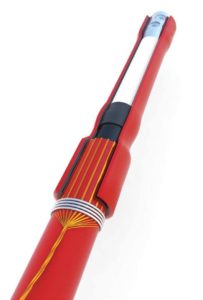
Heat shrink products are installed using controlled heat (typically via a gas torch), causing the material to shrink tightly around the cable.
- Provides a strong, durable seal
- Excellent mechanical protection
- Widely used across LV and MV applications
However, installation requires trained personnel and careful handling of heat sources, particularly in sensitive environments.
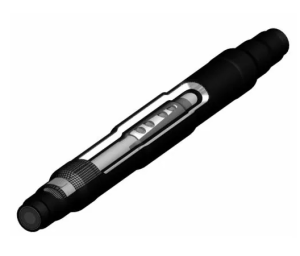 Cold Shrink Technology
Cold shrink products are pre-expanded and mounted onto a removable core. Once positioned, the core is removed and the material contracts automatically.
- No heat required – safer for hazardous or confined environments
- Faster installation time
- Consistent application with reduced risk of error
This makes cold shrink ideal for applications where speed, safety and repeatability are critical.
Terminations: Ensuring Safe Connections at End Points
While joints connect cables together, terminations are responsible for safely connecting cables to equipment such as switchgear, transformers and panels.
The training demonstrated how proper termination:
- Prevents electrical stress at the cable end
- Maintains insulation integrity
- Reduces the risk of partial discharge and failure
Both heat shrink and cold shrink technologies are widely used in termination systems, depending on the application and installation environment.
Why Product Training is Essential in the Electrical Industry
With increasing demand for reliable power across industries, the margin for error in cable installation continues to shrink. Training plays a key role in ensuring:
- Correct product selection
- Safe installation practices
- Compliance with industry standards
- Improved long-term performance of electrical systems
Key Takeaways from 3M Cable Jointing Training
- Understanding the difference between heat shrink and cold shrink is critical for correct product selection
- Tapes and resins play a vital supporting role in insulation and protection
- Proper jointing and termination directly impact system reliability and safety
- Hands-on experience significantly improves technical understanding
- Training ensures confidence when specifying and supplying electrical solutions