What Is Cable Ducting? LV MV HV Underground Cable Ducts Explained
Published 16 Jun 2026
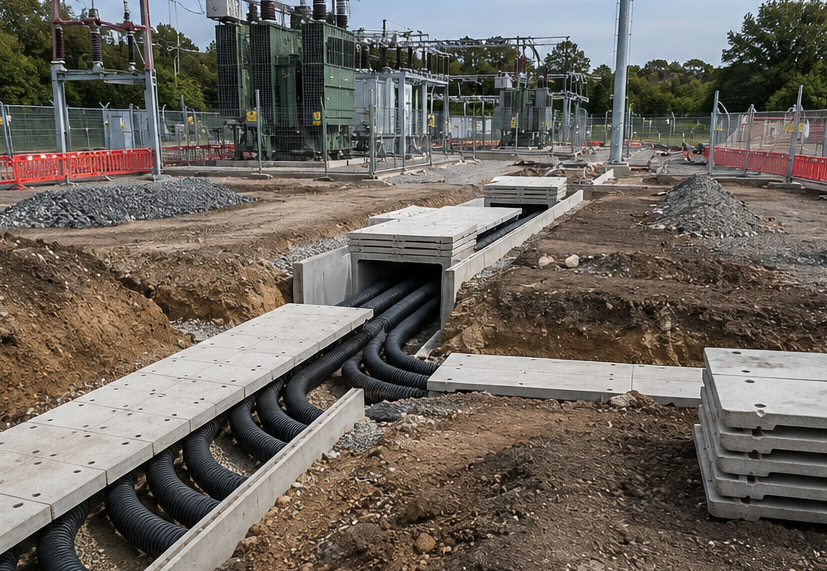
Cable ducting is used to protect electrical, power, communications and utility cables when they are installed underground, through buried routes, into substations, across infrastructure projects or within cable trench systems. A cable duct provides a protected pathway for cables, helping to reduce the risk of mechanical damage, support future cable pulling and improve the long-term reliability of LV, MV and HV cable installations.
For electrical contractors, utilities, DNOs, rail contractors, civil engineers, infrastructure developers and cable installation teams, selecting the correct underground cable ducting is essential. The duct must be suitable for the cable type, voltage level, installation method, ground conditions, pulling route, duct sealing requirements and mechanical protection needed for the project.
Cable ducting is commonly used for LV MV HV power cable ducting, 11kV and 33kV cable routes, 66kV and 132kV cable protection, street lighting, motorway communications, fibre optic networks, substations, renewable energy projects, industrial sites and major infrastructure developments.
Quick Answer: What Is Cable Ducting?
Cable ducting is a protective underground duct or conduit system used to house and protect cables during and after installation. It provides a defined route for power, control, telecoms, street lighting, fibre optic and utility cables, helping protect them from ground movement, civil works, impact, compression, water ingress and installation damage.
In power cable installations, cable ducts are used for low voltage, medium voltage and high voltage cable routes, including 11kV, 33kV, 66kV and 132kV applications. They are often installed in cable trenches, road crossings, substations, highways, industrial sites, rail infrastructure and utility networks.
What Is Cable Ducting?
Cable ducting is a buried or surface-installed duct system that creates a protected route for cables. Instead of installing cables directly into the ground with no dedicated pathway, the cable is pulled through a duct that helps shield it from mechanical stress, soil movement, civil excavation and other external risks.
In electrical infrastructure, cable ducts are particularly important because cable circuits are often expected to remain in service for decades. Once a cable route is buried, repairing or replacing a damaged cable can be disruptive, expensive and time-consuming. Using the correct cable duct at the start of the project helps reduce long-term risk.
Cable ducting can be supplied in different materials, sizes, colours, stiffness ratings, impact classifications and duct classes depending on the application. Common product types include twinwall cable ducting, PVCu cable ducting, PE cable duct coils, rigid cable duct systems, power cable ducts, street lighting ducting, motorway communications ducting and general utility ducting.
Thorne & Derrick supply cable ducting for LV, MV and HV power cable protection, including ducting for 11kV, 33kV, 66kV and 132kV cable systems.
Where Is Cable Ducting Used?
Cable ducting is used wherever cables need to be routed underground or through areas where additional mechanical protection, route control or future access may be required.
Typical cable ducting applications include:
- Power distribution networks – LV, 11kV, 33kV, 66kV and 132kV cable circuits.
- Substations – cable entries, transformer routes, switchgear connections and building entries.
- Utilities – electricity, fibre optic, telecoms, street lighting and communications cable routes.
- Rail infrastructure – cable troughing, duct routes, signalling and power cable protection.
- Highways and roads – motorway communications, lighting, traffic systems and service crossings.
- Renewable energy projects – solar farms, wind farms, battery storage and grid connection projects.
- Industrial sites – factories, process plants, data centres, manufacturing facilities and energy infrastructure.
- Commercial developments – power distribution, lighting, communications and service routes.
Cable ducts are often installed before the cable itself is pulled into place. This means the duct route, bends, internal diameter, draw rope, pulling tension and duct cleanliness should all be considered before the final cable installation.
For cable installation equipment, see cable pulling and cable laying equipment including cable rollers, cable socks, winches, lubricants and duct rods.
LV, MV & HV Cable Ducting
Cable ducting is used across low voltage, medium voltage and high voltage installations, but the specification becomes more critical as cable value, operating voltage, route length and system importance increase.
For power networks, LV MV HV power cable duct is commonly specified to provide underground cable protection for 11kV, 33kV, 66kV and 132kV cable routes.
Ducting should be selected with the full cable installation in mind. The cable outside diameter, bending radius, pulling tension, route length, duct condition, duct class and duct sealing requirements can all influence the final specification.
Cable Duct Classes Explained
Cable ducts used for power cable protection are often selected by duct class, mechanical strength and compliance requirements. For LV, MV and HV applications, it is important to check whether the duct is suitable for the intended environment and voltage level.
Cable duct class should not be guessed. It should be selected in line with the project specification, DNO requirements, cable voltage, installation location, civil design and applicable standards.
Thorne & Derrick supply a range of Polypipe cable ducting, including duct systems for power, motorway communications, street lighting and utilities applications.
Cable Duct vs Cable Trough vs Cable Protection Tiles
Cable ducting is only one form of cable protection. Depending on the route, project type and installation environment, contractors may also use cable troughs, cable covers, cable protection tiles or modular cable protection systems.
For rail, utilities and infrastructure projects, cable troughs may be used where cables need protected containment in a trough-based system rather than a fully ducted underground route.
For underground cable trench protection, cable protection systems can include modern alternatives to traditional ducting, troughing and cable cover methods.
Polypipe Ridgiduct, Ridgicoil & Polyduct
Polypipe cable ducting is widely used for underground cable protection across power, utilities, street lighting, motorway communications and infrastructure projects.
The Polypipe cable duct range includes products such as Ridgiduct, Ridgicoil and Polyduct, with options available for LV, MV and HV power cable protection.
When specifying Polypipe Ridgiduct or other duct systems, engineers should check the required duct class, internal diameter, cable fill ratio, installation temperature, route conditions and whether the duct will be used for LV, MV or HV cable circuits.
View the full range of Polypipe cable ducting available from Thorne & Derrick.
Cubis MULTIduct & Cable Protection Systems
For some infrastructure projects, modular cable protection systems may offer an alternative to traditional ducting methods.
Cubis MULTIduct is a structural multiple duct cable protection system used to create organised, repeatable and modular cable routes. It is commonly associated with infrastructure applications where cable protection, installation speed and route management are important.
Cubis also manufactures access chambers, access covers, cable protection systems and cable troughing products used across rail, telecoms, water, energy and infrastructure networks.
See the full Cubis access chambers and cable protection range.
Why Cable Ducts Need Sealing
A cable duct does not only need to protect the cable route during installation. In many buildings, substations and infrastructure sites, the duct entry itself must also be sealed.
Unsealed ducts can allow water, gas, silt, rodents, fire, smoke or contaminants to pass through cable entries and into buildings, substations, plant rooms or electrical enclosures.
Duct seals are used to seal around cables where they pass through ducts, walls, floors or building entries. This is particularly important for substations, basements, tunnels, industrial sites, flood-risk areas and locations where gas or water migration must be controlled.
Common duct sealing considerations include:
- Water ingress protection – preventing water entering substations, plant rooms and buildings.
- Gas sealing – reducing the risk of gas migration through cable ducts.
- Fire protection – maintaining compartmentation where required.
- Multiple cable entries – sealing several cables within one duct or transit.
- Future access – selecting re-enterable duct sealing systems where cables may need to be changed.
Thorne & Derrick supply CSD RISE duct seals for water-tight and gas-tight cable duct sealing, as well as other cable sealing systems for substations, utilities and industrial applications.
How To Select Cable Ducting
Selecting the correct cable ducting requires more than choosing a duct diameter from a catalogue. The duct must suit the cable, the installation route and the conditions the system will face over its service life.
For long cable pulls, cable ducting should be considered alongside the wider installation equipment package, including cable pulling winches, cable rollers, cable socks, bellmouth rollers and cable lubricants.
Common Cable Ducting Mistakes
Cable ducting failures are often caused by poor planning rather than the duct product itself. The most common mistakes include:
- Choosing the wrong duct size – a duct that is too small can make cable pulling difficult and increase the risk of cable sheath damage.
- Ignoring cable bend radius – tight bends can increase pulling tension and may damage the cable during installation.
- Using the wrong duct class – the duct must match the mechanical and project requirements of the cable route.
- Not checking the duct route before pulling – obstructions, collapsed ducts or debris can damage the cable outer sheath.
- Forgetting duct sealing – unsealed ducts can allow water, gas or contaminants to enter substations and buildings.
- Poor coordination with cable pulling equipment – duct routes should be planned with pulling tension, rollers, winches and lubricants in mind.
- Using general purpose ducting for critical power routes – power cable applications may require specific duct classes, colours, approvals or mechanical performance.
Correct duct selection should be carried out as part of the complete cable installation design, not treated as a last-minute civil engineering detail.
Related Cable Ducting & Protection Products
Cable ducting is usually part of a wider cable protection and installation system. Related products include:
- Cable Duct – underground ducting for LV, MV and HV power cable protection.
- LV MV HV Power Cable Duct – ducting for 11kV, 33kV, 66kV and 132kV cable routes.
- Polypipe Cable Ducting – Ridgiduct, Ridgicoil and Polyduct cable protection systems.
- Cubis Cable Protection – access chambers, access covers, MULTIduct and PROtrough cable systems.
- Cable Trough – GRC, GRP and concrete cable troughing systems.
- Cable Protection – underground cable covers, tiles and protection systems.
- CSD RISE Duct Seals – water-tight and gas-tight duct sealing systems.
- Cable Pulling & Laying Equipment – tools and equipment for installing cables into ducts and trenches.
Cable Ducting FAQs
Q: What is cable ducting?
A: Cable ducting is a protective duct or conduit system used to route and protect cables, usually underground. It provides a defined cable pathway and helps protect cables from mechanical damage, ground movement, civil works and installation stress.
Q: What is cable ducting used for?
A: Cable ducting is used for power cables, communications cables, fibre optic cables, street lighting cables, motorway communications, utilities, substations, rail infrastructure, industrial sites and commercial developments. In power systems, it is commonly used for LV, MV and HV cable protection.
Q: What ducting is used for 11kV and 33kV cables?
A: 11kV and 33kV cable routes typically require power cable ducting suitable for medium voltage cable protection. The correct duct should be selected based on the project specification, duct class, cable diameter, installation route, DNO requirements and mechanical protection needed.
Q: What is the difference between cable duct and cable trough?
A: Cable ducting is usually a closed duct or conduit through which cables are pulled. Cable troughing is a trough-based cable containment system that can provide cable protection in rail, utilities, power and infrastructure environments. The correct option depends on the route, installation method and project specification.
Q: What is Polypipe Ridgiduct?
A: Polypipe Ridgiduct is a twinwall cable duct and cable protection system used across power, utilities, lighting and communications applications. It is designed to provide a lightweight but robust cable protection route for underground installations.
Q: What is a cable duct fill ratio?
A: Cable duct fill ratio compares the cross-sectional area of the cable with the internal cross-sectional area of the duct. It helps determine whether the duct is large enough for the cable to be pulled safely without excessive friction, stress or installation difficulty.
Q: Do cable ducts need to be sealed?
A: Cable ducts should be sealed where there is a risk of water, gas, fire, smoke, rodents or contaminants entering buildings, substations, plant rooms or enclosures. Duct seals are especially important at substation entries, building entries and flood-risk locations.
Q: What products are used with cable ducting?
A: Cable ducting is often used with duct seals, cable lubricants, cable rollers, cable socks, cable pulling winches, duct rods, cable protection tiles, warning tapes, cable troughs and access chambers. These products help protect and install cables safely through underground routes.
Conclusion
Cable ducting is a critical part of underground cable installation. It protects LV, MV and HV cables, creates a defined cable route, supports safer cable pulling and helps reduce the risk of long-term cable damage.
For power cable installations, ducting should be selected carefully based on the cable voltage, cable diameter, duct class, installation route, mechanical protection requirements, cable pulling method and sealing requirements. Related products such as duct seals, cable troughs, cable protection tiles, cable rollers, cable socks and lubricants should also be considered as part of the complete installation package.
Thorne & Derrick supply LV MV HV cable ducting, Polypipe Ridgiduct, cable troughs, cable protection systems, duct seals and cable pulling equipment for underground cable installations, substations, utilities, rail, highways, renewables and industrial infrastructure projects.