Arc Flash PPE Selection Guide: Clothing, Ratings & Protection
Published 17 Nov 2026
What Is Arc Flash PPE and Why Is It Important?
Arc flash PPE is specialist personal protective equipment designed to help protect electrical workers against the thermal hazards of an electric arc. It includes arc-rated clothing, protective helmets, face shields, hoods and other equipment selected according to the risks of a particular electrical task.
An arc flash is a dangerous electrical discharge through air that can release intense heat, light and pressure. Incidents may cause severe burns and other injuries, particularly when working on or near electrical distribution equipment, switchgear, transformers and power systems.
However, choosing suitable protection involves more than selecting a jacket with a particular calorie rating. Engineers must consider the arc flash risk assessment, calculated incident energy, applicable standards, equipment configuration and the protection provided by the complete PPE system.
There are also important differences between arc-rated and flame-resistant clothing, ATPV and ELIM ratings, arc protection classes, insulating gloves and arc-rated hand protection.
Thorne & Derrick supply arc flash clothing and electrical PPE for utilities, cable jointers, substation engineers, electrical contractors and industrial maintenance teams working on LV, MV and HV equipment.
This guide explains the main types of protective equipment, how arc ratings work, which standards apply and what to check when specifying a complete protective outfit.
Quick Navigation – Arc Flash Protection
- Quick Answer: What Is Arc Flash PPE?
- What Is an Arc Flash Hazard?
- What PPE Is Used for Arc Flash Protection?
- Arc-Rated Clothing & Switching Suits
- Helmets, Visors & Face Protection
- Gloves & Electrical Shock Protection
- ATPV, EBT & ELIM Explained
- Arc Protection Class 1 vs Class 2
- Arc Flash PPE Standards
- How to Select the Correct PPE
- Typical Electrical Applications
- Inspection & Maintenance
- Common Selection Mistakes
- Related Products & Guidance
- Frequently Asked Questions
- Conclusion
Quick Answer: What Is Arc Flash PPE?
Arc flash PPE is personal protective equipment selected to help reduce injury from the thermal effects of an electrical arc. Depending on the risk assessment, it may include arc-rated jackets, trousers, coveralls, switching suits, helmets, visors, hoods, gloves and suitable footwear.
Protection must be selected for the assessed electrical hazard. Arc-rated garments are tested against specified thermal effects, but they do not make electrical work risk-free or necessarily protect against electric shock, blast pressure or flying debris.
What Is an Arc Flash Hazard?
An electrical arc flash can occur when an electrical fault creates a conductive path through air between energised conductors or between an energised conductor and earth.
The resulting discharge can release significant thermal energy in a very short period.
Potential consequences include:
- Thermal Burns: Intense heat can cause serious skin injuries.
- Clothing Ignition: Unsuitable fabrics can ignite or melt during exposure.
- Eye and Face Injuries: Light, heat and ejected material can injure exposed areas.
- Pressure Effects: An arc event may generate pressure waves and other mechanical hazards.
- Equipment Damage: Switchgear, cables and surrounding infrastructure may be damaged.
Can Arc Flash Occur on Low Voltage Equipment?
Yes. Electrical arc hazards are not restricted to high voltage systems.
LV distribution boards, feeder pillars and switchgear can present significant risks under certain fault conditions. The available fault current, protective device clearing time, enclosure arrangement and working distance all influence the potential exposure.
Voltage alone does not determine the severity of an arc flash hazard.
Is PPE the First Safety Measure?
No. The preferred approach is to eliminate or reduce exposure wherever reasonably practicable.
Safe isolation, suitable equipment design, planned procedures and other engineering or administrative controls take priority. Personal protection is used to address residual risks identified by the assessment.
For further guidance, read the IET Arc Flash Risk Management guidance.
What PPE Is Used for Arc Flash Protection?
The required equipment depends on the task and identified hazards. A complete protective arrangement may contain several different items rather than a single garment.
| PPE Type | Primary Function | Selection Consideration |
|---|---|---|
| Arc-Rated Clothing | Helps protect the torso, arms and legs against thermal exposure. | Arc rating, coverage, fit and garment construction. |
| Switching Suits | Provides an integrated clothing arrangement for specified electrical tasks. | Suit rating, complete coverage and compatibility of components. |
| Helmets & Face Shields | Help protect the head, eyes and face against specified hazards. | Appropriate arc testing, coverage and compatible helmet assembly. |
| Arc-Rated Hoods | Provide additional head, face and neck coverage. | Rated assembly, visibility, ventilation and task suitability. |
| Protective Gloves | Address specified hand hazards, including thermal and electrical risks. | Arc protection and shock insulation assessed separately. |
| Safety Footwear | Addresses relevant foot and mechanical hazards. | Required electrical, thermal and mechanical characteristics. |
The complete outfit must provide suitable coverage and avoid gaps that could expose the wearer to an assessed hazard.
Arc-Rated Clothing, Coveralls & Switching Suits
Arc-rated protective clothing is designed and tested to provide a specified level of protection against the thermal hazards of an electric arc.
Available garments can include jackets, trousers, coveralls, base layers and complete switching suits. The correct combination depends on the assessed exposure and the manufacturer’s instructions.
Arc-Rated vs Flame-Resistant Clothing
These terms are related, but they do not mean exactly the same thing.
Flame-resistant clothing is designed to resist ignition or limit flame spread under specified conditions.
Arc-rated clothing has been tested for performance against the thermal hazards of an electric arc using an applicable arc test method.
A garment described only as flame-resistant should not automatically be assumed to have an arc rating.
Jackets, Trousers & Coveralls
Separate jackets and trousers can provide flexibility for appropriate electrical tasks, while coveralls provide a continuous garment arrangement.
When selecting separate garments, confirm that the combined outfit provides appropriate coverage, including when the worker bends, reaches or moves.
Individual garment ratings and any claimed combined system rating must be supported by the manufacturer’s test information.
Switching Suits
Switching suits are often selected for specified switching, maintenance or substation operations where an assessed arc exposure requires particular protective clothing.
Some product ranges include higher arc-rated garment combinations and associated head protection.
Browse arc flash suits and protective clothing for available configurations.
Can Several Garments Be Layered?
Layering may form part of an approved protective clothing system, but the resulting protection must not be calculated by simply adding the ratings of individual garments.
Use manufacturer-supported system ratings or an appropriate assessment of the complete arrangement.
Undergarments must also be suitable for the identified hazards. Materials that melt or ignite can worsen burn injuries during thermal exposure.
Arc Flash Helmets, Face Shields & Hoods
Head and face protection is an important part of a complete electrical safety arrangement.
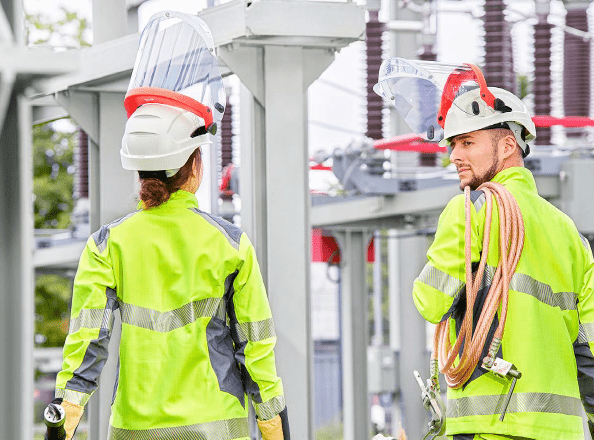
Depending on the risk assessment, workers may need a suitable helmet, arc-rated visor, chin protection, hood or another compatible protective assembly.
Is a Standard Safety Helmet Enough?
Not necessarily. A conventional industrial safety helmet may provide mechanical head protection without being tested for the relevant thermal arc exposure.
Similarly, an ordinary clear face shield should not be assumed to provide sufficient protection against an electrical arc.
What Should Engineers Check?
- The applicable arc thermal protection rating or class.
- Compatibility between the helmet, visor and other components.
- Coverage of the face, chin, neck and surrounding areas.
- Relevant electrical insulation requirements.
- Optical clarity, fit and working visibility.
- The manufacturer’s testing and use instructions.
For a detailed explanation of visor ratings and helmet configurations, read our Arc Flash Helmets Explained guide.
Arc Flash Gloves vs Electrical Insulating Gloves
Arc thermal protection and electrical shock protection are different requirements.
An insulating glove is selected to provide electrical insulation within its specified working-voltage limits and conditions of use.
An arc-rated hand protection product is assessed for defined thermal arc hazards.
One form of protection must not automatically be assumed to provide the other.
Electrical Insulating Gloves
Insulating gloves are available in different electrical classes, with use determined by the applicable voltage, standards and manufacturer instructions.
Where required, compatible protective outer gloves may also be necessary to protect the insulating gloves against mechanical damage.
Explore our electrical insulating gloves range for LV, MV and HV applications.
Can Insulating Gloves Also Provide Arc Protection?
Some glove systems may provide protection against more than one hazard, but suitability must be supported by the relevant testing and documentation.
Always assess the required protection for electrical shock, thermal exposure, mechanical damage and other task-specific hazards.
ATPV, EBT & ELIM – Arc Flash Ratings Explained
When comparing arc-rated garments, engineers may encounter the terms ATPV, EBT and ELIM.
These are used in the open-arc testing framework described in IEC 61482-1-1. Values may be expressed in cal/cm² or the corresponding energy-per-area units.
What Does ATPV Mean?
ATPV stands for Arc Thermal Performance Value.
It represents an incident energy level associated with a 50% probability of reaching the specified second-degree burn threshold under the defined test conditions.
The value is used to characterise the thermal arc performance of tested materials or garments.
What Does EBT Mean?
EBT stands for Energy Breakopen Threshold.
It describes an incident energy level associated with a 50% probability of the specified material breakopen criterion being reached under the test conditions.
It is not simply another name for ATPV.
What Does ELIM Mean?
ELIM stands for Incident Energy Limit Value.
It is determined from test data using a method intended to identify an incident energy level below the specified burn and breakopen criteria within the evaluated test dataset.
ELIM is not a guarantee of zero injury in actual working conditions.
| Rating | Meaning | What It Describes |
|---|---|---|
| ATPV | Arc Thermal Performance Value | 50% probability of reaching the specified burn criterion. |
| EBT | Energy Breakopen Threshold | 50% probability of reaching the specified breakopen criterion. |
| ELIM | Incident Energy Limit Value | An incident energy limit derived from the open-arc test dataset. |
Important: Do not assume that ATPV, EBT and ELIM values are directly interchangeable when selecting clothing. Check the product marking, test method and applicable selection procedure.
Arc Protection Class 1 vs Class 2
Arc protection classes are associated with a different test approach from open-arc ratings.
The box-test method in IEC 61482-1-2 evaluates materials or garments under specified constrained arc conditions.
APC 1
Arc Protection Class 1 indicates that the tested product meets the requirements of the relevant lower box-test exposure condition.
APC 2
Arc Protection Class 2 indicates performance against the higher of the two specified box-test exposure conditions.
APC 2 therefore represents a more demanding test condition within this testing method.
Is APC 2 the Same as a Particular Calorie Rating?
No. APC 1 and APC 2 cannot be converted directly into universal ATPV or ELIM values.
The open-arc and box-test methods use different test configurations and assess performance differently.
Product selection must follow the risk assessment and the applicable method of evaluating the required protection.
Arc Flash PPE Standards – EN 61482 & Related Requirements
Relevant standards provide requirements and test methods for different types of electrical protective equipment.
BS EN 61482-2 – Arc Protective Clothing
BS EN 61482-2 specifies requirements for protective clothing intended to protect against the thermal hazards of an electric arc.
It addresses the relevant clothing performance requirements and associated test methods.
IEC 61482-1-1 – Open Arc Testing
This standard specifies testing used to determine arc thermal ratings such as ATPV, EBT and ELIM.
IEC 61482-1-2 – Box Testing
This test method uses a constrained arc arrangement and supports classification into APC 1 and APC 2.
BS EN 60903 – Electrical Insulating Gloves
This standard covers insulating gloves for electrical protection. Their electrical insulating classification must be considered separately from any arc thermal performance.
Other PPE Requirements
Helmets, visors, footwear and other components may be subject to additional product standards.
When selecting a complete outfit, confirm that each relevant component has suitable documentation and is approved for the intended use.
For a more detailed examination of the clothing requirements, see our IEC 61482-2 Arc Flash Clothing Standard guide.
How to Select the Correct Arc Flash PPE
Suitable protection should be selected using a documented risk assessment and an electrical safety procedure appropriate to the task.
It is not sufficient to select clothing based only on the system voltage, a generic job title or the highest available garment rating.
Does a Higher Calorie Rating Always Mean Better Protection?
Not necessarily for every task. A higher stated arc rating indicates a different tested thermal performance, but equipment must still be appropriate for the assessed hazard and working conditions.
Consider overall protection, visibility, fit, compatibility and the requirements of the specific electrical activity.
Can PPE Be Selected from Voltage Alone?
No. Two pieces of equipment operating at the same voltage may have very different arc flash hazards because of fault current, protective device operation, equipment construction and working distance.
Selection should follow the relevant electrical risk assessment rather than a simple LV, 11kV or 33kV rule.
Where Is Arc Flash Protection Used?
Electrical workers may require suitable protective equipment across various industrial and utility applications.
Switchgear Operation
Electrical switching, racking and certain maintenance operations can present arc hazards that require assessment and appropriate control measures.
Electrical Substations
Substation engineers and authorised personnel may require specialist protection for defined tasks involving distribution or transmission equipment.
Cable Jointing & Terminating
Cable jointers and electrical contractors must assess electrical hazards associated with the equipment and working conditions, particularly where energised systems may be involved.
Industrial Electrical Maintenance
Electrical maintenance teams working on distribution panels, motor control equipment and industrial switchgear may encounter tasks requiring additional protective measures.
Renewable Energy Infrastructure
Solar, wind and battery storage installations contain electrical distribution systems that require suitable risk assessment and task-specific safety procedures.
The presence of an electrical installation alone does not establish that a particular PPE category or rating is required for every task.
Inspection, Cleaning & Maintenance of Protective Clothing
Even correctly specified equipment can become unsuitable if it is damaged, contaminated, altered or poorly maintained.
Before Use
Workers should inspect protective garments and equipment in accordance with the manufacturer’s instructions.
Checks may include:
- Visible tears, holes or damaged seams.
- Contamination from oils, chemicals or other substances.
- Damaged fasteners or closures.
- Cracked or damaged visor surfaces.
- Missing labels or unreadable protection markings.
- Condition and compatibility of protective accessories.
Cleaning and Storage
Follow the manufacturer’s approved cleaning instructions. Incorrect laundering, contamination or unauthorised modifications may affect protective performance.
Store garments and equipment in suitable conditions that reduce the likelihood of mechanical damage or contamination.
When Should Equipment Be Replaced?
Items should be removed from service when they no longer meet the manufacturer’s inspection and use criteria.
Do not assume that damaged arc-rated clothing or protective equipment remains suitable simply because its original rating label is visible.
Common Arc Flash PPE Selection Mistakes
Several specification errors can result in unsuitable protection or create a false sense of security.
- Choosing by Voltage Alone: System voltage does not establish the incident energy exposure.
- Ignoring the Risk Assessment: Protection should correspond to the actual task and assessed conditions.
- Confusing Flame Resistance with Arc Rating: Flame-resistant clothing is not automatically tested for electric arc performance.
- Mixing Rating Systems: ATPV, EBT, ELIM and APC classifications must be interpreted correctly.
- Using an Ordinary Face Shield: Mechanical eye and face protection does not automatically provide suitable arc thermal protection.
- Assuming Insulating Gloves Are Arc-Rated: Shock insulation and thermal arc protection require separate consideration.
- Overlooking Body Coverage: Gaps between garments and protective accessories can leave areas exposed.
- Adding Garment Ratings Together: Layered clothing performance should be supported by appropriate evidence.
- Neglecting Equipment Compatibility: Helmets, visors, hoods and other accessories must work together.
- Poor Inspection & Storage: Damage and contamination can compromise protective equipment.
The safest approach is to prioritise risk reduction, then select suitable protective equipment for the residual hazards identified by the electrical safety procedure.
Arc Flash Protection Products From Thorne & Derrick
Thorne & Derrick supply electrical safety equipment for utility networks, industrial facilities, electrical contractors and substation personnel.
Our product ranges include protective clothing, helmets, visors, gloves and complete PPE kits for suitable applications.
Explore Related Equipment
- Arc Flash Clothing – jackets, trousers, coveralls and other protective garments.
- Arc Flash Helmets & Visors – protective head and face equipment.
- Arc Flash Equipment & Kits – related electrical safety products and PPE configurations.
For product selection and quotations, provide the required garment sizes, intended task, relevant risk assessment information and any specified protection requirements.
Arc Flash PPE – Frequently Asked Questions
These answers cover common questions about protective clothing, ratings, equipment selection and electrical safety.
Q1. What is arc flash PPE?
It is personal protective equipment designed to help protect electrical workers against specified thermal hazards of an electric arc. It may include arc-rated clothing, helmets, face protection, gloves and other suitable equipment.
Q2. Is arc-rated clothing the same as flame-resistant clothing?
No. Flame-resistant clothing has specified flame performance, while arc-rated clothing has been tested against defined electric arc thermal hazards. The terms should not be treated as interchangeable.
Q3. What does ATPV mean?
ATPV stands for Arc Thermal Performance Value. It is associated with a 50% probability of reaching the specified second-degree burn threshold in the relevant open-arc test.
Q4. What is an ELIM rating?
ELIM means Incident Energy Limit Value. It is calculated from relevant open-arc test results and should be interpreted using the applicable standard and garment documentation.
Q5. What is the difference between APC 1 and APC 2?
They are two classes associated with the IEC 61482-1-2 box test. APC 2 represents the higher of the two specified constrained arc test conditions. They cannot be converted directly into universal ATPV or ELIM values.
Q6. Can an ordinary safety helmet provide arc protection?
A conventional helmet may provide mechanical protection without suitable thermal arc protection. The complete helmet and visor arrangement must be selected using relevant markings, testing and manufacturer instructions.
Q7. Are electrical insulating gloves also arc-rated?
Not automatically. Insulating gloves are selected for electrical shock protection. Any claimed thermal arc protection must be supported by appropriate testing and documentation.
Q8. Can arc flash occur on LV equipment?
Yes. Low voltage switchgear and distribution equipment can present significant arc hazards under certain fault conditions. A task-specific risk assessment is necessary.
Q9. Does 11kV equipment always need a particular calorie rating?
No. The system voltage alone does not establish the appropriate protective clothing rating. Fault current, clearing time, equipment construction, working distance and the risk assessment are relevant.
Q10. Can clothing layers be combined to increase protection?
Layering may be used where the complete arrangement is suitable, but the combined protection must not be established by simply adding individual garment ratings. Follow the manufacturer’s tested system information.
Q11. What standards apply to arc protective clothing?
BS EN 61482-2 specifies requirements for protective clothing against thermal arc hazards. IEC 61482-1-1 and IEC 61482-1-2 describe relevant test methods.
Q12. Is arc flash PPE a replacement for safe isolation?
No. The priority is to eliminate or reduce exposure through suitable safe working arrangements. Personal protective equipment addresses residual hazards and does not replace the required electrical safety controls.
Q13. What should be checked before choosing a switching suit?
Check the task risk assessment, garment ratings, complete body coverage, head and face protection, gloves, fit, compatibility and applicable manufacturer instructions.
Q14. How often should protective clothing be replaced?
Replacement depends on the manufacturer’s instructions, condition of the equipment, inspections and any damage or contamination. Do not use items that fail the applicable inspection criteria.
Conclusion: Choosing Suitable Electrical Arc Protection
Arc flash PPE is an important part of managing residual thermal hazards associated with electrical work.
Suitable protection may involve arc-rated clothing, switching suits, helmets, face shields, hoods, gloves and other task-specific equipment.
The correct selection depends on the electrical risk assessment, incident energy or applicable protection method, garment test ratings, body coverage and compatibility of the complete outfit.
Understanding the difference between ATPV, EBT, ELIM and arc protection classes can help engineers interpret product documentation and select suitable protective clothing.
However, PPE remains one part of a wider electrical safety strategy. Safe isolation, engineering controls and appropriate work procedures should always take priority wherever reasonably practicable.
Thorne & Derrick supply specialist electrical protection products for utilities, cable jointers, contractors, substation engineers and industrial maintenance teams.
Contact our technical sales team with your required protection specification, garment sizes and application details to discuss suitable products.