VISARC & the Importance of Whole-Face Arc Flash Protection
Published 06 Aug 2026
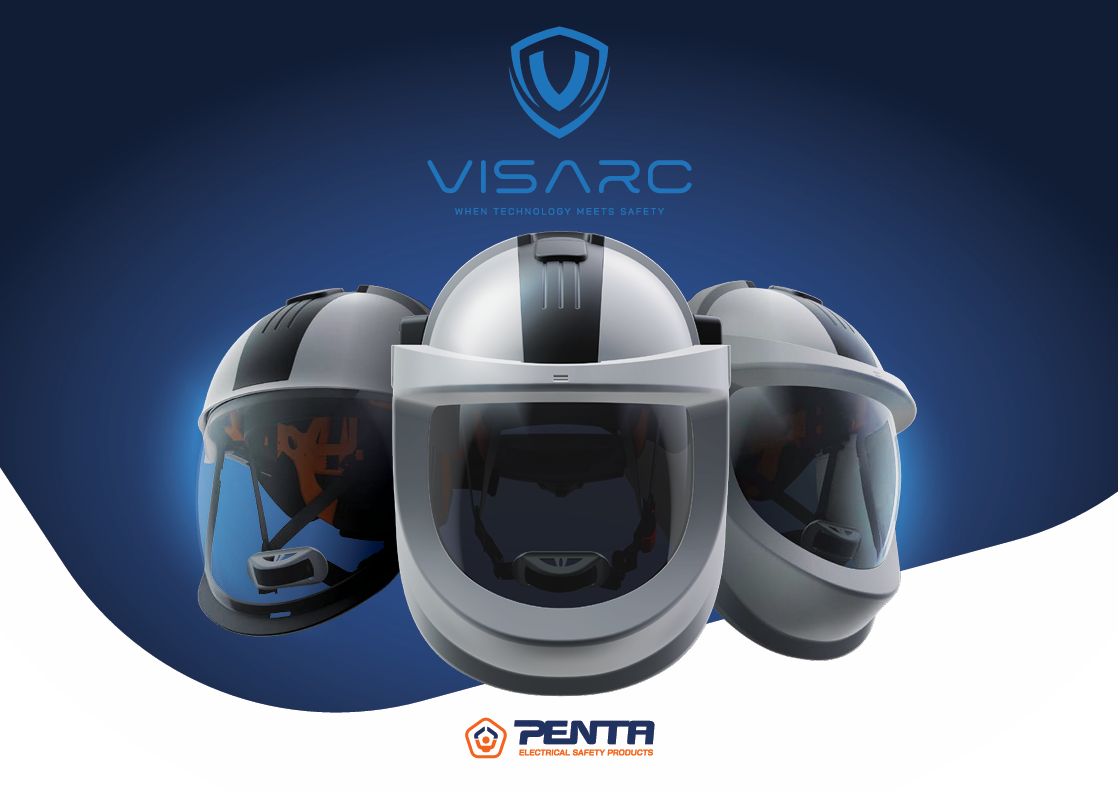
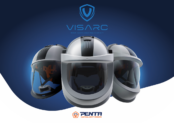
The PENTA VISARC arc flash helmet has been developed to protect one of the most exposed areas of an electrical worker’s body during an arc flash: the face.
Arc flash jackets, trousers and coveralls can protect the body, but they do not automatically protect the eyes, forehead, cheeks, jawline, chin or sides of the face.
The VISARC electrical safety helmet addresses this risk by combining an electrically insulating helmet shell, an integrated retractable face shield and, depending on the selected configuration, rigid chin and lateral protection.
This coordinated helmet system is designed to protect electrical workers against arc flash heat, ultraviolet radiation, molten-metal projections, high-speed particles and mechanical hazards while maintaining the visibility needed for detailed electrical work.
Available in APC1, APC2 12 cal/cm² and APC2 25 cal/cm² configurations, VISARC enables head and face protection to be selected according to the electrical risk assessment rather than applying one protection level to every task.
Thorne & Derrick supply the PENTA VISARC Helmet alongside arc flash clothing, insulating gloves and specialist electrical safety PPE for workers operating on or near LV, MV and HV electrical systems.
Quick Answer: How Does VISARC Protect the Face During an Arc Flash?
The PENTA VISARC Helmet combines an electrical safety helmet with an integrated arc flash face shield. APC2 configurations also incorporate rigid, retractable chin and lateral protection to extend protective coverage beneath and around the face.
The helmet is designed to protect against the thermal effects of an electrical arc, ultraviolet radiation, molten-metal projections, high-speed particles and mechanical hazards.
VISARC is available in three configurations: APC1, APC2 with an ATPV of 12 cal/cm² and APC2 with an ATPV of 25 cal/cm². The correct configuration must be selected through a competent electrical risk assessment.
What Is the PENTA VISARC Arc Flash Helmet?
The PENTA VISARC arc flash helmet is an integrated head and face protection system for electrical workers.
It has been designed to address several hazards within one coordinated assembly:
- Thermal hazards from an electrical arc
- Electrical risks affecting the head
- Mechanical impact and penetration hazards
- Ultraviolet radiation
- Molten-metal projections
- High-speed particles
- Reduced visibility caused by fogging, scratches or distortion
Instead of attaching a separate face shield to a general-purpose helmet, VISARC integrates the helmet shell, face shield and protective frame into one system.
This is important because every component of Category III electrical PPE must work together as part of the certified arrangement.
The integrated system also helps protect the face shield when it is retracted into the helmet, reducing its exposure to accidental scratches and damage while it is not in use.
What Can an Arc Flash Do to the Face?
An arc flash is a rapid release of electrical energy through the air between conductors or from an energised conductor to an earthed surface.
The event can occur following insulation breakdown, accidental contact, equipment failure, contamination, loose connections, incorrect operation or the introduction of a conductive object.
An electrical arc may release:
- Intense thermal energy
- Visible and ultraviolet radiation
- Molten and vaporised metal
- High-speed equipment fragments
- Hot gases and smoke
- A powerful pressure wave
- Extremely high noise levels
The face is particularly vulnerable because it may be close to the electrical equipment and is not protected by the garments covering the torso, arms or legs.
Arc flash exposure is not limited to high-voltage systems. Serious electrical arcs can occur on LV equipment as well as MV and HV systems.
The actual risk depends on the equipment, available fault current, protection clearing time, working distance, configuration and task being performed.
Why Is Arc Flash Clothing Not Enough to Protect the Face?
Arc flash clothing only protects the areas it covers.
An arc-rated jacket, pair of trousers or coverall may protect the torso, arms and legs, but those garments do not automatically protect the face.
A complete arc flash PPE system may also require:
- An arc flash helmet
- An arc-rated face shield or visor
- Chin and lateral facial protection
- An arc flash hood or balaclava
- Safety glasses
- Electrical insulating gloves
- Suitable protective overgloves
- Hearing protection
- Appropriate safety footwear
VISARC has been designed specifically to address protection above the neckline.
The integrated helmet and face shield provide protection across the head, eyes and central facial area. The chin and lateral protection available within the VISARC range extends coverage around areas that may remain more exposed with a conventional open-bottom face shield.
How Does VISARC Extend Arc Flash Protection Around the Face?
The design of the PENTA VISARC Helmet considers more than protection directly in front of the eyes.
An electrical arc can occur below, beside or at an angle to the worker. Heat, ultraviolet radiation and projected particles may therefore reach areas outside the centre of a conventional visor.
VISARC addresses this through a combination of:
- An integrated face shield protecting the eyes and central facial area
- A helmet shell protecting the upper head
- Rigid protection beneath the face shield towards the chin
- Lateral extensions around the sides of the face
- Overlap between the protective components
- A retractable design that allows the complete system to remain attached to the helmet
For the APC1 version, rigid chin and lateral protection can be specified as an accessory and may be removed where permitted by the approved configuration.
For the APC2 versions, the retractable chin and lateral protection forms part of the helmet’s certified arc flash arrangement.
Whole-face coverage should not be confused with full head-and-neck enclosure. Some higher-risk tasks may require an arc flash hood, balaclava, shroud or complete switching suit.
The correct arrangement must always be determined by the task-specific risk assessment.
How Does the VISARC Arc Flash Face Shield Perform?
The face shield is one of the most important elements of an arc flash helmet.
It must provide the required protective performance while allowing the electrical worker to see equipment, conductors, labels, indicators and test points clearly.
The VISARC face shield is designed to protect against:
- Thermal effects from an electrical arc
- Ultraviolet radiation
- Molten-metal projections
- High-speed particles
- External scratching
- Internal fogging
It provides Optical Class 1 performance, the highest optical classification, helping reduce image distortion, visual blur and eye fatigue.
The internal surface is treated to resist fogging, while the outside of the shield is scratch-resistant.
These characteristics are directly relevant to safe working performance.
A visor that fogs, becomes heavily scratched or distorts the worker’s view can make it more difficult to:
- Identify cable and conductor markings
- Read equipment labels
- See warning indicators
- Position tools accurately
- Recognise damaged equipment
- Maintain awareness of the surrounding work area
Why Are VISARC Chin and Lateral Protection Important?
A conventional face shield primarily protects the area directly in front of the wearer.
During an arc flash, however, the heat, radiation, molten metal and projected particles may not travel in a straight line towards the middle of the shield.
The electrical arc may be:
- Below the worker’s eye level
- To one side of the worker
- Inside partially enclosed equipment
- Reflected or channelled by the equipment enclosure
- Directed around the lower or lateral edge of a visor
VISARC’s rigid chin and lateral protection extends the protected area beneath and around the face shield.
This helps reduce open areas around the jawline and sides of the face while maintaining a retractable system that remains integrated with the helmet.
The design is particularly relevant to electrical tasks involving:
- Switchgear operation
- Circuit-breaker racking
- Electrical testing
- Fault finding
- Cable jointing and termination work
- Maintenance inside electrical panels
- Commissioning and inspection
The chin and lateral protection must remain in the approved position and configuration required for the selected VISARC protection level.
It should not be removed, modified or replaced with an unapproved component.
VISARC APC1, APC2 12 Cal and APC2 25 Cal Explained
The PENTA VISARC range is available in three principal arc flash protection configurations.
This allows the wearer or duty holder to select the appropriate system using the findings of the electrical risk assessment.
VISARC APC1
The APC1 version provides Class 1 electrical arc protection under the box-test method.
It does not use an ATPV value from an open-arc test and should not be described as a particular cal/cm² helmet unless supported by specific manufacturer certification.
Rigid chin and lateral protection can be added to the APC1 helmet using the approved mounting points. A flame-resistant fabric lateral protection option is also available.
VISARC APC2 – 12 cal/cm²
The 12 cal/cm² version combines APC2 box-test performance with an ATPV of 12 cal/cm².
It includes the integrated retractable chin and lateral protection system, extending the protected area beneath and around the face shield.
VISARC APC2 – 25 cal/cm²
The 25 cal/cm² configuration provides the highest arc rating within the VISARC range.
It combines APC2 box-test classification with an ATPV of 25 cal/cm² and the integrated retractable chin and lateral protection system.
Which Standards Does the PENTA VISARC Helmet Meet?
The standards applying to VISARC depend on whether the component being considered is the helmet shell, face shield or complete helmet-and-shield assembly.
Standards provide evidence of performance under defined test conditions. They do not mean that one helmet configuration is suitable for every electrical installation or task.
The 30kV test level of the helmet shell must not be treated as a general working-voltage recommendation for the complete PPE system.
Electrical PPE selection should be based on the specific hazard, task, system and risk assessment.
Why Do Visibility and Optical Quality Matter During Electrical Work?
Protection is only effective when the worker can wear it correctly throughout the task.
Electrical work can involve small conductors, closely spaced terminals, labels, test points and equipment indicators. Poor visibility can increase the possibility of mistakes.
The VISARC face shield is designed to reduce:
- Image distortion
- Visual blur
- Eye fatigue
- Internal fogging
- Obstruction caused by surface scratches
Its Optical Class 1 performance supports extended use where clear vision is essential.
The face shield also provides a high level of visible light transmission for its protection class, helping the user work without unnecessarily lifting the shield.
A scratched or damaged face shield must still be inspected and replaced where required. Scratch resistance does not make the surface immune to damage.
Why Does the Integrated VISARC Helmet Design Matter?
Arc flash head protection is sometimes assembled from a helmet, separate visor carrier and additional components.
VISARC has instead been developed as a coordinated system.
The integrated design provides several practical benefits:
- The face shield remains attached to the helmet
- The shield can be lowered and retracted as part of the same system
- The helmet structure protects the shield while it is raised
- Chin and lateral protection remain aligned with the face shield
- The certified components are designed to work together
- The system is balanced for prolonged electrical work
- Approved accessories use designated mounting positions
The helmet uses a double-shell design that helps protect the retracted face shield and prolong its usable condition.
This is particularly important because scratches, cracks, chemical contamination or unapproved modifications can affect the performance of an arc flash face shield.
An integrated system also reduces the need to assemble unrelated helmet and visor components on site.
Can VISARC Protection Be Customised for Different Electrical Workers?
VISARC has been designed as a modular helmet platform.
This allows the helmet to be configured around the role, working environment and required level of protection without changing the certified protection level of the selected helmet.
Available options can include:
- Rigid chin and lateral protection for APC1
- Flame-resistant fabric lateral protection
- Integrated headlamp modules
- Personal voltage alarm options
- Neck protection against ultraviolet radiation
- Retroreflective strips
- Approved hearing protection
- Coloured helmet crests for role identification
- Company logo personalisation
Coloured crests can be used to distinguish teams or responsibilities on a shared site, such as different authorised roles or work supervisors.
Integrated electronic modules can combine a headlamp with additional functions, including rear visibility lighting and a personal electric-field alarm.
A personal voltage alarm is an additional warning device. It must not replace:
- Safe isolation
- Approved voltage detection procedures
- Test-before-touch requirements
- Electrical risk assessment
- Site safety rules
Not every accessory combination is compatible. The approved manufacturer configuration must be checked before combining lateral protection, hearing protection, lighting or electronic modules.
How Should a VISARC Arc Flash Helmet Be Selected?
The correct VISARC configuration should be selected using the results of a competent electrical risk assessment.
It should not be selected using voltage alone.
Important factors include:
- The electrical task being performed
- The system voltage
- The available fault current
- The protection clearing time
- The predicted or calculated incident energy
- The equipment type and configuration
- The condition and maintenance history of the equipment
- The working distance
- The position of the worker
- The possibility of a constrained or directed arc
- The clothing and other PPE being worn
- The need for additional neck or hearing protection
A higher arc rating is not automatically the best choice for every task.
The selected helmet should provide adequate protection without unnecessarily reducing visibility, mobility or comfort.
Who May Need a PENTA VISARC Arc Flash Helmet?
VISARC may be considered wherever electrical workers could be exposed to electric arc hazards during operation, testing, inspection, maintenance or fault conditions.
Potential users include:
- Cable jointers
- Authorised and senior authorised persons
- Electrical maintenance technicians
- Switchgear engineers
- Substation engineers
- Utility workers and linesmen
- Industrial electricians
- Rail and traction-power engineers
- Renewable-energy technicians
- Data-centre electrical teams
- Battery energy storage technicians
- Electric-vehicle infrastructure engineers
- Electrical testing and commissioning personnel
VISARC may be used within industries such as:
- Electricity transmission and distribution
- Utilities and substations
- Manufacturing and industrial processing
- Rail infrastructure
- Renewable energy
- Data centres
- Oil, gas and petrochemical facilities
- Marine and offshore installations
- Battery storage
- Commercial power distribution
The industry or job title does not determine the correct helmet. Selection must be based on the actual task and electrical hazard.
Can the PENTA VISARC Helmet Prevent an Arc Flash?
No helmet or item of PPE can prevent the electrical fault itself.
VISARC is designed to reduce the potential severity of injury if an arc flash occurs within the tested limitations of the selected helmet configuration.
Preventing the event and avoiding exposure must remain the priority.
Arc flash risk management should consider:
- Predict – identify the arc hazard and assess its possible severity.
- Prevent – eliminate the hazard or reduce the likelihood and severity of an event.
- Process – implement competent people, safe procedures and controlled working practices.
- Protect – select suitable PPE for any residual risk that remains.
Risk reduction measures may include:
- De-energising and safely isolating equipment
- Remote switching or operation
- Increasing working distance
- Reviewing protection settings
- Using arc-resistant equipment
- Improving equipment maintenance
- Restricting access
- Providing electrical safety training
- Implementing task-specific procedures
- Wearing correctly selected arc-rated PPE
How Should the VISARC Helmet Be Inspected and Maintained?
The VISARC helmet should be inspected before each use.
Checks should include:
- No cracks, splits or visible damage to the helmet shell
- No serious scratches, cracks or damage to the face shield
- No signs of chemical contamination
- The face shield lowers fully
- The face shield clips correctly onto its frame
- The chin and lateral protection moves and locks correctly
- The harness and chinstrap are secure
- Accessories are fitted in accordance with PENTA instructions
- No unapproved modifications have been made
Any helmet that has sustained a significant impact should be replaced, even where damage is not immediately visible.
For cleaning:
- Clean the helmet using lukewarm soapy water or a suitable soft wipe
- Allow the helmet to dry at room temperature
- Use the supplied microfibre cloth to remove dust from the face shield
- Use lukewarm water without soap for more thorough visor cleaning
- Do not use products containing solvents
- Follow the full instructions supplied with the helmet
PENTA states that the helmet can be stored for up to three years from its manufacturing date and used for up to five years from the date of first use, provided that it continues to pass the required pre-use inspections.
Actual replacement may be required earlier if the helmet is damaged, contaminated, modified, subjected to impact or fails inspection.
Common PENTA VISARC and Arc Flash Helmet Mistakes
Incorrect selection or use can create gaps in protection.
Common mistakes include:
- Selecting the helmet using voltage alone – arc flash severity also depends on fault current, clearing time, equipment configuration and working distance.
- Assuming arc flash clothing protects the face – garments only protect the areas they cover.
- Treating an ordinary visor as arc flash protection – general impact or splash protection does not automatically provide certified electrical arc protection.
- Removing APC2 chin protection – the integrated protection is part of the certified APC2 configuration.
- Changing the face shield to alter the protection level – the originally certified VISARC protection level must be maintained.
- Mixing unapproved components – unrelated helmets, shields and accessories may invalidate the certified arrangement.
- Using a damaged or heavily scratched visor – damage can affect visibility and protective performance.
- Ignoring the chin and sides of the face – an electrical arc may occur below or beside the worker.
- Assuming the highest rating suits every task – PPE should be proportionate to the assessed exposure.
- Using the voltage alarm as a voltage detector – a personal alarm does not replace safe isolation or approved voltage testing.
- Failing to inspect the helmet – cracks, impact damage or contaminated components may prevent the helmet performing as intended.
- Assuming PPE prevents the incident – VISARC reduces potential injury but cannot prevent an electrical fault.
Related VISARC and Arc Flash Safety Products
The VISARC helmet should be selected as part of a complete electrical safety PPE system.
- PENTA VISARC Arc Flash Helmet – integrated head and face protection available in APC1, APC2 12 cal/cm² and APC2 25 cal/cm² configurations.
- Arc Flash Helmets and Visors – helmet, face shield and hood options for electrical arc hazards.
- Arc Flash Clothing and PPE – electrical arc protection for the body, head, face and hands.
- Electrical Safety Equipment – safety equipment for LV, MV and HV electrical systems.
- Electrical Head Protection – helmets, face shields, visors and associated head protection.
- Electrical Insulating Gloves – insulating hand protection for electrical workers.
- PENTA ALADIN Personal Voltage Alarm – personal electric-field warning equipment for suitable electrical applications.
PENTA VISARC Arc Flash Helmet FAQs
Q: What is the PENTA VISARC helmet?
A: PENTA VISARC is an integrated electrical safety helmet and arc flash face shield system. It provides electrical and mechanical head protection alongside certified face protection against electrical arc hazards.
Q: Does the VISARC helmet protect the whole face?
A: The integrated face shield protects the eyes and central facial area. Rigid chin and lateral protection extends coverage beneath and around the face. This protection is integrated into APC2 models and available as an approved option for APC1. Some tasks may still require additional neck protection or a complete arc flash hood.
Q: What protection levels are available?
A: VISARC is available in three principal configurations: APC1, APC2 with an ATPV of 12 cal/cm² and APC2 with an ATPV of 25 cal/cm².
Q: What is the difference between VISARC APC1 and APC2?
A: APC1 and APC2 represent different box-test arc protection classes. APC2 involves the more severe test exposure. VISARC APC2 models are also available with ATPV ratings of 12 or 25 cal/cm² and include integrated chin and lateral protection.
Q: Is the APC1 VISARC helmet rated in cal/cm²?
A: No open-arc ATPV rating is stated for the APC1 VISARC configuration. It is classified using the APC1 box-test method and should not be assigned a cal/cm² value without specific manufacturer evidence.
Q: Is a 25 cal VISARC helmet always better than a 12 cal helmet?
A: The 25 cal configuration has a higher tested arc rating, but the correct helmet should be selected according to the assessed incident energy, task, visibility, working conditions and complete PPE system. The highest rating is not automatically required for every application.
Q: Can the VISARC face shield be changed to alter the arc protection level?
A: No. The protection level originally certified and supplied by PENTA must be maintained. Changing Category III PPE components outside the approved configuration may invalidate the certification.
Q: Is the VISARC face shield anti-fog and scratch-resistant?
A: Yes. The face shield has anti-fog treatment on its internal surface and scratch-resistant treatment on its external surface. It should still be inspected before use and replaced if damaged.
Q: What optical class is the VISARC face shield?
A: The VISARC face shield provides Optical Class 1 performance, helping reduce image distortion and visual fatigue during extended use.
Q: Does arc flash clothing protect the face?
A: No. Arc flash garments protect only the areas they cover. A certified arc flash helmet, face shield or hood may be required to protect the head, eyes and face.
Q: Is an ordinary safety visor suitable for arc flash protection?
A: Not necessarily. General impact or splash protection does not automatically provide protection against electrical arc hazards. The visor must have the appropriate arc flash certification and performance for the task.
Q: Can VISARC be used for LV, MV and HV electrical work?
A: VISARC may form part of the PPE used across LV, MV and HV environments, but suitability cannot be decided from voltage alone. The task, system, incident energy, working distance and complete risk assessment must be considered.
Q: Can VISARC include a voltage alarm?
A: VISARC can be configured with an integrated headlamp and personal electric-field alarm. The alarm is an additional warning device and does not replace approved voltage detection, safe isolation or test-before-touch procedures.
Q: How long does a VISARC helmet last?
A: PENTA states a maximum storage period of three years from manufacture and a maximum in-use period of five years from first use, subject to correct storage, maintenance and successful pre-use inspection. Damage or impact may require earlier replacement.
Q: Can the VISARC helmet prevent an arc flash?
A: No. VISARC is designed to reduce potential injury if an arc flash occurs within the helmet’s tested limitations. It cannot prevent the electrical fault. Isolation, risk reduction and safe working procedures remain the priority.
Conclusion: Arc Flash Protection Should Not Stop at the Collar
An arc flash can expose the eyes, skin, chin and sides of the face to intense heat, ultraviolet radiation, molten metal and high-speed particles.
Arc flash clothing can protect the body, but it cannot protect facial areas that remain uncovered.
The PENTA VISARC arc flash helmet has been developed to address this gap through an integrated helmet, retractable face shield and configurable chin and lateral protection system.
Its Optical Class 1 visor, anti-fog and scratch-resistant surfaces, integrated double-shell design and three protection configurations provide a flexible head and face protection platform for electrical workers.
The range includes:
- VISARC APC1
- VISARC APC2 with an ATPV of 12 cal/cm²
- VISARC APC2 with an ATPV of 25 cal/cm²
The correct configuration must always be selected through a competent arc flash risk assessment and worn with suitable clothing, gloves, hearing protection and any additional head or neck protection required for the task.
Thorne & Derrick supply PENTA VISARC helmets, arc flash clothing, face protection, insulating gloves and electrical safety PPE for LV, MV and HV electrical workers operating across utilities, substations, rail, renewables, data centres, industry and power distribution.