Top Dos And Don’ts – Cable Delivery, Pulling And Installation
Published 03 Sep 2019
Article by BASEC | Article 4 of 10
BASEC Cable Delivery, Pulling and Installation Guide
Correct cable handling is essential for a safe and reliable electrical installation. However, cables can suffer damage before they enter service.
In this article, BASEC explains the key dos and don’ts of cable delivery, pulling and installation.
Thorne & Derrick collaborate with BASEC to raise awareness of electrical safety and cable quality. Together, we encourage the use of independently tested and certified cables.
Our collaboration also promotes the correct selection of cable accessories and suitable installation equipment.
Furthermore, we thank BASEC for allowing us to republish this guidance as part of our cable quality article series.
Why Correct Cable Installation Matters
Electrical cables often remain hidden once installation is complete. Nevertheless, they play a vital role in distributing power and carrying control or communication signals.
Correctly specified cables can provide reliable service for many years. However, their performance also depends on careful handling and installation.
For example, excessive bending can damage cable components. Likewise, pulling cables with too much force can affect their construction.
Therefore, installers must consider the cable’s mechanical limits throughout the project.
How Can Cable Damage Occur?
Even high-quality cables can suffer damage during delivery or installation.
Common causes include:
- Excessive bending during handling.
- Incorrect cable drum sizes.
- Damage from sharp edges.
- Excessive pulling tension.
- High sidewall pressure around bends.
- Twisting during cable pulling.
- Water entering unsealed cable ends.
In addition, poor storage conditions can expose cables to unnecessary environmental stress.
As a result, installers should protect cables from delivery through to final termination.
The Cost of Damaged Cables
Cable installation damage can cause serious project delays.
For example, contractors may need to remove and replace damaged cable sections. Consequently, the project may require additional labour and materials.
Furthermore, damage may remain hidden until the electrical system enters service.
In these cases, faults can interrupt power supplies or affect control and communication systems.
Therefore, correct installation practices are essential for both safety and long-term reliability.
1. Cable Delivery and Cutting to Length
Safe cable handling begins before the cable arrives on site.
Manufacturers normally supply cables on suitable drums or reels. These provide support during storage, transportation and handling.
However, cutting cable to length can introduce additional risks.
Do: Use Suitable Cable Drums
When cutting cable to length, the supplier may transfer it onto a smaller drum.
Before doing so, the supplier should check the minimum permitted bending radius.
If the new drum has a small barrel diameter, the cable may bend too tightly.
As a result, the insulation, sheath or other cable components could suffer damage.
Don’t: Allow Cable Sheath Damage
Careless handling can also cause external scuffing.
For example, dragging cable across rough surfaces may damage its outer sheath.
Therefore, suppliers and installers should use suitable handling methods and inspect cables for visible damage.
2. Protect Cable Ends Against Water Ingress
Cutting a cable exposes the internal cable construction at its ends.
Consequently, moisture can enter if the installer leaves those ends unprotected.
Water ingress may affect cable performance and lead to additional installation problems.
Do: Fit Suitable Cable End Caps
Installers should protect exposed cable ends using suitable cable end caps.
These products help prevent moisture entering during storage, transportation and installation.
Furthermore, suitable end protection helps maintain the condition of the cable before jointing or termination.
Don’t: Leave Cut Cable Ends Exposed
Unprotected cable ends may allow water to enter the cable.
This is particularly important during outdoor installations or prolonged storage.
Therefore, installers should seal cable ends promptly and follow the manufacturer’s storage requirements.
3. Maintain the Correct Cable Bending Radius
Cable bending radius is one of the most important installation considerations.
Every cable has limits on how tightly it can bend. However, these limits vary according to cable construction and application.
For example, armoured cables and higher-voltage cables may require larger bending radii.
Do: Follow the Manufacturer’s Bend Radius
The cable manufacturer should provide the applicable minimum bending radius.
In addition, installers may need to consider two different values:
- Dynamic bending radius: The minimum radius during cable pulling or movement.
- Static bending radius: The minimum radius after installation, when the cable is no longer moving.
These values may differ. Therefore, installers must use the correct limit for each stage of the installation.
Don’t: Force Cables Around Tight Bends
Excessive bending can place mechanical stress on cable components.
For example, a tight bend may damage armour, insulation or screening layers.
Consequently, installers should assess the complete cable route before pulling begins.
Where necessary, they should also use suitable guides and rollers to maintain the required bending radius.
Armoured Cable Bending Radius
Armoured cables require particular care because bending can affect their mechanical construction.
For example, forcing an armoured cable around a small roller can place excessive stress on the armour.
BASEC’s original guidance uses the example of a four-core armoured cable with an outside diameter above 40mm.
It suggests a bicycle wheel as a simple visual reference for the size of some cable bends. However, this is only an illustration, not an approved calculation method.
Always use the cable manufacturer’s specified bending radius.
4. Control Cable Pulling Tension and Sidewall Pressure
Cable pulling places mechanical forces on the cable.
Therefore, installers must control both pulling tension and sidewall pressure.
Excessive force can damage the cable even when the route appears suitable.
Do: Plan the Cable Pulling Route
Before installation, contractors should assess the cable route.
For example, they should identify bends, changes in direction and potential obstructions.
In addition, they must consider the maximum permitted pulling tension.
A properly planned route helps reduce unnecessary friction and mechanical stress.
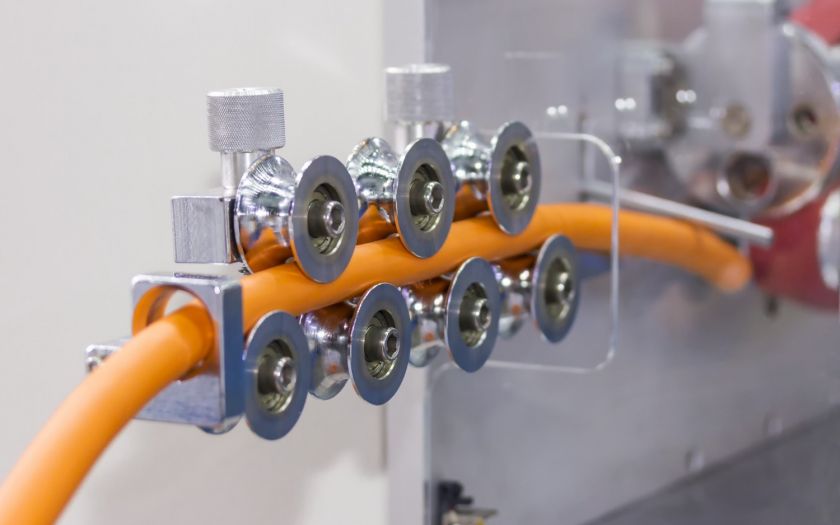
Do: Use Suitable Cable Rollers
Cable rollers support cables during installation.
Furthermore, correctly positioned rollers help guide the cable around bends and along the route.
However, one roller may not provide a large enough bend radius.
Therefore, installers may need several rollers or guides to achieve the required cable curvature.
Don’t: Exceed the Cable’s Mechanical Limits
Excessive pulling tension can damage conductors and other cable components.
Likewise, high sidewall pressure can create problems where cables pass around bends.
Consequently, installers should use approved pulling calculations and suitable equipment.
Where required, tension monitoring helps operators keep the pulling forces within the specified limits.
5. Protect Screened and Fire-Resistant Cables
Screened cables require careful handling during installation.
For example, some fire alarm cables use screening and insulation systems that support their fire performance.
However, tight bends or damaged screening can affect the cable construction.
Do: Follow Fire-Resistant Cable Requirements
BASEC highlights screened cables covered by standards such as BS 7629-1.
Installers should follow the manufacturer’s bending radius and installation instructions.
Furthermore, the cable’s fire performance may depend on its tested construction and installation conditions.
Don’t: Damage Cable Screens
Kinks or sharp bends may affect the screening arrangement.
In addition, forcing a cable into an unsuitable accessory can introduce mechanical stress.
Therefore, installers should check the cable route and accessory compatibility before installation.
6. Monitor Cable Bending Radius During Installation
Maintaining the correct bending radius can be difficult on site.
For example, some bends may appear acceptable while containing a smaller, tighter section.
Consequently, visual checks alone may not identify every problem.
Do: Use Suitable Measuring Tools
Installers often use templates to check whether a cable meets the minimum bending radius.
These provide a simple visual guide. However, they may not identify every tight section.
For more accurate checks, contractors can use purpose-designed radius gauges.
As a result, they can assess cable bends more consistently.
Don’t: Rely Only on Visual Estimates
A bend may look suitable without meeting the required dimensions.
Therefore, installers should measure critical bends and compare them with the manufacturer’s requirements.
In addition, they should record any checks required by the installation specification.
7. Avoid Twisting During Cable Pulling
Incorrect pulling methods can introduce twists into a cable.
This is particularly important when installers pull cables in different directions from a common point.
Don’t: Introduce Cable Torsion
Some installation methods involve pulling part of a cable in one direction.
Installers then lay out the remaining cable before pulling it in the opposite direction.
However, this approach can introduce twists if the cable cannot rotate freely.
As a result, the cable may suffer mechanical damage.
What Is Cable Bird-Caging?
Bird-caging describes a form of cable deformation where armour wires or other stranded components spread apart.
For example, excessive twisting may cause the cable armour to distort.
Consequently, the outer sheath may split or suffer additional damage.
Therefore, installers should avoid methods that introduce uncontrolled torsion.
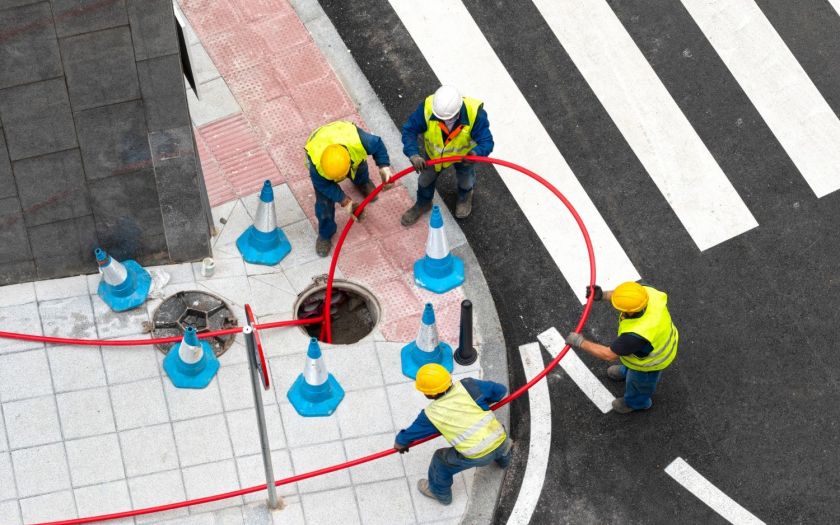
Workers pulling cable across pipes to supply energy to a neighbourhood
8. Use the Correct Cable Pulling Equipment
Suitable cable pulling equipment helps installers control cable movement.
Furthermore, the correct accessories can reduce friction and unwanted twisting.
Do: Use Suitable Cable Pulling Socks
Cable pulling socks provide a gripping connection for suitable cable pulling applications.
Depending on the arrangement, rotating pulling heads or swivels can also help manage cable rotation.
As a result, installers can reduce the risk of unwanted torsion during pulling.
Don’t: Restrict Cable Rotation
BASEC warns against pulling arrangements that prevent the cable from rotating when necessary.
For example, an unsuitable rope connection may restrict rotation and introduce twisting.
Furthermore, tension generated around bends can affect other sections of the cable route.
Therefore, contractors should choose pulling accessories that suit the cable and installation method.
Do: Monitor Cable Pulling Forces
For demanding installations, contractors may use tension-monitored cable winches.
These help operators control pulling loads and identify excessive tension.
In addition, correctly positioned rollers and guides support cable movement.
Consequently, the combined equipment can reduce installation risks when operators follow the approved method.
BASEC Cable Installation – Dos and Don’ts Summary
Successful cable installation depends on preparation, suitable equipment and careful handling.
For example, installers should check cable dimensions and mechanical limits before pulling begins.
Furthermore, they should protect cable ends and prevent unnecessary twisting.
What Should Cable Installers Do?
- Check the manufacturer’s minimum bending radius.
- Use correctly sized cable drums and reels.
- Protect cut cable ends against moisture.
- Plan the cable pulling route.
- Control pulling tension and sidewall pressure.
- Use suitable cable rollers and guides.
- Prevent uncontrolled cable twisting.
- Inspect cables for visible damage.
What Should Cable Installers Avoid?
- Using drums with unsuitable barrel diameters.
- Dragging cables across sharp or rough surfaces.
- Leaving cut cable ends exposed.
- Forcing cables around tight bends.
- Exceeding the permitted pulling tension.
- Using unsuitable pulling connections.
- Allowing cable armour to twist or deform.
- Ignoring damage identified during installation.
By following these principles, installation teams can reduce avoidable cable damage.
However, the final installation method must always follow the cable manufacturer’s requirements and the approved project design.
Conclusion – Successful Cable Delivery and Installation
Careful handling is essential throughout cable delivery, storage and installation.
For example, correct drum selection helps prevent excessive bending. Meanwhile, suitable end caps protect exposed cable ends.
In addition, well-planned pulling routes reduce the risk of mechanical damage.
Experienced installation teams should use suitable equipment, including tension-monitored cable winches, rollers and pulling socks.
As a result, contractors can improve installation quality and reduce costly delays.
Most importantly, the complete installation must remain within the cable manufacturer’s specified limits.
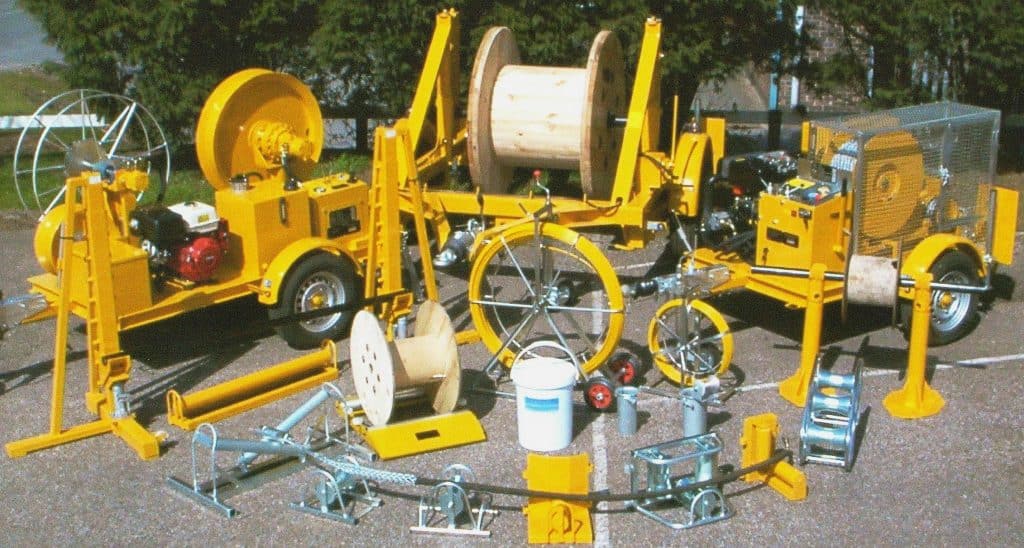
Cable Rollers | Drum Lifting Jacks | Duct Rods | Cable Socks | Cable Lubricant | Duct Seals | Cable Duct
About BASEC – British Approvals Service for Cables
BASEC is an independent cable testing and certification organisation.
Its work helps manufacturers demonstrate compliance with relevant cable standards and specifications.
In addition, BASEC provides testing and certification services linked to cable safety and performance.
As a result, specifiers and electrical contractors can use recognised certification information when selecting cables.
BASEC Cable Testing and Certification
BASEC has extensive experience in cable testing, including work linked to the Construction Products Regulation (CPR).
The original article reported more than 3,000 CPR classification reports.
Furthermore, BASEC works with cable manufacturers to assess product performance and relevant requirements.
These activities support greater confidence in cable quality.
BASEC Cable Quality Seminars
BASEC has also organised educational seminars on cable quality and compliance.
For example, these events have helped industry professionals understand product testing and certification.
However, the original article’s seminar information is historical. Therefore, readers should visit the BASEC website for current training and event information.

Middle East Electricity 2020, Dubai
Why Specify BASEC Approved Cables?
Independent cable certification provides additional assurance when selecting electrical cables.
For example, testing helps assess whether cable products meet relevant standards.
Furthermore, certification and ongoing assessment can support confidence in product consistency.
However, installers must still select the correct cable for the intended application.
Suitable handling and installation remain essential, even when the cable carries recognised certification.
BASEC Cable Quality Video
The following BASEC video explains the importance of specifying approved cable products.
In addition, it highlights the role of independent testing and certification within the electrical industry.
Thorne & Derrick – Cable Installation Equipment
Thorne & Derrick supply specialist electrical equipment for LV, MV and HV cable installation projects.
Our product range supports contractors working on underground cables, overhead lines, substations and electrical infrastructure.
In addition, we supply accessories for power networks operating at 11kV, 33kV, 66kV and other suitable voltage levels.
Consequently, customers can source cable pulling, jointing and installation equipment for a wide range of applications.
MV and HV Cable Accessories
Our range includes specialist products for cable jointing and termination applications.
- Slip-on cable terminations.
- Cold shrink cable terminations.
- Heat shrink cable terminations.
- Heat shrink and cold shrink cable joints.
- Separable connectors, including Nexans Euromold.
- Surge arresters and electrical equipment bushings.
Furthermore, Thorne & Derrick support customers with product selection and availability enquiries.
Key Cable Installation Product Categories
- Cable Pulling and Laying Equipment
- Cable Cleats
- Cable Duct Seals
- Cable Glands
- Electrical Safety Equipment
- Arc Flash Protection
- Cable Jointing Tools
- Earthing and Lightning Protection
- Electrical Feeder Pillars
- LV Cable Joints
- MV and HV Cable Joints and Terminations
For product information, technical advice or availability, contact Thorne & Derrick.