White Paper : Humidity Effects, Partial Discharge & Loss Of Substation Power By EA Technology
Published 22 Oct 2019

Roxtec Cable Transits | Humidity Effects in Substations
Technical White Paper: Humidity Effects in Substations – EA Technology
Author: Tony Byrne | January 2013
DOWNLOAD THE EA TECHNOLOGY WHITE PAPER
Humidity in Substations – Cable Sealing and Partial Discharge
High humidity in electrical substations can affect the performance and reliability of high voltage equipment.
For example, moisture and contamination can create conditions that encourage partial discharge (PD) within or across electrical insulation.
Over time, partial discharge can damage insulation and increase the risk of equipment failure.
Therefore, controlling the internal environment is an important part of substation design and maintenance.
This article examines findings from a technical white paper produced by EA Technology for Roxtec.
The original report, published in January 2013, investigated the relationship between relative humidity, partial discharge and electrical equipment reliability.
In addition, it explored how suitable cable transit sealing systems can help reduce moisture ingress.
Why Is Substation Humidity Important?
Electrical substations contain equipment that relies on effective insulation.
For example, switchgear, transformers and cable systems operate under electrical stress.
However, high humidity and contamination can affect the insulation environment.
Consequently, moisture control can help reduce conditions associated with electrical deterioration.
The report considered these issues for substations operating at voltages including 11kV, 33kV, 66kV and 132kV.
Roxtec Cable Transits and Substation Sealing
Roxtec manufactures cable and pipe penetration sealing systems.
These systems provide a seal around cables and pipes passing through suitable walls, floors and enclosures.
For example, a cable transit can help prevent water or dust entering a substation through a service penetration.
Furthermore, selected systems provide additional protection against gas ingress and other environmental hazards.
However, the protection offered depends on the exact Roxtec product, its tested ratings and the installation arrangement.
What Is a Cable Transit?
A cable transit is a sealing arrangement used where cables or pipes pass through a structure.
For example, electrical cables may enter a substation through basement walls or below-ground cable trenches.
Without suitable sealing, these openings can allow moisture, water or dust to enter.
Therefore, cable transit systems form part of the building’s environmental protection measures.
Roxtec Cable and Duct Sealing Applications
Roxtec sealing systems support a variety of installations, including:
- Electrical substations.
- High voltage switchgear rooms.
- Cable basements and trenches.
- Transformer enclosures.
- Electrical control cabinets.
- Onshore and offshore wind installations.
- Industrial electrical buildings.
- Power transmission and distribution infrastructure.
In addition, some products allow installers to accommodate future cables within a suitable sealing arrangement.
Explore our cable duct sealing systems for related solutions.
EA Technology White Paper – Key Findings
Roxtec commissioned EA Technology to investigate environmental conditions within indoor electrical substations.
The report examined how humidity affects electrical insulation and partial discharge activity.
Furthermore, it considered practical methods for reducing moisture ingress.
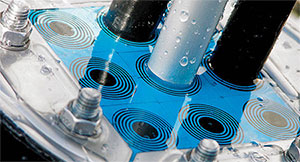
The Importance of Cable Entry Sealing
One of the report’s central findings concerned unsealed cable penetrations.
It identified cable entry points as important potential routes for water ingress.
For this reason, the white paper emphasised effective sealing at these locations.
In particular, the original report concluded:
“cable entry points are one of the main sources of water ingress to substations and they should be effectively sealed.”
This finding has implications for the specification of cable transits and duct seals.
For example, a properly selected sealing system can help prevent external moisture entering an electrical room.
However, sealing alone may not eliminate every source of humidity or condensation.
Who Should Read the White Paper?
The report is relevant to professionals responsible for substation design, installation and maintenance.
These include:
- Lead and principal electrical engineers.
- Electrical project engineers.
- Substation design engineers.
- Plant and maintenance engineers.
- MV, HV and EHV cable jointers.
- Substation commissioning managers.
- Electrical project managers.
- Senior Authorised Persons (SAPs).
- Electrical safety and inspection professionals.
- Procurement managers and technical buyers.
Furthermore, the findings may help specifiers understand environmental protection requirements for cable entries.
Relative Humidity in Electrical Substations
Relative humidity (RH) describes the amount of water vapour in air relative to the maximum amount it can hold at the same temperature.
It is expressed as a percentage.
For example, cooler surfaces may experience condensation when moist air reaches its dew point.
Therefore, both temperature and humidity influence condensation risk.
Typical Humidity Levels in UK Substations
The original EA Technology report identified relative humidity values of approximately 65% to 95% as representative of certain UK substation environments.
However, these figures describe the study’s findings and should not be treated as fixed conditions for every substation.
Actual humidity depends on the building, ventilation, weather and operating conditions.
Furthermore, below-ground spaces can experience different environmental conditions from the main equipment room.
Why Are Cable Trenches and Basements Vulnerable?
Cable trenches and basements are often located below ground level.
As a result, they may be exposed to lower temperatures and increased moisture.
For example, water can enter through cable ducts, wall penetrations or other openings.
Furthermore, condensation may develop when moist air contacts cooler surfaces.
Therefore, suitable waterproofing and cable entry sealing are important design considerations.
Water Ingress During Normal and Flood Conditions
The original report recommended considering both normal environmental exposure and flood conditions.
For example, a cable entry may experience occasional groundwater infiltration.
However, heavy rainfall or flooding can produce more demanding conditions.
Consequently, the sealing arrangement must suit the expected water exposure and pressure.
In addition, even raised substations may require protection against moisture entering through service penetrations.
Cable Movement and Sealing Performance
Power cables can move during normal operation.
For example, changes in electrical load can cause temperature variations within a conductor.
As a result, cables may expand and contract.
Furthermore, short-circuit forces and maintenance activities can place additional demands on cable supports and seals.
Why Can Traditional Cable Seals Fail?
The EA Technology report highlighted the importance of cable retention and sealing performance.
For example, some mastic-based sealing arrangements may not provide sufficient cable retention for particular applications.
Consequently, cable movement can affect the integrity of an unsuitable seal.
Therefore, the selected system must accommodate the expected mechanical demands.
Protecting Against Water, Dust and Vermin
Substation penetrations may also require protection against other environmental hazards.
For example, open ducts can provide routes for dust or vermin to enter.
In addition, external penetrations may require protection against gas migration.
Therefore, specifiers should review the complete environmental sealing requirements.
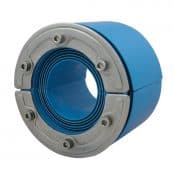
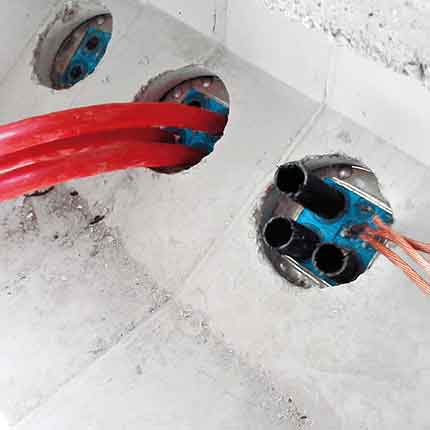
Roxtec R Cable Transit Frames
The original article featured Roxtec R cable transit frames for a transformer station and shelter associated with onshore wind power.
These systems provide sealing for suitable cable penetrations.
Depending on the product configuration, tested properties may include water, gas and fire protection.
However, the specified performance must be checked against the actual product approval.
What Is Partial Discharge in High Voltage Equipment?
Partial discharge (PD) is a localised electrical discharge that does not completely bridge the insulation between conductors.
It can occur within insulation defects or along insulating surfaces under electrical stress.
For example, partial discharge may develop where electric field stress is concentrated.
Over time, repeated discharges can damage insulation.
Consequently, partial discharge can contribute to the deterioration of high voltage electrical assets.
Which Electrical Assets Can Be Affected?
The report identified several types of equipment where partial discharge may be a concern.
These include:
- High voltage switchgear.
- Power cable insulation systems.
- Cable joints and terminations.
- High voltage transformers.
- Other insulation systems operating under high electrical stress.
However, the causes and significance of partial discharge vary between different types of equipment.
How Does Humidity Affect Partial Discharge?
The original white paper linked high relative humidity and contamination with increased partial discharge risk.
For example, moisture can affect the electrical behaviour of contaminated insulating surfaces.
Furthermore, deposits of dust or other particles may contribute to surface discharge conditions.
As a result, changes in humidity can influence the electrical environment within a substation.
However, humidity is not the sole cause of partial discharge.
Insulation defects, equipment design, contamination and electrical stress must also be considered.
Why Are Humidity Fluctuations Important?
The report also highlighted the potential effects of changes in relative humidity.
For example, temperature variations may increase the risk of condensation on cooler equipment surfaces.
Therefore, environmental management should consider fluctuations rather than focusing only on an average humidity value.
Consequences of Partial Discharge in Substations
Partial discharge can progressively damage electrical insulation.
However, deterioration may not always be visible during routine inspection.
As a result, equipment can develop faults before obvious external damage appears.
Electrical Insulation Deterioration
Repeated partial discharges can cause localised insulation damage.
For example, surface tracking or erosion may develop under suitable conditions.
Furthermore, damage can become more severe if the underlying cause remains unresolved.
Consequently, the equipment’s insulation performance may deteriorate over time.
Equipment Failure and Loss of Supply
In severe cases, insulation deterioration can contribute to equipment failure.
For example, damaged switchgear or cable accessories may require replacement.
Furthermore, an unexpected failure can interrupt electrical supply and create maintenance costs.
Therefore, preventing moisture ingress and identifying insulation problems are important reliability measures.
Detecting Partial Discharge
The original paper discussed the difficulty of identifying partial discharge without suitable inspection methods.
However, specialist diagnostic equipment can help identify PD activity under appropriate conditions.
For example, maintenance teams may use dedicated partial discharge monitoring or testing systems.
Consequently, inspection and environmental management can form complementary parts of a maintenance strategy.
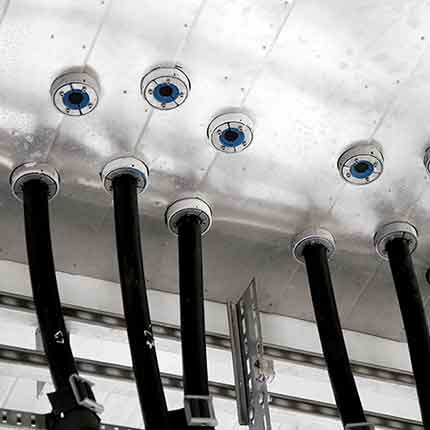
Roxtec RS Cable Transit Seals for Offshore Switchgear
The original article also featured Roxtec RS round cable transit seals.
These sealing arrangements can accommodate suitable cable penetrations.
For example, the illustrated application involved offshore wind power switchgear.
In addition, round sealing systems may be specified for certain large or rigid cable entries.
However, selection depends on the cable dimensions, enclosure and required sealing performance.
Offshore Substation Cable Sealing
Offshore substations operate in demanding environments.
For example, equipment may be exposed to moisture, salt contamination and temperature variations.
Therefore, suitable cable transit systems can help protect electrical equipment enclosures.
Explore Roxtec RS round cable transit sealing systems.
High Voltage Switchgear – Humidity Requirements
Switchgear manufacturers specify environmental conditions for their equipment.
For example, the permitted humidity range may depend on the temperature, equipment construction and installation location.
In addition, manufacturers may require measures to prevent condensation.
IEC 62271-1 Environmental Conditions
The original EA Technology white paper referenced IEC 62271-1:2007 and BS EN 62271-1:2008.
It highlighted environmental conditions relevant to high voltage switchgear.
The values discussed in the paper included:
- 24-hour average relative humidity: Not exceeding 95%.
- One-month average relative humidity: Not exceeding 90%.
- Ambient air: Consideration of pollution and potentially harmful gases or vapours.
- Environmental management: Measures may be needed to control humidity and condensation.
These references describe the editions discussed in the 2013 report.
Therefore, engineers must check the current applicable standard and the equipment manufacturer’s requirements for new installations.
Long-Term Environmental Exposure
The white paper also raised questions about the effects of long-term exposure to humidity.
For example, a short-duration test does not necessarily reproduce every condition encountered over several years.
Therefore, the authors emphasised environmental control during the operational life of the equipment.
Manufacturer Guidance on Substation Humidity
The EA Technology report reviewed humidity recommendations in switchgear manufacturer literature.
Different examples used different environmental thresholds.
For example, some manufacturers recommended precautions when humidity exceeded specified values.
Examples of Manufacturer Humidity Recommendations
The original white paper included the following examples.
| Example | Humidity Guidance Reported in the White Paper |
|---|---|
| Example 1 | Relative humidity should not exceed 80%. In addition, conditions should prevent condensation on or within equipment. |
| Example 2 | Appropriate remedies were recommended when average humidity exceeded 75%. |
| Example 3 | Ideal conditions below 40% humidity, with standard conditions described as below 60%. |
These examples illustrate the variation in manufacturer recommendations.
However, they are not universal humidity limits for every switchgear installation.
Therefore, the exact equipment manufacturer’s documentation must determine the applicable environmental requirements.
Comparing UK Humidity with Manufacturer Guidance
The report compared these recommendations with its cited UK substation humidity range of 65% to 95%.
As a result, it identified situations where actual environmental conditions could exceed manufacturer recommendations.
Furthermore, it highlighted the importance of preventing condensation and moisture ingress.
Controlling Humidity in Electrical Substations
Substation operators may use several methods to manage moisture.
For example, some installations include heaters, dehumidifiers or drainage equipment.
However, environmental control equipment may not address every source of moisture ingress.
Therefore, the report recommended considering the cause of high humidity as well as its effects.
Substation Heaters and Dehumidifiers
Heaters can help reduce condensation risk under suitable conditions.
Meanwhile, dehumidifiers remove moisture from the air.
However, these systems may require energy, servicing and ongoing maintenance.
Furthermore, their effectiveness depends on the building environment and the amount of incoming moisture.
Water Drainage and Sump Pumps
Substation basements may also require drainage arrangements.
For example, sump pumps can remove accumulated water from suitable below-ground spaces.
However, drainage addresses water that has already entered or collected.
Therefore, effective waterproofing and penetration sealing remain important.
Sealing Cable Ducts and Service Penetrations
The report encouraged greater attention to cable and service penetrations.
For example, a cable duct entering a substation may provide a route for groundwater.
Furthermore, dust and other contaminants may enter through unsuitable openings.
Consequently, correctly designed cable duct seals can help manage environmental ingress.
Why Cable Retention Matters
Sealing systems must also accommodate expected cable movement.
For example, thermal expansion and contraction may place mechanical demands on a seal.
In addition, cable weight and maintenance activities may affect the penetration arrangement.
Therefore, retention and mechanical performance should be considered alongside water tightness.
Roxtec Cable Sealing for Substation Cabinets and Panels
Electrical control cabinets contain equipment that may be sensitive to moisture and contamination.
For example, control systems and electronic components may require protection against dust or water ingress.
Therefore, cabinet cable entries should suit the enclosure’s environmental protection requirements.
Sealing Electrical Control Cabinets
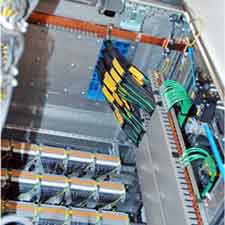
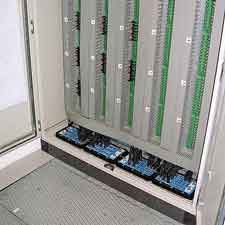
Roxtec provides cable penetration sealing arrangements for suitable electrical cabinets and enclosures.
These can help protect sensitive equipment when installed correctly.
Furthermore, selected systems can accommodate multiple cables within one transit arrangement.
However, the complete installation must maintain the specified enclosure protection.
Substation Transmission and Distribution Applications
The original article highlighted Roxtec cable sealing applications within electricity transmission and distribution infrastructure.
For example, these included:
- Substation control rooms.
- Electrical service rooms.
- Control and switching cabinets.
- Transformer stations.
- Underground cable basements.
- MV and HV cable entry points.
Furthermore, suitable sealing arrangements can support environmental protection in new and existing substations.
Roxtec H3 Cable Seals for 11kV and 33kV Cables
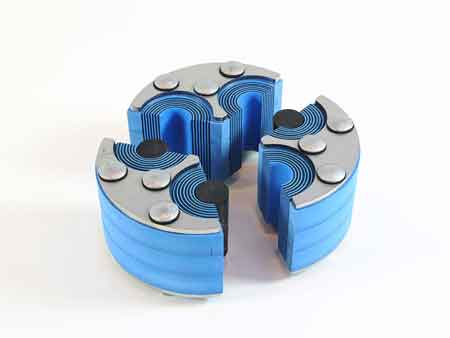
The Roxtec H3 cable seal provides a sealing arrangement for suitable trefoil cable installations.
For example, the original article highlighted applications involving 11kV and 33kV power cables.
These products help manage environmental ingress at compatible cable penetrations.
Why Seal Trefoil Cable Entries?
Three single-core power cables may be installed in trefoil formation.
However, their arrangement can create complex spaces around the cable group.
Therefore, a sealing system must suit the cable dimensions and installation geometry.
Furthermore, the seal must satisfy the relevant environmental and mechanical requirements.
Environmental Protection for HV Cable Ducts
Suitable cable seals can help reduce water entering through cable penetrations.
In addition, selected systems may provide protection against gas migration and vermin ingress.
However, the exact level of protection depends on the selected product and approved installation.
Explore Roxtec H3 Cable Transit Seals.
How to Specify Cable Transits for Substations
Selecting a cable transit requires more than checking its dimensions.
For example, engineers must consider water exposure, cable movement and the building’s environmental requirements.
Furthermore, particular installations may require tested fire or gas sealing performance.
Cable Transit Selection Checklist
- Cable Size: Confirm the cable outside diameters.
- Cable Arrangement: Identify single-core, multicore or trefoil configurations.
- Penetration Type: Check the wall, floor, duct or cabinet opening.
- Water Protection: Consider groundwater, flooding and water pressure.
- Dust Protection: Review the required protection against contamination.
- Gas Tightness: Confirm any gas sealing requirements.
- Fire Performance: Select an appropriately tested system where required.
- Cable Movement: Assess thermal and mechanical movement.
- Retention: Verify any cable retention requirements.
- Future Capacity: Consider spare space for additional cables.
- Installation Conditions: Check accessibility and approved fitting instructions.
In addition, the selected seal must remain compatible with the overall cable and building design.
Therefore, customers should confirm the relevant manufacturer’s performance documentation before ordering.
Conclusion – Reducing Substation Humidity and Partial Discharge Risk
High humidity can contribute to conditions that affect electrical insulation performance.
For example, moisture and contamination may increase the likelihood of surface discharge activity.
Furthermore, water entering through cable ducts can create ongoing maintenance challenges.
The EA Technology white paper highlighted the importance of preventing moisture ingress at cable entry points.
In addition, it encouraged designers to consider cable retention and environmental protection when specifying seals.
However, humidity management should form part of a wider substation reliability strategy.
For example, suitable ventilation, drainage, monitoring and maintenance may also be required.
Consequently, correctly selected cable transit systems can contribute to a more controlled substation environment.
READ THE FULL EA TECHNOLOGY WHITE PAPER – HUMIDITY EFFECTS IN SUBSTATIONS
Thorne & Derrick – Roxtec Cable Transits and Duct Seals
Thorne & Derrick International supply specialist cable accessories and electrical equipment for power infrastructure.
Our product range includes cable transit and duct sealing solutions for suitable industrial and utility applications.
Furthermore, we support projects involving underground cables, substations and electrical distribution networks.
Roxtec Cable Sealing Products
Explore our specialist product ranges:
- Roxtec Cable Transit Systems.
- Cable Transits.
- Cable Duct Seals.
- Roxtec R Cable Transit Frames.
- Roxtec RS Round Seals.
- Roxtec H3 Trefoil Cable Seals.
LV, MV and HV Electrical Equipment
Thorne & Derrick also supply a range of electrical installation and cable jointing products.
These include:
- Slip-on cable terminations.
- Cold shrink cable terminations.
- Heat shrink cable terminations.
- Heat shrink and cold shrink cable joints.
- Screened separable connectors.
- Surge arresters and equipment bushings.
Furthermore, our wider product range includes:
- Cable Cleats and Supports.
- Cable Glands.
- Electrical Safety Equipment.
- Arc Flash Protection.
- Cable Jointing Tools.
- Cable Pulling Equipment.
- Earthing and Lightning Protection.
- Electrical Feeder Pillars.
- LV Cable Joints.
- MV and HV Cable Joints and Terminations.
Enquire About Cable Sealing Systems
Need a cable transit or duct seal for an electrical substation?
Our technical sales team can assist with product selection and availability enquiries.
For example, customers can provide the cable dimensions, penetration type and required environmental protection.
In addition, details of any fire, gas or water pressure requirements will help identify suitable sealing arrangements.

Further Reading
-
 White Paper Humidity Effects, Partial Discharge & Loss Of Substation Power By EA Technology
Size: 715.16 KB