Cable Trough Explained | Cable Protection
Published 23 Jul 2026
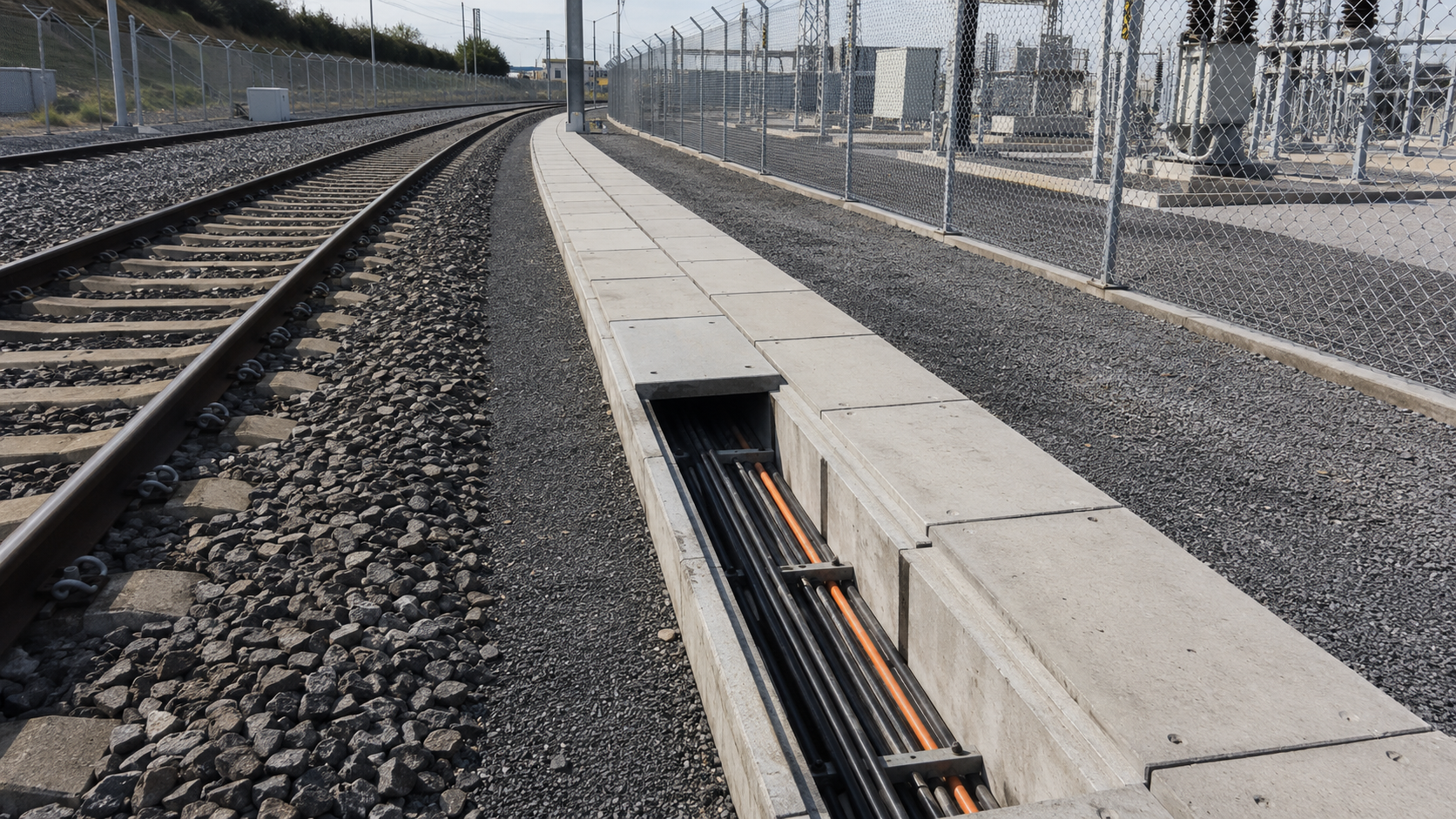
Cable trough is a protective cable containment system used to route, support and protect power, signalling, telecoms, control and communications cables above ground or at shallow depth. Cable troughing is commonly used across railways, substations, highways, utilities, industrial sites, renewable energy projects and electrical infrastructure.
In simple terms, a cable trough provides a defined channel for cables. The trough helps protect cables from mechanical damage, weather exposure, accidental impact, vegetation, debris and unauthorised interference, while still allowing access for inspection, repair, cable jointing and future cable additions.
Cable troughs are available in different materials and formats, including concrete cable troughs, GRC cable troughs, lightweight composite troughs, straight sections, lids, T-pieces, bends, transitions, channels and elevated troughing systems.
Thorne & Derrick supply cable troughing for power, rail and infrastructure cable protection, including concrete cable trough, GRC cable trough, cable trough lids, bends, transitions and accessories for LV, MV and HV cable routes.
Quick Answer: What Is Cable Trough?
Cable trough is a cable protection and containment system used to route cables safely through rail, power, highway and infrastructure environments. It normally consists of a channel or trough section with a removable lid, allowing cables to be protected while still remaining accessible for inspection, maintenance and future installation work.
Cable troughing is commonly used for LV, MV and HV power cables, signalling cables, telecoms cables, control cables and communications cables. It is especially common in trackside rail environments, substations, power networks and utility cable routes.
What Is Cable Trough?
A cable trough is a physical containment route used to house and protect cables. Unlike a buried duct where the cable is pulled through an enclosed pipe, a cable trough is usually an open channel with a lid fitted over the top.
This makes cable troughing useful where cables need both protection and future access. The lid can be removed so engineers can inspect cables, install additional circuits, carry out jointing work or repair damaged sections without excavating a fully buried route.
Cable troughing systems can be used for:
- Power cables
- Rail signalling cables
- Telecommunications cables
- Control and instrumentation cables
- Fibre optic cables
- Substation auxiliary cables
- Trackside and infrastructure cable routes
The correct trough system depends on cable type, cable quantity, route layout, loading requirement, access needs, ground conditions and project approval requirements.
Where Is Cable Trough Used?
Cable troughing is used where cables need mechanical protection and accessible containment.
Typical locations include:
- Railway trackside routes – protecting power, signalling and telecoms cables along rail infrastructure.
- Substations – routing LV, MV and HV power, control and auxiliary cables.
- Highways – protecting cables for lighting, traffic systems, signage and communications.
- Utilities – housing power and communications cables across infrastructure networks.
- Renewable energy sites – protecting cable routes for solar, wind and battery storage projects.
- Industrial sites – protecting cables in outdoor process, plant and utility areas.
- Bridges, tunnels and embankments – where elevated or lightweight cable troughing may be required.
Cable trough is especially useful where a cable route must remain accessible after installation.
Types Of Cable Trough
Cable troughs are available in different materials and shapes to suit different route conditions.
Cable trough systems may also include straight sections, bends, T-pieces, transitions, joint boxes, brackets, stakes and direction-change accessories.
Concrete Cable Trough
Concrete cable trough is one of the most established cable protection methods used in rail and infrastructure projects. It provides strong, durable, permanent cable containment with removable lids for future access.
Concrete troughs are used to protect power, signalling, telecoms and communication cables from physical damage and environmental conditions. They are particularly common on rail infrastructure, where trackside cable routes need long service life and reliable protection.
Benefits of concrete cable troughing include:
- High mechanical strength
- Long-term cable protection
- Removable lids for access
- Suitable for rail and infrastructure projects
- Protection from environmental and mechanical damage
- Support for future cable jointing, repairs and additions
Power & Cables supplies concrete cable troughs for LV, 11kV, 25kV and 33kV trackside cable protection, including Anderton concrete troughing and Anderlite lightweight concrete trough systems.
GRC Cable Trough
GRC cable trough is manufactured from glassfibre reinforced concrete. It is used where a lighter weight troughing system is needed while still providing cable support and protection.
GRC troughing is commonly used at trackside ground level, over bridges and through tunnels. It can be useful in locations where manual handling, access, elevated installation or route flexibility are important.
GRC cable trough systems may include:
- Channels and lids
- Radiused bends
- T-pieces
- Joint boxes
- Height changes
- Direction changes
- Stakes and brackets
View GRC cable troughing for rail, power and infrastructure routes.F
Cable Trough vs Cable Duct
Cable troughs and cable ducts are both used to protect cables, but they are different systems.
For underground ducted cable routes, see cable ducting for LV, MV and HV power cables.
Rail & Trackside Cable Troughing
Railway infrastructure is one of the most common applications for cable troughing. Trackside cable routes must protect power, signalling and telecoms cables while allowing access for maintenance and network changes.
Rail cable troughing is used for:
- Signalling cables
- Telecommunications cables
- Trackside power cables
- Control cables
- LV and MV cable routes
- Tunnel, bridge and elevated route sections
In rail environments, cable trough may need to meet project-specific approvals, load requirements, route design and installation standards. Troughing may also need bends, transitions, tee sections and lightweight alternatives for difficult access locations.
Cable Trough For Power Cables
Cable trough is also used for power cable protection in substations, industrial sites, utilities and renewable energy projects. It can provide a protected route for LV, MV and HV cables while allowing future access for inspection and maintenance.
Power cable troughing can be used where:
- Cables require mechanical protection
- Cable routes must remain accessible
- Future cable additions are likely
- Jointing or repair access may be required
- Above-ground or shallow-depth cable protection is preferred
- Cable ducts are not the most practical route method
For associated installation equipment, see cable pulling and cable laying equipment.
How To Select Cable Trough
Selecting the correct cable trough depends on the route, cables and operating environment.
The correct trough should be selected as part of the complete cable route design, not as an isolated product choice.
Common Cable Trough Mistakes
Cable trough issues are often caused by poor route planning or incorrect product selection.
Common mistakes include:
- Choosing the wrong trough size – insufficient internal space can make cable installation, access and future additions difficult.
- Ignoring lid loading requirements – lids must suit the expected pedestrian, occasional or heavier loading conditions.
- Forgetting route changes – bends, tees and transitions should be planned before installation.
- Using trough where ducting would be better – fully buried routes may be better suited to cable ducts.
- Using duct where access is needed – troughing may be better where cables need frequent inspection or future additions.
- Poor bedding or support – trough sections should be properly supported to prevent instability and damage.
- Overlooking manual handling – concrete trough can be heavy, so lightweight or GRC options may be preferred in some locations.
- Not allowing for cable bend radius – route changes must suit the cables being installed.
- Ignoring project approvals – rail and utility projects may require approved trough systems.
The best cable trough design protects cables while allowing safe access throughout the service life of the installation.
Related Cable Protection Products
Cable troughing is part of a wider cable protection and installation system.
- Cable Trough – troughing systems for rail, power, highway and infrastructure cable protection.
- Concrete Cable Trough – concrete troughs and lids for trackside and infrastructure cable routes.
- GRC Cable Trough – glassfibre reinforced concrete troughing for rail, bridges, tunnels and elevated locations.
- Concrete Utility Cable Troughs – guide to utility troughs and lids for power and communications services.
- Cable Duct – ducting for underground cable protection and cable pulling routes.
- Cable Pulling & Laying Equipment – installation equipment for cable route works.
- Cable Protection Tiles – protective tiles for underground cable routes.
Cable Trough FAQs
Q: What is cable trough?
A: Cable trough is a protective cable containment system used to route and protect power, signalling, telecoms, control and communications cables. It usually consists of a channel with a removable lid.
Q: What is cable trough used for?
A: Cable trough is used to protect and contain cables in rail, power, highway, utility, substation, industrial and infrastructure environments while allowing access for inspection and maintenance.
Q: What is concrete cable trough?
A: Concrete cable trough is a robust cable containment system used for permanent cable protection, especially in rail and infrastructure applications. It normally includes concrete trough sections and removable lids.
Q: What is GRC cable trough?
A: GRC cable trough is glassfibre reinforced concrete troughing. It is used where a lighter weight cable trough system is required, including rail, bridges, tunnels and elevated route sections.
Q: What is the difference between cable trough and cable duct?
A: Cable trough is usually an accessible channel system with removable lids. Cable duct is an enclosed pipe or duct route through which cables are pulled, often underground. Troughing is better where future access is important.
Q: Where is rail cable trough used?
A: Rail cable trough is used along trackside routes, bridges, tunnels and rail infrastructure to protect power, signalling, telecoms and control cables while keeping them accessible for maintenance.
Q: Can cable trough be used for power cables?
A: Yes. Cable trough can be used for LV, MV and HV power cables where the route needs protection and access. It is also used for signalling, telecoms, fibre optic and control cables.
Q: How do you choose the right cable trough?
A: To choose the right cable trough, check the application, cable type, internal capacity, loading requirement, route layout, material, access requirements and project approvals.
Conclusion
Cable trough is an important cable protection and containment system used across rail, power, highway, utility and infrastructure environments. It provides a protected cable route while allowing access for inspection, maintenance, repair, jointing and future cable additions.
Concrete cable trough, GRC cable trough and lightweight troughing systems each have different benefits depending on the route, loading requirement, access needs and project specification.
Thorne & Derrick supply cable troughing, concrete cable troughs, GRC cable troughs, cable trough lids, cable ducts and cable protection products for LV, MV and HV power, signalling, telecoms and infrastructure cable routes.