Earth Mats, Earth Tape & Portable Earthing
Published 23 Jul 2026
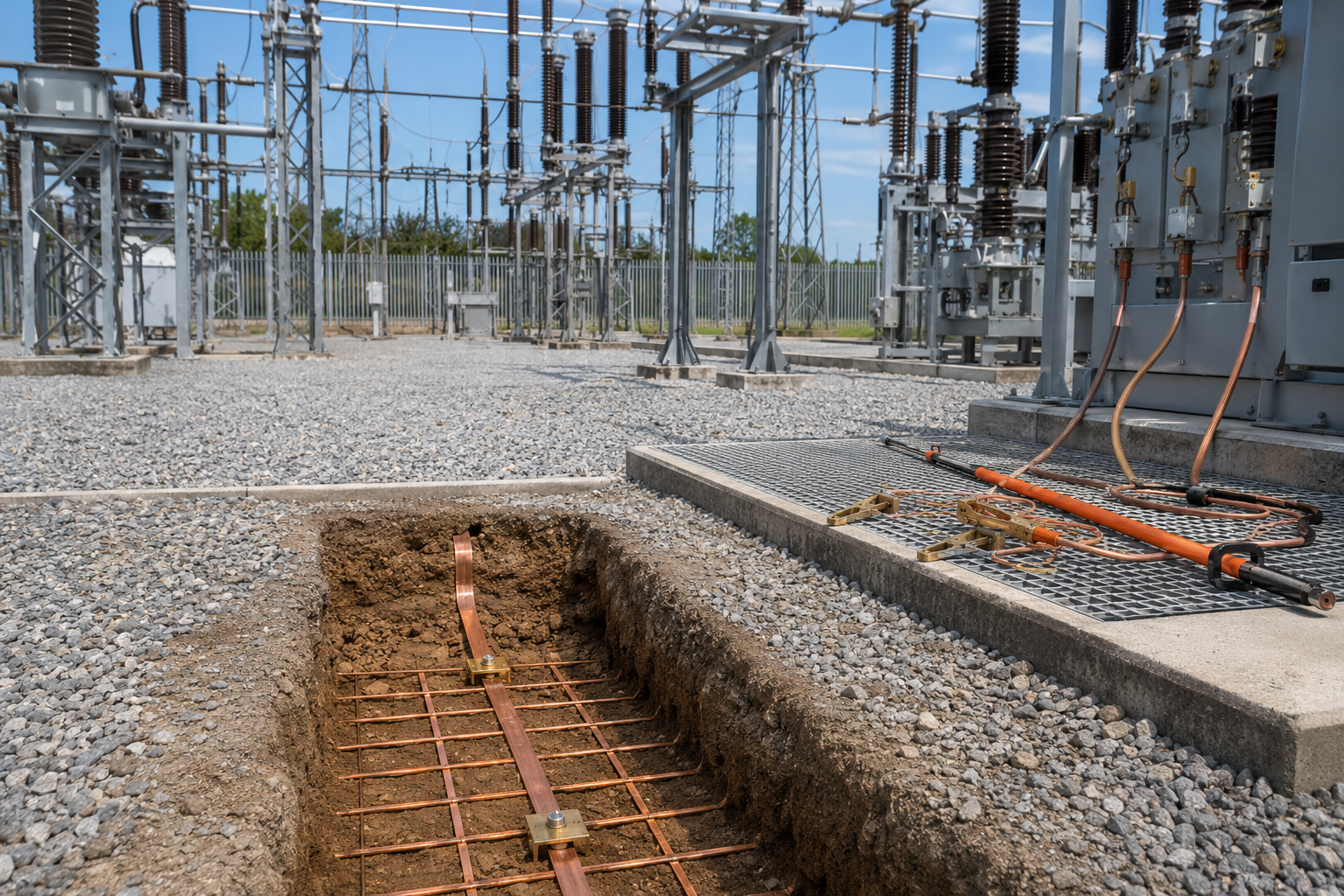
Earth mats, earth tape and portable earthing devices all form part of electrical earthing and safety systems, but they are not the same thing. Some are permanent components buried or fixed into an earthing system, while others are temporary safety devices used during maintenance, isolation and work on electrical equipment.
In LV, MV and HV electrical networks, earthing is essential for safety, fault current control, equipment bonding, lightning protection and reliable operation of electrical infrastructure. Correctly specified earthing systems help manage fault currents, reduce dangerous touch and step voltages, bond metallic structures and provide a route for electrical energy to return safely to earth.
Earth mats and copper earth tape are normally used as part of a fixed earthing system. Portable earthing kits are temporary short-circuiting and earthing devices used by authorised personnel after isolation to help make electrical equipment safe to work on.
Thorne & Derrick supply earth tapes, rods, bars and copper earthing products, copper earth mats, copper earth tape and portable earthing kits for LV, MV and HV electrical networks, substations, overhead lines, power cables and industrial power systems.
Quick Answer: Earth Mats, Earth Tape & Portable Earthing
Earth mats are copper earthing electrodes used to help reduce step and touch voltage risks, especially around substations, switchrooms and high voltage equipment. Copper earth tape is a flat copper conductor used to connect earthing electrodes, earth bars, structures and electrical equipment. Portable earthing devices are temporary short-circuiting and earthing kits used after isolation to help protect authorised workers during maintenance.
The key difference is that earth mats and earth tape are normally part of a fixed, permanent earthing system. Portable earthing kits are temporary safety equipment applied, tested and removed by trained personnel as part of safe working procedures.
What Is Electrical Earthing?
Electrical earthing is the process of connecting electrical equipment, structures, cable systems or lightning protection systems to earth using conductors, electrodes and bonding connections. The purpose is to provide a controlled path for fault current, lightning current or unwanted electrical energy.
Earthing systems help:
- Protect people by reducing dangerous touch and step voltage risks.
- Protect equipment by providing a return path for fault current.
- Support protective devices by helping fault current flow so protection can operate.
- Bond metallic structures to reduce voltage differences between exposed conductive parts.
- Support lightning protection systems by providing a route for lightning current to dissipate into earth.
- Improve network safety in substations, industrial facilities and power distribution systems.
In practical terms, earthing systems are made up of components such as copper earth tape, earth rods, earth mats, earth plates, earth bars, clamps, conductors, inspection pits, Marconite and Bentonite.
What Are Earth Mats?
An earth mat is an earthing electrode, often manufactured from copper tape in a lattice or solid arrangement, used to improve earthing performance and help control touch and step voltage risks.
Earth mats are commonly used around:
- Substation switchgear
- Transformer areas
- High voltage switching points
- Outdoor electrical structures
- Street works and compact earthing installations
- Lightning protection electrodes
- Areas where potential grading is required
Power & Cables explains that earth mats manufactured from high conductivity copper tape help reduce the danger of exposure to high step and touch voltages for substation and authorised personnel working on high voltage switching.
View copper earth mats for substation, utility and electrical infrastructure applications.
What Is Copper Earth Tape?
Copper earth tape is a flat copper conductor used to connect earthing electrodes, electrical equipment, structural steelwork, earth bars and lightning protection systems.
It is widely used because copper provides high conductivity and can be installed in trenches, along structures, around substations and as part of buried earth grids. Earth tape can be supplied in different widths and thicknesses depending on the required current carrying capacity, mechanical strength and project specification.
Typical uses of copper earth tape include:
- Buried earth grids
- Substation earthing systems
- Lightning protection down conductor connections
- Equipment bonding
- Transformer and switchgear earthing
- Earth rod interconnections
- Connections to earth bars and test links
Power & Cables supplies bare and covered copper earth tapes for LV, MV and HV substations, buildings and electrical infrastructure. :contentReference[oaicite:3]{index=3} Wallis copper earth tapes are also listed for earthing and lightning protection applications.
What Are Portable Earthing Devices?
Portable earthing devices are temporary earthing and short-circuiting kits used by authorised electrical workers after equipment has been isolated, tested and confirmed safe for the application of earths.
They are used to help protect workers against:
- Accidental re-energisation
- Induced voltages
- Stored electrical energy
- Unexpected backfeed
- Fault current during maintenance conditions
Portable earthing kits typically include clamps, insulated earth leads, short-circuiting leads, operating sticks and connection accessories. CATU portable earthing and short-circuiting kits are available with choices of earth clamps for live end and earth end applications, jumper clamps for LV switchboards and overhead line clamps.
Power & Cables also lists portable earthing leads in kit form for substations, including field earths, trailing earths, bridging earths, circuit main earths, drain earths and NSI24 kits.
Fixed Earthing vs Portable Earthing
Fixed earthing and portable earthing are often confused, but they have different purposes.
Both are important. A fixed earthing system does not remove the need for portable earthing procedures, and portable earthing equipment does not replace a properly designed permanent earth grid.
Substation Earthing Applications
Substations require carefully designed earthing systems because fault current levels can be high and personnel may need to operate or maintain equipment close to metallic structures, switchgear, transformers and cable systems.
Earthing products used in substations may include:
- Copper earth tape for buried earth grids and bonding.
- Copper earth mats for potential grading and localised step/touch voltage control.
- Earth rods to improve connection to the general mass of earth.
- Earth bars for common earth termination points.
- Earth clamps and connectors for conductor connections.
- Marconite or Bentonite where ground conditions require earthing enhancement.
- Portable earthing kits for safe maintenance procedures.
Copper lattice earth mats are used in high fault current and step potential avoidance applications such as high voltage substations and switchrooms.
For wider earthing products, see earth tapes, rods, bars and copper earthing accessories.
Earth Rods, Earth Bars & Accessories
Earth mats and earth tape are normally used alongside other earthing products. A complete earthing system may include several different components.
Power & Cables states that earth rods are used to provide the interface to ground in all soil conditions for overhead and underground electricity distribution and transmission networks, including low, medium and high voltage substations, towers and power distribution applications.
Earth bars are used for terminating cable lugs or earth tape connections and are commonly manufactured from high-conductivity copper bar.
Marconite, Bentonite & Soil Conditions
The performance of an earthing system depends heavily on the surrounding ground conditions. Dry, rocky, sandy or high-resistivity soil may make it harder to achieve the required earth resistance using rods and tape alone.
Earthing enhancement materials can help improve electrode contact with the surrounding soil.
- Marconite is a conductive aggregate used with cement and water to form conductive concrete around earth electrodes.
- Bentonite is a clay-based earthing compound used as backfill around electrodes.
Marconite and Bentonite should not be treated as the same product. The correct selection depends on the earthing design, soil resistivity, resistance target, installation method and long-term performance requirements.
For more detail, see the Power & Cables guide to Marconite earthing.
How To Select Earthing Products
Earthing products should be selected as part of a complete electrical earthing design. The right products depend on the system voltage, fault level, soil conditions, resistance target, location, network type and maintenance requirements.
For portable earthing kits, selection should also consider the equipment type, voltage level, clamp type, connection points, short-circuit rating, lead length and approved safe working procedure.
Common Earthing Mistakes
Earthing errors can create serious safety risks, especially around substations, overhead lines, switchgear and high fault current electrical systems.
Common mistakes include:
- Confusing fixed earthing with portable earthing – permanent electrodes and temporary safety earths have different purposes.
- Ignoring soil resistivity – earthing design should be based on site conditions, not assumptions.
- Using undersized conductors – copper tape and conductors must be suitable for the required fault current and duration.
- Forgetting step and touch voltage – low earth resistance alone does not always guarantee personnel safety.
- Poor connection quality – loose, corroded or unsuitable connections can reduce earthing performance.
- Failing to test the system – earth resistance and continuity testing are essential after installation.
- Selecting portable earths without fault rating – portable earthing kits must be selected for the fault level and application.
- Using the wrong clamp type – clamp design must suit the connection point, such as busbar, conductor, earth tape or switchgear point.
- Not maintaining portable earthing equipment – leads, clamps and sticks should be inspected and maintained according to site procedures.
Earthing should always be designed, installed, tested and maintained by competent personnel.
Related Earthing & Electrical Safety Products
Earthing products are usually specified as part of a complete earthing, bonding and electrical safety system.
- Earth Tapes, Rods, Bars & Copper Earthing Products – full range of fixed earthing products for LV, MV and HV systems.
- Copper Earth Mats – earth mats for substation, switchroom and potential grading applications.
- Copper Earth Tape – bare and covered copper tape for earthing and lightning protection.
- Earth Rods – electrodes for overhead and underground power networks.
- Earth Bars – copper bars for earthing terminations and bonding connections.
- Portable Earthing Kits – temporary earthing and short-circuiting kits for substations, overhead lines and cable systems.
- Marconite – conductive concrete aggregate for low resistance earthing systems.
- Bentonite – earthing compound for electrode backfill applications.
- AN Wallis Earthing & Lightning Protection – copper earth rods, tapes, bars, mats, clamps and lightning protection products.
Earthing FAQs
Q: What is an earth mat?
A: An earth mat is a copper earthing electrode, often made in a lattice or solid arrangement, used to improve earthing performance and help reduce step and touch voltage risks around electrical equipment.
Q: What is copper earth tape used for?
A: Copper earth tape is used to connect earthing electrodes, earth bars, structural steelwork, electrical equipment and lightning protection systems. It is commonly used in buried earth grids and substation earthing systems.
Q: What is a portable earthing device?
A: A portable earthing device is temporary electrical safety equipment used to earth and short-circuit isolated electrical equipment during maintenance. It usually includes clamps, insulated leads and connection accessories.
Q: What is the difference between fixed earthing and portable earthing?
A: Fixed earthing is the permanent earthing system installed as part of the electrical infrastructure. Portable earthing is temporary safety equipment applied by authorised personnel during isolation and maintenance work.
Q: Where are earth mats used?
A: Earth mats are commonly used around substations, switchrooms, transformer areas, high voltage switching points, outdoor electrical structures and locations where potential grading is required.
Q: Are earth mats and earth rods the same?
A: No. An earth rod is a vertical or angled electrode driven or installed into the ground. An earth mat is a wider copper electrode arrangement, often lattice-based, used for potential grading and earthing performance.
Q: When is portable earthing used?
A: Portable earthing is used during electrical maintenance and isolation procedures after equipment has been isolated and proved safe for the application of earths. It should only be used by authorised and trained personnel.
Q: What products are used in an earthing system?
A: Earthing systems can include copper earth tape, earth rods, earth mats, earth bars, clamps, connectors, inspection pits, Marconite, Bentonite and portable earthing equipment depending on the application.
Conclusion
Earth mats, earth tape and portable earthing devices are all important parts of electrical earthing and safety, but each product has a different role.
Earth mats and copper earth tape are used as part of permanent earthing systems for substations, buildings, lightning protection, power networks and electrical infrastructure. Portable earthing kits are temporary safety devices used by authorised personnel during maintenance, isolation and work on electrical systems.
Correct selection depends on the application, voltage level, fault current, soil conditions, step and touch voltage requirements, connection points, testing requirements and safe working procedure.
Thorne & Derrick supply earth mats, copper earth tape, earth rods, earth bars, Marconite, Bentonite and portable earthing kits for LV, MV and HV electrical networks, substations, overhead lines, underground cables, lightning protection and industrial power systems.