EV Pillars | Taking Charge of Safe & Reliable On-street EV Infrastructure
Published 22 Mar 2022
Lucy Zodion – On-Street EV Charging Infrastructure
Lucy Zodion EV Charging Infrastructure – London Case Study
Project: Safe and Reliable On-Street Electric Vehicle Charging
Electric vehicles are helping cities reduce transport emissions and develop lower-carbon infrastructure. However, widespread EV adoption also requires reliable and accessible charging facilities.
On-street charging is particularly important in urban areas. For example, many residents cannot install private chargers because they have no dedicated driveway.
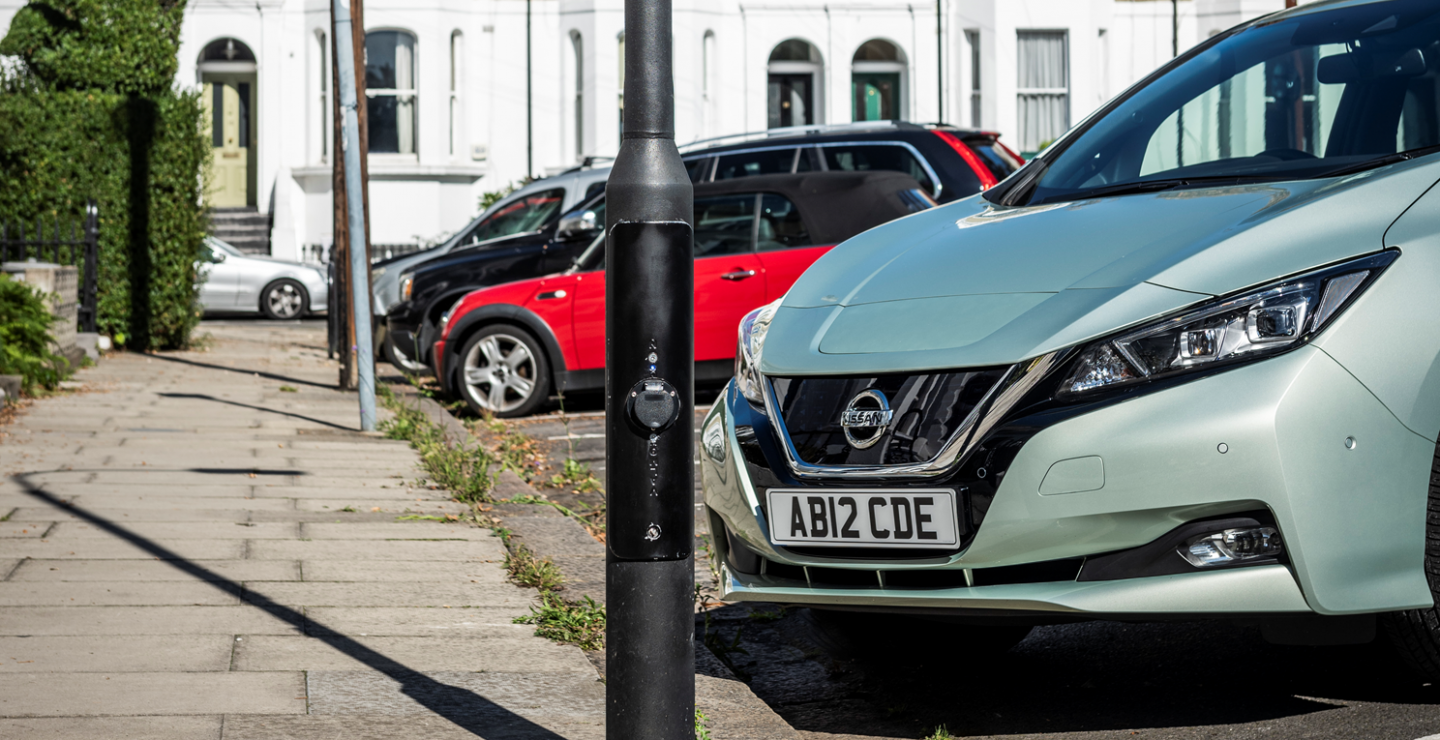
Therefore, existing street lighting columns can offer an alternative location for suitable electric vehicle charging equipment.
This case study explores how Lucy Zodion worked with ubitricity to support on-street EV charging installations across Greater London.
The project used specialist street lighting isolators and electrical protection equipment to supply both EV charging points and existing street lights.
In addition, it demonstrated how electrical infrastructure could support the transition towards cleaner urban transport.
Background – The Growth of On-Street EV Charging
As more drivers choose electric vehicles, towns and cities need additional charging infrastructure.
For example, local authorities must consider residential charging, public charging points and the electrical networks supporting them.
Furthermore, charging equipment must provide suitable electrical protection for both users and connected infrastructure.
Consequently, reliable power distribution forms an important part of EV charging development.
London’s Go Ultra Low City Scheme
The Go Ultra Low City Scheme (GULCS) supported the development of electric vehicle charging infrastructure in London.
London Councils, Transport for London and the Greater London Authority were involved in the initiative.
The scheme aimed to encourage the adoption of ultra-low emission vehicles and improve access to charging facilities.
In particular, its work covered residential charging, rapid charging and infrastructure associated with car club parking bays.
As a result, the programme created opportunities to install charging equipment within existing urban infrastructure.
Why Use Street Lighting Columns for EV Charging?
Street lighting columns already form part of the public electrical infrastructure.
Therefore, suitable columns can provide locations for EV charging equipment without requiring a completely separate charging structure.
However, a street light and an EV charger have different electrical requirements.
For example, the charging equipment needs a suitable power supply and protective arrangement. Meanwhile, the street light must continue operating safely.
Consequently, the combined installation requires careful electrical design.
ubitricity and Lucy Zodion – Project Collaboration
ubitricity developed on-street EV charging solutions that integrated charging equipment into existing street furniture.
As part of the GULCS programme, the company worked on converting suitable street lighting columns into public EV charge points.
The installations took place across London and surrounding boroughs.
To support this work, ubitricity selected Lucy Zodion as a specialist electrical equipment partner.
Why Was Lucy Zodion Selected?
Lucy Zodion had experience supplying electrical connection and protection equipment for street lighting infrastructure.
For example, its product range included street lighting cut-outs and street lighting isolators.
In addition, the company supplied products used within the UK Power Networks electrical network.
As a result, Lucy Zodion could help develop a solution that worked alongside the existing street lighting infrastructure.
EV Charging Infrastructure – Slow, Fast, Rapid and Higher-Power Charging Applications
The Challenge – Converting Street Lights into EV Charge Points
The main challenge involved changing the function of existing street lighting columns.
Previously, these columns supplied electricity for street illumination. However, the project required them to support EV charging as well.
Therefore, each suitable installation needed to accommodate two separate electrical functions.
In addition, the new equipment had to maintain electrical safety and comply with the applicable installation requirements.
Protecting EV Charging Equipment and Street Lighting
A charging fault should not unnecessarily interrupt the street light.
For this reason, the project required separate protective arrangements for the charger and luminaire.
Furthermore, the solution needed to provide suitable isolation for maintenance and electrical work.
As a result, ubitricity and Lucy Zodion focused on both equipment protection and supply continuity.
Working Within Existing Street Lighting Columns
Space inside a street lighting column can be limited.
Consequently, additional electrical equipment must fit within the available enclosure.
For example, installers need sufficient space for the isolator, protective components and associated wiring.
Therefore, a compact and suitable electrical arrangement was important to the project’s success.
Project Objectives – Safe and Reliable EV Charging
Lucy Zodion worked with ubitricity’s UK Operations Director to identify the project’s electrical requirements.
The team established four main objectives.
1. Reliable Electrical Power
The charging equipment required a consistent and reliable electricity supply.
In addition, the selected electrical components needed to meet the relevant industry standards.
Therefore, proven product design and appropriate testing formed part of the selection process.
2. Electrical Safety
Public charging equipment requires suitable protection against electrical hazards.
For example, the electrical installation must address shock protection and the safe operation of connected equipment.
Furthermore, the street lighting circuit must retain its own protective arrangement.
Consequently, safety was an important consideration throughout the design.
3. Product Availability
The project involved a large number of street lighting installations.
However, the rollout programme required equipment within a relatively short timeframe.
For this reason, Lucy Zodion needed to provide suitable products in the quantities required.
4. Multipurpose Power Distribution
The electrical solution had to support both EV charging and street lighting.
In particular, the design required separate protective arrangements for the charger and luminaire.
As a result, a fault affecting the charging equipment would not necessarily interrupt street lighting operation.
Lucy Zodion EV Charging Project Summary
The original case study identified the following project details.
| Project | Safe and Reliable On-Street EV Charging Infrastructure |
| Location | Greater London, United Kingdom |
| Completion | 2019 |
| EV Charging Specialist | ubitricity |
| Electrical Equipment Manufacturer | Lucy Zodion |
| Equipment | Single-phase secondary street lighting isolators |
| Featured Product | Lucy Zodion Trojan Midi with 32A switch disconnector |
| Charging Equipment | ubitricity 5.8kW EV charging equipment |
| Main Objective | Support safe and reliable EV charging alongside street lighting |
The project used street lighting isolators rather than installing a separate EV feeder pillar at every charging location.
However, EV feeder pillars remain an important option for other public charging installations.
The Solution – Lucy Zodion Trojan Midi Isolators
Lucy Zodion manufactured and supplied several thousand secondary isolators for the project.
These units supported electrical isolation and protection within the converted street lighting columns.
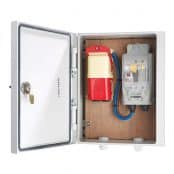
The selected product was the Lucy Zodion Trojan Midi, incorporating a 32A switch disconnector.
In addition, the equipment included separate protective arrangements for the charging unit and street light.
32A Supply Isolation
The 32A switch disconnector provided a means of electrical isolation for the relevant supply arrangement.
Furthermore, the design supported lockable isolation for authorised maintenance work.
Consequently, operators could manage the electrical supply using a designated isolating device.
25A Protection for EV Charging Equipment
The project used a 25A protective arrangement for the 5.8kW ubitricity EV charging equipment.
The original case study describes this as including residual current protection.
However, the 25A figure should not be confused with the residual current trip sensitivity, which is normally expressed in milliamps.
Therefore, installers must confirm the complete device characteristics and protection requirements for the actual charging system.
6A Protection for Street Lighting
Alongside the EV charging protection, the installation included 6A protection for the luminaire.
This provided a separate protective arrangement for the street lighting circuit.
As a result, a fault affecting the EV charging equipment was less likely to interrupt the luminaire supply.
Furthermore, maintaining street lighting operation supported the wider objectives of the public infrastructure project.
Lucy Zodion Trojan Midi Product
The case study specified the Trojan Midi with 32A switch disconnector.
This formed part of Lucy Zodion’s street lighting cut-out and isolator equipment offering.
For further information, explore our Lucy Zodion Trojan Street Lighting Isolators.
Electrical Safety and Standards
Electrical safety was a central requirement of the EV charging project.
For example, the equipment needed to support appropriate isolation, circuit protection and public access to charging facilities.
In addition, Lucy Zodion considered the relevant product standards during development.
IEC/EN 60947-3 – Switch Disconnectors
The original case study reported KEMA testing of the 32A isolator to IEC/EN 60947-3.
This standard covers applicable low voltage switch, disconnector and switch-disconnector equipment.
As a result, the testing formed part of the product’s compliance evidence.
IEC/EN 60269-1 – Low Voltage Fuses
The project information also referenced IEC/EN 60269-1.
According to the case study, KEMA tested the fuse carrier against this standard.
Furthermore, the installation included separate protective arrangements for charging and lighting circuits.
EV Charging Installation Requirements
Lucy Zodion developed the original solution with reference to the electrical requirements applicable at the time.
The case study cited the IET Code of Practice for Electric Vehicle Charging Equipment Installation.
However, electrical installation standards and EV charging requirements have developed since the project’s completion in 2019.
Therefore, new installations must follow the current applicable requirements rather than relying on historical specifications.
Lucy Zodion EV Charging Project Results
The original case study reported that Lucy Zodion met the project’s four main objectives.
These included safety, reliability, availability and multipurpose electrical protection.
Furthermore, the solution supported the wider rollout of on-street EV charging facilities across London.
Improved Electrical Protection
The installation included separate protection for the EV charger and street light.
For example, the charging arrangement incorporated 25A protection, while the luminaire had a dedicated 6A protective arrangement.
Consequently, electrical faults could be managed with greater separation between the two circuits.
Reliable Equipment Performance
Lucy Zodion selected components with relevant test evidence and product specifications.
In particular, the original case study identified testing associated with IEC/EN 60947-3 and IEC/EN 60269-1.
As a result, the equipment supported the project’s electrical safety and reliability objectives.
Supporting a Large-Scale Installation Programme
The rollout required several thousand electrical protection units.
Therefore, Lucy Zodion arranged weekly shipments to support the installation schedule.
In addition, the supply programme helped accommodate the project’s short lead times.
Multipurpose Street Lighting Infrastructure
The solution allowed suitable street lighting columns to support EV charging alongside their existing lighting function.
Furthermore, separate protective arrangements helped maintain the independence of the two electrical functions.
Consequently, existing street furniture could play a greater role in developing accessible public charging infrastructure.
EV Feeder Pillars and Public Charging Infrastructure
Not every EV charging project can use an existing street lighting column.
For example, larger charging installations may need dedicated distribution equipment.
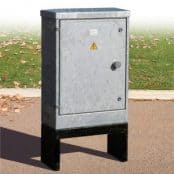
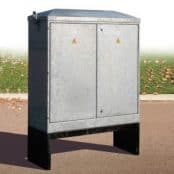
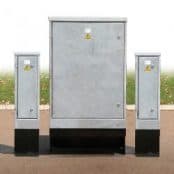
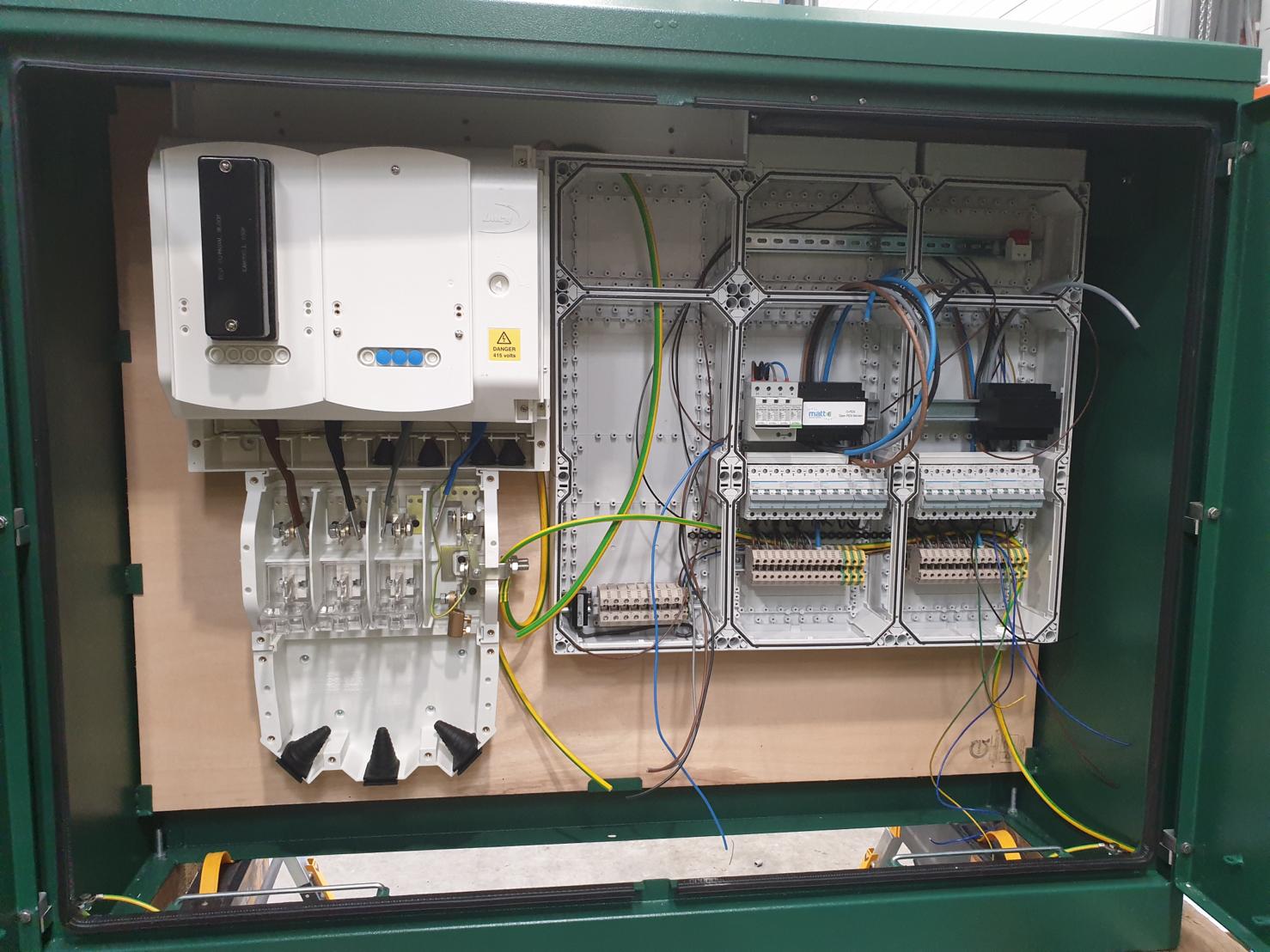
In these cases, an EV charging feeder pillar can provide a central point for electrical power distribution.
Furthermore, dedicated pillars can accommodate suitable switching, isolation and protection equipment.
Where Are EV Feeder Pillars Used?
EV feeder pillars support a wide range of charging infrastructure projects.
Common applications include:
- Public car parks and urban charging facilities.
- Commercial and workplace EV charging.
- Residential charging developments.
- Fleet and depot charging infrastructure.
- Retail and leisure charging locations.
- Transport hubs and public infrastructure.
However, the correct distribution equipment depends on the number of chargers, electrical load and network connection requirements.
Choosing an EV Charging Feeder Pillar
Before specifying an EV pillar, contractors should consider several factors.
- Electrical supply: Confirm the incoming voltage, phase arrangement and available capacity.
- Charging demand: Assess the number and ratings of connected charge points.
- Circuit protection: Select suitable protective devices for the installation.
- Isolation: Include the required switching and maintenance arrangements.
- Earthing: Confirm the required earthing and protective measures.
- Environmental protection: Consider enclosure construction and installation conditions.
- Future expansion: Allow for additional charging capacity where appropriate.
In addition, the final design must meet the relevant electrical and network operator requirements.
Lucy Zodion Electrical Equipment from Thorne & Derrick
Thorne & Derrick supply specialist electrical equipment for street lighting and EV charging infrastructure.
Our range includes electrical feeder pillars, cut-outs, isolators and associated power distribution products.
Furthermore, we work with established manufacturers, including Lucy Zodion, to support utility and infrastructure contractors.
Street Lighting Cut-Outs and Isolators
Street lighting cut-outs provide electrical connection and protection functions within suitable lighting installations.
Meanwhile, isolators provide a designated method of disconnecting the electrical supply.
Explore our specialist product categories:
- Lucy Zodion Titan Street Lighting Cut-Outs.
- Lucy Zodion Trojan Street Lighting Isolators.
- EV Charging Feeder Pillars.
- Electrical Feeder Pillars.
As a result, customers can source equipment for suitable street lighting, public charging and power distribution projects.

Thorne & Derrick – Distributors and Suppliers of Electrical Feeder Pillars and Street Lighting Equipment
Conclusion – Safe and Reliable On-Street EV Charging
The Lucy Zodion and ubitricity project demonstrated how existing street lighting infrastructure could support on-street EV charging.
By incorporating dedicated electrical isolation and protection, the installation supported both public charging and street lighting functions.
Furthermore, the project highlighted the importance of reliable equipment supply during large-scale EV infrastructure development.
The original scheme was completed in 2019. However, the principles of safe electrical distribution and suitable charging infrastructure remain relevant.
Thorne & Derrick supply electrical equipment for street lighting, EV charging and power distribution applications.
For further information, explore our feeder pillar range or contact our technical sales team to discuss your project requirements.