Feeder Pillars Explained | LV Power Distribution
Published 01 Jul 2026
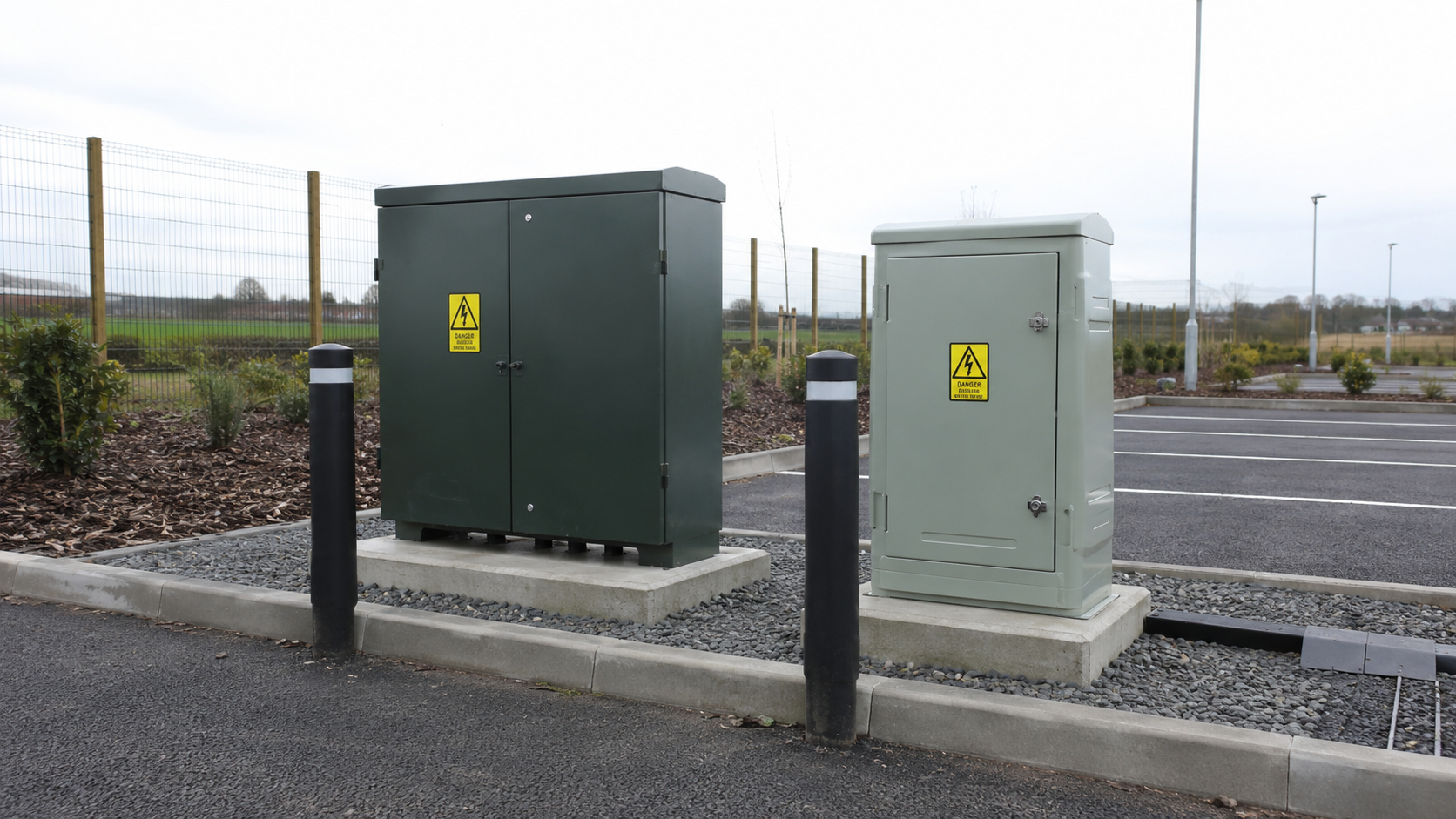
A feeder pillar is an outdoor electrical cabinet used to house and protect low voltage power distribution, isolation, control and connection equipment. Feeder pillars are commonly installed in public spaces, highways, substations, street lighting networks, EV charging sites, industrial facilities, sports grounds, car parks and utility infrastructure.
In simple terms, a feeder pillar provides a secure, weather-resistant enclosure where incoming electrical supplies can be distributed to outgoing circuits. These circuits may feed street lights, signs, traffic systems, EV charge points, temporary event supplies, pumps, public realm equipment, industrial loads or other low voltage electrical assets.
Feeder pillars can be supplied as empty enclosures for panel builders and electrical contractors, or as pre-wired feeder pillars fitted with cut-outs, isolators, fuses, distribution boards, meters, contactors, surge protection, terminals, sockets or other project-specific equipment.
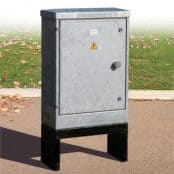
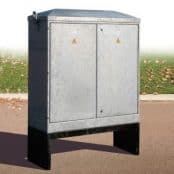
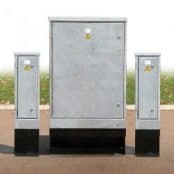
Thorne & Derrick supply feeder pillars for LV electrical power distribution, including GRP, galvanised steel, stainless steel, cast iron, slimline, single door, double door, pre-wired and retractable feeder pillar solutions.
Quick Answer: What Is A Feeder Pillar?
A feeder pillar is a secure outdoor electrical enclosure used for low voltage power distribution, electrical isolation, circuit protection and control. It normally receives an incoming electrical supply and distributes power to one or more outgoing circuits.
Feeder pillars are used for LV electrical power distribution in applications such as street lighting, highways, car parks, public spaces, EV charging, utilities, parks, industrial sites, temporary supplies and substations.
What Is A Feeder Pillar?
A feeder pillar is a purpose-built outdoor enclosure used to house electrical distribution and control equipment. It acts as a protected point where low voltage power can be terminated, isolated, protected and distributed.
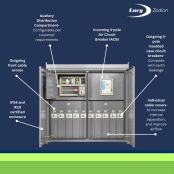
The enclosure protects the internal electrical equipment from weather, impact, unauthorised access and environmental conditions. Depending on the design, the feeder pillar may contain:
- Incoming cable terminations
- Outgoing cable terminals
- Cut-outs and fuses
- Isolators and switches
- Distribution boards
- Meters and metering panels
- Contactors and timers
- Surge protection devices
- Earth bars and neutral bars
- Sockets for temporary or public power supplies
The exact internal arrangement depends on the application. A street lighting feeder pillar may be designed for lighting circuits, photocell control or timeclock control. An EV charging feeder pillar may distribute power to charging equipment. A utility feeder pillar may be used to provide LV power connections to the electricity grid.
What Does A Feeder Pillar Do?
A feeder pillar performs several important functions in an LV electrical distribution system.
A feeder pillar is usually positioned close to the electrical loads it serves, making it easier to distribute power locally and safely.
Where Are Feeder Pillars Used?
Feeder pillars are used wherever low voltage electrical power needs to be distributed outdoors or in exposed environments.
Typical applications include:
- Street lighting networks – distributing power to lighting columns and lighting circuits.
- Highways and traffic systems – powering signs, signals, lighting, CCTV and roadside electrical equipment.
- EV charging sites – supplying power to electric vehicle charging infrastructure.
- Car parks and public spaces – feeding lighting, ticket machines, signage and public electrical services.
- Parks and sports grounds – providing controlled power distribution for events, lighting, pumps or facilities.
- Industrial sites – distributing power to outdoor equipment, process areas and plant.
- Substations and utilities – housing LV power distribution equipment, control equipment and auxiliary supplies.
- Temporary power supplies – supporting semi-permanent or temporary electrical distribution requirements.
Feeder pillars are often specified where equipment must be outdoors, accessible for maintenance and protected from environmental conditions.
Types Of Feeder Pillars
Feeder pillars are available in different materials, sizes, door configurations and wiring arrangements.
View the full range of feeder pillars for electrical power distribution.
GRP vs Steel Feeder Pillars
Two of the most common feeder pillar materials are GRP and steel. The correct choice depends on the project environment, security requirements, mechanical risk, corrosion risk, installation preference and specification.
GRP feeder pillars are commonly used for LV power connections and can be supplied to accommodate different LV power requirements.
Lucy Zodion Slimline steel feeder pillars are manufactured from galvanised steel with optional painted versions for LV power distribution and control applications.
Pre-Wired Feeder Pillars
A pre-wired feeder pillar is supplied with internal electrical equipment already fitted and wired before delivery. This can help reduce site installation time and improve consistency because the internal arrangement is built to an agreed specification.
Pre-wired feeder pillars may include:
- Incoming supply terminals
- Outgoing circuit protection
- Switch disconnectors or isolators
- Fuse switches or cut-outs
- Metering equipment
- Earth bars and neutral bars
- Distribution boards
- Control gear
- Sockets and temporary supply outlets
- Surge protection devices
Pre-wired feeder pillars are commonly used where a standardised or repeatable electrical supply arrangement is needed, such as street lighting schemes, EV charging sites, public spaces, temporary power supplies and highways infrastructure.
Street Lighting & Highway Feeder Pillars
Street lighting feeder pillars are used to distribute power to lighting circuits and associated highway electrical equipment. They are often installed at roadside locations, footpaths, car parks, transport hubs and public realm environments.
A typical street lighting or highway feeder pillar may supply:
- Street lighting columns
- Road signs
- Traffic signals
- CCTV equipment
- Control cabinets
- Pedestrian crossing equipment
- Public lighting systems
Because these feeder pillars are often installed in public locations, security, vandal resistance, IP rating, lock type, visibility, finish, access and maintenance requirements should all be considered.
For manufacturers, see Lucy Zodion feeder pillar and street lighting solutions.
EV Charging Feeder Pillars
EV charging feeder pillars are used to distribute low voltage power to electric vehicle charging points. They may be specified for car parks, public charging hubs, fleet charging depots, workplace charging, local authority charging schemes and commercial developments.
EV charging sites often require careful coordination between:
- Incoming LV supply capacity
- Number of charge points
- Fast, rapid or high-power charging requirements
- Circuit protection and isolation
- Metering and monitoring
- Surge protection
- Cable routing and civil works
- Future expansion
Power & Cables has existing content on feeder pillars for electric vehicle power supply, including pre-wired supply pillar options for EV charging infrastructure.
How To Select A Feeder Pillar
Selecting the correct feeder pillar requires a clear understanding of the electrical design, installation environment and project requirements.
A feeder pillar should be selected using both the electrical specification and the physical site requirements. The enclosure, internal equipment and cable arrangement must all work together.
Feeder Pillar Installation Considerations
Feeder pillar installation usually involves both civil and electrical works. The exact method depends on the pillar type, base design, root section, incoming cable route, internal electrical equipment and site conditions.
Important installation considerations include:
- Base preparation – ensuring the feeder pillar is installed on a suitable foundation, plinth or root section.
- Cable duct alignment – incoming and outgoing ducts must align with the pillar cable entry points.
- Cable bending space – the pillar must allow enough space for safe cable entry and termination.
- Earthing – earth bars, bonding and earthing arrangements should be suitable for the design.
- Access – the door must open fully and safely for installation, inspection and maintenance.
- Public safety – pillars in public spaces should consider security, labels, locks and impact risk.
- Environmental exposure – wind, rain, UV exposure, corrosion and flood risk should be considered.
For installation guidance, see the Power & Cables article on GRP feeder pillar site installation.
Common Feeder Pillar Mistakes
Feeder pillar issues are often caused by poor coordination between the enclosure design, internal electrical equipment and civil installation.
Common mistakes include:
- Choosing a pillar that is too small – insufficient internal space can make cabling, termination and maintenance difficult.
- Forgetting cable bending radius – larger LV cables need enough room to enter and terminate safely.
- Specifying the wrong material – GRP, steel, stainless steel and cast iron all suit different environments and risks.
- Ignoring security requirements – public-facing feeder pillars need suitable locks, hinges and vandal-resistant features.
- Poor duct alignment – incoming ducts must be coordinated with cable entry positions.
- Not allowing maintenance access – doors and internal components must remain accessible after installation.
- Treating all feeder pillars as the same – street lighting, EV charging, industrial and utility applications may need different internal equipment.
- Overlooking earthing and bonding – the pillar and internal electrical equipment must be correctly earthed in line with the design.
The best feeder pillar specification starts with the electrical design, then selects an enclosure and internal layout that can safely support it.
Related Feeder Pillar Products
Feeder pillars are part of the wider LV power distribution and cable installation system. Related products include:
- Feeder Pillars – complete range of feeder pillars for LV electrical power distribution.
- GRP Feeder Pillars – GRP pillars for low voltage power connections and outdoor electrical distribution.
- Lucy Zodion Slimline Steel Feeder Pillars – galvanised steel slimline feeder pillars for LV distribution and control.
- Lucy Zodion Fortress Feeder Pillars – galvanised steel feeder pillars from the Fortress range.
- Lucy Zodion Cast Iron Feeder Pillars – cast iron feeder pillars for increased weather protection, security and long service life.
- EV Power Supply Feeder Pillars – feeder pillar solutions for EV charging infrastructure.
- Cable Ducting – underground cable ducting for LV, MV and HV cable protection.
- Cable Glands – glands for cable entry, termination and sealing into enclosures and cabinets.
Feeder Pillar FAQs
Q: What is a feeder pillar?
A: A feeder pillar is an outdoor electrical cabinet used to house low voltage power distribution, isolation, protection and control equipment. It typically receives an incoming supply and distributes power to outgoing circuits.
Q: What is a feeder pillar used for?
A: Feeder pillars are used for LV power distribution in street lighting, highways, EV charging, public spaces, car parks, industrial sites, parks, utilities, temporary supplies and substations.
Q: What is inside a feeder pillar?
A: A feeder pillar may contain cut-outs, fuses, isolators, switchgear, distribution boards, meters, contactors, terminals, earth bars, neutral bars, surge protection devices and control equipment, depending on the application.
Q: What is a GRP feeder pillar?
A: A GRP feeder pillar is an electrical feeder pillar manufactured from glass reinforced plastic. GRP pillars are lightweight, corrosion-resistant and commonly used for outdoor low voltage power distribution applications.
Q: What is a pre-wired feeder pillar?
A: A pre-wired feeder pillar is supplied with internal electrical equipment already installed and wired. This may include isolation, protection, distribution, metering, control equipment, sockets or terminals depending on the project specification.
Q: What is the difference between a feeder pillar and a distribution board?
A: A distribution board is an internal electrical assembly used to distribute circuits. A feeder pillar is usually an outdoor enclosure that may contain a distribution board or other electrical equipment, while also providing weather protection, security and cable termination space.
Q: Are feeder pillars waterproof?
A: Feeder pillars are designed for outdoor use, but the level of protection depends on the enclosure design and IP rating. The correct pillar should be selected for the site environment, exposure level and internal electrical equipment.
Q: How do I choose the right feeder pillar?
A: To choose the right feeder pillar, check the application, material, size, door configuration, internal equipment, cable entry requirements, security, environmental exposure, earthing requirements and installation method.
Conclusion
Feeder pillars are essential outdoor electrical enclosures used for low voltage power distribution, isolation, protection and control. They provide a secure point for distributing power to outgoing circuits in street lighting, highways, EV charging, public spaces, industrial sites, utilities, parks and temporary supply applications.
The correct feeder pillar depends on the application, internal electrical equipment, enclosure material, size, door configuration, security requirements, cable entries, earthing arrangement and installation environment.
Thorne & Derrick supply LV electrical feeder pillars, including GRP, galvanised steel, stainless steel, cast iron, slimline, single door, double door, pre-wired and retractable feeder pillar solutions for electrical power distribution projects.