Cable Stripping Tools Explained: Sheath, Screen & Insulation Removal
Published 06 Nov 2026

Cable stripping tools remove the outer sheath, semi-conductive screen or insulation from electrical cables before jointing, termination or connection. However, no single tool suits every cable layer. The right choice depends on the cable construction, material being removed and accuracy required.
For LV, MV and HV power cables, correct preparation is essential. In particular, 11kV and 33kV XLPE cables require accurate removal of individual layers without damaging the underlying insulation, conductor or screen.
Specialist tools include cable sheath strippers, bonded semicon shavers, peelable screen removal tools and insulation strippers. Each performs a different preparation task. As a result, selecting the correct tool can improve consistency and reduce the risk of cable damage.
Manufacturers such as Alroc and Ripley produce specialist cable preparation equipment for utilities, electrical contractors and cable jointers.
Thorne & Derrick supply cable stripping and jointing tools for LV, MV and HV installations, including products from Alroc and Ripley Tools.
This guide explains the main tool types, their applications and the differences between bonded and peelable semicon removal. It also covers tool selection for 11kV, 33kV and higher-voltage cable systems.
Quick Navigation
- What Are Cable Stripping Tools?
- Why Is Correct Cable Stripping Important?
- Understanding Cable Layers
- Types of Cable Stripping Tools
- Outer Cable Sheath Stripping Tools
- Semicon Screen Removal Tools
- Cable Insulation Stripping Tools
- Bonded vs Peelable Semicon
- Cable Stripping Tool Comparison
- Tools for 11kV and 33kV Cables
- Alroc vs Ripley Cable Tools
- Tool Selection Checklist
- Common Cable Preparation Mistakes
- Available Cable Stripping Tools
- Frequently Asked Questions
- Conclusion
What Are Cable Stripping Tools?
Cable stripping tools are mechanical cutting, shaving or peeling tools used to remove designated layers from an electrical cable. Their purpose is to achieve accurate preparation while protecting the underlying cable construction.
For MV and HV XLPE cables, preparation normally involves three main operations. However, additional steps may be necessary depending on the joint or termination being installed.
Three Main Cable Stripping Operations
- Outer sheath removal: Removing the protective outer jacket to expose the required underlying cable layers.
- Semicon screen removal: Removing the outer semi-conductive insulation screen to the specified cutback dimensions.
- Insulation stripping: Removing a controlled length of XLPE or EPR insulation to expose the conductor.
In addition, some installations require screen preparation, insulation chamfering or surface finishing. These operations must follow the cable accessory manufacturer’s approved instructions.
Cable Stripping Tools – Quick Summary
Why Is Correct Cable Stripping Important?
Cable preparation quality is particularly important when installing MV and HV cable accessories. These cables contain several layers, each with a specific electrical or mechanical function.
Therefore, installers must prepare every layer to the dimensions and surface finish required by the joint, termination or connector.
What Can Go Wrong During Cable Preparation?
Using an unsuitable tool or incorrect blade setting can damage the cable. For example, cutting too deeply may scratch the insulation or metallic screen.
Common problems include:
- Insulation damage: Excessively deep cuts can damage the underlying insulation.
- Scratches and gouges: Damage to XLPE surfaces may affect electrical stress distribution.
- Irregular semicon edges: Poor screen cutbacks can create local electrical stress concentrations.
- Surface contamination: Dust or other materials can affect prepared insulation surfaces.
- Incorrect cutback dimensions: These may prevent the accessory from fitting correctly.
- Metallic screen damage: Excessive sheath cutting can damage underlying cable components.
- Conductor damage: Incorrect stripping can affect the subsequent electrical connection.
How Precision Tools Improve Preparation
Specialist stripping tools provide greater control over blade depth, cutting geometry and removal dimensions. As a result, they can help installers achieve a more consistent finish.
However, even a precision-engineered tool requires correct adjustment and careful use. Furthermore, competent cable jointers must follow the approved installation instructions.
For MV and HV accessories, poor screen or insulation preparation can increase the risk of partial discharge and premature failure. Therefore, inspection of the finished cable surface remains essential.
Understanding Cable Layers Before Stripping
Before selecting a cable stripping tool, identify the layer that needs to be removed. The correct equipment depends on the cable construction and preparation operation.
For example, a single-core 11kV XLPE cable has a different construction from an LV SWA cable. Consequently, their preparation methods and tooling requirements may differ considerably.
Typical MV XLPE Cable Layers
| Cable Layer | Function | Preparation Requirement |
|---|---|---|
| Outer Sheath | Provides external protection. | Remove without damaging underlying layers. |
| Metallic Screen | Provides electrical screening and a designed fault-current path. | Prepare according to the cable construction and accessory instructions. |
| Outer Semicon Screen | Forms part of the electrical stress control structure. | Remove to the required length with the specified surface finish. |
| XLPE Insulation | Provides the main electrical insulation. | Strip accurately where required for the connection. |
| Conductor | Carries electrical current. | Avoid damage during insulation removal. |
Do All Power Cables Have the Same Layers?
No. Cable construction varies with voltage, application and manufacturer. For example, some designs include armour, water-blocking materials, bedding or additional screens.
Therefore, the cable specification should be checked before preparation begins. In addition, the tool must suit the actual layer diameter rather than the overall cable diameter alone.
What Are the Different Types of Cable Stripping Tools?
Cable stripping tools are normally grouped by the preparation operation they perform. Therefore, selecting a tool by cable voltage alone is not sufficient.
Main Cable Stripping Tool Categories
- Outer sheath stripping tools: Remove compatible PVC, PE, rubber and other jacket materials.
- Peelable semicon tools: Score and remove approved peelable insulation screens.
- Bonded semicon shaving tools: Shave bonded semi-conductive material from the insulation.
- Insulation stripping tools: Remove XLPE, EPR and other compatible insulation materials.
- Multifunction cable preparation tools: Combine selected stripping and finishing operations.
- Chamfering and finishing tools: Produce specified insulation profiles and surface finishes.
Why Do Tool Designs Differ?
Different cable layers require different cutting methods. For example, an outer sheath stripper does not perform the same operation as a bonded semicon shaver.
Furthermore, tool manufacturers use different adjustment systems, blade designs and working diameter ranges. These features help control the preparation process.
Explore our LV, MV and HV Cable Jointing Tools.
Outer Cable Sheath Stripping Tools
Cable sheath stripping tools remove the protective outer jacket before further cable preparation begins. These sheaths may be manufactured from PVC, polyethylene or other polymeric materials.
In many applications, a specialist stripper produces controlled circular and longitudinal cuts. This allows the sheath to be removed while reducing the risk of damage to the underlying cable construction.
How Do Outer Sheath Stripping Tools Work?
Many mechanical sheath strippers use adjustable blades or preset cutting arrangements. However, the exact method depends on the tool and cable.
A typical preparation sequence may involve:
- Confirm the cable diameter and sheath construction.
- Select a compatible tool and cutting arrangement.
- Set the blade to the required cutting depth.
- Make the approved circular and longitudinal cuts.
- Remove the sheath using the specified method.
- Inspect the exposed cable layers for damage.
Importantly, the sequence must follow the tool manufacturer’s instructions and the approved cable preparation procedure.
Alroc PG Cable Sheath Stripping Tools
The Alroc PG range includes specialist cable sheath stripping pliers for compatible cable diameters and sheath materials.
For example, the Alroc PG3 and PG4 are used for selected outer sheath removal applications. However, each model has its own working range and blade arrangements.
Consequently, the exact model must be selected using the cable dimensions and required cutting depth.
View Outer Cable Sheath Removal Tools.
Semi-Conductive Screen Removal Tools
Semicon screen removal tools remove the outer semi-conductive insulation screen from suitable MV and HV cables.
This screen forms part of the cable’s electrical stress control structure. Therefore, its preparation requires particular care.
During cable jointing or termination, the screen is removed to the required cutback length. This allows the accessory’s stress control components to be fitted correctly.
Bonded Semicon Shaving Tools
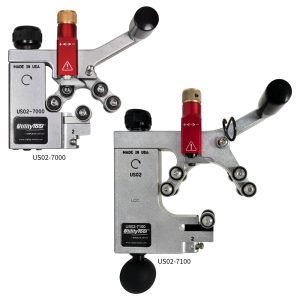
Where the semi-conductive screen is bonded to the XLPE insulation, installers normally use a compatible precision shaving tool.
The tool removes the bonded screen while helping control the finished insulation surface. However, the blade setting and working diameter must match the cable.
For example, the Ripley US02-7000 is designed for selected bonded semicon removal applications.
In addition, Alroc offers specialist tools for compatible bonded screen constructions.
Peelable Semicon Removal Tools
Some MV cables incorporate a peelable outer semicon screen. Unlike bonded screens, these layers are designed to be removed by controlled peeling.
Depending on the cable construction, the process may involve scoring the screen before peeling it away.
However, excessive scoring can damage the insulation. Therefore, both the cutting method and tool must match the approved procedure.
Browse Semicon Screen Removal Tools.
Cable Insulation Stripping Tools
Cable insulation stripping tools remove the required length of electrical insulation to expose the conductor for a lug, connector or other connection.
For MV and HV cables, this process requires accurate dimensions and a suitable surface finish. Consequently, the tool must be compatible with the insulation material and diameter.
Which Cable Insulation Materials Can Be Stripped?
Specialist tools are available for selected polymeric insulation materials, including:
- XLPE: Cross-linked polyethylene.
- EPR: Ethylene propylene rubber.
- PE: Polyethylene.
- Other approved polymers: Materials supported by the specific tool design.
Why Use an Adjustable Insulation Stripper?
An adjustable tool provides controlled cutting and helps achieve consistent insulation cutback dimensions.
However, the settings must reflect the insulation diameter, thickness and conductor construction. Excessive blade penetration may damage the conductor.
Furthermore, some accessories require a chamfered insulation end or another specified finish. Therefore, stripping and finishing should follow the same approved preparation procedure.
View Cable Insulation Stripping Tools.
Bonded vs Peelable Semicon Screens – What’s the Difference?
One of the most important distinctions in MV cable preparation is whether the outer semi-conductive insulation screen is bonded or peelable.
Although both form part of the cable’s insulation screening system, their removal methods differ. Therefore, choosing the correct preparation tool is essential.
Bonded and Peelable Screen Comparison
| Feature | Bonded Screen | Peelable Screen |
|---|---|---|
| Construction | Bonded to the insulation. | Designed for controlled peeling. |
| Removal Method | Normally removed by precision shaving. | Removed by approved scoring and peeling. |
| Tool Requirement | Compatible bonded semicon shaver. | Compatible scoring or peeling tool. |
| Potential Damage | Gouges, uneven shaving or excessive insulation removal. | Over-scoring, screen residue or insulation damage. |
How Do You Identify the Correct Screen Type?
First, check the cable manufacturer’s documentation and identify the screen construction. Next, confirm the approved removal method.
For example, a tool designed for bonded semicon should not automatically be used on a peelable screen.
Important: Always confirm compatibility between the actual cable and stripping tool before starting work.
Cable Stripping Tools – Comparison Guide
Different cable preparation tasks require different tools. Therefore, the following table compares the main stripping operations and suitable tool categories.
Which Cable Stripping Tool Do You Need?
| Preparation Task | Tool Type | Example |
|---|---|---|
| Remove Outer Sheath | Sheath or jacket stripper. | Alroc PG, Ripley US15. |
| Remove Bonded Semicon | Precision semicon shaver. | Ripley US02, compatible Alroc tools. |
| Remove Peelable Semicon | Scoring and peeling tool. | Compatible peelable-screen tool. |
| Strip XLPE Insulation | Adjustable insulation stripper. | Alroc BRMRD range. |
| Multiple Preparation Stages | Multifunction cable preparation tool. | Compatible Alroc multifunction systems. |
| Finish Insulation End | Insulation chamfering tool. | Compatible chamfering equipment. |
These examples identify general tool families rather than guaranteeing compatibility with every cable.
Consequently, the exact model, working diameter and manufacturer-approved application must be verified before selection.
Cable Stripping Tools for 11kV and 33kV Cables
11kV and 33kV cable stripping tools help trained cable jointers prepare MV cables before installing joints, terminations and separable connectors.
These cables commonly include XLPE insulation, semi-conductive screens, metallic screens and protective outer layers.
However, cable construction varies. Therefore, the exact tooling depends on the cable design and accessory installation instructions.
11kV Cable Preparation
For a typical 11kV XLPE cable, preparation may involve several operations:
- Remove the outer sheath to the specified cutback.
- Prepare the metallic screen and other applicable layers.
- Remove the required outer semicon screen length.
- Strip the specified XLPE insulation section.
- Produce the required insulation finish.
- Inspect the prepared cable before fitting the accessory.
In addition, any specific utility or accessory manufacturer requirements must be followed.
33kV Cable Preparation
The same general principles apply to 33kV cable systems. However, dimensions, screen construction and preparation requirements may differ.
In particular, accurate semicon removal is important because irregular screen edges or insulation damage can affect electrical stress control.
For a practical example, read 33kV Cable Stripping – Bonded Semicon Removal Using Ripley US02.
66kV, 132kV and Higher-Voltage Cable Preparation
Higher-voltage cables may require larger tools and additional preparation operations. Furthermore, some accessories impose more demanding surface finish requirements.
Therefore, the installation procedure must be based on the exact cable and accessory design.
Explore Multifunction HV Cable Preparation Tools.
Alroc vs Ripley Cable Stripping Tools
Alroc and Ripley both manufacture specialist tools for power cable preparation.
Although their ranges cover similar operations, individual tools differ in design, adjustment methods and compatible cable dimensions.
Alroc Cable Preparation Tools
Alroc manufactures equipment for outer sheath removal, semicon screen preparation, insulation stripping and finishing.
Examples include:
- Alroc PG: Outer sheath stripping pliers.
- Alroc CWB: Selected bonded semicon removal operations.
- Alroc BRMRD: Cable insulation stripping.
- Alroc Multifunction Tools: Systems combining approved cable preparation tasks.
For more information, browse Alroc Cable Jointing Tools.
Ripley Cable Preparation Tools
Ripley produces precision tools for cable preparation across electricity transmission and distribution applications.
For example, its product families include:
- Ripley US02: Bonded semicon shaving.
- Ripley US02 MAX: Bonded semicon removal for compatible larger cable diameters.
- Ripley US14: Outer jacket stripping.
- Ripley US15: Cable sheath stripping.
- Ripley US10: Insulation chamfering.
Explore Ripley Cable Tools.
How to Choose the Correct Cable Stripping Tool
Selecting a suitable cable stripping tool involves more than checking the cable voltage.
First, identify the cable construction and the layer being removed. Next, confirm the working diameter and any required cutting or finishing dimensions.
Finally, check the tool manufacturer’s instructions and relevant project approvals.
Check the Cable Construction
Start by identifying the insulation, outer sheath, metallic screen and conductor arrangement.
For example, an 11kV XLPE cable with a bonded semicon screen may require different tooling from a cable with a peelable screen.
Confirm the Working Diameter
The tool must suit the diameter of the layer being prepared. Therefore, the overall cable diameter may not be sufficient.
In addition, check the permitted layer thickness and blade adjustment range.
Verify Installation Requirements
The accessory installation instructions determine the required cutback dimensions and finished cable profile.
Consequently, any tool must be capable of producing the specified result.
Cable Stripping Tool Selection Checklist
Where cable details are incomplete, confirm compatibility before beginning preparation work.
Common Cable Stripping and Preparation Mistakes
Incorrect preparation can affect the fit and long-term performance of cable accessories. However, many common problems can be reduced through correct tool selection and approved working methods.
Tool Selection Mistakes
- Using the wrong tool: A sheath stripper may not be suitable for semicon or insulation removal.
- Incorrect diameter settings: Tools must match the actual working diameter.
- Using incompatible screen tools: Bonded and peelable screens may require different equipment.
- Using unapproved substitutes: Project and accessory manufacturer requirements must be followed.
Cutting and Surface Preparation Mistakes
- Incorrect blade depth: Excessive cutting may damage underlying layers.
- Worn blades: Damaged blades can affect cut quality.
- Incorrect cutback: Prepared dimensions must match the cable accessory.
- Scratched XLPE insulation: Gouges may create electrical stress concentrations.
- Surface contamination: Poor handling may affect prepared insulation.
- Missed finishing operations: Some accessories require specific chamfers or surface treatments.
What Should You Do If the Cable Is Damaged?
If the prepared surface is damaged or does not meet the specified finish, assess the defect before fitting the accessory.
Importantly, any correction must follow the approved cable preparation procedure. The installer should not assume that every defect can be removed through additional shaving or cutting.
Safety note: Cable preparation must be carried out by competent personnel under suitable electrical safety procedures. Furthermore, ordinary stripping tools must not be assumed suitable for live working.
Cable Stripping and Jointing Tools from Thorne & Derrick
Thorne & Derrick supply specialist LV, MV and HV cable stripping tools for utilities, electrical contractors and cable jointers.
Our range includes equipment for removing cable sheaths, semicon screens and insulation. In addition, we supply multifunction preparation tools and accessories from established manufacturers.
Browse Cable Preparation Tool Categories
- Cable Jointing Tools – specialist preparation equipment for LV, MV and HV cables.
- Outer Sheath Stripping Tools – controlled cable jacket removal.
- Semicon Screen Removal Tools – compatible shaving and peeling tools.
- Cable Insulation Stripping Tools – XLPE and other compatible insulation preparation.
- Multifunction Cable Tools – equipment combining selected preparation operations.
Information Needed for Tool Selection
When enquiring, provide the cable voltage, construction, working diameter and preparation task.
For example, identifying whether the cable has a bonded or peelable semicon screen can help narrow the tool selection.
In addition, details of the joint, termination or connector being installed will help establish the required preparation dimensions.
Cable Stripping Tools – Frequently Asked Questions
These answers cover common questions about cable sheath removal, semicon stripping and insulation preparation.
General Cable Stripping Questions
Q1. What are cable stripping tools used for?
Cable stripping tools remove specified cable layers before jointing, termination or connection. For example, they can remove outer sheaths, semicon screens and insulation.
Q2. What is the difference between a cable stripper and an insulation stripper?
Cable stripper is a general term covering several preparation tools. By contrast, an insulation stripper specifically removes electrical insulation from a conductor.
Q3. What tools are used to strip 11kV cables?
Depending on the cable construction, 11kV preparation may require sheath strippers, semicon removal tools, insulation strippers and finishing tools. However, the exact equipment must match the approved installation procedure.
Q4. How do you remove bonded semicon from XLPE cable?
Bonded semicon is generally removed using a compatible precision shaving tool. Importantly, tool settings and the finished insulation surface must meet the cable and accessory manufacturer’s requirements.
Q5. What is the difference between bonded and peelable semicon?
Bonded semicon normally requires controlled shaving, whereas peelable semicon is designed for an approved scoring and peeling procedure. Therefore, the tools may differ.
Q6. Can the same tool be used for 11kV and 33kV cables?
Some tools can be compatible with both cable voltage classes. However, suitability depends on the working diameter, insulation, screen construction and installation requirements.
Specialist Tool and Selection Questions
Q7. What is a semicon shaving tool?
A semicon shaving tool removes bonded semi-conductive screen material from compatible MV and HV cable insulation. As a result, it supports accurate screen cutback preparation.
Q8. What are Alroc PG tools used for?
Alroc PG tools are specialist sheath stripping pliers. They provide controlled cutting for compatible outer cable jackets.
Q9. What is the Ripley US02 used for?
The Ripley US02 is used for bonded semicon shaving on compatible MV and HV cables. Therefore, the exact model must match the cable’s insulation diameter and screen construction.
Q10. Why is cable preparation important for MV and HV joints?
Accurate preparation helps maintain the required insulation dimensions, screen cutback and surface quality. Conversely, poor preparation can introduce defects that affect accessory performance.
Q11. How do I choose the correct cable stripping tool?
First, identify the cable voltage, construction and layer being removed. Next, check the working diameter, insulation thickness and screen type. Finally, confirm the approved preparation dimensions and tool compatibility.
Conclusion – Choosing Cable Stripping Tools
Cable stripping tools help prepare electrical cables before installing joints, terminations and connectors. However, different cable layers require different cutting and removal methods.
For example, outer sheath strippers, bonded semicon shavers and insulation strippers perform separate preparation tasks. Therefore, tool selection must consider the actual cable construction and required finish.
For 11kV, 33kV and higher-voltage XLPE systems, accurate cable preparation is particularly important. Scratches, incorrect cutbacks or damaged insulation can affect the long-term performance of electrical accessories.
Thorne & Derrick supply LV, MV and HV cable stripping tools from manufacturers including Alroc and Ripley.
For assistance selecting suitable equipment, contact our technical sales team with the cable construction, voltage, dimensions and required preparation operation.