Trefoil Cable Formation Explained
Published 23 Jul 2026
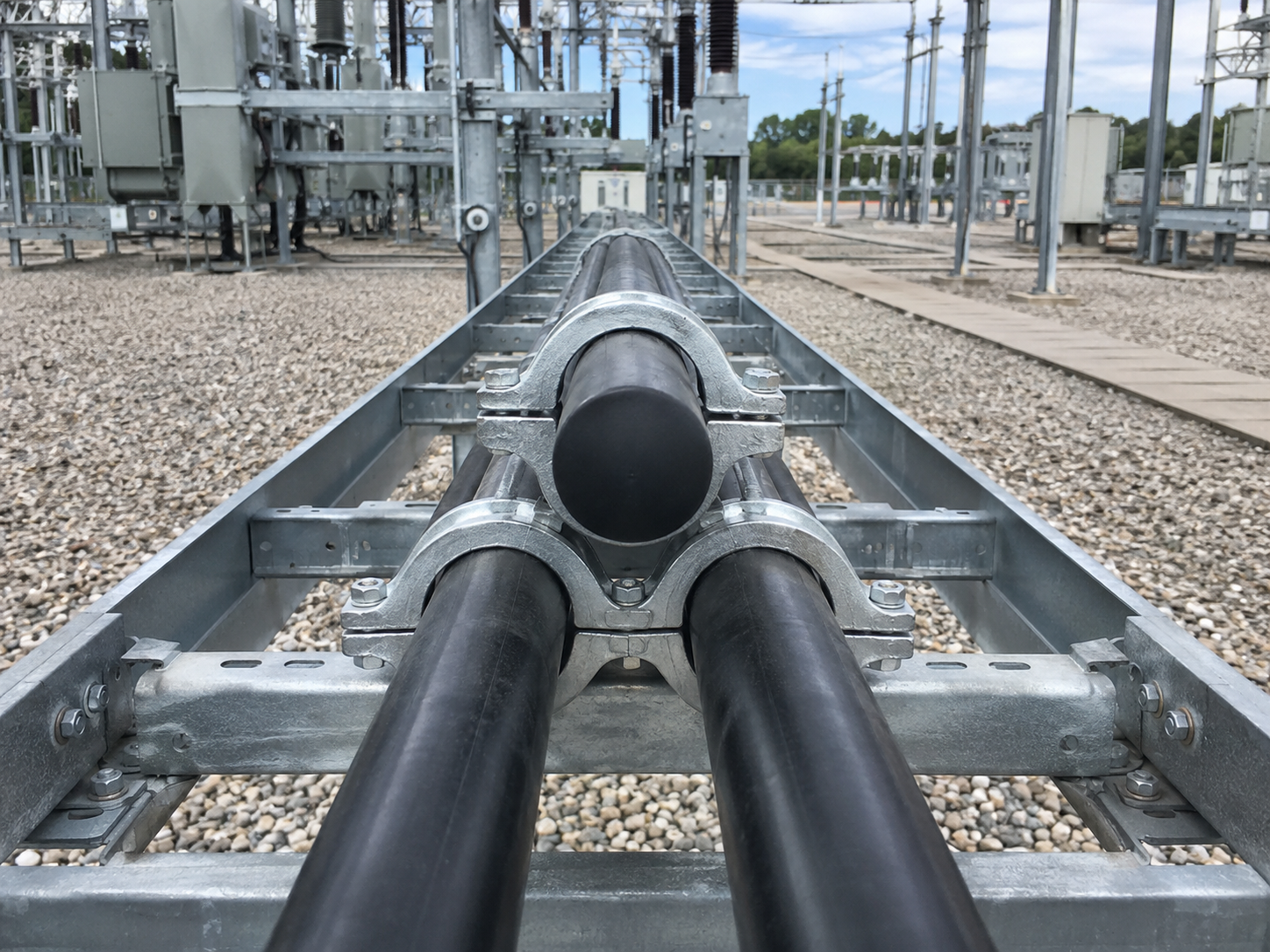
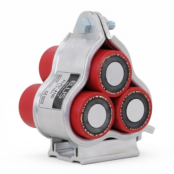
Trefoil cable formation is an installation method where three single core power cables are arranged together in a triangular, shamrock-style formation. Each cable normally represents one phase of a three-phase electrical circuit, and the three cables are held together using trefoil cable cleats or cable clamps.
Trefoil formation is commonly used for LV, MV and HV single core cable installations, including 600/1000V, 11kV, 33kV, 66kV and higher voltage power cable systems. It is used across substations, industrial power networks, renewable energy projects, data centres, utilities, rail infrastructure and electrical distribution systems.
The purpose of trefoil formation is not only neat cable management. It also helps manage magnetic effects, reduces cable spacing, supports short-circuit restraint and keeps the three phases correctly grouped along the cable route. When single core cables are installed in trefoil, they must be restrained with suitable cable cleats selected according to cable diameter, fault level, support structure, cleat spacing and project specification.
Thorne & Derrick supply trefoil cable cleats, LV MV HV cable cleats, Ellis Patents cleats, Prysmian BICON cleats and tested cable restraint systems for single, trefoil, quadrafoil and bundled power cable installations.
Quick Answer: What Is Trefoil Cable Formation?
Trefoil cable formation is the arrangement of three single core power cables in a triangular formation. The three cables normally represent the three phases of a three-phase circuit and are installed together using trefoil cable cleats.
Trefoil formation is commonly used for single core LV, MV and HV cables. It helps keep the phases grouped, reduces magnetic imbalance compared with widely spaced single cores, supports efficient cable installation and allows the cables to be restrained using tested cable cleats.
What Is Trefoil Cable Formation?
Trefoil cable formation is a method of installing three single core cables together so that the cable centres form a triangle. The term “trefoil” comes from the three-lobed shape created when the cables are grouped together.
In a three-phase circuit, the single core cables are usually arranged as:
- L1 / Phase A
- L2 / Phase B
- L3 / Phase C
The three phases are held together using a trefoil cable cleat. The cleat clamps around the three cables and fixes them to the cable ladder, tray, bracket, Unistrut, concrete surface or steelwork.
Trefoil formation is most common when the electrical design uses three single core cables instead of one multicore cable. This is often seen on larger power circuits where cable size, current rating, installation method, handling, bending radius or system design makes single core cables more practical.
Why Are Single Core Cables Installed In Trefoil?
Single core cables are installed in trefoil for several electrical and mechanical reasons.
The three phases of an AC circuit create magnetic fields around the cables. If single core cables are spaced too far apart or installed incorrectly, magnetic effects can increase losses, induce currents in nearby metallic components and create unwanted heating.
Trefoil formation helps keep the phases close together. This helps balance the magnetic fields produced by the three phase conductors and can reduce the risk of heating effects in nearby metalwork compared with poorly arranged single core cable routes.
Trefoil formation also helps:
- Keep the three phases grouped along the route
- Reduce the overall cable footprint
- Simplify cleating and restraint
- Improve cable route organisation
- Support short-circuit force restraint
- Maintain phase identification and circuit grouping
The exact formation should always follow the electrical design, cable manufacturer guidance and project specification.
Trefoil vs Flat Cable Formation
Single core cables are commonly installed in either trefoil formation or flat formation. Both methods can be correct, depending on the installation design.
Trefoil is often chosen where compact grouping and magnetic field balance are important. Flat formation may be used where the design needs greater cable spacing for thermal performance, specific route constraints or installation access.
Why Trefoil Cable Cleats Are Used
Trefoil cable cleats are used to clamp, support and restrain three single core cables installed in trefoil formation. They keep the cable group fixed to the support structure during normal service and during fault conditions.
Cable cleats are not just cable tidies. In power cable systems, they are safety-critical components. During a short circuit, very large electromagnetic forces can act between the cables. If the cleats are under-specified, poorly spaced or incorrectly installed, the cables may move violently and damage the installation.
Trefoil cable cleats help:
- Retain cables during short-circuit conditions
- Maintain phase grouping
- Support the cable weight
- Control cable movement
- Protect nearby equipment and structures
- Support compliance with project and standard requirements
Thorne & Derrick supply trefoil cable cleats for LV, MV and HV cable systems, including cleats for 11kV, 33kV and higher voltage applications.
Short-Circuit Forces & Cable Restraint
When a short circuit occurs, the current flowing through the cables can generate very high electromechanical forces. These forces can cause cables to move, twist, strike nearby equipment or break free from unsuitable supports.
The force depends on factors such as:
- Peak fault current
- Cable diameter
- Cable spacing
- Cable formation
- Cleat spacing
- Support structure strength
- Cable route changes and bends
This is why cable cleats should be selected using actual project fault data and cable dimensions. A cleat that physically fits the cable is not automatically suitable for the fault level.
For more detail, see the Power & Cables guide to IEC 61914 cable cleats and short-circuit protection.
IEC 61914 & Cable Cleat Testing
IEC 61914 is the international standard for cable cleats used in electrical installations. It covers important cable cleat performance requirements, including mechanical strength, short-circuit testing, impact, corrosion, UV resistance and other classification areas.
For trefoil cable installations, IEC 61914 is important because it helps prove that a cable cleat has been tested for the type of cable restraint duty it may face in service.
Cable cleat selection should consider:
- IEC 61914 classification
- Short-circuit test performance
- Peak withstand current
- Cleat material
- Cable diameter range
- Maximum recommended spacing
- Installation environment
- Support structure compatibility
Browse the Power & Cables cable cleats guide for more information about specification, types and standards.
Where Is Trefoil Formation Used?
Trefoil cable formation is used wherever three single core cables need to be installed as a three-phase power circuit.
Common applications include:
- LV power distribution – large single core 600/1000V cable circuits.
- 11kV and 33kV MV networks – substation, utility and industrial medium voltage cable routes.
- 66kV and 132kV HV circuits – transmission and grid infrastructure cable installations.
- Substations – transformer, switchgear and cable sealing end connections.
- Renewable energy projects – solar farms, wind farms, battery storage and grid connections.
- Data centres – high current power distribution and backup power circuits.
- Industrial sites – process plants, factories, utilities and large motors.
- Cable tunnels, trenches and risers – controlled cable support and containment routes.
Trefoil cleats may be installed onto ladder rack, cable tray, steelwork, concrete structures, Unistrut or dedicated support brackets depending on the route design.
How To Select Trefoil Cable Cleats
Selecting the correct trefoil cable cleat requires technical project information. The cleat must match the cable size, system duty and environment.
For detailed advice, see the complete range of cable cleats, clamps and hangers.
Common Trefoil Installation Mistakes
Trefoil cable installation mistakes can reduce safety, reliability and installation quality.
Common mistakes include:
- Using cable ties instead of tested cleats – cable ties are not suitable for restraining high short-circuit forces.
- Selecting cleats only by cable diameter – fault level and cleat spacing are also essential.
- Ignoring short-circuit forces – cables can move violently during fault conditions if not properly restrained.
- Incorrect cleat spacing – wide spacing may reduce restraint performance.
- Mixing cable phases incorrectly – the three phases should remain correctly grouped along the route.
- Poor support structure design – the ladder, tray or steelwork must be strong enough for the forces involved.
- Ignoring bend and route changes – bends and vertical runs may require closer cleating or additional support.
- Using unsuitable cleat materials – corrosion, UV, chemical or fire exposure can affect material choice.
- Not checking IEC 61914 test data – cleat performance should be proven, not assumed.
Correct trefoil installation is a combination of cable design, fault calculations, cleat selection, cleat spacing and good installation practice.
Related Trefoil Cable & Cable Cleat Products
Trefoil cable formation is part of a wider single core cable and cable cleat system.
- Trefoil Cable Cleats – cleats for retaining three single core cables in trefoil formation.
- Cable Cleats, Clamps & Hangers – cable restraint products for LV, MV and HV installations.
- Ellis Patents Trefoil Cable Cleats – trefoil cleats for cable restraint and short-circuit protection.
- Ellis Alpha Trefoil Cable Cleats – aluminium trefoil cable cleats for LV, MV and HV applications.
- Ellis Trident Cable Cleats – cable cleats for LV, MV and HV power cable systems in trefoil installation.
- Cable Cleats Guide – guide to cable cleat specification, types and standards.
- IEC 61914 Cable Cleats – guide to cable cleat short-circuit protection and IEC 61914.
- Single Core XLPE Cables – single core power cables commonly restrained in trefoil formation.
Trefoil Cable FAQs
Q: What is trefoil cable formation?
A: Trefoil cable formation is the arrangement of three single core power cables in a triangular formation. The three cables usually represent the three phases of a three-phase circuit and are restrained using trefoil cable cleats.
Q: Why are cables installed in trefoil?
A: Cables are installed in trefoil to group the three phases closely together, help manage magnetic effects, reduce cable route footprint and allow the cables to be restrained using tested trefoil cable cleats.
Q: What are trefoil cable cleats?
A: Trefoil cable cleats are cable clamps designed to hold three single core cables together in trefoil formation. They support the cable weight and help restrain the cables during short-circuit conditions.
Q: What is the difference between trefoil and flat formation?
A: Trefoil formation groups three single core cables in a triangular arrangement. Flat formation installs the three cables side by side in a row. The correct choice depends on current rating, cable spacing, fault level, thermal performance and route design.
Q: Are cable ties suitable for trefoil cables?
A: Cable ties are not suitable for restraining high short-circuit forces in power cable installations. Trefoil cable cleats should be selected using cable diameter, fault current, cleat spacing and tested performance data.
Q: What is IEC 61914?
A: IEC 61914 is the international standard for cable cleats used in electrical installations. It covers performance requirements including mechanical strength, short-circuit testing, impact, corrosion and environmental classification.
Q: How do you choose trefoil cable cleat spacing?
A: Trefoil cable cleat spacing should be based on cable diameter, fault current, cable route, cleat test data, support structure and manufacturer guidance. It should not be guessed or based only on visual cable support.
Q: Where is trefoil cable formation used?
A: Trefoil cable formation is used in LV, MV and HV power cable systems, including substations, cable tunnels, ladders, trays, risers, utilities, renewables, data centres and industrial power networks.
Conclusion
Trefoil cable formation is a common method for installing three single core power cables in a three-phase circuit. The cables are arranged in a triangular formation and restrained using trefoil cable cleats.
Trefoil formation helps keep the phases grouped, supports magnetic field balance, reduces cable route footprint and allows the cables to be restrained against short-circuit forces. Correct cleat selection is essential, especially for LV, MV and HV power systems where fault levels can be high.
Trefoil cable cleats should be selected using cable diameter, formation, short-circuit current, cleat spacing, installation environment, support structure and IEC 61914 test data.
Thorne & Derrick supply trefoil cable cleats, cable clamps and cable cleat systems for LV, MV, HV and EHV power cable installations, including Ellis Patents, Prysmian BICON and other tested cable restraint solutions.