How to Specify Cable Cleats for Safety, Compliance & Optimal Cable Management
Published 30 Jan 2026
What Are Cable Cleats?
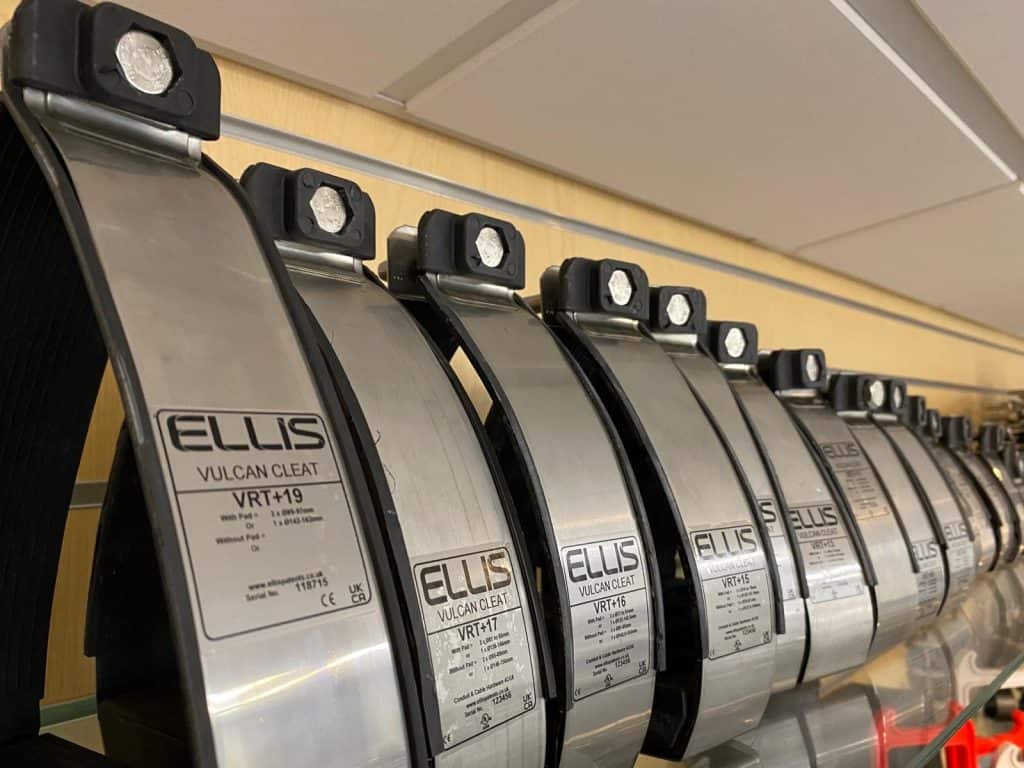
Cable cleats are mechanical devices used to fix, support, clamp and retain electrical power cables along their routing. They are engineered to restrain cables during short-circuit electromagnetic events, preventing excessive movement that could damage systems or create hazards.
Unlike cable ties, cleats are designed and tested specifically for short-circuit forces they absorb significant mechanical load when needed.
Why Specification Matters
The purpose of specifying cable cleats correctly isn’t just neatness it’s about:
-
Safety under fault conditions
-
Regulatory compliance with standards like IEC 61914
-
Protection of expensive electrical assets
-
Reduced downtime and maintenance costs
Cleats play a role in systems ranging from LV installations in buildings to HV transmission cable routes through substations and tunnels.
Cable Cleat Standards: IEC 61914 & More
When specifying cleats, the first question should be: Does the cleat meet the relevant standards?
IEC 61914 is the international benchmark for cable cleats. It defines test requirements, mechanical properties, and classification methods that ensure a cleat can withstand predicted short-circuit forces.
In addition, installations may require compliance with regional or industry standards such as:
-
BS 7671 (IET Wiring Regulations)
-
Fire performance standards for safety systems
-
Rail and utility specifications
These demand specific cleat ratings and materials.
Key Specification Factors
Cable Diameter & Voltage Class
Choose cleats based on the actual outer diameter (OD) of the cable not just conductor size. Cleats must fit the exact OD for effective restraint.
Additionally, different voltage classes (LV, MV, HV) pose unique force profiles during faults higher voltage systems typically generate stronger electromagnetic forces, demanding more robust cleats.
Mechanical Ratings & Short-Circuit Forces
Cleat manufacturers provide kA ratings which indicate the peak prospective short-circuit current the cleat can withstand, usually defined over specific spacing conditions. Always ensure the cleat’s rating exceeds the system’s calculated fault level.
Cable Cleat Types & Their Uses
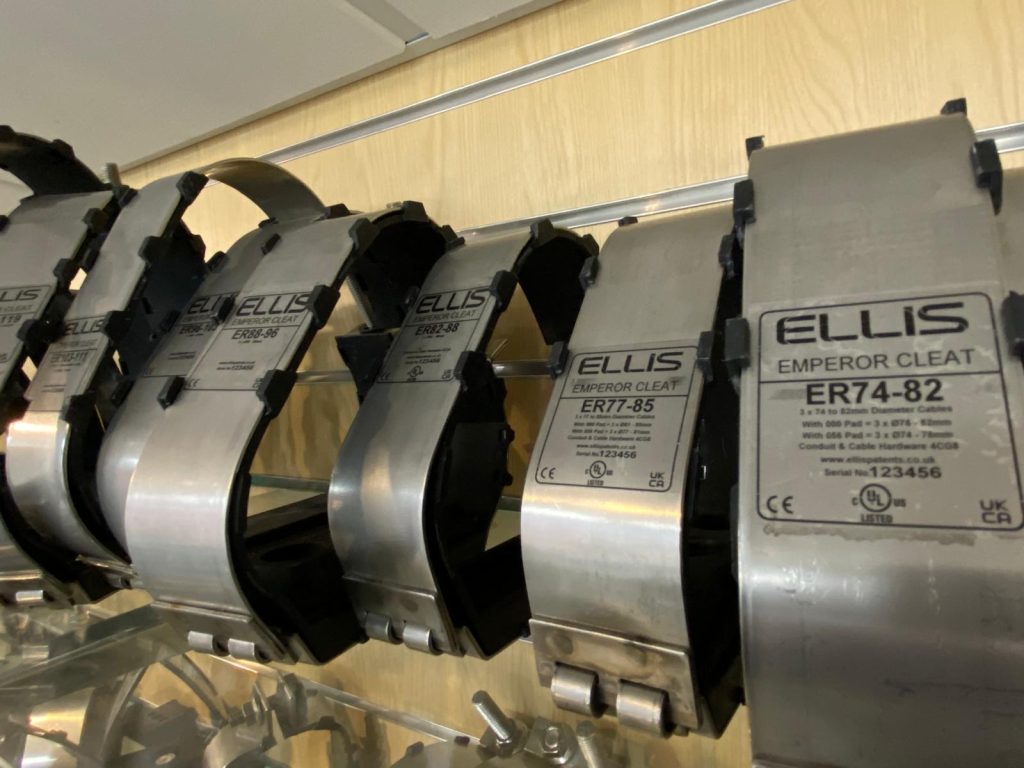
Cable cleats come in various designs depending on cable configuration, installation method, and performance needs:
Single Way Cleats
Best for individual power cable runs where standard support and restraint are required. Used across LV to HV systems.
Used to restrain and secure individual low, medium, or high voltage cables, these single way cleats are ideal for flat or spaced arrangements. Common in substations and control panels where single-core or multicore cables are installed.
Trefoil Cleats
Designed for three single-core cables laid in a trefoil (triangular) formation. Trefoil cleats are vital in power distribution systems to control magnetic forces during faults. They’re typically used in high-current circuits or where space is limited.
-
With Liners: Prevents damage from thermal expansion at elevated temperatures (up to 250°C during faults).
-
Without Liners: Used in lower-stress applications or where the cable jacket is more resilient.
Quadrafoil Cleats
Specialised cleats used for four single-core cables laid in a quad formation. Common in high-power or parallel circuit applications. Quadrafoil Cable Cleats improve current balancing and electromagnetic performance.
Stackable & No-Bolt Cleats
Stackable cleats allow multiple cleats to be mounted vertically, maximising space in cable ladders or risers. Boltless cleats are fast and tool-free to install ideal for panel boards, data centres and confined space environments.
Fire Resistant Cable Cleats
Designed for applications where fire performance is critical. Fire resistant cleats are made from low smoke zero halogen materials or stainless steel to maintain cable support under extreme heat, flame, or fire exposure.
Typical uses:
-
Tunnel installations
-
Transport infrastructure (Network Rail, London Underground)
-
Oil & gas facilities
-
Emergency systems (life safety cables)
triplex Cable Cleats
Triplex cables are three single-core cables twisted together, commonly used in 11kV to 33kV MV HV installations. Due to their spiral shape, standard cleats often can’t securely hold them. To solve this, Triplex cable cleats surrounds are applied to form a circular profile, allowing standard cleats to be fitted safely and effectively.
Material Selection: Strength, Corrosion & Environment
Material choice affects performance and lifespan:
-
Stainless Steel: Exceptional strength and corrosion resistance great for outdoors, marine, or industrial environments.
-
Aluminium: Lightweight with strong mechanical properties, suitable across LV to HV.
-
Polymer / Nylon: Cost-effective, light, fire and UV options available. Ideal for indoor and non-extreme environments.
Consider environmental exposure like chemical presence, temperature extremes, UV exposure and fire risk when selecting materials.
Installation & Spacing Best Practices
Correct installation technique and spacing directly affect performance:
General Steps
-
Position cleats at manufacturer-recommended intervals.
-
Align with cable diameter and configuration.
-
Secure cleat with correct fixings.
-
Tighten to keeper torque without damaging insulation.
Under-tightening risks slippage; over-tightening can distort cable jackets precise torque is crucial.
Spacing depends on cable size and fault current tighter spacing is often needed in high short-circuit scenarios.
Conclusion: Choosing the Right Cable Cleat
Correct specification of cable cleats is a blend of engineering, safety awareness, and standards compliance. By understanding cable layouts, force ratings, materials and installation practices, designers and installers can ensure safe, robust and code-compliant installations across LV, MV and HV applications.
When selecting a cable cleat, consider:
-
Cable Diameter – for proper sizing and fault force calculations of the electrical cable
-
Cable Voltage – LV, MV, or HV applications
-
Construction – armoured or unarmoured
-
Environmental Exposure – fire, corrosion, or chemical resistance
-
Containment Method – tray, ladder, or hanger
Cleats must be IEC 61914 compliant, tested to withstand peak fault forces.

Ellis Patents based in the UK are world leading manufacturers of cable cleats and cable clamps used to clamp and support LV-MV-HV cables – this includes cable support and management products to provide short circuit protection for 600V, 11kV-33kV-66kV and medium/high voltage power cables in single, trefoil or bundled formation up to 400kV.
Cable hangers support single or multiple cables – hangers and cable hooks are available in both galvanised steel and nylon and are used to support horizontal cable routes to building and tunnel structures. A complete range of steel cable hooks are also available compliant with 18th Edition of the IET Wiring Regulations (BS7671) is effective as of January 1, 2019.