In the engineering landscape, staying ahead of things is crucial, especially when it comes to cable management. Thorne & Derrick together with CableSafe, have operations spanning the Netherlands and the USA, we’re dedicated to pioneering innovative solutions in cable safety, confined space safety, and dropped objects prevention. Let’s delve into the future of cable management, examining emerging trends and exciting innovations shaping the industry.
Efficient cable organisation is essential for optimising workflows and minimising hazards in industrial settings. Traditional methods often involve cumbersome cable trays and racks, but advancements in cable management solutions are simplifying the process. Products like CableSafe Safety Hooks Extreme and Cable Guards provide simple yet effective solutions for keeping cables organised and secure, reducing clutter and potential safety risks.
CableSafe Hooks
Elevated cable management solutions
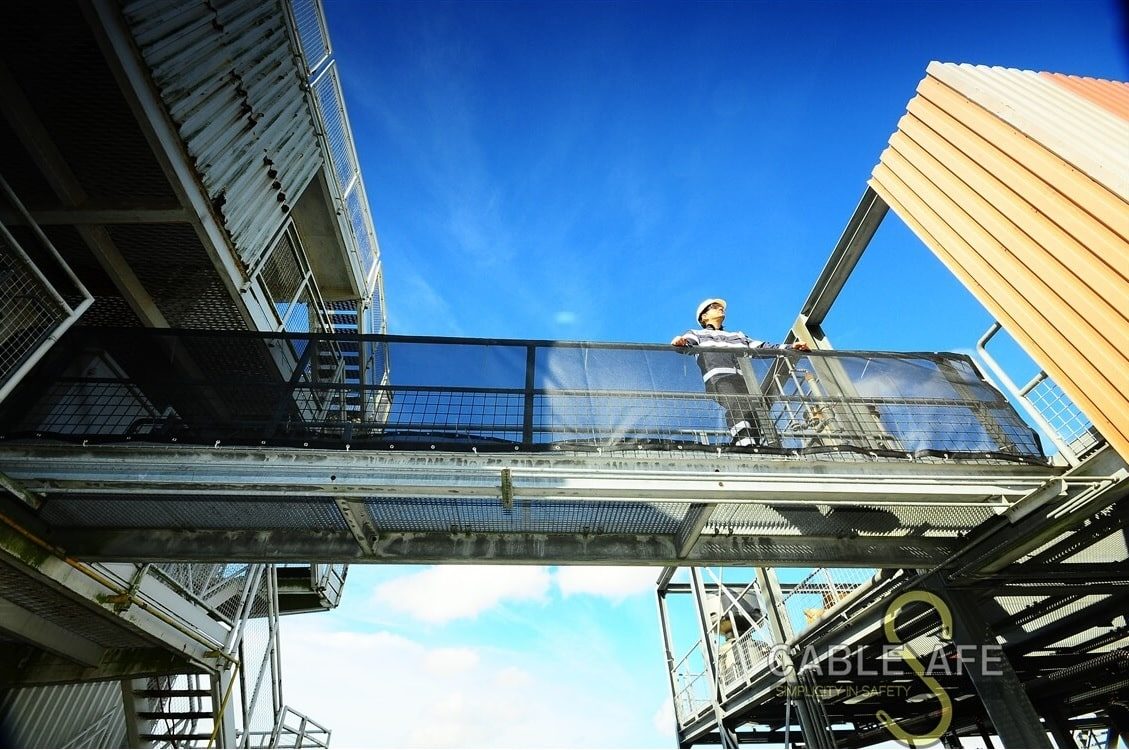
Elevated cable management solutions like CableSafe Cable Stands and Cable Bridge further streamline operations by minimising tripping hazards and facilitating easier access for maintenance personnel. These innovations not only improve safety but also contribute to overall efficiency on the job site.
As technology continues to advance, ensuring cable safety remains a top priority. CableSafe is dedicated to developing robust cable protection systems that mitigate risks and prevent accidents. Whether it’s through innovative cable guards or durable safety hooks, our products are designed to withstand the rigors of industrial environments while keeping workers safe.
Looking ahead, the future of cable safety lies in proactive prevention measures and advanced monitoring technologies. By investing in smart solutions that detect potential hazards before they escalate, companies can minimise downtime and maximise productivity while safeguarding their workforce.
Every industry has its own unique challenges when it comes to cable management. From offshore oil rigs to manufacturing facilities, CableSafe understands the importance of tailored solutions. Their customisable products are designed to meet the specific needs of diverse industries, from corrosion-resistant materials for marine applications to fire-retardant coatings for high-risk environments.
As we look to the future, CableSafe remains committed to driving innovation and excellence in cable management. By embracing emerging trends and leveraging cutting-edge technologies, we’re shaping the industry for the better. With our customisable solutions and unwavering dedication to safety, we’re empowering companies to create safer, more efficient workplaces for their employees.
Confined Space Entry Products and Equipment
Thorne & Derrick stock and distribute an extensive range of Confined Space Entry Products and Equipment to mitigate potentially life-threatening dangers such as flammable gases, dangerous chemicals and other hazards – this ensures people are safe at all times and also provides the correct rescue equipment to meet the legislative requirements.
We supply the complete range of Safety Tools & Equipmentto enable safe working in sectors such as the construction, renewables, data centres, rail, manufacturing and oil, gas, petrochemical industries – this includes Push-Pull Tools for the safe manoeuvring of suspended loads to prevent pinch-point injury.
CABLE SAFETY EQUIPMENT
CableSafe® is part of Westmark Group, a specialised engineering company. Westmark started in 1991 as a manufacturer of CableSafe Safety Hooks, their flagship product which has become a standard in cable safety and cable management in different industries worldwide. CableSafe® specialise in Cable Safety, Cable Management, Confined Space Safety and Dropped Objects Prevention.
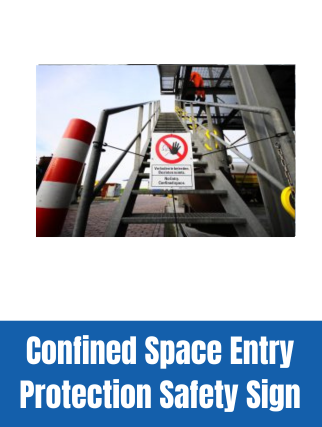
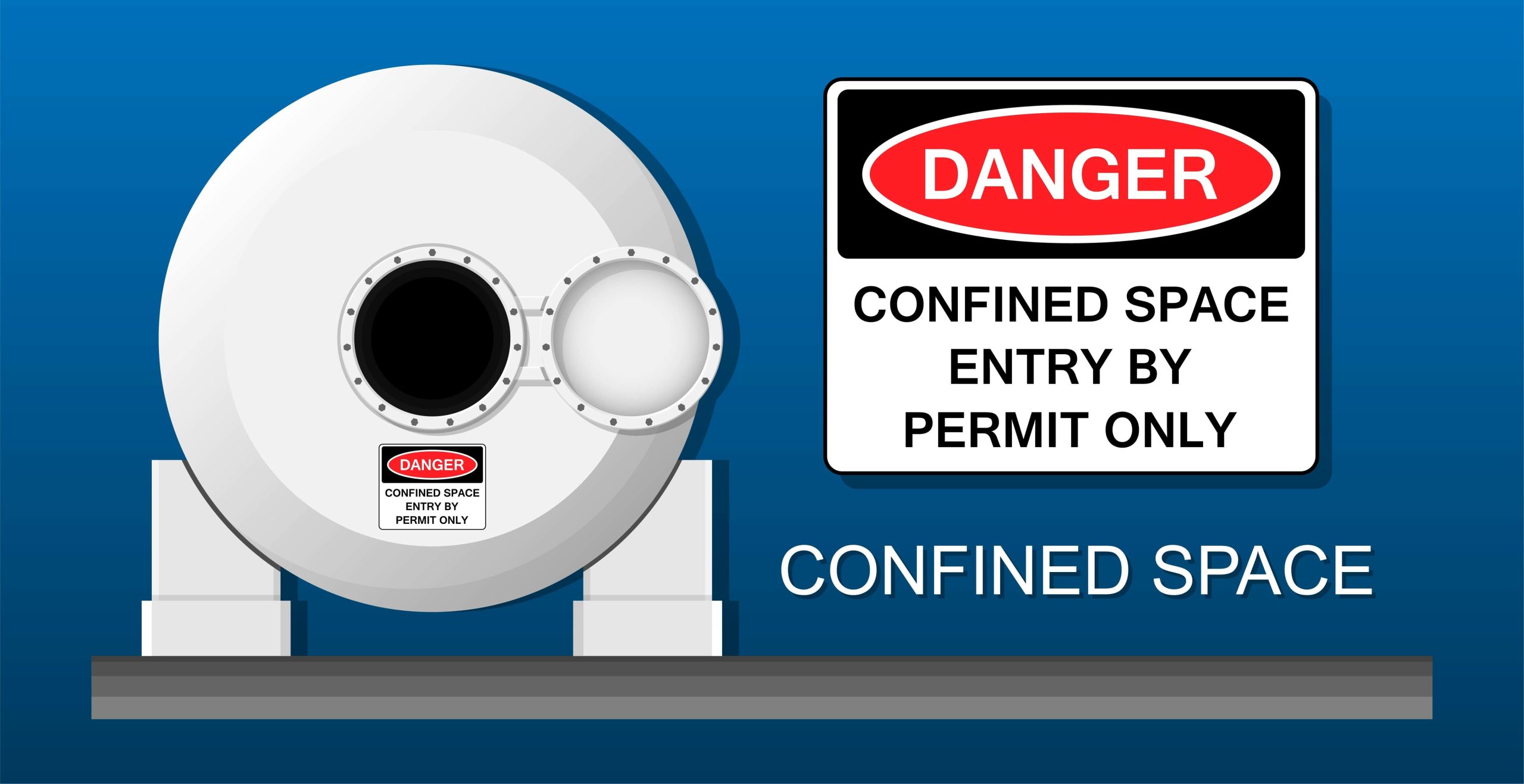
Confined space entry hazards are severe risks for personnel. Accidents with unauthorised confined space entries are often deadly.
Confined spaces pose unique challenges in industrial environments, requiring comprehensive safety solutions to protect workers. Equipping personnel with the essential equipment for confined spaces is crucial for creating a safe work environment and ensuring compliance with safety regulations.
Thorne & Derrick stock and distribute an extensive range of Confined Space Entry Products and Equipmentto mitigate potentially life-threatening dangers such as flammable gases, dangerous chemicals and other hazards – this ensures people are safe at all times and also provides the correct rescue equipment to meet the legislative requirements.
Compliance with safety regulations is paramount in confined spaces. From ladder guard safety regulations to ventilation standards, adherence to guidelines is essential for mitigating risks and preventing accidents. Choosing equipment that meets compliance requirements is vital for maintaining a safe work environment.
➡ Thorne & Derrick supply the complete range of Safety Tools & Equipmentto enable safe working in sectors such as the construction, renewables, data centres, rail, manufacturing and oil, gas, petrochemical industries. We also offer a range of Push Pull Tools for the reduction in Hand Injuries in the workplace designed to improve safety at work.
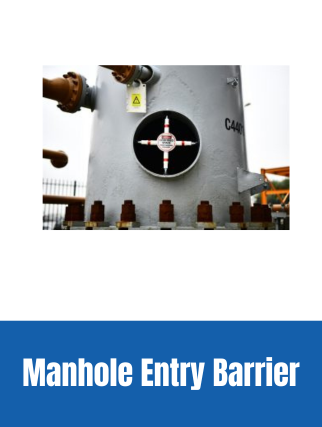
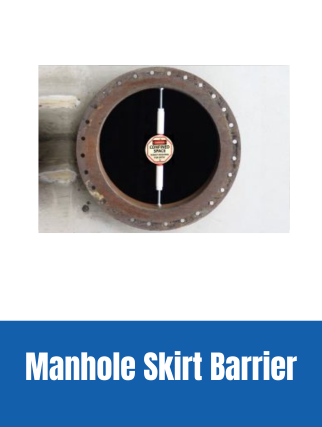
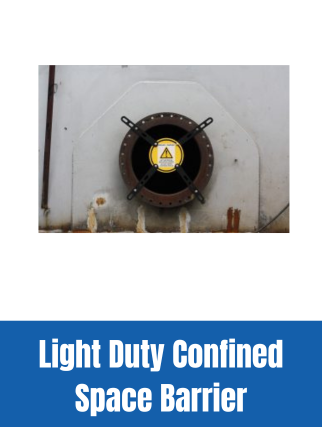
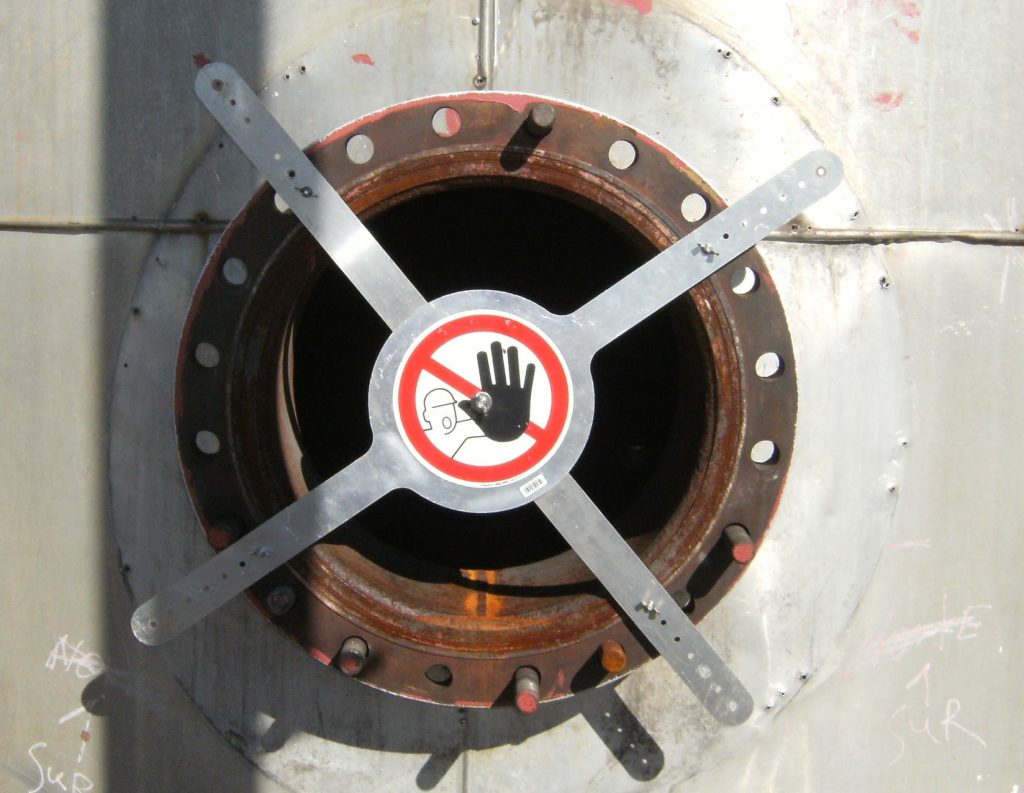
When it comes to confined space safety, having the right equipment is non-negotiable. From personal protective gear to access barriers, each piece plays a vital role in safeguarding workers. One exemplary solution that exemplifies safety and efficiency is the CableSafe® Manhole Entry Barrier.
Constructed from high-quality materials, the CableSafe® Manhole Entry Barrier is built to withstand harsh industrial environments. With a secure mechanism and sturdy construction, this barrier meets ladder guard safety regulations, ensuring compliance and worker safety. Its modular design allows for easy assembly and disassembly, making it suitable for temporary work sites or situations requiring frequent access.
By incorporating the CableSafe® Manhole Entry Barrier into confined space operations, companies can enhance both safety and efficiency. Its robust construction and compliance with safety regulations provide peace of mind, knowing that workers are protected from potential hazards.
The CableSafe® Manhole Entry Barrier stands as an exemplary solution, offering durability, compliance, and practicality to safeguard workers in confined spaces. By prioritising safety and investing in quality equipment, companies can protect their most valuable asset; their workers!
Other Confined Space Entry Equipment
Choosing the right safety equipment for confined spaces is essential for creating a safe work environment and ensuring compliance with regulations.
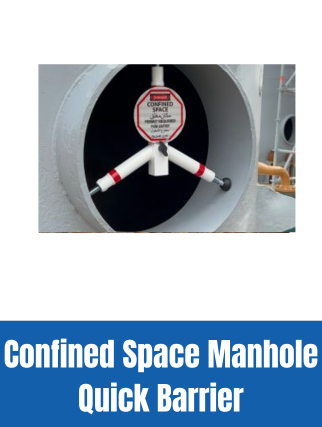
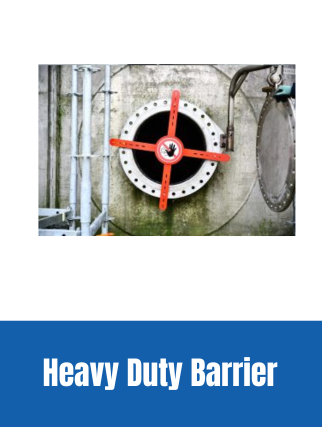
HEAVY DUTY QUICK ADAPTABLE CONFINED SPACE BARRIER
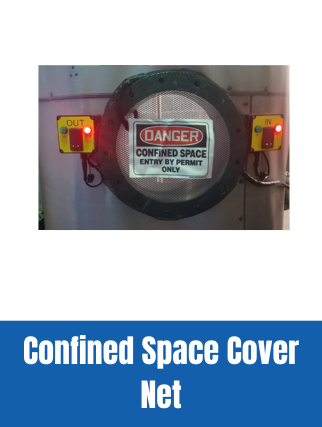
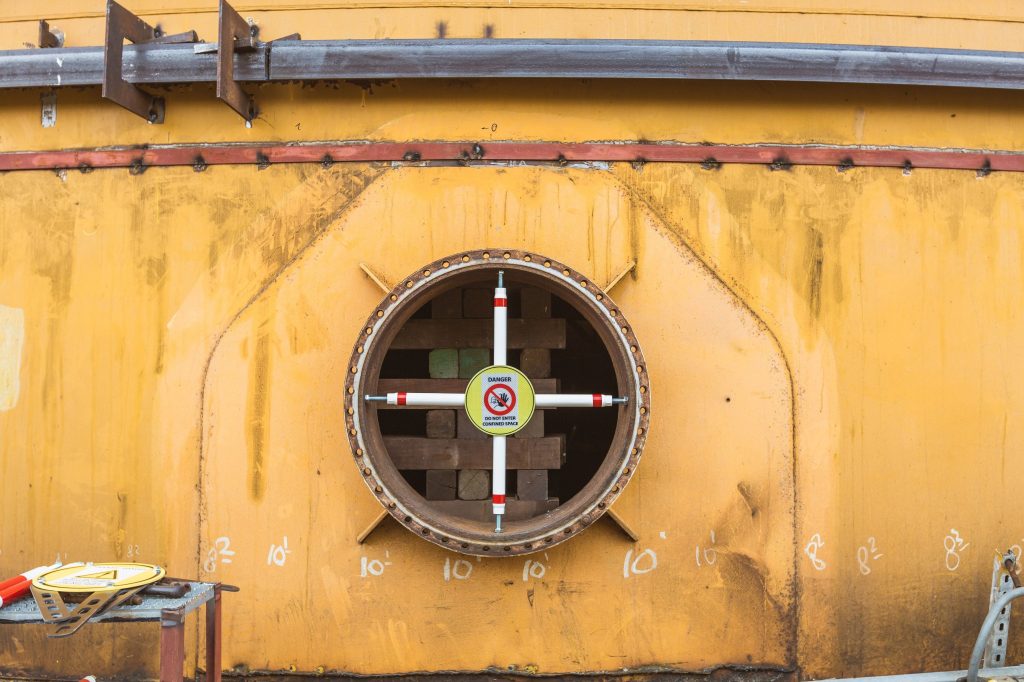
Designed as a physical barrier with a sign that hooks easily on the rungs so the warning cannot be missed. This prevents unauthorized entry to manholes, vessels, tanks and vaults.
The barrier is durable, has a diameter of 990 mm (40 inch) and a 4 mm thickness and can withstand impacts, scratches, and other industrial conditions.
For easy installation the barriers are equipped with bolts & nuts. Based on specific needs, magnets (95 Newton; 9.5 KG force) and locks can be provided on request for easy handling and/or locking of the confined space protection barrier.
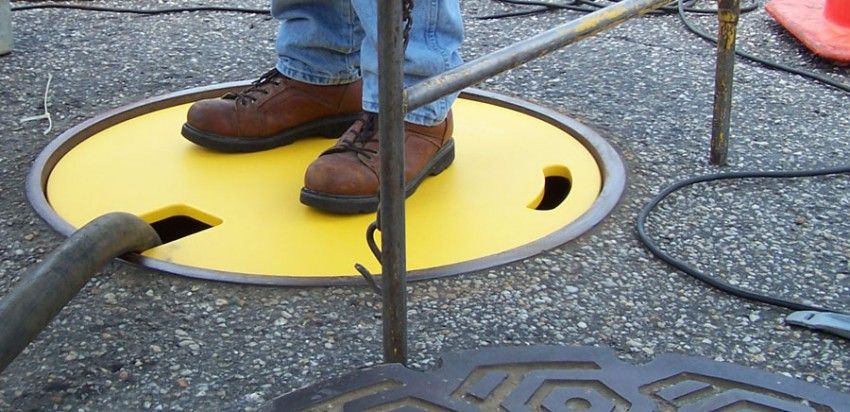
MANHOLE COVER
Specially designed with a bright yellow colour. CableSafe®’s manhole cover prevents a fall-in for workers while performing activities around an open manhole.
It is strong, can support 140 kilograms and the frame is furnished with anchor bolt holes.
Cable Safety Equipment
CableSafe® Safety solutions are critical cable essentials and are well proven construction safety products. The CableSafe® range of cable hooks can be used during maintenance, turnaround, outages, shutdowns, construction work to suspend cables and hoses and other work gear and equipment from the working space.
Thorne & Derrick stock and distribute a range of Safety Toolsincluding Push Pull Tools from Hand Safety Tool Company designed to minimise hand injuries by keeping hands out of the line of fire.
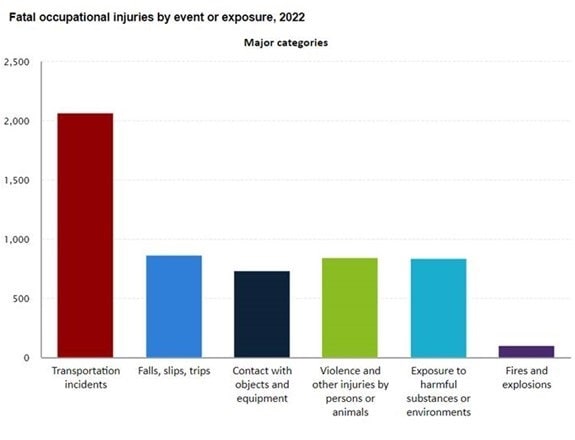
Safety is a top priority in any industrial setting, fatal work injuries at work up 6% in 2022 shows OSHA some of these could have been avoided implementing dropped object prevention equipment. Building an enduring safety culture can be the most cost-effective and proven accident prevention process in any organisation. Creating, promoting and internalising this culture is the most successful way to minimise costly injuries and maintain a safer, more productive and engaged workforce.
OSHA recently announced that in December 2023 the numbers of fatal occupational injuries by event in the USA for the year 2022. The fatal occupational injuries have increased by almost 6%, which is a significant increase on the year before. The highest number of fatalities at work are found in the transport industry and are often related to controlling a vehicle. The second highest fatal injury for 2022 is slip, trips and falls.
Work-related fatalities due to falls, slips, and trips have increased 1.8% in 2022, resulting in 865 fatalities, up from 850 in 2021. Most fatalities 80.9% in this category were due to falls to lower levels, which had 700 fatalities in 2022.
This was a 2.9% increase from 680 fatalities in 2021.
Dropping objects highest risks for employees
Drilling down in the causes of these fatalities you find that: slips, trips and falls, also struck by falling object or equipment other than vehicle, is an high risk for employees and contractors. Both of these categories have fatalities resulting from dropping objects and falling from elevated work locations. The list further continues with the 3rd highest categories of fatalities in the industry with exposure to substance or environments.
A lot of these accidents can be prevented with decent housekeeping and well-designed work areas. Therefore special a focus should be on how to keep your workspace safe and clean. The walkways should be well prepared and suitable for work and designed with traffic segregation schemes. Safety standard ISO 14122 teaches that stairs, stepladders and guard-rails should be designed safely.
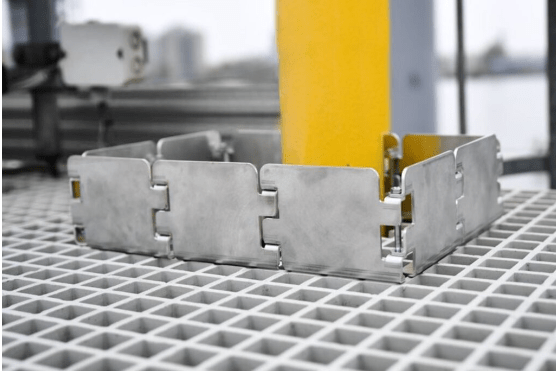
Adjustable Kick Plate installed to prevent objects from falling
The toe-board, or kickplates are designed as a solid lower part of a guard-rail. It is a upstand on a landing to prevent the fall of objects from a floor level. Toe boards is edge protection for the floor. It prevents that accidents happen when employees kick against a tool that slides off the edge to the work area.
The advantage for using toe board kick plates is that it prevents injuries and fatalities by reducing dropping objects.
Protecting work floors below with toe board kick plates
Guards, Gates & Netting
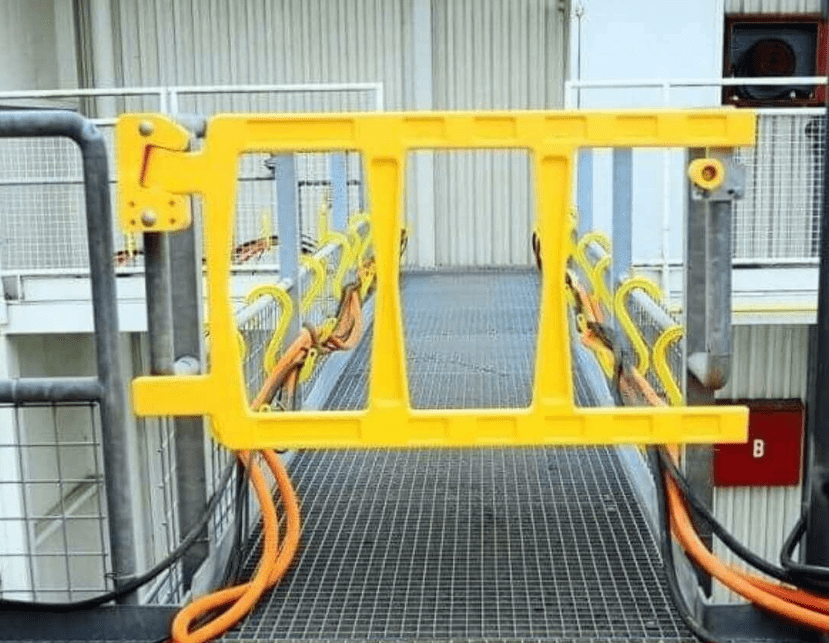
Guard-railings have openings, these openings in the guard-rail should be closed off and obstructed with safety gates to prevent persons from accidentally falling though an opening, or prevent persons from entering a hazardous area.
Self-closing safety gates are also called swing gates or just simply safety gates. A safety gate is part of the guard-rail is designed with a certified minimum strength and opens easily one-way, when you pass through the safety gate will automatically return to its closed position.
Vertical posts and stanchions should be well marked and protected with padding when located in the walkway areas. Height differences in the walking level should be marked and the work environment should have sufficient lighting.
Overhead hanging structures should be designed with steel dropped object prevention safety nets, as secondary retention methods to support the brackets and basic structure.
Walkways must be safe to walk over at all times. Keeping the walkways safe and clean with no clutter does make a difference for a safe and pleasant work environment. Locations for temporary maintenance or installation work should be visible, well-marked and obstructed.
How do I make my work environment safe?
Be critical to work environment, ask yourself the following questions; are your walkways safe and clean to work? Designed in the right place? Being used? Are they available for employees to use? What tasks are performed on this walkway? Is the walkway good visible, are hazards on the walkway visible?
Simple tools are available for walkway clearing and walkway design, according to ISO / OSHA the safety standards in combination with safety tools can reduce these risks and prevent future accidents.
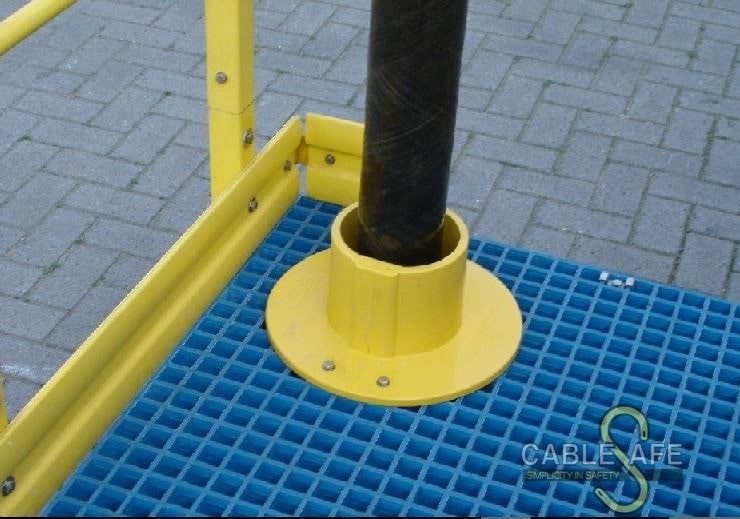
Review and apply safeguards specifically designed to prevent slips, trips and falls. Examples of these safeguards are cable safety hooks or s-hooks and cable guards, they ensure a neat and tidy work environment by removing all tripping hazards from the temporary work spot.
Dropped object prevention equipment and slip, trip and fall safeguards have a positive influence on creating a safe work environment. The bottom line is; it prevents fatal injuries and lost time incidents. These tools help reduce the highest safety risks in your organisation as stated by the OSHA.
Extreme CableSafe Hooks from Stock | Call Thorne & Derrick with your Enquiry.
Dropped Object Prevention Equipment
Safety at work is of utmost important when working on elevated platforms especially if there are personnel or contractors working underneath. Dropped objects are still, unfortunately, a common contributor to severe accidents in industrial facilities across different sectors globally.
The accidental dropping of tools and equipment poses a very real risk to safety of workers operating at elevated heights. It is therefore important offshore development sites have systems in place to reduce the occurrence of such incidents.
Objects known to frequently cause accidents are hand tools or equipment left behind after a task. Also equipment mounted in an elevated location that has the potential to fall due to movement or environmental conditions.
CableSafe® offer a broad array of dropped item prevention tools to protect employees from potentially harmful injuries and accidents in a wide range of working environments within industrial facilities.
T&D are Specialist Distributors ofLV MV HV Cable Installation, Jointing, Substation & Electrical Equipment– we supply companies in the onshore and offshore wind, solar, rail, oil/gas, data centre, battery storage and utility sectors with products to enable the energisation, operation and maintenance of underground cables and overhead lines.
LV MV Cable Accessories | Joints Terminations Connectors 600V to 66kV Ex Stock
Protecting Workers by Reducing Pinch & Crush Injury
uploaded by Chris Dodds | Sales Marketing Manager at Thorne & Derrick
Thorne & Derrick are Specialist Suppliers to the UK and international Renewable Energy Industry of products and equipment to provide safe and reliable LV HV Electrical Cable Termination, Jointing, Tooling & Installation of Power Systems up to 66kV.
This article covers the introduction of a Hand Safety Measure to reduce risk and improve safety for workers in the offshore wind industry involved in both construction, operations and maintenance (O&M).
Thorne & Derrick working closely alongside a multinational power company leading the energy transition from fossil-based to renewable generation of electric power have introduced a significant improvement to industry Health & Safety.
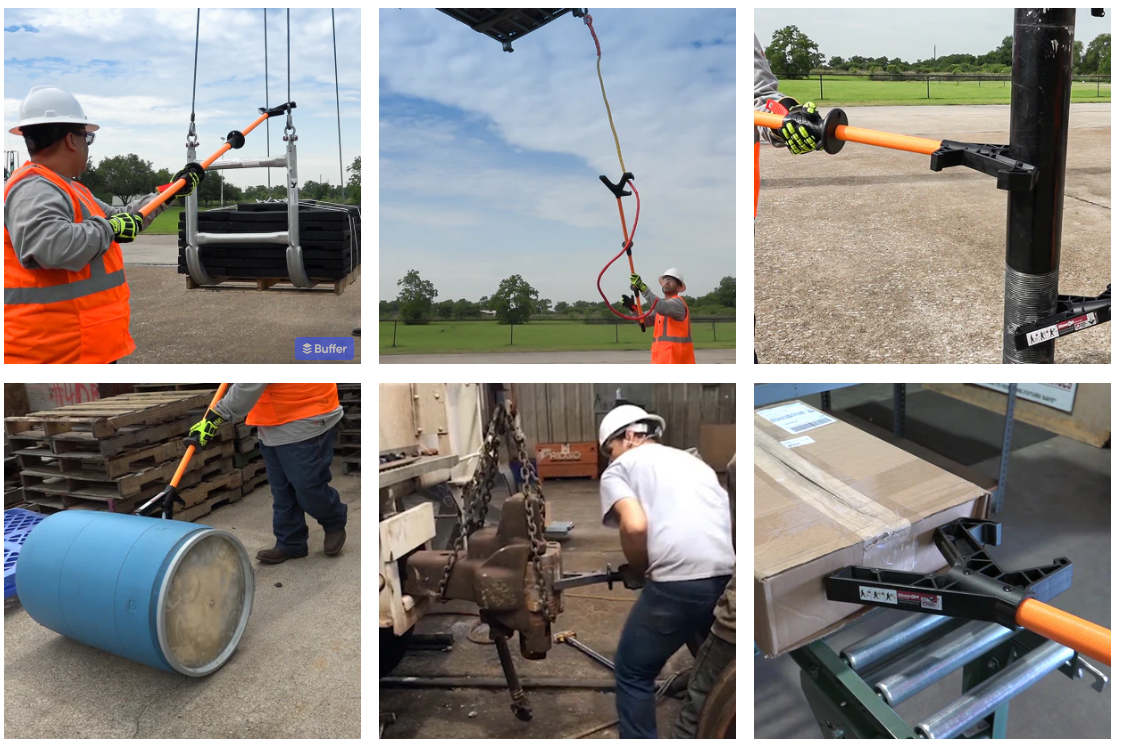
The adoption of the innovative ShoveIt product from Hand Safety Tools will reduce hand injuries while working with suspended loads or manoeuvring objects in offshore wind turbine nacelles. This could include manual handling activities, such as moving suspended heavy items including tooling, equipment, kit personnel bags to the work area.
Thorne & Derrick, a leading Distributor of Personal Protection & Site Safety Products, were invited to propose product recommendations to ensure a “hands-free” working procedure for turbine technicians and workers guiding suspended or hoisted loads into and out of nacelle loading hatches.
A Risk Assessment identified potential hand injury hazards relating to Pinch-Pointswhen manoeuvring, grabbing, guiding and positioning suspended loads – the mitigation measure required adequate working length (up to 1.75m), lightweight for ease of use and allowance for a tool lanyard attachment.
Following risk review, Thorne & Derrick submitted the ShoveItproduct for field trail and evaluation over a 2 week rotation period to gather collective performance feedback from the clients team – the 72” Length Rubber Insert Shove-It Hand Safety Tool was concluded to be optimal for the safe movement of the loads.
During the product trial the No Touch Hands Free safety tool was field tested during all weather conditions to ensure its suitability, particularly in high wind and low temperature periods (affecting grip ability) when conditions for manoeuvring loads into and out of the hatch can be most difficult and dangerous.
This Hand Safety Tool is made from non-conductive materials and features a rubber insert that provides a secure grip on the load without damaging it – the lightweight design makes it easy to handle, even in windy conditions. The tool lanyard attachment allows the operator to secure the tool to their wrist or harness, reducing the risk of dropping the tool and causing an accident.
The ShoveIt tool was found to be very effective in guiding loads in and out of the Nacelle loading hatch and the client was delighted with the results – ShoveIthas now been introduced by the H&S Team into their working Method Statement to reduce hand and finger injuries to the turbine and deck crew working across Irish & North Sea assets.
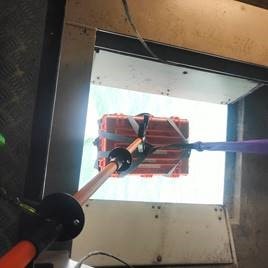
The ShoveIt Hand Safety Tool pictured in field use within a wind turbine tower to safely guide hoisted loads into and out of the nacelle loading hatch avoiding manual dragging and associated injury.
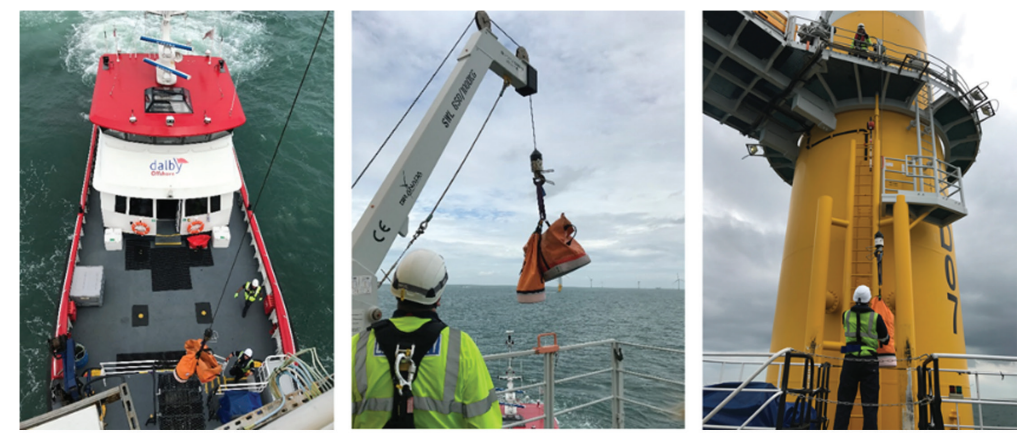
The load movement, handling and transfer of items from the Crew Transfer Vessel (CTV) to an asset via a crane mounted on the TP external platform can involve risk and exposure to potential hand injury accidents and incidents during the physical handling of loads.
ShoveIt | The No Touch Hands Free Safety Tool
The ShoveIt No Touch Push / Pull Pole Hand Safety Tool helps avoid hand injuries while working with suspended loads or manoeuvring objects across all industries. Users maintain proper ergonomic body positioning for safe handling out of the line of fire – this enables users to guide loads, move and position objects, as well as grab slings and taglines without physically placing hands on the item.
Stocked by Thorne & Derrick| Specialist Distributors of Industrial Safety Products, Tools, Equipment & PPE
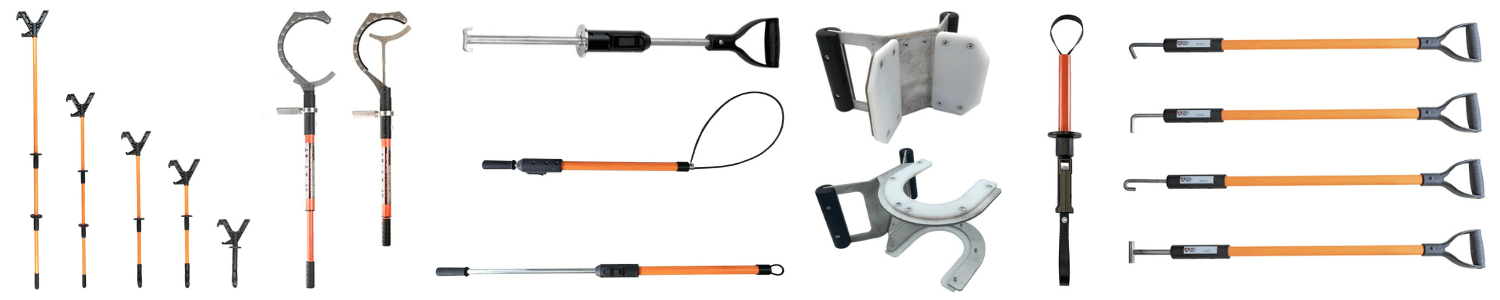
Push Pull Tool Design
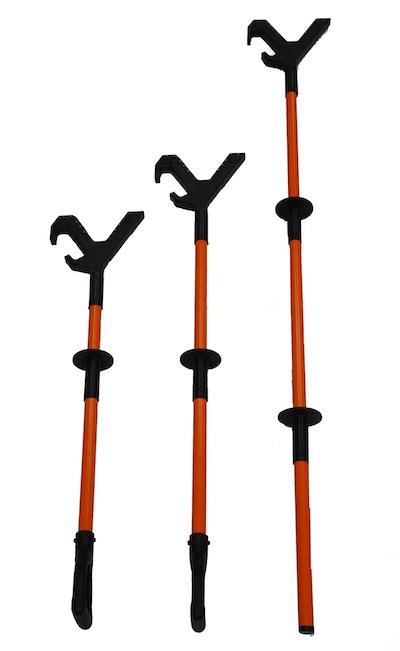
SHOVEIT Head Design
Lightweight yet extremely durable head
Versatile V-shape and opposing grab hooks allow workers to safely push and pull a multitude of objects
Three insert options for various applications:
Nitrile rubber insert for grip
UHMW-PE plastic insert for glide
Aluminium insert for high heat
SHOVEIT Shaft Material
Lightweight and durable plastic coated FRP material
Hi-Viz safety orange tools
Textured shaft for slip-resistant handling
Hand Guard With Tethering, Point D-Handle, Rubber End Grip
Safety is a top priority in any industrial setting, and one crucial aspect of ensuring a secure working environment is the installation of heavy-duty Dropped Objects Prevention Safety Nets. These robust nets provide an effective secondary solution to catch objects in case the primary fixings fail.
The primary purpose of safety netting is to prevent injuries and protect workers and equipment from falling objects. Safety nets act as a vital secondary measure, providing a reliable barrier to catch objects that may accidentally fall or be dislodged from primary fixings. By installing heavy-duty safety nets, industries can significantly reduce the risk of accidents, minimise property damage, and enhance overall workplace safety.
Thorne & Derrick stock and distribute an extensive range of Confined Space Entry Products and Equipment to mitigate potentially life-threatening dangers such as flammable gases, dangerous chemicals and other hazards – this ensures people are safe at all times and also provides the correct rescue equipment to meet the legislative requirements.
In this blog, we will explore various examples of safety netting installations, along with the assembly instructions for safety nets, highlighting the importance and purpose of these essential safety measures.
Safety netting comes in different forms, tailored to meet the specific needs of various industries. One prominent example is the stainless steel net, commonly used as a dropped objects prevention safety net. These nets are designed to catch falling objects, preventing potential hazards and protecting workers and equipment below. Stainless steel nets offer exceptional strength, durability, and resistance to corrosion, making them ideal for industrial environments
Safety Net Rolls: These versatile nets come in rolls, making them easy to transport and install. They are ideal for covering large areas quickly and effectively, offering reliable fall protection and containment.
Safety Net Fit-to-Size: custom-fit stainless steel nets are available in situations where precision is paramount. These nets are tailored to specific measurements, ensuring a perfect fit for any industrial setting. They provide maximum safety without compromising on aesthetics or functionality.
Safety Net Roll
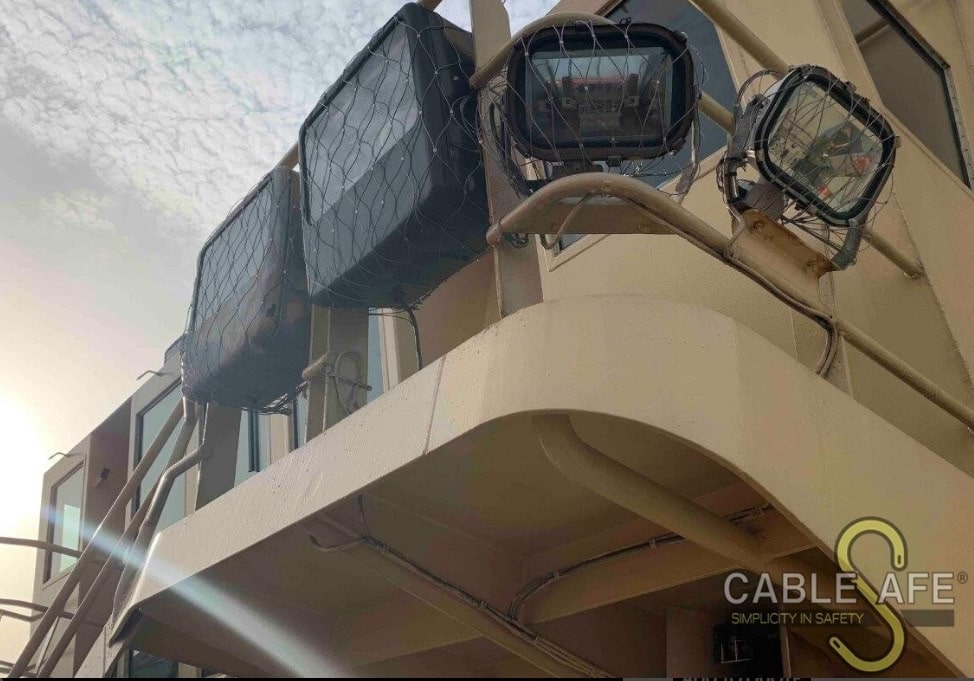
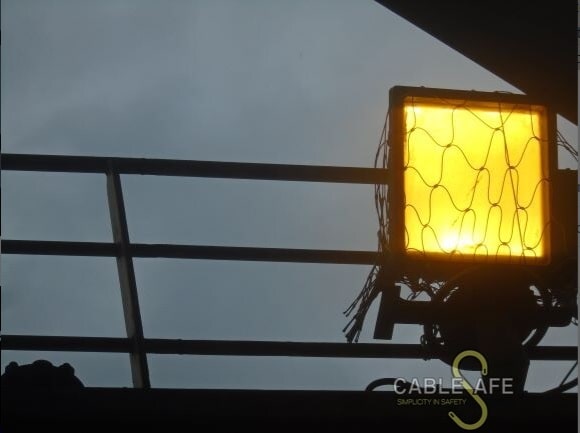
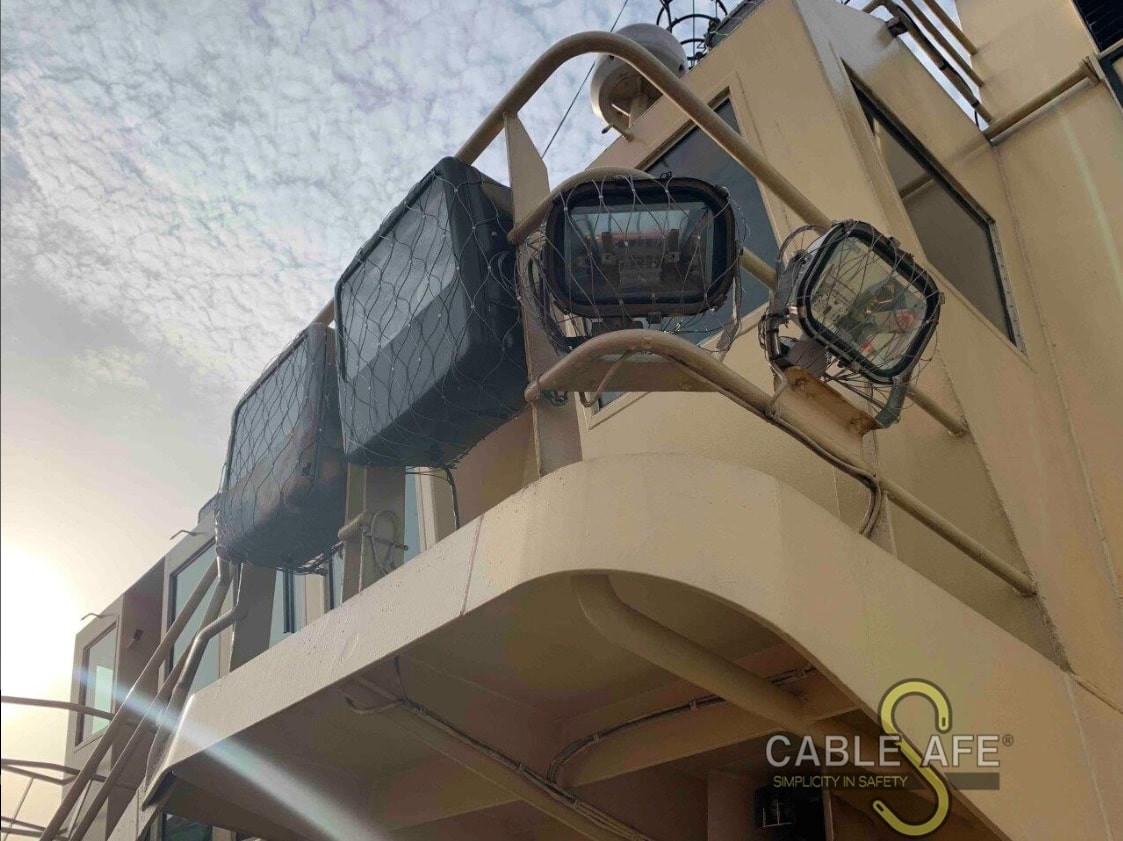
The Safety Net Roll is cut in smaller sections with simple hand tools and wrapped around equipment at height. A steel lanyard is used to attach the net to a structure as a secondary retention method to prevent dropped objects. The Safety Net Rolls are suitable for onshore and offshore conditions and are chemical treated.
To prevent objects from falling from height the safety nets are wrapped around the objects. The size of the object determines the size of the Safety Net Roll required. A strong lanyard is supplied to weave through the netting and wrap and lock the ends of the safety net to the solid structure. This secondary retention method is commonly applied to protect the lives of the workers and pedestrians.
Safety Net Rolls Around Light Fittings
How do you install a safety net?
Proper installation is crucial to ensuring the effectiveness of safety nets. Here are some key steps to follow when installing industrial safety nets:
Planning and Assessment: Begin by conducting a thorough assessment of the area where the safety net will be installed. Identify potential hazards, determine the required dimensions and strength of the net, and assess the attachment points.
Preparation: Prepare the area by removing any debris or obstacles that may hinder the installation process. Ensure the attachment points are secure and capable of withstanding the load.
Net Assembly: Follow the manufacturer’s instructions for assembling the safety net.
Attachment Points: Depending on the specific installation requirements, safety nets can be attached to existing structures such as beams, walls, or specially designed frames. Ensure the attachment points are robust and capable of supporting the net’s load.
Tensioning:Proper tensioning is essential to maintain the integrity of the safety net. Carefully adjust the tension to ensure a taut and secure installation. Be mindful of the net’s sag, as excessive sag may reduce its effectiveness.
Testing and Inspection: Once the safety net is installed, conduct thorough testing to ensure its stability and load-bearing capacity. Regularly inspect the net for any signs of wear, damage, or degradation, and replace or repair as necessary.
Conclusion
Industrial safety nets, particularly stainless steel nets used as dropped objects prevention measures, play a critical role in maintaining a safe work environment. By understanding examples of safety netting, following proper installation procedures, and recognising the purpose of safety netting, industries can effectively mitigate potential hazards and ensure the well-being of their workforce. Implementing these heavy-duty safety measures demonstrates a commitment to safety and provides peace of mind to employees and employers alike.
Remember, when it comes to safety, investing in reliable safety netting is a worthwhile endeavour that pays dividends in accident prevention and overall workplace safety.
FAQ – Dropped Object safety Nets
What Are Safety Nets?
Safety nets for fall protection are generally used at high-rise building construction sites in order to prevent objects from falling on the worksite. These nets are different from oil nets or other safety net systems in that they are a form of secondary protection in case the primary safety fails. We have two options available. One option is a safety net roll, which can be cut and used according to what size is needed. Another option we offer is custom sized nets, which is implemented fast as it requires no modification and is made for the object itself.
What Is Secondary Retention?
Safety Nets Fit-to-size are used for secondary retention. It secures, encloses and tethers overhead fixtures to prevent dropped objects to the work floor when its primary attachment (or installation bracket) fails.
Why Dropped Objects Prevention?
The accidental dropping of toolsand equipment poses a safety threat to workers operating at elevated heights. It is therefore important to take precautionary measures to reduce the frequency of such accidents. Tools, equipment and mounted objects in an elevated location have the potential to fall due to movement.
These nets are designed to protect employees from severe injuries in a wide range of working environments. The dropped object prevention safety net will catch the equipment at height when brackets corrode or connections to structure fails (e.g. impact by crane, fatigue, etc). The nets are designed for onshore and offshore installations.
Best practices & recommendations
Portable Equipment
All portable equipment used where there is a risk of the equipment falling to an underlying level must be secured against being dropped
Carrying pouches must always be used for radios and any other portable equipment without certified securing points
Locks on pouches must have a double securing mechanism to prevent unintentional opening
Belt clips that allow equipment to become detached when turned 180º should not be used
Belts with snap fasteners are not suitable for securing equipment at height
Battery compartments and covers on portable equipment must be secured to prevent internal components from falling.
Remember even small items falling from significant heights can cause injury and distractions. Ensure all personal equipment (tally books, pens, calipers, cameras, water bottles etc.) is secure in a fastened pocket or carry pouch. If the item is not required for the task, do not carry it at height – leave it at ground level.
Securing Tools >5kg / 11lbs
All use of heavy tools and hand-held machinery where equipment may fall to an underlying level must be risk assessed
All heavy tools and hand-held machinery used at height must be secured against being dropped, both when in use and while being transported
Securing points for tools and machinery must be in place above the work site, attached to the surrounding structure, not to scaffolding
Tools heavier than 2kg should not be secured to the body, secure them to the adjacent worksite structure
One piece sledge hammers (forged construction with secured head) should be used at height
The attachment points / devices on tools shall be documented and all securing wires inspected in accordance with the manufacturers recommendations
The securing wire must be as short as possible to reduce shock loading effect
Energy absorbing lanyards and tethers can stretch beyond the safe calculations or drop distance, therefore fixed securing wires should be used on heavy tools at height, according to the work environment
Only certified lifting equipment shall be used as securing devices (where appropriate)
Tools used at height should be checked out / in (see Page 54) to ensure that nothing is left behind.
Securing of Personnel
The choice of equipment to be used must be made after evaluating the work place environment
Established control procedures must be followed before, during and after use
Anyone using personal protective equipment against falls from height must have documented training (including rescue method training)
Nobody shall work alone or unattended when using fall arrest equipment
Everyone involved in the work scope must have sufficient training and awareness of the equipment and safety procedures
A ‘Buddy’ check of all fall arrest, rigging and other equipment must be carried out
The necessary rescue equipment and trained personnel must always be available at the workplace
Fall arrest equipment must have CE approval, incorporate an anti-trauma safety device and comply with an accepted standard
The equipment shall be checked EVERY TIME before use and must be checked at least every 6 months by a competent person
The date for next inspection must be clearly shown on the equipment
The anchor point for suspension must be rated to 5000 lbs (22kN) – OSHA.
CABLE SAFETY EQUIPMENT
CableSafe® Safety solutions are critical cable essentials and are well proven construction safety products. The CableSafe® range of cable hooks can be used during maintenance, turnaround, outages, shutdowns, construction work to suspend cables and hoses and other work gear and equipment from the working space.
Thorne & Derrick stock and distribute a range of Safety Tools including Push Pull Tools from Hand Safety Tool Company designed to minimise hand injuries by keeping hands out of the line of fire.