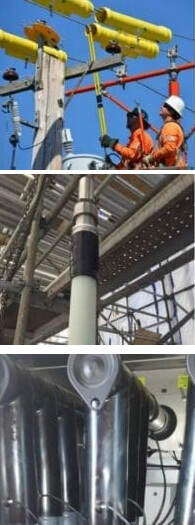
ABB EHV 275kV Cable Sealing Ends & GIS Cable Terminations
Published 02 Dec 2019

Images Courtesy: Richard Mason – EHV Jointer for Onshore & Offshore Work up to 245kV (SMSTS) – Global Cabling Services Ltd.
GCS Jointing – HV and EHV Cable Jointing Specialists
GCS Jointing is a trading name of Global Cabling Services Ltd. The company was founded in 2015 by Richard Mason, who previously worked for a major power utilities contractor.
With over 25 years of experience, Richard is a skilled EHV Cable Jointer. His practical approach to high voltage projects is central to the company’s services. In addition, Richard personally installs or supervises much of the work undertaken on site.
Today, GCS Jointing operates as a specialist HV and EHV cable jointing and cable installation subcontractor. The company supports projects across the onshore and offshore utilities, oil and gas, and clean energy sectors.
As a result, its experience covers demanding electrical installations where workmanship, technical knowledge and reliable cable connections are essential.


ABB Cable Sealing Ends for High Voltage Applications

Cable Sealing Ends
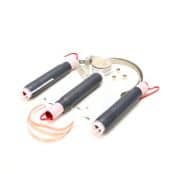
An ABB high voltage cable termination provides an insulated connection for HV and EHV power cables. Its construction includes an insulator mounted on a box body made from aluminium castings.
Part of the box body also contains insulating material. Together, these components support the electrical insulation required for high voltage cable installations.
The base of the cable sealing end is designed for installation on a supporting bracket. For 420kV applications, the assembly includes a corona shield and a PIU 420 B/G post insulator kit.
In addition, electrical stress is controlled by a premoulded rubber stress cone. This component helps manage the electrical field around the prepared cable insulation.
Cable Sealing End Construction and Insulation
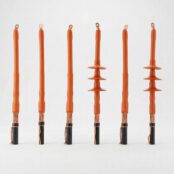
The cable sealing end includes an insulator with alternating short and long sheds. Furthermore, the assembly is filled with synthetic insulating oil to provide the required insulation.
Its composite insulator features grey silicone rubber sheds and a hollow core made from fibreglass-reinforced epoxy resin. As a result, the assembly offers a lightweight design with reduced sensitivity to external damage.
Alternatively, brown porcelain insulators are available on request.
A bolt clamp within the top fitting connects the cable conductor to the top bolt. Both the top bolt and clamp are included in the termination kit.
Before installation, the cable dimensions must be checked against the termination requirements. In particular, installers must consider the maximum permitted diameter over the cable oversheath and the diameter of the prepared XLPE insulation.
Once positioned and secured, the cable sealing end provides a fixed connection point for the completed high voltage termination.
Skilled Cable Jointers and Quality Workmanship
Workmanship and competency play a critical role in the performance of MV, HV and EHV cable systems. This is especially important during the installation of cable joints and terminations.
Incorrect preparation or assembly can increase the risk of future cable failures. Therefore, experienced cable jointers must follow the correct installation procedures and use suitable equipment.
During HV cable preparation, several layers of the cable must be removed or treated. However, each stage requires care to avoid damaging the remaining insulation and cable components.
For example, incorrect removal of the semiconductive screen can damage the insulation surface. Consequently, careful preparation is essential before fitting the cable accessory.
Specialist Cable Jointing Tools and Training
Successful installation requires technical knowledge, practical experience and suitable cable jointing tools.
In addition, jointers must understand the critical stages of cable accessory assembly. These include cable preparation, insulation treatment, stress control and the final installation of the termination.
Appropriate training also helps installers understand the requirements of different cable systems. As a result, skilled workmanship supports the safety and long-term reliability of the completed installation.
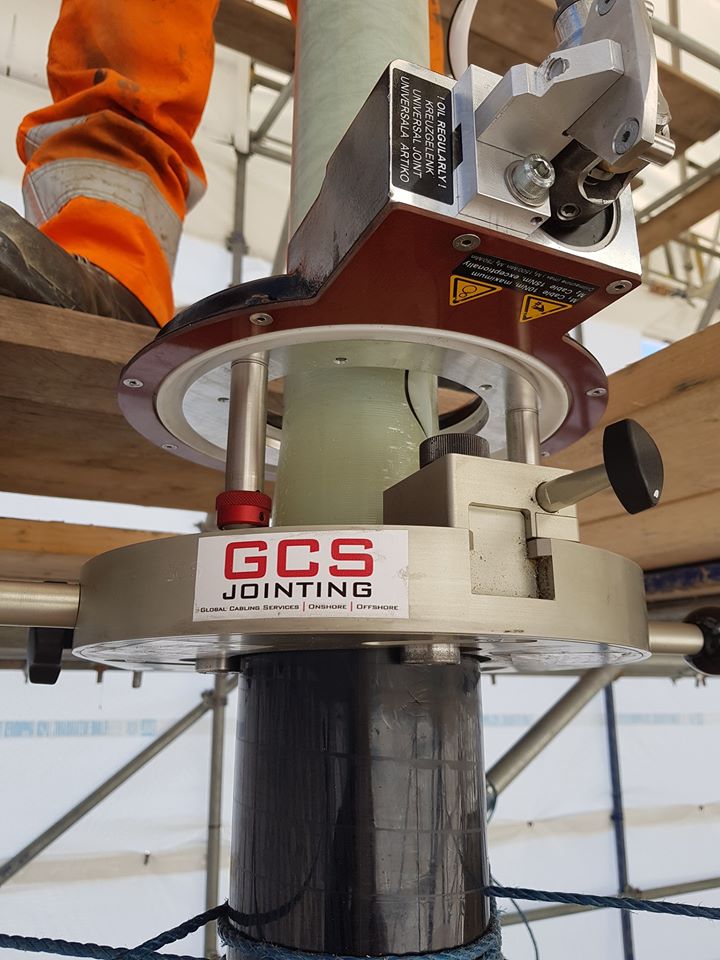
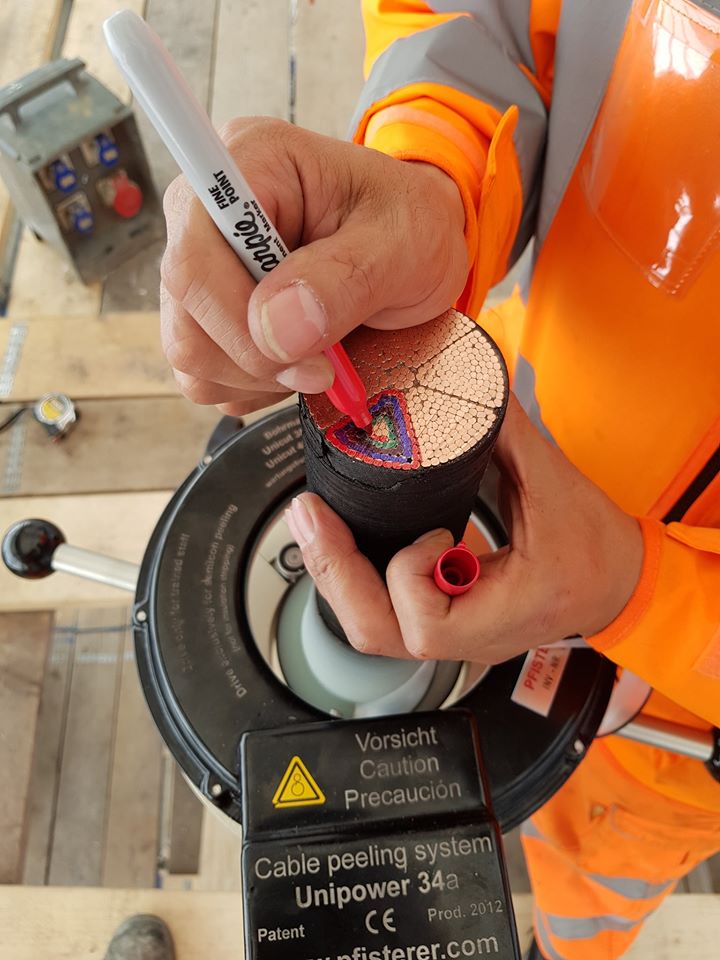
ABB Gas-Insulated Switchgear and Cable Terminations
ABB pioneered high voltage gas-insulated switchgear (GIS) technology more than 50 years ago. The company’s established product portfolio includes equipment with voltage ratings from 72.5kV to 1200kV.
Over the years, ABB has developed extensive experience in high voltage switchgear technology. Its historical installed base includes more than 35,000 GIS bays worldwide.
Gas-insulated switchgear plays an important role in electrical power transmission and distribution. In particular, it provides switching, protection and isolation functions within high voltage networks.
What Is Gas-Insulated Switchgear?
Gas-insulated switchgear (GIS) is a compact, metal-enclosed electrical system. It contains high voltage components, including circuit-breakers and disconnectors.
Unlike conventional air-insulated arrangements, GIS uses an insulating gas within enclosed equipment. Consequently, it can reduce the space required for high voltage switching installations.
Furthermore, GIS equipment helps protect important electrical components from external environmental conditions.
When integrated into a power network, GIS supports the control, protection and isolation of electrical equipment. As a result, it contributes to reliable electricity transmission and distribution.
The Importance of HV and EHV Cable Terminations
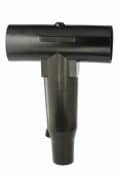
HV and EHV cable terminations form an essential connection between power cables and electrical equipment. For example, they may connect underground cables to switchgear, substations or overhead electrical infrastructure.
Correct selection is important because the termination must suit the cable construction, operating voltage and installation conditions.
Equally, careful installation helps maintain the electrical insulation and mechanical integrity of the cable system.
For this reason, specialist cable jointers play a vital role in high voltage network construction, maintenance and refurbishment.

Jointers Blog – HV and EHV Cable Industry News
Stay informed about developments across the high voltage cable industry with the Thorne & Derrick Jointers Blog and POWER Newsletter.
Subscribe to our POWER Newsletter for industry news, projects, technical guidance and product information.
Each edition brings together useful content for professionals involved in electrical power infrastructure. For example, topics include cable jointing, installation techniques, technical training and new equipment.
In addition, subscribers can access information about webinars, career opportunities, white papers and industry developments.
Join the HV and EHV Cable Jointing Community
Our Jointers Blog features contributions from utility professionals, linesmen and experienced cable jointers.
These contributors work with MV, HV and EHV cables, as well as overhead power lines. Common voltage levels include 11kV, 33kV, 66kV and 132kV.
Furthermore, the blog shares practical knowledge from electrical installation projects across different industries.
Whether you work in cable installation, jointing or power network maintenance, the newsletter offers access to relevant industry content.
15,000+ Subscribers. Join our electrical industry mailing list today.
SUBSCRIBE TO THE POWER NEWSLETTER

Further Reading
-
 ABB Gas-Insulated Switchgear | Pioneer & Technology Leader, Driving Gas-insulated Switchgear (GIS) Innovations
Size: 1.26 MB
-
ABB Cable Terminations and Accessories 84-420kV | ABB Catalogue
Size: 259.23 KB