Arc Flash Protection
The First Sustainable Arc Flash Range Of PPE From ProGARM
June 5th, 2023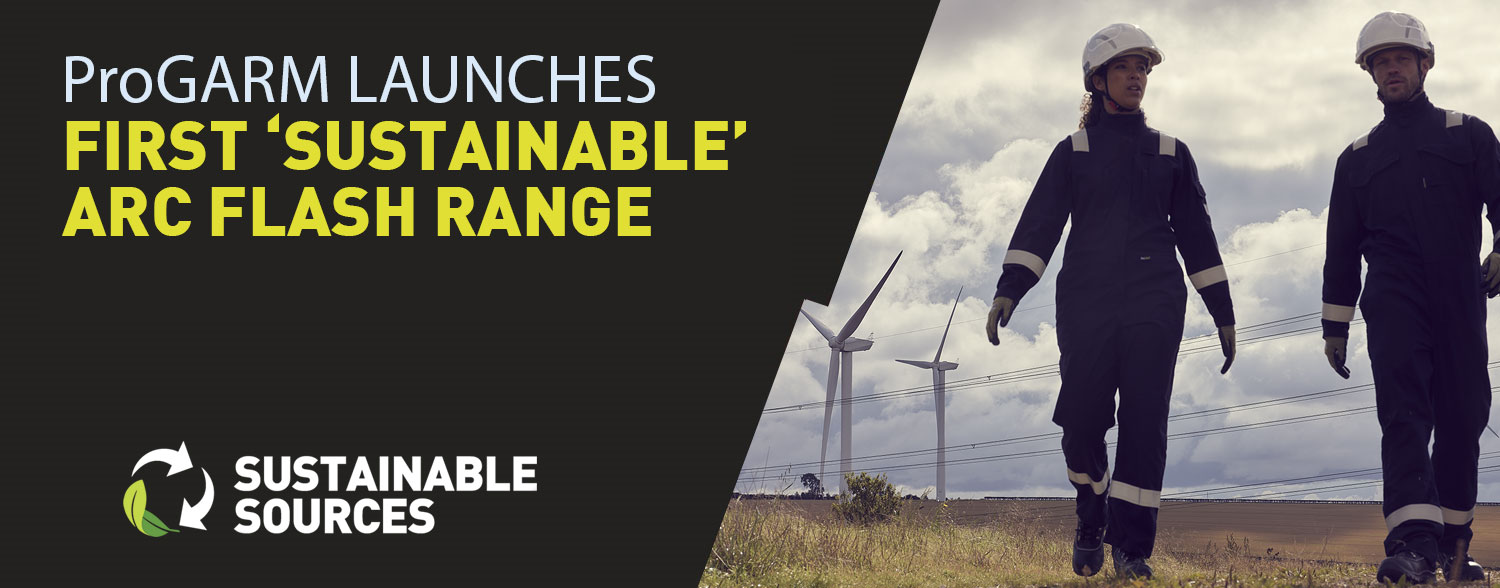
ProGARM launches first sustainable range of Arc Flash Protective Clothing
Sustainable Arc Flash PPE
Introducing ProGARM’s new sustainable arc flash protective clothing range; which meets both sustainability and safety obligations.
The ProGARM range of protective garments deliver ultimate Arc Flash protection, conforming with the relevant industry and EN standards ensuring protection from Arc Flash incidents.
Thorne & Derrick provide competitive prices and fast delivery for the complete range of ProGarm arc flash clothing and accessories designed to protect people and save lives.
ProGARM are known for being arc flash specialists, and in a world-first they have launched a range which looks and performs just like their regular arc flash garments – but with a few key differences making it a truly sustainable option.
After extensive research and development working with fabric specialists across Europe, ProGARM’s new range features the maximum amount of recycled content possible while still creating a fabric and garments that meet the stringent safety standards required for arc flash protection. It uses 20% recycled fabric content, taken from off-cuts from making ProGARM’s regular range – the first arc flash range in the world to achieve this.
The first to use recycled
content in arc flash PPE
Until now it’s been difficult to use recycled content in life-saving PPE garments because of the need to guarantee protection and understand the origin of any recycled material. Using off-cuts from ProGARM’s own production and putting them back into the production process removes question marks over quality and protection levels of other recycled content which may have suffered degradation to the protection it offers.
Using this unworn fabric enables this range to have some recycled content and the same life-saving protection.
Other sustainable features include:
- Sustainable, carbon neutral packaging, made from a plant-based polymer which is a waste product from the sugar industry
- Manufactured in mainland Europe and transported by sea and land in consolidated loads. No ProGARM product travels more than 1900 miles to reach its UK destination (up to 60% less than other suppliers), with deliveries carefully planned to minimise mileage, reducing the number of deliveries by 10% in 2021/22
All of this supports organisations in minimising their impact, contributing to achieving their sustainability goals.
The sustainable arc flash protective clothing range
Meeting High Standards
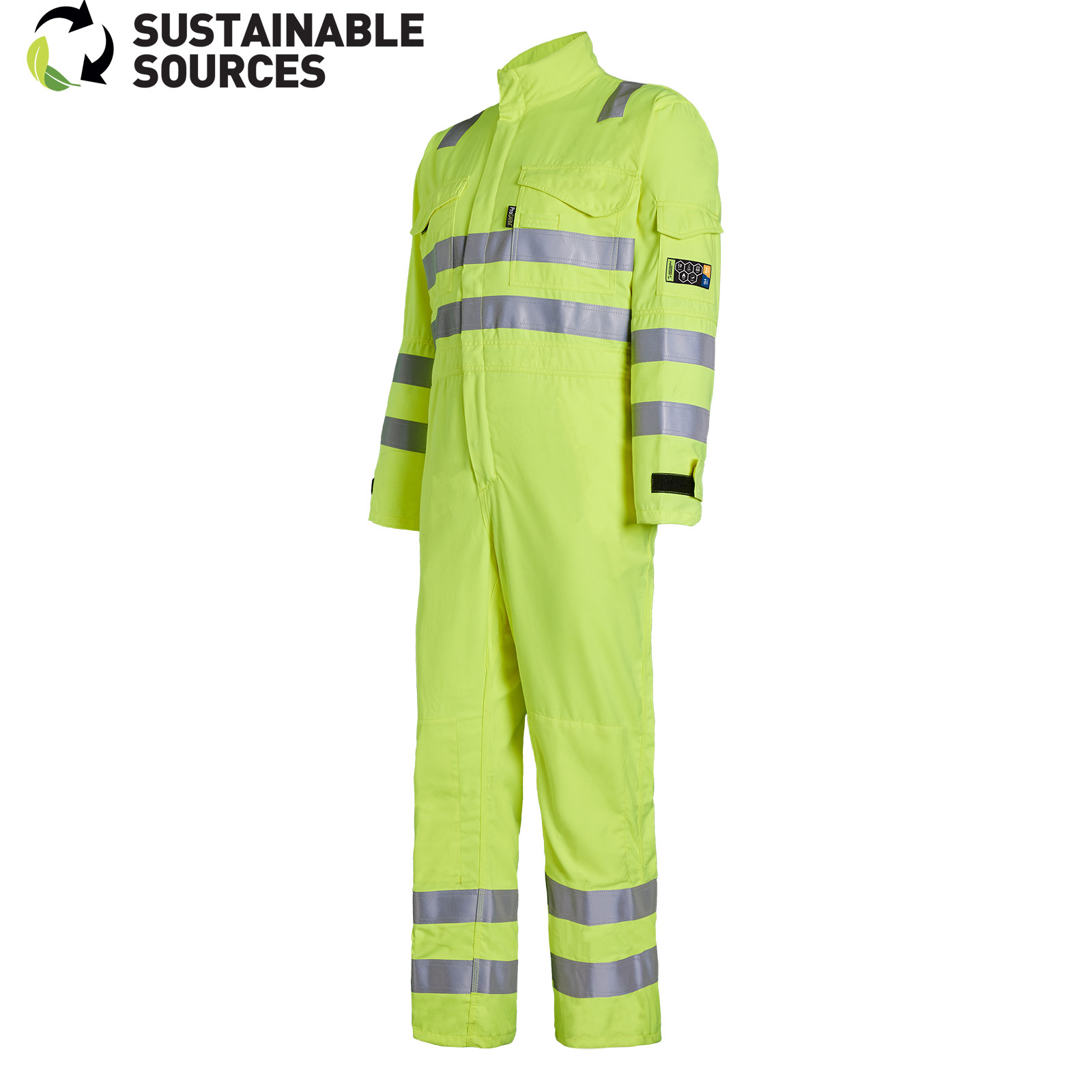
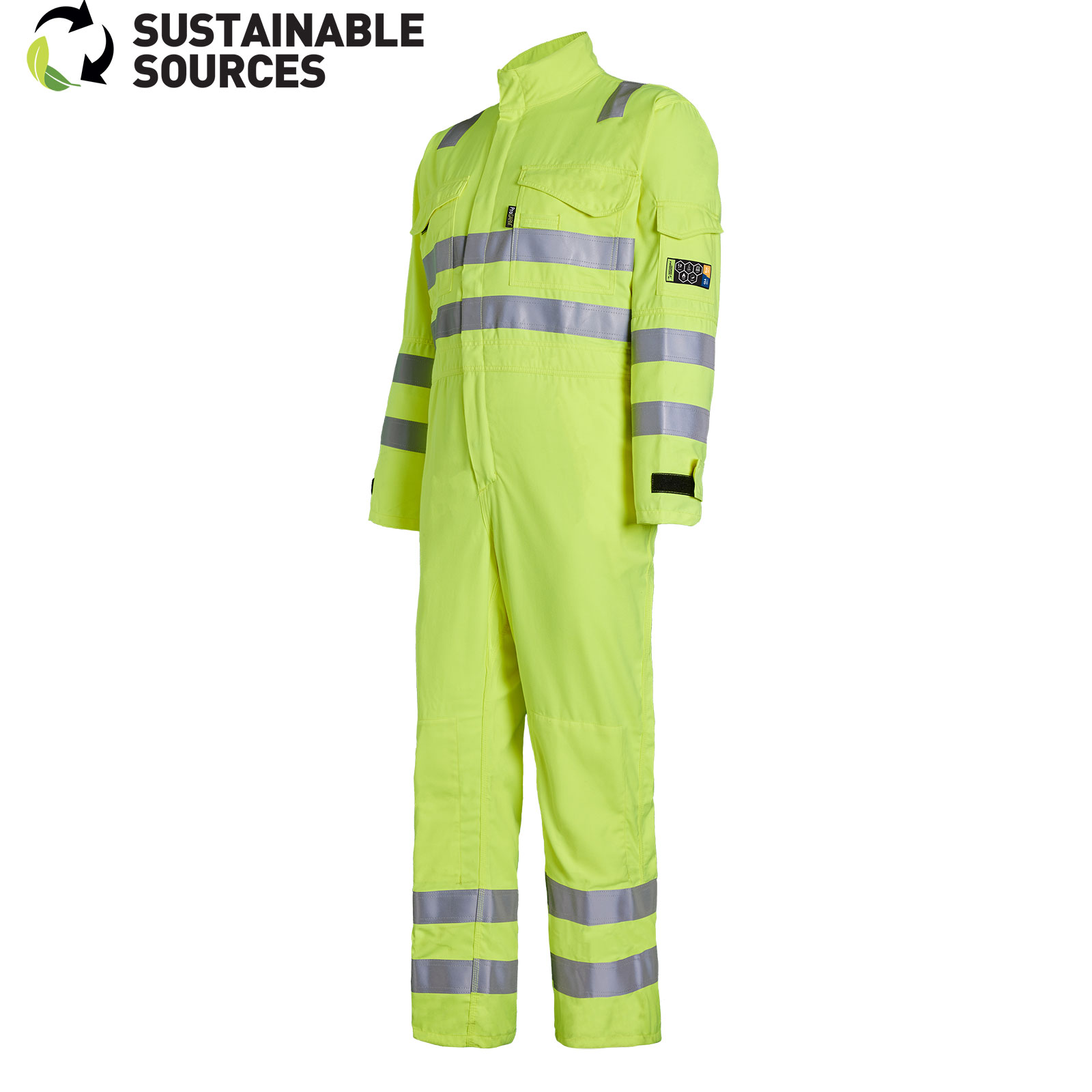
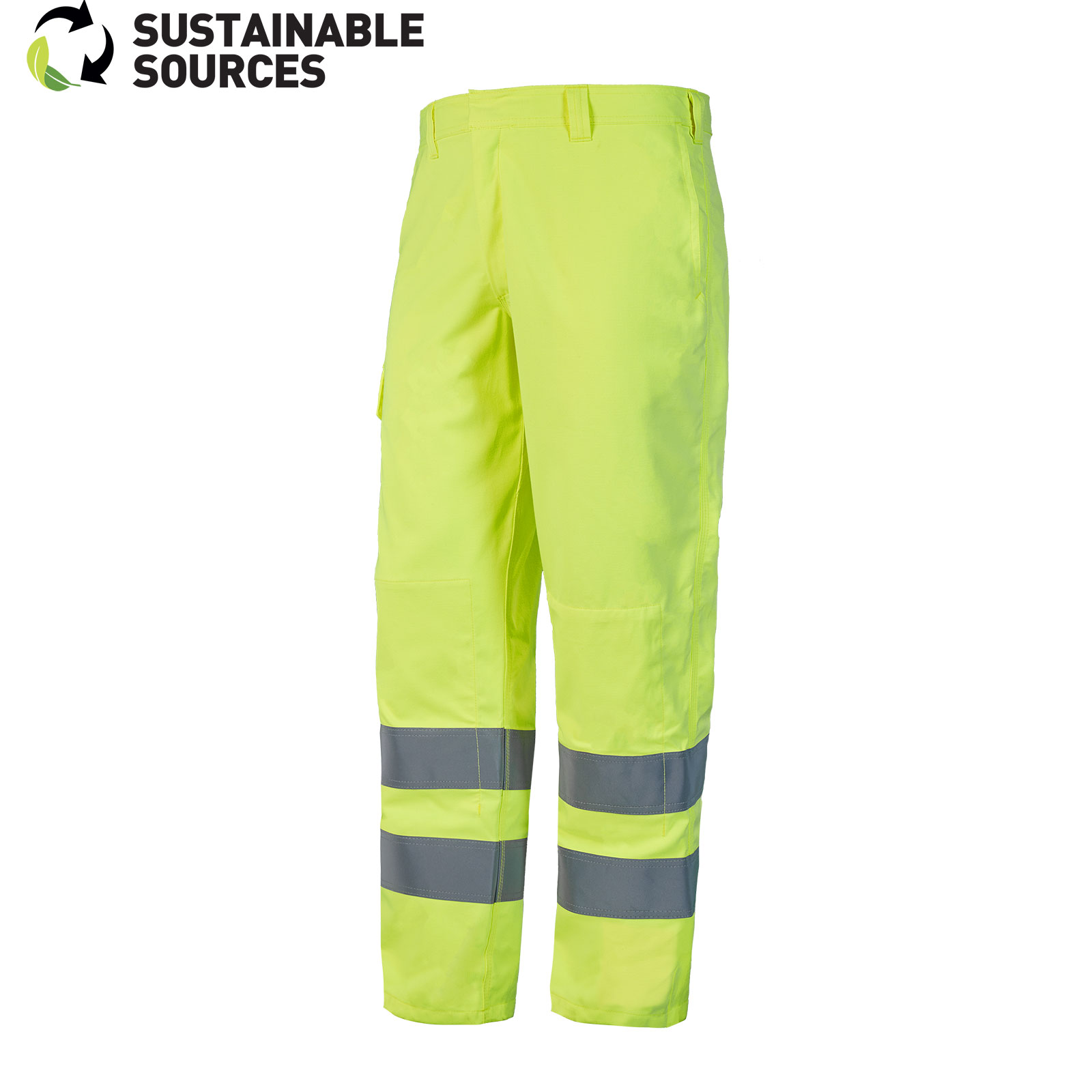
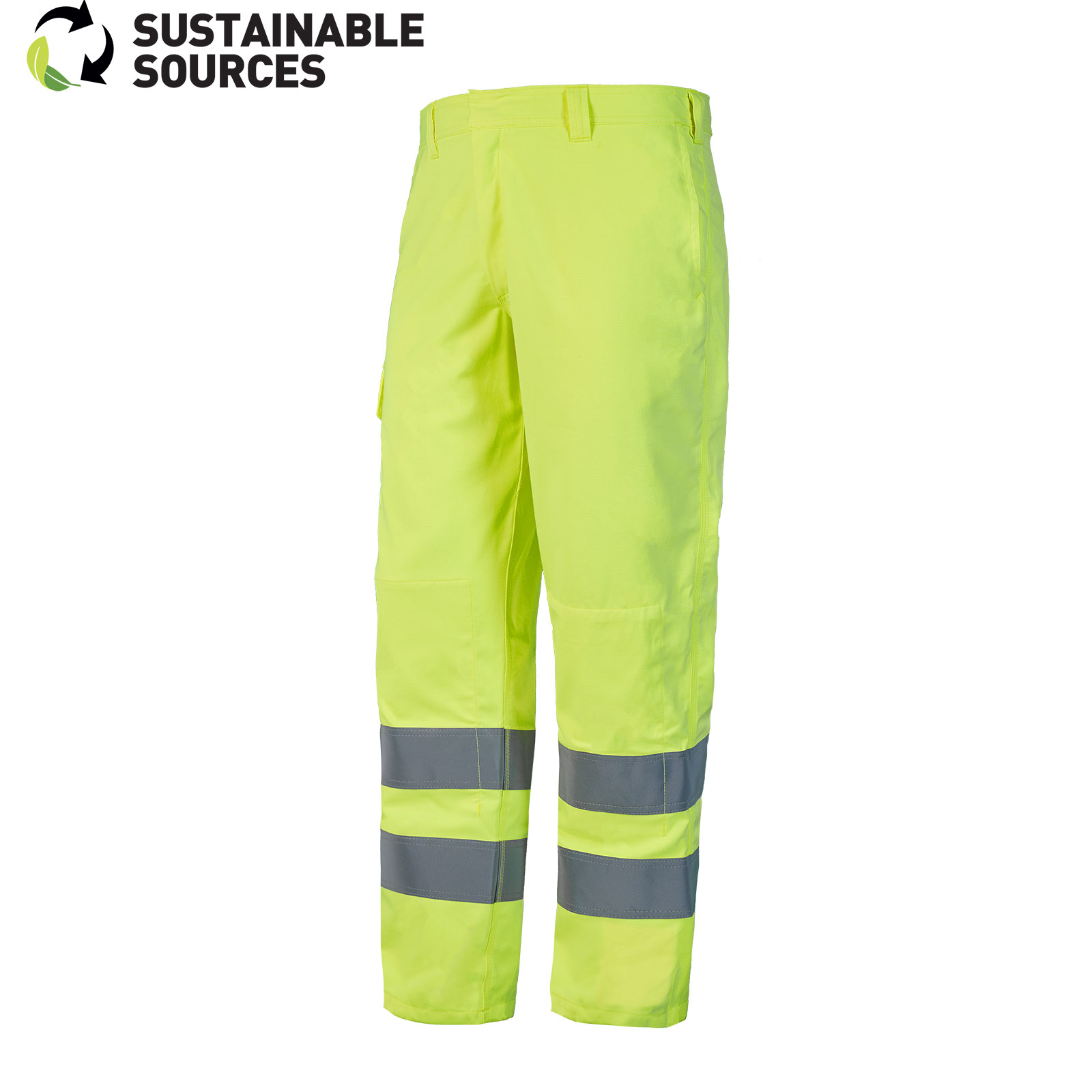
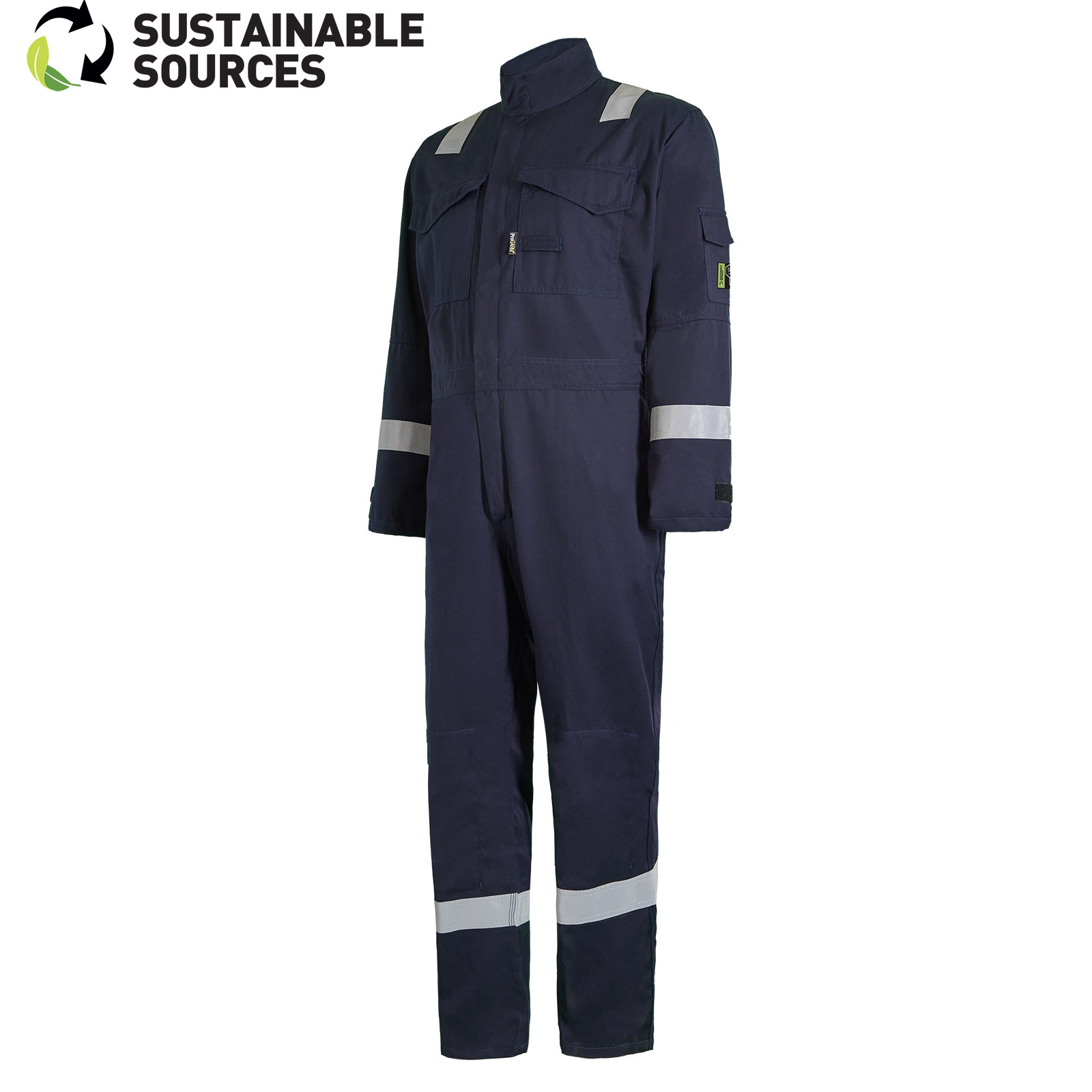
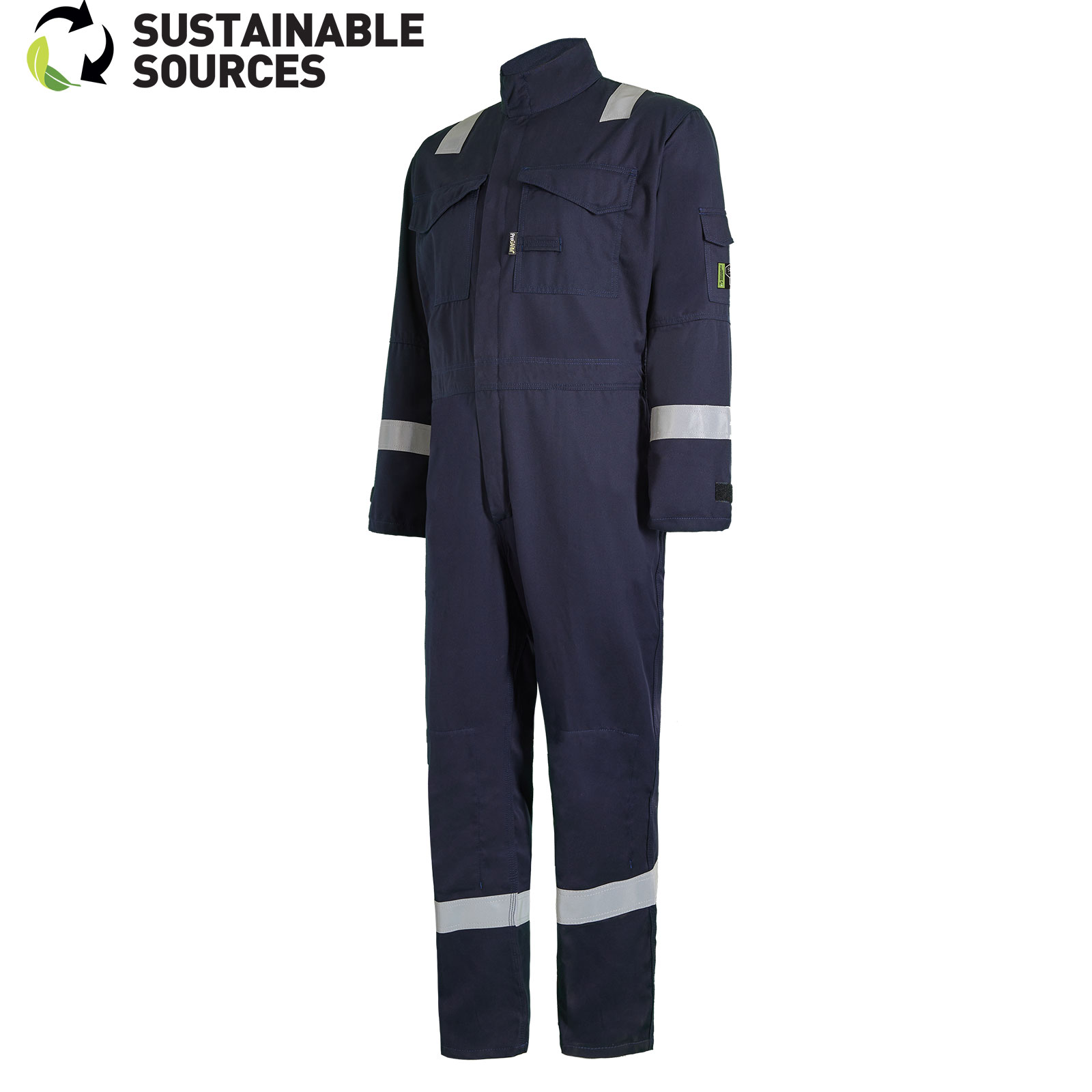
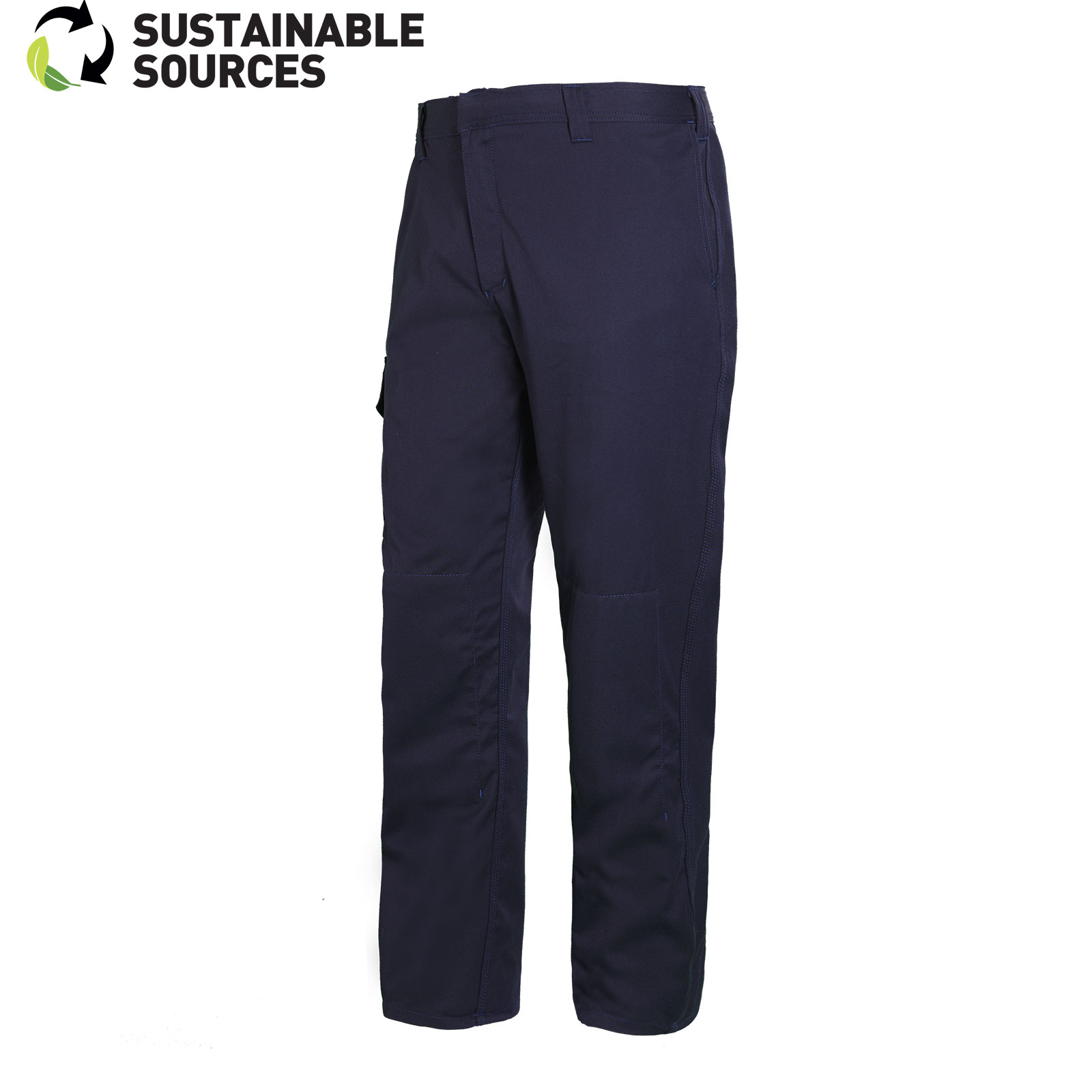
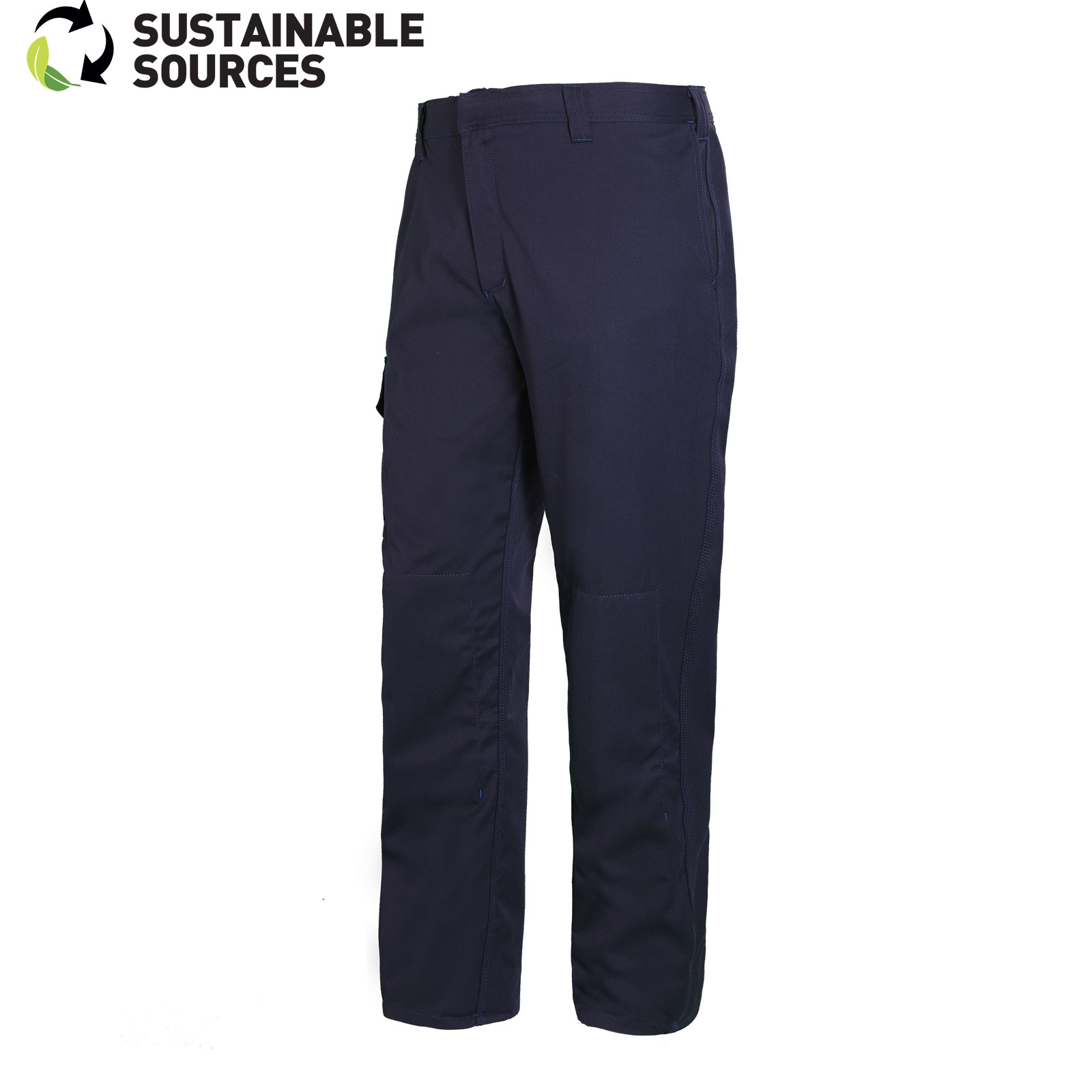
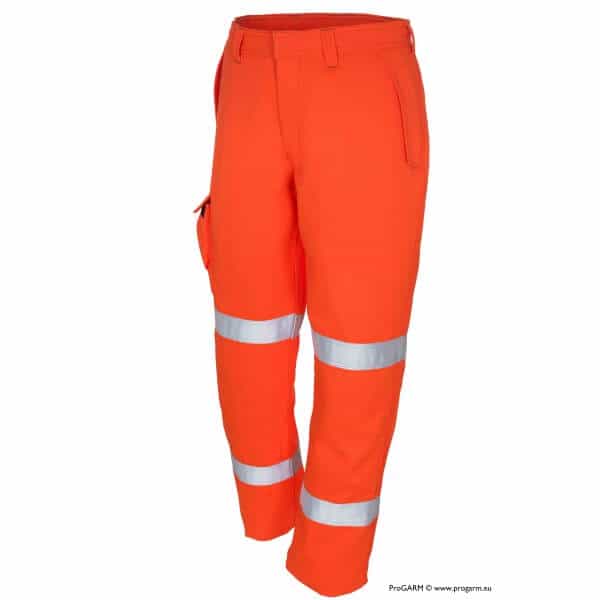
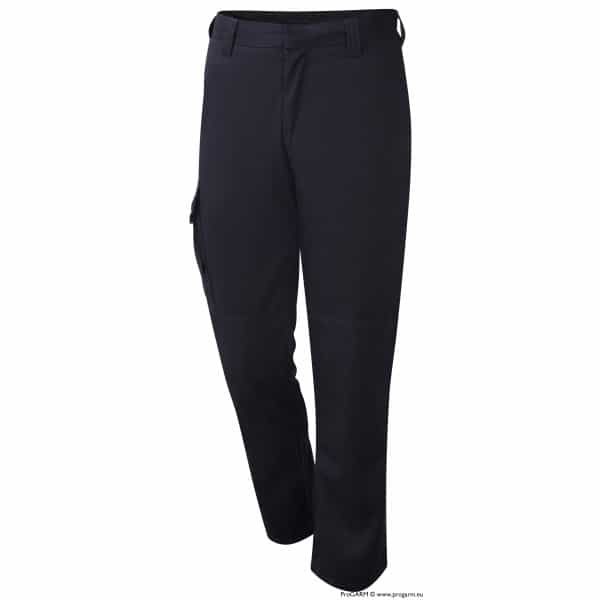
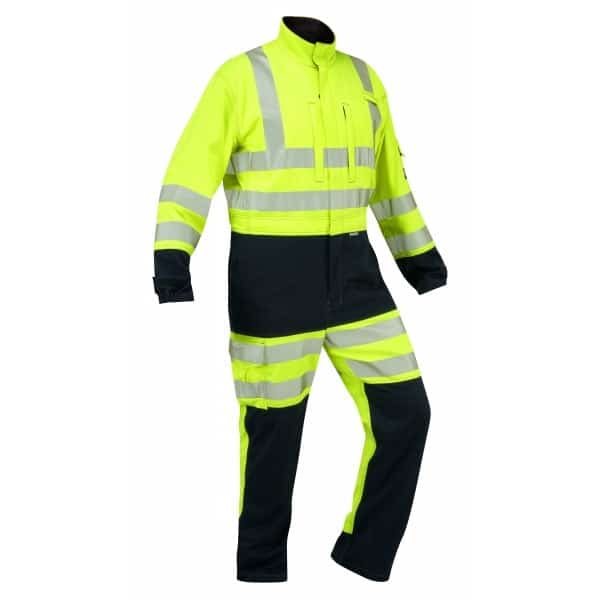
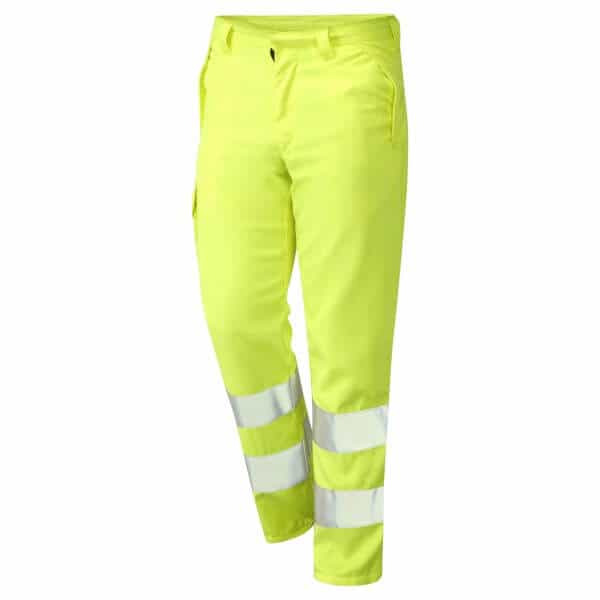
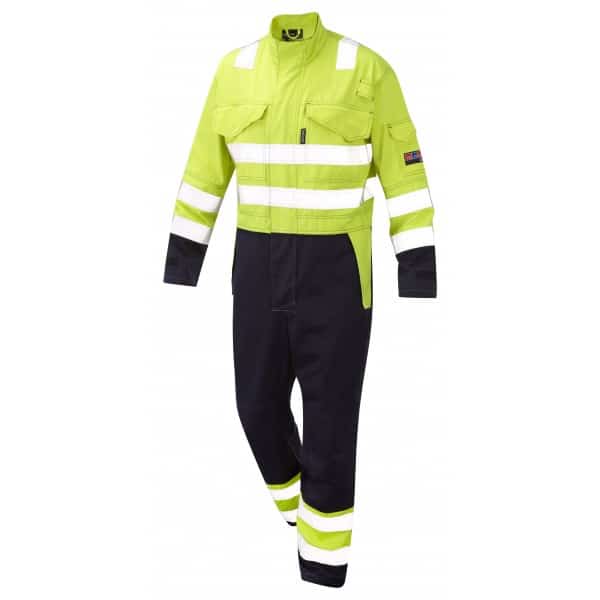
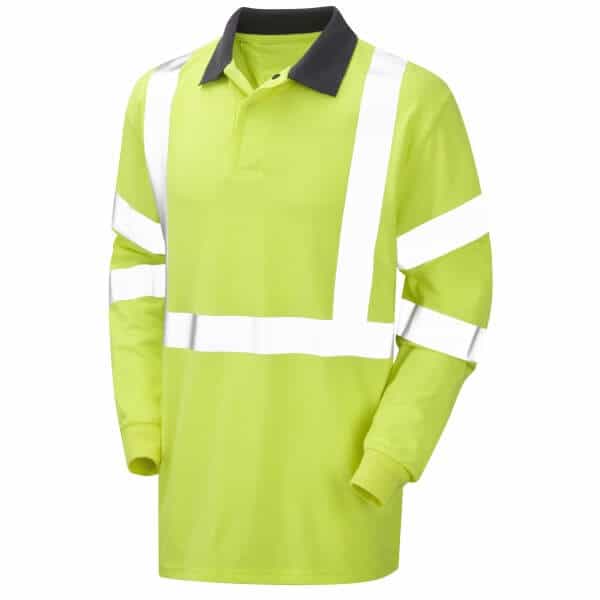
Five coveralls, one jacket, and four pairs of trousers in men’s and women’s cuts make up the new range. Available in three colourways – including high-vis yellow, navy blue, and a combination of navy and high-vis yellow – the range has been designed to offer the most popular and useful garments for anyone requiring arc flash protection, while passing all relevant tests and standards.
See an overview of the range below ➡
 |
 |
 |
 |
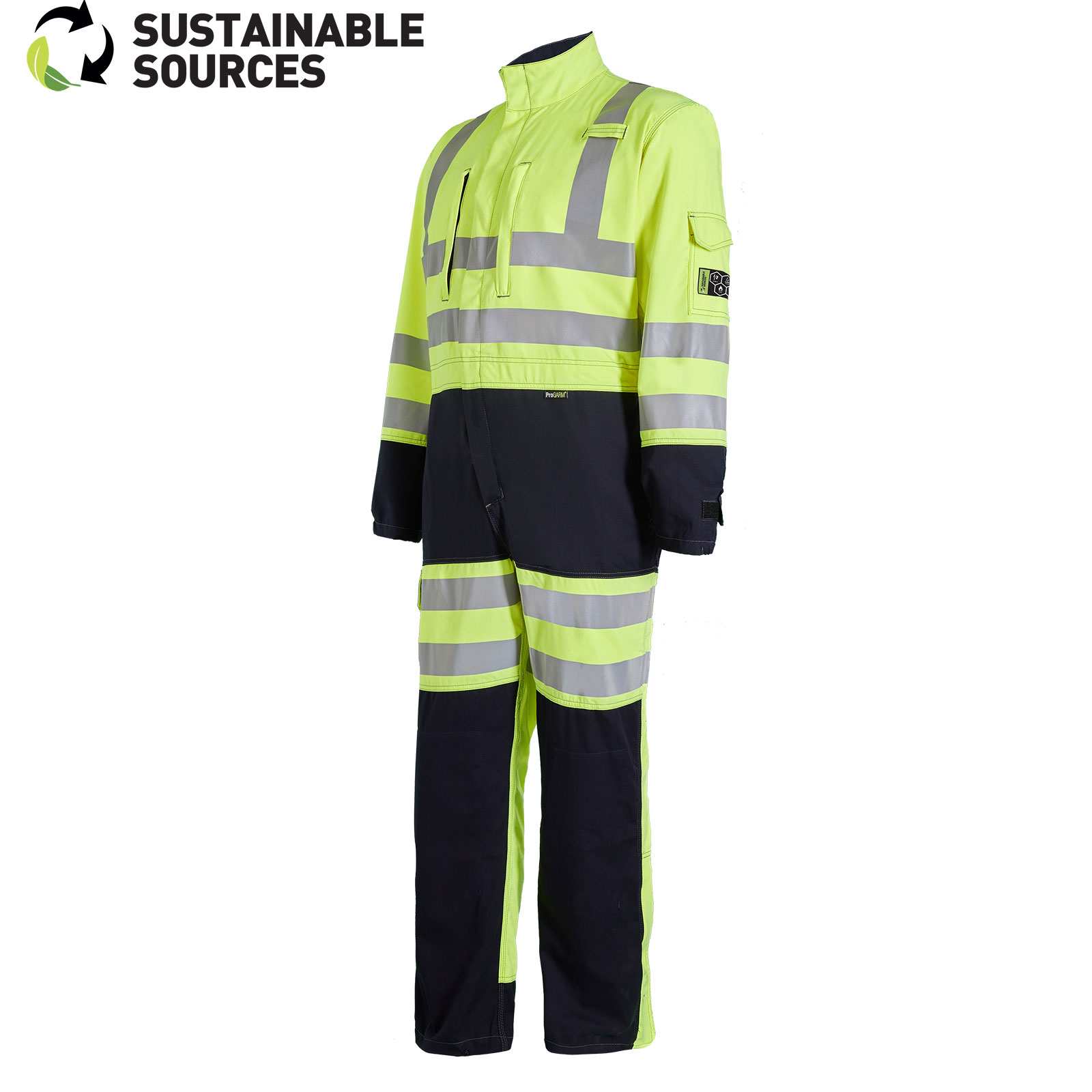 |
| ProGARM CV170F Sustainable Ladies Are Coverall | ProGARM CV170M Sustainable Arc Coverall | ProGARM TR170F Sustainability Ladies Arc Trouser | ProGARM TR170M Sustainable Arc Trouser | ProGARM CV155M Sustainable Linesman Arc Coverall |
 |
 |
 |
 |
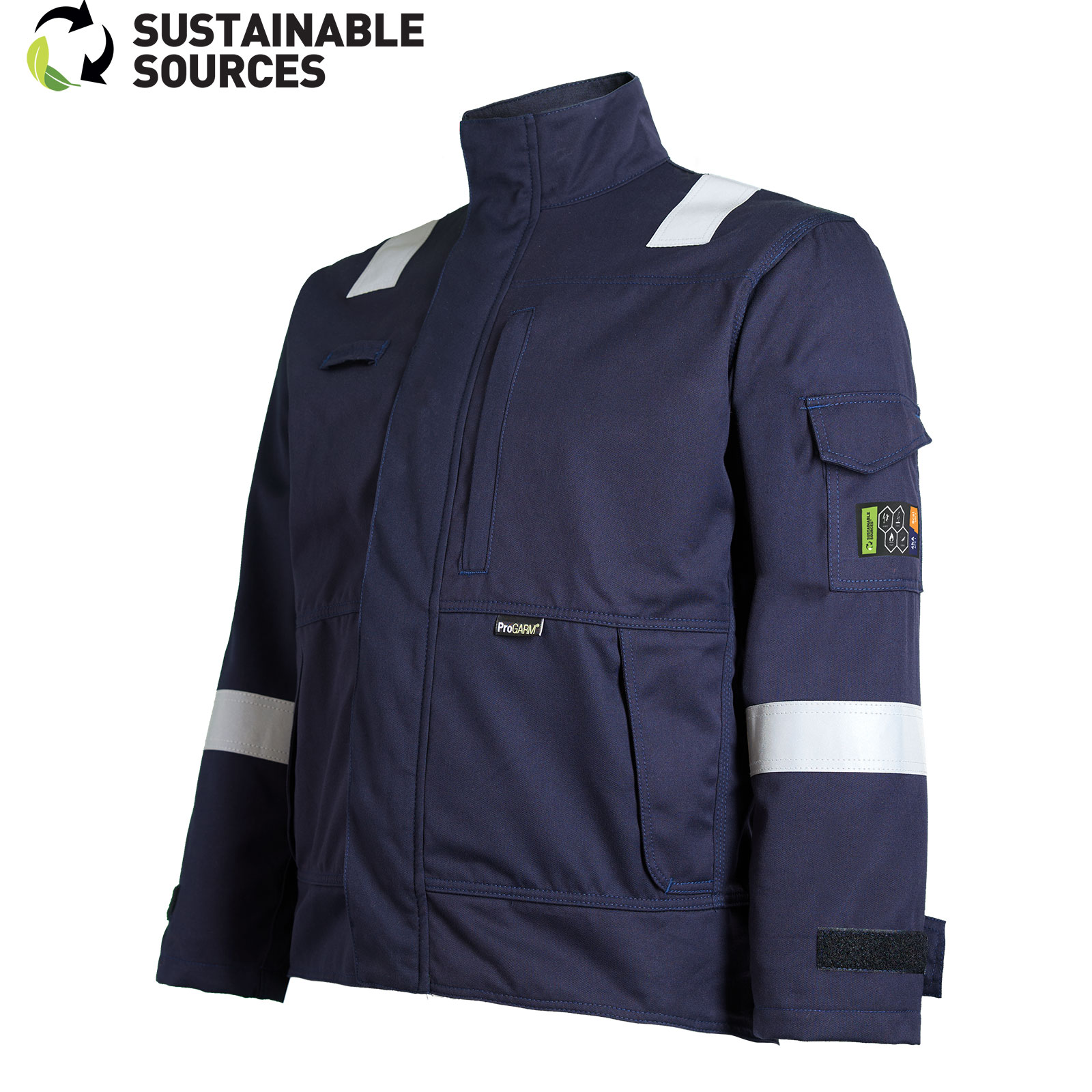 |
| ProGARM CV100F Sustainable Ladies Coverall | ProGARM CV100M Sustainable Arc Coverall | ProGARM TR120F Sustainable Arc Ladies Trouser | ProGARM TR120M Sustainable Arc Trouser | ProGARM JK128M Sustainable Arc Jacket |
Contact Thorne & Derrick to order
The range is certified for standards covering arc flash (APC1, ELIM 8cal), flame resistance (EN11612, A1 + A2), welding (EN11611), anti-static (EN1149-5), and high visibility. So it not only performs the way other arc flash garments do, but has materially less impact.
The arc flash protection is inherent, meaning it can’t be washed out and helping the workwear provide protection for longer.
ProGARM, renowned for making protective workwear which lasts up to 70% longer than the industry average, is the first company to launch a certified arc flash range containing recycled fabric.
Arc flash sustainability initiatives
The new range comes after ProGARM created the first repair programme for arc flash PPE in 2021, which helps with sustainability by making minor repairs to garment components such as zips and fastenings to extend the life of the clothing.
With arc flash clothing, even a small rip which happens during the rigorous workday of the wearer would mean it no longer offered the life-saving protection needed, and would mean it had to be thrown away. The combination of ProGARM’s focus on durability and the option for small repairs to fastenings means their range can last up to 70% longer than competitor options.
The company has also partnered with a leading textile recycler to offer end-of-life recycling for all its products so they can be recycled, making sure ProGARM products don’t become part of the 350,000 tonnes of textile waste send to landfill in the UK every year.
ProGARM aims to be carbon neutral throughout all its operations and the whole supply chain (scopes 1, 2 and 3) by the end of 2025.
ARC FLASH LEARNING & RESOURCES

Thorne and Derrick are proud to be distributors of ProGARM arc flash coveralls and protection.
We can help – should you require arc flash calculators or advice on the type of clothing and protection available please do not hesitate to contact us.





Protection Against Arc Flash, Faults & Electric Shock | 5 Safety Rules
March 24th, 2023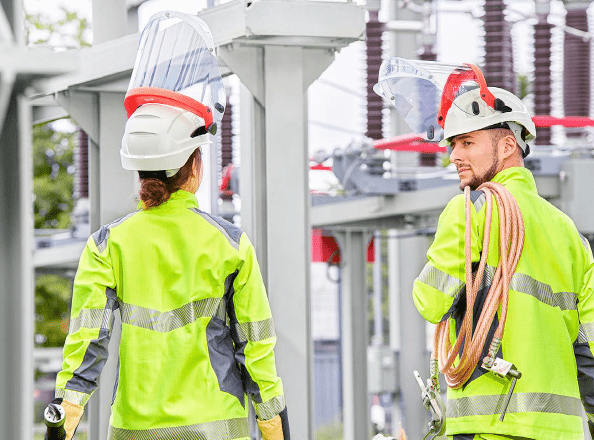
Protect employees from electric shock and arc faults
In industries working around high and low voltage electricity, the importance of Electrical PPE and arc flash protection is widely recognised, and the latest electrical safety requirements are understood by managers and operatives alike.
It is imperative that the 5 safety rules are complied with to prevent accidents when working on electrical systems. By using insulating tools and equipment, electric arcs are prevented from forming and the working distance is made bigger.
DEHN are committed to the protection of workers and material assets. The energy and the spirit of innovation of more than 1,400 employees are reflected in their developments and innovative products in the field of lightning protection, surge protection and safety equipment.
DEHN protection at a glance:
Effective – The probability of an arc fault occurring is reduced and the PPE protection level increased.
Protective – The employee is further removed from the system, increasing his/her safety during work.
Competent – DEHN offers the right products for complying with the 5 safety rules.
Foresighted – A large range of services ensures that electrical equipment is kept safe permanently.
ARC FLASH Protection | Five safety rules
| 1. Disconnect completely | 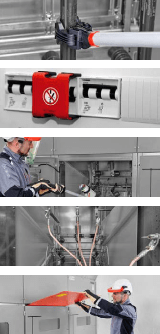 |
Operating poles are used for safe hot stick working when switching and insulating live equipment. | ||
| 2. Secure against reconnection | Locking devices secure the work location against re-powering. | |||
| 3. Verify that the installation is dead | Voltage detectors are available for verifying a dead condition on all poles at the work location. | |||
| 4. Earthing and short-circuiting | Earthing and short-circuiting devices for earthing and short-circuiting electrical systems. | |||
| 5. Provide protection against adjacent live parts | Insulating protective shutters for protecting against accidental contact with live parts of an installation. |
reducing Arc Flash risk
The use of tested insulating tools and operating sticks reduces the probability of occurrence of an arc fault and thus also the risk involved. Furthermore, the individual is distanced further away from the system (working distance) due to the lengths of the insulating sticks, meaning the PPE protection level is increased.

Arc Flash Protection & Electrical Safety Products | Distributed By Thorne & Derrick
ELECTRICAL SAFETY PROVIDERS
We protect substation engineers, asset managers, SAPS, cable jointers, overhead linesmen and utility workers with PPE and safety equipment: this includes insulating gloves, arc flash clothing, voltage detectors, insulating matting and portable earthing to ensure worker safety when carrying out repair and maintenance on LV-HV switchgear, transformers, substations and turbines.
All of our Cable Connection & Energisation Accessories including Medium & High Voltage joints, terminations, connectors and cleats are tested to the latest international standards and supporting ranges of professional installation tools are stocked to reduce incident, accident and downtime to plant and people.
IEC 61482-2 | Arc Flash Clothing & Protection Standard (Version EN-IEC 61482-2: 2020)
March 22nd, 2023
EN-IEC 61482-2: 2020 Protective clothing against the thermal hazards of an electric arc
EN IEC 61482-2:2020 Supersedes IEC 61482-2:2009
IEC 61482-2 Standard is an International Electrotechnical Commission standard regarding live working – protective clothing against the thermal hazards of an electric arc. This part of EN 61482 specifies requirements and test methods applicable to materials and garments for protective clothing for electrical workers against the thermal hazards of an arc flash.
Electric shock hazards and other effects like noise, light emissions, pressure rise, hot oil, the consequences of physical and mental shock or toxic influences are not covered by this standard. Protection of eyes, face, head, hands, and feet against electric arc hazard fall outside the scope of this standard.
EN IEC 61482-2 includes two methods for testing. Garments can be certified according to one of the test methods or to both test methods.
What is an electric arc?
Electric Arc and the Arc Flash created is an extremely dangerous and least understood hazard of electricity. It occurs as a result of extreme discharges of voltage or electrical current from equipment including switchgear, transformers and heavy electrical equipment. The Arc generates a high level of energy for a very short span of time (up to 1 second). The intense heat can create temperatures as high as 19,000°C and it also produces electric shock, force and large quantities of thermal radiant energy.
What is the Risk?
In any situation where your employees are working with electricity, an Arc Flash can occur and as such the maximum energy of default circuits in any electrical installation must be able to be determined. The risks of an electric Arc exposure are:
- Electrocution – potentially fatal
- Extremely high levels of Radiant Heat
- 1st, 2nd or 3rd Degree burns – 3rd Degree burns cause permanent damage
Arc Testing Methods
EN-IEC 61482-1-1:2019 supersedes IEC 61482-1:2009 – “Open Arc Test Method”
USA Arc Flash Test Method
The Open Arc Test Method (ATPV test and garment test) determines the Arc Rating Arc Thermal Protection Value (ATPV level), ELIM (incident energy limit) or Energy Break Open Threshold (EBT) of flame-resistant material (Method A) and clothing (Method B). The basic principle is that the ATPV of the garment must be higher than the Arc Flash energy level as calculated. The “Open Arc” test method is the same as the original North American method for measuring the Arc Thermal Performance Value (ATPV) as used in ASTM F1959. The Arc Rating is expressed in cal/cm² (calories per centimetre square).
EN-IEC 61482-1-2:2015 – “Box Test Method”
European Arc Flash Test Method
In the Box Test Method, materials and clothing will be tested using two methods: the material box test method and the garment box test method.
The material box test method is used to measure and determine material response to an arc exposure when tested in a flat configuration. A quantitative measurement of arc thermal performance is made by means of the energy transmitted through the material. During this test, a fabric sample is exposed to an electric arc produced by a 4kA or 7kA short circuit. In this test, the arc does not last any longer than 500ms. The amount of heat transmitted through the sample is measured during and after the test.
Based on the resulting data and a Stoll curve, the length of time it would take to cause the onset of second-degree burns is subsequently determined. Samples are also assessed for after-flaming, hole formation, melting, etc.
The garment box test method is used to test the function of the protective clothing after an arc exposure (i.e., no heat flux will be measured). This test must be conducted on a complete garment. In doing this, the objective is not to determine the energetic value, but to assess the garment after exposure to an electric arc for defects in the seams, fastenings, and other closures.
The garments are tested and evaluated in two classes in the same test:
- APC1 (Arc protection class) protects against electric arc of 4kA (arc energy 168 kJ)
- APC2 protects against electric arc of 7kA (arc energy 320 kJ)
The standard requires the following:
- A garment must have at least an ELIM value of 3,2 cal/cm2 (130 kJ/m2), or else an ATPV or EBT value of 4 cal/cm2 (167.5kJ/m2) according to IEC 61482-1-1 or APC1 when tested according to EN IEC 61482-1-2
- Garments must be sewn with inherently flame-resistant threads
- If a garment has a higher rating of arc protection on the front than on the back, the garment’s torso, sleeves, and legs must be made using the arc-rated material; the back of the garment can have a lower arc rating
- Garments must have no exposed external metal (i.e., any internal metal or melting parts are to be covered inside to avoid contact with the skin)
- The garment label must show the lowest ATPV or class if the garment is comprised of different panels of material; more detailed information about areas of the garment with varying levels of protection may be provided on the garment’s label or in the manufacturer’s instructions pertaining to use
- The protective clothing material must have some minimum tensile, tear, and burst resistance and minimum dimensional stability (e.g., for wear and tear associated with cleaning)
- The garments must cover the entirety of the wearer’s body. For example, jacket and trousers must be worn together with other personal protective equipment (PPE), including a helmet with a protective visor, protective gloves, and protective footwear (i.e., work boots) to achieve the correct level of protection. Layering is very important and will increase protection (e.g., if you wear flame-retardant underwear beneath your flame-retardant garments, you are better protected).
ARC FLASH PPE & ELECTRICAL SAFETY
Main UK Stockists & Distributors of Electrical Safety Products
Thorne & Derrick provide Electrical Safety Equipment to substation engineers, cable jointers, overhead linesmen and utility workers with PPE and electrical safety equipment including insulating gloves, voltage detectors, insulating matting and portable earthing to ensure worker safety when carrying out maintenance on LV-HV switchgear, substations, cables and electrical equipment.
We protect substation engineers, asset managers, SAPS, cable jointers, overhead linesmen and utility workers with PPE and safety equipment: this includes insulating gloves, voltage detectors, insulating matting and portable earthing to ensure worker safety when carrying out repair and maintenance on LV-HV switchgear, transformers, substations and turbines.
All our Cable Connection & Energisation Accessories including Medium & High Voltage joints, terminations, connectors and cleats are tested to the latest international standards and supporting ranges of professional cabling tools are stocked to reduce incident, accident and downtime to plant and people.
Ten Most Common Errors in Arc Flash Studies | Guest Article By Power EasyPower LLC
June 20th, 2022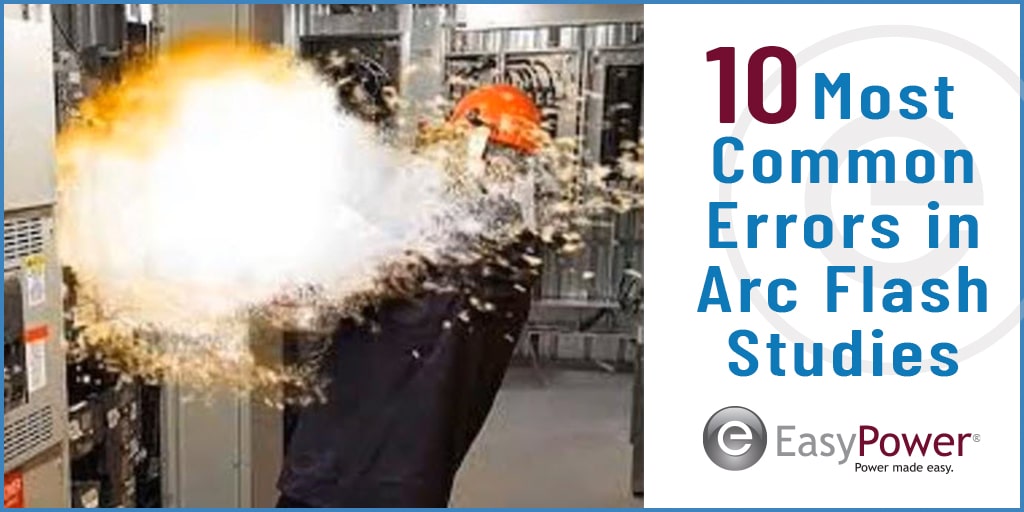
Ten Most Common Errors in Arc Flash Studies
- Special thanks to Emily Sotupo Marketing Co-ordinator from EasyPower LLC for the kind permission to republish
Arc Flash Studies
Each year we see dozens of arc flash studies ranging from first attempts to submittals from seasoned veterans in the industry. With an eye towards improving the overall results in the field, we offer this list of “Ten Most Common Errors.” This is not a criticism of anyone or any group; it is more of an effort to bring some insight to areas that may not be that well understood, including changes in the standards, the phenomenon of arc flash, and the application of analytical tools toward that end.
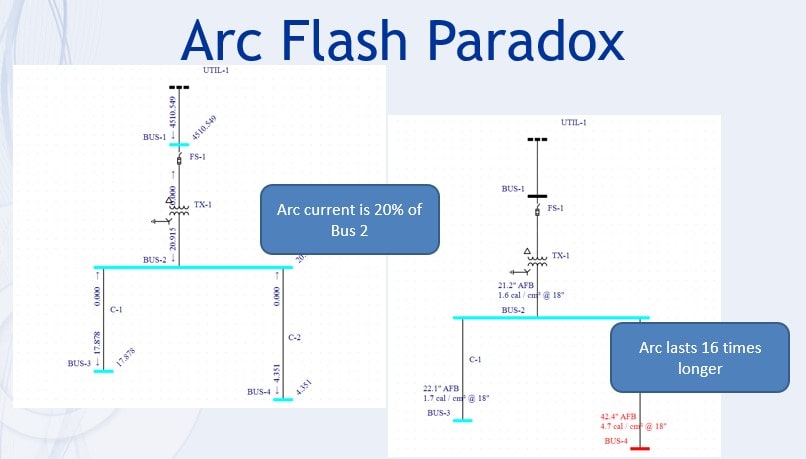
#1 – The Lack of Understanding the “Arc Flash Paradox.”
The counter-intuitive nature of the arc flash hazard tends to impede the acceptance of arc flash as a hazard by some of us with a long history in the industry. Put simply, within the same system you can have buses that have high current and high arc incident energy AND other buses that have lower current but that calculate a higher arc incident energy. Incident energy has a significant relationship to the time required to clear the arc.
Comparing Bus-4 to Bus-2 in the example below, Bus-4 has a higher incident energy in spite of having available fault current at Bus-4 that is only 20% of the fault current available at Bus-2. The length of time to clear the arc in this case has a significant bearing on the arc flash calculation.
#2 – “Infinite source” is Not the Worst Case
Nor should it be used in place of actual utility data when calculating arc flash results. Often times, the local utility company cannot or does not respond to a request for short circuit data as required for an arc flash hazard assessment. From the early days of power system design, the engineer responsible for the electrical system was tasked with the requirement to have the system be able to safely protect itself against the worst-case short circuit current that it could possibly see from the utility source. The concern was due to the short circuit rating for each piece of equipment in the system.
Each piece of equipment needed to be able to survive in the case of a short circuit fault. The results of an equipment duty analysis will determine if any system element has the potential for being over-stressed in the case of a worst-case fault at that location.
In that case, using an infinite source would be valid to determine system integrity. In the case of arc flash analysis, however, the use of a higher short circuit current value than is really expected could potentially yield a lower result for arcing incident energy since the higher current value of the infinite source would cause the protective devices to trip quicker than the same circuit exposed to actual or estimated fault current at the utility connection. This can be shown in the framework of an EasyPower study by using the Scenario Manager to compare results.
#3 – Not all buses are created equal!
The long-awaited release of IEEE 1584-2018 promised improved alignment between model results and the test data upon which the model is built. Part of this improvement is the inclusion of a number of parameters that were not included in the original arc flash calculation method. Included in the updated standard is a table of typical values for each of these parameters along with equipment type and different voltage levels.
It is therefore a good practice to ensure that the data collection team can identify the type of switchgear or panelboard and at the same time recognize if there is a significant difference between the typical values listed in the standard and record the actual values for:
- Working distance
- Electrode gap
- Enclosure size
- Electrode configuration
In EasyPower, the default values for each of these parameters are included in the Arc Flash Hazard Default table in the Device Library. If the actual system diverges from the default values significantly, it is incumbent on the person creating the digital model of the system to update the recorded values during model creation.
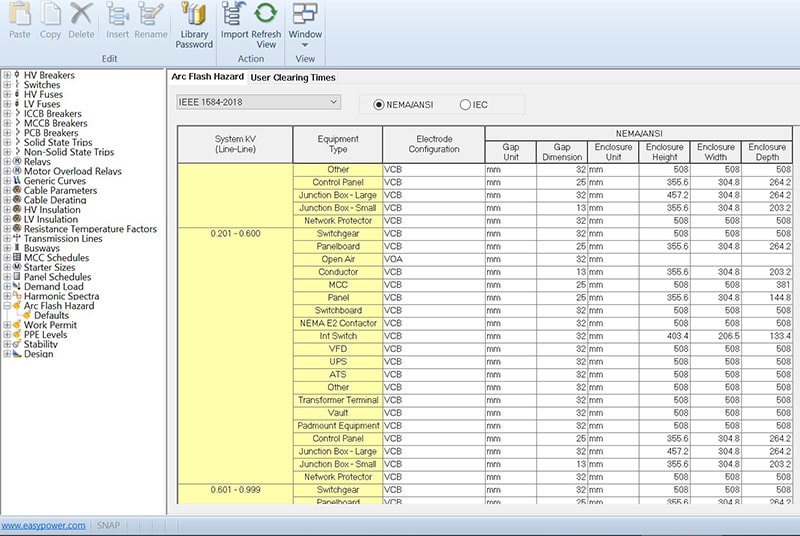
Arc Flash Hazard Default Values
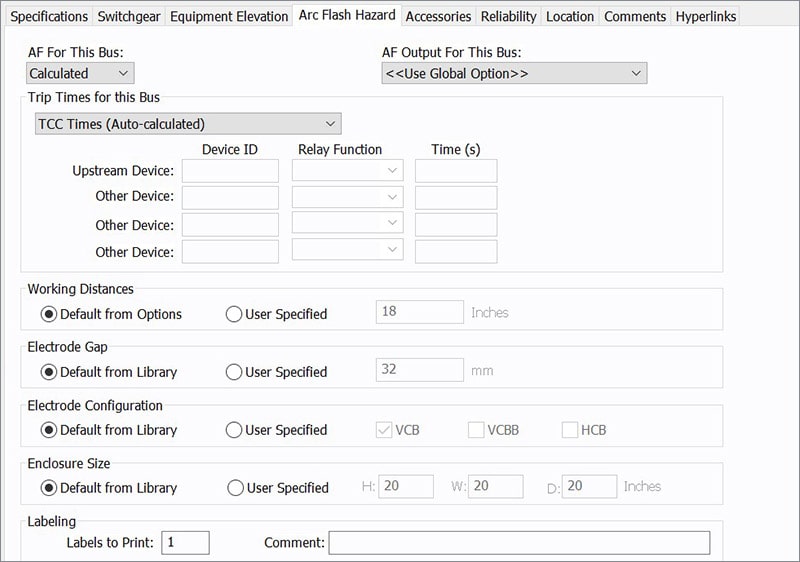
Typical Parameters in the Arc Flash Hazard Tab
#4 – Why Not Put 6 Inches Working Distance on the Label, Since That is What My Hand Will See?
It is expected that the results of the arc flash study will be reviewed by management with an eye towards verifying that all hot work required in the plant will be necessary and conducted with the utmost focus on employee safety.
As such, all hot work should be conducted under the auspices of properly completed Hot Work Permit. Labels do not authorize hot work. The working distance on the label is generally based upon the distance from the bus to the head or thorax of a worker while the panel cover is being removed. It is really a convenient number to permit the qualified worker to understand the relative magnitude of the hazard when the cover is removed. Additional information on the label is discouraged to prevent any misunderstanding of this restriction.
#5 – Why Calculate Equipment Duty on Plant Equipment That Has Already Been in Operation For 25 Years?
If it has been working for that long without an issue, why bother? Right? SCCR (short circuit current rating) is the maximum short-circuit current an electrical component can safely withstand without causing shock or fire hazard. In general, the SCCR for electrical switchgear or panels is based on the lowest component’s SCCR in that panel. Protective devices included in the one-line diagram must be linked to the datasheet for that element located in the Device Library.
As long as the one-line element is linked to the Device Library (meaning it is verified using the Calculate button on the Short Circuit tab of the Data dialog box), EasyPower calculates the equipment duty during a short circuit analysis.
The withstand rating of switchboards, panels, and MCC enclosures is usually listed on the nameplate of the installed element. In EasyPower, this rating should be entered in the dialog box for the element to be included in the equipment duty calculation.
Consideration should be given to system changes over the life of the installation. Changes in load size and location, increases in fuse sizes, breaker trip settings, as well as unannounced changes in utility short circuit values could render the original system design guard bands inadequate. Even if the SCCR for some elements may not have been entered during the original arc flash study, it seems prudent to include the data during study updates.
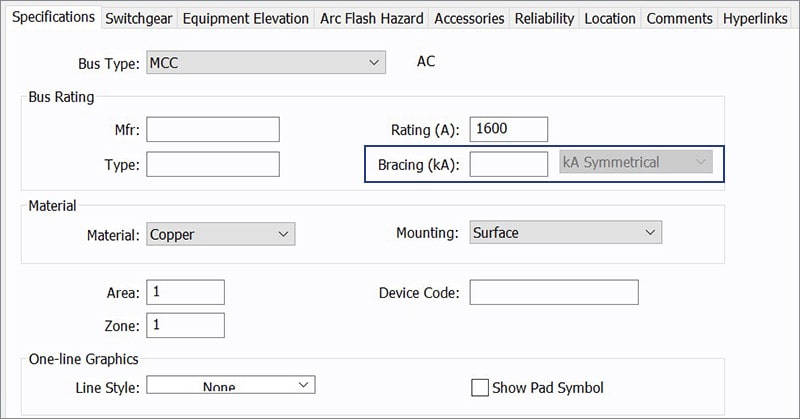
Bus Bracing Missing in the Data Dialog Box for an MCC
#6 – We Do Not Need a Coordination Study on Protective Devices During This Update. We Did It Five Years Ago
You may be correct unless:
- Some blown fuses were swapped out with a different manufacturer’s product or values because they were available during urgent times.
- Relay or LVPCB trip settings were tweaked to eliminate nuisance tripping.
- Large system loads have been added, moved, or deleted.
At a minimum, you should check the Sequence of Events. PowerProtector™ is the name of the EasyPower module used for plotting TCC curves and verifying coordination. When system fault current is displayed during a single bus fault, EasyPower illuminates an icon labeled Sequence of Events.
A simple click on that icon displays the chronological trip order of all device between the faulted single bus and the energy sources affected, providing a quick and efficient way to verify device coordination.
Arc Flash Protection & Electrical Safety Products | Distributed By Thorne & Derrick
#7 – I Always Calculate Arc Incident Energy Including the Main Breaker Because I Don’t Think It Will Fail
The IEEE 1584 standards (both 2002 and 2018) recommend excluding the main breaker of a panel or switchgear when there is not an arc barrier between the incoming conductors to the main breaker and anyone working downstream on the main bus. The reason has less to do with the reliability of the breaker itself and is more based on the fact that once established, an arcing fault will produce a plasma ball, often several millimeters in diameter.
If that plasma ball contacts any electrified bus work, the arc can propagate and potentially render the protective device useless. Verifying the existence of an arc barrier between the incoming conductors and the downstream bus is the only way to recommend including the main breaker.
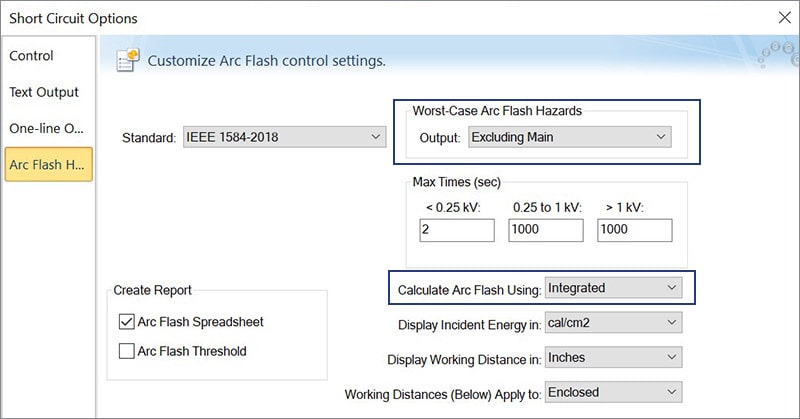
Worst-Case Arc Flash Hazards Indicating the Option to Exclude Main Breaker and Use the Integrated Method to Calculate Arc Flash
#8 – Half-cycle (Momentary) Current is the Worst-case Fault Current, so I Use It to Calculate Arc Incident Energy
Recognizing that the available fault current may change over time, IEEE 1584-2018 recommends that a dynamic assessment of fault current be used to accommodate changes that may be the result of reducing motor contribution, load drops, or other changes in fault current. In EasyPower, the recommendation is to use the Integrated Method.
In the EasyPower Integrated Method, during:
- The first cycle of the fault, momentary current is used for energy integration.
- The next 8 cycles, interrupting (5-cycle) current is used to calculate energy.
- For any additional time to clear the protective device, 30-cycle current is used.
9 & 10 Deal with labels, which are the source of a large number of frequent errors. These are two of the most frequent:
#9 – I Want My Labels to Show the HRC #, in Spite of the NFPA 70E Changes
NFPA 70E revision history includes the following changes:
- The 2012 version had Hazard Risk Category (HRC) tables.
- The intent was to calculate incident energy and then use the table to determine the PPE needed.
- The 2015 version changed HRC to PPE category.
- The label may have calculated Incident Energy OR PPE category, but NOT BOTH.
- Allows for a “Site Specific” option for companies to define their own categories.
- The 2018 version repeats label restrictions.
- The industry is migrating to align training for labels and PPE rating to reflect the incident energy.
While the standard is voluntary, the industry is moving to align with the NFPA 70E recommendations to label PPE with incident energy. So, the reasons (if any) to stay with using the HRC # on labels should be reconsidered. We recommend:
- Set a timetable to achieve NFPA 70E alignment.
- Decide between Site Specific or Incident Energy to determine PPE.
- Update the safety manual and training to follow NFPA 70E.
#10 – I Want to Put Maintenance Mode incident Energy on the Label
For at least the last 10 years, hardware companies have made available a feature that enables the user to temporarily set the trip time of a relay or LVPCB unit to be much quicker and provide a safer, lower arc hazard on the protected bus. This feature can be enabled by a switch on the front panel or an electric control signal routed to the back of the panel and is called Maintenance Mode.
This is a method of hazard reduction preferred over just adding more PPE for the worker at the higher energy level. It also falls into the category of hot work. Therefore, the information should not be on a label. Instead, the maintenance procedure, correct PPE, and instructions to use the Maintenance Mode feature should be approved and listed on the Hot Work Permit.
EasyPower LLC – Bio

Since our inception in 1984, we’ve been redefining how companies manage, design, and analyze their electrical power distribution. We continue to develop unprecedented technologies to make it simpler, smarter, and safer— driven by an unyielding commitment to deliver cutting-edge power system software that’s inherently easy to use.
Organizations throughout the world use our advanced— yet simple— software tools to safeguard their valuable resources of time, money, and personnel. Oil refineries, power utilities, paper and pulp manufacturers, military installations, data centers, and a host of others rely on EasyPower to keep their power systems running safely and smoothly.
From plant personnel to the most experienced electrical engineers, EasyPower users continually rave about its simplicity and power.
Our family of products includes the EasyPower® suite, ArcFlash Essentials™, and OnSite™, as well as our grounding calculation solution, XGSLab, for which we are the exclusive reseller in the United States and Canada. We also provide training for EasyPower and electrical safety in general, in addition to offering a full range of engineering services.
EasyPower Customer Service
EasyPower’s Sales Team is available to meet all of your customer service needs:
- Provide free demos
- Provide pricing information
- Customize a software package to meet your specific engineering needs
- Provide answers regarding upgrades, maintenance contracts, and key replacements
If you need Engineering Services, we are happy to process your Request for Proposal from our Consulting Team. Or, if you have Training Questions, we’ll gladly answer those as well.
Contact us by email at [email protected]
Contact us electronically by using our Contact Form, or reach us with our address or phone number here:
EasyPower LLC
15862 SW 72nd Ave, Suite 100
Portland, OR 97224
+1 (503) 655-5059
Arc Flash PPE & Electrical Safety
Main UK Stockists & Distributors of Electrical Safety Products
Thorne & Derrick provide Electrical Safety Equipment to substation engineers, cable jointers, overhead linesmen and utility workers with PPE and electrical safety equipment including insulating gloves, voltage detectors, insulating matting and portable earthing to ensure worker safety when carrying out maintenance on LV-HV switchgear, substations, cables and electrical equipment.
We protect substation engineers, asset managers, SAPS, cable jointers, overhead linesmen and utility workers with PPE and safety equipment: this includes insulating gloves, voltage detectors, insulating matting and portable earthing to ensure worker safety when carrying out repair and maintenance on LV-HV switchgear, transformers, substations and turbines.
All our Cable Connection & Energisation Accessories including Medium & High Voltage joints, terminations, connectors and cleats are tested to the latest international standards and supporting ranges of professional cabling tools are stocked to reduce incident, accident and downtime to plant and people.
Arc Flash Risk In Wind Turbine Renewables?
April 19th, 2022
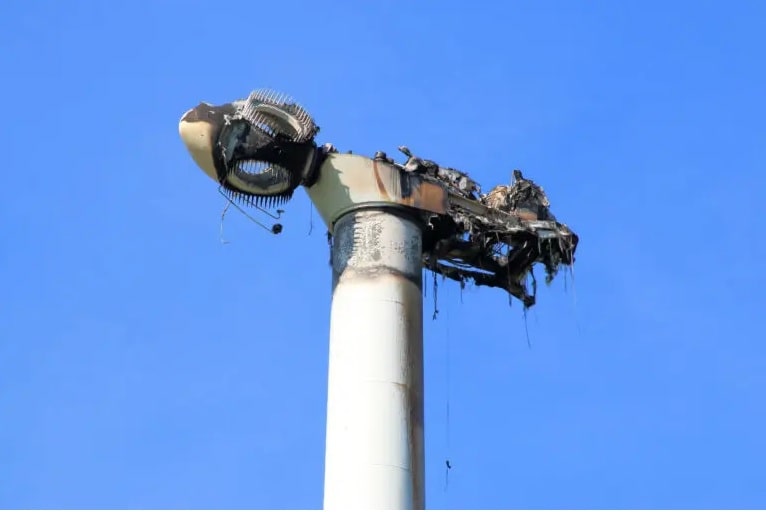
Wind turbine damaged by Arc Flash

Looking at the incidents and accidents above, arc flash hazard and fires due to electrical faults are happening on Wind Turbines.
Here at Electrical Safety UK, we have carried out Arc Flash studies on a number of Wind Farms.
Does a typical wind farm installation differ much from other industrial type installations?
In general, the high voltage (HV) network that the wind turbines are connected to have incident energy levels well above 8 cal/cm2. The main reason for this is that the power distribution network that wind farm is connected to, can supply a significant amount of arc fault current into an arc flash event on the HV network.
We find a similar effect with conventional power stations that tend to have elevated levels of incident energy due to the fault levels available from their grid connection as well as their generators.
Interestingly, the contribution to fault levels from the wind turbines themselves is limited, as there is a solid-state conversion between the generator and the rest of the network.
If you would like more information or help in carrying out an Arc Flash Study, why not get in touch with us, using the form below? There is no charge for our initial pre-assessment visit. We would be happy to come and see you to discuss your requirements and, if required, provide you with a fixed price proposal for an Arc Flash study.
(References: Caithness wind farm Forum, http://www.caithnesswindfarms.co.uk/)
Electrical Safety Management is our core business. We provide expert consultancy and advice services for blue chip organisations across Europe concerned with the safe management of risk associated with all electrical work activities.
Electrical Safety UK provide a multi-faceted holistic approach including a full electrical safety management programme, project management and policy documentation all bespoke to the client’s requirements including fully accredited and bespoke training courses and personnel assessment programmes.
2 Genesis Business Park
Sheffield Road
Rotherham
S60 1DX
Tel: 0800 652 1124
Tel: 01709 961 666
Email: [email protected]
Electrical Safety Providers
We protect substation engineers, asset managers, SAPS, cable jointers, overhead linesmen and utility workers with PPE and safety equipment: this includes insulating gloves, arc flash clothing, voltage detectors, insulating matting and portable earthing to ensure worker safety when carrying out repair and maintenance on LV-HV switchgear, transformers, substations and turbines.
All of our Cable Connection & Energisation Accessories including Medium & High Voltage joints, terminations, connectors and cleats are tested to the latest international standards and supporting ranges of professional installation tools are stocked to reduce incident, accident and downtime to plant and people.