Cable Rollers

Cable Rollers | Pulling Cables into Trenches
Rollers for LV, MV, HV & EHV Cable Installation
Straight line, bridge, corner, lead-in, manhole entry and suspension cable rollers for pulling cables into trenches, ducts, pits and substations. Suitable for LV, 11kV, 33kV, HV and EHV cable installation projects, with technical support available for selecting the correct roller type based on cable diameter, route geometry and installation method.
➡ Rollers are used to support and guide LV, MV & HV cables into open trenches without damaging cable sheaths and incurring overbending stresses on power cables, typically at LV (1000 volts), MV (11kV/33kV), HV (66kV) and EHV (132kV-400kV) voltages.
- Supply Scope | UK & export sales
- Applications | Trench, duct, manhole, lead-in, bend, gantry and substation cable installation
- Voltage Range | LV, 11kV, 33kV, HV and EHV cable projects
- Support | Technical selection support, quotations and datasheets available
Heavy duty rollers with zinc plated steel frames are used by medium/high voltage cable laying contractors for placement of power cables directly into the bottom of cable trenches – rollers and cable support guides available for ladder rack, gantry and cable tray applications of armoured and unarmoured LV-HV cables.
Overview of Roller Product Range
- TRP76 – Narrow Trench
- HSP125 – Straight Line
- HBSP125 – Bridge
- CR1 – Angle Corner
- CR2 – Skid
- CR4 – Triple Corner
- CR5 – Horizontal Corner
- CR6 – Vertical Corner
- DR1 – Draw Off / Lead-In
- VR1 – V Type Lead-In
- SR5 – Suspension
Shop Types
- Straight Line Rollers – for open trench cable laying and horizontal runs
- Narrow Trench Rollers – for smaller trench widths and LV armoured cable work
- Bridge Rollers – for cable routes crossing existing laid cables
- Corner Rollers – for route bends and difficult changes of direction
- Lead-In & Draw-Off Rollers – for guiding cable from drum into trench
- Manhole & Duct Entry Rollers – for pits, ducts and cable access points
- Suspension Rollers – for elevated cable installation onto gantries and structures
- Vertical / Limited Bend Radius Rollers – for larger MV-HV cable pulls
Need help selecting the correct roller? Contact Thorne & Derrick for technical guidance based on cable diameter, route layout and installation method.
Why Use Rollers?
- Protect cable sheaths from trench debris, edge damage and abrasion
- Help maintain correct bending radius during cable installation
- Reduce drag and improve pulling efficiency across the route
- Support safer cable handling for LV, MV, HV and EHV cable pulls
- Provide controlled cable guidance into trenches, ducts, manholes and support structures
Rollers
For Open Trench Laying Of LV MV HV Cables
Utilities recommend rollers should always be used when pulling cables.
Rollers move easily on their free running spindles increasing cable support, labour productivity and site safety for cable pulling teams.
- Straight Horizontal Cable Runs
Rollers are generally placed into the trench to prevent the LV-HV cable from incurring damage to the sheath from trench debris or aggregate. The spacing of rollers depends on the cable type being installed and the pulling tension along the route.
A leading roller should be used to support the cable over the entire drum width immediately before being fed or pulled into the trench. Slide corner rollers are used on bends and “hoop” type straight rollers along horizontal cable run sections.
Trench rollers available to handle up to 125mm diameter cables for standard LV, 11kV and 33kV cable pulls into underground trench – narrow trench rollers with 76mm diameter available for LV armoured (XLPE SWA) applications.
Rollers with inverted skid plates can be used to prevent the cable rising into obstructions.
At cable duct entries a bell mouth should be attached at each end with rollers positioned to give central access into the bell mouth.

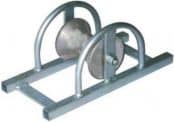
Straight Rollers – HSP125 up to 125mm diameter cables | LV MV HV
Which Do I Need?
- Straight Line Rollers – for open trench horizontal cable runs
- Bridge Rollers – for guiding cable over an existing cable already laid in trench
- Corner Rollers – for bends, corners and route changes
- Lead-In Rollers – for guiding cable from drum into trench or duct entry
- Manhole & Duct Entry Rollers – for pits, manholes, duct mouths and access points
- Suspension Rollers – for gantry, beam and elevated installation routes
- Vertical / Large Radius Rollers – for larger diameter MV-HV cables where bend radius is limited
High Voltage Cable Pulling Installations
Rollers provide correct levels of support and stability to ease the installation of medium/high voltage cables into cable trenches – here 3 x cable drums of 33kV power cables await laying into the trench with both standard rollers and lead-in types positioned to commence and handle the 33kV cable pull.

- Bends & Corners In Cable Routes
Rollers with skid plates of a radius greater than the cable minimum dynamic bending radius should be used on all bends.
Before commencement of cable pulling, initial tension of the cable should be taken up to remove the slack out of the bond wire – rollers along the trench route should be visually checked for sharp edges or projections and adjusted to line up with the taut bond and a final check should then be made to ensure that utility or cable services which may be abraded by the cable during installation are suitably protected.
When final roller positions are confirmed and all other services are suitably protected the cable pull can be started.
Medium Voltage & Substation Cables

Rollers | here is a substation site installation of 11kV medium voltage Triplex power cables pulled and laid effectively into an underground cable trench using a roller system

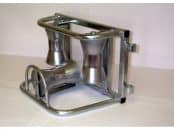
Corner Rollers With Skid Plates – CR2 up to 75mm diameter cables | LV MV HV
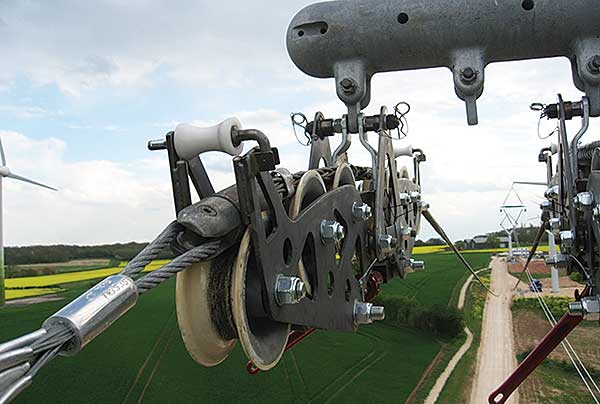
Array Rollers for Overhead Conductors
This innovative cable conductor installation system eliminates the need for a lifting system – array rollers replace standard running blocks with a new type of proven roller, featuring an adjustment that allows the conductor to be raised and lowered directly into the suspension shoe. As a result, operation times and the need for large amounts of pulling or stringing equipment are substantially reduced. The use of the Array Roller has already been proven on the National Grid network, delivering substantial efficiencies when removing or replacing suspension fittings on standard suspension arrangements. With a time saving of 80%, roll-out across the network should deliver reduced overall project timescales.
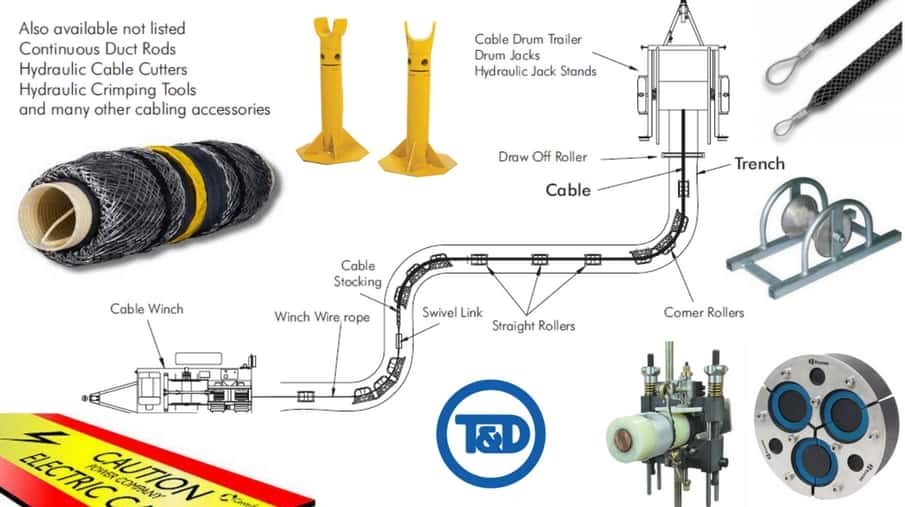
Typical Cable Pulling Layout – Open Trench
Cable Pulling & Laying Products lv mv hv
Complete range of LV, MV and HV cable pulling products for installation into trench or duct including LV, 11kV/33kV medium voltage (MV), 66kV/132kV high voltage (HV) and EHV transmission and distribution cables up to 400kV.
Pit Lifter Equipment | Ancillaries to Support Cable Installations

Cable Lubricants
- S001072 Heavy Duty Manhole Key
- S001073 4″ Manhole Key
- S001463 Replacement Hook
- S003000 20″ Pit Lifter
- S003001 D Pit Lifter
- S003002 No.2 Pit Lifter
- S003031 Lifting Key 9758
- S003575 Carriageway Key
- S007906 4 Way Utilities Key
- S007907 4 Way Pit Lifter
Popular Types
- Straight Line Rollers
- Bridge Rollers
- Corner Rollers
- Lead-In Rollers
- Manhole Rollers
- Suspension Rollers
FAQs
What roller do I need?
The correct roller depends on cable diameter, route geometry and installation method. Straight line rollers are used for trench runs, corner rollers for bends, and lead-in or manhole rollers for duct and pit entry points.
When should rollers be used?
Rollers should be used when pulling LV, MV, HV and EHV cables into trenches, ducts, pits and substations to reduce sheath damage, maintain cable support and improve pulling efficiency.
What roller is used for bends in a cable route?
Corner rollers, skid rollers and triple corner rollers are typically used on bends and route changes to guide the cable while helping maintain the required bend radius.
What roller is used for manhole or duct entry?
Manhole rollers, bellmouths, edge rollers and lead-in rollers are used to guide cable safely into ducts, pits and access points while reducing abrasion at the entry edge.
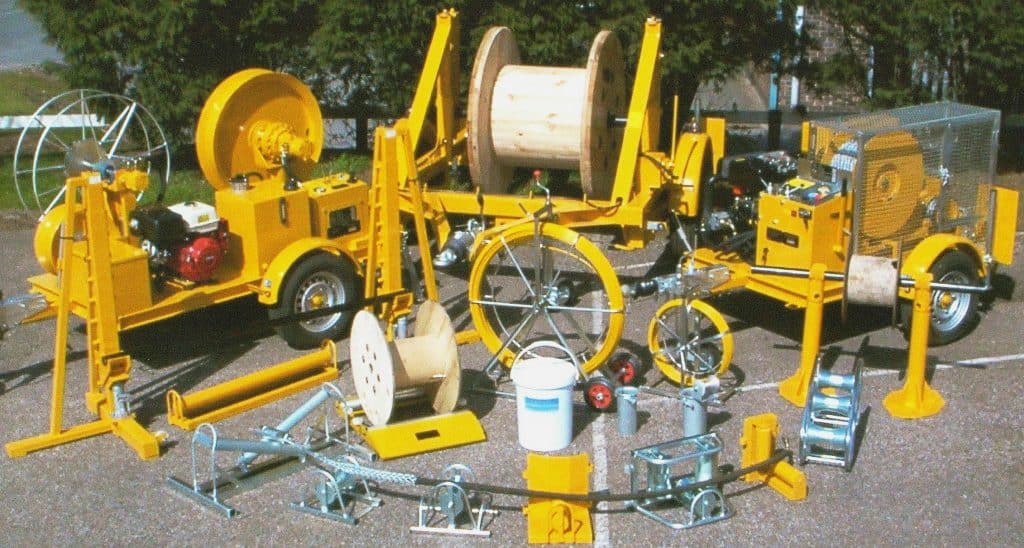
Drum Lifting Jacks | Duct Rods | Cable Socks | Lubricant | Duct Seals | Cable Duct
 Cable Rollers – Cable Trench Rollers LV MV HVDownload