Blog
Splicing, Wiping & Laying Submarine Cable In San Francisco Bay (1936)
March 30th, 2021-
uploaded by Chris Dodds | Sales Marketing Manager at Thorne & Derrick
Picture the scene, its 1936 and in San Francisco harbour a ship arrives from Baltimore having travelled through the Panama Canal bringing with it 6 reels of submarine telephone cable which is transferred to a waiting barge. After a long journey the final resting place is the floor of San Francisco Bay to provide telephone communications to America.
Unique skills and techniques are shown throughout the film.
The underwater cable circuit must be installed by cable splicers with protection against leakage. The protection can be seen when the camera zooms in as it pictures two cable lengths being spliced together – multiple layers of water-blocking jute and double armouring protect the cables against water ingress.
Splicing is no small task – 1,056 wires must be spliced per cable. This wire is separately insulated and the boiling out process with petrolatum removes any moisture. The lead sleeve is then pulled over the cable splice. The lead sleeve becomes very hot as it is to be made part of the protective metal cable jacket.
The cable engineers need to make sure the cable splice is airtight so they carry out testing investigations. A hole is made in the lead and nitrogen gas at twenty pounds pressure per sq inch is forced through the hole made to surround the wires just spliced. Soap suds are used to check whether any gas escapes as the soap will bubble at the exact point.
Corrosion is minimised as the cable gets two overcoats to reduce the risk of salt water on the metal. Finally the two miles of armoured cable is added to a drum before it is transported out to sea.
Thorne & Derrick
T&D are Specialist Distributors to UK Distribution Network Operators (DNO’s), NERS Registered Service Providers, ICP’s and HV Jointing Contractors of an extensive range of LV, MV & HV Jointing, Earthing, Substation & Electrical Eqpt – this includes 11kV/33kV/66kV cable joints, terminations and connectors for both DNO and private network applications.
Contact our UK Power Team for competitive quotations, fast delivery from stock and technical support or training on all LV-HV products.
All international sales enquiries can be serviced and supplied by our Export Power Team.
Key Product Categories: Duct Seals | Cable Cleats | Cable Glands | Electrical Safety | Arc Flash Protection | Cable Jointing Tools | Cable Pulling | Earthing | Feeder Pillars | Cable Joints LV | Joints & Terminations MV HV


ANSI Connectors | Screened Separable Connectors from Cooper Power Systems
March 30th, 2021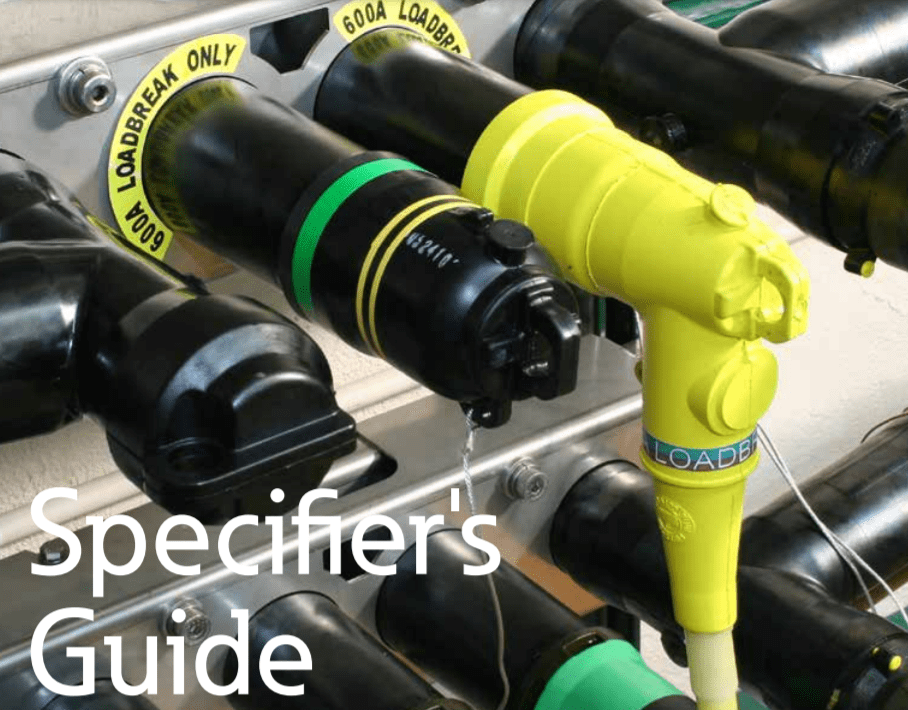
ANSI Connectors | Medium Voltage Power Cable Connectors for Transformers & Switchgear Bushings from Cooper Power Systems
Cooper Power Systems Separable Connectors (ANSI) & Bushings are rated for 15kV, 25kV and 35kV medium voltage power systems in accordance with the following ratings.
What is ANSI?
The American National Standards Institute is a private non-profit organization that oversees the development of voluntary consensus standards for products, services, processes, systems, and personnel in the United States.
ANSI Separable Connectors are waterproof cable connectors that can be easily installed – these cable accessories use imported high quality EPDM rubber for reliable field performance and are widely used in pad-mounted switchgears and pad-mounted transformers on MV Power Systems.

Connectors & Bushings from Cooper Power Systems
For further information download the Cooper Power Systems catalogue.
Standard Interfaces For Separable Connectors and Components
Certified Tests and Performance
Conductor Sizing
AEIC Insulation Diameter Chart
ICEA Insulation Diameter Chart
200 A Loadbreak Connectors
200 A Deadbreak Connectors
200 A Stacking Dimensions
Clēēr 600 A Loadbreak Connectors
600/900 A Deadbreak Connectors
600/900 A Components and Replacement Parts
600/900 A Connector Systems
600 A Stacking Dimensions
Junction Bars/Cable Transition and Oil Stop Modules
Splices
Underground Surge Arresters
Tools & Maintenance
Bushings
Fusing
MagneX Single-Phase Interrupter
MagneX Three-Phase Interrupter
Faulted Circuit Indicators
Sectionalizing Cabinets
Part Number Index
Support Available When You Need It
Product Application Overhead and Underground Distribution Systems
Connectors
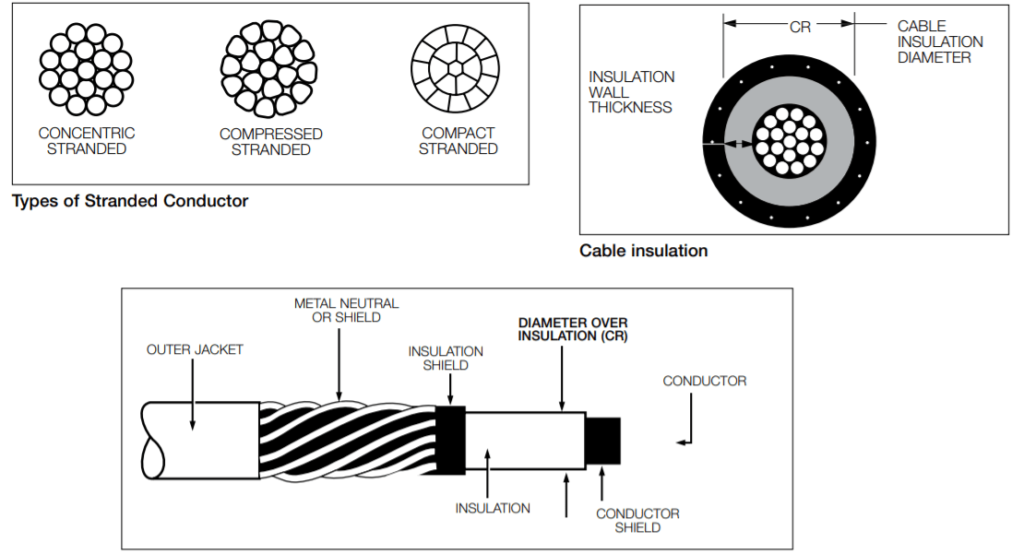
Eaton’s Cooper Power Systems 200 A and 600 A connector products are designed for applications on XLPE, EPR or other solid dielectric insulated underground electrical cables. In order to maintain a reliable termination, the cable accessories must be sized correctly with the cable conductor size and cable insulation diameter.
The cable conductor size is used to determine the compression connector used. Proper sizing is important to ensure reliable current transfer from the underground cable conductor to the elbow connector.
Conductor diameters are dependent on the conductor size in AWG or kcmil, and conductor type (stranded, compressed, compact or solid). The cable insulation diameter (the diameter over the insulation) is critical because it is important to maintain a tightly sealed fit between the cable insulation and the elbow housing at the cable entrance. As the insulation thickness changes, so must the range of the cable accessory. Cable insulation diameter can be determined from the cable manufacturer’s specification, or by referring to pages 8 (for cable made to the AEIC Standard including the ± 0.030 inch tolerance) or 9 (for cable made to the ICEA Standard) for minimum and maximum diameters.
ANSI Connectors | MV Medium Voltage Power Cable Construction
Thorne & Derrick
Contact us for Competitive Prices & Fast Delivery from Stocks for Heat Shrink, Cold Shrink & EPDM Rubber Connectors, Joints & Terminations up to 66kV.
Thorne & Derrick International are specialist distributors of LV, MV & HV Cable Accessories, Jointing, Substation & Electrical Equipment – servicing UK and global businesses involved in cable installations, jointing, substation, overhead line and electrical construction at LV, 11kV, 33kV, 66kV and EHV.
Stocking & Supplying | Duct Seals | Cable Cleats | Cable Glands | Electrical Safety | Arc Flash Protection | Jointing Tools | Cable Pulling Eqpt | Earthing & Lightning Protection | Feeder Pillars | Cable Joints LV | Joints & Terminations MV HV
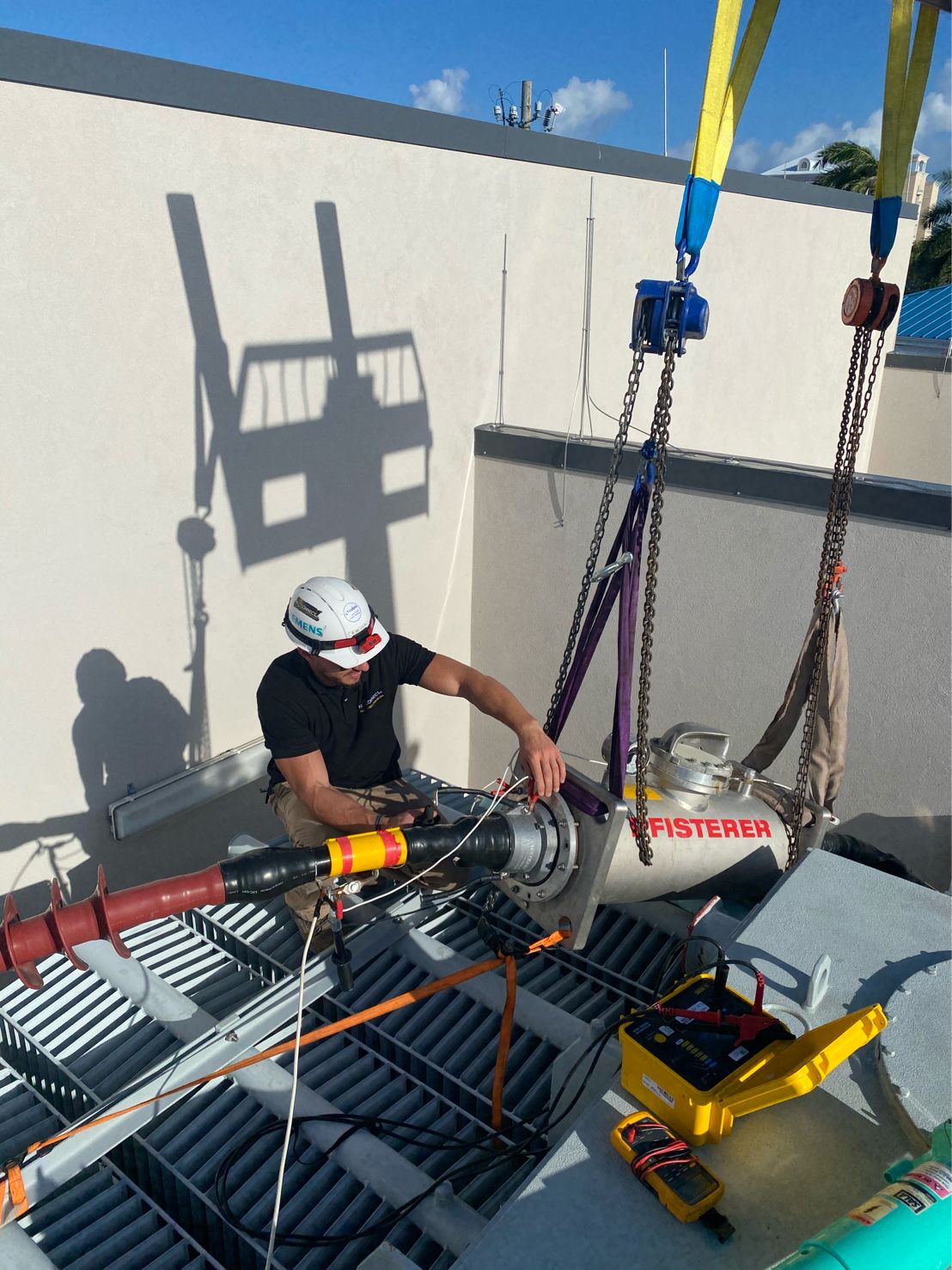
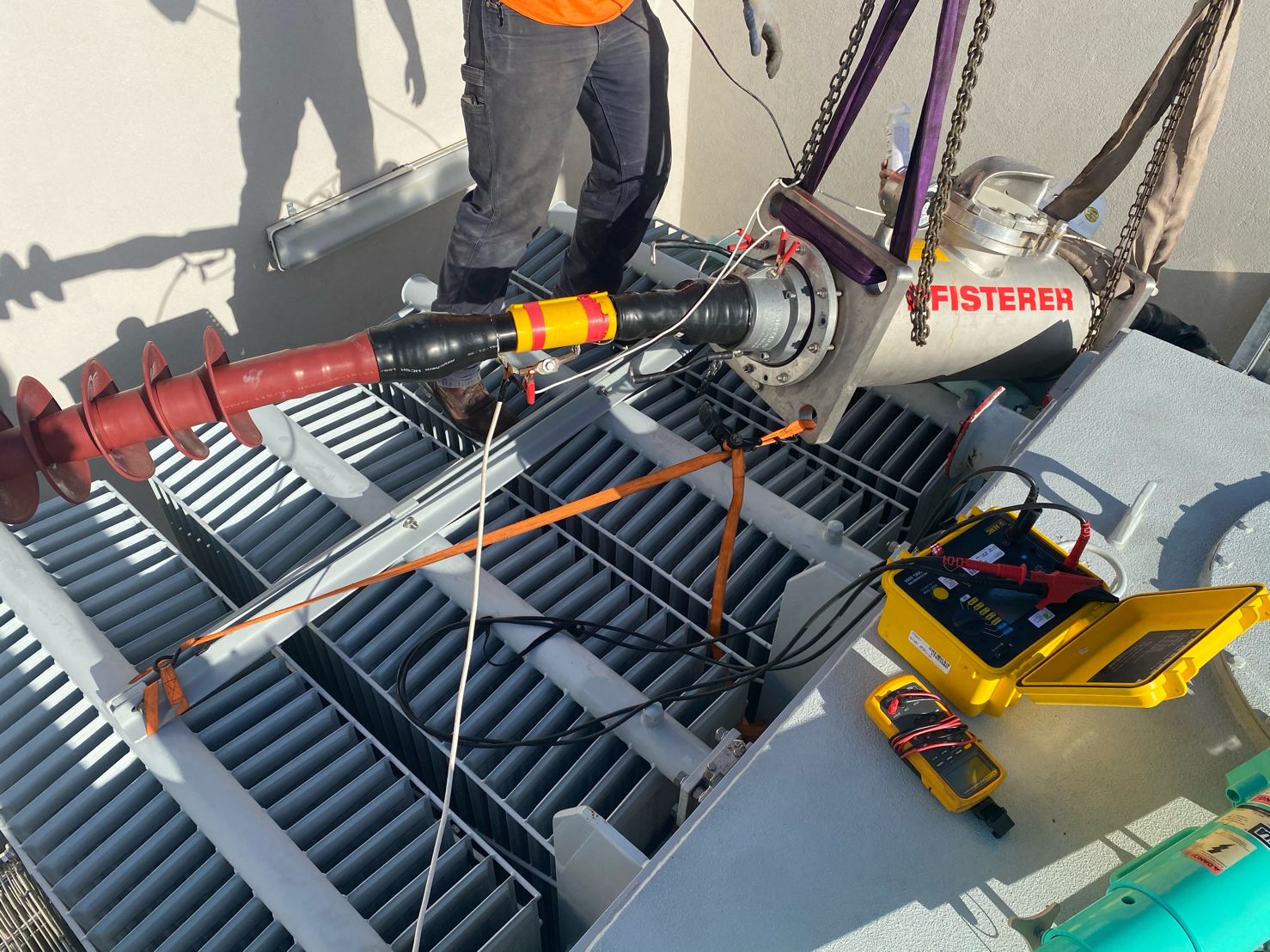
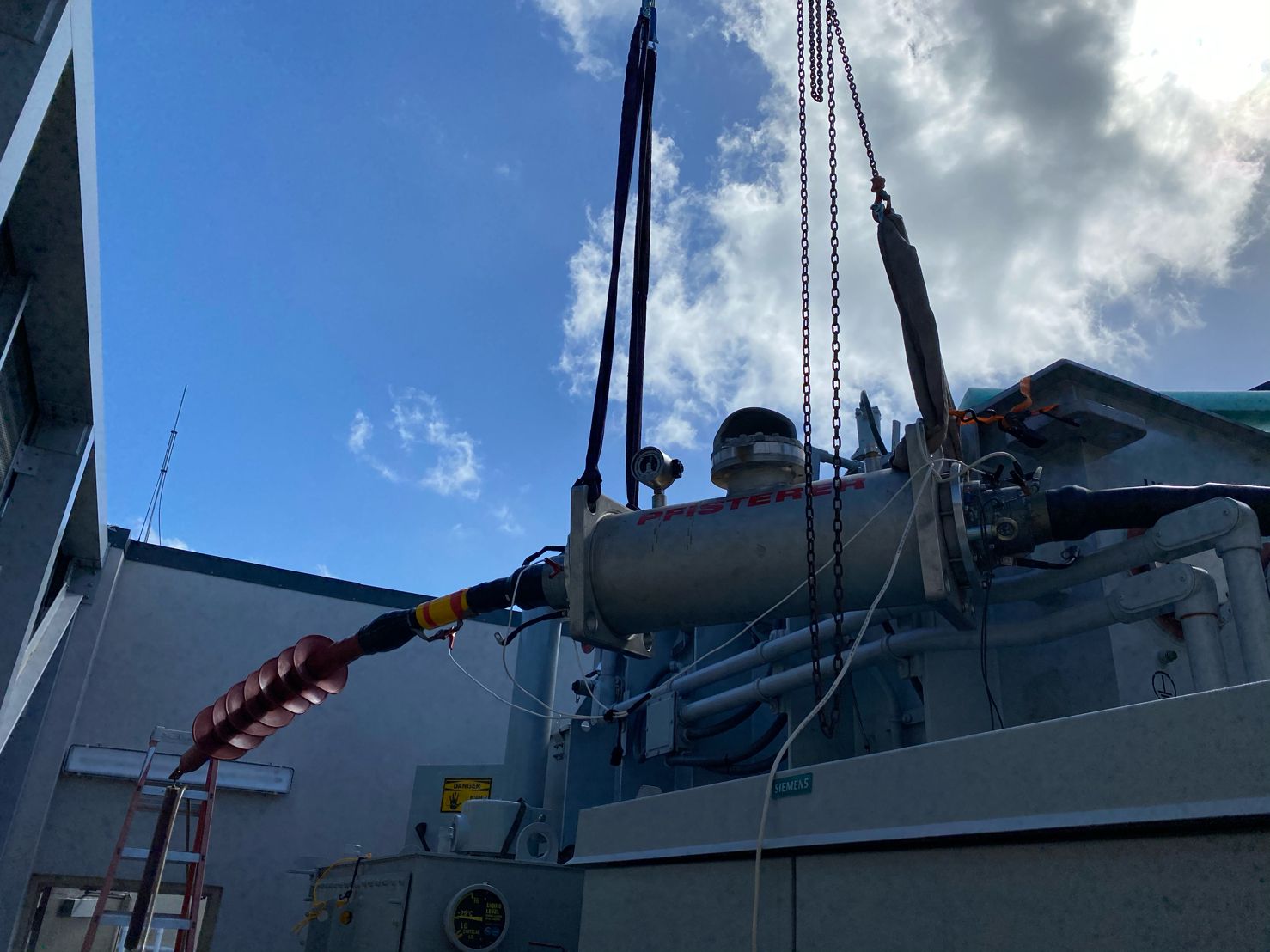
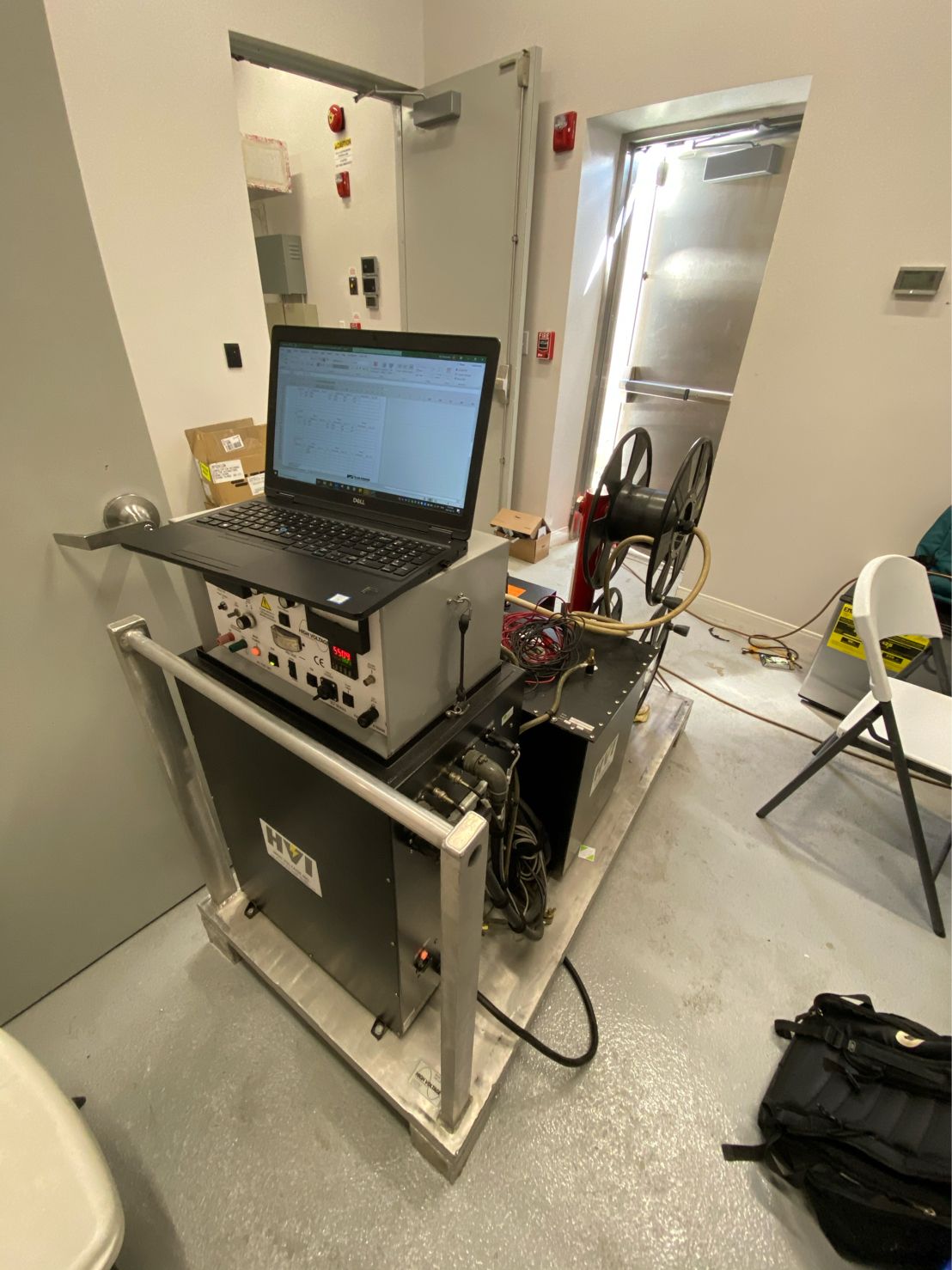
VLF Testing Of 69kV Cables With Pfisterer SF6 Cable Joint
March 30th, 2021Images Courtesy Of: Bruno Da Silva – Owner at HV Connect LLC – MV, HV, EHV Cable Splicing & Testing
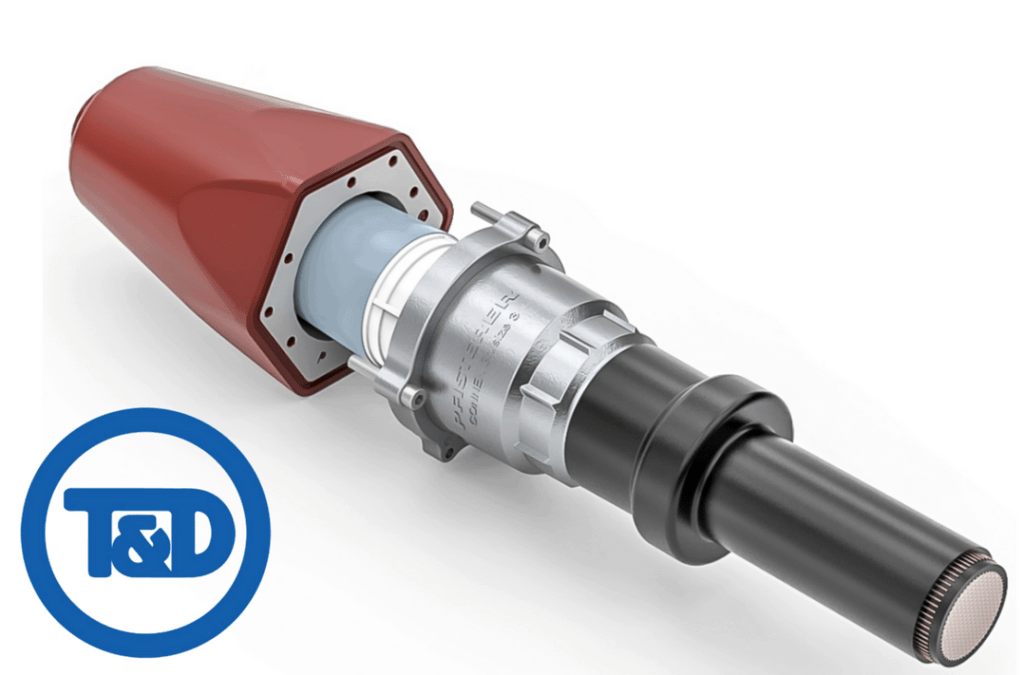
Pictured: Assisting Team Power Solutions in the Cayman Islands for the VLF Testing of 69kV cables with PFISTERER Size 4 SF6 cable joint, after the cable splicing.
MV Connex Products | Ex Stock Thorne & Derrick

Jointers blog
Subscribe now to our POWER NEWSLETTER– a monthly email circulation packed with news, projects, videos, technical tips, training information, promotions, webinars, career opportunities and white papers.
Includes access to our popular JOINTERS BLOG with contributions from utility professionals, linesmen and cable jointers working on MV HV EHV cables and overhead lines typically at 11kV, 33kV, 66kV and up to 132kV.
15,000+ Subscribers. ➡ 
MV Cable Leads | Pre-Terminated Medium Voltage Cable Leads for 33kV Power Networks
March 30th, 2021
Cable Leads MV 33kV
MV Cable Leads
Pre-assembled custom, ready-to-install MV cable leads manufactured by Nexans are available equipped with Interface “A” to “F” separable connectors and terminations (Heat Shrink, Cold Shrink and Slip on). Cable types available are standard MV XLPE and Class 5 Flexible cables. Just contact Thorne & Derrick and specify connector/termination type, cable type and length and we provide competitive prices and short lead times for the delivery of custom MV cable leads – assembled and tested. Typical applications for cable leads include connecting between MV distribution transformers and electrical switchgear. Testing options available include Megger, HI Pot (AC withstand to 72kV) and partial discharge (PD). Contact us with your requirements.
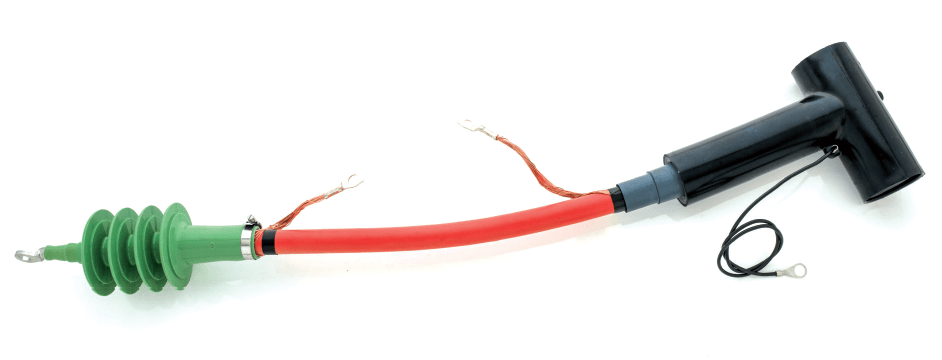
MV Cable Lead | Here a medium voltage (MV) cable in shown terminated using Nexans AFN Slip-on Cold-applied Cable Termination with Screened Separable Connector for connection to MV switchgear, transformer or electrical equipment up to 33kV
Thorne & Derrick
Nexans Main UK Stockist & Distributor
Contact us for Competitive Prices & Fast Delivery from Stocks for Heat Shrink, Cold Shrink & EPDM Rubber Connectors, Joints & Terminations up to 66kV.
Go to our Price List and contact us with your enquiries.
Heat Shrink Cable Accessories for 11kV Triplex Cables
Thorne & Derrick International are specialist distributors of LV, MV & HV Cable Accessories, Jointing, Substation & Electrical Equipment – servicing UK and global businesses involved in cable installations, jointing, substation, overhead line and electrical construction at LV, 11kV, 33kV, 66kV and EHV.
Stocking & Supplying | Duct Seals | Cable Cleats | Cable Glands | Electrical Safety | Arc Flash Protection | Jointing Tools | Cable Pulling Eqpt | Earthing & Lightning Protection | Feeder Pillars | Cable Joints LV | Joints & Terminations MV HV

Euromold MV HV | Cable Terminations, Connectors, Elbows & Joints
MV ‘Backup’ Fuses (Current Limiting Type) Are Not Rated For ‘Overload’ Current Interruption
March 30th, 2021MV ‘Backup’ Fuses
From IEEE Std C.37.48.1
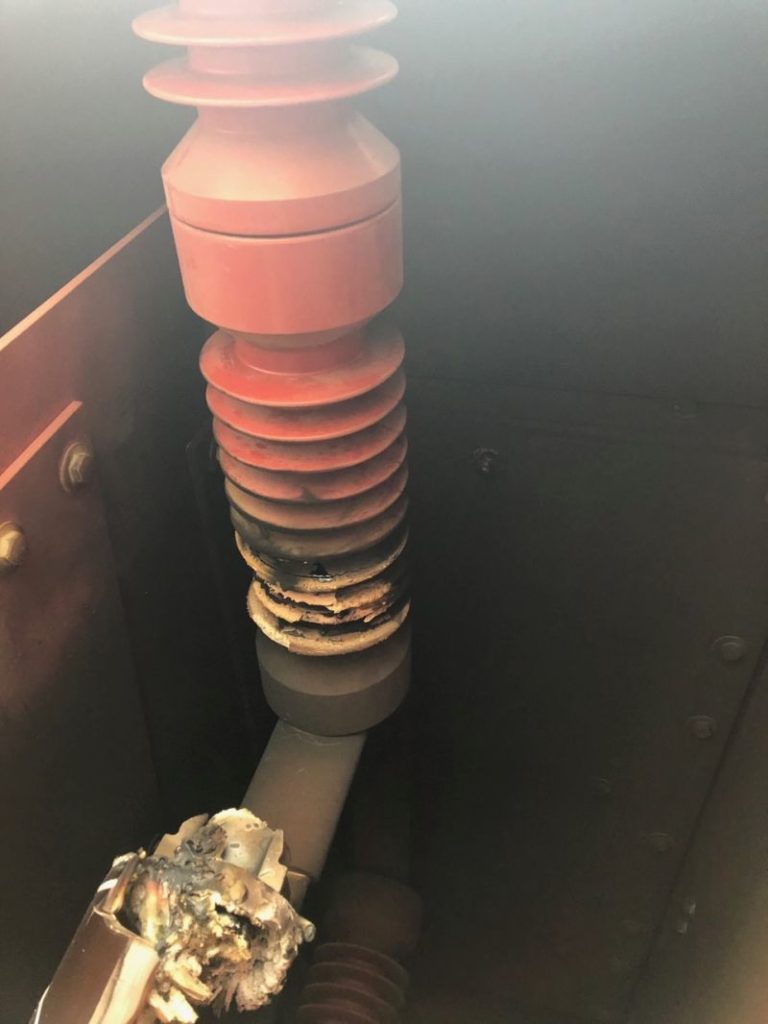
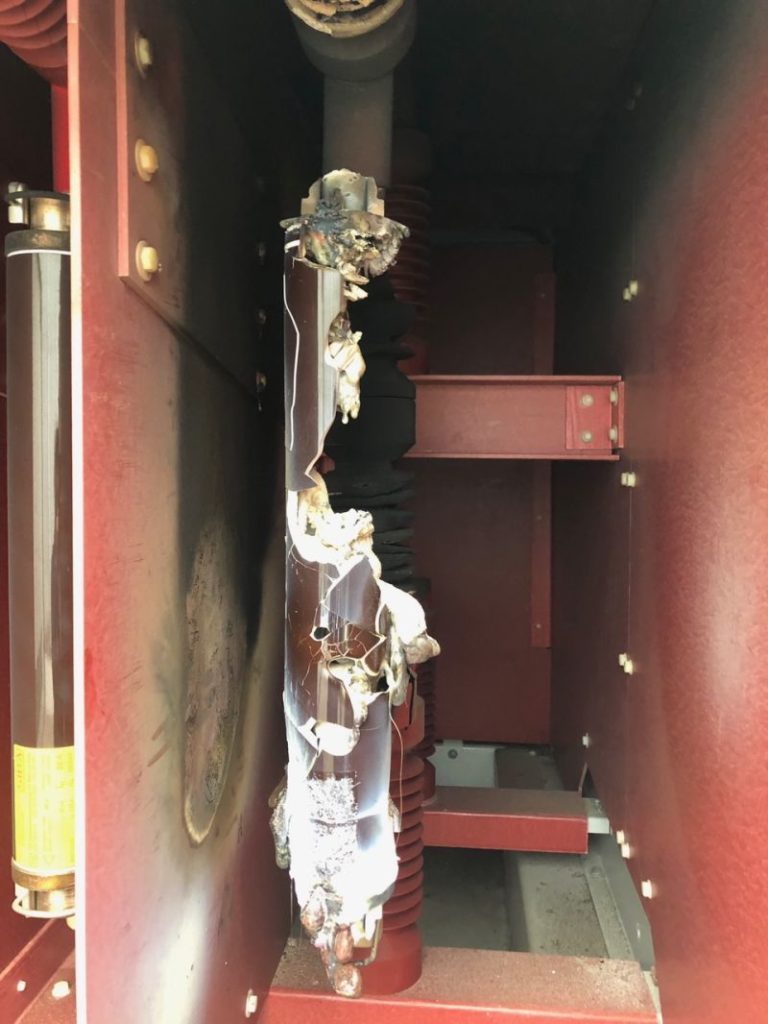
“MV backup fuses can interrupt any current between its rated minimum interrupting current and its rated maximum interrupting current. If a backup fuse is melted open at a current level less than its minimum interrupting rating, the fuse is not required to, and may not successfully, interrupt the circuit. In this case, the fuse melts open at only a few places, often a single point, along the length of the element. Burn back of the element proceeds very slowly, as the arc heat causes the sand to melt and form a resistive fulgurite. During arcing conditions, a large amount of heat is released in a limited area within the fuse. This heat can prevent the sand and the resultant fulgurite formed in the sand from developing dielectric properties needed to withstand circuit voltage. As a result, the fuse may fail to interrupt the current and be destroyed as it attempts to clear.”
Solution(s): Include a protective device in series which is rated for overload operation (increase back-up fuse size to get out of the zone), employ full range fuses.
In this case, an upstream SF6 breaker was able to be coordinated with the needs of the CL fuse – here the fuses are immediately ahead of the transformer primary.

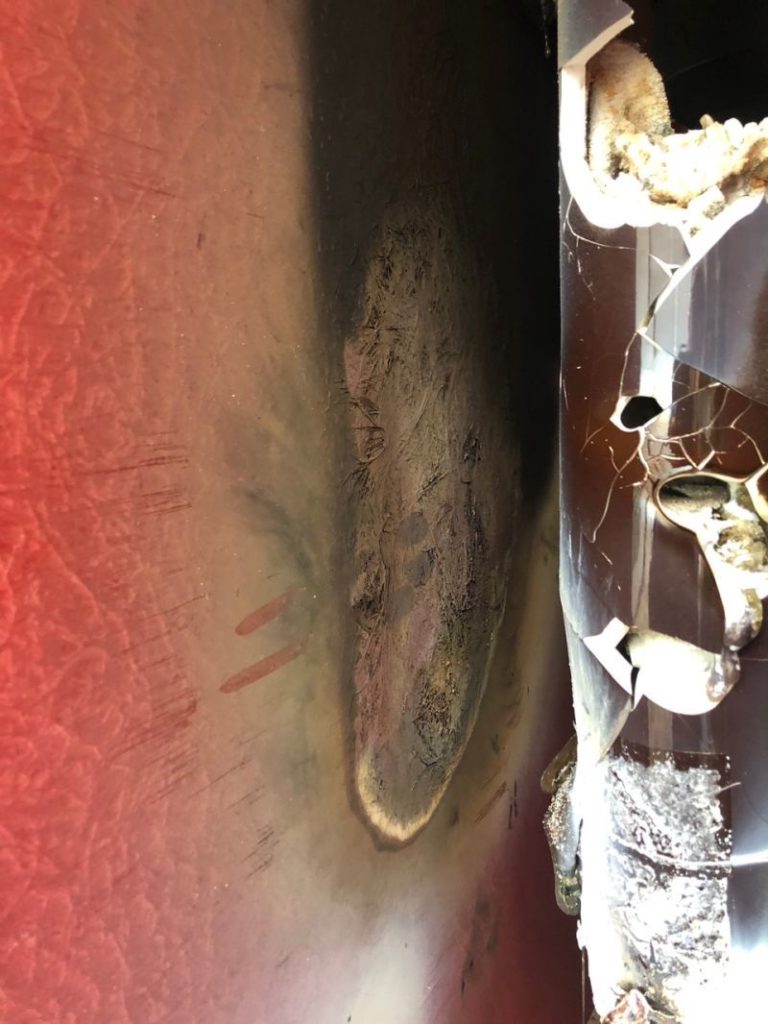
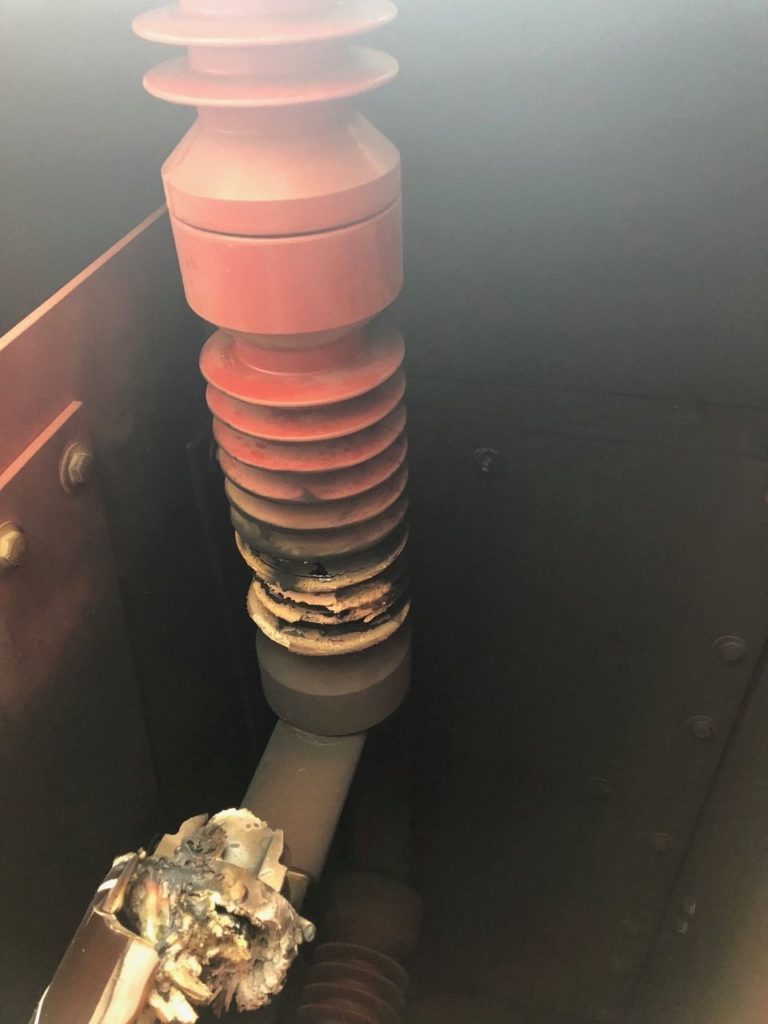
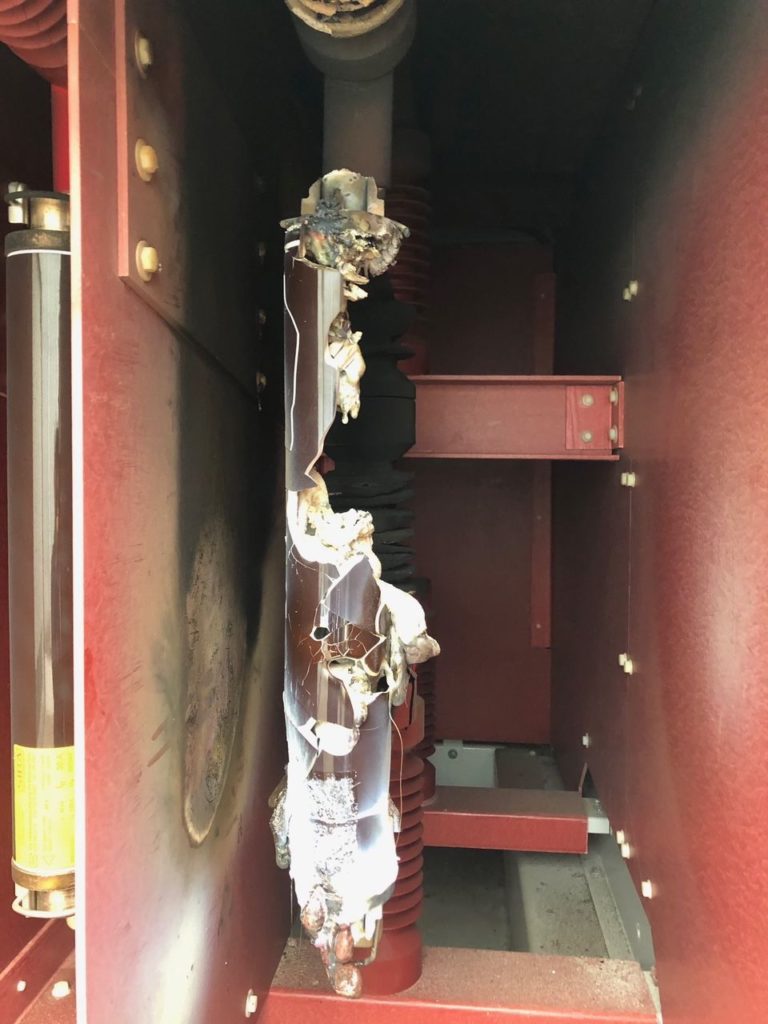
Guest Post by Matthew Denis | Principal Engineer at Rockwood Engineering (Ontario Canada)
Services | Medium Voltage Electrical Power System Design & Analysis | Power System Analysis including: Protection Coordination, Arc Flash, Short Circuit, Harmonic & Load Flow | Power Quality Assessment/Mitigation | Power Distribution Design (Industrial, Utility, Commercial, Agricultural), Medium Voltage Power Systems Design
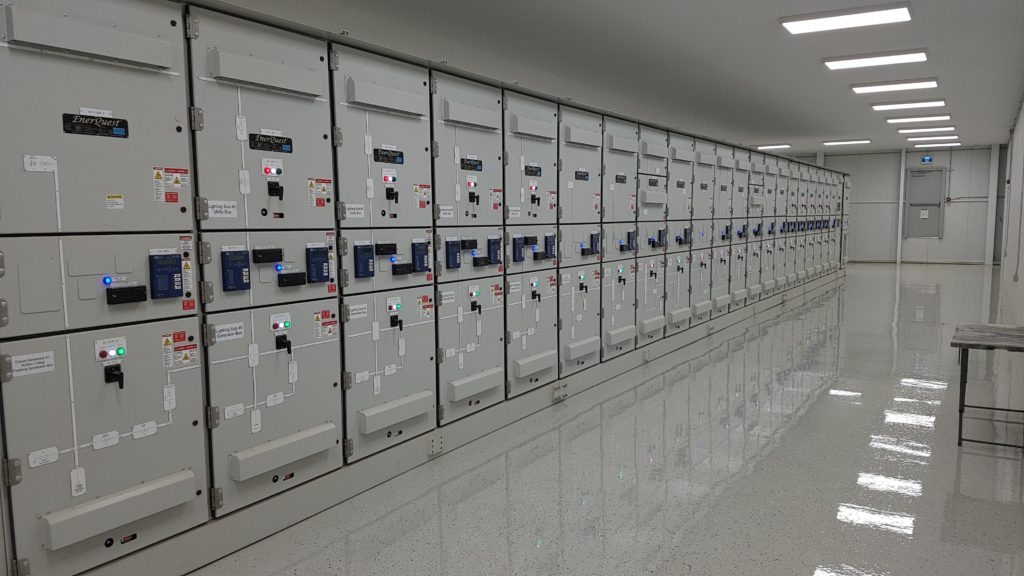

MV Fuses | Thorne & Derrick distribute the complete range of ABB Medium & High Voltage Fuses (MV-HV) for the protection of 11kV & 33kV switchgear, transformers, cables and substations.
Definition: MV Back-up Fuses by ABB
Current limiting back-up fuses. The current limiting fuse family is generally composed of three different fuse groups: back-up fuses, general purpose fuses and full range fuses. All of them limit the value of prospective short-circuit currents during the interruption process, thereby extending the life time of nearby installed electrical equipment. The main difference is in the minimum breaking current that characterizes the lowest fault current that the fuses are capable of interrupting. This value is generally highest for back-up fuses, slightly smaller for general purpose fuses and smallest, with the value close to the minimum melting current, for full range fuses. But reaction time is critical for the protection function. That is why back-up fuses, with an interruption time for the minimum breaking current in the range of a few seconds down to a few tense of milliseconds, are the most commonly used. The total clearing time in cases of high short-circuit currents is even shorter i.e. only a few milliseconds. That is why back-up fuses can be used as typical overload protection elements. General purpose and full range fuses capable of interrupting even the smallest values of currents can only be considered as over current devices since the interruption time is greater than one hour. Therefore, these types are used rarely and are usually recognized as a separate element of protection, without any linkage to the opening function of load break switch. ABB current limiting fuses have low minimum breaking currents, i.e. close to three times the rated current In.