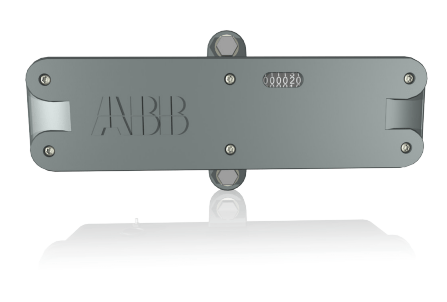
Surge Counters are used to monitor the health of Surge Arresters and protect against potentially damaging events which could lead to deterioration and ultimate overload. It is important to also schedule regular checks of surge arresters including visual inspection and diagnostics to detect and prevent a costly medium voltage power outage.
Well-designed and tested, ABB surge arresters are maintenance-free and can reasonably be expected to have a long service life. However, the condition of these surge arresters should also be monitored to ensure the most ultimate protection against a costly unplanned power outage. This can be achieved using the ABB EXCOUNT range of surge counters and monitors.
Surge Counters
Surge registration
The primary reason for the use of surge counters on modern gapless ZnO arresters is to check if a particular transmission line or phase suffers from an exceptionally high number of overvoltages leading to arrester operation — lightning faults on a line, for example. If this is the case, whilst it validates the need for the arresters, use of some preventative counter measures may be warranted to limit the number of surges. A sudden increase in the counting rate may also indicate an internal arrester fault, in which case the arrester should be investigated further.
However, simple surge counters tell only part of the story, as they only register the number of surges according to their operating characteristic. The user therefore has no way of telling the magnitude of the surge and if it was significant, nor when it occurred and if it was coincident with a system event.
Leakage current measurement
Surge counters can be complimented with the substation facility to measure leakage currents (total and/ or resistive), with the intention of monitoring and diagnosing the condition of the arrester and its state of fitness for continued service. However it is important to understand the validity of the information provided.
At continuous operating voltage (Uc), a metaloxide varistor acts as a capacitor, leading to a predominantly capacitive component of current and a significantly smaller resistive part. For a complete surge arrester, the capacitive current is further dependent on stray capacitances, pollution currents on the insulator surface, number of varistor columns in parallel and the actual operating voltage. Meanwhile the small resistive component of the leakage current is temperature and voltage dependant.
Since the capacitive component of the current dominates so greatly, the total leakage current measured on a basic mA-meter will be very sensitive to the installation; making interpretation of the readings difficult. Furthermore, the capacitive current does not change significantly due to deterioration of the voltage-current characteristic of the surge arrester. Consequently, measurement of capacitive current cannot reliably indicate the condition of metal-oxide arresters. Nevertheless, increasing values may be of some use in indicating that cleaning of the insulators is necessary.
Instead, it is generally recognized (IEC 60099-5) that the only reliable indicator for the condition of a gapless arrester that can be assessed during normal service is to measure the resistive component of the leakage current (or estimate it from the 3rd harmonic).
The obtained value may then be compared with the maximum allowable resistive current as given by the manufacturer under prevailing service conditions i.e. temperature and applied voltage.
If a metal-oxide varistor ages or is damaged by impulses etc, the arrester resistive leakage current, and hence power losses, increase permanently. This may result in an increase in temperature, which in turn, increases the leakage current and so on until a so-called thermal runway occurs. Early detection of a possible harmful increase may prevent a failure and subsequent unplanned shutdown. Hence, to provide true diagnostics, a good monitor must be able to detect the arrester leakage current and isolate and measure the resistive component flowing internally.
EXCOUNT Surge Counters | ABB
Diagnostic plan
A surge arrester does not contain any moving parts or items that can break.
Consequently there is nothing to maintain, adjust, correct or repair, which is why there is normally no need to perform any form of periodical checking or monitoring. In general, a correctly chosen and installed arrester is maintenance free during its entire lifetime. A correctly chosen arrester in this context means that its electrical and mechanical characteristics are matched to actual service conditions.
Nonetheless, since external factors can place stresses on the arrester, potentially leading to its deterioration and ultimate overload, it may be prudent to draw up a schedule for regular checks. Such consideration is all the more important if an unplanned outage is unacceptable for reasons of system stability or economics. The older the arrester, the more regular these checks may need to be, since the statistical risk for overload increases with age.
As a guide, the following strategy is proposed to be made at regular intervals as required and determined by site availability and importance:
Visual inspection and possible cleaning
Diagnostics in advance of the designated lighting season and thereafter following periods with bad weather conditions.
Diagnostics after special fault conditions causing flashover in the network or TOV’s of high amplitude and/ or long duration.
Because of their nature, old-style gapped arresters should be removed as soon as possible as part of a scheduled replacement program. Their age and inherent design does not warrant detailed evaluation. Early models of gapless arresters may require additional visual checks to look for signs of mechanical or physical deterioration as well as monitoring of the internals. Newly purchased arresters can also benefit from diagnostic monitoring right from first installation since this permits easy trend analysis to detect potential deterioration later on in its service life.
EXCOUNT draws upon over 80 years of experience by ABB in the development of arresters and associated accessories. Safety, functionality and longevity are key elements which are given priority in selection and design of components. The EXCOUNT range has not neglected short-circuit safety which lies inherent in the design concept.
Minimized risk for injury in case of accidental contact during surges
Maintenance Free
Sealed components
Requires no external power supply (except for EXCOUNT-III)
Long Life
Moulded components, non-sensitive to humidity or temperature variations
Universal Application
All makes and types of gapless surge arresters.
All weather and temperature conditions.
Design
The use of an impulse current transformer with a single-turn primary ensures that the voltage drop across the counter is negligible, even at the highest impulse currents encountered in service. This leads to added personnel safety and no increase in the protection level of the arrester. Since no gaps or series impedance are used, there is no risk of internal arcing and consequent explosive failure in the event of a short-circuit following an arrester failure.
One further common feature with the entire EXCOUNT family is that all internal components are fully encapsulated in polymer. This provides sealing to IP67, which ensures no harmful ingress of dust or moisture as well as providing personal safety through complete protection against contact with the internals.
EXCOUNT is available in different variants, depending on the user’s needs: simple, basic or extensive. Contact Thorne & Derrick for more information.
T&D are Specialist Distributors ofLV MV HV Cable Installation, Jointing, Substation & Electrical Equipment– we supply companies in the onshore and offshore wind, solar, rail, oil/gas, data centre, battery storage and utility sectors with products to enable the energisation, operation and maintenance of underground cables and overhead lines.
HV Joints Terminations Connectors | 11kV/33kV up to 66kV Ex Stock
Protection of MV HV Medium High Voltage Cables & Power Systems
ABB introduces the next generation of monitoring equipment for surge arresters: EXCOUNT-III, utilising unique features previously unseen on the market.
Interest for online surge arrester monitoring is growing, and so the EXCOUNT-III Surge Counters have been designed to fulfil this need by providing the user with remote real-time monitoring of arresters as well as useful input to the insulation co-ordination of the station as a whole.
What are Surge Counters?
Surge Counters are used to monitor the health of Surge Arresters and protect against potentially damaging events which could lead to deterioration and ultimate overload. It is important to also schedule regular checks of surge arresters including visual inspection and diagnostics to detect and prevent a costly power outage.
The EXCOUNT surge counter range draws upon over 70 years of experience by ABB in the development of arresters and associated accessories. Safety, functionality and longevity are key elements which are given priority in selection and design of components. In stark contrast to many other competing products, the EXCOUNT surge counters has not neglected short-circuit safety which lies inherent in the design concept.
ABB Excount-III
With market pressure on utilities to obtain near 100% power availability, taking all actions to avoid even a rare unplanned outage is vital. As users push their systems harder accordingly, it can be expected to see stresses from system events leading to the arresters also being called upon to act more often than they perhaps did in the past. Monitoring how they handle those stresses – as well as what the consequences of those events are on the system itself – may be included as part of the user’s strategy for improving the overall availability. EXCOUNT-IIIhas been developed with this strategy in mind.
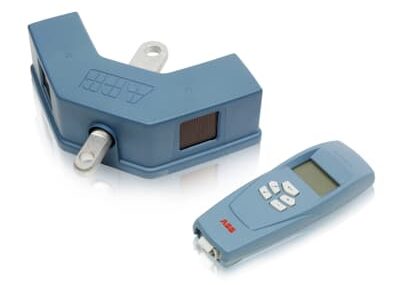
EXCOUNT-III is a complete remote real-time surge arrester monitoring, diagnostics and analysis system. It permits the registration of the total number of discharges, the surge amplitude and wave-steepness, the date and time of occurrence, the total leakage current as well as the resistive leakage current through the surge arrester. In addition, the equipment can be used to define the residual voltage across the arrester for the actual surge, which in turn can be used to better estimate overvoltages in the station for a more detailed insulation co-ordination evaluation.
Not only does the EXCOUNT monitor the arrester itself, it can also give an estimate of overvoltage occurring at nearby apparatus within the arrester’s protection zone – providing valuable information about whether the protection against potentially damaging surges is sufficient or not. In this way, EXCOUNT-III provides the user with remote real-time monitoring of arresters as well as useful input to the insulation co-ordination of the station as a whole.
ABB EXCOUNT-III surge counter supports the protocol IEC 61850, Ed. 2, and communicates remotely via the fibre optic cable to permit the user to add signals into an existing data collection system (SCADA). Enabling remote retrieval of data, EXCOUNT-III eliminates the need for substation visits solely to monitor surge arrester condition, while also enabling the highest possible personnel safety standard by not having to approach an energized arrester to perform online diagnostic measurements.
Excount-III Applications & Performance Data
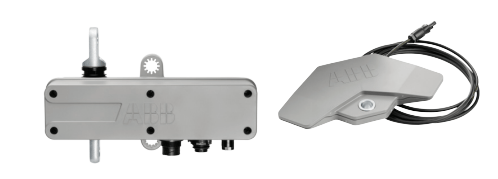
The EXCOUNT-III system consists of individual sensors that are connected by an optical fibre connection. Each sensor can be interrogated individually and be integrated to existing SCADA system. For use with all makes and types of gapless arresters.
No voltage added to the residual voltage of the arrester
Complete monitoring of the health of the substation and the surge arresters
Remote real-time monitoring – minimizes substation visits and enables the highest possible personnel safety standard
Supports IEC 61850, Ed. 2, for integration to existing SCADA system
Enables analysis of surge current impulses
Estimation of overvoltages in the station allows for a more detailed insulation co-ordination evaluation
For each surge arrester it is fitted on, the advanced version (EXCOUNT-IIIA) registers the total number of discharges, the surge amplitude and wave-steepness, the date and time of occurrence, the total leakage current as well as the resistive leakage current through the arrester by thirdharmonic analysis (method B2 according to IEC 60099-5). Using high speed sampling and sweep time, complete surge current impulses at the arrester’s connection point are recorded and available for analysis.
The standard version (EXCOUNT-IIIM) is available for users who do not desire to analyse the overvoltages in detail. With this, discharges are only categorized by their amplitude along with a date and time stamp of occurrence. Other generic features are the same between the versions.
A web browser interface via an optical fibre connection permits online interrogation and data analysis from each unit individually and is also used for configuration setup. The introduction of smart grid and the communication protocol IEC 61850 has made users more focused on integration with existing SCADA systems. EXCOUNT-III supports this protocol and communicates remotely via the fibre optic cable to permit the user to add signals into an existing data collection system.
Excount-III ABB Surge Counters
Surge registration
In addition to surge counting, a special feature of the advanced version is the registration of the surge amplitude and wave-steepness. This can be used to define the residual voltage across the arrester for the actual surge, which in turn can be used to better estimate overvoltages in the station for a more detailed evaluation of insulation coordination than has been possible in the past.
This added-value feature will help users to verify if they have adequate protection or if they need to reconsider their choice of arrester or even increase the number of arresters in the station. Furthermore, there is particular interest to correlate front time and overvoltage levels with pre-existing transformer monitoring equipment as a means to support total system condition monitoring diagnostics.
Leakage current measurement and condition
monitoring
EXCOUNT-III gives the user the possibility to measure both the total leakage current as well as the resistive component of the current through the arrester. The measurement of the resistive current especially gives a good indication of the arrester’s condition and fitness for continued service. With the aid of the SCADA system, these measurements can readily be used to co-ordinate maintenance work and possible replacement in order to assist with minimizing unnecessary and costly unplanned outages.
Safe and secure
EXCOUNT-III remote retrieval of data via the optical fibre cable eliminates the need for substation visits solely to monitor arrester condition, while also enabling the highest possible personnel safety standard by not having to approach an energized arrester to perform online diagnostic measurements. All components are housed in a sealed, weather-proof case, suitable for outdoor use. The base unit is mounted on the support structure and interconnected similar to a traditional counter, while the separate field probe is fixed at the bottom of the arrester. An external power connection from the station auxiliary supply (100 – 250 V, AC or DC) as well as a fibre optic cable connection are additionally to be provided by the user.
T&D are Specialist Distributors ofLV MV HV Cable Installation, Jointing, Substation & Electrical Equipment – we supply companies in the onshore and offshore wind, solar, rail, oil/gas, data centre, battery storage and utility sectors with products to enable the energisation, operation and maintenance of underground cables and overhead lines.
HV Joints Terminations Connectors | 11kV/33kV up to 66kV Ex Stock
Top 5 Challenges In Wind Power Cable Management
Offshore Wind Power Cable Management
Roxtec Top 5 Challenges
Thorne & Derrick are Approved Distributors for Roxtec, the leading manufacturer of sealing solutions for cables and pipes, to protect electricity Transmission & Distribution assets including windfarm substations against water ingress, gas migration and fire hazards.
Below Roxtec have compiled the top 5 most common issues we all struggle with on offshore substations.
1. Specifications & Certificates
We all want to ensure safety and operational reliability, and use high quality products to deliver the best result we can. Therefore, we often meet specifications and requirements demanding a multitude of certificates. However, it is not guaranteed that all types of cable sealing methods are approved.
The best thing would be to find a sealing solution that has passed all tests and certifications.
2. Uncertain Estimates
It can be difficult to know how many cables or pipes, or what size power and instrumentation cables, we need to route. We can never be sure about making the right openings, or about how to seal all those penetrations. Even the best of estimates cannot predict all late design changes.
What we need is a sealing system that is as adaptable as possible to the number and size of cables, pipes or openings. It should be so flexible that we would be able to have spare capacity.
3. Hard Cables To Handle
It is difficult, or almost impossible, to move and bend a large high-voltage or medium-voltage power cable into the desired position for routing through a deck or bulkhead. It takes a lot of time to reorganize the routing path in order to gain a couple of millimeters of bending radius.
What you need is a solution where you can position and apply a seal to fit around the cables, even if they are in an off-center position.
4. Tricky Design Work
Given the issues mentioned above, the work of design engineers often becomes a nightmare. We need to plan, calculate and design in cable and pipe penetrations at an early stage considering both rollout and maintenance. Sometimes, it means recalculating each opening.
Imagine a web-based design tool that we can use to design and redesign transits in no time.
5. Time-Consuming Installation
We know renewables can save the climate, and we know speed is crucial and time is money. Therefore, it is so frustrating to struggle with sealing solutions that are neither flexible nor easy to install. We cannot accept that project plans fail due to complicated installation work tasks. We should only engage suppliers of user-friendly products who will also train the installation team.
Roxtec provides offshore wind farms with an “all in one” solution for cable entry sealing, cable management and vibration damping. Standardise with Roxtec seals for efficient offshore windfarm cable protection design, quick roll-out and certified protection – cables are securely fixed, sealed and cable lifetime is extended.
Thorne & Derrick are Specialist Distributors to the UK and international Offshore Wind & Renewable industry to provide safe and reliable
LV HV Electrical Cable & Power Distribution Systems up to 66kV– we are highly customer responsive and absolutely committed to providing a world-class service.
Contact our UK Power Teamfor competitive quotations, fast delivery from stock and technical support or training on all LV-HV products.
See how T&D support, supply and service the Renewable Energy industry.
ENERGYx2022 North | Chester Racecourse | 21st September 2022 | Book Now
ENERGYX2022 north
What: ENERGYx2022 North | Electrical Industry Event Where: Chester Racecourse, New Crane Street, Chester, CH1 2LY When: Wednesday 21st September 2022 09:00 – 16:00 Exhibition Space Bookings:BOOK NOW Free Delegate Attendance: BOOK NOW
ENERGYx2022 North is an Exhibition and Conference for anyone working within the Electricity Industry (distribution network operators, private network operators, energy transmission, renewable energy, telecommunications, and rail companies). This Net Zero event combines Overhead Lines, Plant and Cables as well as featuring the Health & Safety aspects.
Thorne & Derrick are delighted to announce that we are exhibiting at ENERGYx2022 North taking place this September at Chester Racecourse. Earlier in the year we were Exhibition Sponsors for ENERGYx2022 South in Chester. We would like to take this opportunity to invite our supply chain to attend this prestigious event.
There is much to see and do at ENERGYx2022 North, be that hear from leading industry figures, meet the best of the supplier base, take part in practical health and safety demonstrations, and sample the food drink and entertainment available at the Networking event the evening prior.
This event will be attended and supported by a wide mix of people working in Electrical Utilities, Network Operators, DNOs, Railway Companies, Transport Specialists, Renewable Companies, Civil Works, Health & Safety, Telecom, data centres and Industrial Manufacturers with private networks.
Following on from ENERGYx2020/21, COP26 and the UK government’s drive for us all to reduce the use of fossil fuels ENERGYx2022 will be a great place to benchmark our progress. The challenges reaching Net Zero creates for transmitting and distributing electricity whilst maintaining safe and reliable networks, though not insurmountable requires a lot of joined up and collaborative thinking.
With the proliferation of working from home it has become more difficult to meet and network with potential customers and suppliers and therefore events such as ENERGYx and The Electrical Engineers Circle have grown in importance.
Contact Louise Purcell Events Director at Energy Network Events Limited to discuss further:
Tel: +44 (0)121 736 0411
Mobile: +44(0)7581 779661
Email: [email protected]
Energyx2022 North Confirmed Speakers
Liam O’Sullivan – Licence Director, SP Manweb, SP Energy Networks
Liam O’Sullivan is the Licence Director for the SP Manweb area for SP Energy Networks. He started his professional career in ScottishPower in 2000 and has gained a wealth of experience in several senior roles, in both the Retail and Networks businesses, including Customer Collections, E-Commerce, Network Operations, Customer Connections and Large Capital Investment Projects.
In his current role, he is responsible for the electricity distribution network in North West England, North and Mid Wales. As a result of the decarbonisation of transport and heat networks, demand and reliance on our electricity network infrastructure is expected to increase significantly. Liam is committed to ensuring a smooth transition to low carbon technologies for all industrial, commercial and domestic customers in Merseyside, Cheshire, North Shropshire and North Wales.
Cara Blockley – Head of DSO Strategy, Electricity North West
Cara has been with Electricity North West for 14 years working in network innovation and transition to distribution system operations for the last 8 of those. Cara has responsibility for the teams who are charged with leading the North West to Net Zero.
This means ensuring we understand what the needs of our customers will be in relation to network capacity requirements, seeking innovative, flexible solutions to those requirements through running tenders for flexibility and supporting the adoption of low carbon technologies.
Geoff Murphy – Head of Delivery for Low Carbon Technology and Low Voltage Cables, SP ENERGY Networks
Geoff is currently the Head of Delivery for Low Carbon Technology and Low Voltage Cables in the SP Manweb Licence Area. He is a Chartered Engineer that has worked for SP Energy Networks for 18 years.
During this time, he has held several varied positions within the organisation, with a strong focus on developing, trialling an implementing innovation strategies and solutions.
Kailash Singh – Lead Engineer – Future System Strategy, SP Energy Networks
Kailash Singh is a Lead Engineer within Future System Strategy team at SP Energy Networks. With over 15 years of industry experience, Kailash is specialised in power system planning, design, and network innovation.
At SP Energy Networks Kailash is involved in development of the state-of the art Engineering Net Zero (ENZ) Model which underpins Load Related Expenditure (LRE) within SPEN’s RIIO-ED2 Business Plans. Kailash has been instrumental in development of SPEN’s flexible network planning process and have been involved in assessment of over 1.5GW of flexibility capacity across both distribution license areas of SPEN.
Professor John Barrett OBE
John is a Professor in Energy and Climate Policy at the Sustainable Research Institute, University of Leeds with over 20 years of experience in energy and climate policy. John’s research interests include energy demand, resource productivity, energy and economy modelling, carbon accounting and exploring low carbon transitions.
John has been the Director of a number of large research centres that has employed a range of modelling approaches to understand how changes in production and consumption can contribute to a low carbon future. John was the Director of the Centre for Industrial Energy, Materials and Products (CIE-MAP – www.ciemap.ac.uk), a £4 million initiative funded by the UK Research Council. The centre explored how using material and products differently could contribute to the UK carbon targets. John is now a Co-Director for the Centre for Research in Energy Demand Solutions (CREDS – www.creds.ac.uk). This £19 million initiative is a new research centre established in 2018 with a vision to make the UK a leader in understanding the changes in energy demand needed for the transition to a secure an affordable, low carbon energy system.
John’s research is applied in various arena having been an advisor to a number of UK Government departments, Government Select Committees and agencies such as the Committee on Climate Change. John’s research team are responsible for providing annual headline Government indicators, including an indicator on “Consumption-based GHG emissions” and “Resource Productivity”. His research findings have provided evidence and influenced many Government publications related to energy demand projections, climate policy and resources and waste strategies. John was also a lead author for the International Panel on Climate Change, Working Group III.
Helen Gaier-Laidlaw – Licence Programmes Manager, SP Energy Networks
Helen is responsible for the development and delivery of investment programmes for SP Energy Networks including Overhead lines, vegetation management, telecoms, civils, Low Carbon Technology connections and investments including EVs and heat pumps.
Management of budgets, asset and business performance as well as preparing for the next Price Control contract from Ofgem and enabling SP Energy Networks transition to Net Zero.
Tom Walsh – District General Manager – Scottish Power
Tom leads a multidiscipline team to build, operate and maintain the EHV, HV & LV electricity distribution network in Merseyside and delivering a world class customer experience.
Tom is an experienced GM with a demonstrated history of working in the construction and utilities industries.
Guy Shapland – Lead Commercial and Policy Analyst, SP Energy Networks
Guy started his career in Manweb in 1993 as an apprentice jointer and has worked in many areas throughout his time. More recently Guy has been taking a lead role in developing the processes and systems to manage the procurement and operation of flexibility services.
Jason Hicks – Offshore Network Strategy Manager, National Grid ESO
Jason started his career at National Grid in 2011. During this time, Jason has been responsible for producing the Network Options Assessment (NOA) signalling the future transmission network requirements needed to deliver the renewable energy revolution.
With 10 years’ experience in onshore network planning Jason recently pivoted into the offshore network planning space. Since then, Jason has developed the Holistic Network Design, a first-of-a-kind plan to coordinate the connection of 23GW of offshore wind and recommend the key onshore and offshore infrastructure requirements necessary to facilitate the Government’s ambition of connecting 50GW of offshore wind by 2030.
In his current role, Jason is continuing to develop the strategy that delivers a future offshore transmission network, unlocking access to large volumes of renewable generation and paving the way to Net Zero.
Simon Sutton
Simon has over 25 years’ experience in the electricity transmission and distribution industry predominantly in the cables sector. He has worked in the cable materials supply industry, as the cables policy manager for a transmission utility and in the research sector. His interests also include condition monitoring, diagnostic testing, forensics and asset management.
Simon now works as Director of Professional Services for Altanova and is based in the UK. His responsibilities include business strategy, external relationships, and the coordination of technical activities around the world.
Simon holds a degree and PhD in Physics both from the University of Reading. He is active in International professional bodies and recently became chairman of CIGRE Study Committee D1, Materials and Emerging Test Techniques. He is also a member of the editorial board of the IEEE Electrical Insulation Magazine and a Visiting Senior Research Fellow at the University of Southampton.
Sebastian Ebert – M Sc of Engineering / Diplom-Ingenieur Elektrotechnik (FH)
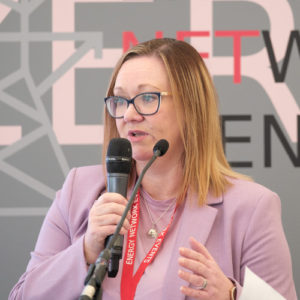
Sebastian graduated from the University of applied sciences Zittau, Görlitz (Germany) as a Electrical Engineer and has worked in the industry for nearly 20 years in Germany and across the world. He has been with Suedkabel since 2019 and as a keen environmentalist he and his team want to play their part in helping with the drive to Net Zero.
Based on what we learnt at previous ENERGYx events we thought it fitting to have a speaker from a world class manufacturer, Suedkabel, who have been producing high quality cables and accessories for more than 120 years.
Sebastian will speak about the importance of maximizing the use of European power cable system manufacturing with technological leadership and sustainable advantage as contribution to meet the climate targets to drive the energy transition in the UK and in Europe.
T&D are Specialist Distributors of LV MV HV Cable Installation, Jointing, Substation & Electrical Equipment– we supply companies in the onshore and offshore wind, solar, rail, oil/gas, data centre, battery storage and utility sectors with products to enable the energisation, operation and maintenance of underground cables and overhead lines.
HV Joints Terminations Connectors | 11kV/33kV up to 66kV Ex Stock
Battery Storage
Portable & Fixed Gas Detection Monitors from Crowcon
Introduction
The Paris Agreement on climate change holds nations accountable for reducing their greenhouse emissions and reliance on fossil fuels, thus driving them to invest and use renewable energies, such as solar and wind.
However, the sun doesn’t always shine and it’s not always windy – or it might be very sunny or windy, leading to over-supply of the grid. To ensure that renewables are used for maximum benefit, any excess energy they produce (i.e., that isn’t needed for the grid at that time) is stored in local storage facilities, which take the form of large batteries.
These release energy later – when the grid requires more power, or when there is less sun or wind, such as overcast nights or calmer, duller days. However, these batteries can only release energy for a few (between 1 and 12) hours, so their use is limited to short-term, energy-on-demand requirements.
Batteries are effective at reducing power outages since they can also store excess traditional grid energy. The energy stored within batteries can be released whenever a large volume of power is needed, such as during a power failure at a data centre to prevent data being lost, or as a back-up power supply to a hospital or military application to ensure the continuity of vital services. Large scale batteries can also be used to plug short-term gaps in demand from the grid.
These battery compositions can also be used in smaller sizes to power electric cars and may be further scaled down to power commercial products, such as phones, tablets, laptops, speakers and – of course – personal gas detectors.
Applications
Battery
Storage
Transportation
Welding
Battery technologies can be segregated into four main categories:
Chemical– e.g. ammonia, hydrogen, methanol and synthetic fuel
Electrochemical – lead acid, lithium ion, Na-Cd, Na-ion
Electrical – supercapacitors, superconductive magnetic storage
The range of portable gas detectors and portable monitors for personal and temporary gas monitoring from Crowcon, consists of a wide range of single and multi gas products.
This range of portable gas detectors are used to protect staff and personnel in many industries (including battery storage) around the world and are specified to ensure that each product is fit for purpose.
The Gasman personal monitor manufactured by Crowcon is a compact and fully ruggedised single gas detector for the toughest of industrial environments – the gas detector is compact and lightweight design for industrial gas detection in battery storage, oil and gas, chemical plants (with exotic gases), steel works (special CO sensor), hospitality (CO2), renewable energy (hydrogen) and waste and water works. More about Crowcon Gasman
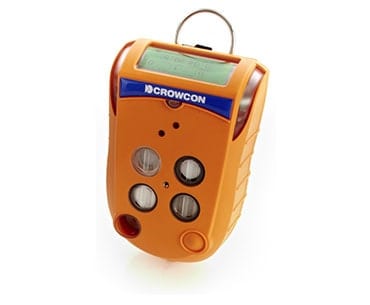
Gas-Pro portable gas detector is designed and manufactured by Crowcon for confined space entry monitoring and can detect up to 5 gases. The Crowcon Gas-Pro offers a compact and rugged solution for works and fleet managers entering confined spaces. More about Crowcon Gas-Pro
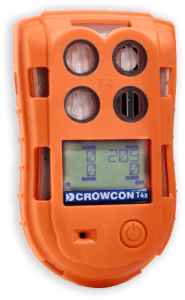
Crowcon T4x is a new and improved portable multi gas monitor you can take almost anywhere. Now with added industry leading sensor technologies to improve worker safety and cost you less over time. Exclusively with long-life O2 and MPS™ sensor technologies.
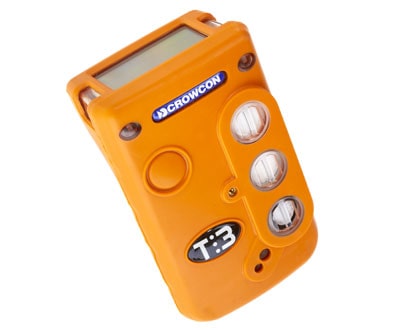
The Crowcon Tetra 3 portable gas detector is a compact, robust and simple to use multigas monitor. The Crowcon Tetra 3 mainly detects the common four gases (carbon monoxide, methane, oxygen and hydrogen sulphide), but also an expanded range: ammonia, ozone, sulphur dioxide, H2 filtered CO (for steel plants) and IR carbon dioxide (for safe area use only) – this portable gas detector is specified in harsh environmental conditions. More about Crowcon Tetra 3
The T4 is a portable gas detector manufactured by Crowcon which provides a personal gas detection solution against four of the most common gas hazards – carbon monoxide, hydrogen sulphide, flammable gases and oxygen depletion. The T4 also now has improved detection of pentane, hexane and other long chain hydrocarbon. This portable gas detector offers compliance, robustness and a low total cost of ownership. More about Crowcon T4
Portable gas detectors are typically smaller, handheld devices that provide gas detection in smaller locations and are often used in confined spaces or working areas – mobile, transferable and transportable. Crowcon Gas-Pro portable gas detector is designed for confined space entry monitoring and can detect up to 5 gases. The Crowcon Gas-Pro offers a compact and rugged solution for works and fleet managers entering confined spaces.
fixed Gas Detectors
For Battery & other Power storage
Fixed gas detectors manufactured by Crowcon have been proven in many harsh environments around the world and are used in industries such as offshore, oil and gas, petrochemical as well as steel mills and chemical plants.
The range of fixed gas detectorsfrom Crowcon are suitable for detecting single and multi gases and can be configured to suit specific requirements – including hazardous area workplaces according to ATEX and IECEx Certification.
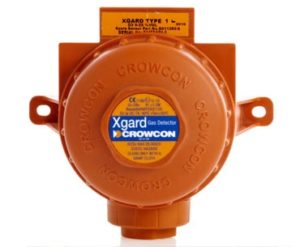
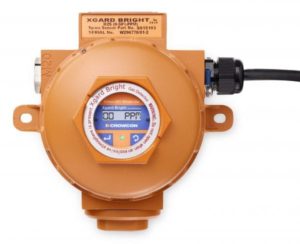
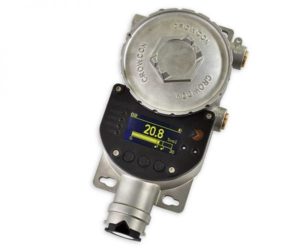
Crowcon Xgard is a versatile range of fixed gas detectors which meet gas detection specifications for a wide range of applications and industries worldwide. The Crowcon Xgard can be found in research facilities, water treatment, power, oil and gas and manufacturing facilities. More about Crowcon Xgard
Xgard Bright is a versatile platform offering flammable and toxic gas detection and oxygen monitoring, while providing ease of operation and reduced installation costs. The Xgard Bright is now available with MPS (Molecular Property Spectometer™) technology.
The Crowcon XgardIQ is an intelligent and versatile fixed gas detector for the detection of seven different gases dependent upon product setup. Gases include CO, H2S, H2, HF, LPG, CH4 and O2. There is a non-intrusive calibration where functions are performed via the display and keypad, without the need for a hot-work permit or any special tools. More about Crowcon XgardIQ
Crowcon gas detectors, both fixed and portable, provide life saving alerts and notice of the presence of potentially fatal gases in working areas. Typically, a fixed gas detector is used as a permanent gas monitoring solution installed in a specific location such as a process area of a control or a plant room.
Gas Hazards in Batteries and Other Power Storage Sector
Dangers
Typical processes and associated gas detection issues
Li-ion battery fires
A major concern arises when static electricity or a faulty charger has destroyed the battery’s protection circuit. Such damage can permanently fuse the solid-state switches into the ON position, without the user knowing. A battery with a faulty protection circuit may function normally, but it does not provide protection from short circuit
At this point, a gas detection system can establish if there is a fault and may be used in a feedback loop to shut off power, seal the space and release an inert gas (such as nitrogen) into the area to prevent any fire or explosion
Leakage of toxic gases prior to thermal runaway
Thermal runaway of lithium-metal and lithium-ion cells has caused numerous fires. Studies have found the fires to be fuelled by the flammable gases that are vented from the batteries during thermal runaway
The electrolyte in a lithium-ion battery is flammable and generally contains lithium hexafluorophosphate (LiPF6) or other Li-salts containing fluorine. In the event of overheating, the electrolyte will evaporate and eventually be vented out from the battery cells. Researchers have found that commercial lithium-ion batteries can emit considerable amounts of hydrogen fluoride (HF) during a fire, and that emission rates vary for different types of battery and state of-charge (SOC) levels. Hydrogen fluoride can penetrate skin to affect deep skin tissue and even bone and blood. Even with minimal exposure, pain and symptoms may not present for several hours, by which time damage is extreme
Hydrogen and explosion risk
With hydrogen fuel cells gaining popularity as alternatives to fossil fuel, it is important to be aware of the dangers of hydrogen. Like all fuels, hydrogen is highly flammable and if it leaks there is real risk of fire
Traditional lead acid batteries produce hydrogen when they are being charged. These batteries are normally charged together, sometimes in the same room or area, which can generate an explosion risk, especially if the room is not properly ventilated
Most hydrogen applications cannot use odorants for safety, as hydrogen disperses faster than odorants do. There are applicable safety standards for hydrogen fuelling stations, whereby appropriate protective gear is required for all workers. This includes personal detectors, capable of detecting ppm level hydrogen as well as %LEL level. The default alarm levels are set at 20% and 40% LEL which is 4% volume, but some applications may wish to have a custom PPM range and alarm levels to pick up hydrogen accumulations.
Celebrating Charlie & Ella’s Level 4 Sales Executive Apprenticeships At Thorne & Derrick International, we are proud to champion talent development and recognise the dedication required to achieve professional growth. We are therefore delighted to congratulate Charlie Baines and...
Thorne & Derrick will be Exhibiting at Solar & Storage Live UK 2026 at the NEC Birmingham from 22nd–24th September, showcasing our support for HV Cable Accessories, Joints, Terminations, Separable Connectors, Cable Tooling and Grid Connection Products used across...





















 Sebastian graduated from the University of applied sciences Zittau, Görlitz (Germany) as a Electrical Engineer and has worked in the industry for nearly 20 years in Germany and across the world. He has been with Suedkabel since 2019 and as a keen environmentalist he and his team want to play their part in helping with the drive to Net Zero.