Resin Cable Joints

The range includes resin cable jointing systems from established manufacturers including 3M, Filoform and Prysmian, with technical support available for selecting the correct joint according to cable construction, conductor size, joint configuration and installation environment.
Browse Resin Cable Joints & Jointing Products
Browse resin jointing solutions by joint configuration, manufacturer and application. For help selecting a suitable joint, see the technical guidance further down this page or contact Thorne & Derrick.
Straight Resin Cable Joints
Filoform straight and inline resin jointing systems for the connection, repair and transition jointing of low voltage power cables.
Branch Resin Cable Joints
Filoform branch resin cable joint kits for creating reliable branch connections on low voltage cable systems.
3M LVI-2/x Resin Cable Joints
3M Scotchcast Resin 40 inline joint kits for armoured low voltage cables, including straight and transition jointing applications.
Hazardous Area Resin Cable Joints
Resin cable jointing systems for areas where flame retardancy and resistance to hydrocarbons or chemicals may be required.
Prysmian Cable Joints
Prysmian cable jointing kits and BICAST jointing products for low voltage cable connection and repair applications.
Cable Jointing Resins
3M Scotchcast electrical insulating resins for cable joint encapsulation, including standard, premium and specialist resin systems.
How to Select a Resin Cable Joint
Selecting the correct resin cable joint depends on the cable construction, conductor size, joint configuration, voltage and installation environment. Resin cable joints are available for low voltage cables with XLPE, EPR, PVC or PILC insulation, including applications from 1.5–400 mm² and 0.6/1 kV systems, with selected jointing solutions available for cables up to 3.3 kV.
Thorne & Derrick stock and distribute a comprehensive range of cable joints and provide technical support for new installations, cable repairs and transition jointing applications.
Power, control and instrumentation cables.
Armoured or unarmoured cable systems.
Straight, branch, transition, multi-service or pot-end.
XLPE, EPR, PVC or PILC insulated cables.
Copper, aluminium or transition connections.
Indoor, outdoor, cable containment, underground or specialist industrial locations.
Resin Cable Joint Types & Applications
Resin cable joints can be selected for different cable arrangements and installation requirements. Specialist resin jointing systems are also available for oil, petrochemical, gas, mining, telecoms, rail and industrial applications, including direct burial underground or installation onto cable containment.
Joint Configurations
- Straight / inline cable joints
- Branch cable joints – T or Y configuration
- Multi-service cable joints
- Transition cable joints
- Pot-end jointing applications
Typical Cable Applications
- Power cables
- Control cables
- Instrumentation cables
- Armoured and unarmoured cables
- Specialist industrial cable systems
3M Scotchcast LV Resin Cable Joints
3M Scotchcast forms part of the wider Thorne & Derrick resin cable jointing range, with systems available for standard low voltage cable jointing and specialist industrial applications.
| 3M Scotchcast LV Resin Cable Joint Kit Type | Resin | Resin Mould | Power | Telecom | Instrumentation & Control |
| Standard | 470W | Translucent | Yes | Yes | No |
| Premium | Resin 40 | Transparent | Yes | No | No |
| Hazardous Area | 1402FR | Translucent | Yes | Yes | Yes |

Cable Jointing Resins
Two-part cable jointing resin can be mixed and poured into the cable joint shell using a closed mixing and pouring system. Specialist electrical resins are available for applications requiring properties such as hydrocarbon resistance, low smoke zero halogen performance, fire resistance or flame retardancy.
Scotchcast resin bags are designed to reduce unnecessary handling during the mixing and pouring process, helping the installer control the resin application and minimise spills and wastage.
Resin Volumes & Cable Joint Selection
Occasionally, cable jointers experience resin shortages when filling cable joint shells with resin encapsulant compounds.
Most cable joint kits include sufficient cable jointing resin to fill the joint shell when the kit is selected in accordance with the appropriate cable joint selection guide. Where the installation differs from a standard joint arrangement, a few additional checks may be required.
Some cable jointers may select a larger cable joint shell to provide additional working space where transition joints or crossed-core cable joints need to be installed in a cable trench.
On larger cable conductors where it can be difficult to handle and operate cable crimping tools in confined working conditions, the jointer may select mechanical shearbolt connectors for jointing copper to aluminium conductors or dissimilar conductor sizes.
Where a larger joint shell is used, or there is a reduction in conductor size, there may be more free volume inside the cable joint mould. In these circumstances the installed cables and connectors displace less resin and additional top-up resin may therefore be required.

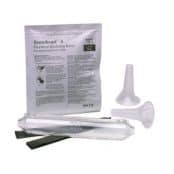
3M Scotchcast LV Resin Bags
Hydrocarbon-Resistant Resin Cable Joints
Standard cold-pour electrical resins may be adversely affected when exposed to hydrocarbons or chemical solvents. For demanding industrial environments, specialist resin formulations can therefore be required.
3M hazardous area resin cable joints use specialist joint shells and resin systems designed for demanding applications. The completed electrical joint is enclosed within the mould before resin encapsulation.
3M Scotchcast 1402FR is a two-component polyurethane resin developed for electrical insulation and mechanical protection where flame retardancy and resistance to chemicals including hydrocarbons are required.
3M 1402FR is used within specialist resin jointing systems for power, control and instrumentation cable applications, including selected cable systems rated up to 3.3 kV.
| Resin Specification | 3M Scotchcast 470W Resin (Standard) | 3M Scotchcast Resin 40 (Premium) | 3M Scotchcast 1402FR Hydrocarbon Resistant Resin |
| Type | Polyetherurethane | Polyetherurethane | Polyurethane |
| Form | 2 Part Resin | 2 Part Resin | 2 Part Resin |
| Density (g/cm³) | 1.16 | 1.07 | 1.6 |
| Viscosity at 23°C (Pa·s) | 0.9 | 0.9 | 2.5 |
| Hardness (Shore D) | 59 | 57 | 75 |
| Elongation at Break (%) | 90 | 50 | 2 |
| Pot Life at 23°C (min) | 20 | 20 | 20 |
| Dielectric Strength (kV/mm) | 20 | 24 | 20 |
| Exotherm Reaction at 40°C (°C) | 90 | 95 | 65 |
Cable Joint Components & Cable Compatibility
Cable Joint Shells & Moulds
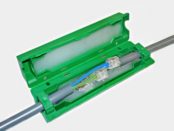
Single-piece cable joint shells wrap around the cable and help prevent resin leakage associated with traditional two-part snap-lock style joint designs. The joint shell provides space for cable preparation, conductor connection and transition jointing, including applications involving XLPE and PILC cables.
Correct sealing of the mould is important to prevent resin leakage and moisture ingress. See also the Thorne & Derrick range of
cable sealing products.
Conductor Connectors
Resin cable joints can accommodate compression crimp connectors or range-taking mechanical shearbolt connectors, depending on the joint design and available working space. Connector selection should consider the conductor material, conductor cross-sectional area and available space inside the joint shell.
Jointing Armoured & Unarmoured Cables
Resin cable joint systems are available for steel wire armoured (SWA), aluminium wire armoured (AWA), galvanised steel wire braid (GSWB) and unarmoured cables.
Selected 3M resin joints use tinned copper earth braid and constant-force springs to provide armour earth continuity across the cable joint, avoiding the need for difficult manipulation of armour wires around the completed conductor connection.
Correct armour and earth continuity is essential to maintain the electrical protection provided by the cable system across the completed LV joint.
Resin Cable Joint Benefits
Correctly selected resin cable jointing systems provide electrical insulation, mechanical protection and environmental sealing around completed cable connections.
- Electrical insulation around completed conductor connections.
- Environmental sealing against moisture ingress.
- Armoured and unarmoured cable options for different cable constructions.
- Straight, branch and transition joint configurations for varied installation requirements.
- Copper and aluminium conductor jointing using suitable connector systems.
- Direct burial and outdoor installation options where the selected joint system is suitable.
- Specialist resin formulations for demanding industrial environments.
- Permanent encapsulation providing mechanical protection around the finished electrical joint.
Resin Cable Joint Manufacturers
Thorne & Derrick distribute resin cable jointing products from established cable accessory manufacturers, enabling joint selection according to cable type, joint configuration, conductor size and installation environment.
- 3M Scotchcast – resin cable joints and electrical insulating resin systems for standard and specialist applications.
- Filoform – straight and branch resin cable jointing systems for LV cables.
- Prysmian – cable jointing kits including BICAST jointing products.
Resin Cable Joint FAQs
What is a resin cable joint?
A resin cable joint is a cable connection in which the prepared conductors and connectors are enclosed within a joint shell or mould and encapsulated using an electrical insulating resin. The cured resin provides insulation, mechanical protection and environmental sealing around the completed joint.
What cables can resin cable joints be used with?
Resin cable joints are available for power, control and instrumentation cables with insulation systems including XLPE, EPR, PVC and PILC. The correct joint must be selected according to cable construction, conductor size, voltage and installation requirements.
Can resin cable joints be used with SWA cables?
Yes. Resin cable joint kits are available for steel wire armoured cables. Suitable armour continuity components must be used to maintain the earth path across the completed joint.
Are resin cable joints suitable for direct burial?
Selected resin cable joint systems are designed for underground direct-buried applications. The joint kit must be suitable for the cable type and intended installation environment and installed in accordance with the relevant jointing instructions.
What is the difference between a straight and branch resin cable joint?
A straight or inline joint connects two cable ends along the same circuit route. A branch joint creates an additional cable connection from the main cable and is commonly configured as a T or Y branch.
How do I select the correct resin cable joint kit?
Selection should consider the cable voltage, insulation type, conductor cross-sectional area, number of cores, overall cable diameter, armour construction, joint configuration and installation environment. Thorne & Derrick can provide technical support where the correct kit is unclear.
Can resin cable joints connect copper and aluminium conductors?
Resin joint shells can accommodate suitable connectors for copper, aluminium and transition connections. Mechanical shearbolt connectors can provide a practical option where conductor materials or sizes differ, subject to correct connector selection.
When is a hydrocarbon-resistant resin cable joint required?
A specialist resin system may be required where the completed cable joint could be exposed to hydrocarbons, fuels, oils or aggressive chemical environments. Products such as 3M Scotchcast 1402FR are designed for applications requiring chemical resistance alongside electrical insulation and mechanical protection.
Need Help Selecting a Resin Cable Joint?
Thorne & Derrick provide technical support for the selection and specification of resin cable joints according to cable type, conductor size, armour construction, joint configuration and installation environment.