a Guest Blog by Jonathan Andrews (Managing Director - Energy Skills Solutions)
Energy Skills Solutions is a registered training organisation based in Perth Western Australia offering training, assessment and consultancy solutions for the electrical supply and electrical industries.
Founded on the expertise and background of its Directors with a combined over 60 years’ experience in electricity supply industry operations and training, Energy Skills Solutions is committed to delivering the highest quality training, assessment and consultancy services.
Energy Skills Solutions prides itself on establishing and maintaining strong, mutually beneficial relationships with their industry clients.
We strive to be the training provider of choice for our targeted industries.
As a Registered Training Organisation, Energy Skills Solutions is obligated to deliver high quality, well managed and competitive services.
All Energy Skills Solutions operations are underpinned by its core values:
Safety and environment
Quality
Professionalism
Trust
Responsiveness
Flexibility
Services
Energy Skills Solutions offers a range of training, assessment and consulting services from Nationally Recognised Qualifications, Units of Competence and Accredited Courses to customised training to suit the individual client needs.
Services include:
Overhead Distribution Training
Certificate III in ESI – Power Systems Distribution Overhead
Energised power line insulator cleaning and coating
High voltage live work glove and barrier
High voltage live work distribution stick
Services & Metering Training
Installation of customer services (overhead and underground)
Installation of energy meters
Service connection testing
Underground Cable Training
Certificate III in ESI – Power Systems Distribution Cable Jointing
UETTDRRF09B Apply Access Procedures To Work On Or Near Electrical Network Infrastructure
UETTDRRF10B Perform First Aid In An ESI Environment
UETTDRRF11A Testing Of Connections To Low Voltage Electricity Networks
HLTAID001 Provide CPR – Endorsed By St John
HLTAID002 Provide Basic Emergency Life Support – Endorsed By St John
HLTAID003 Provide First Aid – Endorsed By St John Assessment
Assessment services include:
Service connection testing
High voltage live work glove and barrier (annual)
High voltage live work distribution stick
High voltage live work transmission stick
Recognition of prior learning
Verification of competency
Consulting
Our consulting services include:
Courseware design and development
Procedure development and audits
Training needs analysis and training plan development
Systems development (training and assessment)
Recruitment and selection support
Energy Skills Solutions delivers courses to optimise learning and make training both informative and enjoyable.
Electrical Safety
With safety seen as a reflection of an organisation’s commitment to its people, Energy Skills Solutions ensures safety is embedded into and an integral part of the services delivered.
In particular, Energy Skills Solutions uses training as an opportunity to influence and promote:
a culture intolerant of unsafe practices and conditions
an attitude of “there’s always time to do it safely” and
“do it safely or not at all”
People
Along with the background and experience of its Directors, Energy Skills Solutions engages only the most skilled and knowledgeable trainers in the industry.
ESS unique arrangement means that trainers when not training can undertake field based work to maintain and build their technical skills and knowledge. Many of Energy Skills Solutions trainers operate their own electrical contracting or power line construction business.
Energy Skills Solutions trainers also hold the relevant Certificate IV training and assessment qualification.
Energy Skills Solutions – Training, Assessment & Consultancy Solutions
For further information please contact Energy Skills Solutions so they can assist you with your training requirements.
THORNE & DERRICK are national distributors of LV, MV & HV Cable Installation, Jointing, Duct Seals, Substation & Electrical Equipment – we service UK and global businesses involved in copper earthing, cable installations, cable jointing, substation, overhead line and electrical construction at LV, 11kV, 33kV and EHV.
Since 1985, T&D have established an international reputation based on SERVICE | INTEGRITY | TRUST.
Contact us for 3M Electrical, ABB, Alroc, AN Wallis, CATU Electrical, Cembre, Centriforce, CMP, CSD, Elastimold, Ellis Patents, Emtelle, Euromold, Filoform , Furse, Lucy Electric & Zodion, Nexans, Pfisterer, Polypipe, Prysmian, Roxtec, Sicame, WT Henley.
Invitation
Thorne & Derrick invite you to join LinkedIn’s largest LV-HV Electrical Discussion Group : Low & High Voltage Power, Cabling, Jointing & Electricals.
Discussion subjects include cable installations, cable jointing, substation, overhead line and electrical construction at LV, 11kV, 33kV and EHV. Network, engage and promote your profile, company or products with over 10,000 influencers.
a Guest Blog by Jo Niblett (Managing Director - Pragmatic Consulting)
Pragmatic Consulting are a leading engineering consultancy business with a training and assessment centre working within the utilities industry approved to deliver BESC AME assessments along with other training courses such as manual handling, first aid and other related qualifications.
BESC AME assessment courses are for anyone who carries out work either directly or indirectly in the power utility industry – including cable jointers and wiremen working on low, medium or high voltage cables, overhead lines, substations or switchgear.
Pragmatic Consulting offer a range of courses that meets the needs of the electrical and power industry and are prepared to travel and provide training events across the UK so that you are able to have training when it suits you.
Pragmatic Consulting approach each course in an individual manner to ensure that the candidates who pass through the door are trained to the highest standard whilst ensuring that they receive whatever support they require to help them progress and achieve.
Cable Jointers
Compliance vs Competence
A common debate I have, Compliance vs Competence, what is the difference?
Is simply being compliant enough?
Does a ticket equal competence?
And how is competence measured?
Compliance is ‘acting in accordance with health & safety rules and legislation’.
Compliance is a minimum requirement, while competence goes above and beyond that.
The definition of competence from the HSE website: “To be competent an organisation or individual must have sufficient knowledge of the tasks to be undertaken and the risks involved. They must have the experience and ability to carry out their duties in relation to the project, to recognise their limitations and take appropriate action to prevent harm to those carrying out construction work, or those affected by the work.”
Competence develops over time.
It is a mix of initial and on-job training, instruction, assessment and formal qualifications.
The difference between compliance and competence can be thought of as: Passing and getting your driving license you are compliant; you know how to drive and all the rules and road theory. But are you a competent driver? You are now on your own and putting the knowledge you have learned into practice. But without experience you are only compliant.
For further information on the courses that Pragmatic Consulting offer please visit https://www.pragmatic-consulting.co.uk/ or contact Jo Niblett (Managing Director).
THORNE & DERRICK are national distributors of LV, MV & HV Cable Installation, Jointing, Duct Sealing, Substation & Electrical Equipment – we service UK and global businesses involved in cable installations, cable jointing, substation, overhead line and electrical construction at LV, 11kV, 33kV and EHV.
Since 1985, T&D have established an international reputation based on SERVICE | INTEGRITY | TRUST.
Contact us for 3M Electrical, ABB, Alroc, AN Wallis, CATU Electrical, Cembre, Centriforce, CMP, CSD, Elastimold, Ellis Patents, Emtelle, Euromold, Filoform , Furse, Lucy Electric & Zodion, Nexans, Pfisterer, Polypipe, Prysmian, Roxtec, Sicame, WT Henley.
Invitation
Thorne & Derrick invite you to join LinkedIn’s largest LV-HV Electrical Discussion Group : Low & High Voltage Power, Cabling, Jointing & Electricals.
Discussion subjects include cable installations, cable jointing, substation, overhead line and electrical construction at LV, 11kV, 33kV and EHV. Network, engage and promote your profile, company or products with over 10,000 influencers.
10 Things You Should Know About Electrical Safety & Protection | Image ABB
by Chris Dodds T&D - estimated reading time 5 minutes
T&D Largest UK Stockist – CATU Electrical Safety Equipment For LV HV EHV Electricity Cables, Lines & Substations
The world of electrical safety, insulation and protection is rife with potential hazards and dangers. Electrocution risks prevail throughout low and high voltage power systems – whether by underground cable or via overhead line where the ampere flows danger goes with it.
Electrical Safety Foundation International has confirmed every 30 minutes during the work day, a worker suffers an electrically induced injury that requires time off the job for recovery.
Over the last ten years, more than 46,000 workers have been injured from on-the-job electrical hazards.
Engineers, installers, maintenance and other operatives working on or near HV and LV electrical installations are at risk from the dangers an arc flash, power surge or short circuit can cause.
Arc flash clothing is essential to provide “head-to-toe” worker protection against arc incidents – this includes a complete range of arc flash gloves, arc flash helmets and garments for utility workers carrying out installation and maintenance tasks on LV MV HV underground cables, overhead lines and electrical substation equipment.
Cable jointers working on underground cables, linesmen stringing overhead conductors and SAP’s switching high voltage substations all confront daily dangers of electrocution which can only be moderated by a responsible attitude to electrical safety and risk assessment.
Nothing has changed. Serious injury, high degree burns, electrocution and all to commonly death are the dangers that face these workers daily if the proper electrical safety precautions are not taken.
Here, we take a look at 10 of the most important factors that need to be considered regarding LV-HV Electrical Safety.
The list below is by no means exhaustive, however it does cover 10 of the most pertinent points that must be considered prior to carrying out any electrical installation, maintenance or other work:
Arc Flash – calculation, risk assessment, protection and dangers
Electrical Accidents – causes, courses and cable faults
Electrical Isolation – what is lock-out tag-out?
Electrical Accidents – prevention and risk assessment
Arc Flash Protection – eliminating, reducing and quenching
British Standards – domestic electrical protection and BS7671
Dead or Live – energised or de-energised electrical working
Image: Jim McDonald (Owner/Live Line Training at Powerline Training Consultants)
1. Arc Flash
The most common hazards typically faced when working on LV HV electrical cables, switchgear and substation installations are electrical arcing (often called a ‘flashover’ or ‘arc flash’).
♦ Arc Flash Statistic: According to NFPA and IEEE from 1992 to 2002, over 2,000 workers a year or more than 5 workers a day were victims of an arc flash.
Arc flash can generate intense levels of heat and flames which can cause deep set burns and serious injury. The dangers of arc flash incidents are well documented and calculating the potential level and power of an electrical arc to provide adequate arc flash protective clothing can save lives should an arc flash incident occur.
We recently asked Hugh Hoagland (Partner at ArcWear & e-Hazard.com) and “leading-light” in arc flash protection to recommend the 3 most effective and reliable software packages for Calculating Arc Flash Risk & Hazard in accordance with NFPA 70E and IEEE 1584.
In addition to the intense heat, the levels of ultraviolet radiation from an electrical arc can also cause damage to the eyes. It is often the case that those working with or near electricity do not appreciate the risk of serious injury and consequential damage to equipment that can arise from arcing.
In the case of oil filled switchgear, burning oil and gas can be ejected causing serious injury or death to those nearby and major damage to buildings located in the vicinity of the arc flash blast. Switchgear that may be using SF6 gas as the insulating medium presents other risks that must be controlled and managed as the presence of F-gas is pervasive throughout industries.
These risks are managed effectively through the installation of an SF gas detector. The Crowcon F-Gasis a fixed point gas detector enclosed in an IP54 case and delivers reliable detection of freon gases (F-gases).
The F-Gas monitors levels of a range of refrigerant gases and also sulphur hexafluoride (SF6) and can be connected to any control system that can accept an analogue signal and is ideal for use in substations, switchgear, plant rooms, MV switches, ring main units, contactors and circuit breakers covering the electrical safety and gas detection requirements of the electrical distribution industry.
By providing SF gas detection, electrical safety is improved generally and the potential risks are managed.
Not only is damage to human life a real hazard, electrical fire and the subsequent damage to property and electrical infrastructure can cause considerable financial loss.
GIS Gas Insulated Switchgear 220kV. Image ABB
Adequate training and the lack of it is a continuing theme as a contributory cause of arc flash incidents and accidents….
Occupational Injuries From Electrical Shock and Arc Flash Events – extract from Final Report (2015) by The Fire Protection Research Foundation.
The Full Report is available as Slideshare download :
CATU, a world leader and respected voice in the world of electrical safety recommend the following 5 points to determine the selection of suitable arc flash clothing for protecting against arc flash :
Maximum fault current value
Phase/ground rated voltage at location of risk
Distance between the arc source and the reception source
AC cycle number and the mono or three-phase circuit type
Location of where the arc is produced (confined space)
This information enables an estimate of the arc flash risk level and determines the selection of arc flash clothing and PPE to use : 12 to 100 cal/cm³ or class 1 or 2. Arc flash site surveys and electrical risk assessments can be carried out by specialist service providers. For instance in the UK, ESUK is a specialist company concerned with the safe management of risk associated with LV-HV electrical work activities.
2. Electrical Accidents & Causes
The vast majority of electrical incidents occur because:
People are working on or near equipment that is either thought to be dead but is still live or,
By those working on equipment that is known to be live but they do not have the adequate training or are not using adequate protection equipment.
By not taking the required safety precautions and selecting the correct equipment for protection from the threats mentioned seriously increases the chances of an electrical incident occurring.
Here, we return again to the role of training and professionally educating electrical workers.
Investment both in terms of time and cash is required by responsible contractors to ensure the safety of their greatest asset, their workers.
Train and train some more. Training builds skills and confidence, it reinforces best working practises and should be encouraged throughout the lifetime of the career.
There is no shortage of training resources available, such as the High Voltage Training Courses for HV electrical engineers conducted by EA Technology’s Power Skills Centre.
Whether HV or LV, EA Technology are leading power engineering consultants and their courses and solutions are adopted by utilities across the globe.
Substations Courses
Specialist Courses
Cables Courses
Power Networks Courses
Protection Courses
Tailored Programmes
Pictured: The CableSniffer™ is designed to quickly and accurately detect cable faults. The CableSniffer™ pinpoints low voltage (LV) cable faults by “sniffing” the gases given off by faulting LV cables as the cable insulation burns. Widely used across UK DNO and global power utilities the EA Technology CableSniffer™ significantly reduces the impact of LV cable faults on customer minutes lost and restoration costs.
CableSniffer – Cable Fault Location For Low Voltage Cables
Quite simply, lock-out tag-out (LOTO) is the safety procedure of securely locking machines and equipment with numerous electrical safety padlocks to ensure that it cannot be energised without the necessary workers being present.
LOTO controls the flow of electrical energy and in practice is the isolation of power from the system by physically locking it in safe mode. In most cases, the safety switch has a series of holes through which a number of securing devices are fastened to ensure the switch cannot be turned.
Only the authorised individual is permitted to lock out and is the only one who can unlock the devices. LOTO is vital to to maintain worker safety while these systems are being operated when non-routine activities such as maintenance, repair, or set-up; or the removal of jams, clogs or misaligned feeds are performed.
Send an e-mail to [email protected] to request your FREE copy. Please include within the e-mail your name, ship to address, company and your job title.
4. Electrical Accident Prevention
There are many steps and precautions that should be taken in order to minimise the risk of electrical accidents occurring. Firstly, a risk assessment should always be carried out prior to any work starting and this should focus specifically on the electrical hazards present.
Secondly, the equipment used should be suitable for the application in which it is to be used. It must be properly designed, constructed, installed and maintained so that it does not present a risk of electric shock, burns or explosion.
Certified “explosion-proof” equipment must be used in areas that are classified as hazardous areas where flammable gases and vapours constitute potentially explosive atmospheres. Also where possible live work should be avoided during commissioning and fault finding. There must also always be adequate light, space and access to work safely.
The arc flash point is worth re-iterating and here is why.
According to OSHA, 80% of electrically related accidents and fatalities involving “Qualified Workers” are caused by arc flash / arc blast. Between 2007 and 2011, more than 2,880 fines were assessed for not meeting OSHA regulation 1910.132(d) which averages out to 1.5 fines a day.
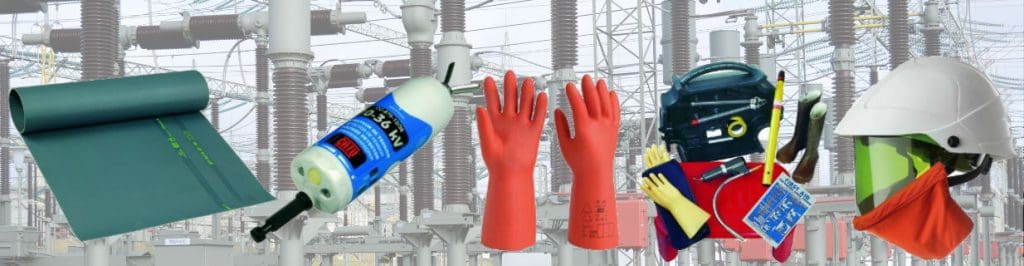
As mentioned earlier, the electrical hazard dangers posed by an arc flash or electrical explosion can seriously injure or kill workers and also cause significant financial damage to infrastructure and cause significant downtime. If an electrical arc does occur, it is imperative that workers are already protected by wearing the correct clothing, whether that is insulating gloves, insulating matting, helmets and insulating boots or a full arc flash protection suit.
T&D Largest UK Stockist – CATU Electrical Safety Equipment
Apologies for further product placement, but leading manufacturers have innovated a series of electrical equipment geared towards eliminating, reducing or quenching arc flash.
Here are just 4 of them :
Eaton Arc Flash Reduction Maintenance System
A circuit breaker equipped with an Arc flash Reduction Maintenance System by Eaton can improve safety by providing a simple and reliable method to reduce fault clearing time. Work locations downstream of a circuit breaker with an Arc flash Reduction Maintenance System unit can have a significantly lower incident energy level. Read more.
ABB REA Arc Flash Detection System
Ultra-fast clearing of arc flash faults in medium voltage (MV) switchgear panels is essential in controlling arc flash hazards. Reducing the arcing time through faster detection is the most practical way of reducing incident energy levels and improving workplace safety. ABB’s innovative REA fast arc flash detection system uses fibre-optic sensors to cut the typical relay operating time to less than 2.5 ms – far faster than conventional relay technology. Read more.
Littelfuse Arc Flash Relays
Littelfuse AF0500 and PGR-8800 Arc-Flash Relays help improve safety and reduce equipment downtime in the event of an arc flash. Both relays use reliable light to send a trip signal to the breaker in 1ms to interrupt power before damage occurs. Their simple plug-and-play installation make them the perfect, cost-effective solution to lowering equipment incident energy (HRC). Read more.
Safe-T-Rack Remote Racking Systems
Safe-T-Rack® is an innovative, patented tool for circuit breaker remote racking and control. The product was specifically developed to provide users of low and medium voltage circuit breakers, including GE vertical lift (MagneBlast) designs and a variety of horizontally racked breakers, a comprehensive alternative to arc flash protection garments. Read more.
ABB 15 HK Circuit Breaker Remote Racking System
The video below demonstrates the need for effective arc flash protection as when it does occur, the results can be deadly.
Arc Flash
6. British Standards & BS7671
British Standards
According to UK Wiring Regulations, the main standard governing electrical installations is BS7671‘Requirements For Electrical Installations’.
This BS standard describes how electrical systems and equipment can be designed, conducted and installed in order for them to be used safely – to provide electrical safety in the workplace and in our homes.
Non compliant “BS7671” installations often feature a potentially lethal cocktail of manufacturers devices that may not have been tested as a completed unit – whilst this “pick and mix” attitude might be acceptable practice in Europe, it definitely does not comply with British Standards.
Earlier this year, we joined forces with Michael Halverson, owner of M-Spec Services Electrical Contractors, a respected UK based electrical contractor. We discussed the recent changes to the BS7671 Wiring Regulations and their affect on the selection and installation of Domestic Household Consumer Units.
“Shoddy cowboy builder charged £49,000 to turn our home into a deathtrap. One light switch turning on a bulb elsewhere in the home.” Via Daily Mail.
In addition, further guidance can be taken from three British Standards – BS6423, BS6626 and BS6867.
HSG230 Keeping Electrical Switchgear Safe includes guidance on the selection, use, care and maintenance of high voltage and low voltage switchgear.
When using electrical equipment in explosive atmospheres, certified products must be used and the Dangerous Substances and Explosive Atmospheres Regulations 2002 covers the regulations that should be followed for onshore installations.
For offshore applications, the Offshore Correct Selection & Use Of Equipment Electricity at Work : Safe Working Practices Page 8 of 33 Health & Safety Executive Installations (Prevention of Fire and Explosion, and Emergency Response) Regulations 1995 should be followed.
7. Partial Discharge & High Voltage Cable Breakdown
Partial Discharge Damage To Electrical Cable Insulation. Image HVPD
A Partial Discharge (PD) is an electrical discharge or spark that bridges a small portion of the insulation between two conducting electrodes.
Partial discharge is an electrical discharge or spark that bridges a small portion of the insulation between two conducting electrodes.
PD can occur at any point in the insulation system, where the electric field strength exceeds the breakdown strength of that portion of the insulating material.
Electrical failures of three phase HV switchgear are most likely to occur during, or shortly after, switchgear operation. The way switchgear is operated, its condition and the conditions in the electrical system at the time it operates will largely determine whether it will function safely.
The use of handheld partial discharge equipment can be considered for use as an additional safety measure during a routine inspection or when entering a substation. The use of partial discharge detection equipment can reduce the risks to people who perform inspections by providing a warning that something may be wrong.
HV electrical switchgear should not be used where its strength and capability may be exceeded unless there is no potential danger of anybody being exposed to the results. In order to prevent any future danger, switchgear and machines must be adequately maintained and details for guidance on the maintenance of HV electrical switchgear can be found in BS6626.
BS6626 is a British Standard which gives recommendations and guidance for the maintenance of electrical switchgear and controlgear having a rated a.c. or d.c. voltage above 1kV and up to and including 36kV.
Older switchgear may contain parts that were manufactured from asbestos or asbestos-containing materials (ACMs).
Getting it right first time. When electrical installations are commissioned and installed, the correct equipment must be used to not only prevent electrical explosions and arc flash but to also minimise the financial costs associated.
If any old equipment is still in use including old type switchboards and fuse-boards used by electricity distributors, then this is not designed to prevent people touching live conductors and suffering injuries from shock or burns.
Electrical equipment to be used in hazardous areas must be certified for use and have adequate certification.
Consideration must also be given to the environment in which the equipment is being used and whether there is any potential for an explosion or leak to occur.
Potentially explosive atmospheres are regulated under the ATEX Directive in Europe and geo-specific hazardous area classifications cover the rest of the world. Adverse external factors should be considered for the electrical equipment such as excess damp or humidity conditions.
The assessment of the working area must be carried out before work commences – given average travel distance from an oil rig to the nearest hospital (by helicopter) offshore locations consequently have extremely rigorous electrical safety working practises. We covered BP’s recently….
Assessing safe working electrical practices can be divided into four stages :
Deciding whether to work live or dead
Planning and preparations for actions that are common to both dead and live working
Procedures for working dead
Procedures for working live
This basic flow chart for assessing safe working practices helps to assess exactly what should be taken into consideration:
Selection chart for assessing safe working practices
The age of switchgear and other electronic equipment should be taken into account as the risk of catastrophic failure increases with age and a process of assessment should be carried out to decide on the appropriate action for dealing with aged switch-gear.
10. Should You Work Dead Or Live?
Working either live or dead is dependent upon the work being carried out and the equipment being worked upon. Working dead simply means working on or with electrical equipment of which the power source has been switched off. Working live means the opposite – the power is still on and the equipment is live.
Typically, normal policy is to work dead and deciding whether to work dead or live is extremely important. It is normal for utilities to recommend work on or near electrical apparatus to be on de-energised equipment, not live, i.e. isolated.
There are a series of questions and points to consider when deciding between working and working dead live:
Can the normal policy of dead working be carried out?
There are three conditions that must be met for live working to be considered acceptable over dead working. These are: It is unreasonable in all the circumstances for the conductor to be dead? It is reasonable in all the circumstances for the person to be at work on or near that conductor while it is live; and suitable precautions (including, where necessary, the provision of personal protective equipment) have been taken to prevent injury.
Is it unreasonable for the work to be done dead?
There are some circumstances in which it would be unreasonable to make the equipment dead due to the difficulties it would cause. Situations where it may not be technically feasible, a DNO needs to connect a new low-voltage service to an existing main or switching off a system, such as the supply to an electric railway track would cause excessive financial cost.
Identify, assess and evaluate the risks and methods for controlling them
If it has been decided that the work must be carried out live, then a risk assessment is required to evaluate the work on or near the specific equipment and it must be carried out by someone with comprehensive knowledge and experience of the type of work.
Decide whether it is reasonable to work live
The risk assessment should inform managers and supervisors whether it is safe to work live. At this stage the operational and economic factors of the work being live should be taken into consideration and evaluated against the risks of working live.
Decide whether suitable precautions can be taken to prevent injury
Providing the required points have been met, live work can still only be justified if suitable precautions are taken to prevent serious injury arising from the hazards noted in the risk assessment.
Arc Flash – HV Substation Switching
Thorne & Derrick are global distributors for the full range of CATU electrical safety products.
The range that ensures your worker safety and prevents and injury or serious harm occurring.
T&D distribute the most extensive range of LV, MV & HV Cable Jointing, Terminating, Pulling & Installation Equipment – we service UK and international clients working on underground cables, overhead lines, substations and electrical construction at LV, 11kV, 33kV and EHV transmission and distribution voltages.
Thorne & Derrick invite you to join LinkedIn’s largest LV-HV Electrical Discussion Group : Low & High Voltage Power, Cabling, Jointing & Electricals. Discussion subjects include cable installations, cable jointing, substation, overhead line and electrical construction at LV, 11kV, 33kV and EHV. Network, engage and promote your profile, company or products with over 10,000 influencers.
by Chris Dodds T&D - estimated reading time 5 minutes
Headquartered in the USA, OCS Group is one of the largest independent inspection company’s, developing many proprietary services and products over the last 20 years for all their clients within the oil, gas, energy and hazardous area industries.
OCS Group works in collaboration with the regulators, government agencies and leading industry bodies for electrical safety in the work place to provide the best training available in the USA in respect to hazardous areas and high voltage power systems.
It is acknowledged that OCS Group is the industries leading expert in electrical safety and this has resulted in a growing relationship and ongoing collaboration with UL to provide the best of industry related competency based training. In addition, OCS is the leading training provider to drilling contractors and operators working in hazardous area and on high voltage systems in their region.
With offices in the USA, Singapore, Australia, Indonesia, Malaysia, Saudi Arabia, UAE and India, OCS Group provides a wide range of services to international oil and gas industries and other industrial engineering and energy markets.
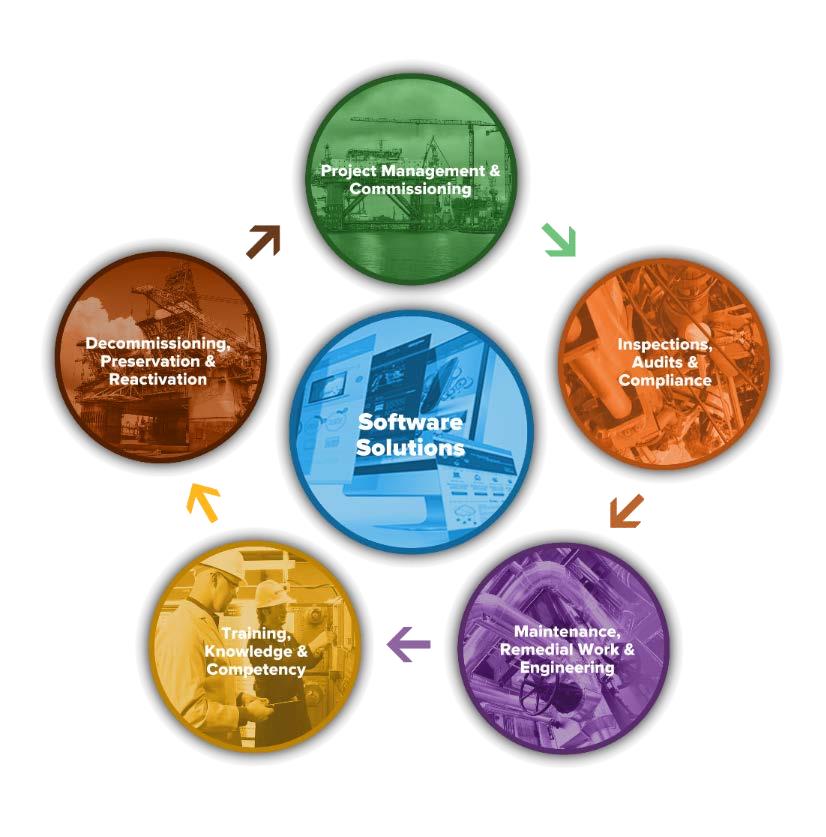
OCS GROUP – Life Cycle of Services
OCS Group delivers these services with an unwavering commitment to the highest safety and quality standards, evidenced by IS0 9001:2015 certification.
Project Management & Commissioning
OCS has global experience of over 150 successful hazardous area and high voltage project management, engineering, testing and acceptance projects delivered on time and budget.
All projects are managed through proprietary software developed in house specifically for land assets, jack-ups, platforms, FPSO’s, drill ships and refineries.
Inspections, Audits & Compliance
OCS Group over 20 years has built strong relationships with operators and contractors providing solutions for all types of hazardous area and high voltage inspections, audits and compliance surveys.
Rig Inspections
Hazardous Area
DROPS
NDT
MCT
Valuation
Rope Access
Competency Audits
Preservation & Reactivation
OCS Group provides VCI materials, experienced and qualified personnel for application and preservation management for large and small projects. For 20 years OCS Group has been providing rig and asset re-activation services, continuously proving the process by ensuring your asset is ready to operate.
Software Solutions
Hazard Trac: Hazardous Area Strategy and Management Software
Drops Trac: Managing Drops on an asset, regional or global scale.
Inspection Trac: Tracking routine inspections and corrective action closeouts
MCT Trac: Managing and Maintaining the required MCT register
Training & Competency
The Global Leader in competency and knowledge based training:
CompEx Scheme: 01-04
CompEx Mechanical
Marine High Voltage (STCW-USCG)
Hazardous Areas HAET – IADC
Electrical for Industrial Applications
Electrical for Renewable Applications
Customized Training Programs
Online Training
High Voltage
Houston based OCS Group has been awarded the United States Coast Guard (USCG) Marine High Voltage Safety accreditation as a Marine High Voltage Training Provider.
Hazardous Area Electrical (Ex) Management
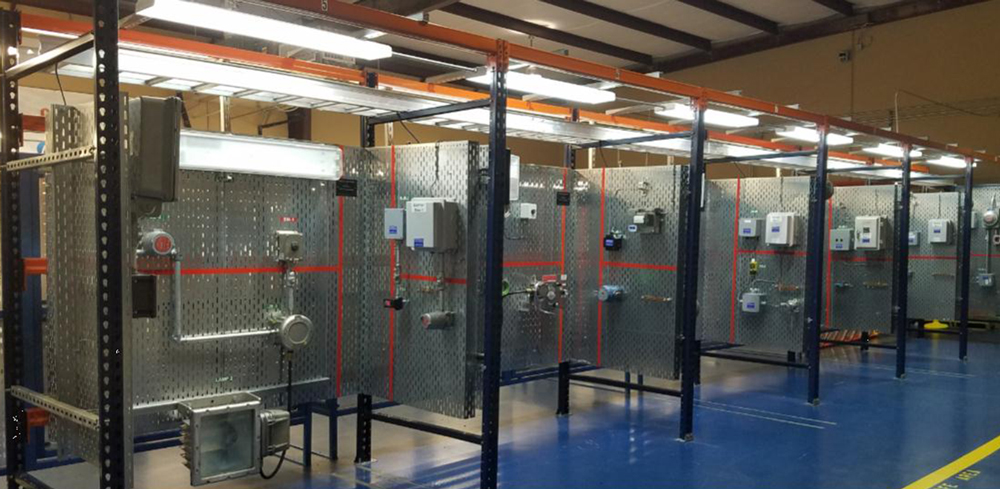
OCS Group is a leading hazardous area (Ex) equipment Inspection Company, evidenced by their loyal clientele comprised of renowned, international drilling companies.
OCS Group follows IEC and NEC standards, employing CompEx certified inspectors to work on every Ex hazardous area inspection. Additionally, the technical training of staff ensures the professionalism of the entire inspection crew and operations personnel have the specialised knowledge and skills necessary to comprehensively complete the job with utmost client satisfaction.
The hazardous area management plan includes creating a register of every item within the Ex location. The equipment is inventoried, logged, inspected, tagged and verified for compliance. The end result is a detailed report outlining the remedial tasks required to make the hazardous area zone safe.
The Hazardous Area Electrical Register (HAER) Inspection consists of several Phases to choose from. Client Preparation required is an up to date area drawings and to provide all hazardous area equipment certification and maintenance system records for review.
Phase One is a detailed inspection of all Ex equipment located in the identified ‘Hazardous Area Locations’ (or Zones)
Phase Two is a separate scope of work of remedial task management to correct the deficient items identified in Phase One
Phase Three is optional and can consist of a specific scope of work such as an Emergency Shutdown Devices (ESD), or a competency assessment of the assets’ workforce in a live simulation of an electrical Safe Work Practices
(SWP) audit
OCS Group – Solutions For Success
THORNE & DERRICK are national distributors of LV, MV & HV Cable Installation, Jointing, Substation & Electrical Equipment – we service UK and global businesses involved in cable installations, cable jointing, substation, overhead line and electrical construction at LV, 11kV, 33kV and EHV.
Since 1985, T&D have established an international reputation based on SERVICE | INTEGRITY | TRUST.
Contact us for 3M Electrical, ABB, Alroc, AN Wallis, CATU Electrical, Cembre, Centriforce, CMP, CSD, Elastimold, Ellis Patents, Emtelle, Euromold, Filoform, Furse, Lucy Electric & Zodion, Nexans, Pfisterer, Polypipe, Prysmian, Roxtec, Sicame, WT Henley.
Invitation
Thorne & Derrick invite you to join LinkedIn’s largest LV-HV Electrical Discussion Group : Low & High Voltage Power, Cabling, Jointing & Electricals.
Discussion subjects include cable installations, cable jointing, substation, overhead line and electrical construction at LV, 11kV, 33kV and EHV. Network, engage and promote your profile, company or products with over 10,000 influencers.
Northern Powergrid, NPG, are a UK Distribution Network Operator distributing low and high voltage electricity covering North East England, – we overview current NPG recommendations and specifications for Cable Protection Tapes & Covers using Tile Tape and Stokbord products.
This should assist LV-HV Cable Jointing, Installation & Civil Engineering Contractors installing the appropriate level of LV-HV Cable Protection for underground power cables.
T&D are Approved Vendors to NPG and their contractors providing competitive prices and technical support for LV, MV & HV Cable Installation, Jointing, Substation & Electrical Equipment.
Trenchless Excavation
Where appropriate, trenchless excavation shall be considered as a viable option when installing underground cable. Application of this option shall always employ the cable being laid in a suitable and approved duct as shown below.
Trenchless Installation Duct Requirements
Cable Type
Cable Size
Duct (Outside Diameter)
Metallic Auxiliary
All
125mm PE SDR-11 Black
Fibre Auxiliary
All
125mm PE SDR-11 Black
Fibre Auxiliary (Sub-Duct)
All
32mm PE SDR-11 Black
LV Service
All
75mm PE SDR-11 Black
LV Main
All
125mm PE SDR-11 Black
11kV to 20kV
Triplex up to 300sqmm
125mm PE SDR-11 Black
Triplex above 300sqmm
160mm PE SDR-11 Black
33kV
Single Core
160mm PE SDR-11 Black
Triplex up to 400sqmm
160mm PE SDR-11 Black
66kV to 132kV
All
180mm PE SDR-11 Black
All ducting used in trenchless excavation shall be solid wall circular section duct (SDR-11) as specified in ENA-TS 12-24 – ‘Plastic Ducts for Buried Electric Cables 2008’and NPS/002/003 – ‘Technical Specification for Protective Tile, Tile Tape and Cable Ducting’ and all cables require advanced warning and this will normally be in the form of an embossed black duct compliant with ENA-TS 12-24 – ’Plastic Ducts for Buried Electric Cables 2008’.
Open Cut Trench
Open Cut Trench Installation Requirements
Cable Type
Cable Size
Public Footpath (OD / ID mm)
Private Domestic (OD / ID mm)
Private Non-Domestic (OD / ID mm)
Road (OD / ID mm)
Metallic Auxiliary
All
96.5/90 Duct & Tile Tape
96.5/90 Duct & Tile Tape
96.5/90 Duct & Tile Tape
96.5/90 Duct & Tile Tape
Fibre Optic Auxiliary
All
96.5/90 Duct & Tile Tape
96.5/90 Duct & Tile Tape
96.5/90 Duct & Tile Tape
96.5/90 Duct & Tile Tape
LV Service
All
Laid Direct & Tile Tape
38/34 or 46 Duct & Tile Tape
Laid Direct & Tile Tape
150/125 Duct* & Tile Tape
LV Main
All
Laid Direct & Tile Tape
150/125 Duct* & Tile Tape
Laid Direct & Tile Tape
150/125 Duct* & Tile Tape
11kV to 20kV
Up to 300sqmm
Laid Direct & Tile Tape
175/150 Duct* & Tile Tape
Laid Direct & Tile Tape
150/125 Duct* & Tile Tape
Above 300sqmm
Laid Direct & Tile Tape
175/150 Duct* & Tile Tape
Laid Direct & Tile Tape
175/150 Duct* & Tile Tape
33kV
Triplex up to 400sqmm
160/150 Duct & Tile Board
160/150 Duct & Tile Board
160/150 Duct & Tile Board
160/150 Duct & Tile Board
All Single Core
160/150 Duct & Tile Board
160/150 Duct & Tile Board
160/150 Duct & Tile Board
160/150 Duct & Tile Board
66kV to 132kV
All Single Core
160/50 Duct & Tile Board
160/150 Duct & Tile Board
160/150 Duct & Tile Board
160/150 Duct & Tile Board
*Assumes twin wall ducting. All others are single smooth wall design.
All sizes for ducts installed in open trenches are nominal diameter measurement and should have tile tape or tile board installed above the cables / ducts ensuring an overlap of 50mm either side of the cable(s)/duct(s).
Cables in the range 230V to 20kV shall be laid under tile tape positioned 150mm directly above the top of the uppermost cable / duct and 33kV to 132kV shall be laid under tile boards positioned 75mm directly above the top of the uppermost cable / duct with each tile board shall be closely interlocked with adjacent covers throughout the length of the cable.
All ducting used in open trench excavation shall be used as part of cable installation works shall be as specified in NPS/002/003 – ‘Technical Specification for Protective Tile, Tile Tape and Cable Ducting’.
Cables installed for future jointing to existing cables shall be adequately overlapped to allow easier jointing.
T&D supply Utilities & Approved Contractors with cable pulling products including cable rollers, cable socks and drum lifting jacks to enable the installation of low voltage and high voltage cables intro trench or duct: this includes single core, 3 core and Triplex 11kV/33kV power cables and LV waveform, mains and service cables.
klauke ekm60unv – universal cutting, crimping & punching tool The Klauke EKM 60 UNV is a versatile battery powered hydraulic universal tool engineered that can be used as a battery powered cable crimping tool and battery operated cable cutting tools that comes...
INDUSTRIAL LABEL PRINTING SOLUTIONS When clear, durable and professional identification is required across control panels, cable systems, production facilities and industrial installations, print quality, reliability and ease of use are critical. Cembre industrial label printers are designed to support...














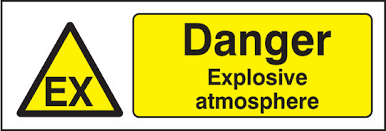 Atmospheres Regulations 2002 covers the regulations that should be followed for onshore installations.