Maintaining Arc Flash Clothing For Long Term Multi-Risk Protection
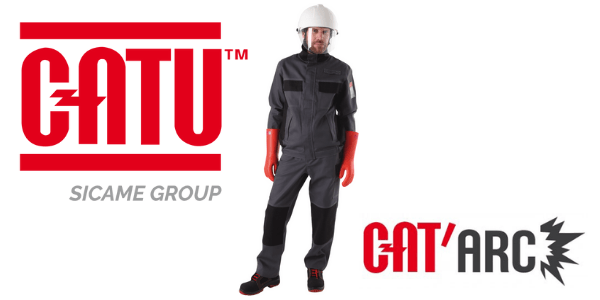
The CATU range of Arc Flash Clothing Kits are comfortable, lightweight and range from 12 cal/cm² – 40 cal/cm². The Pro Kit gathers a selection of essential garments to guarantee protection against electrical arc risks – should you require guidance on selection and use of an Arc Flash Calculator please call Thorne & Derrick.
Thorne & Derrick stock and distribute an extensive range of arc flash clothing and protection available in a range of sizes and cal ratings to ensure protection against the dangers and risks of arc flash hazards manufactured by market-leading specialists CATU.
The CAT’ARC range now offers multi-risk and Arc-Flash protection from 12 to 40 cal/cm². These comfortable garments are worn on a daily basis and therefore need to be cleaned regularly. CATU helps you to maintain their protection levels, even after many washes.
Technical and innovative, the 12 cal/cm² CAT’ARC garments have been tested according to the ISO 15 797 standard, which certifies that they retain their properties throughout their period of use. This standard verifies that our garments support global industrial maintenance solutions offered by service providers, such as professional laundries.
The arc flash protective garments were subjected to 50 wash cycles at 75 ° C and drum drying at 70 ° C – this makes it possible to check the maintenance of the different protections, the dimensional stability, the behaviour of the colours, the wrinkling, the formation of creases, the pilling and the visual.
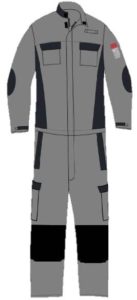
12 Cal Arc Flash Protection Kit
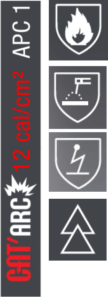
Flame spread (ISO 11612 – A1 A2)
Source of heat emmited by convection, radiation, or contact
(ISO 11612 B1, C1, F1)
Molten metal spatter (ISO 11612 E2)
Protection against welding hazards (ISO 11611 class 2)
Electrostatic dissipation (EN 1149-5)
Arc-Flash resistance
box test (IEC61482-1-2 / Box Test APC 1)
Mechanical strength (tensile, tear)
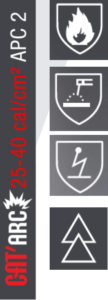
The innovative CAT’ARC 25-40 cal/cm² fabric has been subjected to 50 complete wash cycles at 40°C and tumble drying at 60°C, in accordance with ISO 6330, Household Washing and Drying Methods for Textile Testing. This standard verifies that our garments can withstand the care solutions. Thus, the fabric has been tested and validated after 50 industrial wash-dry cycles for the following performances:
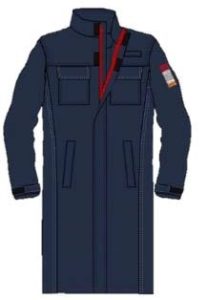
25-40 Cal Arc Flash Protection Kit
Flame spread (ISO 11612 – A1 A2)
Source of heat emmited by convection, radiation, or contact
(cf ISO 11612 B1, C2, F2)
Protection against welding hazards (cf ISO 11611 class 2)
Electrostatic dissipation (EN 1149-5)
Arc-Flash resistance
box test (IEC61482-1-2 / Box Test APC 2)
Mechanical strength (tensile, tear)
Caring & Maintaining Arc Flash Clothing
Some Tips On How To Care For Your Garment
As a reminder, the useful life of clothing depends on the use of the PPE, maintenance, storage, etc. it is therefore important to take good care of your clothing and adapt the frequency of washing to the working conditions and the degree of soiling. To wash your garment properly, there are a few simple tips to follow:
Close all hook and loop fasteners and zips. Empty all pockets.
Turn the arc flash garment inside out to avoid damage from rubbing against the machine drum.
Wash separately the arc flash clothing. Do not mix with ordinary garments without similar protective properties.
Recommended washing temperature: 40°C (104ºF).
Do not bleach the clothing.
Tumble dry possible at 60ºC (140ºF)
Arc Flash PPE & Electrical Safety
Main UK Stockists & Distributors of Electrical Safety Products
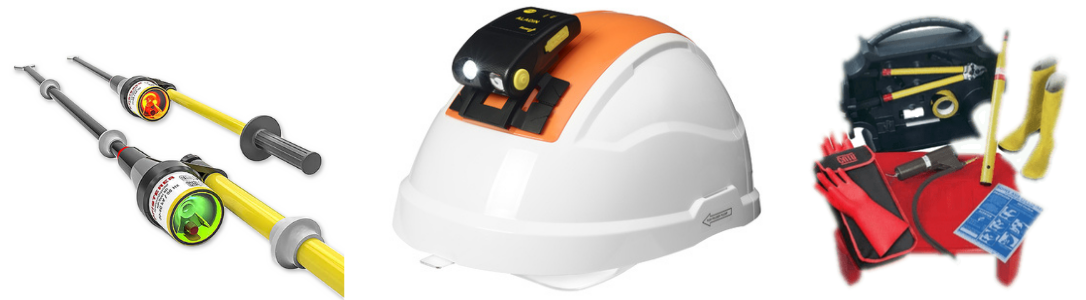
Thorne & Derrick provide Electrical Safety Equipment to substation engineers, cable jointers, overhead linesmen and utility workers with PPE and electrical safety equipment including insulating gloves, voltage detectors, insulating mattingand portable earthing to ensure worker safety when carrying out maintenance on LV-HV switchgear, substations, cables and electrical equipment.
We protect substation engineers, asset managers, SAPS, cable jointers, overhead linesmen and utility workers with PPE and safety equipment: this includes insulating gloves, voltage detectors, insulating mattingand portable earthing to ensure worker safety when carrying out repair and maintenance on LV-HV switchgear, transformers, substations and turbines.
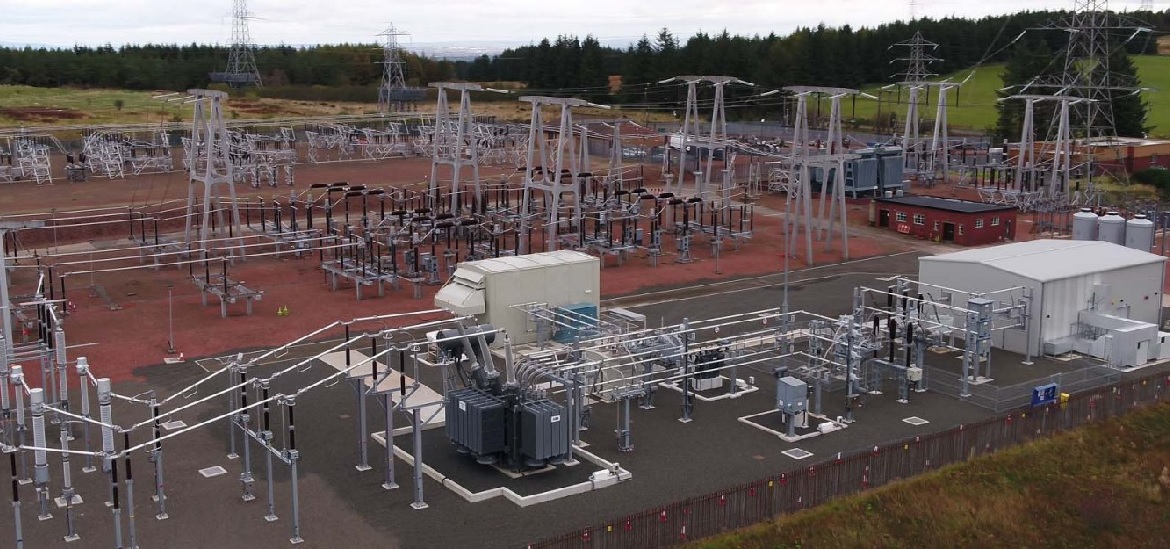
All our Cable Connection & Energisation Accessories including Medium & High Voltage joints, terminations, connectors and cleats are tested to the latest international standards and supporting ranges of professional cabling tools are stocked to reduce incident, accident and downtime to plant and people.
An arc flashis the light and heat produced as part of an arc fault; a type of electrical explosion or discharge that results from a low impedance connection through air to ground or another voltage phase in an electrical system.
In industries working around high and low voltage electricity, the importance of Electrical PPE and arc flash protection is widely recognised, and the latest electrical safety requirements are understood by managers and operatives alike.
However, the dangers posed by an arc flash are not so well known in comparison. With temperatures of up to 35,000ºF, which is more than four times hotter than the surface of the sun, an arc flash has the potential to burn an operative’s skin within fractions of a second, meaning PPE really is the last line of defence for workers.
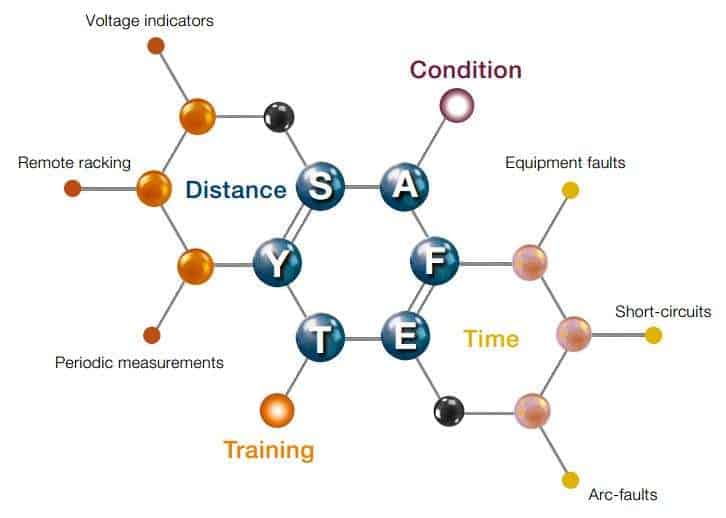
In the face of the internal arc fault risk present in low and medium voltage switchgear, prevent accidents to protect the personnel and the electric installation itself by following this proven formula.
Condition
Knowing and improving the condition of the equipment is a key factor in reducing the likelihood of failure, damage, and injury. is comprised of condition, distance, time, and training.
Risk Assessment study – Asset risk assessments to establish the risk profile of equipment based on its condition and importance in the system, and prioritize actions to mitigate the risk before the hazard occurs
Monitoring programs – Risk monitoring and mitigation programs to maximize improved reliability and reduced operator exposure
Upgrades and retrofit – Equipment upgrades and retrofit which decrease operator exposure because of reduced maintenance, faster cycle times, and lower clearing times
Diagnostic testing – Diagnostic testing to address concerns of bad connections, pollution, mechanical faults and minimize failures due to defective devices
Distance
Maintaining a safe distance between personnel and equipment during critical operations provides the most effective means of avoiding injury by keeping people out of harm’s way
Remote racking – Remote racking provides a safer operating environment for personnel through the proven method of adding distance between the operator and arc flash incident energy at the switchgear site, bringing operation of power circuit breakers to a new level of safety. ABB vacuum circuit breakers can be provided with a fully integrated motor operated racking system for their use in new replacement switchgear or as part of the hard-bus and cradle-in-cradle retrofill solutions.
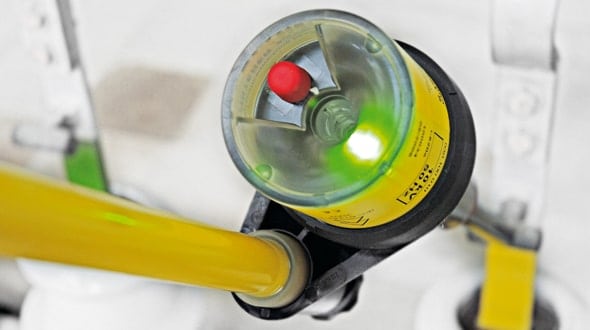
Voltage indicators – The installation of voltage indicators on accessible power circuits can increase the operators safety and avoid accidental electrical contact injuries. VisiVolt is an ABB passive voltage indicator perfectly suiting the equipment upgrade. It is adapted for permanent installation on busbar and naked or insulated metal conductors, indicates the presence of voltage by displaying a large and well visible lightning arrow sign on its display. The relevant silicone elastomeric enclosure ensures performance also in outdoor conditions while its fluorescent orange colour provides good visibility among the other elements of the system.
Infrared thermo-graphic inspection – Infrared (IR) thermal measurements are performed through dedicated arc-proof ports with power compartment doors closed. The periodic thermo-graphic inspection of the critical areas (e.g. power cables connections) is an efficient method for preventing associated faults. Ports can be added to existing switchgear by ABB expert engineers keeping the original equipment design characteristics.
Partial discharge measurements – Periodic measurement of the partial discharge (PD) level is a proven method for detecting insulation degradation before real insulation failure develops. The assessment results are documented as trend curves for each switchgear compartment, where the curves with high increase of partial discharge activity level indicate compartments with high risk of insulation failure. Site work is performed with closed doors.
Time
Reduction of time for clearing fault conditions has a dramatic impact on the energy released and consequent damage and injury.
MV equipment faults: relay upgrades with Relion® – microprocessor equipment which operate faster than electromechanical relays and support faster clearing times.
Short-circuit current: Is-Limiter device – Is-limiter device as a fast operating interrupting device that limits the short circuit current to a level that breakers and buses can withstand, protecting property and personnel. Replacement of existing switchgear and cable connections with new equipment with higher short-circuit ratings can be technically impossible. The use of Is-limiters reduces the short-circuit current in extensions of existing systems and in new systems. The Is-limiter is capable of detecting and limiting a short-circuit current during the first current rise in less than a millisecond.
Arc-faults: REA arc fault detection system – REA arc flash protection relay uses patented fiber-optic sensor technology that instantaneously detects light from an arc to signal a “trip” to the designated circuit breaker in less than 2.5 ms, minimizing an arc flash incident.
Arc-faults: Upgrade with UFES – UFES, an ultra fast earthing switch, provides detection and grounding of faults in times significantly faster than breaker clearing times, leading to the avoidance of injury and damage and the reduction of production outages. A device as small as an insulator offers enhanced protection for your switchgear by the effects of internal arcs. The UFES arc protection system channels the uncontrolled release of energy by the arc into a solid metal, 3-phase connection to earth potential. The internal arc will be extinguished within an operation time of < 4ms after detection of the fault.
Training
Adequately trained personnel and proper procedures are essential to safe operations
Personnel training – Training engineering and technical services provide personnel with a better understanding of their equipment and systems and the safest means to operate them.
Procedure development – Arc flash studies help to determine the necessary level of protective equipment or clothing (PPE) to be worn by workers in close proximity to potential arcs and also help determine the proper application of any arc flash protection equipment to be installed.
Engineering studies – Engineering studies determine the proper settings and system coordination, while addressing the speed of the system to handle a fault so relays and associated protective devices are set properly in order for the system to react as designed.
Electrical Safety Providers
We protect substation engineers, asset managers, SAPS, cable jointers, overhead linesmen and utility workers withPPE and safety equipment: this includes insulating gloves, arc flash clothing, voltage detectors, insulating mattingand portable earthing to ensure worker safety when carrying out repair and maintenance on LV-HV switchgear, transformers, substations and turbines.
All of our Cable Connection & Energisation Accessories including Medium & High Voltage joints, terminations, connectors and cleats are tested to the latest international standards and supporting ranges of professional installation tools are stocked to reduce incident, accident and downtime to plant and people.
Voltage Detectors Distributed from Stock | Approved Supplier | UK & Export Sales
Voltage Detectors
Pfisterer KP-Test 5
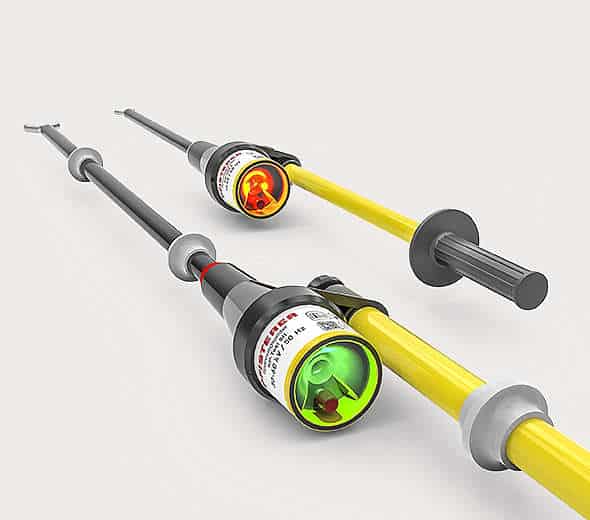
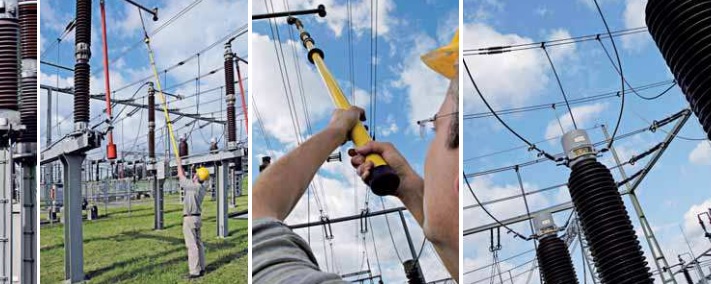
The KP-Test 5 capacitive voltage detector manufactured by PFISTERER and distributed by Thorne & Derrick can be used for indoor and outdoor medium voltage applications. It indicates the presence of operating voltage. The KP-Test 5 voltage detector is distinguished by its high level of user friendliness and user safety.
Voltage detectors in the KP-Test 5 seriesperform an automatic self-test when they are switched on. The detectors also give off a clear visual and audible warning to signal the presence of voltage.
Voltage detector provides wider range of application, easier handling, improved signal indication – KP-Test 5 keeps pace with increased market requirements and makes high-quality electrical safety equipment possible.
Pfisterer Voltage Detector
KP-Test 5 Voltage Detector
Tested to EN 61243-1 the capacitive voltage detector can be used in all weather conditions. As with any security-related tool, there are a few basic rules to follow:
The employers’ liability insurance association for energy, textiles, electronics and media products (BG ETEM) currently points out that the contact electrodes or test prods of voltage testers must have conductive electrical contact with the system part to be tested in order to reliably determine the absence of voltage.
Clear measuring conditions, which are covered by the IEC 61243-1 standard, only arise in direct contact with the conductive part of the system. Even the simplest adhesive strips from office supplies can cause voltage drops of a few kV on busbars and lead to incorrect test results.
In practice, busbars are often color-coded, and measurements should never be taken at these points. This fact is due to the principle and applies to devices from all manufacturers. Another important rule: Voltage testers must be checked for proper functioning both before and after the measurement. The built-in self-test function is used for this.
Voltage Detectors 11kV 33kV
The KP-Test 5 family offers the right voltage detector for every application. Medium or High Voltage, alternating or direct current for use on overhead power lines, switchgear, in substations or on railway systems. All devices are individually adapted to our customers’ requirements. PFISTERER offers solutions for all voltage levels from 1 to 420 kV AC.
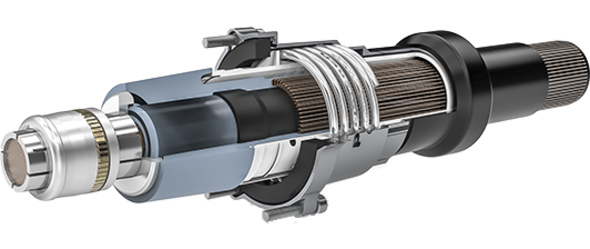
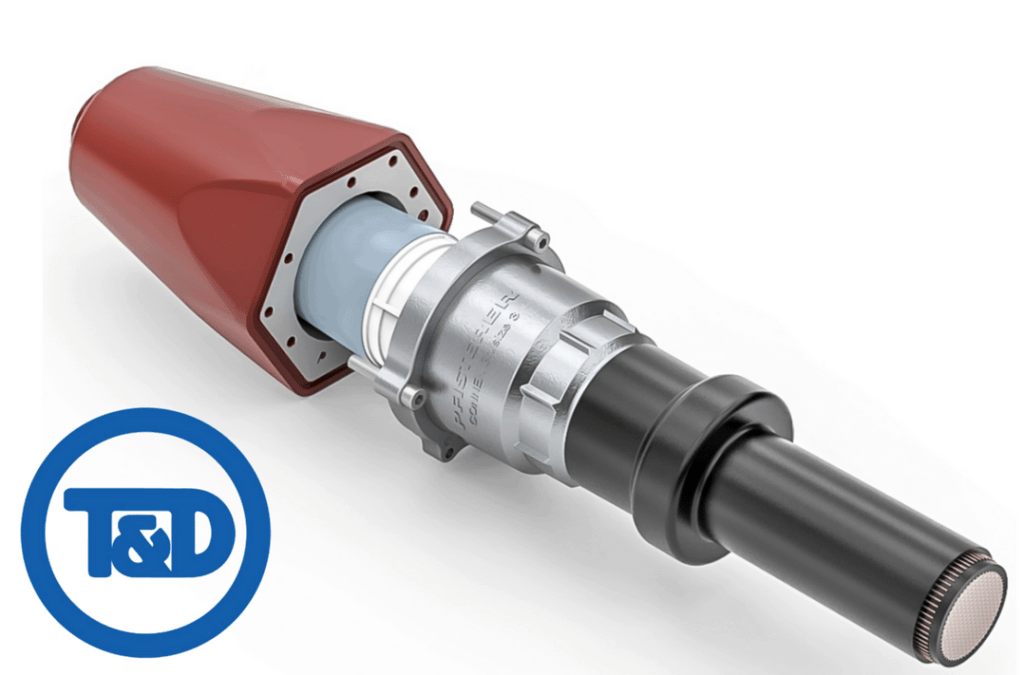
The SEANEX inner cone solution is an offshore variant of the successful Connex HV connection system that is specially adapted for 66kV inter-array cabling.
THORNE & DERRICK
Thorne & Derrick are national distributors of LV, MV & HV Cable Installation, Jointing, Substation & Electrical Equipment – servicing businesses involved in cabling, jointing, substation, earthing, overhead line and electrical construction at LV, 11kV, 33kV, 66kV and EHV. Supplying a complete range of power cable accessories to support the installation and maintenance of low/medium and high voltage cable systems:
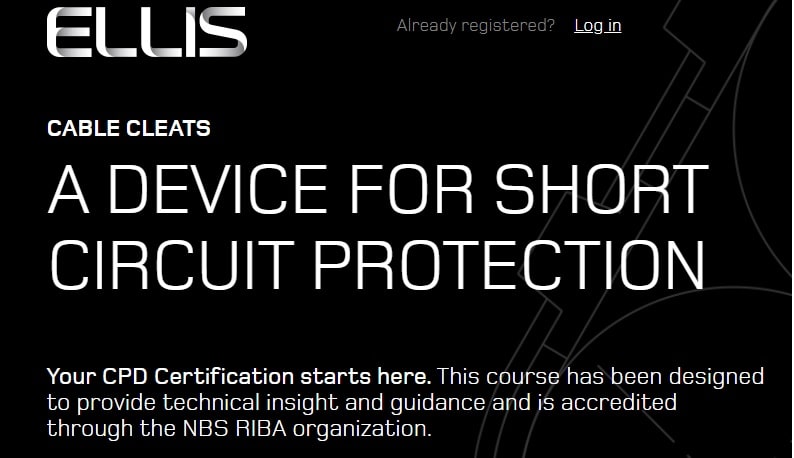
Ellis Patents, the world’s leading cable cleat manufacturer, has launched its UK accredited Continuing Professional Development (CPD) course – developed in-house, their online CPD course has helped educate thousands of engineering professionals from around the world.
“Cable cleats: a device for short circuit protection” is a NBS RIBA accredited course designed to provide technical insight and guidance that has been adapted for international use and is available through Ellis’s e-learning portal.
Includes a brief history of standards plus the importance of detailed specification to ensure the correct cable fixings are chosen for the environmental conditions and application.
Module 2 Electrical Theory
Nothing too heavy! Learn about short circuit faults, why they occur and their impact on cable systems. Also, how to calculate the forces involved and therefore how to ensure the correct strength fixings are specified.
Module 3 Materials
Different applications require differing solutions. Learn how sunshine, pollution and marine environments can cause problems if the wrong materials are specified. How to avoid bimetallic issues and how to prevent corrosion. The importance of fire safety and low emissions is also studied.
Module 4 Testing
Some exciting video clips of when things go wrong, and of good engineering practice. Appreciate the international standards that apply to cable cleat design and the rigorous testing procedures involved.
Module 5 Applications
An overview of some cable cleating applications and interesting special cable fixing projects.
What are the people saying?
“The Ellis CPD training is beneficial because it covers technical aspects of selecting the right cleat and it allowed me to discuss cleats with much more confidence.”
Rob Rehberg (NASCO)
“I found the Ellis Cable Cleats CPD kept my interested, it was very informative and professionally put together.”
Jon Watkins (Electrical Engineer – Kier Construction)
In this video Ellis Patents compare using Stainless Steel Cable Cleats and Stainless Steel Cable Ties – the Ellis cable cleats are used to restrain power cables on slotted rung cable tray and are short-circuit tested to 59kA RMS, 118kA Peak for 0.1 second duration.
SHORT-CIRCUIT TESTING
There is a major difference between the short-circuit withstand requirements of a cable and the short-circuit withstand of a cable cleat.
The former is concerned with cable degradation as a result of temperature rise (thermal stress heating), while the latter is concerned with cable retention as a result of electromechanical forces.
Typical installation specifications that have been derived from the thermal withstand of the cable would require a short-circuit withstand of 63kA for 1 second or 40kA for 3 seconds.
A short-circuit test for a cable cleat does not consider this heating effect, and instead concentrates entirely on the destructive electro-mechanical forces at peak, followed by a short term decaying RMS.
The international standard IEC 61914 requires a short-circuit test duration of just 0.1 second. This equates to five complete cycles, by which time the true strength of a cable cleat will be known.
IEC61914 notes “a cable cleat is provided with a means of attachment to a mounting surface but does not rely on an unspecified mounting surface for the retention of the cables. Examples of mounting surfaces that may be specified are ladder, tray, strut or rail, wire and beam. Where declared, cable cleats provide resistances to electromechanical forces.”
IEC61914 – Calculating Short Circuit Forces To Specify Compliant Cable Cleats
Thorne & Derrick are national distributors of LV, MV & HV Cable Installation, Jointing, Substation & Electrical Equipment – servicing businesses involved in cabling, jointing, substation, earthing, overhead line and electrical construction at LV, 11kV, 33kV, 66kV and EHV. Supplying a complete range of power cable accessories to support the installation and maintenance of low/medium and high voltage power systems:
Main UK Stockists & Distributors of Electrical Safety Products
Thorne & Derrick provide Electrical Safety Equipment to substation engineers, cable jointers, overhead linesmen and utility workers with PPE and electrical safety equipment including insulating gloves, voltage detectors, insulating mattingand portable earthing to ensure worker safety when carrying out maintenance on LV-HV switchgear, substations, cables and electrical equipment.
ELECTRICAL SAFETY IN THE WORKPLACE
See our collection of the Top Blogs featuring the complete range of Arc Flash PPE and Electrical Safety Equipment that Thorne & Derrick have available:
From Substation to Socket | Safe LV HV Cables & Electrical Power Systems Up to 400kV
We provide Tooling & Electrical Equipment to Improve Workplace Safety.
Contact us with your Enquiry.
We protect substation engineers, asset managers, SAPS, cable jointers, overhead linesmen and utility workers with PPE and safety equipment: this includes insulating gloves, voltage detectors, insulating mattingand portable earthing to ensure worker safety when carrying out repair and maintenance on LV-HV switchgear, transformers, substations and turbines.
All our Cable Connection & Energisation Accessoriesincluding Medium & High Voltage joints, terminations, connectors and cleats are tested to the latest international standards and supporting ranges of professional installation tools are stocked to reduce incident, accident and downtime to plant and people.
Compound Box Filling Compound end boxes rarely get attention — until one fails. Across ageing networks, replacement of compound-filled end boxes is becoming more frequent, particularly where original insulation systems have deteriorated and air insulation is not practical because...
Nexans 240–300mm² Multi-Joint – Medium Voltage Cable Joint Installation Medium voltage cable jointing requires reliability, consistency and safe installation practices. The Nexans 240–300mm² Multi-Joint is designed to simplify medium voltage jointing while maintaining high electrical performance for demanding power...