Blog
BS EN ISO 20471 Standard | Arc Flash & Protective Clothing Standards
September 9th, 2021
BS EN ISO 20471 Standard Arc Flash & Protective Clothing Standards
BS EN ISO 20471
Arc Flash & Protective Clothing Standards
BS EN ISO 20471 is the European Standard for High Visibility Protective Clothing – High Visibility Clothing. Test methods and requirements.
The BS EN ISO 20471 standard specifies the requirements for clothing designed to increase the wearer’s visibility in order to make them more noticeable in hazardous situations during the day and at night (illumination in car headlights). It has replaced EN 471 which has now been withdrawn.
THE CONTENTS OF THIS EN STANDARD
BS EN ISO 20471 standard’s icon is a safety vest placed adjacent to a number which represents the design classification of the garment. The classification is 1, 2 or 3 where Class 1 provides the minimal level of visibility and class 3 provides the highest level prescribed by the standard.
View further information about Arc Flash Clothing Standards.
The Classification
The classification is derived from the number of square metres of fluorescent fabric and the number of square metres of reflective strip incorporated in a garment.
| Material | Class 3 Garments | Class 2 Garments | Class 1 Garments |
| Background material | 0.80 | 0.50 | 0.14 |
| Retroflective material | 0.20 | 0.13 | 0.10 |
| Combined performance material | N/A | N/A | 0.20 |
| NOTE – The clothing class is determined by the lowest area of visible material | |||
EN ISO 20471 provides the following guidance on risk factors and selection of clothing:
| Risk Level | Factors related to the risk level (Vehicle speed/Type of road user) | Risk Level |
| High risk ISO 20471 class 3 | >60km/h / Passive | High Visibility – Day and night visibility – 360 Degrees (visibility from all sides) – Design for form recognition – Encircling the torso (Class 2 & 3) – Quantity and quality for day and night |
| High risk ISO 20471 class 2 | ≤60km/h / Passive | |
| High risk ISO 20471 class 1 | ≤30km/h / Passive |
The fluorescent fabric must encircle the torso, sleeves and trouser legs with at least 40% or the minimum required area of fluorescent material present on the front of the garment (and on the back of the garment). The reflective strips must be 50mm wide and the space between 2 reflective strips must be at least 50 mm.
The distance from ‘the end’ of the garment (e.g. the end of a trouser leg) to the reflective strip must also be at least 50mm. Reflective strips can be positioned in a variety of different ways; Class 3 garments must cover the wearers torso and have either reflective strips about the sleeves or full length trouser legs.
BS EN ISO 20471 | Standard Overview
Protective clothing. High visibility clothing. Test methods and requirements.
ISO 20471:2013 specifies requirements for high visibility clothing which is capable of visually signalling the user’s presence. The high visibility clothing is intended to provide conspicuity of the wearer in any light condition when viewed by operators of vehicles or other mechanized equipment during daylight conditions and under illumination of headlights in the dark.
Performance requirements are included for colour and retroreflection as well as for the minimum areas and for the placement of the materials in protective clothing.
This British Standard is the UK implementation of EN ISO 20471:2013+A1:2016. It is identical to ISO 20471:2013, incorporating amendment 1:2016. It supersedes BS EN ISO 20471:2013 which is withdrawn.
The UK committee voted against the approval of this standard. The reason for this objection is that several UK experts expressed the opinion that the inclusion of the Water Vapour Resistance (clause 5.6.3) is a general requirement and not specific to High Visibility Clothing. This may discriminate against a range of materials currently in use resulting in serious implications for manufacturers of garments to this standard.
Standard Status | Current, Under Review
Published | 2013
➡ Standards | RIS-3279-TOM | IEC 61482-2 | BS EN ISO 11611 | BS EN 1149-5 | BS EN ISO 14116 | BS EN ISO 11612 | BS EN 13034 | BS EN 342 | BS EN 14404 | BS EN 343 | HSG47
BS EN 471:2003+A1:2007
High-visibility warning clothing for professional use. Test methods and requirements.
BS EN 471:1994
Specification for high-visibility warning clothing.
BS 6629:1985
Specification for optical performance of high-visibility garments and accessories for use on the highway.
Clothing & Garments
Protecting Workers Against the Dangers of Arc Flash
Thorne & Derrick stock and supply the most extensive range of Arc Flash PPE, Clothing & Protective Garments – should you require any further information, sample garments for field test and trial or a quotation please do not hesitate to contact us.

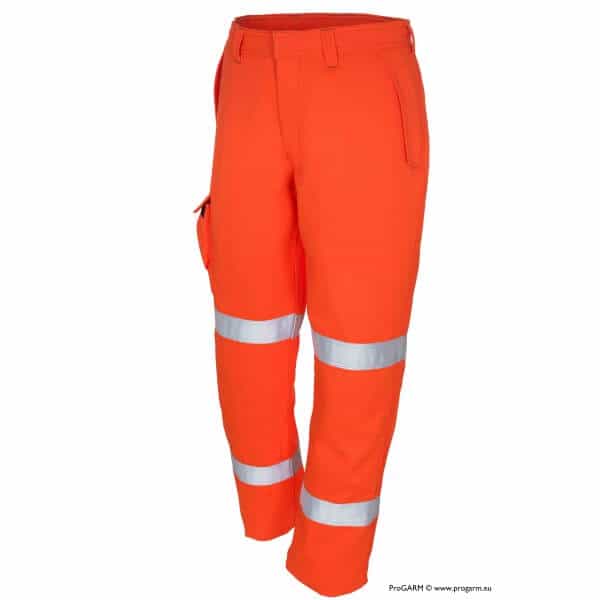
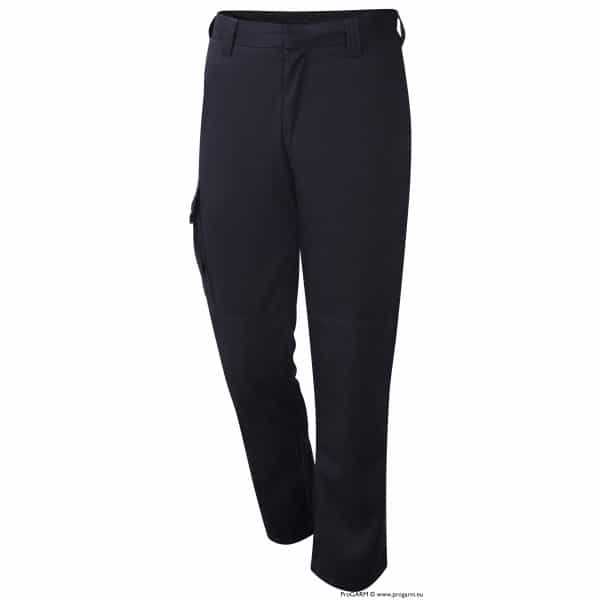
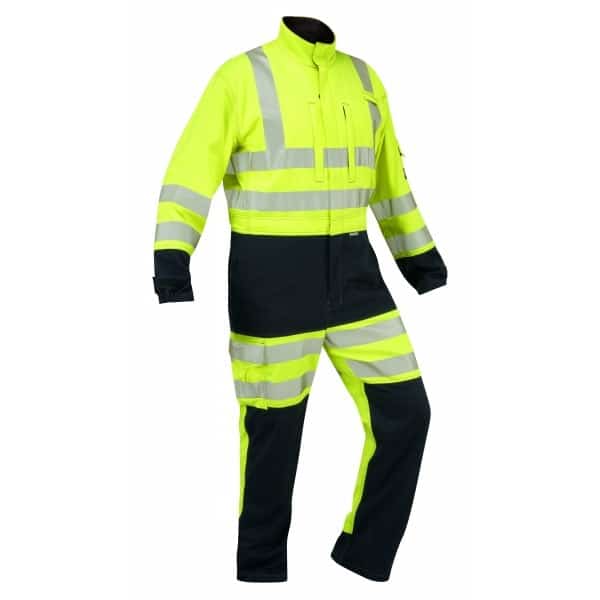
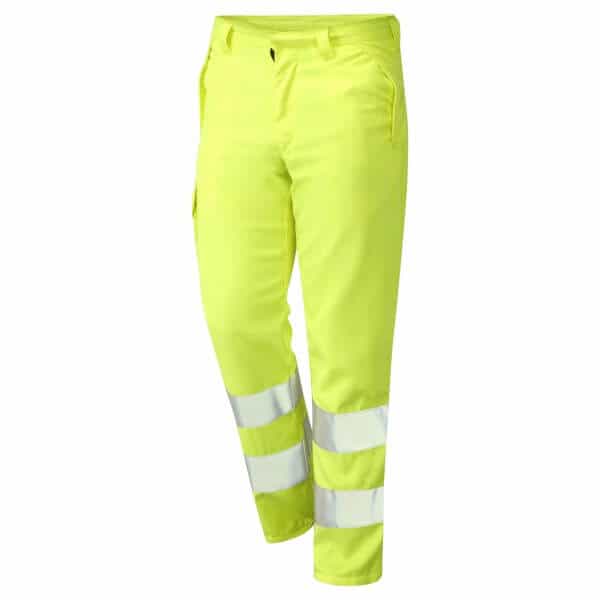


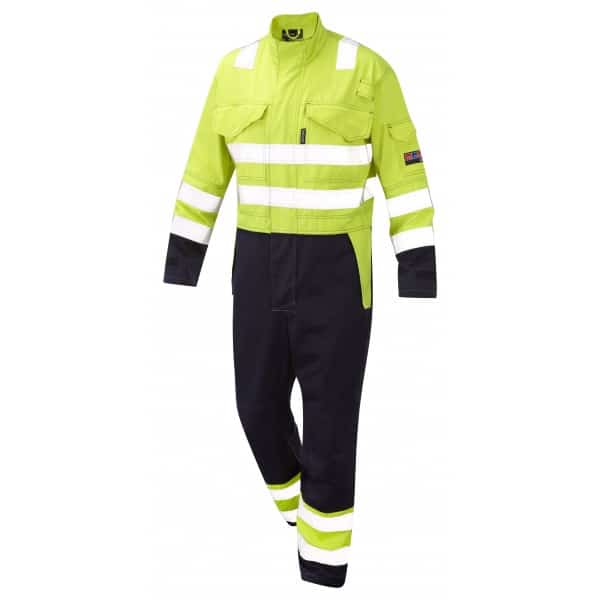
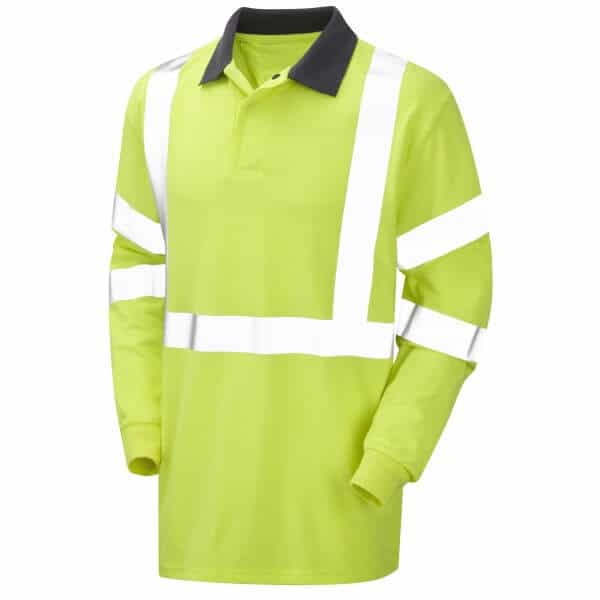

Thorne & Derrick International supply arc flash clothing and protection equipment including coveralls, gloves, helmets, face shields and general head-to-toe PPE is used to protect against flashover – complete range of insulating matting is also available for worker protection when exposed to energised electrical switchgear and transformers.
Typical applications include LV, HV & EHV cable jointing and terminating, fuse pulling, switchgear commissioning, racking circuit breakers, electrical switching and live working on medium and high voltage electricity networks.
T&D are national distributors LV, MV & HV Cable Installation, Jointing, Substation & Electrical Equipment – we service UK and global businesses involved in cable installations, cable cleating, cable jointing, substation, overhead line and electrical construction at LV, 11kV, 33kV and EHV.
Since 1985, T&D have established an international reputation based on SERVICE | INTEGRITY | TRUST.

Electrical Safety Equipment & Cable Accessories for the Maintenance of Low, Medium & High Voltage Power Systems
IEC 61482-2 Standard | Arc Flash & Protective Clothing Standards
September 9th, 2021IEC 61482-2 Standard Arc Flash & Protective Clothing Standards
IEC 61482-2
Arc Flash & Protective Clothing Standards
IEC 61482-2 Standard is an International Electrotechnical Commission standard regarding live working – protective clothing against the thermal hazards of an electric arc. Arc flash protection garment style is carefully designed to offer the maximum protection in regards to IEC 61482 standards whilst ensuring comfort and outstanding durability.
As arc flash garments come under the requirements of Category 3 Protective Clothing, these garments are manufactured under Article 11B Quality Control Procedures.
View further information about Arc Flash Clothing Standards.
What is an electric arc?
Electric Arc and the Arc Flash created is an extremely dangerous and least understood hazard of electricity. It occurs as a result of extreme discharges of voltage or electrical current from equipment including switchgear, transformers and heavy electrical equipment. The Arc generates a high level of energy for a very short span of time (up to 1 second). The intense heat can create temperatures as high as 19,000°C and it also produces electric shock, force and large quantities of thermal radiant energy.
What is the risk?
In any situation where your employees are working with electricity, an Arc Flash can occur and as such the maximum energy of default circuits in any electrical installation must be able to be determined. The risks of an electric Arc exposure are:
- Electrocution – potentially fatal
- Extremely high levels of Radiant Heat
- 1st, 2nd or 3rd Degree burns – 3rd Degree burns cause permanent damage
IEC 61482-2:2018 PERFORMANCE & DESIGN REQUIREMENTS
Performance requirements for materials and design requirements for garments, plus Marking and User Information.
This part of IEC 61482 is applicable to protective clothing used in work if there is an electric Arc hazard. This standard specifies requirements and test methods applicable to materials and garments for protective clothing worn by electrical workers to protect them against the thermal hazards of electric Arc based on relevant general properties of the textiles, tested with selected textile test methods, and one of the Test Methods as defined below.
IEC 61482-1-1:2019 ‘OPEN ARC’ TEST METHOD
‘Open Arc’ test method (ATPV test and garment test). This replaces IEC 61482-1:2002. The ‘Open Arc’ test method is the same as the original North American method for measuring the Arc Thermal Performance Value (ATPV), as used in ASTM F1959. Materials or assemblies are given an ATPV/EBT/ELIM value, expressed in kilojoules per square metre (kJ/m2), which can be converted into the familiar cal/cm². To learn more about the classification of cal ratings read our guide on the updated standard here.
Or
IEC 61482-1-2:2007 ‘BOX ARC’ TEST METHOD
‘Box Arc’ test method (Fabric classification and garment test). The ‘Box Arc’ test method is based on the original European method described in ENV 50354, with a heat transfer measurement. Materials or assemblies are classified as Arc Protection Class (APC) 1 (4 kA) or APC 2 (7kA). During this test, a fabric sample is exposed to an electric Arc produced by a 4kA or 7kA short circuit. In the test, the Arc does not last any longer than 500ms. The amount of heat transmitted through the sample is measured during and after the test. On the basis of the resulting data and a Stoll curve, the length of time it would take to cause the onset of second-degree burns is subsequently determined. Samples are also assessed for after-flaming, hole formation, melting, etc.
GARMENT TESTING & FABRIC TESTING
It is important to note that not only the fabric should be tested for conformance to the Arc Flash Standard, but also the complete garment or garment assembly itself. The garment test is not testing for energetic value but is testing to ensure that the garment structure remains intact after the Arc exposure and that components such as zippers and buttons are still functional and do not contribute further injury to the wearer by melting or heat transfer.
IEC 61482-2 | Standard Overview
Protective Clothing. Thermal Hazards. Electric Arc & Arc Thermal Protection.
IEC 61482-2:2018 is applicable to protective clothing used in work where there is the risk of exposure to an electric arc hazard. This document specifies requirements and test methods applicable to materials and garments for protective clothing for electrical workers against the thermal hazards of an electric arc.
Electric shock hazard is not covered by this document, which is applicable in combination with standards covering such hazards. Other effects than the thermal effects of an electric arc like noise, light emissions, pressure rise, hot oil, electric shock, the consequences of physical and mental shock or toxic influences are not covered by this document. Protection of eyes, face, head, hands and feet against electric arc hazard is not covered by this document.
Requirements and tests to cover electric arc hazards to these parts of the body are under development. Protective clothing for work intentionally using an electric arc, e.g. arc welding, plasma torch, is not covered by this document. This second edition cancels and replaces the first edition published in 2009. This edition constitutes a technical revision.
This edition includes the following significant technical changes with respect to the previous edition: new definition for ELIM, ATPV and EBT as used in accordance with IEC 61482-1-1:–; new requirements for the thermal stability of the intermediate layers; additional material requirement for volume resistance; new test procedure for the thermal resistance of sewing threads and a new symbol for marking.
Standard Status | Current
Published | 2018
➡ Standards | RIS-3279-TOM | BS EN 1149-5 | BS EN ISO 11611 | BS EN ISO 20471 | BS EN ISO 14116 | BS EN ISO 11612 | BS EN 13034 | BS EN 342 | BS EN 14404 | BS EN 343 | HSG47
IEC 61482-2:2009
IEC 61482-2:2009 is applicable to protective clothing used in work if there is an electric arc hazard. Specifies requirements and test methods applicable to materials and garments for protective clothing for electrical workers against the thermal hazards of an electric arc based on:
– relevant general properties of the textiles, tested with selected textile test methods, and
– arc thermal resistance properties, such as:
- the arc rating of materials (ATPV or EBT50), when tested with an open electric arc under defined laboratory conditions according to IEC 61482-1-1, or
- the arc protection class of materials and garments (Class 1 or Class 2), when tested with a directed and constrained electric arc under defined laboratory conditions according to IEC 61482-1-2.
Clothing & Garments
Protecting Workers Against the Dangers of Arc Flash
Thorne & Derrick stock and supply the most extensive range of Arc Flash PPE, Clothing & Protective Garments – should you require any further information, sample garments for field test and trial or a quotation please do not hesitate to contact us.
Thorne & Derrick International supply arc flash clothing and protection equipment including coveralls, gloves, helmets, face shields and general head-to-toe PPE is used to protect against flashover – complete range of insulating matting is also available for worker protection when exposed to energised electrical switchgear and transformers.
Typical applications include LV, HV & EHV cable jointing and terminating, fuse pulling, switchgear commissioning, racking circuit breakers, electrical switching and live working on medium and high voltage electricity networks.
T&D are national distributors LV, MV & HV Cable Installation, Jointing, Substation & Electrical Equipment – we service UK and global businesses involved in cable installations, cable cleating, cable jointing, substation, overhead line and electrical construction at LV, 11kV, 33kV and EHV.
Since 1985, T&D have established an international reputation based on SERVICE | INTEGRITY | TRUST.
Electrical Safety Equipment & Cable Accessories for the Maintenance of Low, Medium & High Voltage Power Systems
BS EN ISO 11611 Standard | Arc Flash & Protective Clothing Standards
September 9th, 2021BS EN ISO 11611 Standard Arc Flash & Protective Clothing Standards
BS EN ISO 11611
Arc Flash & Protective Clothing Standards
BS EN ISO 11611 Standard is the European Standard for protective clothing for use in welding and allied processes. Within BS EN ISO 11611 Arc Flash Clothing Standard there are a series of tests – the most important of which are described in ISO 6942, ISO 9150, ISO 15025 and EN 1149-2. ISO 11611 has two classes – if the fabric passes all the tests, it is designated as Class 1 and if the fabric receives a Class 2 rating for the ISO 6942 and ISO 9150 tests, it is designated as Class 2.
- Class 1 – Lower Hazard Welding Applications
- Class 2 – Higher Hazard Welding Applications
EXPLAINING THE DIFFERENT TESTS
ISO 6942: This is a test method for assessing fabrics and fabric combinations exposed to radiant heat. In this test, a fabric sample is exposed to radiant heat (infrared rays). The temperature on the reverse (unexposed) side of the sample is registered using a calorimeter. Subsequently, the length of time the sample can remain exposed before its temperature rises by 24°C is measured.
This test is also used for EN 531C and has two different classes as follows:
- Class 1 temperature increase occurs after ≥ 7 seconds
- Class 2 temperature increase occurs after ≥ 16 seconds.
ISO 9150: Determining the behaviour of fabrics when exposed to small spatters of molten metal. In this test, droplets of molten metal are spattered on a vertically suspended fabric sample. The number of droplets it takes to cause an increase in temperature of 40°C on the reverse side of the sample is determined. This test also has two classes as follows:
- Class 1 ≥ 15 droplets of molten metal
- Class 2 ≥ 25 droplets of molten metal.
ISO 15025: The test method for limited flame spread. The test consists of applying a flame to a fabric sample for 10 seconds. To pass the test, the after flame & smoulder times and formation of holes must be within the tolerances (set in the standard). This test is also used for EN 531A. The application of a flame can take place in two ways:
- in procedure A (leads to Class A1), the flame is applied horizontally (similarly to EN 470 and EN 531)
- in procedure B (leads to Class A2), the flame is applied laterally.
EN 1149-2: This is a test method for measuring the electrical resistance of a fabric sample and determining whether an electrical charge passes through the sample from the outside to the inside. For further information on this EN Standard please refer to the EN1149 section.
TYPICAL EXAMPLES OF PROCESSES VERSUS CLASS OF CLOTHING
Criteria for choice on the basis of the type of process
CLASS 1
Manual welding operations during which small amounts of spatter or droplets of molten metal are formed
– Gas welding
– TIG welding
– MIG welding
– Micro plasma welding
– Soldering brass
– Spot welding
– Shielded electrode MMA welding
CLASS 2
Manual welding operations during which large amounts of spatter or droplets of molten metal are formed, e.g.:
– MMA welding (using alkaline or cellulose electrodes)
– MAG welding (with CO2 or mixed gasses)
– MIG (high-voltage) welding
– Flux-cored arc welding
– Plasma cutting
– Gouging
– Oxygen cutting
– Thermal spraying
Criteria for choice on the basis of the type of work
CLASS 1
Operating machines, e.g.
– Oxygen cutting machines
– Plasma cutting machines
– Resistance pressure welding machines
– Thermal spraying
– Welding tables
CLASS 2
Operating machines, e.g.:
– In enclosed spaces
– When welding/cutting operations require reaching above head height or take place in comparable difficult positions
BS EN 1149-5 | Standard Overview
Protective clothing. For welding & allied processes. Basic safety requirements.
This International Standard specifies minimum basic safety requirements and test methods for protective clothing including hoods, aprons, sleeves, and gaiters that are designed to protect the wearer’s body including head (hoods) and feet (gaiters) and that are to be worn during welding and allied processes with comparable risks. For the protection of the wearer’s head and feet, this International Standard is only applicable to hoods and gaiters. This International Standard does not cover requirements for feet, hand, face, and/or eye protectors.
This type of protective clothing is intended to protect the wearer against spatter (small splashes of molten metal), short contact time with flame, radiant heat from an electric arc used for welding and allied processes, and minimizes the possibility of electrical shock by short-term, accidental contact with live electrical conductors at voltages up to approximately 100 V d. c. in normal conditions of welding. Sweat, soiling, or other contaminants can affect the level of protection provided against short-term accidental contact with live electric conductors at these voltages.
For adequate overall protection against the risks to which welders are likely to be exposed, personal protective equipment (PPE) covered by other International Standards should additionally be worn to protect the head, face, hands, and feet.
Guidance for the selection of the type of welders clothing for different welding activities is detailed in Annex A.
Standard Status | Current, Under Review
Published | 2015
➡ Standards | RIS-3279-TOM | IEC 61482-2 | BS EN 1149-5 | BS EN ISO 20471 | BS EN ISO 14116 | BS EN ISO 11612 | BS EN 13034 | BS EN 342 | BS EN 14404 | BS EN 343 | HSG47
BS EN ISO 11611:2007
BS EN ISO 11611:2007 specifies minimum basic safety requirements and test methods for protective clothing including hoods, aprons, sleeves and gaiters that are designed to protect the wearer’s body including head (hoods) and feet (gaiters) and that are to be worn during welding and allied processes with comparable risks.
Clothing & Garments
Protecting Workers Against the Dangers of Arc Flash
Thorne & Derrick stock and supply the most extensive range of Arc Flash PPE, Clothing & Protective Garments – should you require any further information, sample garments for field test and trial or a quotation please do not hesitate to contact us.
Thorne & Derrick International supply arc flash clothing and protection equipment including coveralls, gloves, helmets, face shields and general head-to-toe PPE is used to protect against flashover – complete range of insulating matting is also available for worker protection when exposed to energised electrical switchgear and transformers.
Typical applications include LV, HV & EHV cable jointing and terminating, fuse pulling, switchgear commissioning, racking circuit breakers, electrical switching and live working on medium and high voltage electricity networks.
T&D are national distributors LV, MV & HV Cable Installation, Jointing, Substation & Electrical Equipment – we service UK and global businesses involved in cable installations, cable cleating, cable jointing, substation, overhead line and electrical construction at LV, 11kV, 33kV and EHV.
Since 1985, T&D have established an international reputation based on SERVICE | INTEGRITY | TRUST.
Electrical Safety Equipment & Cable Accessories for the Maintenance of Low, Medium & High Voltage Power Systems
Flooding & Underground Cables: Myth or Reality?
September 6th, 2021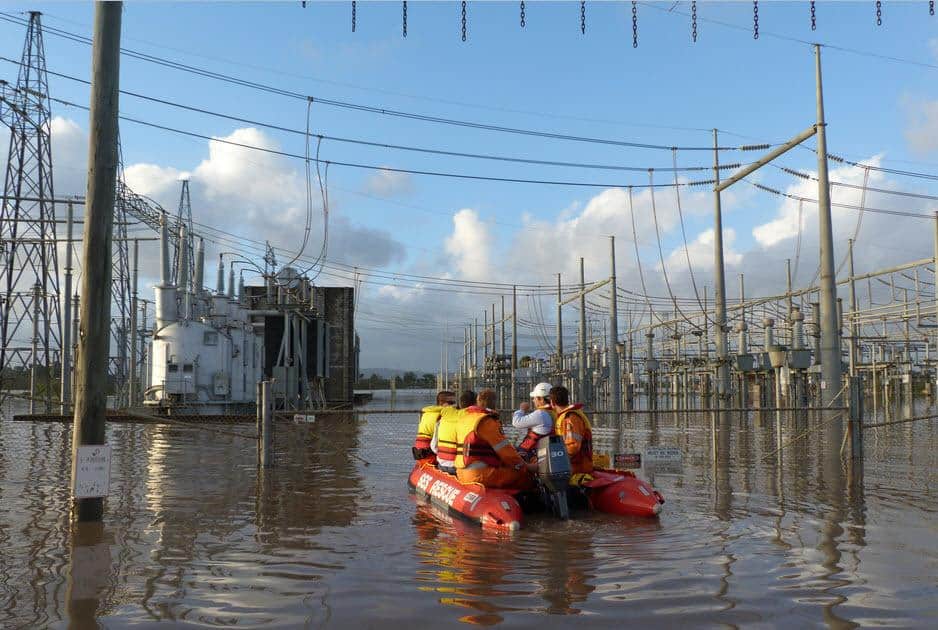
Protecting Underground Cables
This Article was originally published by T&D World.
From Superstorm Sandy to Hurricanes Harvey, Irma, Maria, Florence and Michael – the volume of rain and storm surge has and can cause unprecedented flooding.
Flooding negatively impacts power systems – but not for the reasons you might think. Power Delivery Intelligence Initiative (PDi²) is taking on the myth that flooding compromises underground cables.
Medium and high voltage cables are designed to be direct buried, often in areas where they will be below the water table and permanently in a wet environment. Under normal weather conditions, manholes and vaults are often full of water and need to be pumped out for even routine inspections.
Outer jackets for these cables, made of polymeric materials, resist moisture permeation to prevent water incursion into the cable over the life of the system.

Roxtec Cable Transits provide effective protection to LV HV substation cables against flood damage and water penetration be it in dry or wet conditions.
In the rare instances that water permeates a cable jacket, certain insulations, including tree-retardant crosslinked polyethylene, are designed to resist growth of water trees that could cause premature cable failure. In addition, cable also can be manufactured using moisture-blocked conductor, water-swellable tapes and powders and corrugated sheath to make them more moisture impervious.
Underground cables are expected to meet rigorous standards specifically addressing operation under adverse weather conditions like flooding. These standards take into consideration both moisture and chemical resistance as there can be significant differences between rain and flood water. ICEA, ANSI and AEIC require adherence to a variety of test procedures that address moisture barriers, water-blocking components, water-resistance tests and other sealing components and technologies.

CSD RISE Duct Seals – combining ease of installation with cable duct sealing and protection against water, gas and fire.
Cables are rarely at fault for failures related to flooding.
The biggest concern for flooded underground systems are the open-air terminations at ground level where external or internal contamination has occurred due to poor sealing. However, technology is improving here as well.
Certain elbow and T-bodies are typically submersible and have not shown any significant negative impact after flooding. Joints and other accessories like link boxes are used in manholes and vaults and can be designed and installed in such a way that they can operate submerged in water without compromising cable insulation integrity.
Areas known for periodic flooding can take additional measures for outer protection of cable joints like metal housings moulded with epoxy coatings or fibreglass boxes filled with water sealants.
These designs are typically electrically screened with electrical fields that are fully contained within the solid insulation of the cable.
Myth – flooding and underground cables
busted.
Cables are made to resist water under both normal and extreme operating conditions. As long as water does not extend to the exposed terminations, there is little risk of failure due to flooding.
Where terminations are at ground level, technology and products exist to mitigate the chance of failure. These solutions should be part of storm hardening efforts and decisions regarding choices for new and rehabilitated power infrastructure.

Joint | Terminate | Connect Medium & High Voltage Cables MV HV
Further Reading
- Sealing Underground Cables & Pipes Under Constant Water Pressure
- Submersible Switch Applications By G&W Electric
- 21st Century Costs of Underground Distribution

LV, MV & HV Jointing, Earthing, Substation & Electrical Eqpt
Thorne & Derrick International are specialist distributors of LV, MV & HV Cable Installation, Jointing, Duct Sealing, Substation & Electrical Equipment – servicing UK and global businesses involved in cable installations, cable jointing, substation, overhead line and electrical construction at LV, 11kV, 33kV and EHV.
THORNE & DERRICK Product Categories: Duct Seals | Cable Cleats | Cable Glands | Electrical Safety | Arc Flash Protection | Cable Jointing Tools | Cable Pulling | Earthing | Feeder Pillars | Cable Joints LV | Joints & Terminations MV HV
Onshore Cable Pulling Starts At Seagreen Offshore Wind Farm
September 6th, 2021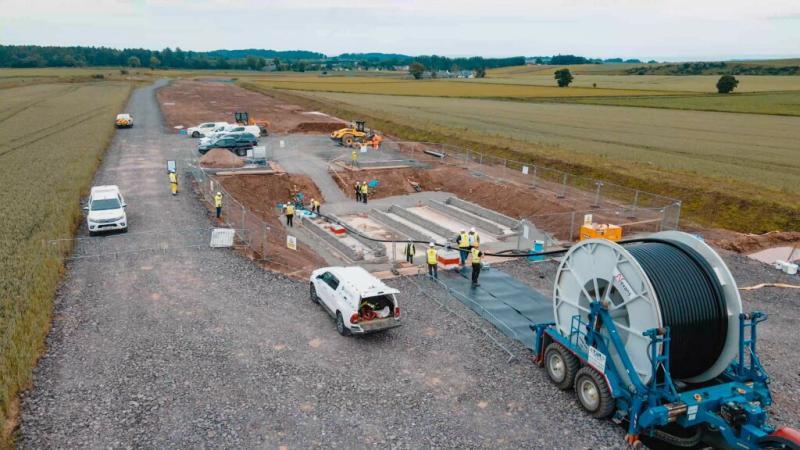
Cable Pulling & Laying
Work is underway to pull cabling through 19.5 kilometres of underground ducts which will connect the GBP 3 billion Seagreen Wind Farm to the Scottish National Grid.
The cable pulling is the latest stage in the cable installation process and another milestone in the construction of the 1,075MW 114-turbine development 27 kilometres off the coast of the county, which when operational, will power up to 1.6m homes throughout the country.
Once finished, the cabling will reach from where the project makes landfall in Carnoustie to a new dedicated substation currently under construction in Tealing.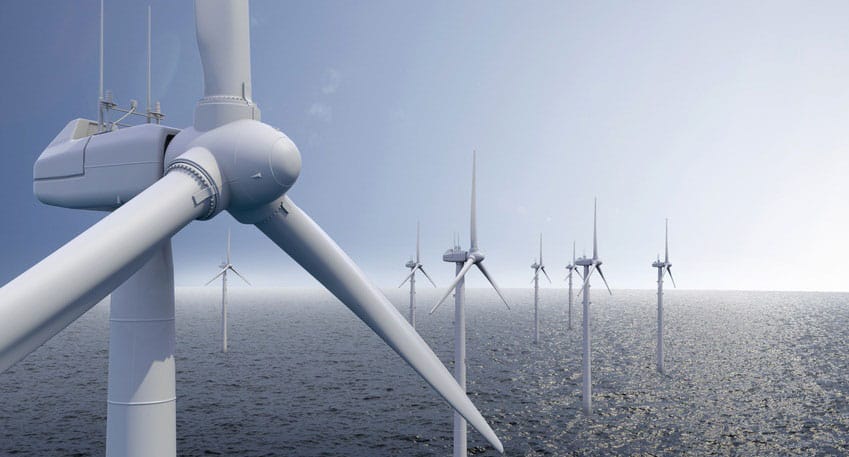
Onshore Electrical Infrastructure Project Manager, Steven Reid from SSE Renewables is responsible for the cable installation project.
”The start of the cable pulling process marks an important achievement in the delivery of the onshore electrical transmission infrastructure following significant efforts from the Project Team and the support of various stakeholders,” Reid said.
”Again, I‘d like to express our thanks to all who live along the route for their co-operation and understanding as the project has progressed up to this stage of delivery. Working with our Contractor Nexans, we now look forward to continue to deliver the installation of the 19km of cabling safely and with the least amount of disruption possible to the surrounding community.”
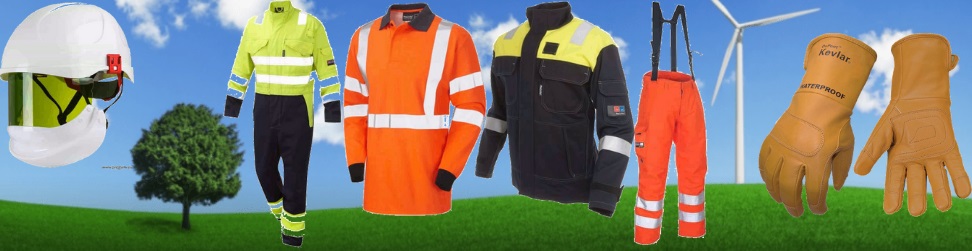
Electrical Arc Flash Protection for Offshore Wind Farm WorkersSeagreen is a joint venture between SSE Renewables and Total.
First power at the wind farm is expected by early 2022 with full power coming on stream in 2022/23.
Seagreen selected Montrose Port as the home for the operations and maintenance base for the 114-turbine development in October 2019.

See how T&D support, supply and service the Renewable Energy industry.

Cable Pulling & Cable Laying Equipment