Electrical Safety
Dropped Objects & How To Prevent Them
June 10th, 2025 Prevent Dropped Objects
To prevent dropped objects it is recommended to implement a multifaceted approach that includes physical barriers, tool tethering, proper storage, training and regular inspections. This strategy aims to minimize the risk of objects falling from height and causing harm or damage – we welcome your Enquiries for workplace products that prevent dropped objects and mitigate risk to plant and personnel.
-
Toeboards & Handrails
Ensure these are securely fixed on scaffolding, platforms and walkways to prevent objects from falling through gaps.
-
Netting
Utilize safety mesh or rated barrier netting in areas where objects might fall, especially around walkways, platforms, and building perimeters.
-
Catch Platforms
Consider using temporary roofing, floor fabrics, or other means to shield workers below from falling objects.
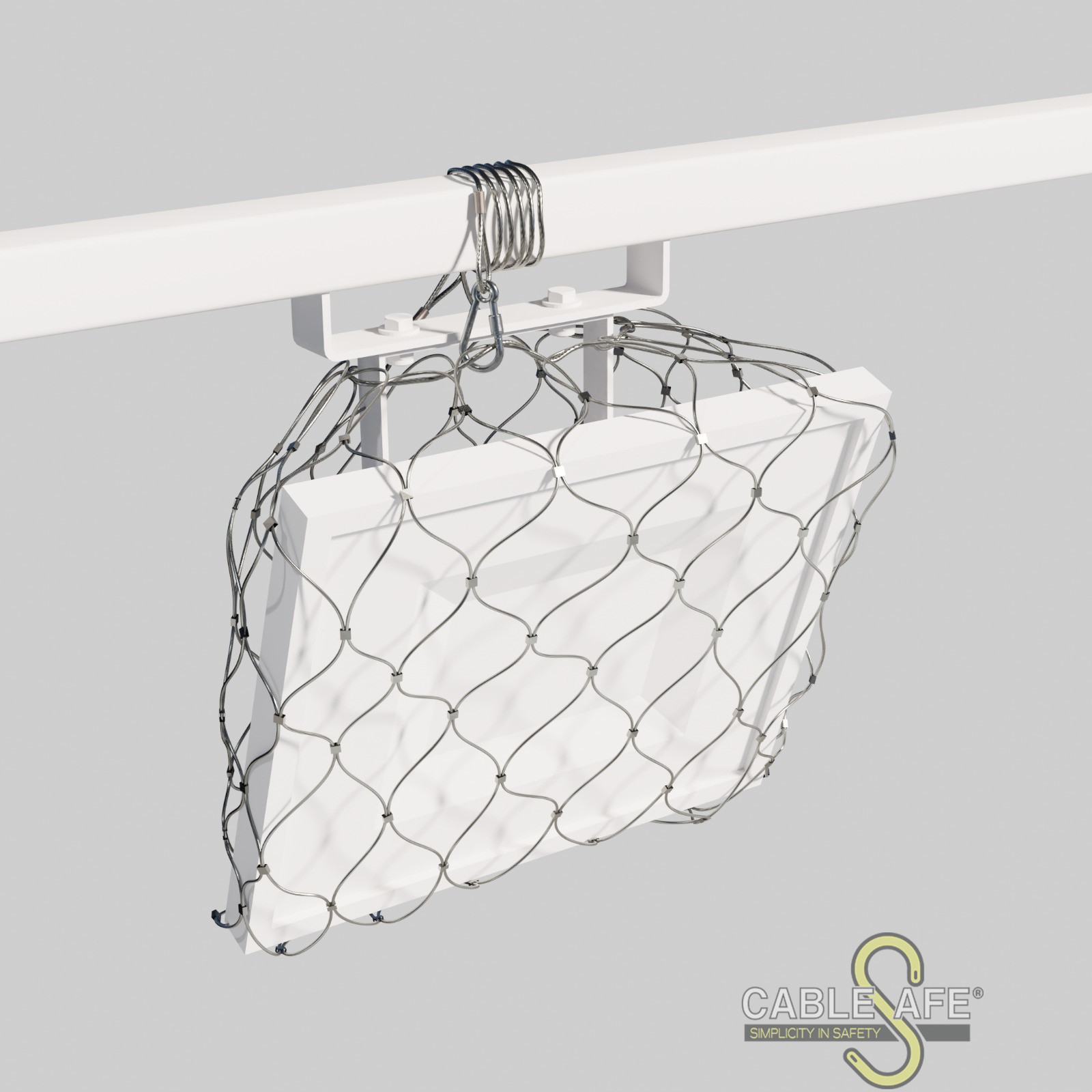
Dropped Object Prevention | Netting is used to enclose objects at height to prevent them posing a dropped object risk.
-
Tool Lanyards & Tethers
Secure tools and equipment using lanyards, tethers, pouches, holsters, and other drop containment devices.
-
Proper Storage
When not in use, tools and materials should be properly stored and secured.
-
Avoid Hanging Over Railings
Never hang or drape items over guardrails, as this can cause them to fall.
-
Keep Tools and Materials Away from Edges
Maintain a safe distance (at least 3 feet) from any leading edges when tools and materials are not in use.
-
Education on Risks
Train workers on the dangers of dropped objects and how to minimize the risk.
-
Hazard Hunts
Conduct regular inspections and periodic “hazard hunts” to identify potential hazards.
-
Housekeeping
Maintain high housekeeping standards to reduce the risk of loose objects falling.
-
Regular InspectionsImplement a risk-based inspection plan to identify and address potential dropped object hazards.
-
Inspection of EquipmentInspect equipment that is in continual use or difficult to access, especially after major stresses like adverse weather or collisions.
-
Corrective Action
Document any nonconformities, assess their criticality, and implement corrective actions.
-
Lowering Working Platforms
When possible, lower the working platform to ground level and lift the structure into position rather than taking tools and equipment to height.
-
Using Mechanized Means
Utilize pulley systems, ropes, or tool bags and belts to move tools and materials, reducing hand-carrying.
-
PPE
Ensure workers wear appropriate personal protective equipment (clothing and PPE), including hard hats and climbing helmets.
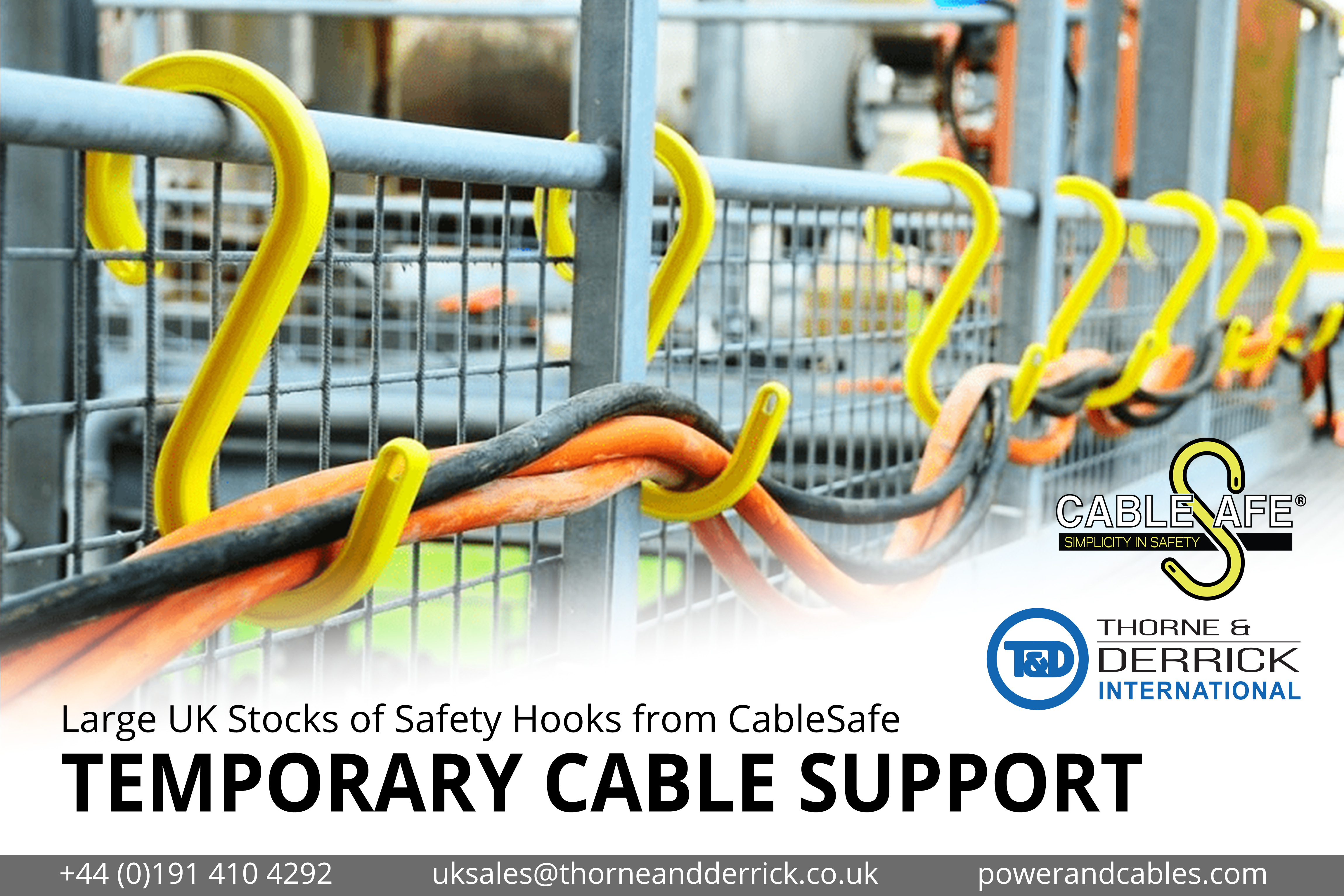
Cable Hooks | Reduce Slips, Trips & Falls from Trailing Cables
May 30th, 2025The Future of Cable Management – Trends & Innovations
-
uploaded by Chris Dodds (Thorne & Derrick) with accreditation to CableSafe.
In the engineering landscape, staying ahead of things is crucial, especially when it comes to cable management. At CableSafe, with operations spanning the Netherlands and the USA, we’re dedicated to pioneering innovative solutions in cable safety, confined space safety, and dropped objects prevention. Let’s delve into the future of cable management, examining emerging trends and exciting innovations shaping the industry.
Efficient cable organization is essential for optimizing workflows and minimizing hazards in industrial settings. Traditional methods often involve cumbersome cable trays and racks, but advancements in cable management solutions are simplifying the process. Products like CableSafe Safety Hooks Extreme and Cable Guards provide simple yet effective solutions for keeping cables organized and secure, reducing clutter and potential safety risks.
Elevated cable management solutions like CableSafe Cable Stands and Cable Bridge further streamline operations by minimizing tripping hazards and facilitating easier access for maintenance personnel. These innovations not only improve electrical safety but also contribute to overall efficiency on the job site.
As technology continues to advance, ensuring cable safety remains a top priority. CableSafe is dedicated to developing robust cable protection systems that mitigate risks and prevent accidents. Whether it’s through innovative cable guards or durable safety hooks, our products are designed to withstand the rigors of industrial environments while keeping workers safe.
Trailing Cable Safety
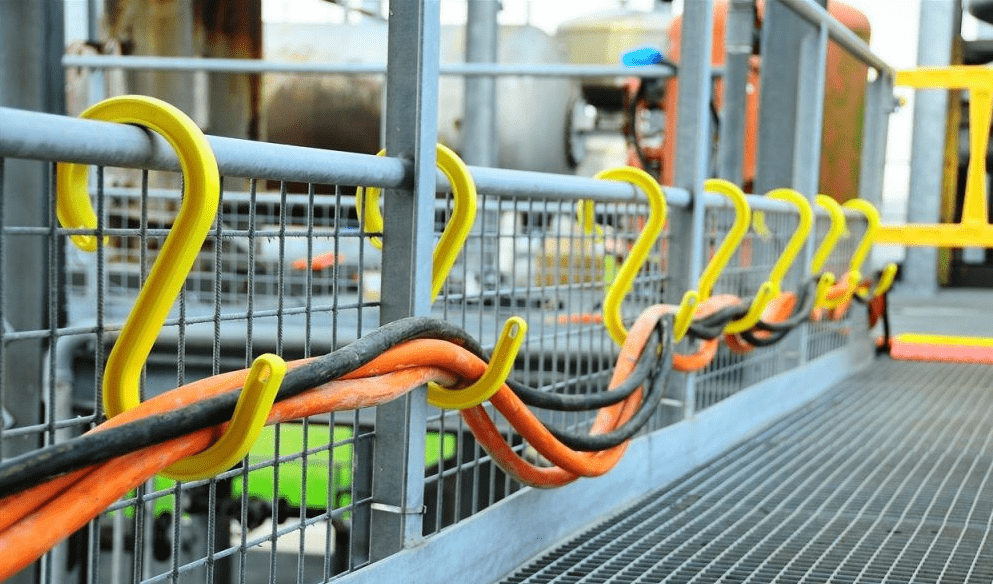
The Safety Hook Extreme is an advanced specification and high performance version of the standard industrial cable hook manufactured with glass reinforced PBT and is UV stabilized, Flame Retardant (Class: 94V-0, Flame Class Rating 3) and Cold Weather rated.

CableSafe Hooks
Looking ahead, the future of cable safety lies in proactive prevention measures and advanced monitoring technologies. By investing in smart solutions that detect potential hazards before they escalate, companies can minimize downtime and maximize productivity while safeguarding their workforce.
Every industry has its own unique challenges when it comes to cable management. From offshore oil rigs, wind turbines and to manufacturing facilities, CableSafe understands the importance of tailored solutions for elevating trailing cables. Our customizable products are designed to meet the specific needs of diverse industries, from corrosion-resistant materials for marine applications to fire-retardant coatings for high-risk environments.
As we look to the future, CableSafe remains committed to driving innovation and excellence in temporary, permanent and trailing cable management. By embracing emerging trends and leveraging cutting-edge technologies, we’re shaping the industry for the better. With our customizable solutions and unwavering dedication to safety, we’re empowering companies to create safer, more efficient workplaces for their employees.
Should you require any further information about improving Electrical & Cable Safety in your workplace, contact Thorne & Derrick.
Further Reading
- Thorne & Derrick Appointed Preferred Supplier of CableSafe Safety Hooks
- Cable Safety Hooks from Cablesafe vs. Traditional Cable Management
- Confined Space Entry Protection by CableSafe®
The Ultimate Guide to Arc Flash Clothing: 7 Essential Considerations for Safety
December 18th, 2024
Why Choosing the Right Arc Flash protection Matters for Workplace Safety?
When working in both high– and low-voltage electricity environments, ProGARM makes sure workers are kept safe.
Where PPE is well understood to be important, Arc Flash incidents are often underestimated in the workplace. Reaching temperatures over 35,000°F—four times hotter than the surface of the sun—Arc Flash can cause serious burns in one-quarter of a second. Selecting the right Arc Flash Clothing is essential in order to safeguard workers and meet safety compliance standards.
Arc flash clothing and protection equipment including coveralls, gloves, helmets, face shields and general head-to-toe PPE (arc flash coveralls) are used to protect against flashover but will not prevent arc flash hazards.
Arc flash clothing and PPE such as arc flash suits should be worn when working on energised conductors, cables or circuits.
Layering is Crucial for Protection
Arc Flash PPE isn’t just about outer garments. The materials worn beneath the protective outer layers are equally critical in preventing burns and injuries. Everyday undergarments made of materials like nylon, cotton, or polypropylene can melt during an Arc Flash event, causing severe skin damage.
Pro Tip: Always wear Arc-rated base layers, including tops, leggings, and even underwear, to ensure maximum protection.
Flame Retardant vs Arc Flash Resistant
A common misconception is that flame-retardant (FR) clothing provides Arc Flash protection. However, FR clothing is tested against fire hazards, not the intense thermal energy of Arc Flashes.
Key Differences:
- Arc Flash-resistant clothing must meet higher tear resistance and tensile strength standards.
- Look for Arc-rated garments with long sleeves, no exposed metal, and designs for easy removal in emergencies.
Understanding the Fabric: Treated vs. Inherent
When selecting Arc Flash PPE, understanding the difference between treated and inherent fabrics is essential:
- Treated Fabrics: Treated chemically for fire resistance but may lose effectiveness after repeated washing or wear.
- Inherent Fabrics: Materials that are inherently flame-resistant; their properties remain consistent after repeated washing or wear.
Whereas treated fabrics may be more economical, inherent fabrics offer reliability and consistency over time.
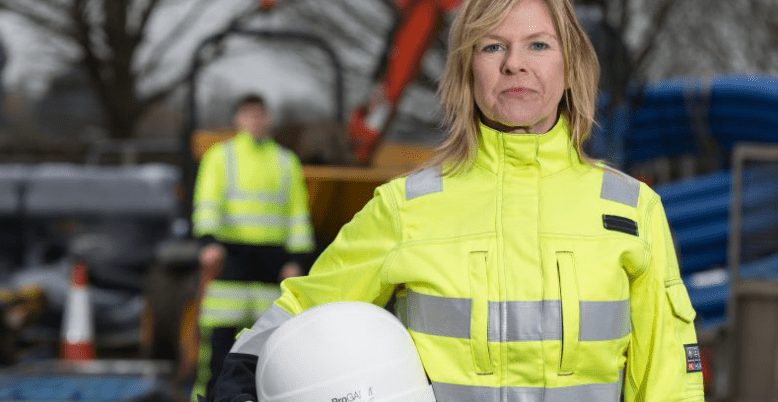
PPE Tailored arc flash Clothing
Poor-fitting PPE can compromise safety. Most women in the workforce are still being forced to wear unisex or men‘s garments, which can be too big and uncomfortable, leading to poor use–such as rolling up sleeves or unfastening jackets.
Solution: Specify PPE designed for women for a proper fit and optimal protection.
The New Standard for CAL Ratings
Recent developments in Arc Flash testing, including the ELIM method, better indicate the protection a garment can provide. Unlike the former system of ATPV that estimated the likelihood of burn, conservative measurements are taken with ELIM to ensure safety.
What to Check: Your PPE supplier should indicate whether the garments meet ATPV or ELIM requirements for your specific safety needs.
Don’t Overlook Fastenings
Not one single part of Arc Flash PPE is unimportant, including those fastenings such as zippers, buttons, and Velcro fasteners; all must be of flame-resistant material for complete protection.
Did You Know? ProGARM‘s ThermSAFE™ fastenings are manufactured using military-specification materials and offer unrivaled durability and safety.
Comfort is Non-Negotiable
Uncomfortable PPE often leads to improper use, reducing its effectiveness. Modern Arc Flash PPE made from breathable, lightweight, and moisture-wicking fabrics ensures workers remain safe and comfortable, even in challenging environments.
Features to Look For:
- Flexible fabrics for ease of movement.
- Moisture management to keep workers cool and dry.
- Durable designs for long-term wear.
IEC 61482 PROTECTIVE CLOTHING AGAINST THE THERMAL HAZARDS OF AN ELECTRIC ARC
Arc Flash-rated clothing and garments in layered ensemble provide workwear protection from hazards according to IEC 61482, as PPE protects a worker against electric arc flash dangers. According to IEC 61482-1-1:2009 (which includes NFPA 70E 2015), the 4 arc risk categories are numbered according to the severity threat and determine the clothing protection level required to protect against a minimum level of incident energy measured in calories / cm² – this is the ‘Open Arc‘ test method and measures clothing protection level according to the Arc Thermal Performance Value (ATPV).
NFPA 70E outlines the requirements for safe work practices to protect personnel by reducing exposure to workplace electrical hazards.
The ‘Box Arc’ tests clothing materials and fabric according to a pass/fail test by exposure to electric arc produced by 4kA (Class 1) and 7kA (Class 2) short circuits – this is IEC 61482-1-2:2009.

Electrical PPE Products | Gloves | Arc Flash Clothing | Arc Suits | Coveralls | Helmets & Visors

Safety Wear & Arc Flash Protection | Thorne & Derrick understand how critical it is to have reliable, highest quality personal protection equipment (PPE), clothing and workwear available from stock at competitive prices – protecting utility workers against arc flash dangers posed during maintenance on underground electric cables, overhead line conductors or electrical equipment.
Dropped Objects Prevention Work Mat: Enhancing Safety on Elevated Gratings
June 4th, 2024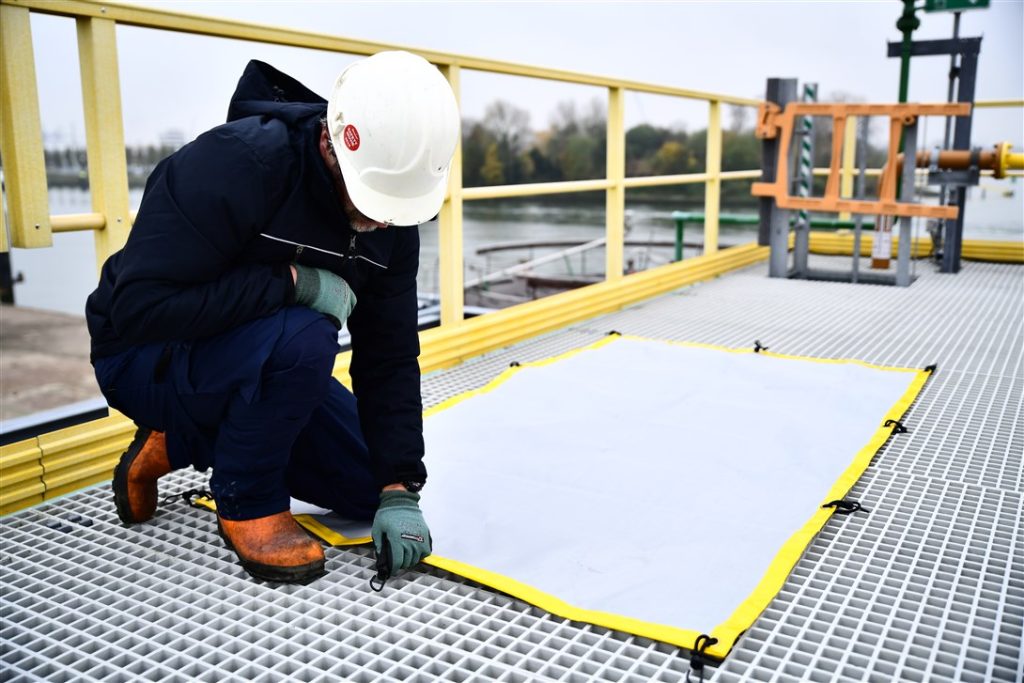
Dropped Objects Prevention Work Mat: Enhancing Safety on Elevated Gratings
Dropped Object Prevention Work Mat Enhancing Safety on Elevated Gratings
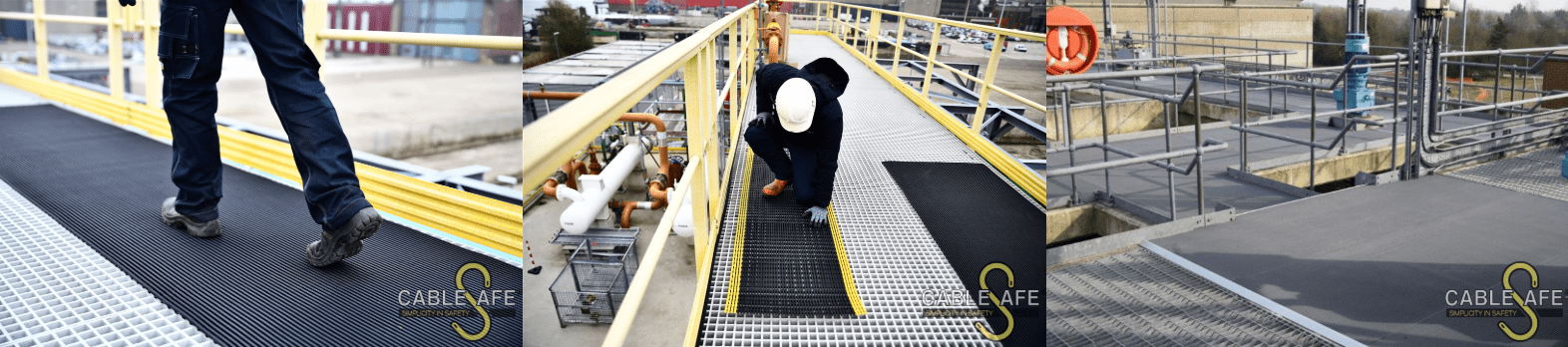
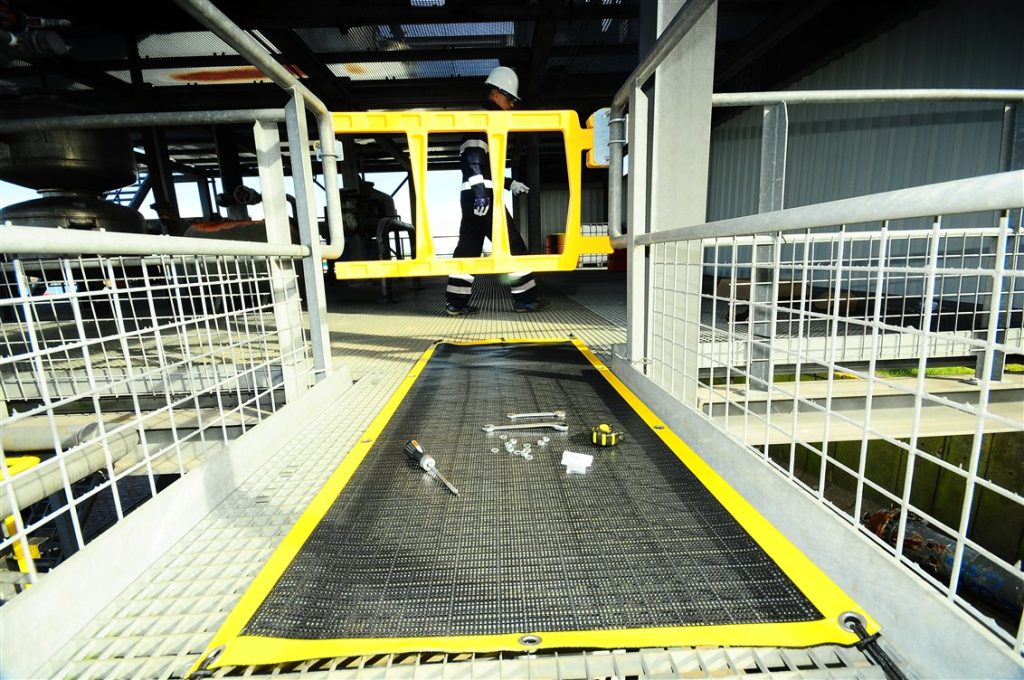
The CableSafe® Dropped Object Prevention Work Mat serves as a reliable resource for protecting tools and equipment from falling through the grating and is designed for use in wet and slippery conditions. It is also designed to protect your flooring or walkways from damage – matting is used for dropped object prevention across all industries and workplace applications.
One area where safety is important is when working at a height, especially on elevated gratings, catwalks, and platforms. The risk of dropped tools or equipment poses a significant hazard, potentially damaging equipment or causing fatalities.
Safety at work is of utmost importance when working on elevated platforms, especially if there are personnel or contractors working underneath. Dropped objects are still, unfortunately, a common contributor to severe accidents in industrial facilities across different sectors globally.
Thorne & Derrick supply the complete range of Safety Tools & Equipment to enable safe working in sectors such as the construction, renewables, data centres, rail, manufacturing and oil, gas, petrochemical industries.
dROPPED oBJECTS PREVENTION MATS
wHAT ARE THEY?
The CableSafe Dropped Objects Prevention Work Mats are designed to allow personnel to work confidently on grating surfaces, as they serve as a dual purpose for the following:
- Protection : This mat prevents tools and equipment from falling through grate openings and holes
- Safety: Personnel can easily work efficiently without worrying about dropped objects, especially during maintenance, turnarounds, inspections, and daily operations
Flame RetardAnt / Fire retardant
CableSafe Dropped Object Prevention Work Mats are available with flame retardant and fire resistant coated polyester fabric. This fabric is crafted with coated polyester mesh fabric, and it has a tear strength of 330N (DIN 53363). This range of flame retardant mats is available with spanners and is available with a flame-resistant material that is made of fibreglass double coated polyurethane and can withstand temperatures of up to 550°C.
The CableSafe Dropped Objects Prevention Work Mat is available with a flame-resistant material that is made of fibreglass double coated polyurethane. It can withstand temperatures of up to 550 °C.
The fire resistant mats are available with spanners or with magnets.
Work mAts
hOW TO CONNECT THEM:
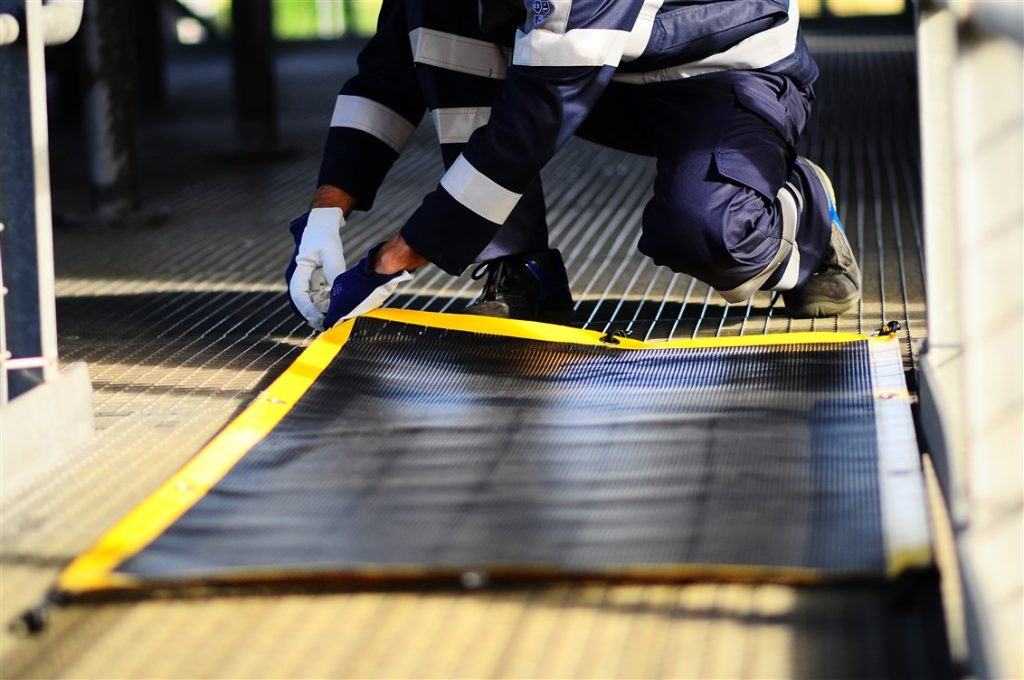
- Prevention Work Mats can be secured with 14 strong magnets, which attach to the grating. The magnets in the hem are rated at 84N each, making them one of the strongest in the market to ensure that the mats are secured properly.
The CableSafe Dropped Objects Prevention Work Mat is a high-quality, reusable, and cost-effective safety tool that significantly reduces the risk of dropped objects and is fast and easy to install.
Applications
- Marine & shipbuilding / Shipyards
- Metal gratings
- Elevated work platforms
- Walkways & catwalks
- Maintenance projects & industrial turnaround
- Oil and gas, refineries and power plants
- Offshore platforms, terminals and rigs
- Manufacturing facilities
Objects known to frequently cause accidents are hand tools or equipment left behind after a task, as well as equipment mounted in an elevated location that has the potential to fall due to movement or environmental conditions.
Benefits of the Prevention Work Mats
- Risk Reduction: Minimises the risk of dropped objects, protecting personnel and equipment
- Reusable: This range of high-quality mats can be used repeatedly to protect people in the workplace
- Fast Installation: No complicated setup– simply lay it down and secure it which helps reduce downtime and risk of workplace injuries and easy to deploy, fold and reuse
- Used as temporary Work Mat for dropped objects prevention
- Prevents small tools, fasteners & foreign objects falling from elevated work platforms creating a safer work environment
- Fire Resistant / Flame Retardant fabric available for heat sensitive areas
CABLE SAFETY EQUIPMENT
CableSafe® Safety solutions are critical cable essentials and are well proven construction safety products. The CableSafe® range of cable hooks can be used during maintenance, turnaround, outages, shutdowns, construction work to suspend cables and hoses and other work gear and equipment from the working space.

Cable Safety Equipment | Cable Stand | Cable Bridge | Cable Rail | Cable Guard | Dropped Object Prevention Mats
Electrical Safety in Wind Turbines
February 20th, 2024
Authored by Pieter Pijnenburg | Arc Flash Engineer from Leaf Electrical Safety
Electrical Safety
Any industrial or commercial workplace requires arc flash and electrical safety training, and it is essential in order to make sure your staff members know what they need to do to remain safe.
Leaf Electrical Safety is an electrical safety company that can provide expert advice on electrical safety to help teams build processes and improve safety culture. Working primarily across Canada and the USA, they help solve your industrial electrical safety problems.
Electrical safety compliance training should keep you on the edge of your seat, wanting more, because it will highlight the dangers that your team faces on a daily basis. Special thanks to Jon Travis for the kind permission to republish.
→ See original article here!
- What are the electrical safety hazards in wind turbines?
- How do I ensure my team works safely around them?
- What PPE should my electrical workers be wearing?
- How do you perform grounding with wind turbines?
Let’s jump right in!
The Definitive Guide to Arc Flash By Thorne & Derrick
WIND POWER FACILITY ELECTRICAL SAFETY
In our ever-changing renewable world, the safety of personnel is still and should remain a paramount concern. Wind Energy Conversion Systems (WECS) are some of the more prominent types of renewable generation whose safety concerns are exacerbated by two main factors:
- Remoteness: due to the nature of wind turbines being remote and/or offshore, any hospitalisation can turn into a race against time.
- Confined spaces: the electrical components and work areas within a wind turbine are typically in confined spaces, which becomes more problematic when you add multiple workers into the mix.
WHAT ARE THE ELECTRICAL SAFETY HAZARDS
IN WIND TURBINES?
In order to mitigate hazards and allow for adequate protection, WECS equipment and operators should be adequately equipped to deal with the following main hazards issues that commonly occur in WECS:
- Arc Flash
- Shock
- Overloaded Circuits
- Defective Insulation
- Wet Environment
- Damaged or Worn Equipment
ARC FLASH RISK IN WIND TURBINE
Potential arc flashes in WECS are potentially life-threatening issues which require detailed analysis and physical protection to be accounted for. Arc flash hazard analysis (incident energy calculations) is typically used and utilises standards such as IEEE 1584-2018 to perform the calculation. Once the calculation is made and the proper arc flash boundaries are determined, personal protective equipment (PPE) can be assigned based on the calculations (see CSA Z462 for more details).
SHOCK RISK IN A WIND TURBINE
Shock risk, like an arc flash, is a potentially life-threatening hazard if not properly accounted for. Usually, a shock risk assessment is performed to look at key system parameters such as voltage level, shock boundary, environment, equipment type, and condition.
OVERLOADED CIRCUITS
Overloaded circuits can cause various problems and increase the risks of shock and arc flash considerably if not protected and isolated properly. Preventative measures can be taken through routine inspection of protection devices and physical circuitry (with proper PPE) to check for any abnormalities in the equipment.
DEFECTIVE INSULATION
Defective insulation can cause system malfunction and exponentially increase the potential arc flash and shock risks. Regular insulation resistance (IR) tests, whose procedure for electric machinery is highlighted in IEEE 43-2013, should be performed to test the dielectric strength of the insulation.
WET ENVIRONMENT
Wet surfaces can prove hazardous to people as well as electrical equipment. In order to reduce these potential hazards, regular equipment checks should be carried out on the exterior and interior of the WECS for potential water seepage/damage.
DAMAGED OR WORN EQUIPMENT
Equipment can be compromised from its normal working state for a variety of reasons, but compromised equipment can cause major problems if it is not repaired or replaced quickly enough. To mitigate this, scheduled maintenance procedures should be made and followed (see CSA Z463).
ELECTRICAL SAFETY PRECAUTIONS FOR WIND TURBINE WORKERS
PROPER PERSONAL PROTECTION EQUIPMENT
Each hazard risk category requires a different level of protection. Categories range from 1 to 5 as defined within CSA Z462 and laid out below as follows:
| PPE category | 1 | 2 | 3 | 4 | 5 |
| Incident Energy | Up to 4 cal/cm² | Up to 8 cal/cm² | Up to 25 cal/cm² | Up to 40 cal/cm² | Up to 75 cal/cm² |
Figure 1:PPE category as defined by CSA Z462
ARC FLASH BOUNDARY
An arc flash boundary is the shortest distance at which a person working at the time of an arc-flash incident may receive an onset of a second-degree burn or worse (1.2 cal/cm2) if not adequately protected by flame-resistant (FR) clothing.
LABELING
Labelling is defined in CSA 22.1-18 for both small (64-300) and large (64-400) wind turbines as “a permanent marking” that must be created near an easily accessible location near the disconnecting for the wind turbine output circuit (64-300) or base of the tower (64-400) and display the following critical information:
- Overcurrent protection values provided by the wind turbine for the stator and rotor, if applicable;
- Short-circuit current rating (SCCR);
- A brief system description, including the type of generator (synchronous or induction);
- Rated output current; and
- Rated output voltage at the grid connection to the turbine.
- Warning notice (large turbines only)
Furthermore, arc flash and shock hazard labels should be provided for large wind systems. These labels are covered in CSA Z462 Annex Q, which highlights procedures for labelling arc flash hazards and shock protection. The minimum arc flash label requirement per CSA 22.1-18 (Canadian Electrical Code Part 1) is:

Figure 2:CSA Arc Flash label template for CSA 22.1 Requirements
Whereas the CSA Z462 recommends that the label look something more like:

Figure 3:CSA Z462 Annex Q Recommended ARC Flash label structures
WIND TURBINE GROUNDING
Like any generator, the WECS should be properly grounded and follow CSA standards and IEEE 142. Proper grounding of turbines follows the general ruleset of AC connections as defined by CSA 22.1 Section 64-312 as:
- 1) Exposed non-current-carrying metal parts of towers, turbine nacelles, other metallic equipment, and insulated conductor enclosures shall be bonded to ground in accordance regardless of voltage.
- 2) Metallic towers or supporting structures shall be bonded to the ground with a minimum No. 6 AWG.
- 3) Guy wires used to support turbine towers need not be grounded.
- 4) Towers or structures shall be grounded by means of grounding electrodes to limit voltages imposed by lightning.
- 5) Notwithstanding Subrule 4), metal towers located on steel-supported buildings shall be bonded to non-current-carrying metal parts of the building.
FAULT FINDING & TESTING
To effectively find faults in a WECS, proper fault monitoring relay devices should be installed particularly:
- 50 – Instantaneous Overcurrent Relay
- 51 – AC Time Overcurrent Relay
- 59 – Overvoltage Relay
These devices will be able to monitor and indicate the levels of key parameters such as voltage and current.
ELECTRICAL SAFETY STANDARDS AND TRAINING REQUIREMENTS FOR THE WIND ENERGY INDUSTRY
CSA 22.1-2018 lists several safety requirements for both small and large wind turbines (64-300 tot 64-414), including marking, maximum voltage, insulated conductors, wiring methods, overcurrent protection, disconnecting means, grounding and bonding, maintenance receptacles, lightning protection, surge protection and system demarcation (large turbine).
Training requirements are highlighted in Annex U of CSA Z462, which highlights procedures for human performance in electrical safety. It highlights risk control methodologies and procedures for human performance, such as
- Job planning and pre-job briefing tool
- Job site review tool
- Post job review tool
- Procedure use AND adherence tool
- Self check with verbalization
- Three-way communication tool
- Stop when unsure tool
- Flagging and blocking tools

ELECTRICAL SAFETY PROVIDERS
Thorne & Derrick protect substation engineers, asset managers, SAPS, cable jointers, overhead linesmen and utility workers with PPE and safety equipment: this includes insulating gloves, arc flash clothing, voltage detectors, insulating matting and portable earthing to ensure worker safety when carrying out repair and maintenance on LV-HV switchgear, transformers, substations and turbines.
All of our Cable Connection & Energisation Accessories including Medium & High Voltage joints, terminations, connectors and cleats are tested to the latest international standards and supporting ranges of professional installation tools are stocked to reduce incident, accident and downtime to plant and people.