ARC FLASH| Protecting Lives of Lighting Engineers Against Arc Flash Dangers
In the following article, we assess the types of Arc Flash risks and the prevention of those same risks through the implementation of effective Arc Flash Clothing & PPE for workers in the UK Highways & Street Lighting industry.
With guidance from the UK Health & Safety Executive’s HSG85, Engineering Recommendation G39/1 and the Highways Electrical Association (HEA), we provide advice on management procedures to facilitate a continued achievement of safe working practices.
The role of Risk Assessment Method Statements (RAMS) and Safe Systems Of Work (SSOW) are mentioned as key underpins to arc flash mitigation and worker protection.
In recognition of those dangers and working with ProGARM, the leading UK manufacturer of the Flame Resistant & Arc Flash Clothing, we show how together we ensure workers return home safe.
We hope to clear the current ambiguity of attitudes to the subject with some interesting statistics that in conclusion may or may not achieve that objective.
Let me know your thoughts later here or vote in our Poll below – so lets get started.
known to be live but those involved do not have adequate training or appropriate equipment to prevent injury, or they have not taken adequate precautions
Arc flash can only occur on live cables, circuits or electrical equipment.
Arc Flash Defined
“Electrical arcing (sometimes called a ‘flashover’ or ‘arc flash’), perhaps as a result of a short circuit caused by unsafe working practices, can generate intense heat leading to deep-seated and slow-healing burns, even if it persists for a short time. The intense ultraviolet radiation from an electric arc can also cause damage to the eyes.
Often those working with or near electricity do not appreciate the risk of serious injury and consequential damage to equipment that can arise from arcing. Arcing, overheating and, in some cases, electrical leakage currents can cause fire or explosion by igniting flammable materials.
This can cause death, injury and considerable financial loss.”
Extract from HSG85 UK HSE Electricity At Work – Safe Working Practices.
The UK HSE is an independent regulator providing advice, guidance, news, tools, legislation and publications for work-related health, safety and illness issues.
♦ ARC FACT Electric arc causes an ionization of the air with arc flash temperatures generating a fireball reaching up to 35,000 degrees Fahrenheit. This is hotter than the surface of the sun.
Arc Flash – The Risks
Street Lighting Electrical Cable Dangers
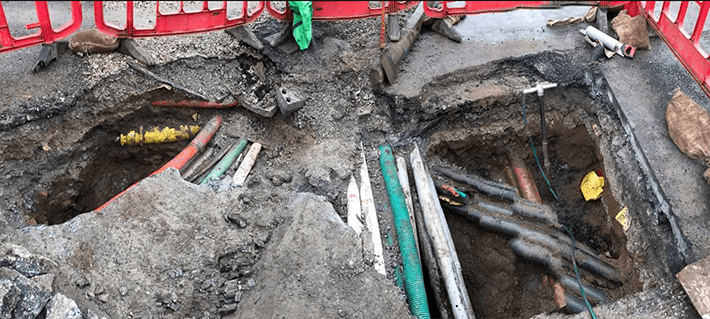
Injuries are usually caused by the explosive effects of arcing current, and by any associated fire or flames that may result when a live cable is penetrated by a sharp object such as the point of a digging tool. Excavating around public utilities always carries the potential for those utilities to be damaged and for those involved to be seriously injured.
In particular electrical cables carrying low voltage domestic electricity can cause serious burns. It is therefore important that all those involved in excavation work comply with safe digging practices to ensure the safety of themselves and anyone else who may be close by.
Street lighting engineers and operatives are exposed to arc flash risks if correct digging procedures are not followed while excavating underground electricity cables – operatives have suffered arc flash burns when digging with a hammer drill directly above an identified live buried cable. Upon making contact with a 415v street lighting cable, ‘arc flash’ occurred resulting in burns to the wrist and elbow and a visit to the hospital A&E – this could have been much worse. Never dig directly over an identified live buried service. Powered hand tools used close to live cables are likely to represent the greatest risk of injury.
In the street lighting industry arc clothing should be rated according to IEC61482 – under test method IEC6182-1-1 garments are tested and then categorized into 5 levels of protection as per the chart below. Typically Category 2 arc flash clothing covers workers for the majority of tasks however this should be dependent and based on risk assessment of the job in hand.
As above but with 2 layer FR outer work wear that has wrist closures, and a full face polycarbonate visor. A FR single-layer balaclava may also be worn to protect the face.
25 – 39.9
3
3
3 layer FR outer work wear and FR shirt, a full-face hood or visor with safety spectacles underneath, chrome leather gauntlets.
40+
4
4
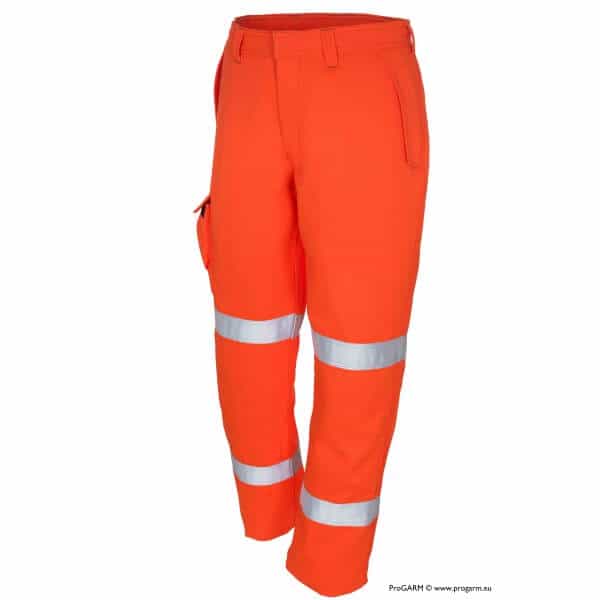
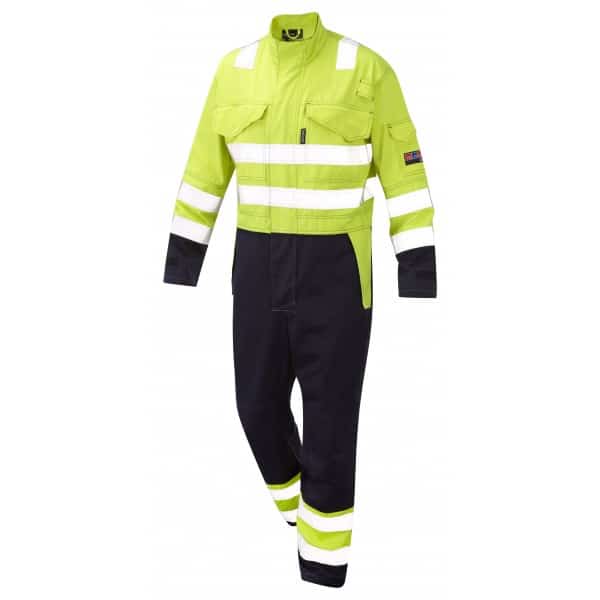
Typically 4 layer FR outer work wear (as illustration), FR and electrically insulated footwear and suitable FR material spats to close off the ankle area, FR gloves or chrome leather gauntlets, a hood constructed from a triple layer of FR material with a sewn-in polycarbonate face shield with a minimum of 2 panels of suitable thickness with one coated with a gold film for UV protection.
♦ ARC FACT The arc blast can rupture ear drums and project molten metal into the face and lungs without adequate PPE protection.
G39 Working In the Vicinity Of DNO / IDnO Electrical Equipment
Engineering Recommendation G39 is a Model Code of Practice covering Electrical Safety in the Planning, Installation, Commissioning and Maintenance of Public Lighting and Street Furniture. G39 scope covers low voltage electrical installations (up to 1000V), the associated inherent risks, hazards and requirement for implementation of thorough and proper PPE to protect workers against electrical injuries.
Under obligation of law the employee must provide a Safe Systems of Work (SSOW) to enable safe working where hazardous work processes are present, for instance the risk of arc flash when working in the vicinity of live conductors in a cable trench during jointing of utility cables.
G39 does not mandate PPE requirements– this is the absolute responsibility of the employer (or if you’re the employer, the employee and vice versa).
However, leading industry bodies including the Highways Electrical Association would always recommend arc flash clothing and protective PPE where this is available.
Perilous Contradictions, Mixed Messages & A Mexican Stand-Off
Despite this a recent study by ProGARM in conjunction with the British Safety Industry Federation (BSIF) revealed a shocking level of widespread industry ignorance with 25% of employers attributing the sole responsibility to the employee, not the employer, to self-protect against arc flash.
Worryingly, 50% expect the employee to also self-educate through personal research.
Perverse as it may sound, try Googling “how to save my life against arc flash“. Over 43 million search results to wade through – some contradictory, some misleading.
This employer-employee confrontation across the knowledge gap is exacerbated by government passivity, resulting in an unresolved tension with workers endangered daily due to lack of understanding and ultimately absence of UK legislation – until legal action is taken, as in the USA, the stand-off prevails and the risk pervades.
More findings from the BSIF report:
84%Understood the risk of arc flash – Good, only 16% to educate.
57% Were aware of someone who has suffered an arc flash injury – The threat is real.
90% Believe revised Government guidelines or enacted legislation is required to protect workers exposed to arc flash hazard – Voice your opinion in our Poll below.
Established providers of training courses covering G39, such as the Highways Electrical Association, ensure engineers working in highways environments such as street lighting are equipped with the knowledge, awareness and practical key skills when working in the vicinity of DNO electrical equipment.
Arc flash clothing is commonly worn when working on overhead power lines, during the removal and replacement of DNO cut-out fuse carriers, jointing live cables and the commissioning, maintenance and repair of distribution feeder pillars.
G39 training courses ensure delegates work in a safe and responsible manner to comply with company obligations and legislative policy.
Noting the recent swing in the UK HSE view of risk management through significance it would be reasonable to conclude that Arc Flash Clothing & PPE including visors and suitable head / hand wear, on a balance of risk vs cost vs availability should be specified – otherwise offending management or neglectful decision makers could face fines or imprisonment.
In addition to this Electricity at Work Regulations 1989 place a duty on an employer to protect against the risk of death or personal injury from electricity in work activities.
EAWR places a legal responsibility on employers and employees, as duty holders, to ensure that electrical systems used at work under their control are safe.
Make Arrangements For Management Checks & Supervision Of Work
“Employers and workers must comply with the EAW Regulations in so far as they relate to matters within their control. You should check that workers are following the rules and correct procedures. Sometimes, some or all of these checks may be delegated to the supervisor of the work. Even in organisations with effective written safety rules and safe systems of work, regular and systematic management checks of the work are necessary. This is particularly important if the work is being done in the field, on another occupier’s premises, or by peripatetic workers.”
Extract from HSG85 UK HSE Electricity At Work – Safe Working Practices.
ProGARM | Functional Arc Flash Clothing, Protection & PPE For Everyday Wear
Check Your rams – Risk Assessment Method Statements
In the UK risk assessments are undertaken to identify, mitigate and eliminate workplace risks and then additionally a method statement is prepared to control residual risks – this is known as RAMS and demonstrates safety precautions have been sanctioned to protect employees against worksite hazards and comply with Law.
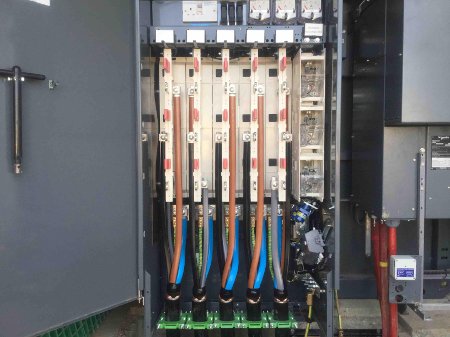
Pictured: 4 Core Waveform LV Cable Terminations Into Schneider Feeder Pillar. Image: Darren Street (D&R Cable Jointing).
5 Simple Steps To Assessing Risk Of Arc Flash Incident
Identify the arc flash risk
Who can be harmed and how
Evaluate the arc flash risks
Record your findings
Monitor and review
With respect to arc flash protection a company risk assessment would cover PPE requirements at the planning stage before any works commencing – typically an electrical engineer would isolate and test energised equipment is dead and absent of voltage prior to removal of incoming mains power supply.
Live Working & Working Dead
Working dead with secure electrical isolation eliminates arc flash risk completely, but working on or near live exposed conductors or electrical equipment occurs because it is difficult, even impossible, to programme work to allow all job tasks to be carried out where cables and equipment are dead:
Commissioning feeder pillars without full or partial energisation can be impossible
Cable fault finding and tracing location of malfunction requires energised circuits
Unacceptable multiple disconnections necessitate live working where LV supply must be connected to existing mains
Isolation of power supply to essential services is precluded due to repair work causing disproportionate disruption and cost
Inadvertent live working on public lighting cables, signs, traffic signals and equipment when presumed de-energised
In these conditions, arc flash clothing and protective helmet with insulating gloves should be worn – if in doubt contact us to discuss your requirements.
Live Cable Jointing
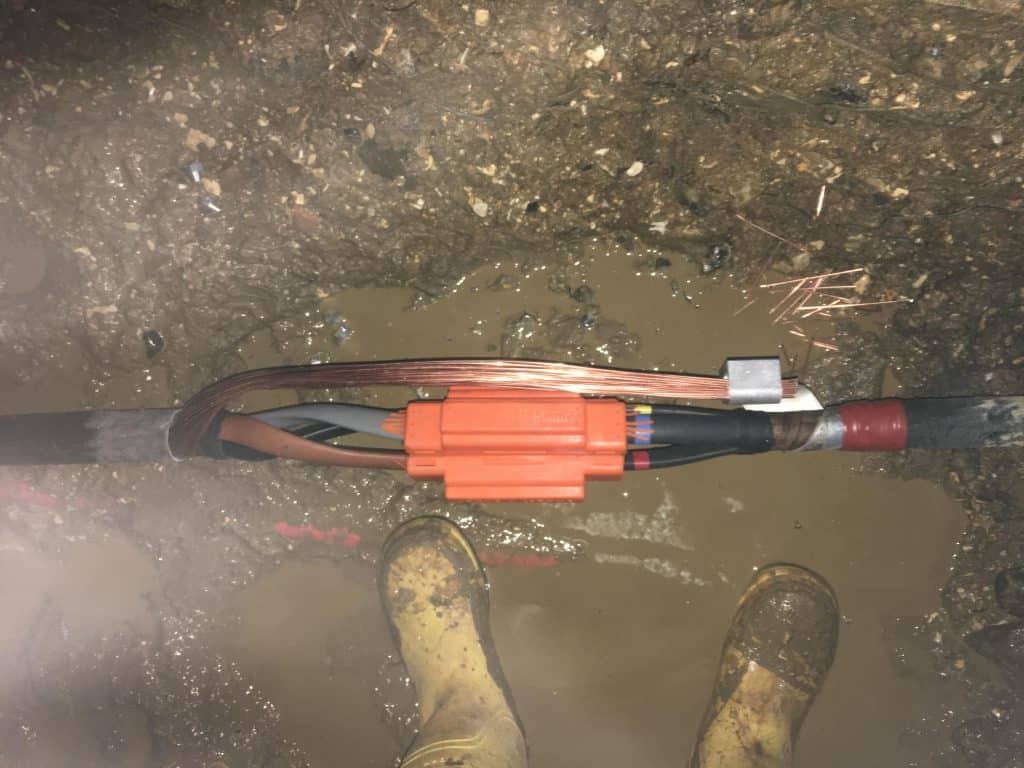
Utlities in the UK undertake live cable jointing using insulated tools to prevent interruption to multiple occupancy buildings and businesses. Shown pictured, a live 185sqmm Consac to 185sqmm Wavecon low voltage mains repair straight joint has been installed to restore power to 13 industrial units “off-supply” in Reading. The fault was a “phase to phase” fault with two cable faults on a 1 meter section of cable.
Credit:Cable Jointer – Grant Butler 33kV/11kV HV & LV Cable Faults Jointer at SSEN
T&D distribute Flame Resistant & Arc Flash Clothing to local authorities, private lighting contractors (Highways Agency & NERS), ICP’s and DNO’s.
ProGARM, The Arc Flash Specialists
ProGARM are a the leading UK manufacturer of high quality Flame Resistant & Arc Flash clothing, garments and workwear – they work successfully with their UK Distributor Thorne & Derrick to save lives and reduce accidents.
“At ProGARM our mission is protect lives through the manufacture and supply of exceptional quality Arc Flash and Flame Resistant Clothing. Being the only specialist Arc Flash protection manufacturer in the UK we focus on providing the best protection possible to those who work at risk of Arc Flash on a daily basis with our inherent, specialist garments and industry-leading innovation. Supporting Utilities, Power Generation, Rail & Petrochemical industries we work with Thorne & Derrick to educate, inform and supply those who work at risk everyday allowing us to keep protecting lives throughout the UK & beyond.
When lives are at stake, trust a specialist.” Mark Lant, Sales Manager at ProGARM – Protecting Lives through ARC Flash & Flame Resistant Clothing solutions.
Closing Thought – EU statistics show that between eight and ten arc flash accidents occur in the UK every week. Protect yourself, contact us to learn how.
Arc Flash Learning & Resources
Thorne and Derrick are proud to be distributors of ProGARM arc flash coveralls and protection.
We can help – should you require arc flash calculators or advice on the type of clothing and protection available please do not hesitate to contact us.
Arc Flash Clothing – For Jointers Working On Low & High Voltage Power Cable Systems
Yes. Here is the evidence.
by Chris Dodds T&D - estimated reading time 5 minutes
Utility Workers & The Risk Of Arc Flash
Utility workers stand in the frontline of electrocution and arc flash risk – facing daily hazard whether in the cable trench, joint bay, substation or working in front of switchboard panels.
Jointers, Linesmen, SAP’s and Civil Engineers should all be protected against the working dangers of arc flash – according to the UK Health & Safety Executive workers engaged in the location, identification and excavation of of buried services should be ensure adequate protective clothing is used when working around underground cables:
HSG47 Excerpt
Injuries to workers are typically caused by the explosive effects of arcing current, also known as arc flash, and by the associated fire or flames that can result when a live cable is penetrated by digging tools (typically “shovels and spades”) – the risk is elevated where medium/high voltage cables are trenched and backfilled but not protected using 11kV/33kV cable covers.
Arc flash can also occur when a cable is crushed severely enough to cause internal contact between the cable conductors, or metallic cable sheathing and one or more conductors.
Injuries are severe – potentially fatal – burns to the hands, face and body: electric shock is possible but less likely.
Incidents can also arise from cables, connections and cable terminations which have been damaged but left unreported and unrepaired, or which have deteriorated with age.
Avoiding Danger From Underground Services UK HSE HSG47 – download full copy.
Here utility workers are shown live-line working from an aerial lift on overhead conductors from the bucket truck.
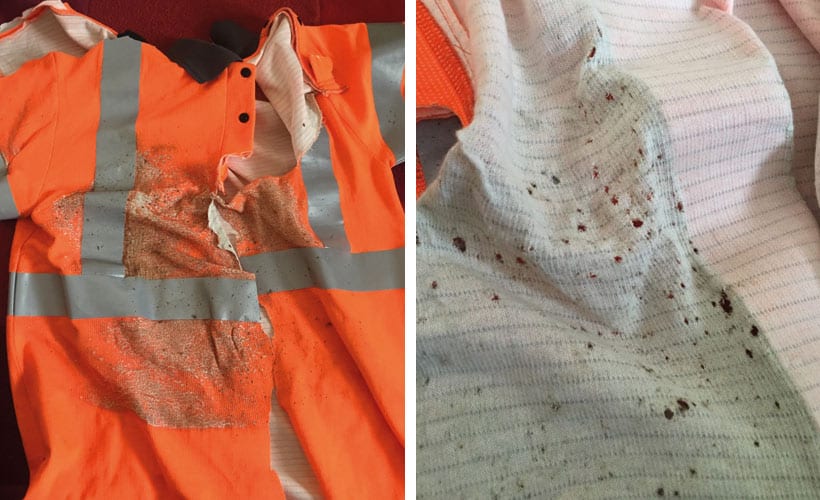
Clearly the garment has quelled the arc flash due to the inherent flame retardancy of the clothing fabric. The cause of the arc flash was triggered by an LV jointer using a Jack Hammer in the vicinity of an underground low voltage cable.
The strike to the 3 phase 120sqmm CNE utility cable caused an arc flash which if not protected against using appropriately rated clothing would have inflicted serious skin injury and burns to the cable jointers chest and arms.
Typical risks include: fuse replacement and maintenance on feeder pillars and link boxes, live cable jointing, underground cable excavation and switching operations in substations at low, medium and high voltages.
As well as correctly specified levels of arc flash clothing protection utility workers should ensure appropriate levels of protection against electrical shock hazard by wearing suitable insulating gloves, arc flash gloves and insulating boots according to the voltage and risk.
Cable Strikes & Arc Flash Risk
Failure to implement and follow the HSG47 Guidelines can cause fatal injury to workers striking buried electricity cables operating at LV MV HV – workers have been electrocuted and engulfed in flames coming into accidental contact with 11,000 volt (11kV) underground cable where sites have not been scanned for live buried cables by cable avoidance tools.
Cable strike incidents can be avoided when work is properly planned and supervised in accordance with HSG47.
Image: Lee Richard – LR Power Services
The photographs are compelling evidence of the electrical safety requirement to protect cable jointers whether working on LV, MV or HV power cables, overhead lines or substations.
The investment in clothing is an investment in worker protection and ultimately life.
Naturally, all ProGARM arc flash clothing is vigorously tested in the laboratory and to witness real life evidence of the protection provided underlines the need to take arc flash seriously.
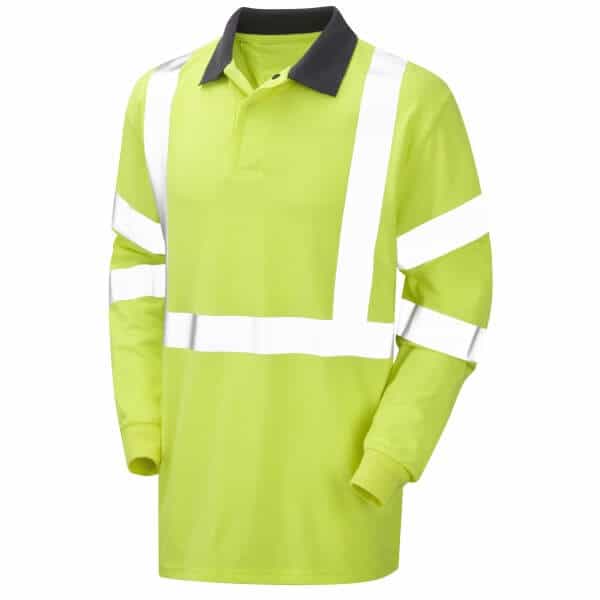
Mark Lant, an Arc Flash Technical Expert at ProGARM comments: “Obviously, we’d prefer it if Arc Flash incidents never occurred. However, the fact is they do, and we’re pleased to see our arc flash polo shirt performing as effectively in the field as it did in the lab. We wish the cable jointer a speedy recovery from his other injuries.”
Arc Flash Clothing & Electrical Safety Tests
Arc flash clothing and garments are tested to European norms and standards:
EN ISO 11612: 2008 (A1 B1, C1) – ISO 11612:2008 Protective Clothing – Clothing to protect against heat and flame
EN ISO 20471: 2013 Classs 3 – High Visibility Clothing – Test Methods & Requirements
IEC 61482-2: 2009 Class 1 – Clothing Protection For Thermal Hazards Of An Electric Arc
Electric arc flash occurs during fault conditions when a current flows through an air gap between conductors – this inflicts catastrophic devastation upon switchgear MV HV
High Voltage Substations – pictured the catastrophic effects on 11kV switchgear and cables of an arc flash incident
Can An Arc Flash Occur While Ground Digging?
1. On average 8-10 cable strikes are reported in the UK every day
2. Over 90% of LV-HV underground cables in the UK are unmarked
3. Over 1,000 electrical incidents reported to the HSE in the UK every year
4. 25 of these are fatalities (HSE)
5. Fines can be an excess of £2 million
Arc Flash Learning & Resources
Thorne and Derrick are proud to be distributors of ProGARM arc flash coveralls and protection.
We can help – should you require arc flash calculators or advice on the type of clothing and protection available please do not hesitate to contact us.
5 Common Cable Management Mistakes And How To Avoid Them Cable management is often overlooked but in industrial environments, it plays a critical role in safety, reliability and long-term performance. Loose, poorly routed or unprotected cables can quickly become...
Rethinking Cable Cleats for High-Density Data Centres Global demand for cloud computing, AI workloads and digital services is accelerating the construction of data centres at an unprecedented scale. Hyperscale facilities are now being developed across Europe, North America and...


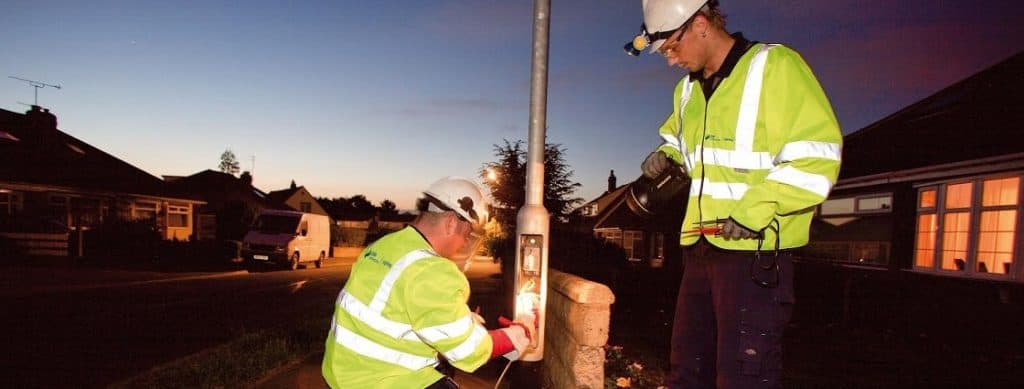












 cables, overhead lines or substations.