Dropped Objects Prevention Work Mat: Enhancing Safety on Elevated Gratings
Dropped Object Prevention Work Mat Enhancing Safety on Elevated Gratings
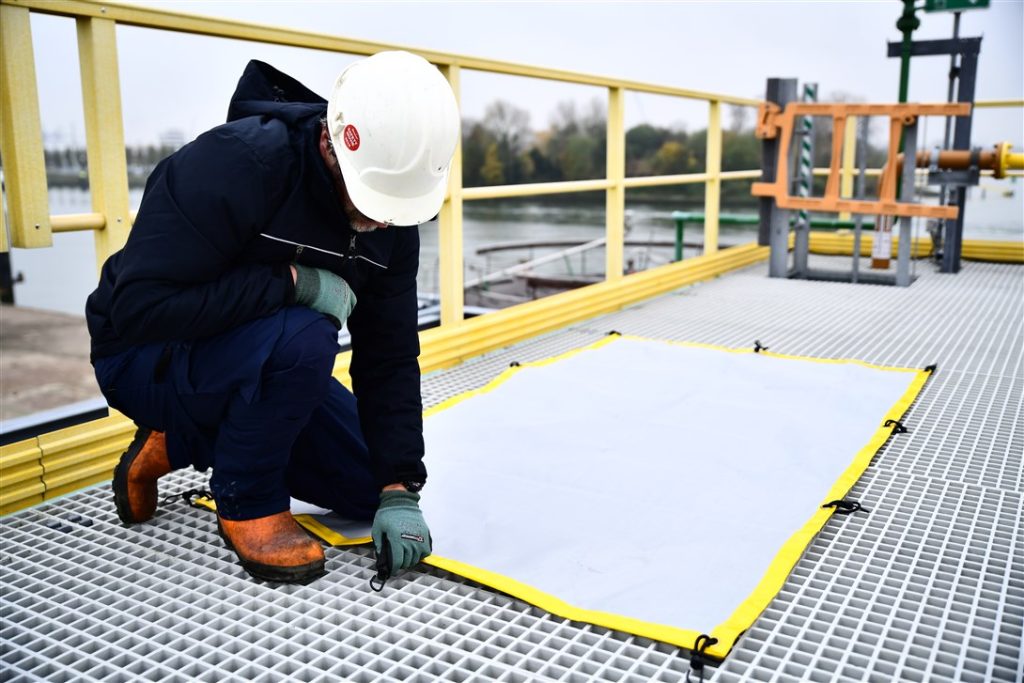
The CableSafe® Dropped Object Prevention Work Mat serves as a reliable resource for protecting tools and equipment from falling through the grating and is designed for use in wet and slippery conditions. It is also designed to protect your flooring or walkways from damage – matting is used for dropped object prevention across all industries and workplace applications.
One area where safety is important is when working at a height, especially on elevated gratings, catwalks, and platforms. The risk of dropped tools or equipment poses a significant hazard, potentially damaging equipment or causing fatalities.
Safety at work is of utmost importance when working on elevated platforms, especially if there are personnel or contractors working underneath. Dropped objects are still, unfortunately, a common contributor to severe accidents in industrial facilities across different sectors globally.
Thorne & Derrick supply the complete range of Safety Tools & Equipmentto enable safe working in sectors such as the construction, renewables, data centres, rail, manufacturing and oil, gas, petrochemical industries.
dROPPED oBJECTS PREVENTION MATS
wHAT ARE THEY?
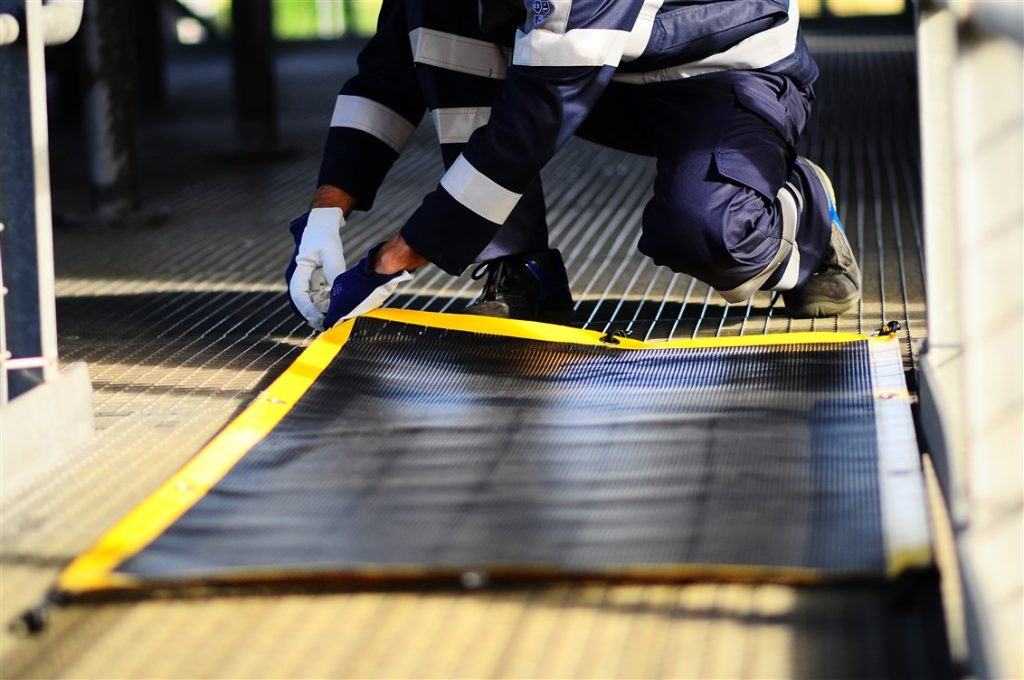
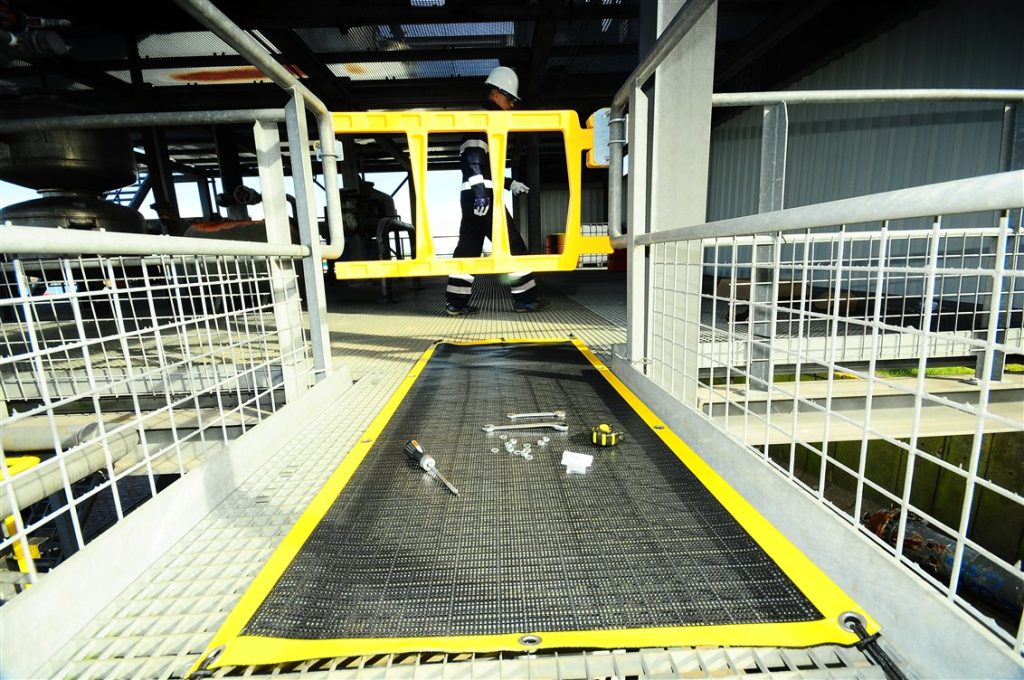
The CableSafe Dropped Objects Prevention Work Mats are designed to allow personnel to work confidently on grating surfaces, as they serve as a dual purpose for the following:
Protection : This mat prevents tools and equipment from falling through grate openings and holes
Safety: Personnel can easily work efficiently without worrying about dropped objects, especially during maintenance, turnarounds, inspections, and daily operations
Flame RetardAnt / Fire retardant
CableSafe Dropped Object Prevention Work Mats are available with flame retardant and fire resistant coated polyester fabric. This fabric is crafted with coated polyester mesh fabric, and it has a tear strength of 330N (DIN 53363). This range of flame retardant mats is available with spanners and is available with a flame-resistant material that is made of fibreglass double coated polyurethane and can withstand temperatures of up to 550°C.
The CableSafe Dropped Objects Prevention Work Mat is available with a flame-resistant material that is made of fibreglass double coated polyurethane. It can withstand temperatures of up to 550 °C.
The fire resistant mats are available with spanners or with magnets.
Work mAts
hOW TO CONNECT THEM:
Prevention Work Mats can be secured with 14 strong magnets, which attach to the grating. The magnets in the hem are rated at 84N each, making them one of the strongest in the market to ensure that the mats are secured properly.
The CableSafe Dropped Objects Prevention Work Mat is a high-quality, reusable, and cost-effective safety tool that significantly reduces the risk of dropped objects and is fast and easy to install.
Applications
Marine & shipbuilding / Shipyards
Metal gratings
Elevated work platforms
Walkways & catwalks
Maintenance projects & industrial turnaround
Oil and gas, refineries and power plants
Offshore platforms, terminals and rigs
Manufacturing facilities
Objects known to frequently cause accidents are hand tools or equipment left behind after a task, as well as equipment mounted in an elevated location that has the potential to fall due to movement or environmental conditions.
Benefits of the Prevention Work Mats
Risk Reduction: Minimises the risk of dropped objects, protecting personnel and equipment
Reusable:This range of high-quality mats can be used repeatedly to protect people in the workplace
Fast Installation: No complicated setup– simply lay it down and secure it which helps reduce downtime and risk of workplace injuries and easy to deploy, fold and reuse
Used as temporary Work Mat for dropped objects prevention
Prevents small tools, fasteners & foreign objects falling from elevated work platforms creating a safer work environment
Fire Resistant / Flame Retardantfabric available for heat sensitive areas
CABLE SAFETY EQUIPMENT
CableSafe® Safety solutions are critical cable essentials and are well proven construction safety products. The CableSafe® range of cable hooks can be used during maintenance, turnaround, outages, shutdowns, construction work to suspend cables and hoses and other work gear and equipment from the working space.
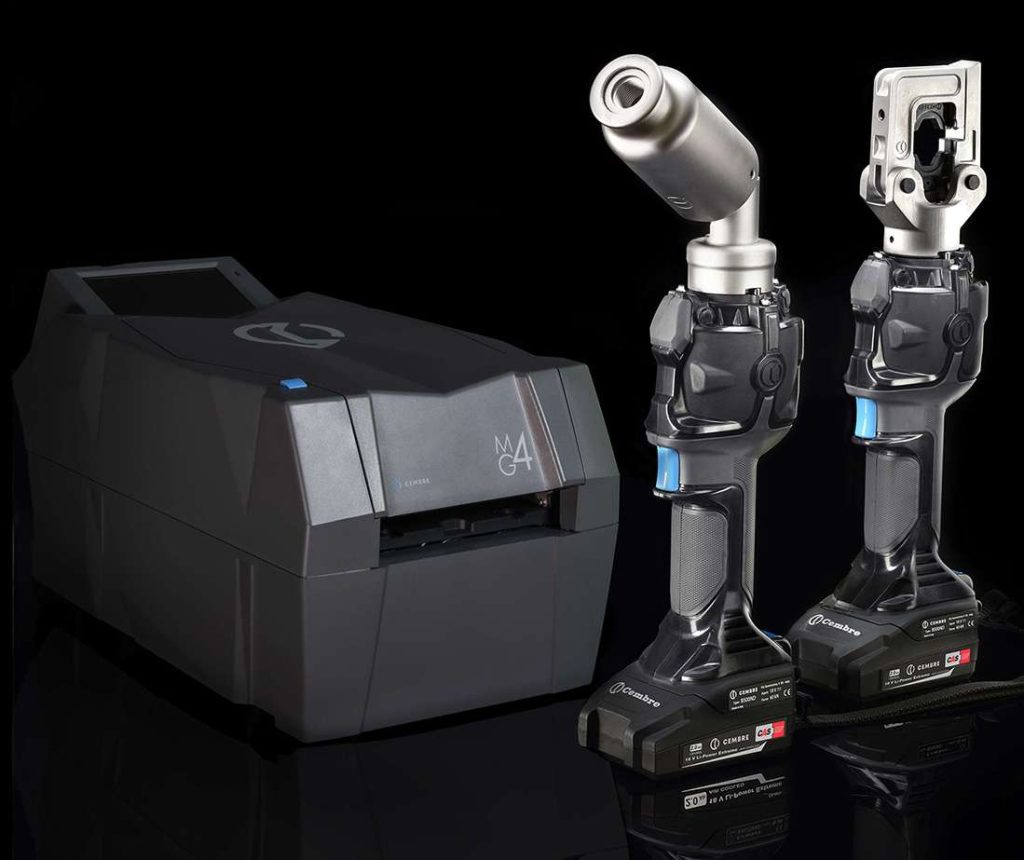
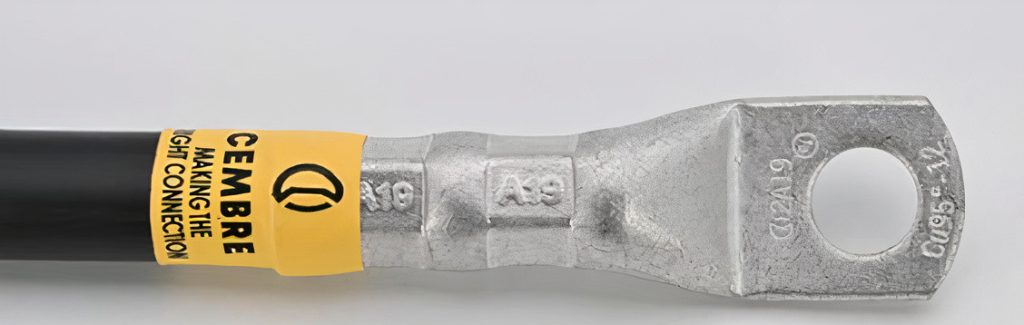
Cembre designs and manufactures solutions for the connection, glanding and termination of electrical conductors: including connectors, cable lugs and installation tools for cutting and crimping cables.
Cembre MAXIBLOCK & MAXIBRASS Cable Glands
Thorne & Derrick are a UK Specialist Distributor for Cembre, the leading European Manufacturer of electrical connectors, crimping tools, cutting tools and a variety of accessories for LV, MV & HV (Low, Medium and High Voltage)power systems. Designed for working in and around switchgear and control panels, Cembre tools are ideal for installing low and medium voltage connectors and cable lugs.
MAXIblock & MAXIbrass rANGES
Cembre have expanded the new range of MAXIblock & MAXIbrasscable glands, which are becoming more flexible and practical for equipment and electrical panel applications.
Cembre MAXIblock 1940.M Metric Thread 1.5 Pitch
Cembre MAXIbrass 2940.M Metric Thread 1.5 Pitch
This new range of MAXIblock and MAXIbrass cable glands manufactured by Cembre allow the passage of cables with a larger diameter, saving space and time on installations by becoming increasingly flexible and practical compared to the standard range of cable glands which makes it possible to install large diameter cables.
The 1940.M and 2940.M series are characterised by the extended cable entry compared to the standard range, a longer thread makes installation on thick plates easier.
Extended Cable Entry | EV CHarging Points
The installation of cables with larger diameters is now possible due to the extended cable entry. An extension on the entry thread makes it possible to install on thicker sheet metal.
The 1940.M and 2940.M series are in fact characterised by an extended clamping range compared to the standard range. In this way, the needs of installers and customers are met by maximising the relationship between the diameter of the cable and the entry hole in the electric panel or equipment.
ev cHARGING POINTS
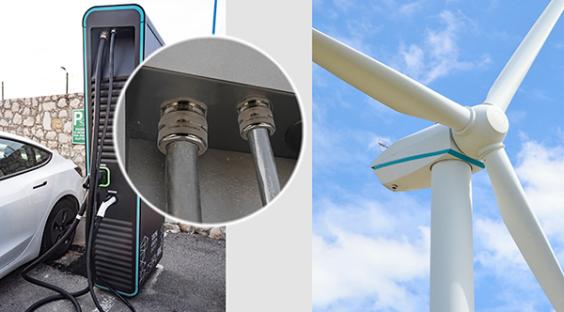
The new designs of the MAXIblock 1940.M and MAXIbrass 2940.M are ideal for applications such as EV chargers and wind turbines.
With the same thread as the standard range, the 1940.M and 2940.M allow the passage of cables with a larger diameter, saving space and time on installations. Additionally, a longer thread also makes installation on thick plates easier.
Ideal for EV chargers and wind turbines
Single hole on electrical panel for multiple uses
Stop using adaptors
IP Protection
Cembre Cable Glands
Cable glands are mechanical cable entry devices that attach, secure and terminate cable ends to an electrical enclosure or directly into equipment providing for mechanical support, earth continuity for armoured/braided cables and protect against the ingress of dust and moisture according to the ingress protection (IP) rating.
Benefits
Ingress protection IP68 guarantees protection against water and dust
Temperature range: -40°C a +100°C (Static) of operating temperature
MAXIblock and MAXIbrass are NEMA Certified
VDE Certification provides a guaranteed safe use of the product for the user
Cembre is a leading European manufacturer of electrical connectors, crimping tools, cutting tools and a variety of accessories for LV (Low Voltage), MV (Medium Voltage) and HV (High Voltage) power systems. Designed for switchgear and control panels, Cembre tools are ideal for installing low and medium voltage connectors.
T&D are Specialist Distributors ofLV MV HV Cable Installation, Jointing, Substation & Electrical Equipment– we supply companies in the onshore and offshore wind, solar, rail, oil/gas, data centre, battery storage and utility sectors with products to enable the energisation, operation and maintenance of underground cables and overhead lines.
Special thanks to Matt Page EV Business Development Manager at Lucy Zodion for the kind permission to republish.
Specifying a EV Feeder Pillar
What Do You Need To Consider?
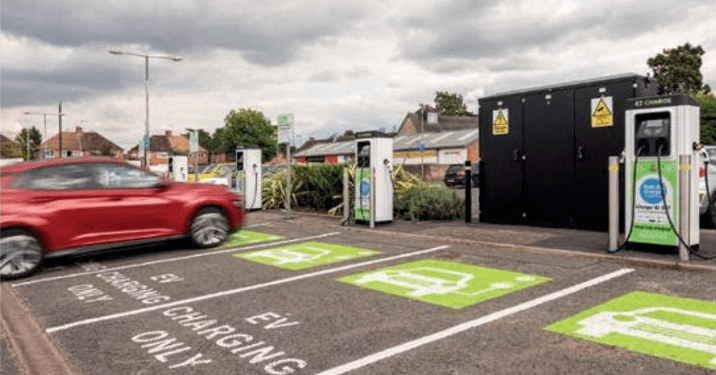
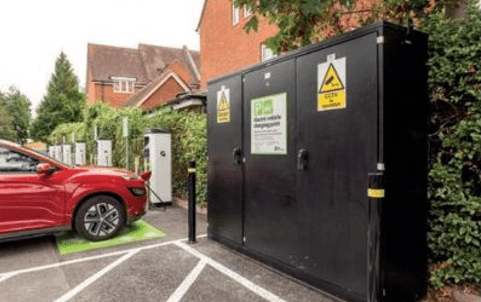
The unsung hero of EV infrastructure is not sexy chargers; the unsung hero of great EV infrastructure is the feeder pillar. Used to distribute power safely and efficiently, whilst ensuring charging speed reliability – correctly specifying an EV feeder pillar will provide secure, dependable, and compliant electrical connections, says Matt Page, EV Business Development Managerat Lucy Zodion.
Lucy Zodion manufacture a wide range of products suitable to provide Low Voltage Electrical Power Distribution for EV charge points – from distribution network operator (DNO) accredited cut-outs and isolators for on-street chargers, to feeder pillars for electrical vehicle charging.
Due to the growing demand for Electric Vehicles (EV) around the world and the resulting strain that the charging infrastructure has on our electrical network, a wide range of safe and compliant electrical power and connection solutions are needed.
▶ Thorne & Derrick together with Lucy Zodion are able to offer a range of feeder pillar enclosures and cabinets that are robust, durable and secure providing weatherproof and padlockable vandal resistant protection.
As the electrification revolution continues, robust electrical infrastructure is crucial. Electrical enclosures and cabinets serve as frontline defences, safeguarding components and ensuring system reliability. But how does one specify the correct enclosure amidst various materials and standards?
With decades of experience in electrical connection solutions, Lucy Zodion is here to guide contractors. Here’s an overview of key considerations:
EV Feeder Pillars Considerations
Electrical Supply
The first thing to consider is the electrical supply. Will it be a new point of connection provided by the DNO or ICP, or will it be a private supply routed from a supply elsewhere? If the former, then consideration must be given to the space that the DNO/ICP will need to install its service head/cut-out and any metering requirements.
Earthing
You must decide whether your EV feeder pillar will use Protective Multiple Earthing (PME), O-PEN technology, or TT earthing. The choice depends on various factors, such as existing infrastructure, preservation orders on trees and not forgetting resistance levels that would need to be guaranteed all year round in the event of a TT installation.
TT installations, where an earth rod is installed to provide the earth, are the most common. However, fitting PEN detection technology is a well-recognised alternative where it is impossible to fit an earth rod
or earth mat.
Charge Points
How many EV charge points is the feeder pillar powering and what are their ratings? Outgoing devices include single-phase and three-phase, enabling EV chargers to be powered from 7kW to 150kW.
What current reading is the incoming supply of 100A, 200A, 400A, and 630A?. Understanding your current rating requirements is essential.
How much power does your feeder pillar need to deliver, and how many charge points (in kilowatts) will it supply? Consider load balancing within charge points to optimise your supply connection and get the most value from your electrical infrastructure.
Residual CircuitProtection
There is a requirement to protect cables supplying the charge points, and to do this, Lucy Zodion installs a 300 mA protection. If the charge points do not have this local protection, the company offers 30 mA protection to cover it.
This is generally seen on the 7-22W charge points, but Lucy Zodion EVIS range offers both solutions to protect your installation requirements.
Futureproofing
Anticipate future needs by allocating space within your feeder pillar for additional equipment or charge points that may be installed later. This proactive approach ensures your infrastructure can adapt to evolving EV demands without costly modifications.
Location & Planning Requirements
Carefully consider the location of your EV feeder pillar. Are there specific planning requirements or access needs for maintenance and testing? Proper planning ensures seamless integration into your site or development.
Aesthetics
In some cases, aesthetics play a vital role. Does your EV feeder pillar need to blend into its surroundings? Standard enclosures are hot-dipped galvanised, but opting for a painted finish can help maintain the integrity of your site or development while ensuring that your infrastructure is functional and visually appealing.
EV Feeder Pillar
Compliance and standards
When specifying an EV feeder pillar, you need to make sure it is tested to the following standards:
BS7671- IET Wiring Regulations – Covers the electrical installation of buildings, including the use of surge protection
BS7671- IET Code of Practice for Electric Charging
BS EN 61439 – Low Voltage Switchgear and Control Gear Assembly
Considering these key points will ensure that your EV feeder pillar is designed to deliver efficient and reliable power distribution for electric vehicle charging, contributing to a sustainable and greener future.
Strong R&D, constant innovation in manufacturing technologies, and extensive experience in the field of electrical connectors enable Cembre to swiftly meet the market’s rising demands for high-quality, dependable, long-lasting, and safe products.
Cembre has received accreditation from CPD (Continued Professional Development) to offer certified training on their electrical crimping and compression connectors. Since CPD is a globally renowned independent accrediting body, you can take advantage of their knowledge and experience in the electrical connections industry while also earning CPD credits for your professional advancement.
The course aims to deliver ‘best practice’ crimping methods in accordance with BS7609; for electrical engineers; contractors; and installers. Delegates will learn the importance of material composition; cable preparation and using a ‘matched crimping system’.
Connectors: what they are, how they work, and why they are important for reliable and safe LV MV HV electrical connections.
BS7609 is the British standard that specifies the requirements and installation methods for un-insulated compression and mechanical connectors for power cables with copper or aluminium conductors.
Matched system: the system that ensures the highest quality and safety of connections by using electrical connectors, crimping tools, and dies that are designed and tested together.
Participating in Cembre’s CPD-certified training courses offers many benefits, including:
Certified Excellence: The courses are meticulously crafted and assessed by CPD, ensuring alignment with the highest training standards and guidelines.
Flexible Learning: Whether you prefer face-to-face interaction or the convenience of online learning, our courses cater to diverse preferences and schedules.
Certification: Upon completing the training, you will receive a CPD training certificate that that acknowledges your participation and attendance.
Cable lugs are suitable for connection, termination and jointing of 11kV-33kV power cables with copper or aluminium conductors to MV-HV electrical equipment including switchgear, transformers and control panels
Cembre CPD TRAINING cOURSES
CEMBRE training coursesare suitable for anyone who works with electrical connections, such as electricians, cable jointers, engineers, technicians, contractors, and inspectors. They are also flexible and convenient, as they can be arranged with local sales engineer at a time and place that suits you.
Contact Thorne & Derrick today to discuss your requirements.
Cembre is a leading European manufacturer of electrical connectors, crimping tools, cutting tools and a variety of accessories for LV (Low Voltage), MV (Medium Voltage) and HV (High Voltage) power systems. Designed for switchgear and control panels, Cembre tools are ideal for installing low and medium voltage connectors.
T&D are Specialist Distributors ofLV MV HV Cable Installation, Jointing, Substation & Electrical Equipment– we supply companies in the onshore and offshore wind, solar, rail, oil/gas, data centre, battery storage and utility sectors with products to enable the energisation, operation and maintenance of underground cables and overhead lines.
Unlocking The Power Of Solar | Electrical Balance of System in Solar Applications
Electrical Balance of System in Solar Applications
The hard parts are done. You have a solar farm site ready to build and an order placed for high performance PV modules, best-in-class inverters, and a tracking system to maximise energy production. Now you just need to figure out how to get it all connected.
Easy, right?
It’s not rocket science, but thoughtful selection of Electrical Balance of System (EBOS) components is essential for project success. In a recent audit from Solargrade, 62% of all utility-scale solar projects had critical safety issues, 91% of which related to direct current (DC) power distribution. Most issues were caused by field-made connectors and wire management, components of the EBOS.
To understand where to focus to create a reliable, high-performance EBOS, let us start with the PV module and work our way to the DC/AC inverters that connect to the grid.
➡ Thorne & Derrick partner with Panduit to bring the most innovative renewable energies solutions to the market.
Below discover how Panduit is at the forefront of accelerating solar projects, enhancing reliability, and increasing profitability with our expert insights on navigating Electrical Balance of System (EBOS).
Join us as we unlock the potential of solar energy for reliable, efficient projects.
Electrical Balance of System Components IN THE SOLAR iNDUSTRY
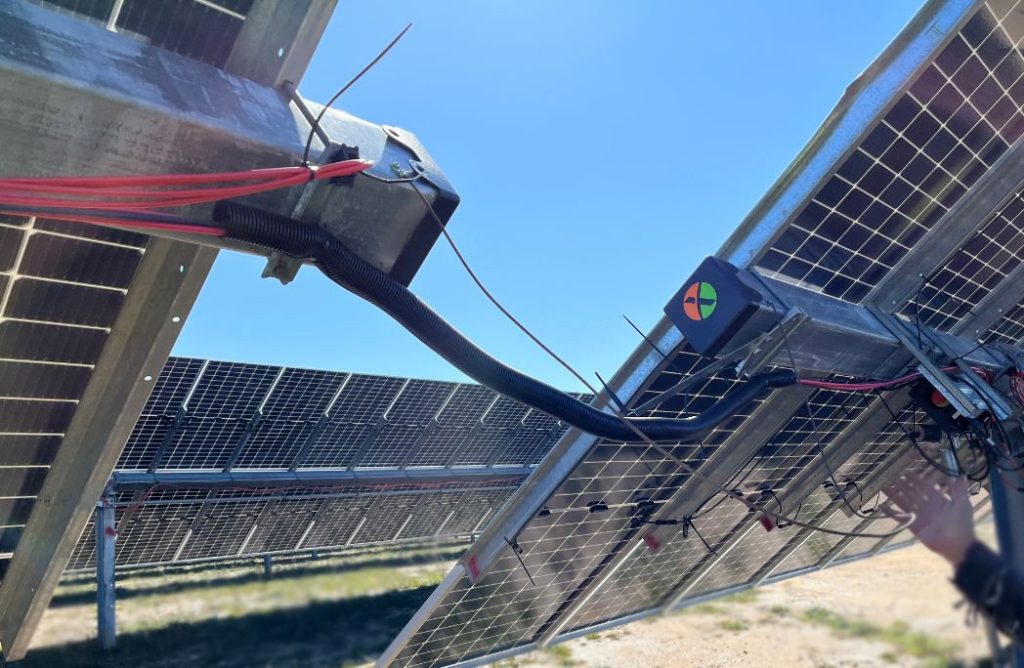
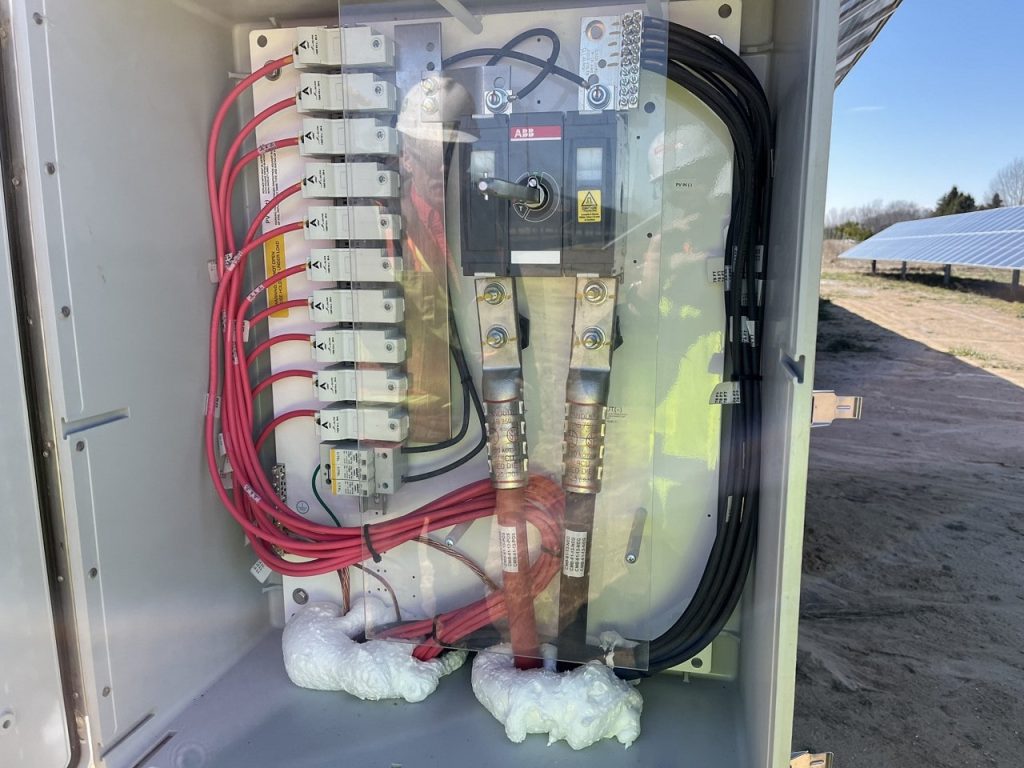
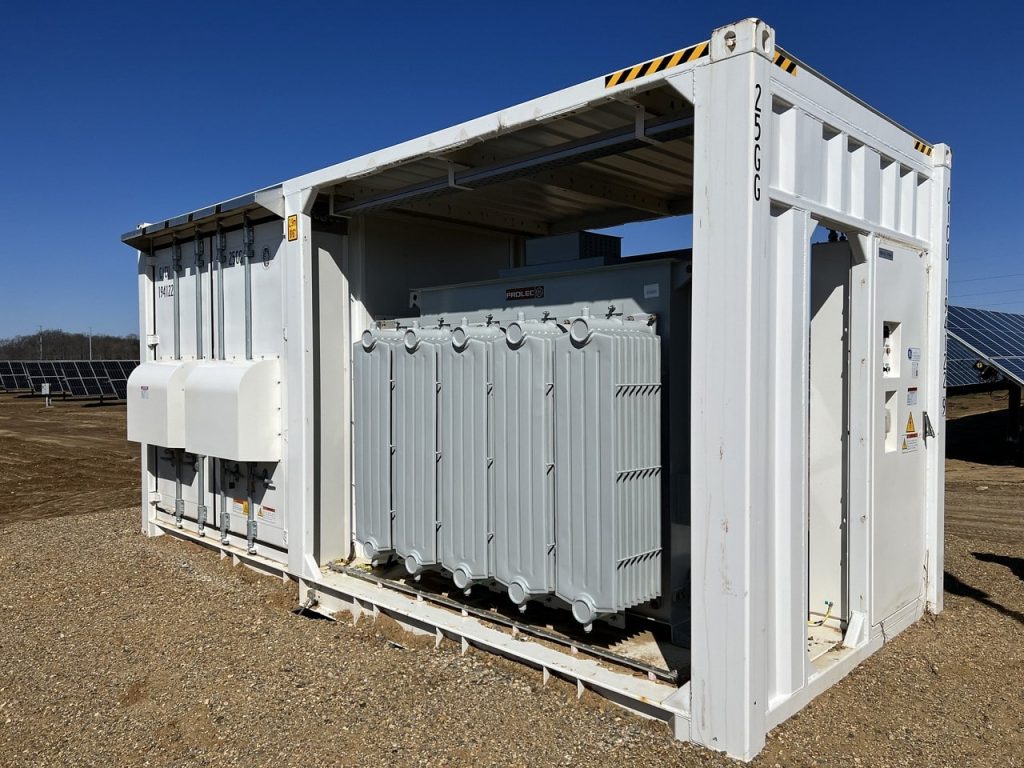
PV modules range in size and power output, but all have DC wires exiting from a junction box on the back. In a solar array, these wires are routed as a bundle or spliced together at prescribed intervals and fed into a combiner box. The combiner box, as its name suggests, combines the power from these strings of modules so that a pair of larger, high-voltage cables can carry their combined power in a “home run” to the inverter and then eventually on to the grid.
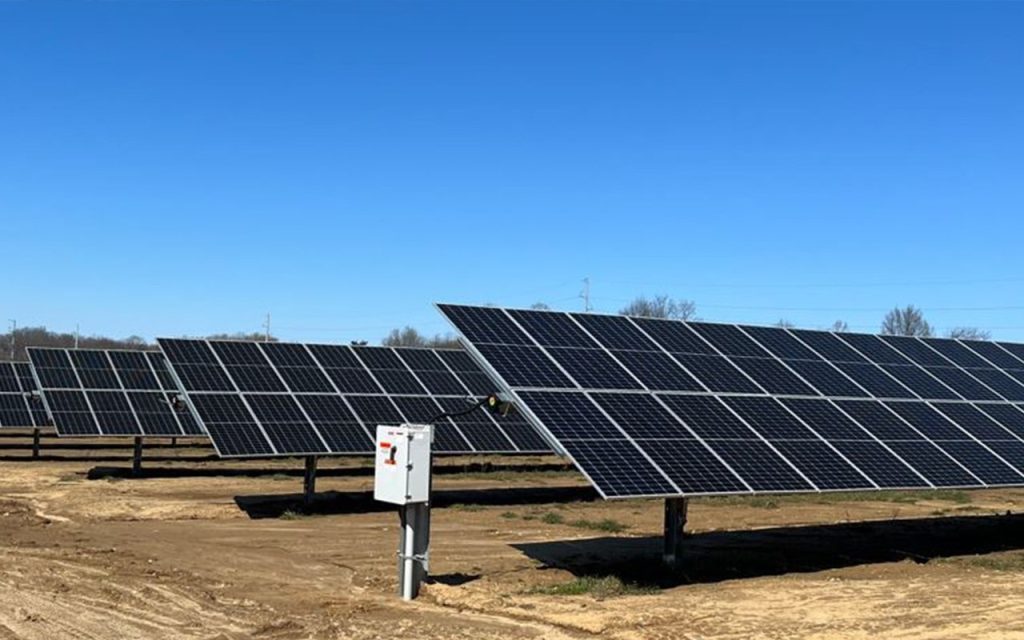
Commercial and utility scale solar projects necessarily have a large footprint to produce the amount of required power. Because each PV module only creates 400–600 W, you need 1,667–2,500 modules to produce just one megawatt (MW) of electricity, and utility projects can typically range anywhere from 20 to 500+ MW. With all that scale comes a huge amount of cable to manage. And because these projects are placed in areas with intense sun, all the components are exposed to the elements. To be reliable, solar cable management solutions must securely hold cables in high wind, protect from long-term abrasion, withstand harsh UV, potential chemical exposure, and extreme temperatures.
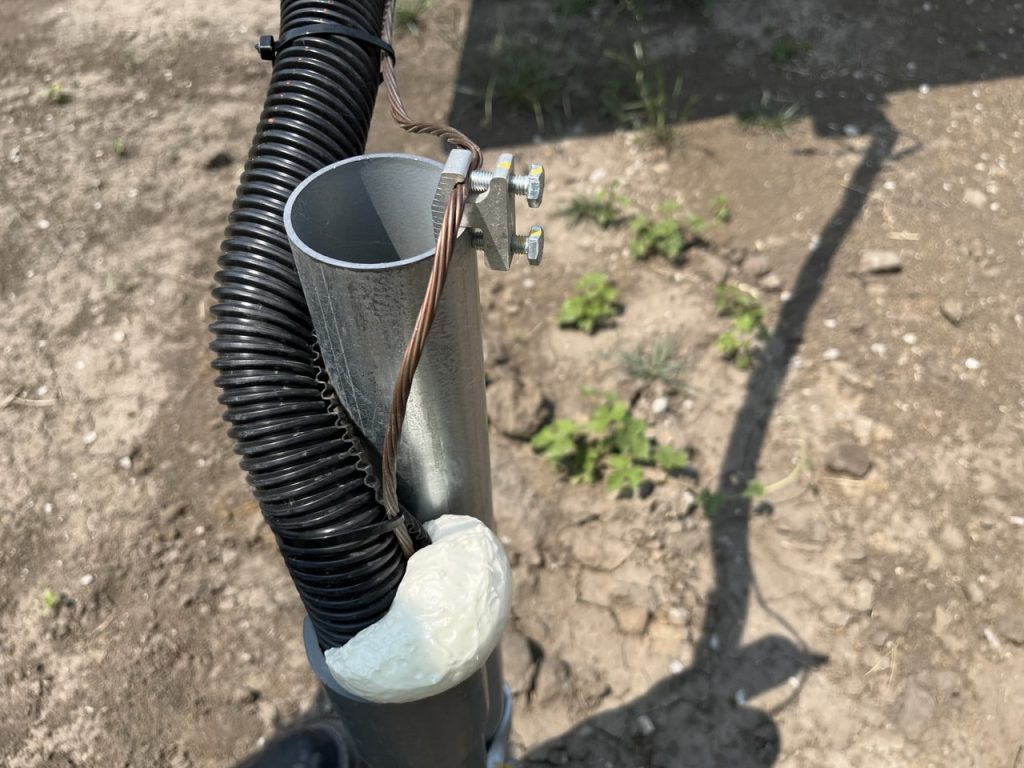
Several suitable options exist for routing smaller cables along the back of PV modules. The most common include dedicated solar clips that snap on the metal frame, specialised wire hangers that fit through holes in the frame, and heavy-duty cable ties. Arrays that move to track the sun create some additional challenges with abrasion, so flexible corrugated tubing is often used to surround cables and protect around potential pinch points.
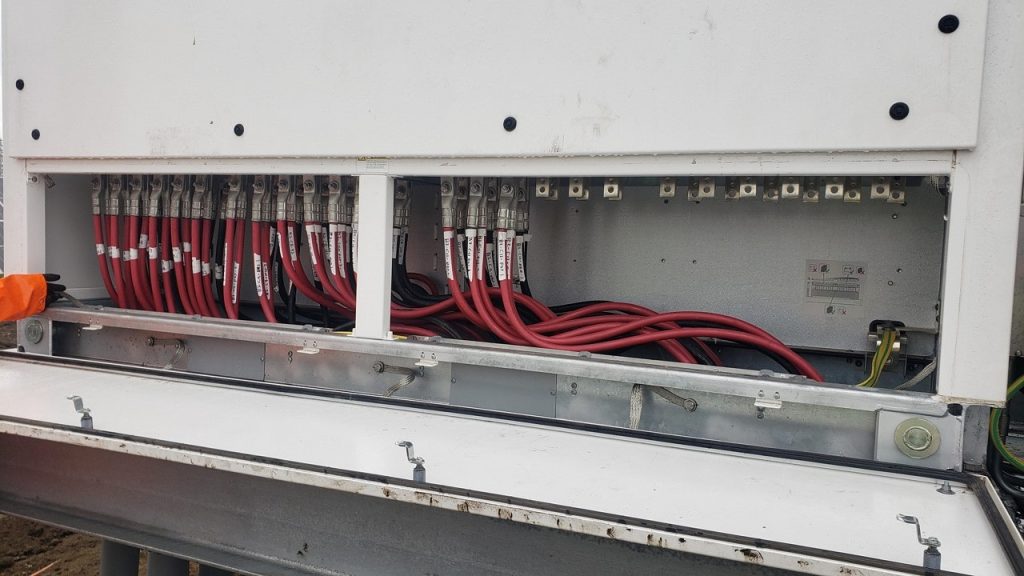
At each combiner box, dozens of smaller cables enter and connect to a pair of busbar conductors, most commonly with power lugs. The lugs are crimped using tools or mechanically terminated to the ends of the wires and secured to the busbar with screws to ensure reliability and efficiency.
Power exits the combiner box through higher-voltage cables and is routed one of two ways: either below ground in a trench or suspended in bundles from steel cables strung in-between rows. These higher voltage “home run” cables carry power to an inverter connected to the grid, or directly to DC battery storage on site.
As with any electrical system, proper bonding and grounding are critical parts of a solar project. Grounding provides a super-low-resistance path for electricity to flow, so that power can safely complete a circuit should a fault occur.
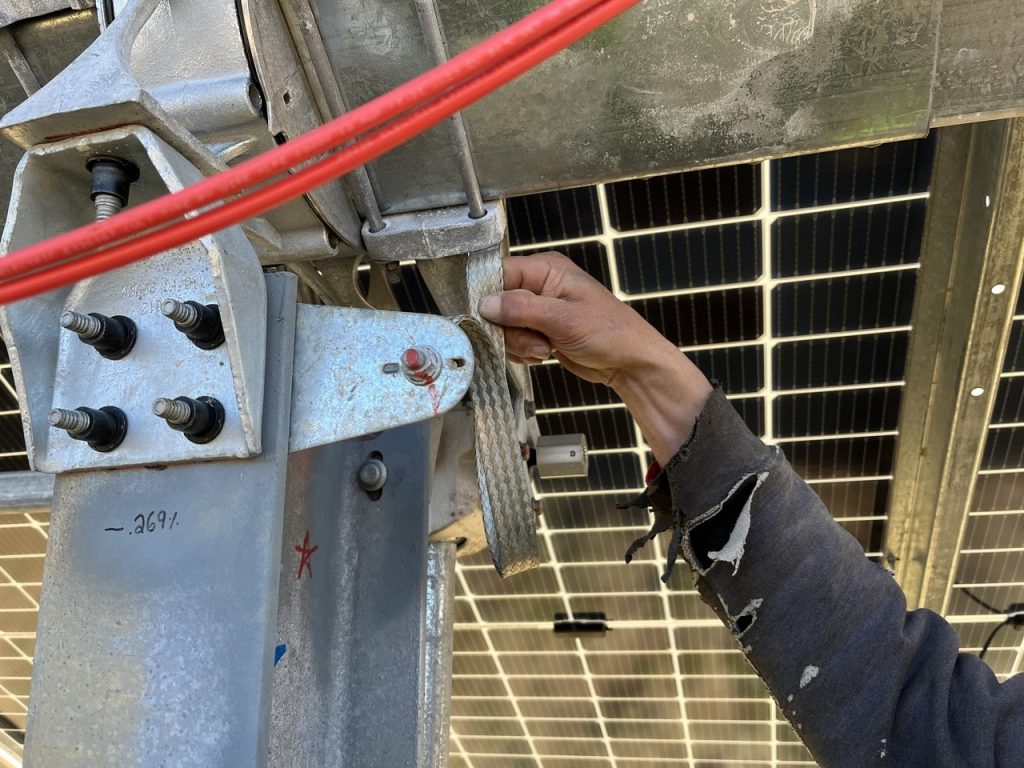
In the EBOS, bonding components like lugs and straps connect each of the individual array components together and then to the grounding system. Without proper grounding, tray and racking surfaces can become energised in the event of a fault, creating a life-threatening situation for people working on the solar array.
Most solar safety and reliability issues emerge from mistakes in managing DC wiring and grounding. Selecting appropriate cable management, termination, and grounding solutions can prevent some challenges. Placing an emphasis on ease of installation, quality materials, and long-term reliability when specifying EBOS components will minimise problems once the project is built.
Maximising Return on Investment Through EBOS
Like any utility, the goal of solar farms is to produce the most usable energy at the lowest total cost over the life of the project. To optimise long-term return on investment, it’s important to consider ease of installation, durability, and safety when selecting BOS components.
Finding skilled labour continues to be a challenge in the construction industry, and the labour needed to connect 2,500 PV modules is significant, let alone 2.5 million. EBOS solutions that simplify installation and minimise re-work can noticeably reduce labour hours and total installation costs. Even components that save seconds per operation compound to significant time savings over the duration of the build.
Once a power plant is commissioned, any downtime directly impacts profitability. Because these projects necessarily involve hundreds of thousands of individual modules, any weaknesses in components will be exposed and magnified. Selecting products specifically designed to last years in harsh environments reduces unplanned maintenance costs and lowers the total cost of ownership over the life of the project.
Solar projects typically have a usable lifespan of 25+ years. To maintain the highest level of production, it’s necessary to perform regular maintenance, which includes everything from cleaning modules and controlling vegetation to replacing deteriorating components.
Effective labelling of all system components during installation is critical for future operations personnel to interact with equipment safely and efficiently. Exposure to UV and precipitation can lead to fading and make labels illegible, so high-quality, easy-to-read solutions designed for outdoor environments are a good investment to ensure efficient maintenance in the future.
Summary
Though EBOS components (excluding wire) represent less than 5% of total project costs, they can be an important way to control costs and optimise performance throughout the life of a solar installation. Quality components maximise labour efficiency during the initial build and result in fewer errors that require re-work. Using longer lasting environment-specific materials and easy-to-read labelling solutions simplifies future operations and reduces maintenance costs. And most importantly, getting EBOS right addresses the most common critical safety issues found in solar projects today.
Experienced Brand Marketer with a specialization in strategy, content marketing, product marketing, storytelling, public relations, event management, athlete and ambassador partnerships, advertising, and team leadership.
Andrew is a member of the Panduit Renewable Energy team as a Product Marketing Manager. He is passionate about building an electrified future and the technology powering energy transformation.
Panduit Electrical Group is a world wide leader in the manufacture of high-quality electrical products including cable ties, wiring accessories, terminals, and identification products such as computer printable labels and portable labelling systems, wiring duct, heat shrink tubing, wire abrasion protection, and accessories.
Thorne & Derrick are Specialist Distributors to Solar EPC’s & High Voltage Jointing Contractors working on the design, construction and maintenance of UK, European and international projects supplying an extensive range of LV HV Solar Cables, Jointing, Substation & Electrical Eqpt.Based in the UK, we are highly customer responsive and absolutely committed to providing a world-class service.
We stock LV HV Solar Cables, Accessories & Electrical Equipment to enable the construction, maintenance and operation of utility-scale PV installations – our products connect600V/1500V solar cablesinto combiner boxes, inverters, transformers and energise switchgear up to 33kV/132kV for high voltage grid connections.
Since 1985, we have provided expert technical support and express delivery from extensive UK stocks to world-wide destinations.
We look forward to working to with you on your next Solar project.
HIGH VOLTAGE JUNCTION BOXES & ENCLOSURES When high-voltage power distribution and cable termination are required, safety, enclosure integrity and long-term reliability are critical. HV Junction Boxes and Electrical Enclosures manufactured by Abtech are engineered for the safe distribution, cable termination and protection...
Compound Box Filling Compound end boxes rarely get attention — until one fails. Across ageing networks, replacement of compound-filled end boxes is becoming more frequent, particularly where original insulation systems have deteriorated and air insulation is not practical because...