Arc Flash | Protection Standards
The First Sustainable Arc Flash Range Of PPE From ProGARM
June 5th, 2023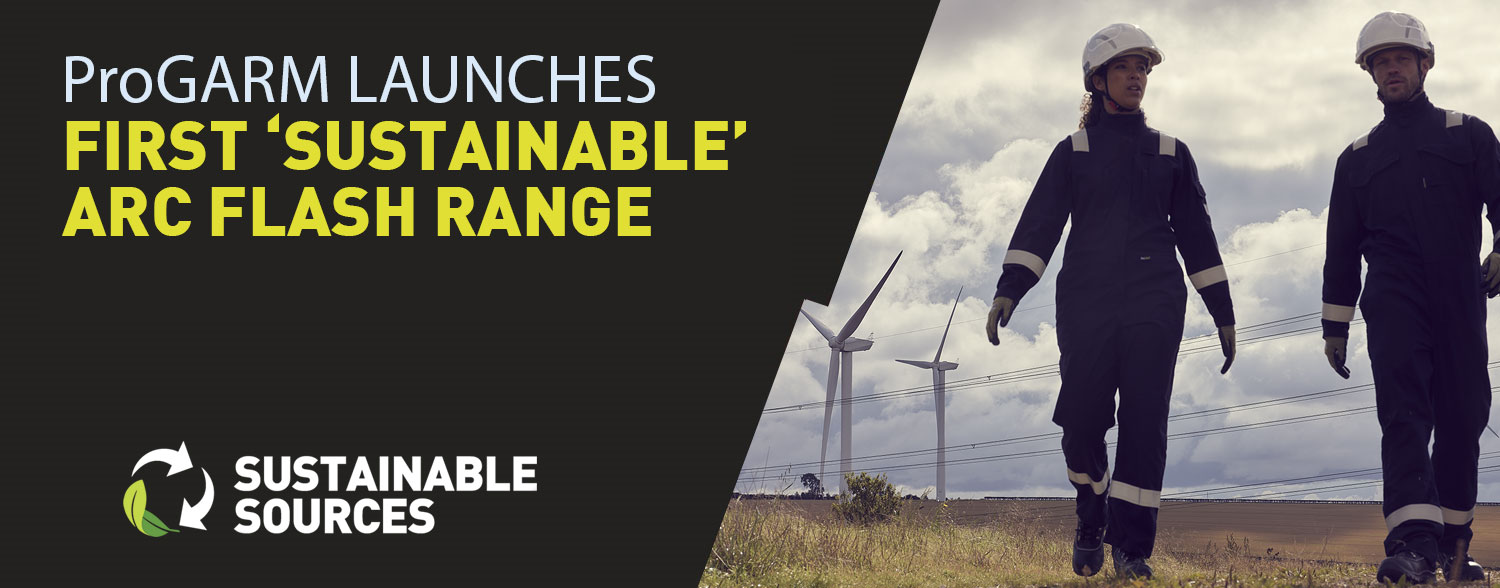
ProGARM launches first sustainable range of Arc Flash Protective Clothing
Sustainable Arc Flash PPE
Introducing ProGARM’s new sustainable arc flash protective clothing range; which meets both sustainability and safety obligations.
The ProGARM range of protective garments deliver ultimate Arc Flash protection, conforming with the relevant industry and EN standards ensuring protection from Arc Flash incidents.
Thorne & Derrick provide competitive prices and fast delivery for the complete range of ProGarm arc flash clothing and accessories designed to protect people and save lives.
ProGARM are known for being arc flash specialists, and in a world-first they have launched a range which looks and performs just like their regular arc flash garments – but with a few key differences making it a truly sustainable option.
After extensive research and development working with fabric specialists across Europe, ProGARM’s new range features the maximum amount of recycled content possible while still creating a fabric and garments that meet the stringent safety standards required for arc flash protection. It uses 20% recycled fabric content, taken from off-cuts from making ProGARM’s regular range – the first arc flash range in the world to achieve this.
The first to use recycled
content in arc flash PPE
Until now it’s been difficult to use recycled content in life-saving PPE garments because of the need to guarantee protection and understand the origin of any recycled material. Using off-cuts from ProGARM’s own production and putting them back into the production process removes question marks over quality and protection levels of other recycled content which may have suffered degradation to the protection it offers.
Using this unworn fabric enables this range to have some recycled content and the same life-saving protection.
Other sustainable features include:
- Sustainable, carbon neutral packaging, made from a plant-based polymer which is a waste product from the sugar industry
- Manufactured in mainland Europe and transported by sea and land in consolidated loads. No ProGARM product travels more than 1900 miles to reach its UK destination (up to 60% less than other suppliers), with deliveries carefully planned to minimise mileage, reducing the number of deliveries by 10% in 2021/22
All of this supports organisations in minimising their impact, contributing to achieving their sustainability goals.
The sustainable arc flash protective clothing range
Meeting High Standards
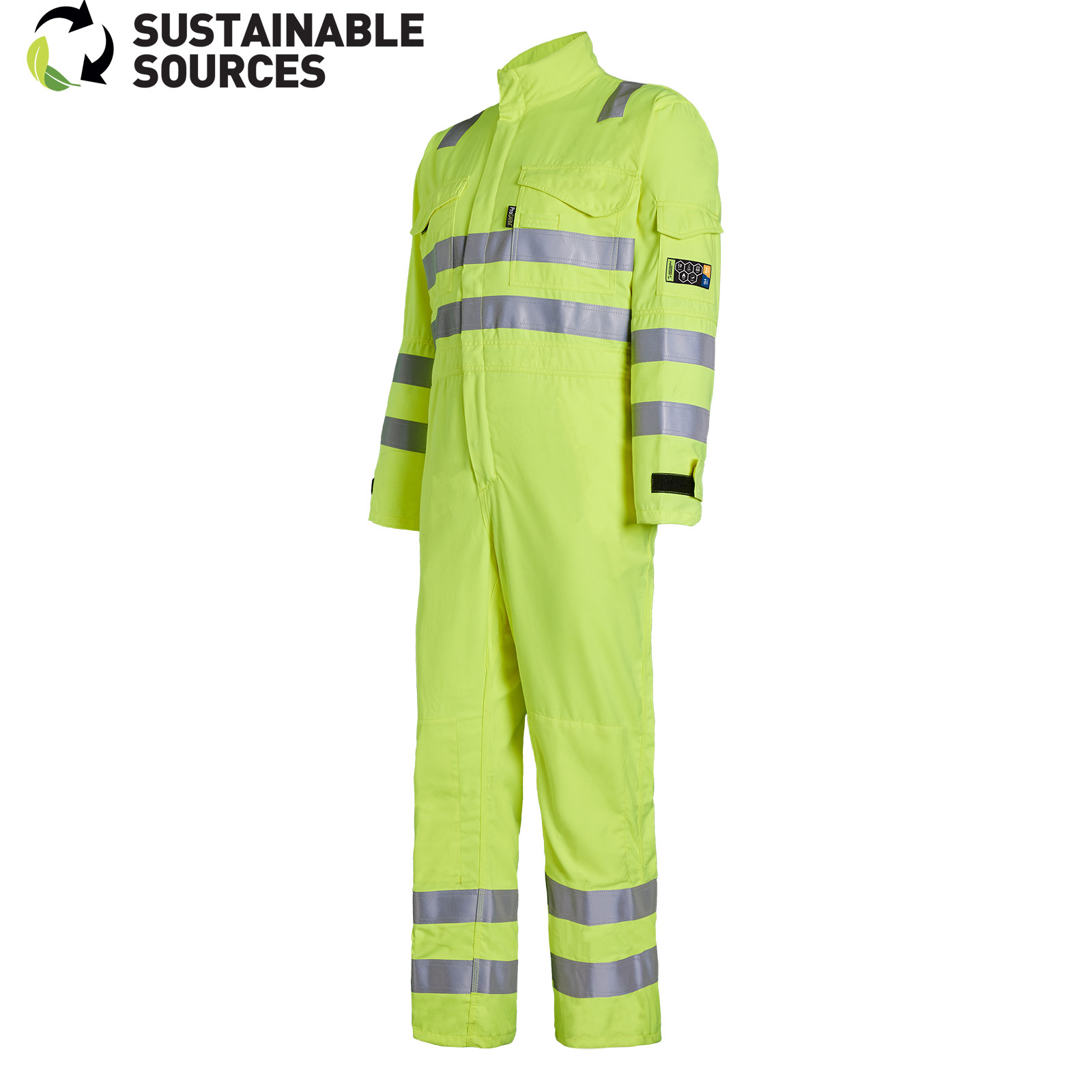
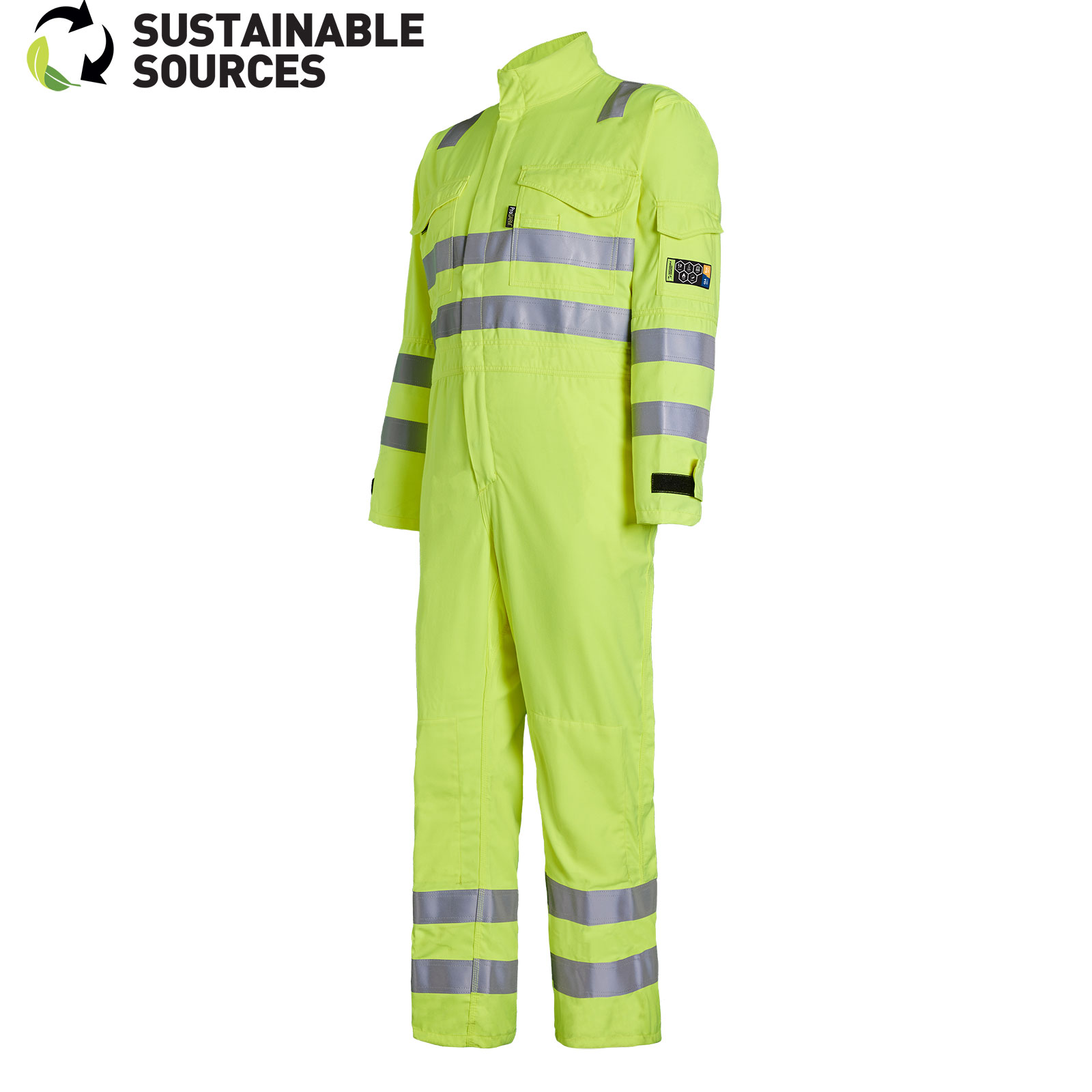
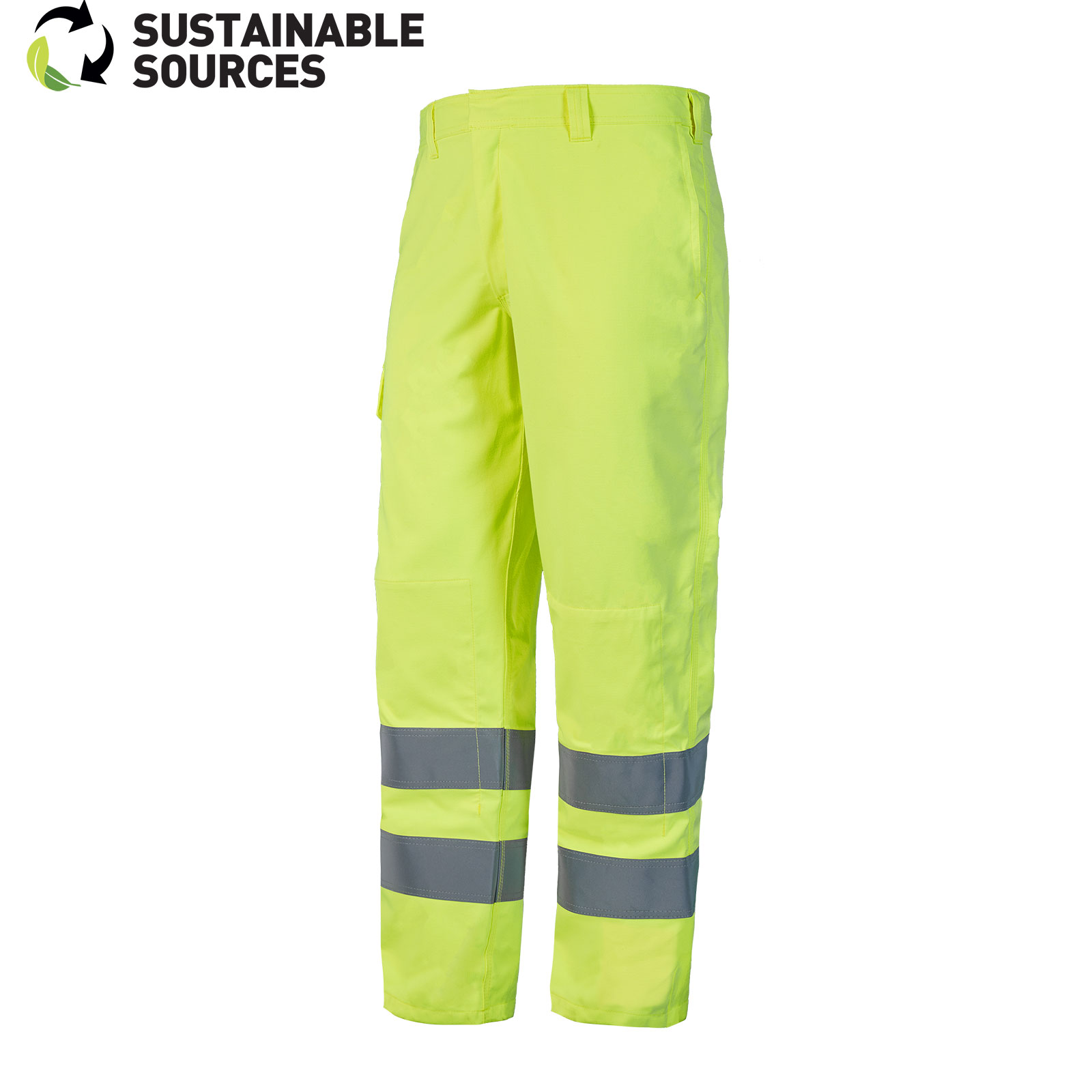
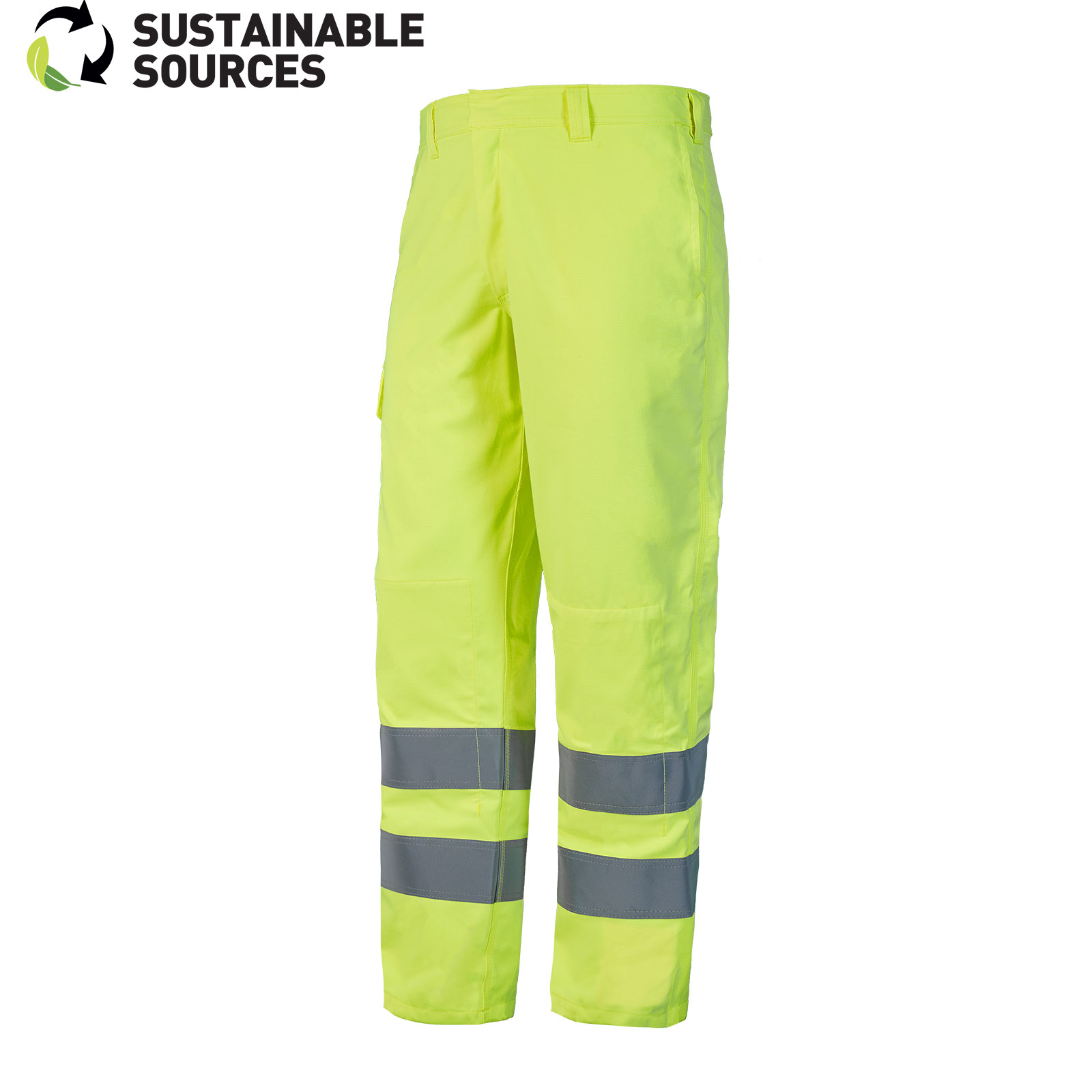
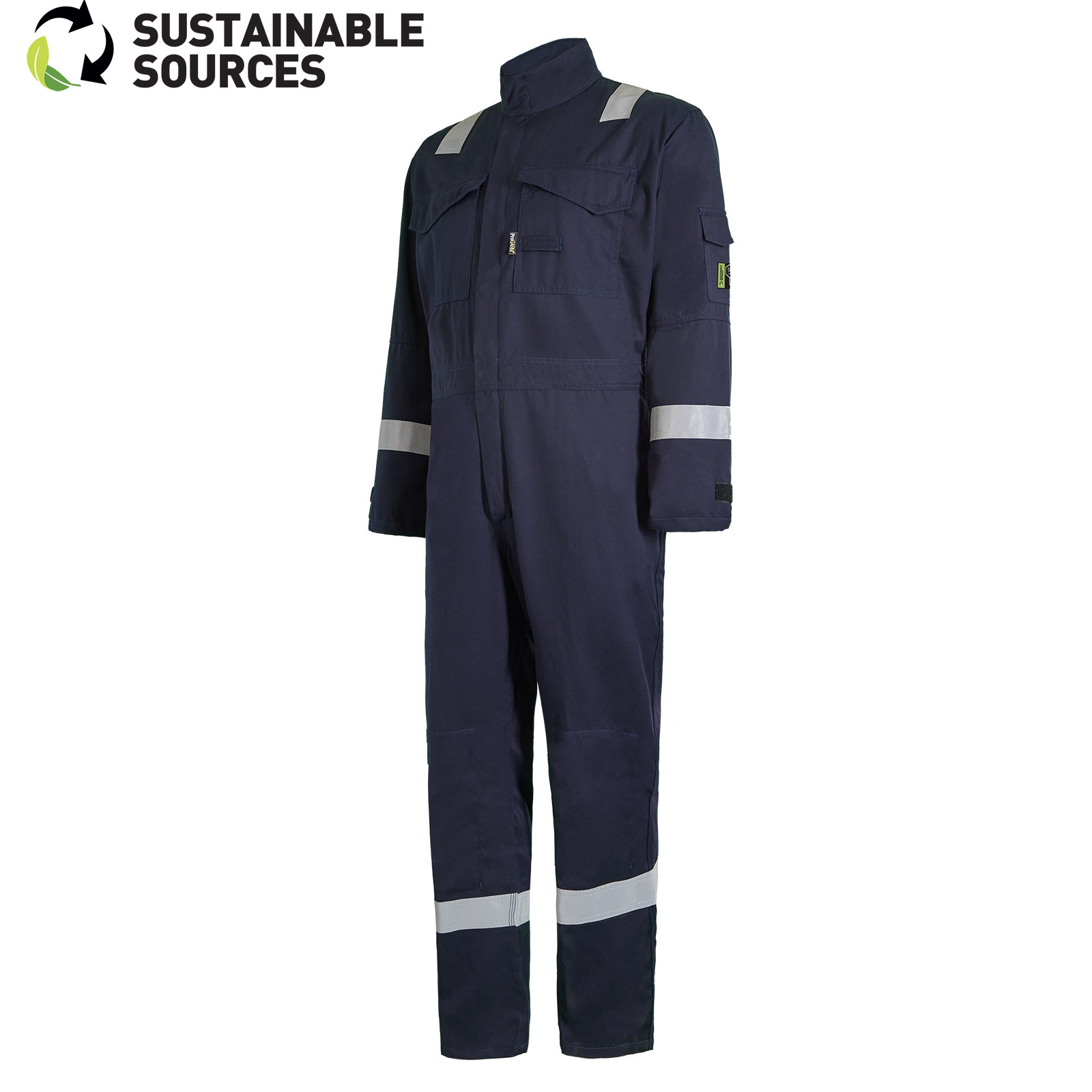
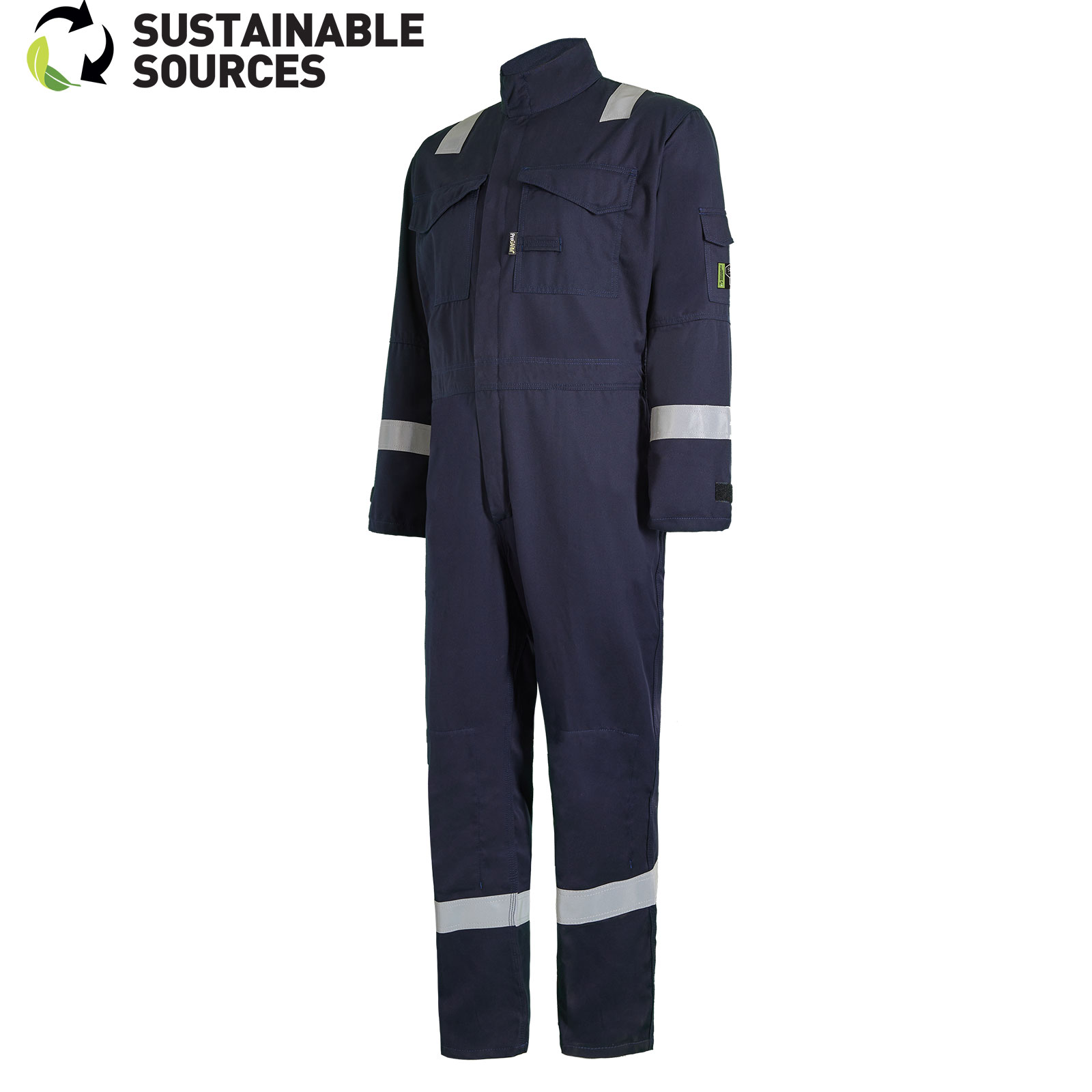
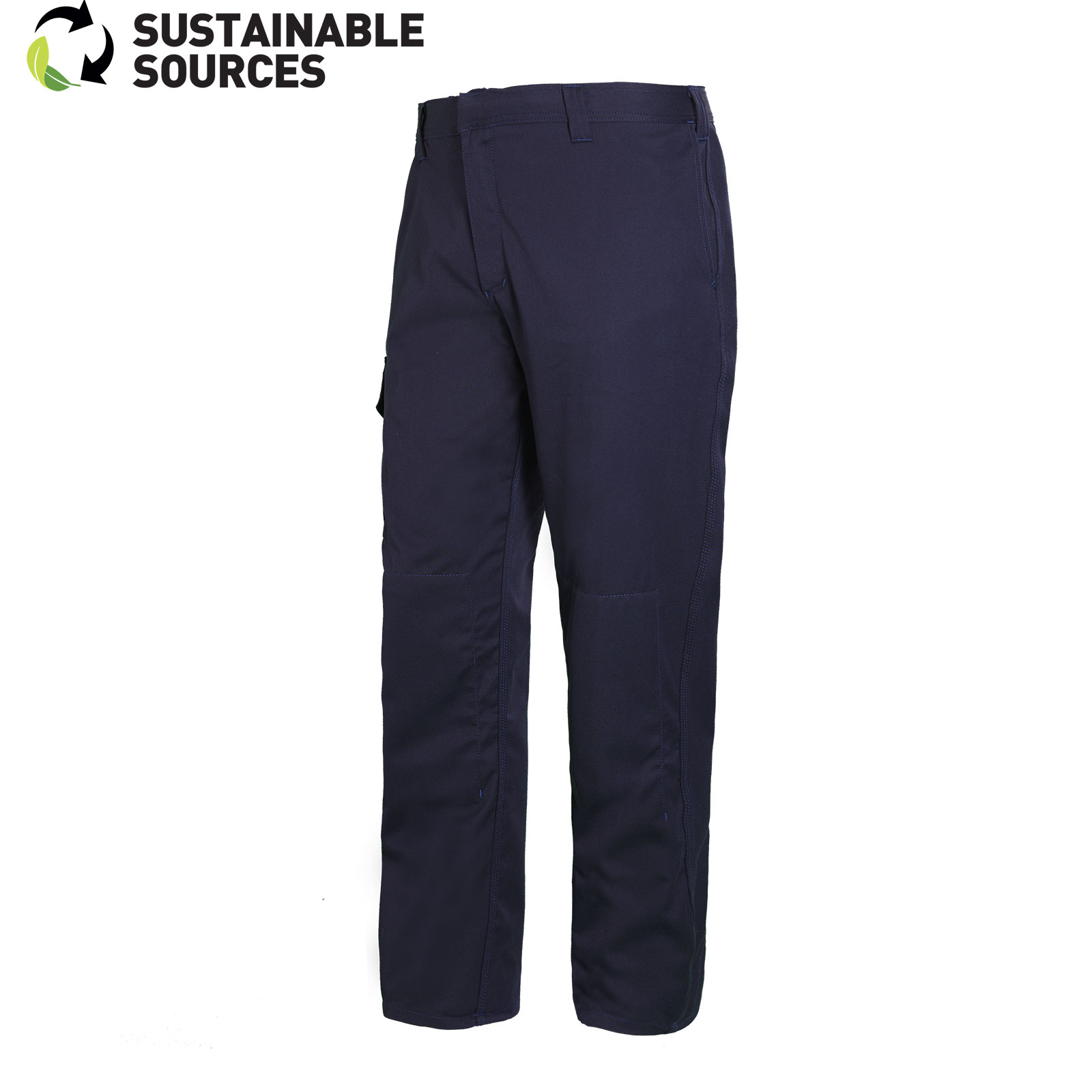
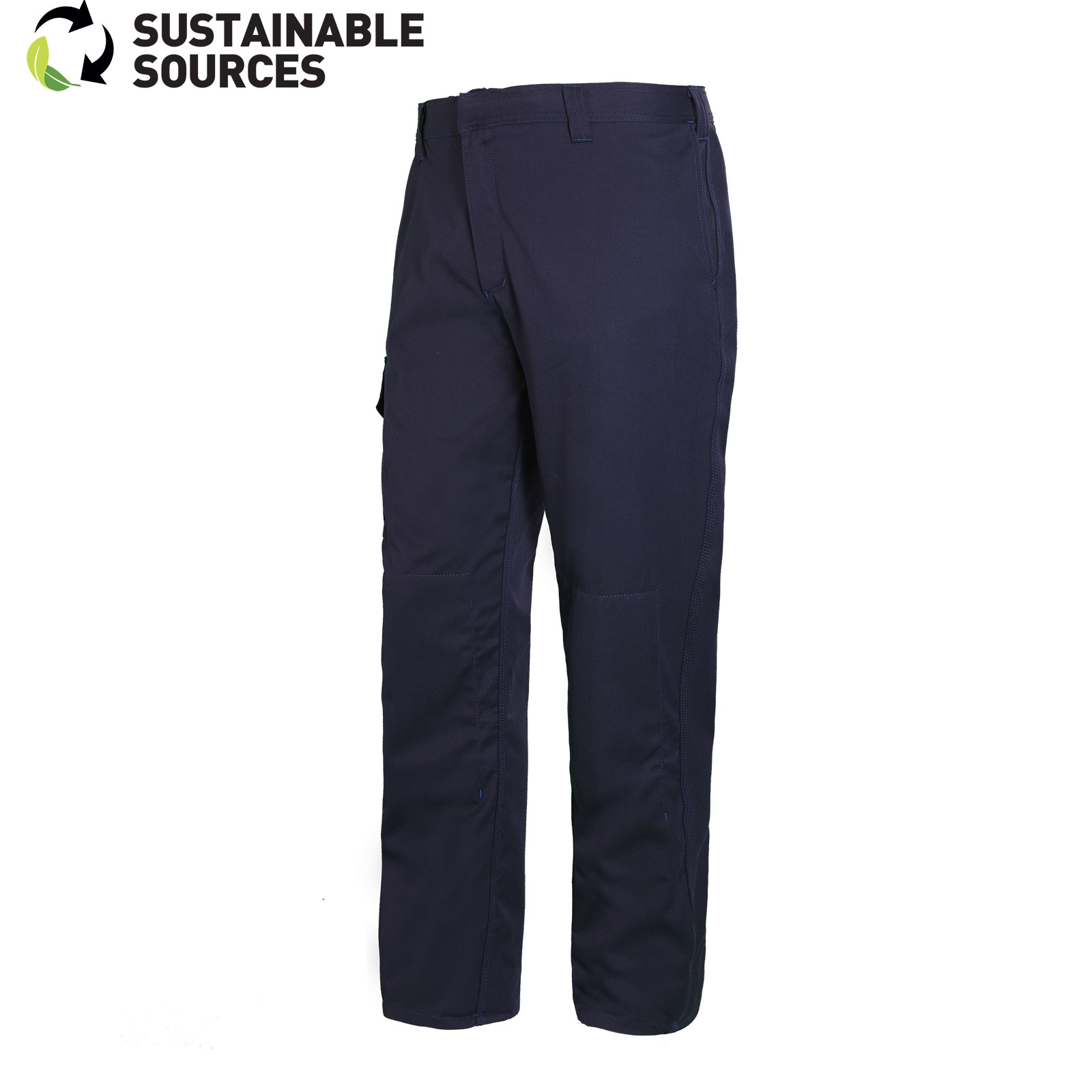
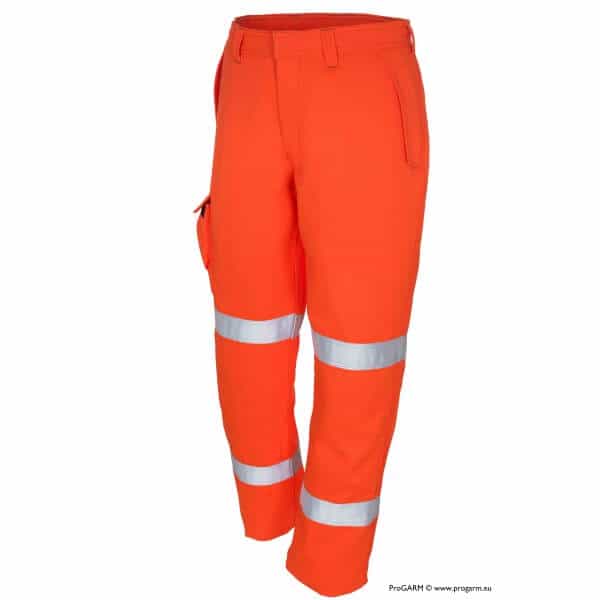
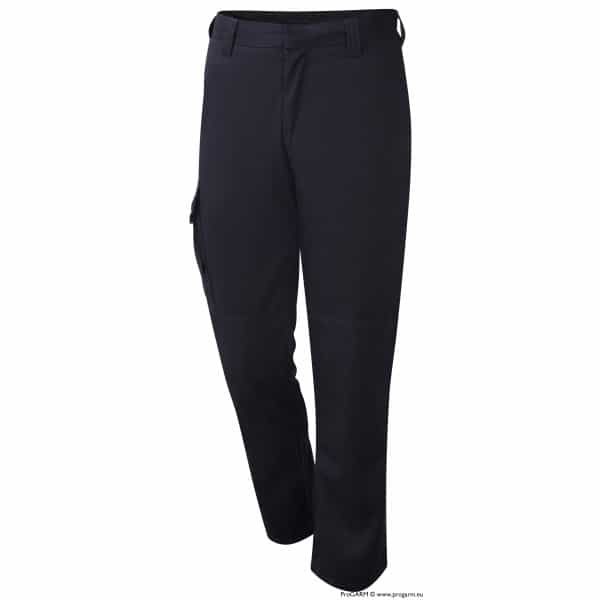
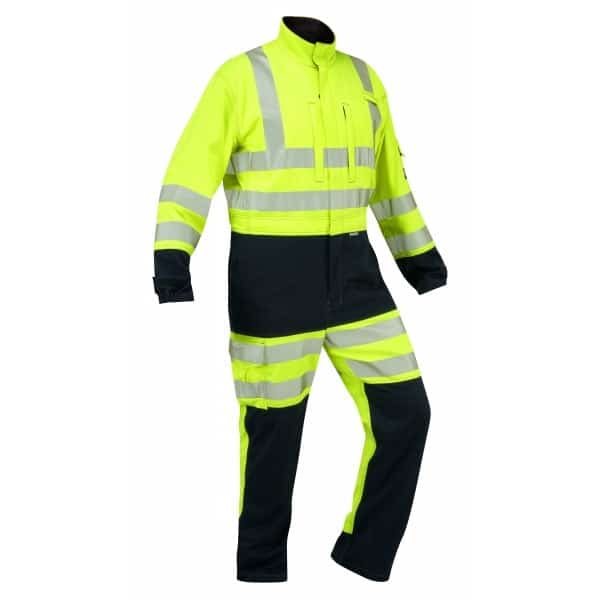
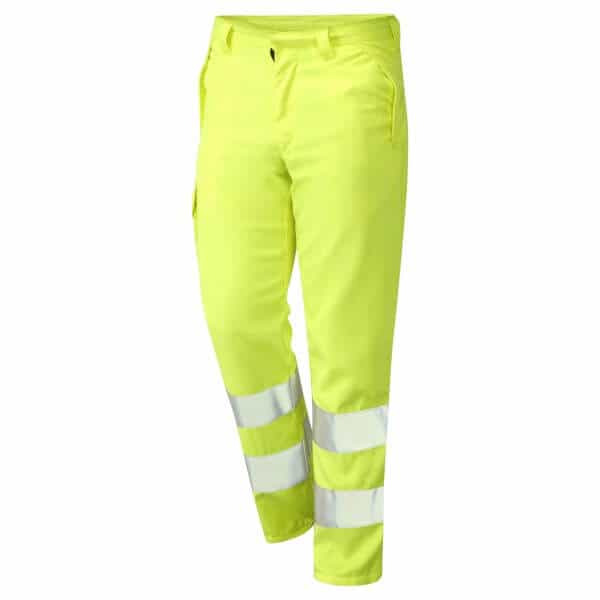
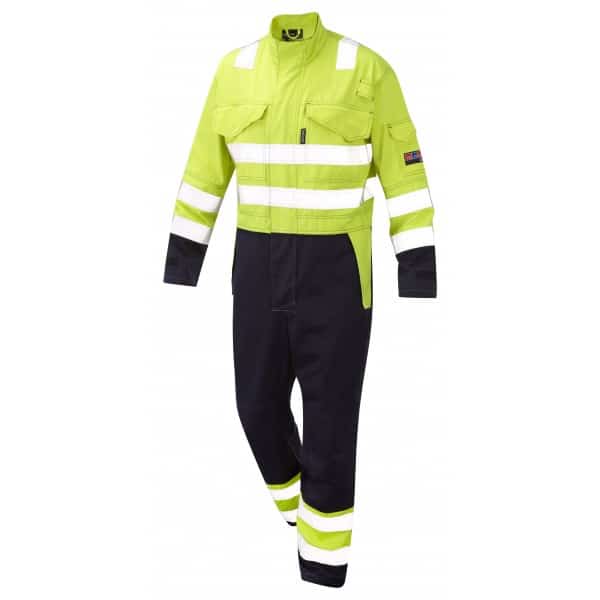
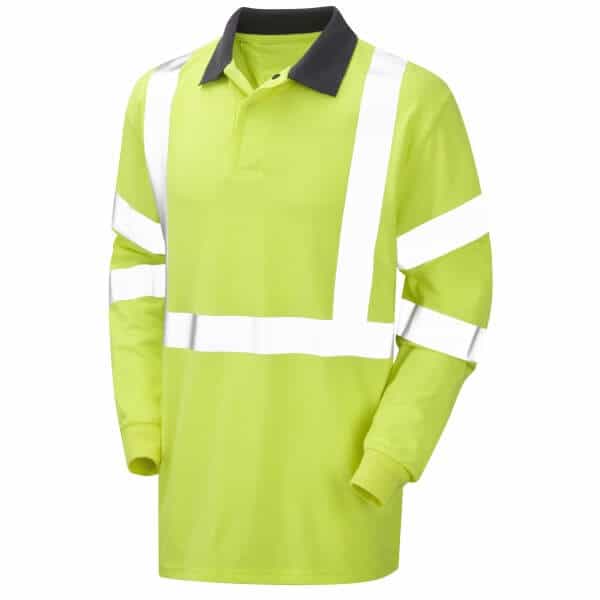
Five coveralls, one jacket, and four pairs of trousers in men’s and women’s cuts make up the new range. Available in three colourways – including high-vis yellow, navy blue, and a combination of navy and high-vis yellow – the range has been designed to offer the most popular and useful garments for anyone requiring arc flash protection, while passing all relevant tests and standards.
See an overview of the range below ➡
 |
 |
 |
 |
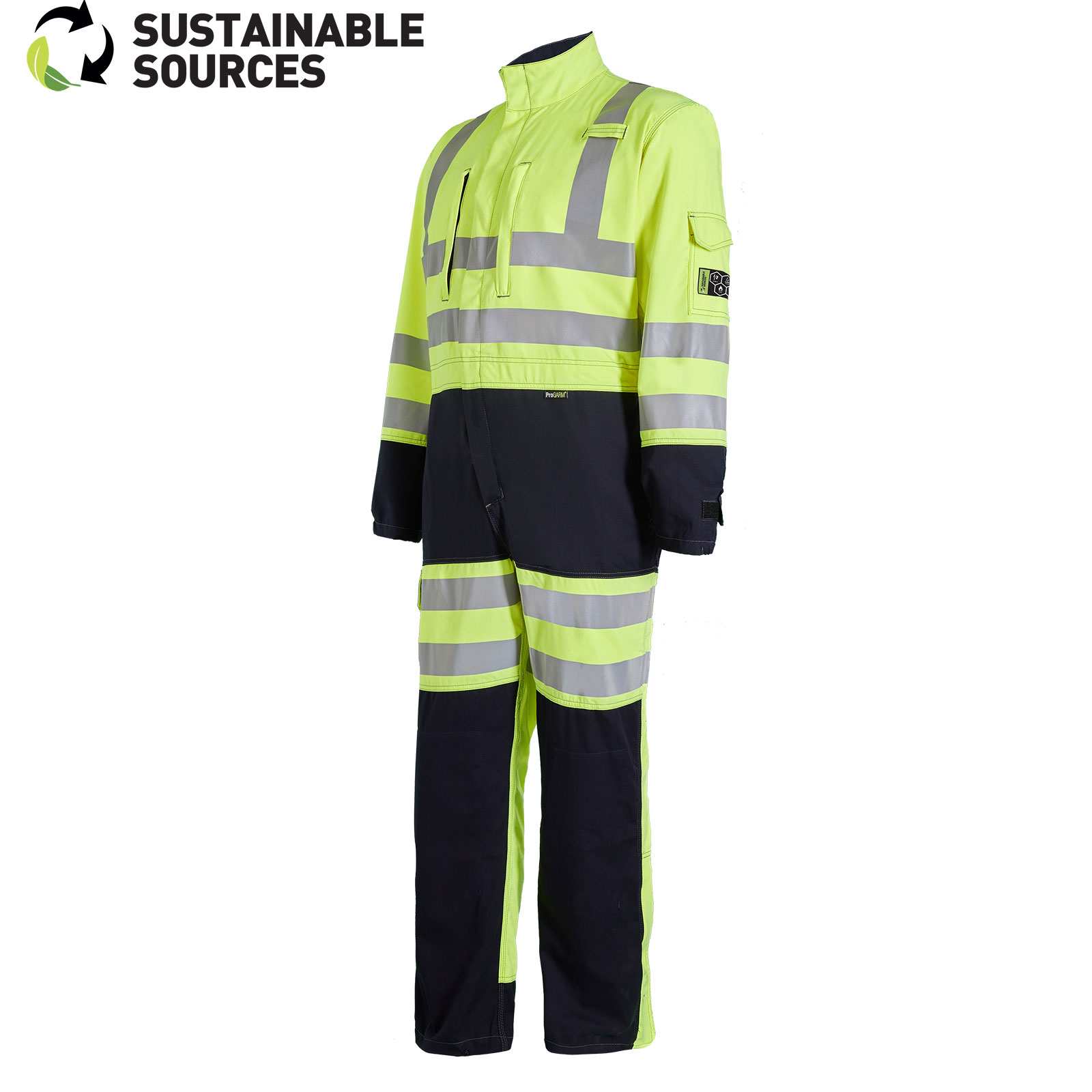 |
| ProGARM CV170F Sustainable Ladies Are Coverall | ProGARM CV170M Sustainable Arc Coverall | ProGARM TR170F Sustainability Ladies Arc Trouser | ProGARM TR170M Sustainable Arc Trouser | ProGARM CV155M Sustainable Linesman Arc Coverall |
 |
 |
 |
 |
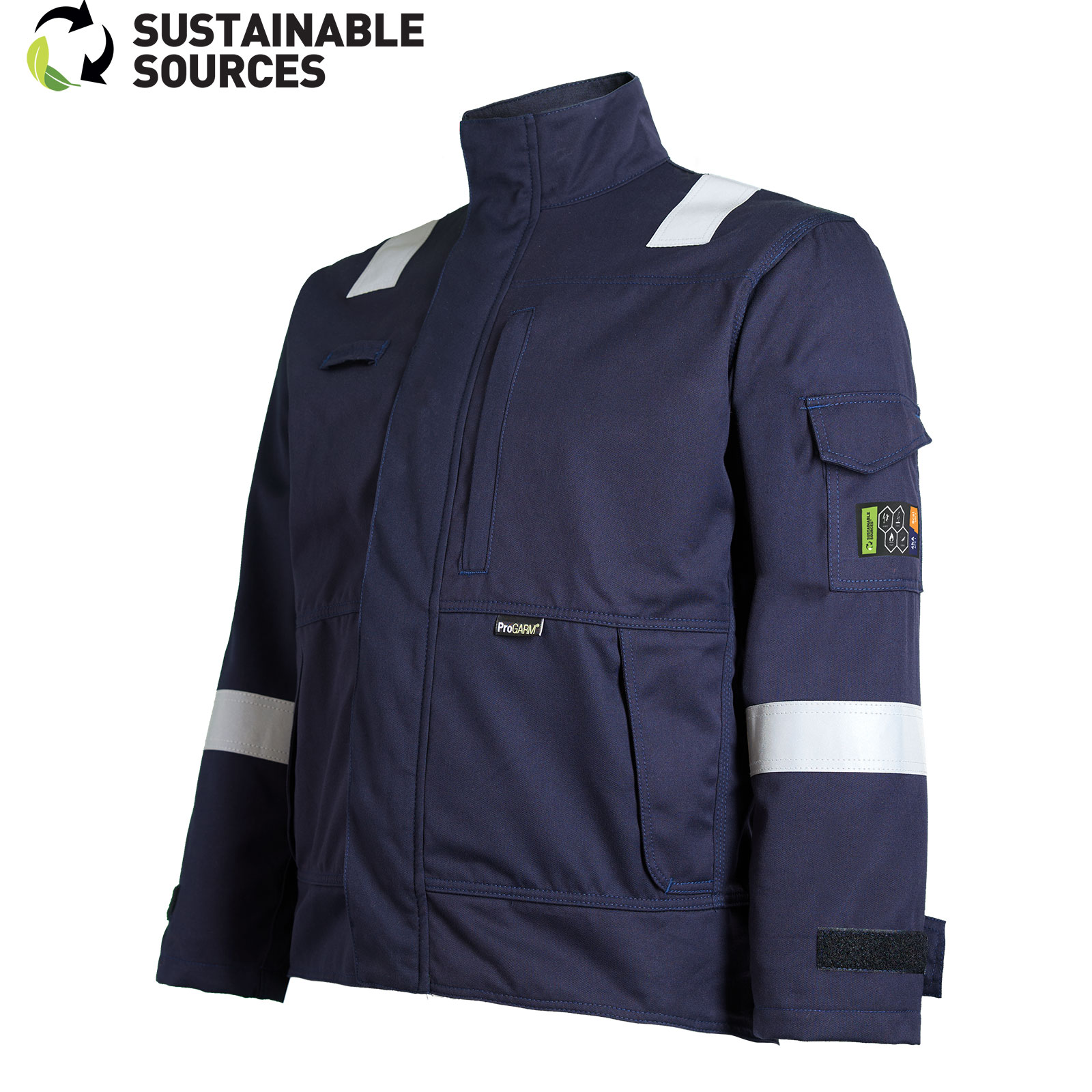 |
| ProGARM CV100F Sustainable Ladies Coverall | ProGARM CV100M Sustainable Arc Coverall | ProGARM TR120F Sustainable Arc Ladies Trouser | ProGARM TR120M Sustainable Arc Trouser | ProGARM JK128M Sustainable Arc Jacket |
Contact Thorne & Derrick to order
The range is certified for standards covering arc flash (APC1, ELIM 8cal), flame resistance (EN11612, A1 + A2), welding (EN11611), anti-static (EN1149-5), and high visibility. So it not only performs the way other arc flash garments do, but has materially less impact.
The arc flash protection is inherent, meaning it can’t be washed out and helping the workwear provide protection for longer.
ProGARM, renowned for making protective workwear which lasts up to 70% longer than the industry average, is the first company to launch a certified arc flash range containing recycled fabric.
Arc flash sustainability initiatives
The new range comes after ProGARM created the first repair programme for arc flash PPE in 2021, which helps with sustainability by making minor repairs to garment components such as zips and fastenings to extend the life of the clothing.
With arc flash clothing, even a small rip which happens during the rigorous workday of the wearer would mean it no longer offered the life-saving protection needed, and would mean it had to be thrown away. The combination of ProGARM’s focus on durability and the option for small repairs to fastenings means their range can last up to 70% longer than competitor options.
The company has also partnered with a leading textile recycler to offer end-of-life recycling for all its products so they can be recycled, making sure ProGARM products don’t become part of the 350,000 tonnes of textile waste send to landfill in the UK every year.
ProGARM aims to be carbon neutral throughout all its operations and the whole supply chain (scopes 1, 2 and 3) by the end of 2025.
ARC FLASH LEARNING & RESOURCES

Thorne and Derrick are proud to be distributors of ProGARM arc flash coveralls and protection.
We can help – should you require arc flash calculators or advice on the type of clothing and protection available please do not hesitate to contact us.





IEC 61482-2 | Arc Flash Clothing & Protection Standard (Version EN-IEC 61482-2: 2020)
March 22nd, 2023
EN-IEC 61482-2: 2020 Protective clothing against the thermal hazards of an electric arc
EN IEC 61482-2:2020 Supersedes IEC 61482-2:2009
IEC 61482-2 Standard is an International Electrotechnical Commission standard regarding live working – protective clothing against the thermal hazards of an electric arc. This part of EN 61482 specifies requirements and test methods applicable to materials and garments for protective clothing for electrical workers against the thermal hazards of an arc flash.
Electric shock hazards and other effects like noise, light emissions, pressure rise, hot oil, the consequences of physical and mental shock or toxic influences are not covered by this standard. Protection of eyes, face, head, hands, and feet against electric arc hazard fall outside the scope of this standard.
EN IEC 61482-2 includes two methods for testing. Garments can be certified according to one of the test methods or to both test methods.
What is an electric arc?
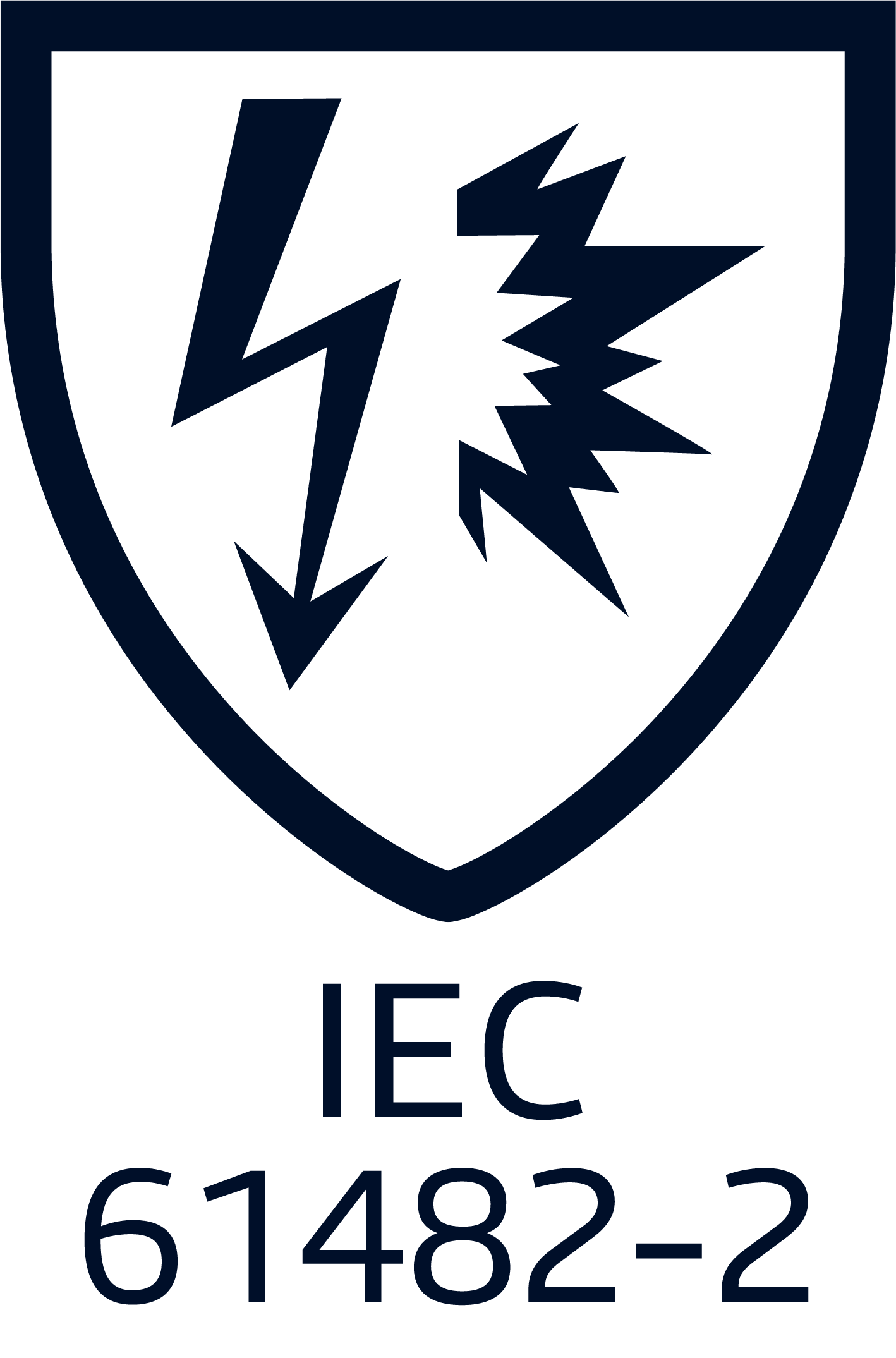
Electric Arc and the Arc Flash created is an extremely dangerous and least understood hazard of electricity. It occurs as a result of extreme discharges of voltage or electrical current from equipment including switchgear, transformers and heavy electrical equipment. The Arc generates a high level of energy for a very short span of time (up to 1 second). The intense heat can create temperatures as high as 19,000°C and it also produces electric shock, force and large quantities of thermal radiant energy.
What is the Risk?
In any situation where your employees are working with electricity, an Arc Flash can occur and as such the maximum energy of default circuits in any electrical installation must be able to be determined. The risks of an electric Arc exposure are:
- Electrocution – potentially fatal
- Extremely high levels of Radiant Heat
- 1st, 2nd or 3rd Degree burns – 3rd Degree burns cause permanent damage
Arc Testing Methods
EN-IEC 61482-1-1:2019 supersedes IEC 61482-1:2009 – “Open Arc Test Method”
USA Arc Flash Test Method
The Open Arc Test Method (ATPV test and garment test) determines the Arc Rating Arc Thermal Protection Value (ATPV level), ELIM (incident energy limit) or Energy Break Open Threshold (EBT) of flame-resistant material (Method A) and clothing (Method B). The basic principle is that the ATPV of the garment must be higher than the Arc Flash energy level as calculated. The “Open Arc” test method is the same as the original North American method for measuring the Arc Thermal Performance Value (ATPV) as used in ASTM F1959. The Arc Rating is expressed in cal/cm² (calories per centimetre square).
EN-IEC 61482-1-2:2015 – “Box Test Method”
European Arc Flash Test Method
In the Box Test Method, materials and clothing will be tested using two methods: the material box test method and the garment box test method.
The material box test method is used to measure and determine material response to an arc exposure when tested in a flat configuration. A quantitative measurement of arc thermal performance is made by means of the energy transmitted through the material. During this test, a fabric sample is exposed to an electric arc produced by a 4kA or 7kA short circuit. In this test, the arc does not last any longer than 500ms. The amount of heat transmitted through the sample is measured during and after the test.
Based on the resulting data and a Stoll curve, the length of time it would take to cause the onset of second-degree burns is subsequently determined. Samples are also assessed for after-flaming, hole formation, melting, etc.
The garment box test method is used to test the function of the protective clothing after an arc exposure (i.e., no heat flux will be measured). This test must be conducted on a complete garment. In doing this, the objective is not to determine the energetic value, but to assess the garment after exposure to an electric arc for defects in the seams, fastenings, and other closures.
The garments are tested and evaluated in two classes in the same test:
- APC1 (Arc protection class) protects against electric arc of 4kA (arc energy 168 kJ)
- APC2 protects against electric arc of 7kA (arc energy 320 kJ)
The standard requires the following:
- A garment must have at least an ELIM value of 3,2 cal/cm2 (130 kJ/m2), or else an ATPV or EBT value of 4 cal/cm2 (167.5kJ/m2) according to IEC 61482-1-1 or APC1 when tested according to EN IEC 61482-1-2
- Garments must be sewn with inherently flame-resistant threads
- If a garment has a higher rating of arc protection on the front than on the back, the garment’s torso, sleeves, and legs must be made using the arc-rated material; the back of the garment can have a lower arc rating
- Garments must have no exposed external metal (i.e., any internal metal or melting parts are to be covered inside to avoid contact with the skin)
- The garment label must show the lowest ATPV or class if the garment is comprised of different panels of material; more detailed information about areas of the garment with varying levels of protection may be provided on the garment’s label or in the manufacturer’s instructions pertaining to use
- The protective clothing material must have some minimum tensile, tear, and burst resistance and minimum dimensional stability (e.g., for wear and tear associated with cleaning)
- The garments must cover the entirety of the wearer’s body. For example, jacket and trousers must be worn together with other personal protective equipment (PPE), including a helmet with a protective visor, protective gloves, and protective footwear (i.e., work boots) to achieve the correct level of protection. Layering is very important and will increase protection (e.g., if you wear flame-retardant underwear beneath your flame-retardant garments, you are better protected).
ARC FLASH PPE & ELECTRICAL SAFETY
Main UK Stockists & Distributors of Electrical Safety Products
Thorne & Derrick provide Electrical Safety Equipment to substation engineers, cable jointers, overhead linesmen and utility workers with PPE and electrical safety equipment including insulating gloves, voltage detectors, insulating matting and portable earthing to ensure worker safety when carrying out maintenance on LV-HV switchgear, substations, cables and electrical equipment.

We protect substation engineers, asset managers, SAPS, cable jointers, overhead linesmen and utility workers with PPE and safety equipment: this includes insulating gloves, voltage detectors, insulating matting and portable earthing to ensure worker safety when carrying out repair and maintenance on LV-HV switchgear, transformers, substations and turbines.
All our Cable Connection & Energisation Accessories including Medium & High Voltage joints, terminations, connectors and cleats are tested to the latest international standards and supporting ranges of professional cabling tools are stocked to reduce incident, accident and downtime to plant and people.
BS EN 343 Standard | Arc Flash & Protective Clothing Standards
September 10th, 2021
BS EN 343 Standard Arc Flash & Protective Clothing Standards
BS EN 343
Arc Flash & Protective Clothing Standards
The BS EN 343 standard is the European Standard for garments that protect against rain.
BS EN 343 specifies the requirements and test methods for materials and the seams of protective clothing that has been designed to give protection against precipitation (i.e. rain, snow), mist and ground moisture.
There is also a separate test EN 14360 for assessing the waterproofness of the complete finished garments but this test is not included in EN 343.
ABOUT BS EN 343
This standard’s icon shows an umbrella placed under two numbers that represent the X and Y values. The X value indicates the waterproofness and the Y value indicates the water vapour permeability (the garment’s breathability).
This standard falls within the scope of ‘self-certification’. This means that manufacturers are allowed to certify their own products, which therefore do not need to be assessed by an independent Notified Body. This is because the only risk to the wearer is that he/she might get wet, which is not a life-threatening hazard. If EN 343 is used in combination with other EN standards the whole combination of standards is assessed by the Notified Body.
The X and Y Values
The X value indicates the waterproofness of the garment. There are 3 Classes with 3 being the highest (i.e. the most waterproof) and 1 is the lowest. A specific quantity of pressurised water is applied to the fabric and the respective Class is derived from the amount of pressure the fabric can withstand.
The Y value indicates the breathability of the fabric/s (all the layers used in the article). There are also 3 classes for breathability with Class 1 being the lowest and Class 3 the highest. Wearing Class 1 garments longer than x minutes is not recommended (the length of time the article may be worn (x) is given in the standard in a table).
View further information about Arc Flash Clothing Standards.
BS EN 343 | Standard Overview
Protective Clothing. Protection against Rain.
This document specifies requirements and test methods for the performance of materials and readymade garments for protection against the effects of precipitation (e.g. rain, snowflakes), fog and ground humidity.
Garments for protection against other effects than precipitation (e.g. water splashes, waves) are excluded from this standard. The protective effects and requirements of footwear, gloves and separate headwear are excluded from the scope of this document.
Standard Status | Current, Under Review
Published | 2019
➡ Standards | RIS-3279-TOM | IEC 61482-2 | BS EN ISO 11611 | BS EN ISO 20471 | BS EN ISO 14116 | BS EN ISO 11612 | BS EN 13034 | BS EN 342 | BS EN 14404 | BS EN 1149-5 | HSG47
BS EN 343:2003+A1:2007
Protective clothing. Protection against rain – Withdrawn 4th September 2003.
Clothing & Garments
Protecting Workers Against the Dangers of Arc Flash
Thorne & Derrick stock and supply the most extensive range of Arc Flash PPE, Clothing & Protective Garments – should you require any further information, sample garments for field test and trial or a quotation please do not hesitate to contact us.
Thorne & Derrick International supply arc flash clothing and protection equipment including coveralls, gloves, helmets, face shields and general head-to-toe PPE is used to protect against flashover – complete range of insulating matting is also available for worker protection when exposed to energised electrical switchgear and transformers.
Typical applications include LV, HV & EHV cable jointing and terminating, fuse pulling, switchgear commissioning, racking circuit breakers, electrical switching and live working on medium and high voltage electricity networks.
T&D are national distributors LV, MV & HV Cable Installation, Jointing, Substation & Electrical Equipment – we service UK and global businesses involved in cable installations, cable cleating, cable jointing, substation, overhead line and electrical construction at LV, 11kV, 33kV and EHV.
Since 1985, T&D have established an international reputation based on SERVICE | INTEGRITY | TRUST.

Electrical Safety Equipment & Cable Accessories for the Maintenance of Low, Medium & High Voltage Power Systems
BS EN 14404 Standard | Arc Flash & Protective Clothing Standards
September 10th, 2021BS EN 14404 Standard Arc Flash & Protective Clothing Standards
BS EN 14404
Arc Flash & Protective Clothing Standards
BS EN 14404 Standard relates to personal protective equipment, knee protectors for work in the kneeling position. ProGARM® produces safety garments that are certified in accordance with the BS EN 14404 Type 2 standard. This EN Standard relates to trousers and coveralls which offer kneepad pockets to protect the wearer when kneeling.
ABOUT THIS EN STANDARD
EN 14404 only applies in combination with certified knee pads and a garment that has been assessed. All ProGARM® workwear garments with knee pockets comply with EN 14404 and have been assessed accordingly by a notified body.
The measurements prescribed for kneepads depend on the size of the garment in which they are used. The ProGARM® Gel Foam kneepad is our recommended kneepad for use in our garments to ensure the pad fits the pocket and offers protection for wearers from short to long leg lengths.
There are three properties of knee protectors that are tested – these are Penetration Resistance, Force Distribution and Shock Absorption. Two levels of protection can be provided. The ProGARM® Gel Foam Knee Pad has been tested according to and meets the requirements for EN14404 Level 1.
Level 1: This level requires knee pads to provide protection on a surface on which the wearer will not generally risk injury from lying objects more than 1 cm high. Penetration resistance of at least 100 N.
Level 2: This level requires kneepads to be able to withstand use under heavy conditions, such as kneeling on stones in mines and quarries. Penetration resistance of at least 250 N. View further information about Arc Flash Clothing Standards.
BS EN 14404 | Standard Overview
Personal protective clothing. Knee protectors for work in the kneeling position.
The following is an excerpt from BS EN 14404:2004+A1:2010 EN 14404:2004+A1:2010 (E)
This British Standard is the UK implementation of EN 14404:2004+A1:2010. It supersedes BS EN 14404:2004 which is withdrawn.
Kneeling is an unnatural working position. Without knee protectors, workers may suffer discomfort and immediate injuries from hard surfaces and small stones and similar objects lying on the surfaces. However no knee protector can ensure that workers will not suffer medical complications if they are required to kneel for long periods.
It is important that knee protectors do not compromise venous drainage in the leg while kneeling or standing up. Therefore it is important that it is easy for workers to change position and to stand up to re-establish a normal blood circulation at frequent intervals while wearing knee protectors. Work in a kneeling position involves the risk of chronic diseases such as prepatellar bursitis and cartilage injuries caused by continuous pressure on the knees. Knee protection is therefore recommended for all work in the kneeling position.
The protection should distribute forces evenly and prevent small hard objects on the ground causing injuries. Many workers have pre-existing damage to their knees particularly to their cartilages from sports injuries and from previous work. These injuries will be made worse by further kneeling, but knee protectors should slow the process.
Work in a kneeling position may expose the skin of the shins, knees and thighs to toxic and corrosive materials normally kept off the body while walking and standing by waterproof or water-resistant footwear. Knee protectors and trousers for use with such wet materials and particularly wet cement, should take this into account and provide adequate protection, as does footwear.
Knee protectors incorporated into trousers or attached to trousers or worn over trousers or on the bare knees should remain in place while kneeling down, and while shuffling (walking) on the knees. Their size should ensure that they protect the knees during movement.’
Standard Status | Current, Under Review
Published | 2004
➡ Standards | RIS-3279-TOM | IEC 61482-2 | BS EN ISO 11611 | BS EN ISO 20471 | BS EN ISO 14116 | BS EN ISO 11612 | BS EN 13034 | BS EN 342 | BS EN 1149-5 | BS EN 343 | HSG47
Clothing & Garments
Protecting Workers Against the Dangers of Arc Flash
Thorne & Derrick stock and supply the most extensive range of Arc Flash PPE, Clothing & Protective Garments – should you require any further information, sample garments for field test and trial or a quotation please do not hesitate to contact us.
Thorne & Derrick International supply arc flash clothing and protection equipment including coveralls, gloves, helmets, face shields and general head-to-toe PPE is used to protect against flashover – complete range of insulating matting is also available for worker protection when exposed to energised electrical switchgear and transformers.
Typical applications include LV, HV & EHV cable jointing and terminating, fuse pulling, switchgear commissioning, racking circuit breakers, electrical switching and live working on medium and high voltage electricity networks.
T&D are national distributors LV, MV & HV Cable Installation, Jointing, Substation & Electrical Equipment – we service UK and global businesses involved in cable installations, cable cleating, cable jointing, substation, overhead line and electrical construction at LV, 11kV, 33kV and EHV.
Since 1985, T&D have established an international reputation based on SERVICE | INTEGRITY | TRUST.
Electrical Safety Equipment & Cable Accessories for the Maintenance of Low, Medium & High Voltage Power Systems
BS EN 342 Standard | Arc Flash & Protective Clothing Standards
September 10th, 2021BS EN 342 Standard Arc Flash & Protective Clothing Standards
BS EN 342
Arc Flash & Protective Clothing Standards
BS EN 342 standard covers Protective Clothing & Protection Against Cold.
This EN Standard specifies the requirements and test methods for garments and clothing combinations designed to protect the wearer in a cold environment (characterised by a combination of humidity, wind and air temperature lower than -5 °C). The standard does not contain any specific requirements for head, hand or foot protection.
ABOUT THIS EN STANDARD
This standard’s pictogram is an ice-crystal placed alongside three figures that represent the insulation (Clo), air permeability (X) and, if applicable, the water vapour resistance (Y) values. The precise meaning of these values is explained below.
The Clo, X and Y Values
The Clo value indicates a garment’s insulation properties and is a measurement of how long a person can work at a specific temperature when wearing this clothing. It is not a specific class, but can be any value. The table below shows the significance of the Clo value.
(Table to follow)
The X value indicates a garment’s air permeability. The X value has 3 classes (1 to 3). Class 1 garments have the highest air permeability and Class 3 the least. The air permeability is a wind proofing measurement, Class 1 is therefore the least windproof and Class 3 the most.
The Y value indicates a garment’s water vapour resistance. The Y value also has 3 classes (1 to 3). Class 1 garments have the lowest water vapour resistance and Class 3 garments the highest.
A more recent version (2004) of EN 342 is now available
The new version has the following values: Icler / Icle, this is the equivalent of the Clo value and two Y values. The first Y value indicates the air permeability; it is assessed in a different way to the old EN 342, but is still given as Class 1 to 3. The second Y value indicates the garment’s waterproofing. Clothing that complies with EN 342 does not necessarily have to be waterproof. This value can therefore sometimes be omitted. This value has 2 classes – 1 and 2. Class 1 is the least waterproof and Class 2 the most. If a garment is waterproof, its breathability must also be tested.
View further information about Arc Flash Clothing Standards.
BS EN 342 | Standard Overview
Protective Clothing. Ensembles and garments for protection against cold. Material performance and design requirements.
This European Standard specifies requirements and test methods for the performance of clothing ensembles (i.e. g two piece suits or coveralls) for protection against the effects of cold environments equal to or below −5°C (see Annex C). These effects comprise not only low air temperatures but also humidity and air velocity.
Requirements and test methods of garments for protection against cool environments are specified in EN 14058.
The protective effects and requirements of footwear, gloves and separate head wear are excluded from the scope of this standard.
Standard Status | Current
Published | 2017
➡ Standards | RIS-3279-TOM | IEC 61482-2 | BS EN ISO 11611 | BS EN ISO 20471 | BS EN ISO 14116 | BS EN ISO 11612 | BS EN 13034 | BS EN 1149-5 | BS EN 14404 | BS EN 343 | HSG47
BS EN 342:2004
Protective clothing. Ensembles and garments for protection against cold. This British Standard is the UK implementation of EN 342:2004, incorporating corrigendum March 2008. It supersedes DD ENV 342:1998 which is withdrawn.
Clothing & Garments
Protecting Workers Against the Dangers of Arc Flash
Thorne & Derrick stock and supply the most extensive range of Arc Flash PPE, Clothing & Protective Garments – should you require any further information, sample garments for field test and trial or a quotation please do not hesitate to contact us.
Thorne & Derrick International supply arc flash clothing and protection equipment including coveralls, gloves, helmets, face shields and general head-to-toe PPE is used to protect against flashover – complete range of insulating matting is also available for worker protection when exposed to energised electrical switchgear and transformers.
Typical applications include LV, HV & EHV cable jointing and terminating, fuse pulling, switchgear commissioning, racking circuit breakers, electrical switching and live working on medium and high voltage electricity networks.
T&D are national distributors LV, MV & HV Cable Installation, Jointing, Substation & Electrical Equipment – we service UK and global businesses involved in cable installations, cable cleating, cable jointing, substation, overhead line and electrical construction at LV, 11kV, 33kV and EHV.
Since 1985, T&D have established an international reputation based on SERVICE | INTEGRITY | TRUST.
Electrical Safety Equipment & Cable Accessories for the Maintenance of Low, Medium & High Voltage Power Systems