Blog
INVITE | ONLINE DEMO | Verisafe™ The Absence of Voltage Tester By Panduit
March 19th, 2021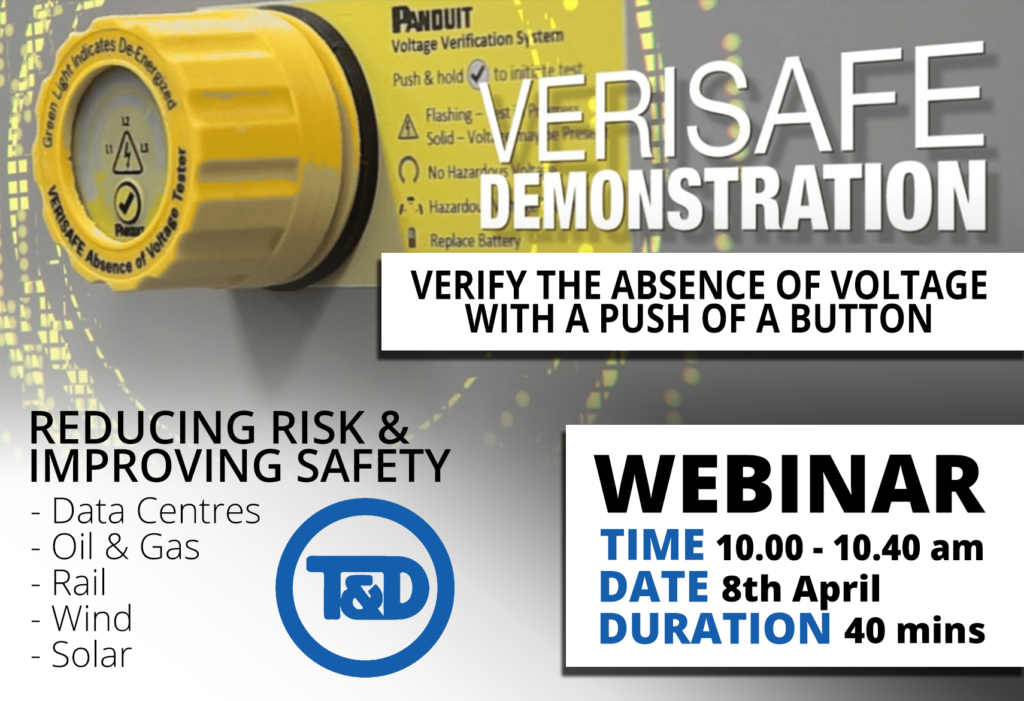
Verisafe
Absence of Voltage Tester
Are you ready to Lead the Way with Prevention through Design?
VeriSafe™ Online DEMO: Thursday 8th April 10.00 am – 10.40 am – REGISTER HERE
Thorne & Derrick International together with Panduit are pleased to Invite you to Register to a Joint Online Demonstration of the Verisafe ™
Due to high demand for a Demo of The Panduit Absence of Voltage Tester VeriSafe™ this innovative solution to prevent serious harm, we are running an online session.
In just over 30 minutes with an added Q&A section, walk away with an increased understanding of VeriSafe™ – the first-of-its-kind voltage tester that determines the absence of voltage with just a push of a button.
Learn how this SIL Level 3 compliant product automates the required six-step testing process in about ten seconds, enabling your plant to operate faster, safer, and more efficiently with:
- INCREASED PRODUCTIVITY
- IMPROVED SAFETY & RISK REDUCTION
- SIMPLIFIED PROCESS FOR EASIER COMPLIANCE
A simple button push enables electrical workers to verify the absence of voltage and see an active visual indication when the absence of voltage is confirmed.
This provides a new and innovative way to efficiently, reliably, and safely verify the absence of voltage before accessing potentially dangerous electrical equipment. Fail Safe. Meets SIL 3 IEC 61508-1.
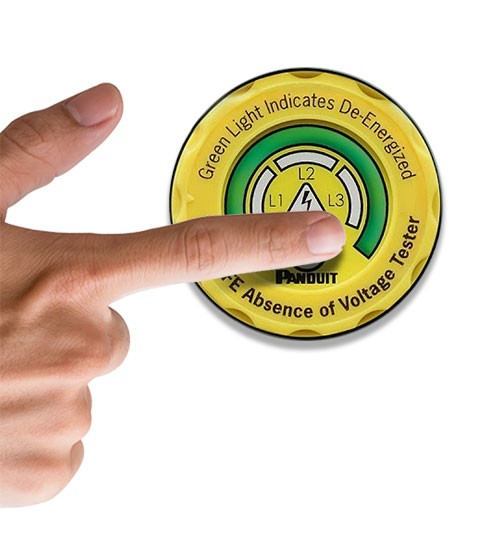
Safety is everything. Green means go. Verisafe™ provides reassurance that the area is de-energized
➡ VIDEO How To Verify Total Absence of Voltage By The Push Of a Button
REGISTER

Panduit and Thorne & Derrick ONLINE DEMO of Verisafe™

Glen Bate M.B.A.
Panduit Account Manager
Watch Glen Bate highlight how VeriSafe™, a product of Panduit’s Prevention through Design Safety Business, is focused on innovating groundbreaking new electrical safety technology that reduces risk, increases safety, and helps industry leaders achieve operational goals. Distributed in the UK by Thorne & Derrick.

Thorne & Derrick
T&D are Specialist Distributors to UK Distribution Network Operators (DNO’s), NERS Registered Service Providers, ICP’s and HV Jointing Contractors of an extensive range of LV, MV & HV Jointing, Earthing, Substation & Electrical Equipment – this includes 11kV/33kV/66kV joints, terminations and connectors for both DNO and private network applications.
Contact our UK Power Team for competitive quotations, fast delivery from stock and technical support or training on all LV-HV products.
Key Product Categories: Duct Seals | Cable Cleats | Cable Glands | Electrical Safety | Arc Flash Protection | Cable Jointing Tools | Cable Pulling | Earthing | Feeder Pillars | Cable Joints LV | Joints & Terminations MV HV
➡ Read: Isolate 99.999% Of Electrical Risks With Verisafe From Panduit
➡ Read: Verisafe AVT By Panduit | Safe & Sure Electrical Isolation

BS5467 Low Voltage Power Cable Installation | Video
March 17th, 2021Video Courtesy: Mark Slater | Managing Director at Pulse Cables Ltd | Tel 01902 870004
Services Provided
- High & Low Voltage Cable Pulling
- Cable Fault Location
- Cable Jointing Services
- HV & LV Maintenance
- Power Cable & Electrical Installs
- Industrial Electrical Work
The Video shows the completed installation of a BS5467 Low Voltage Armoured Power Cable (XLPE SWA 4 Core 185sqmm Stranded Copper) located to a cable ladder management system utilising fire resistant stainless steel cable ties in accordance with BS7671.

Power Cable Accessories
To support the installation of Low Voltage Power Cable Systems, Thorne & Derrick stock and supply an extensive range of Cable Accessories to enable to support, jointing, glanding and termination of BS5467 Armoured Cables from leading manufacturers including CMP, Cembre, Ellis Patents and 3M Electrical.

Low Voltage 1000V | Resin Joints | Cable Lugs | Cable Glands | Cable Cleats
Cable Strikes | The Utility Strike Avoidance Group (USAG)
March 17th, 2021
Cable Strikes
Cable Strikes
A Series of Articles Republished Kind Permission of USAG
Utility strikes represent an ever-present threat to human life.
Hundreds of people have died across the World as a result of strikes on underground and overhead cables and pipelines – the 2019 Utility Strike Damages Report 2019 summarises the key findings of approximately 2500 utility strikes across the UK based on responses from 44 USAG Members. It highlights what caused the most damages and provides scope and recommendations to:
✓ Avoid future damages
✓ Improve the ability to analyse the strike data in future years.
The main conclusions for the causes were:
▪ Better preparation in advance of breaking ground / construction works commencing. This should be through availability of more accurate plans and the use of more robust location and survey practices
▪ Behavioural issues on site during the execution of the works is a key issue; it is recommended that the root causes are established and investigated further
Articles
- High Pressure Gas Main Strike Failure Upper Thames Crossing
- Cable Strikes | Gas and Electric Service Strikes
- Cable Strikes | How To Support LV to 33kV Electricity Cables
- Cable Strikes | Excavator Struck 11kV Overhead Power Lines
- Cable Strikes | Strike to Low Voltage Cable
- Cable Strikes | Surface Cable Damage by Mower
- Cable Strikes | Damage to Underground Service
- Cable Strikes | Combined Gas and Electric Strike and Ignition
- Cable Strikes | Ingrebourne Valley – 415V Cable Strike
- Cable Strikes | 132kV Cable Strike at Sellafield
- Cable Strikes | 10kV Medium Voltage (MV) Cable Struck By An Excavator
- Cable Strikes | 11kV Strike With Auger
- Cable Strikes | 11kV Depot Cable Strike
- Cable Strikes | HV Cable Joint Explosion


Thorne & Derrick | Stockists & Suppliers of Cable Joints for the Repair & Restoration of Power to Damaged Cables | LV MV HV up to 66kV Ex Stock
11kV Transformers | Bushing Oil Leak on High Voltage Distribution Transformers
March 17th, 2021
Low (LV) to Extra High Voltage (EHV) Power Services to Distribution Networks
Guest Post by Simon Brown
Business Development Manager/33kV Senior Authorised Person at Ipsum Utilities (Private Networks) at Ipsum. Specialising in the installation, maintenance, testing, commissioning and switching of High Voltage networks up to and including 33kV.
If you require any of these services please contact Simon on 07889706194 or [email protected] to discuss your needs.
Transformer Oil Leak
Video | This is an 11kV bushing oil leak on a 500kVA distribution transformer.
Most likely caused by the end gaskets of the bushings having been penetrated and then the rubber flexible boot has held the oil until I released it as seen in the video. We will be isolating the 11kV transformer to drop the oil level below the bushing, remove it and replace its gaskets before putting it all back together – the cork gaskets on either end of the bushing have been penetrated by the transformer oil and it has travelled from the main tank to the 11kV cable box through the bushing. The rubber flexible bushing boot insulating the 11kV cable connection integral to the heat shrink cable termination was holding it back until I released the pressure.
This video demonstrates the critical value of cyclical inspection and maintenance of substation equipment as required by law associated with the installation and on-going maintenance of high and low voltage equipment.
About Ipsum
At Ipsum, we provide specialist infrastructure services across the UK’s regulated water and energy companies and private sector businesses. We work with our customers to maintain, optimise and develop their above and below ground assets to ensure security and resilience, and with our smart systems and ways of working, we ensure we deliver on time, on budget and safely. At Ipsum, we develop long-term working relationships with our customers by providing essential utility services on both public and private networks.
We have many long-term contracts and framework arrangements in place which are built upon great customer service, safe working practices and the ability to flex and deploy specialist skill sets at short notice. The growth of Ipsum has been built upon our people and our ability to meet the demanding and ever-changing needs of our customers.
The UK utility sector is evolving and expanding to meet increasing customer demand, regulatory driven outcomes and to exploit new innovative technologies, at Ipsum we will continue to grow in this sector by being a reliable, flexible and agile service partner that helps customers meet these new challenges.
As we know, utility service provision is not a 9 to 5 business, our customers don’t switch off their networks or assets at night, or at the weekends, or on holidays, or when things are quiet. They need them to work round the clock – and we at Ipsum are right beside them 24/7 to make sure they do. We pride ourselves in providing specialist scheduled maintenance services, being able to respond to an individual call-out or mobilise onto a major upgrade project and that our customers can rely on Ipsum 24/7/365.

Stockists | 11kV 33kV 66kV Joints Terminations Connectors – 3M Pfisterer Nexans
THORNE & DERRICK
Thorne & Derrick are national distributors of LV, MV & HV Cable Installation, Jointing, Substation & Electrical Equipment – servicing businesses involved in cabling, jointing, substation, earthing, overhead line and electrical construction at LV, 11kV, 33kV, 66kV and EHV. Supplying a complete range of power cable accessories to support the installation and maintenance of low/medium and high voltage power systems:
- Slip-on Cable Terminations
- Cold-shrink Cable Terminations
- Heat-shrink Cable Terminations
- Cable Joints – Heat & Cold-shrink
- Separable Connectors (Euromold)
- Surge Arresters & Switchgear/Transformer Bushings
Key Product Categories: Duct Seals | Cable Cleats | Cable Glands | Electrical Safety | Arc Flash Protection | Cable Jointing Tools | Cable Pulling | Earthing | Feeder Pillars | Cable Joints LV | Joints & Terminations MV HV
NFPA-110 Standard for Emergency & Standby Power Systems
March 16th, 2021
NFPA-1100
NFPA-1100 Requirements
-
Special thanks to Franklin Electric for allowing T&D to republish this Article
Franklin Electric is now the leading developer and manufacturer of intelligent monitoring equipment. The 2019 NFPA-110 Standard for Emergency & Standby Power Systems states in Section 8.3.6.1 that the specific gravity of lead-acid batteries be both tested and recorded monthly – copies available of this standard are available on request.
Grid Solutions products include intelligent electronic devices that are designed for online monitoring for the power utility, hydroelectric, and industrial markets – a complete range of MV HV circuit breaker monitoring products are available ensuring uptime, thus considerably reducing the risk and cost that follows power grid downtime.
In addition, NFPA-110 code states that, “Battery CONDUCTANCE testing shall be permitted in lieu of specific gravity testing when applicable or warranted.”
ABOUT CONDUCTANCE TESTING
In simplest technical terms, ohmic technology is based on Ohm’s Law, which expresses the relationship between Volts, Amperes and Ohms in an electrical circuit.
Ohm’s law can be expressed as follows:
Volts (E) = Amperes (I) x Ohms (R).
If any two of the three values of voltage (Volts), current (Amperes) or resistance (Ohms) are known, the third value can be calculated using the above expression of the law.
Thus, Ohmic technology attempts to use voltage and current to determine the resistive characteristic of a battery. Higher resistance equates to a reduced ability to produce current. This characteristic is translated into a measurement of resistance or impedance (Ohms) in some Ohmic technologies; more recent technology uses a converse measurement, called Conductance.

Conductance Testing
Years of laboratory and field-based research found that conductance correlates with battery capacity as measured in a timed discharge test. Since voltage and specific gravity testing are not predictive, timed discharge testing is time consuming and expensive, conductance testing is an effective and economical way of analyzing the health of your battery systems.
Correlation studies have been performed on a significant number of valve regulated AGM and GEL cells, as well as vented flooded cells. These studies have shown that conductance test results are very predictive of battery timed discharge capacity, while voltage measurements are shown to be of little value. This data has been presented to a number of international organizations.
Patented Conductance Technology is the core of our battery testing methodology and recognized as a standard for determining battery state-of-health worldwide.
TWO MAIN BATTERY TYPES
Not all batteries are made equal. Have you ever wondered why there are different battery sizes and ratings? Did you know every battery type serves a specific functionality?
The two main battery types are stationary batteries and “starting” batteries. It is very important that you find the correct battery for your particular application, as the wrong choice can affect both the battery’s efficiency as well as its lifespan.
STATIONARY BATTERIES VS ENGINE START BATTERIES
A stationary battery is meant to provide a continuous current of the same intensity for a prolonged time span. In order to do this, they are designed with thick internal plates that slows down the process delivering amperes to the load. Stationary batteries are typically rated in ampere-hours.
An ampere-hour represents the amount of electricity when a current of 1 Ampere passes for 1 hour. The ampere-hour capacity varies with the rate at which the battery is discharged; the slower the discharge, the greater the amount of electricity that the battery will deliver.
A typical rate for ampere-hour capacity is the amount of electricity that a battery will deliver during 20 hours before the voltage falls to 10.50V. For example, a 60Ah battery will deliver a current of 3A for 20 hours.
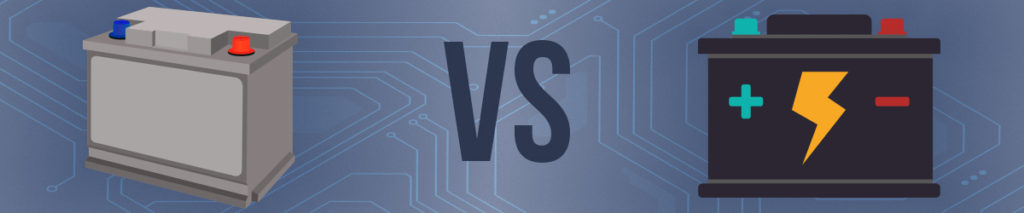
Starting batteries are just the opposite. They are designed with thin plates so they can provide quick bursts of energy, such as a backup generator or car would need while starting. This only discharges the battery by about 1-3%, which is then topped off typically by an alternator. This is typically known as the battery cranking amps.
Cranking amps are the numbers of amperes a lead-acid battery at 32 degrees F (0 degrees C) can deliver for 30 seconds and maintain at least 1.2 volts per cell (7.2 volts for a 12 volt battery). To recap, stationary batteries provide a lower but longer duration amount of energy, but cannot deliver as many peak cranking amps. Starting batteries are made to provide high power for higher amps, more frequent short draws, and limited long term discharge.
STARTING BATTERY RATINGS
CCA, EN, SAE, JIS, DIN, and IEC
CCA/CA:
CA/cranking amps determine how much power you have to start your engine in most climates. The basic job of a battery is to start an engine; it must crank, or rotate the crankshaft while at the same time maintain sufficient voltage to activate the ignition system until the engine fires and maintains rotation. This requirement involves a high discharge rate in amperes for a short period of time.
Since it is more difficult for a battery to deliver power when it is cold, and since the engine requires more power to turn over when it is cold, the Cold Cranking rating is defined as: The number of amperes a lead-acid battery at 0 degrees F (-17.8 degrees C) can deliver for 30 seconds and maintain at least 1.2 volts per cell (7.2 volts for a 12-volt battery).
CCA/cold cranking amps determine how much power you have to start your engine on cold winter mornings.
EN (EN50342.1A1 Nov 2011 Item 5.3)
Test is performed at -18°C. The EN requirement is however split into two levels EN1 and EN2.
EN1: The battery is required to meet a voltage of 7.5V after 10 seconds and after 10 seconds rest, the battery is further discharged @ 0.6 x original current and is required to complete 73s in the second stage giving a total combined discharge period of 90 seconds (assume initial period equates to (10s/0.6) 16.7 seconds.
EN2: As EN1 except that the second discharge period to 6.0V should achieve 133 seconds giving a total time of 150 seconds. The discharge current’s ability to meet both designs is very much subject to battery design and can vary from manufacturer to manufacturers and design to design.
SAE (J537 Jun 1994 American Standard)
This is the starting test according to the SAE (Society of Automotive Engineers). The test specifies that the battery at a temperature of –18°C will deliver a current equal to the Cold Cranking Amps for 30 seconds with the voltage staying above 7.2 volts (3.6 volts for a 6 volt battery).
JIS (D5301: 1999)
The Japanese Industrial Standard test is carried out at -15°C. The starting batteries are usually tested at either 150A or 300A with different 10s /30s voltage and durability requirement to 6V.
DIN (German Industrial Standard at -18°C)
As with SAE the test is carried out at -18°C. The fully charged battery is discharged to 6V with the rated test current. The voltage must be at least 9.0V after 30 seconds and the time to achieve 6V must be at least 150 seconds.
IEC (International Electro Technical Commission) (IEC 60095-1 Nov 2006)
The test is performed at -18°C .
After a rest period of up to 24 hours after preparation according to 6.2 of standard, the battery is placed in a cooling chamber with air circulation at a temperature of -18°C +/- 1°C until the temperature of the middle cell has reached -18°C +/- 1°C.
The battery is then discharged according to the standard and is required to meet a voltage of 7.5V after 10seconds and 7.2V after 30seconds, the battery is then rested for 20+/-1 seconds after which the battery is discharged at 60% of the original current and is required to meet a voltage of 6V after 40 seconds, in accordance with table 7 of the standard.
THE RIGHT TOOL FOR THE JOB
Just like finding the right battery for the job, you must find the correct battery analyzer to test the battery.
Utilizing Battery Conductance To Meet NFPA-110 Battery Maintenance Requirements
The CELLTRON GENSTART uses conductance technology that correlates the battery test output results to the selected engine start battery rating under test, thus executing a conductance test with the battery results matching the selected battery rating set by the user including CCA, EN, SAE, JIS, DIN, and IEC.
Conductance is our patented core technology and an excellent indicator of state of health making the CELLTRON GENSTART a solid choice for maintaining the critical power standard of 24/7/365.

CELLTRON GENSTART
Meeting NFPA-110 & NFPA-111 Maintenance Requirements
The CELLTRON ADVANTAGE is a user-customizable, economical battery management tool for service providers, operations, and maintenance teams capable of testing Valve Regulated Lead Acid (VRLA) and Vented Lead Acid (VLA) batteries.
KIT Configurations To Meet NFPA-110:
- CAD 5000 KIT: With Genstart Module Add-On
- CAD 5200 KIT & CAD 5500 KIT: Standard
All Kit Configurations Meet NFPA-111 Requirements.
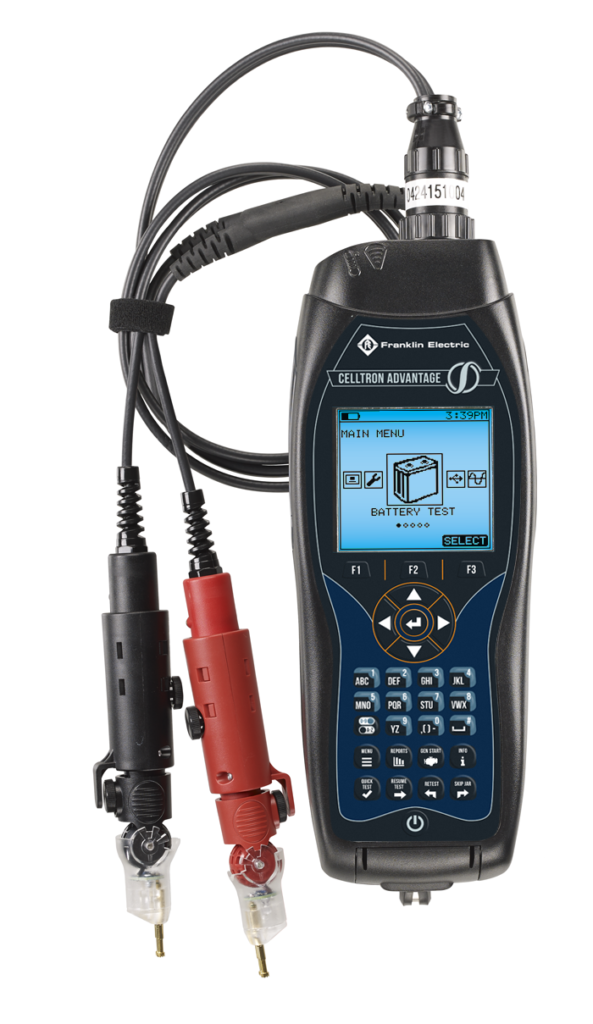
CELLTRON ADVANTAGE
Features:
- Pateted conductance based diagnostics
- 50% reduction in test time
- Less invasive testing approach
- Compatibility with CELLTRAQ Battery Data Management Software for simple data tracking, reporting, and decision making
- Field software updates, including module add-ons

Franklin Electric Grid Solutions work to provide the expertise to reduce the risks of power grid downtime.
Franklin Electric provides a range of utility grid solutions including circuit breaker monitors and load tap changers. Circuit breaker monitors including the Incon Optimizer 2 and the Incon Optimizer 3 feature award-winning, SF6 gas monitoring technology.
Overview of Monitoring Devices for HV Circuit Breakers
The following Franklin Electric products are available from Thorne & Derrick – contact us for further information.
- HV Circuit Breakers Monitors | Franklin Electric Incon Optimizer 2
- HV Circuit Breakers Monitors | Franklin Electric Incon Optimizer 3
- HV Load Tap Changers | Franklin Electric Incon 1250 LTC
- HV Load Tap Changers | Franklin Electric Incon 1250B LTC
- HV Load Tap Changers | Franklin Electric Incon 1511 LTC
- HV Power Grid Monitoring | GridSense Line IQ
THORNE & DERRICK
Thorne & Derrick are national distributors of LV, MV & HV Cable Installation, Jointing, Substation & Electrical Equipment – servicing businesses involved in cabling, jointing, substation, earthing, overhead line and electrical construction at LV, 11kV, 33kV, 66kV and EHV. Supplying a complete range of power cable accessories to support the installation and maintenance of low/medium and high voltage power systems:
- Slip-on Cable Terminations
- Cold-shrink Cable Terminations
- Heat-shrink Cable Terminations
- Cable Joints – Heat & Cold-shrink
- Separable Connectors (Euromold)
- Surge Arresters & Switchgear/Transformer Bushings
Key Product Categories: Duct Seals | Cable Cleats | Cable Glands | Electrical Safety | Arc Flash Protection | Cable Jointing Tools | Cable Pulling | Earthing | Feeder Pillars | Cable Joints LV | Joints & Terminations MV HV