I booked that 4 day course, turned up, collected my certificate – I am now a Cable Jointer.
With paperwork to prove it.
Easy-peasy.
Next move, carpet bomb LinkedIn recruiters with my new CV, sit back and wait for work.
OK, this is a personal fiction but a common occurrence in the UK jobs market.
There is increasing concern in the electrical industry in general and the Cable Jointing trade specifically about a trend of “fast-track” training courses propelling underskilled manpower into a crowded labour market. Inflicting damage on day rates, earnings and livelihoods.
We’re talking day rate differences of £150 v £500/600.
This is rather bloody serious – the view from the cable trench is that the industry is lawless and time-served experienced craftsmen are the furious victims. Some are fastly loosing faith in their trade, some would say their craft, some even their art. Their pockets are hurting.
There is not a skills desert out there but there is an unwillingness, in part, to recognise the monetary value of their skill, experience and ability.
A curative response is needed to stem the tide – no end of soul-baring spleen venting social media posts will remedy this situation. We’ve lamented the demise of “The Jointer” before – we’ve kicked up stinks and many have smelt the pong if not righted the wrong.
Nevertheless, lets continue the crusade and champion the real-deal Jointer.
Because in 4 days time more cable jointers will be on the job-market for hire.
But can they wipe, glass, strip, chamfer or plumb cable?
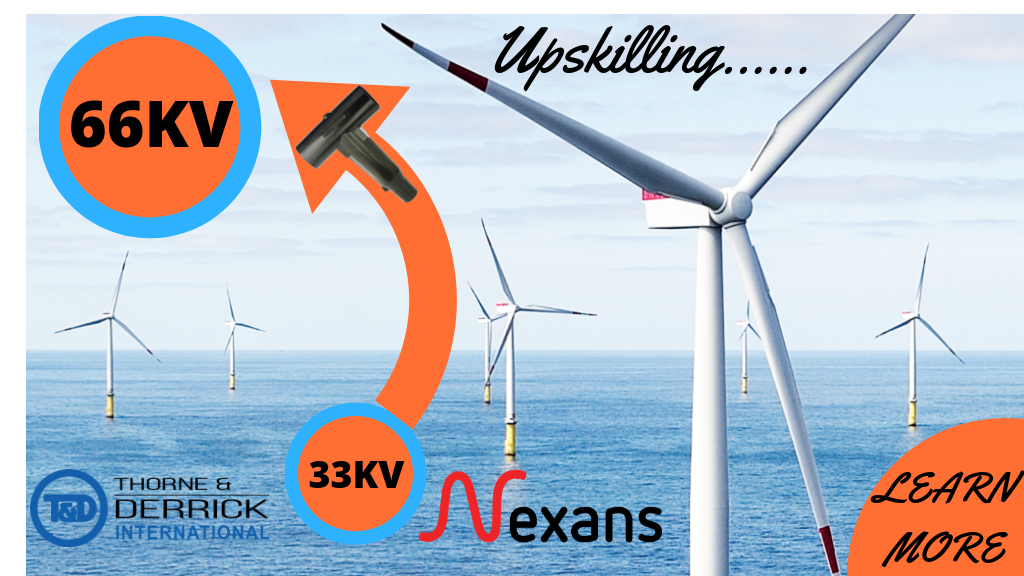
Two Times More Power. Jointers! Empower your CV and skill-set by grasping the 66kV Jointer Training opportunity. Jointers must currently be 33kV Competent and experienced to be ready to undertake the step-up to 66kV from 33kV.
Many cable jointers hold a diversity of accreditations from leading brands such as Nexans Euromold, Brugg, ABB, Pfisterer, Prysmian and 3M – they possess the expertise to joint across an extensive range of medium and high voltage cables (polymeric, gas and oil filled) using cold shrink, heat shrink or push-on HV cable joints, terminations and connectors.
This skill-set is developed over years and contrasts sharply with the generic jointer familiarised with the “specific joint for specific cable” approach of some training centres.
Of course, training is core to career progression without which young, skilled and gifted trainees could never develop – the industry would stagnate to eventual extinction.
Well we’ve blown the trumpet, now we need you – the industry – to rally to the call and let us know your thoughts and opinions. We will feature them on this Post.
The following TweetDeck demonstrates the skills levels and competency of an international class EHV Cable Jointer – Andrew Brezovszky is conversant with the cable jointing techniques required for medium voltage, high voltage and extra high voltage oil filled, gas filled or polymeric cables. 20 years of cable jointing experience with Competency Certificates from leading cable accessory manufacturers including Prysmian, ABB and Pfisterer.
What you might call a real-deal Jointer.
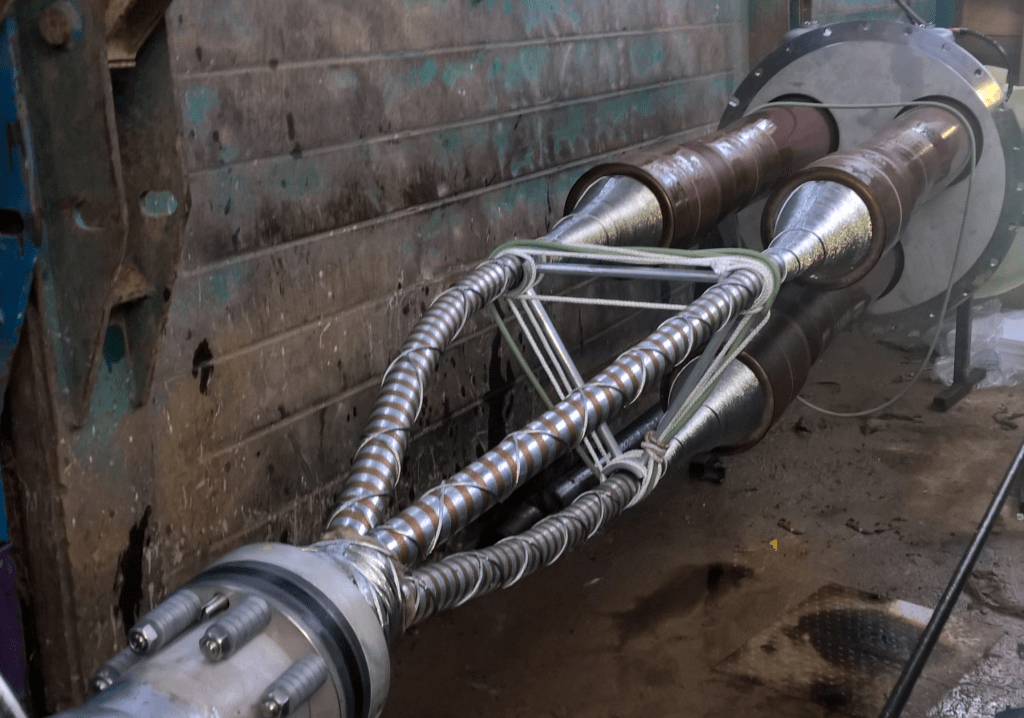
132kV Ericsson Transition Joint – 3 Core Cable Joint XLPE To Oil Filled Cable. Image: Energi Cable Services
T&D customers include UK and worldwide contractors, specifiers, traders and end-users involved in cable installations, sealing cable ducts, cable jointing, substation, overhead line and electrical construction at Low, Medium & High Voltages.
We are specialist stockists and distributors of 11kV-33kV Cable Joints, Terminations & Connectors from manufacturers including 3M, Pfisterer, Prysmian and Nexans Euromold in a selection of jointing technologies including heat shrink, cold shrink and push-on.
Cable Innovation Tools & Accessories for Low & High Voltage Power Systems| HV Tools Information
ATEX & Sealing Cable Ducts
by Chris Dodds T&D - estimated reading time 3 minutes
The following short update is written to provide clarification on the requirement to seal cable ducts in hazardous area locations according to the ATEX Directive – ATEX is a EU applicable directive to protect and ensure worker and workplace safety for equipment to be installed in potentially explosive atmospheres.
ATEX Directive relates to equipment which is used in hazardous areas i.e. locations with concentrations of flammable gases and vapours creating a potentially explosive atmosphere.
Specifically ATEX relates to equipment with moving parts posing a potential source of ignition (such as fuel dispensing equipment, gears, motors, pumps, mining equipment, lighting, alarms, plugs, switches, sensors etc).
The comments and conclusions below apply to sealing all types of electrical cables both onshore and offshore – including control, instrumentation and power supplying low, medium and high voltage electricity, typically entering substations at 11kV-33kV.
Hazardous Areas
Equipment is only considered to be within the scope of the ATEX Directive if it is intended (either in whole or in part) to be used in a potentially explosive atmosphere. If a product containing an intended potentially explosive atmosphere, for example a vessel, itself contains equipment as defined in the Directive, then the latter equipment is in effect in a
potentially explosive atmosphere, albeit one which is contained by the vessel, and is therefore subject to the ATEX Directive.
Potential sources of ignition: electric sparks, arcs and flashes, electrostatic discharges, waves, ionising radiation, hot surfaces, flames and hot gases, mechanically generated sparks, chemical flame initiation and compression.
If equipment containing a potentially explosive atmosphere can, due to its construction, operation etc. create a potentially explosive atmosphere itself, which wholly or partially surrounds it, then such equipment is in effect in a potentially explosive atmosphere, and is therefore subject to the Directive.
A third scenario is that there may not only be a surrounding potentially explosive atmosphere but also a process that requires such a mixture to enter and/or be released from the product. The interface between the equipment and the process input/ output will also require consideration. This may, in some cases, lead to equipment having more than one Category, one (or more) for the external atmosphere and another for the process atmosphere.
According to the ATEX Directive download below Section 2 and 3.7 covers the type of equipment that the hazardous area certification covers – the document does not reference products excluded from the Directive.
Conclusion
Duct sealing systems are not covered or categorised according to ATEX – they are effectively “non-sparking” and when installed in accordance with the manufacturers installation instructions do not pose a potential explosion risk. In this instance, a “Statement of Exclusion” applies to cable sealing with respect to the ATEX Directive.
Duct seals are available to prevent water ingress and gas migration into electrical substations, infrastructure and buildings – fire resistant cable seals are available for fire-rated applications. Sealing solutions are available to suit all duct diameters and cable voltages in single, multiple or trefoil cable arrangement.
This information has been provided by SIRA, the leading hazardous area certification body.
Filoform – Water, Gas & Fire Protection Of Cable Ducts In Industrial & Hazardous Areas
Should you require any advice or specification support to enable to selection of cable duct seals for safe, industrial or hazardous area locations, call us | LV MV HV | 11kV 33kV 132kV
Thorne & Derrick International
Since 1985 Thorne & Derrick based in the UK have been specialist distributors of LV, MV & HV Cable Installation, Jointing, Substation, Arc Flash Clothing & Electrical Safety Equipment – customers include UK and worldwide contractors, specifiers, traders and end-users involved in cable installations, sealing cable ducts, cable jointing, substation, overhead line and electrical construction at Low, Medium & High Voltages.
We are specialist stockists and distributors of 11kV-33kV Cable Joints, Terminations & Connectors from manufacturers including 3M, Pfisterer, Prysmian and Nexans Euromold in a selection of jointing technologies including heat shrink, cold shrink and push-on.
Heat shrink cable joints were supplied to replace faulted sections of the low voltage festoon cables which were cut out from the circuit using cable cutters and re-jointed to provide electricity supply to offshore cranes.
The festoon cables powering bridge brakes and pictured below suffered from severe cable sheath damage and corrosion damage due to salt-water atmospheric conditions associated with offshore environments.
The catenary cables terminated into ExD electrical enclosures and located in a hazardous area zone were jointed under special permit conditions to allow the electrical engineers to “hot-work” the installation of heat shrink type cable joints – the joints were kitted and despatched same day for air freighting offshore to a North Sea offshore oil platform.
The heat shrink tube components of the cable joint conform with flat design multi-core power and multipair control cables with copper tape screens – running through the cable trolley system the client required a high strength cable joint.
The heat shrink joints were supplied with pre-insulated crimp connectors, manufactured by Cembre, crimped in a staggered formation to limit the area displacement and overall diameter of the completed cable joint.
Cable joints with heat shrink tubes repair damaged power and control cables without need to handle hazardous classification resins or compounds
The multicore flat cable for power supply and control of overhead travelling cranes and festoons is available as fire retardant specification with reduced emission of corrosive gases and opaque fumes in event of fire (IEC 60754-1) – zero halogen cable joints are also available.
Festoon cable joints are often deployed as interim measures to enable continued power supply where specialist replacement cables are on extended delivery lead times from the manufacturer.
The festoon cables were subjected to mechanical damage while in service and required a smooth profile cable joint suitable for flat form cables and reeling trolley systems
Festoon cable joints utilise adhesive lined heat shrink protective tubings to provide a waterproof cable seal with excellent mechanical protection
The heats shrink cable joints re-instate the primary insulation and cable jacket sheath to prevent water ingress and corrosion damage to copper braid armour or screening in onshore or offshore locations
Conductix-Wampfler
Conductix-Wampfler is a world leading supplier of intelligent energy supply and data transmission cable systems for moving machinery – this includes festoon systems, conductor rails, energy guiding chains, spring cable reels, motorised cable reels, slip ring assemblies and contactless power transmission systems.
T&D also distribute Protolon Cables for medium voltage flexible trailing applications
Cable Joints
Thorne & Derrick International can specify and supply standard and bespoke LV cable joints utilising heat shrink, cold shrink or resin cast type jointing kits.
Should you have a specific application for LV, MV, HV up to 33kV cable joints please contact us. For further information:
Cable Voltage:Low Voltage | Medium Voltage | High Voltage | Other – 600V 1000V
Cable Joint Manufacturer:SPS
Cable Manufacturer: Lapp Group
Cable Type: ÖLFLEX®
Cable Joint Application Notes– the smooth profile LV heat shrink cable joints were specified to connect and splice single core shielded 185mm CSA cables powering test cells located in a cable trench. The 500KW battery simulator unit provides 1000V and 1000A up to 500KW which can be supplied to several test cells.
The cable joints were required to enable the relocation of the LV distribution unit by extending the existing low voltage cables by inline jointing.
Lapp Cable ÖLFLEX® joints are available to suit single core 10-300sqmm cable conductors.
Heat shrink cable joints are compatible with polymeric cables with XLPE or EPR insulation – specialist versions of the joint kit are available for zero halogen and fire resistant cables.
Once the cable insulation has been removed and stripped and the conductors jointed using appropriate crimp connectors and crimping tools the inner heat shrink tube can be positioned onto the cable to be jointed overlapping equally at both sides – the joints were supplied with Cembre connectors. Earth continuity of wire braided or wire armoured cables is achieved across the cable joint using tinned copper mesh and earth braid secured using constant force roll springs.
Connectors – both crimped or mechanical shearbolt connectors are suitable for use with heat shrink cable joints. Where mechanical shearbolt connectors are used the inner heat shrink tube may need to be increased in size. Check with T&D.
Heat Shrink Cable Joint Kit Installation
Lapp Cable ÖLFLEX® FD 90 CY Screened Power Cable Specification
Highly flexible, screened single core cable with PVC insulation and PVC sheath – certified for North America.
ÖLFLEX® FD 90 CY manufactured by Lapp Group is a screened single core power cable for use in low voltage power chains with UL/CSA AWM certification – EMC compliant copper screening. Flame retardant according to IEC 60332-1-2 & CSA FT1. High oil resistance. Low adhesive surface. 4000V test voltage.
Cable Applications
Power chains or moving machine parts
Internal wiring of electric and electronic equipment in switch cabinets
Power circuits of servomotors driven by frequency converters
Test systems in the automotive industry, vehicles and stationary fuel cell systems
Lapp Group
Headquartered in Stuttgart, Germany, the Lapp Group is a leading supplier of integrated wire, cabling and connector products and solutions. Lapp Group manufactures and supply’s electrical and fibre optic cables, industrial plug-in and screw connectors, cabling solutions, automation technology and technical accessories. Lapp Group’s core markets are in the mechanical and plant engineering and electronics manufacturing sectors, with rapid market expansion in the renewable energy, mobility and life science industries.
Cable Joints
Thorne & Derrick International can specify and supply standard and bespoke LV cable joints utilising heat shrink, cold shrink or resin cast type jointing kits.
Should you have a specific application for LV, MV, HV up to 33kV cable joints please contact us. For further information:
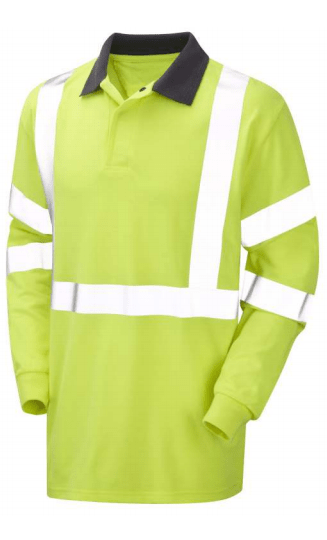
Arc Flash Clothing – For Jointers Working On Low & High Voltage Power Cable Systems
Yes. Here is the evidence.
by Chris Dodds T&D - estimated reading time 5 minutes
Utility Workers & The Risk Of Arc Flash
Utility workers stand in the frontline of electrocution and arc flash risk – facing daily hazard whether in the cable trench, joint bay, substation or working in front of switchboard panels.
Jointers, Linesmen, SAP’s and Civil Engineers should all be protected against the working dangers of arc flash – according to the UK Health & Safety Executive workers engaged in the location, identification and excavation of of buried services should be ensure adequate protective clothing is used when working around underground cables:
HSG47 Excerpt
Injuries to workers are typically caused by the explosive effects of arcing current, also known as arc flash, and by the associated fire or flames that can result when a live cable is penetrated by digging tools (typically “shovels and spades”) – the risk is elevated where medium/high voltage cables are trenched and backfilled but not protected using 11kV/33kV cable covers.
Arc flash can also occur when a cable is crushed severely enough to cause internal contact between the cable conductors, or metallic cable sheathing and one or more conductors.
Injuries are severe – potentially fatal – burns to the hands, face and body: electric shock is possible but less likely.
Incidents can also arise from cables, connections and cable terminations which have been damaged but left unreported and unrepaired, or which have deteriorated with age.
Avoiding Danger From Underground Services UK HSE HSG47 – download full copy.
Here utility workers are shown live-line working from an aerial lift on overhead conductors from the bucket truck.
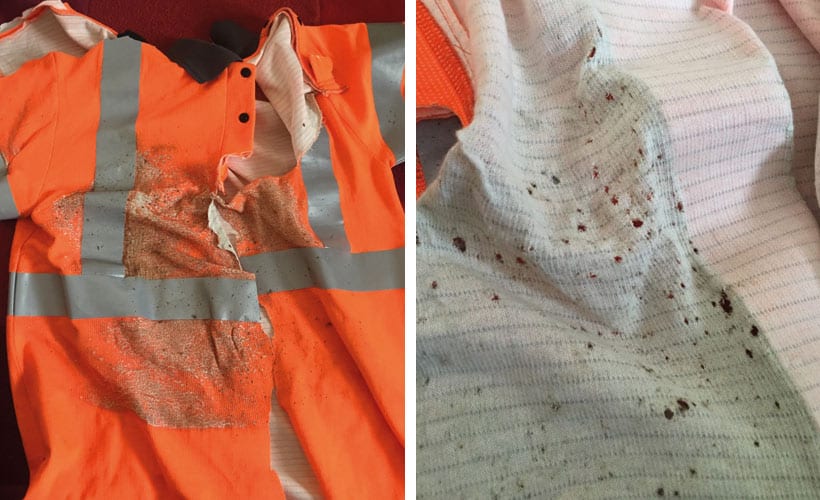
Clearly the garment has quelled the arc flash due to the inherent flame retardancy of the clothing fabric. The cause of the arc flash was triggered by an LV jointer using a Jack Hammer in the vicinity of an underground low voltage cable.
The strike to the 3 phase 120sqmm CNE utility cable caused an arc flash which if not protected against using appropriately rated clothing would have inflicted serious skin injury and burns to the cable jointers chest and arms.
Typical risks include: fuse replacement and maintenance on feeder pillars and link boxes, live cable jointing, underground cable excavation and switching operations in substations at low, medium and high voltages.
As well as correctly specified levels of arc flash clothing protection utility workers should ensure appropriate levels of protection against electrical shock hazard by wearing suitable insulating gloves, arc flash gloves and insulating boots according to the voltage and risk.
Cable Strikes & Arc Flash Risk
Failure to implement and follow the HSG47 Guidelines can cause fatal injury to workers striking buried electricity cables operating at LV MV HV – workers have been electrocuted and engulfed in flames coming into accidental contact with 11,000 volt (11kV) underground cable where sites have not been scanned for live buried cables by cable avoidance tools.
Cable strike incidents can be avoided when work is properly planned and supervised in accordance with HSG47.
Image: Lee Richard – LR Power Services
The photographs are compelling evidence of the electrical safety requirement to protect cable jointers whether working on LV, MV or HV power cables, overhead lines or substations.
The investment in clothing is an investment in worker protection and ultimately life.
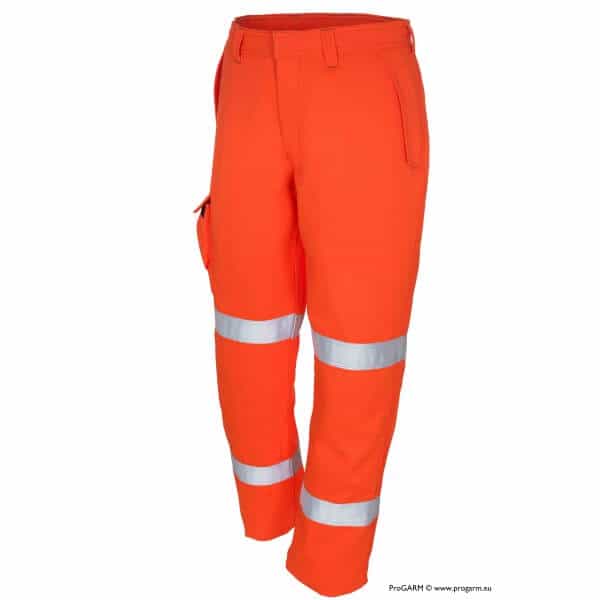
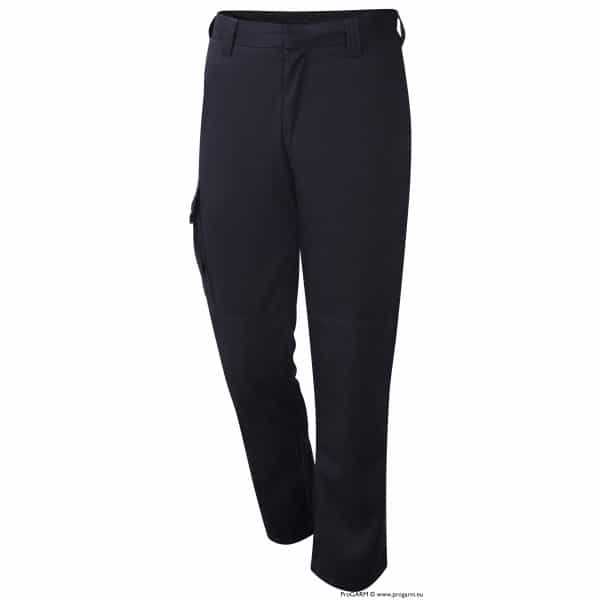
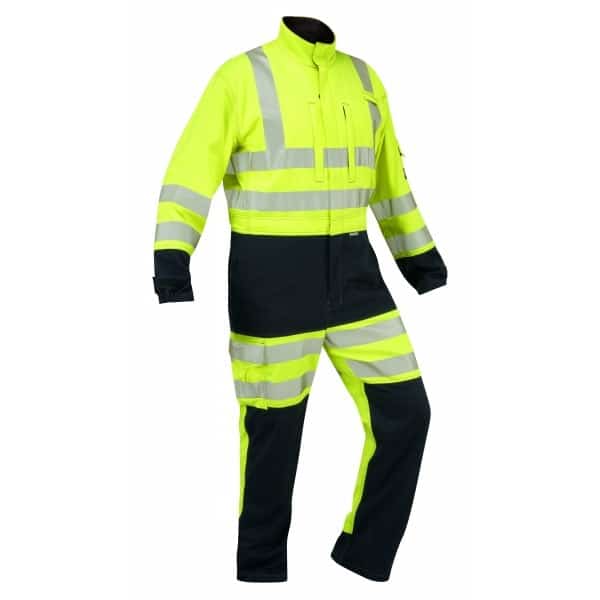
Naturally, all ProGARM arc flash clothing is vigorously tested in the laboratory and to witness real life evidence of the protection provided underlines the need to take arc flash seriously.
Mark Lant, an Arc Flash Technical Expert at ProGARM comments: “Obviously, we’d prefer it if Arc Flash incidents never occurred. However, the fact is they do, and we’re pleased to see our arc flash polo shirt performing as effectively in the field as it did in the lab. We wish the cable jointer a speedy recovery from his other injuries.”
Arc Flash Clothing & Electrical Safety Tests
Arc flash clothing and garments are tested to European norms and standards:
EN ISO 11612: 2008 (A1 B1, C1) – ISO 11612:2008 Protective Clothing – Clothing to protect against heat and flame
EN ISO 20471: 2013 Classs 3 – High Visibility Clothing – Test Methods & Requirements
IEC 61482-2: 2009 Class 1 – Clothing Protection For Thermal Hazards Of An Electric Arc
Electric arc flash occurs during fault conditions when a current flows through an air gap between conductors – this inflicts catastrophic devastation upon switchgear MV HV
High Voltage Substations – pictured the catastrophic effects on 11kV switchgear and cables of an arc flash incident
Can An Arc Flash Occur While Ground Digging?
1. On average 8-10 cable strikes are reported in the UK every day
2. Over 90% of LV-HV underground cables in the UK are unmarked
3. Over 1,000 electrical incidents reported to the HSE in the UK every year
4. 25 of these are fatalities (HSE)
5. Fines can be an excess of £2 million
Arc Flash Learning & Resources
Thorne and Derrick are proud to be distributors of ProGARM arc flash coveralls and protection.
We can help – should you require arc flash calculators or advice on the type of clothing and protection available please do not hesitate to contact us.
What Is Arc Flash PPE and Why Is It Important? Arc flash PPE is specialist personal protective equipment designed to help protect electrical workers against the thermal hazards of an electric arc. It includes arc-rated clothing, protective helmets, face...
Voltage detectors are electrical safety instruments used to identify the presence or absence of voltage on electrical equipment and conductors. They are used by electricians, electrical engineers, utilities and maintenance teams working on low voltage (LV), medium voltage (MV)...











 cables, overhead lines or substations.