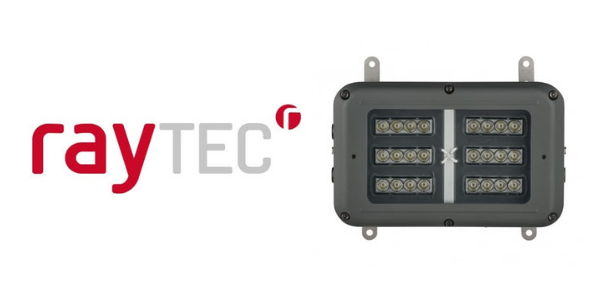
Raytec are world leaders in LED lighting for hazardous area environments – the Raytec SPARTAN range of hazardous area lighting is globally certified Ex LED lighting, approved for all ATEX and IEC Ex Zone 1 and Zone 2 hazardous area environments, including UL /CSA C1D2 (Class 1 Division 2) installations.
In this Application Focus, we explore the lighting requirements for offshore wind farms and identify some of the key features to consider when specifying luminaires for these types of environments.
LED Lighting Requirements
for Offshore Wind Farms
An offshore wind farm can be defined as a cluster of wind turbines constructed in a body of water. The turbines harvest wind energy to generate electricity and benefit from the high wind speeds of their offshore location.
However, the nature of an offshore location provides a challenging environment when specifying lighting. Given the continuous exposure to marine conditions, such as high wind speeds and a saline environment, a high-quality and durable lighting system, capable of withstanding these elements, is critical.
LED Lighting
Offshore Wind Stats
Typical Areas Requiring LED Lighting
Jacket Base Of The Turbine
A turbine sits on a supporting structure called a Jacket Base. The jacket sits above the waterline, as well as being anchored to the seabed, giving the turbine the foundation it needs to withstand the harsh marine environment and dynamic loads.
Lighting, particularly LED lighting, is required to ensure safe working conditions when accessing and departing the turbine, via a crew transfer vessel, where the jacket structure is the main access point. Installing lighting here is also beneficial for routine maintenance and inspection of the area around the ‘splash zone’, where corrosion occurs due to the meeting of the waves and air.
Interior Of The Turbine
Lighting is required inside the turbine for the safety of workers when they perform routine maintenance procedures from within the tower. In many cases ‘Emergency Lighting’, such as the Raytec SPARTAN Intelligent Emergency, is also needed to maintain safety in the event of a power outage.
Access Area Lighting
It is a necessity for heavy-duty industrial lighting to be installed at the crew access point to the turbine, when disembarking the crew transfer vessels. This area sits above the supportive structure and is accessed via a bridge from the crew transfer vessels. Therefore, safety requirements dictate that high-quality industrial lighting is needed to make sure these areas are well lit.
All of these areas require the use of a heavy-duty lighting fitting, such as lighting from the Raytec SPARTAN range, to withstand the challenges of the offshore environment. The remainder of this article will explore the key features to consider when specifying a luminaire for an offshore wind farm.
Specifying Lighting for Offshore Wind Farms
Choosing LED
Firstly, selecting lighting which uses LED technology (rather than conventional lighting, such as high-pressure sodium), should be considered essentialwhen specifying for offshore wind farms.
Lighting Maintenance
Providing it uses effective thermal management, an LED luminaire can offer a lifetime of 100,000 + operating hours, without the need to re-lamp. This results in a significantly longer lifespan and lower life-cycle costs. Reducing the number of maintenance interventions in these remote and offshore locations, where access is difficult and costly, is vital.
Energy Costs
Keeping costs to a minimum is a common goal amongst offshore wind applications. LEDs run more efficiently than conventional lighting; reducing energy costs. The major benefit comes from an LED luminaire’s ability to instantly restrike. Instant restrike allows the lights to be easily switched on and off when they’re not being used. In contrast, due to the warm-up time of a conventional lamp (such as High-Pressure Sodium) they would likely be left switched on 24/7 to avoid costly and impractical delays during maintenance.
Quality of Light
With LED’s capable of providing improved CRI and higher colour temperatures than conventional lighting, light quality is improved which drastically improves working conditions.
Easy Maintenance
Specifying LED lighting can help in reducing the frequency of maintenance required. However, the way a manufacturer has designed the luminaire can have a large impact on how easily maintenance can be carried out of it is required, and how long the site is left without light.
Making Access Easier
For offshore wind farms, where access for maintenance can be difficult, choosing an LED luminaire with a removable power supply unit (PSU), that can be placed separately from the main unit, can help make access easier. For example, Raytec’s SPARTAN High-Power Flood & High-Power Bay luminaires, allow the PSU module to be removed from the main body of the luminaire and be positioned in an easy to access location. This makes access to serviceable parts far easier.
SPARTAN High-Power Bay Lighting
SPARTAN High-Power Flood Lighting
Lighting is required inside the interior of the turbine, stretching from the bottom to the top. Each luminaire can be accessed via a stair or lift system within the turbine column. However, when routine or emergency maintenance is required, having the PSU located at ground level would mean this could be conducted with more efficiency. Having this functionality reduces the time taken to carry out maintenance, and its associated cost. By reducing the time and frequency which maintenance workers spend working at height, health and safety compliance is also positively impacted.
Reducing Downtime
Minimising downtime is crucial to the financial viability of wind farms. If the lighting fails, certain scheduled maintenance procedures can’t take place due to the health and safety risks to the workers.
This could have a detrimental impact on the ‘up-time’ of the turbine itself. So, having a lighting solution that allows maintenance to be quick and easy – bringing the turbine back into service as soon as possible – can be a massive selling point for manufacturers, developers and investors, as this improves the overall financial viability of the site.
LED Lighting For Offshore Wind Farms
Durability
Lighting Withstanding Harsh Environments In Offshore Wind Applications
There are many environmental issues companies need to be aware of when installing hardware for an offshore wind application. These will be discussed in further detail below:
Sea Water (Saline Environments)
A saline environment (exposure to sea water spray and salt water saturated air) can cause a higher risk of corrosion compared to inland applications. Saltwater spray aggressively corrodes the metal. Once evaporated, saltwater can also leave a thin film of salt on the hardware – interfering with the performance of the luminaire by reducing light intensity.
Any luminaire installed in these offshore locations needs to withstand these aggressive conditions. The Raytec SPARTAN range is designed with offshore use in-mind. Made with marine-grade aluminium and stainless-steel fixings, while being ABS approved to marine standards, our luminaires are ideal for any marine application.
Top Tip for Specifying…. Specify a luminaire made from marine grade aluminium or stainless steel as this provides a more robust solution under aggressive environmental conditions. Also look for a luminaire which uses a smaller front gasket, reducing the risk of water ingress into the unit.
High Wind Speeds & Extreme Weather
High wind speeds and other weather conditions such as sleet, hale and heavy rains are a regular occurrence for offshore applications. A luminaire with a high IP rating is essential to prevent water ingress which could damage internal components of the unit.Fixing centres and brackets of luminaires also need to be durable enough to withstand the extra wind forces. If this is not the case, then over time the lighting bracket could wear and snap causing the unit to be lost at sea.
Top Tip for Specifying… Specify a luminaire with an appropriate IP rating, and check exactly which tests the luminaire has been exposed to. SPARTAN lights have been approved to both IP66 and IP67 standards – so they can withstand powerful water jets (IP66) as well as temporary immersion (IP67).
Sun & UV Exposure
Prolonged exposure to the sun, or UV (ultraviolet) rays, is common for offshore locations. In the case of an offshore wind turbine, the turbine is in a vast, open space, with nothing to shadow the turbine. When lighting is installed in external areas, such as the ‘jacket base’, this continuous exposure to UV may cause issues for some luminaires, depending on the materials it’s constructed from. For example, luminaires made from GRP (glass reinforced plastic) can degrade and become brittle when exposed to UV over long periods, causing issues around maintenance and structural integrity of the housing.
Emergency Lighting
Offshore wind sites are high-risk environments and rely on the use of emergency lighting to ensure the safety of maintenance workers on-site at that specific time.
Turbines have a tendency to cut out. This can be down to several reasons, such as the wind speed being too high, water entering the wiring system, a voltage or current surge, or overheating. In these circumstances the turbine is turned off, the fault assessed, repaired, and restarted. This can sometimes be done remotely, but in many cases, it is necessary for people to enter the turbine to manually check the issue. Emergency backup lighting is therefore a necessity to maintain the safety of anyone on site, providing back-up illumination in the event of a power outage. This protects maintenance workers and can be essential in getting the turbine running again. Emergency lighting may also be needed to evacuate people from site if issues are unable to be resolved.
Duration & Output
To ensure an emergency luminaire will provide back-up illumination for the required length of time, it is important to check the emergency duration when specifying. Consideration should also be given to the level of light output the luminaire provides whilst operating in emergency mode. This is usually expressed as a percentage of the luminaire’s output in normal operation, and it is common for output to drop significantly when in emergency mode.
Most of Raytec’s SPARTAN emergency luminaires provide 25% light output for 3 hours as standard but can also offer up to 100% output for a shorter duration if required. The duration and intensity of output are often specific to individual applications, so this flexibility can be an important benefit.
Automated Testing
Some manufacturers are now providing emergency luminaires which increase safety and reliability of emergency systems. Raytec’s SPARTAN Intelligent Emergency luminaires provide a self-testing function which automatically cycles the emergency battery, to maintain its health and to measure its capacity. This ensures the luminaire is operating at its optimum and reduces the requirement for manual intervention. Inspection of emergency luminaires is also made easier, with a tri-colour LED indicator which communicates when the unit is going through a testing procedure and highlighting the health of the luminaire.
Lighting design is an essential part of specifying lighting for an offshore wind application.
With numerous turbines across one site, achieving the correct light levels on-site will improve safety and efficiency across the turbine. For specifiers going through the initial design process, a lighting design will provide peace of mind that the final solution will achieve the required, on-site lighting goal, with no surprises at the point of commissioning.
Thorne & Derrick’s hazardous area lighting design service is completely free of charge, providing you with a visual 3D representation of the final lighting solution, with detailed lux levels and a true indication of lighting performance. Our lighting design experts will guide you through the entire process, ensuring the optimum solution is achieved.
Thorne & Derrick International are specialist distributors of LV, MV & HV Cable Installation, Jointing, Duct Sealing, Substation & Electrical Equipment – servicing UK and global businesses involved in cable installations, cable jointing, substation, overhead line and electrical construction at LV, 11kV, 33kV and EHV.
The corrosion resistant stainless cable steel ties with self-locking design are used to bundle, tie or fasten cables in both onshore and offshore locations including industrial, substation and hazardous area locations with potentially explosive atmospheres.
Several developers and installers of solar farms specify BAND-IT cable ties for a better solution that matches the lifespan of the photovoltaic panels and replaces nylon cable ties with Ball-Lok cable ties as part of their cable management portfolio.
The decision has been by many solar farms to replace the nylon ties with BAND-IT metal cable ties to reduce maintenance and costly failures.
Currently there are over 2,000 solar farms (over 10 MW) planned throughout the United States. The average livespan of a photovoltaic panel is 20 years, which is much longer than the lifespan of a traditional nylon cable tie, especially in extreme heat and UV exposure typically found in high producing solar areas.
BAND-IT Ball-Lok Cable Ties
The BAND-IT Edge
Ball-Lok cable ties are tested and hold firm in extreme heat
Thorne & Derrick distribute the most extensive range of Cable Installation & Electrical Distribution Equipmentto the renewable energy sector – we service UK and international clients working on underground cables, overhead lines, substations and electrical construction at 11kV and up to and EHV transmission and distribution voltages.
A National Grid substation is a large installation where 275kV and 400kV overhead power lines or underground cables are switched and where electricity is transformed to 132kV for distribution to surrounding areas.
National Grid own HV electricity transmission network in England and Wales operating throughout Great Britain. The transmission network is made up of approximately 7,200 kilometres (4,470 miles) of overhead line, 1,400 kilometres (870 miles) of underground cable and around 330 substations.
Substations contain electrical equipment to transform the voltage to lower or higher voltages, switching equipment to connect and disconnect circuits, and protection equipment to ensure the network operates safely and reliably.
Thorne & Derrick are approved vendors to National Grid and their electricity framework contractors. We can deliver customised copper earth tape for high voltage substation earthing embossed to National Grid specification.
Bare copper earthing tape is an integral component of all high voltage substation earthing and lightning protection systems – bare copper, LSF, PVC and green/yellow insulated copper earth tapes are available.
Thorne & Derrick are a leading distributor of Earthing & Lightning Protection Systems to the UK power utility industry – we can imprint or emboss copper earth tapes with all UK DNO ownership requirements.
Willesden National Grid 275kV Substation
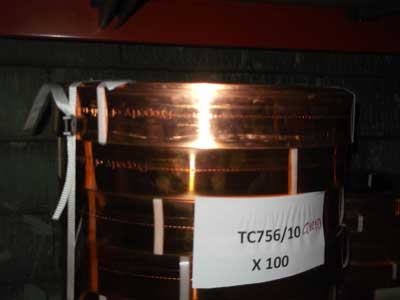
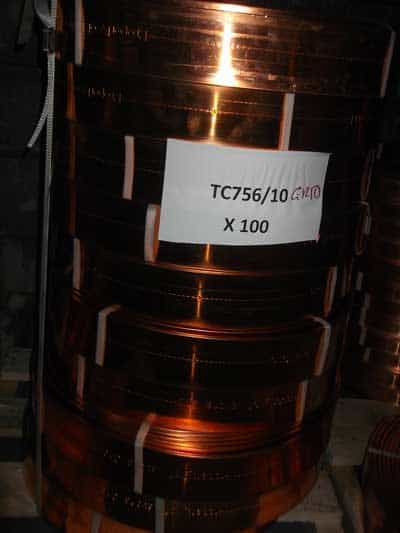
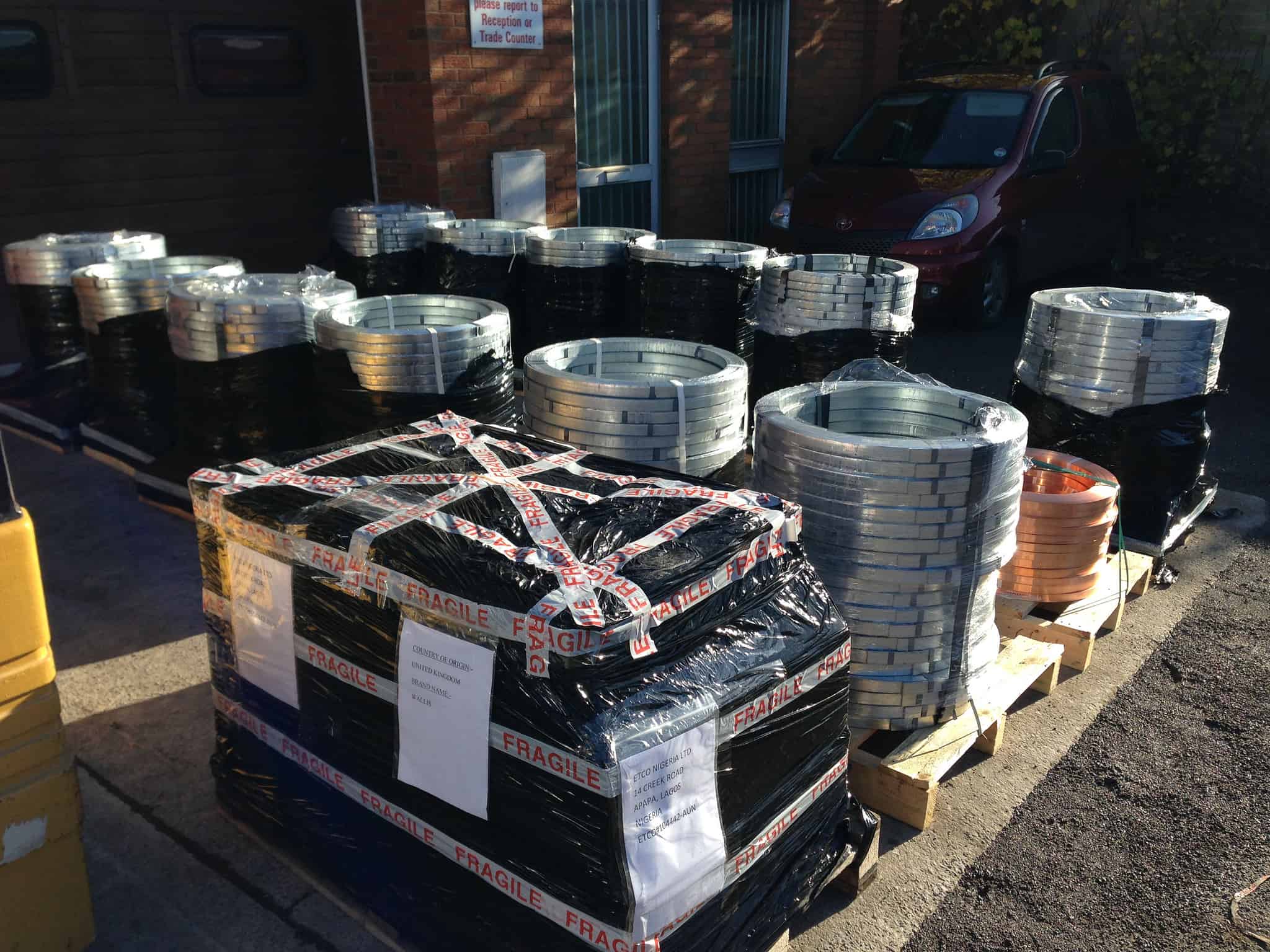
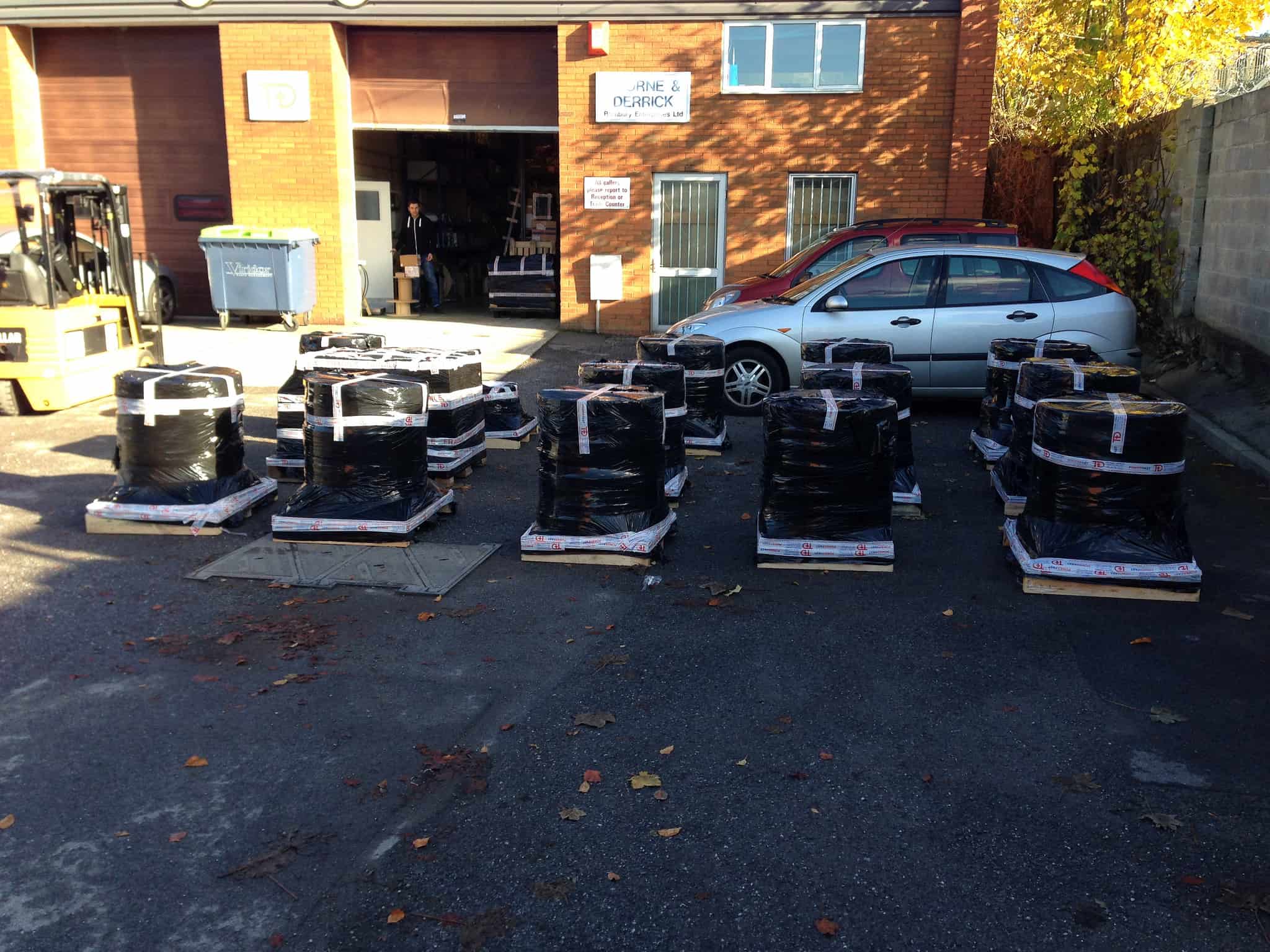
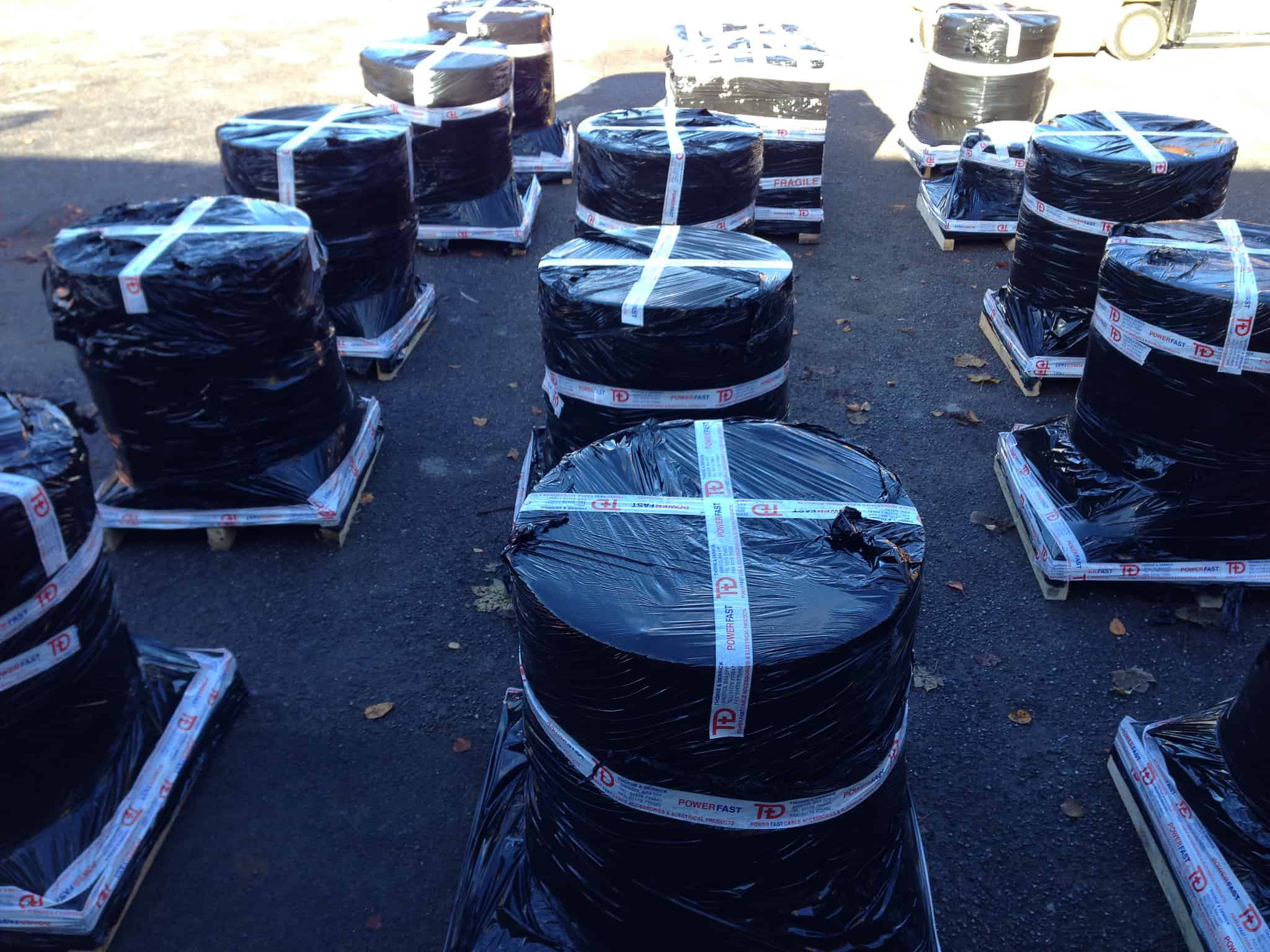
National Grid Substation Copper Earth Tape : Copper Earth Tape 75mm x 6mm embossed and stamped Property of National Grid. 1,000 metres palletised for despatch today for earthing 400kV Elstree to St John’s Wood substation maintenance projects.
Copper Earthing & Lightning Protection – National Grid
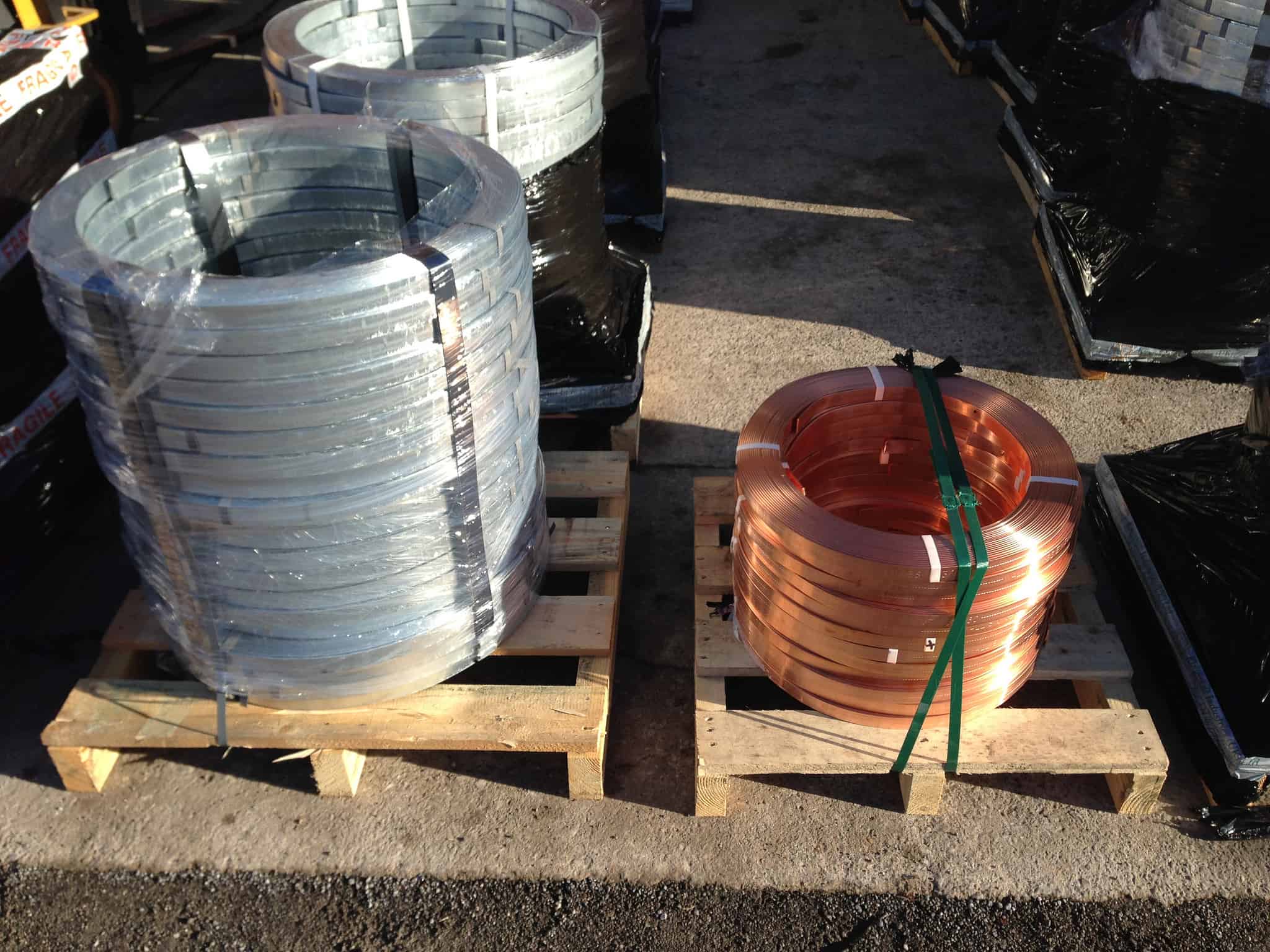
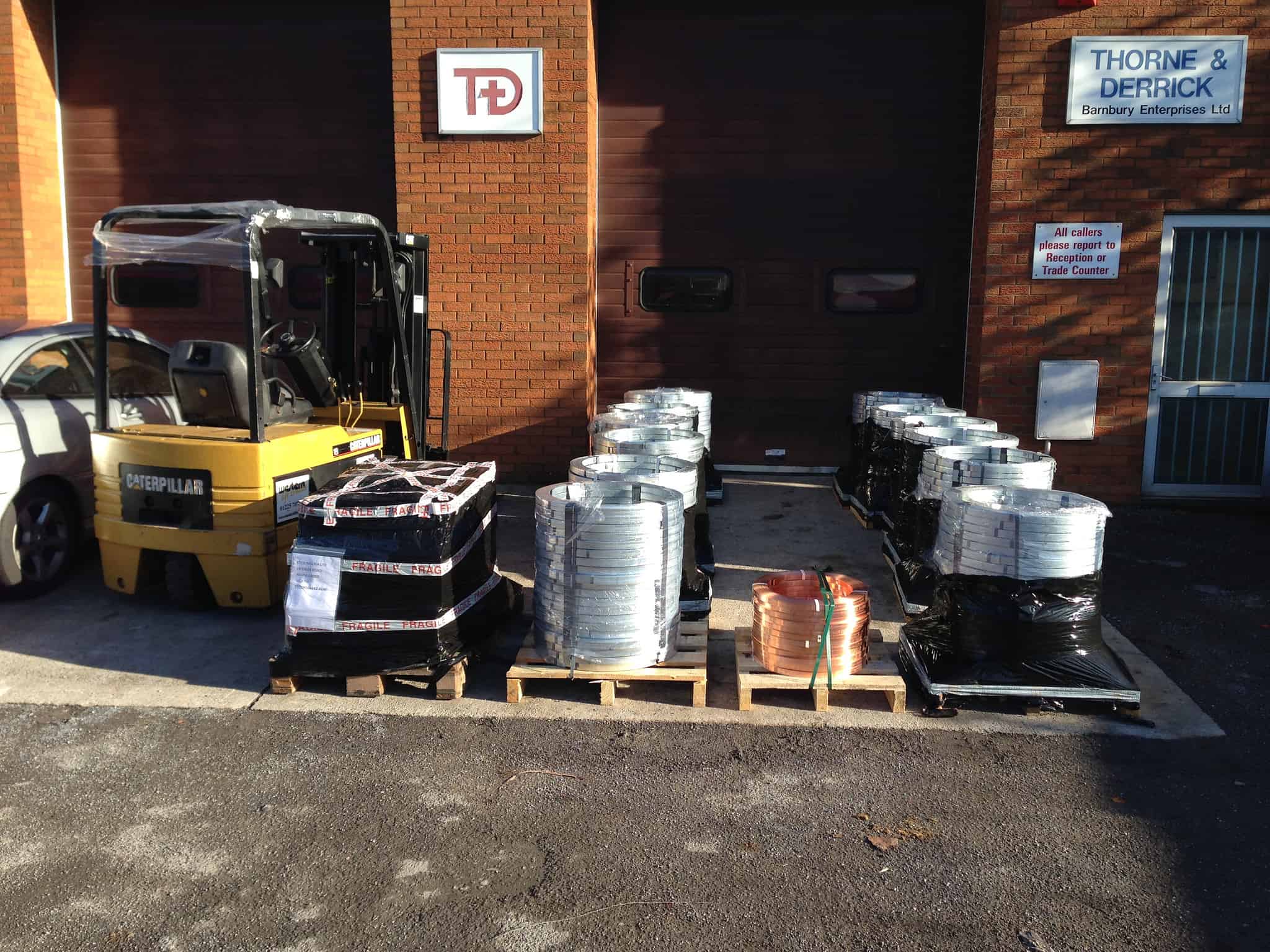
T&D consolidated for despatch a £75K purchase order for Earthing & Lightning Protection Products – the 26 pallet consignment including galvanised steel and copper earthing tapes, mats, rods, earth bars and clamps is destined for several National Grid infrastructure projects including North London Reinforcement, London Power Tunnels & Nemo Link.
EARTHING GUIDE
Should you require further information or assistance with working on a bill of materials for your earthing requirements, please do not hesitate to contact T&D. Designers of Earthing & Lightning Protection Systems can benefit from downloading our AN Wallis Handbook – an essential resource to ensure compliance with BS EN 62305 the document covers:
Design of Structural Lightning Protection (BS EN 62305) – Rolling Sphere, Mesh & Protective Angle
Design of Roof Termination Network
Copper Tape & Down Conductors – Calculation & Location
THORNE & DERRICK are national distributors of LV, MV & HV Cable Installation, Jointing, Duct Sealing, Earthing & Electrical Equipment – we service UK and global businesses involved in cable installations, cable jointing, substation, overhead line and electrical construction at LV, 11kV, 33kV and EHV.
Contact us for 3M Electrical, ABB, Alroc, AN Wallis, CATU Electrical, Cembre, Centriforce, CMP, CSD, Elastimold, Ellis Patents, Emtelle, Euromold, Filoform , Furse, Lucy Electric & Zodion, Nexans, Pfisterer, Polypipe, Prysmian, Roxtec, Sicame, WT Henley.
T&D, a leading distributor and stockist for Pfisterer Connex HV Cable Plugs, are delighted to present a stunning selection of application photographs from the Muncey & Black Peak PV Farms, Melbourn, South Cambridgeshire project.
All images courtesy : Karl McFadden (Business Development Engineer, Renewables & Business Unit PDS at PFISTERER).
Special mention to Richie Rice (EHV Cable Jointer).
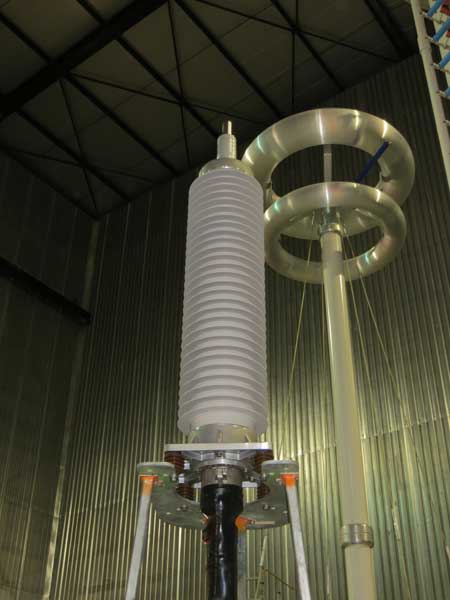
Pfisterer Cable Termination : ESS145 Fluid Filled ODSE Terminating 2000sqmm XLPE Single Core Lead Sheathed Cable During DMK Type Test. 132kV.
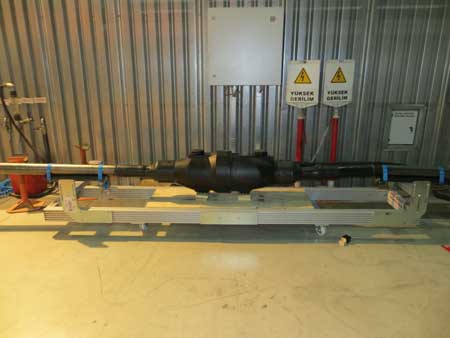
Pfisterer Cable Joint : MSA145 XKG Single Piece Slip-on Cross Bonding Cable Joint Jointing 2000sqmm XLPE Single Core Lead Sheathed Cable To 300sqmm Concentric Bonding Cable. 132kV.
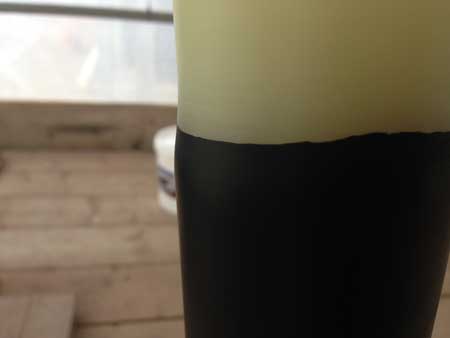
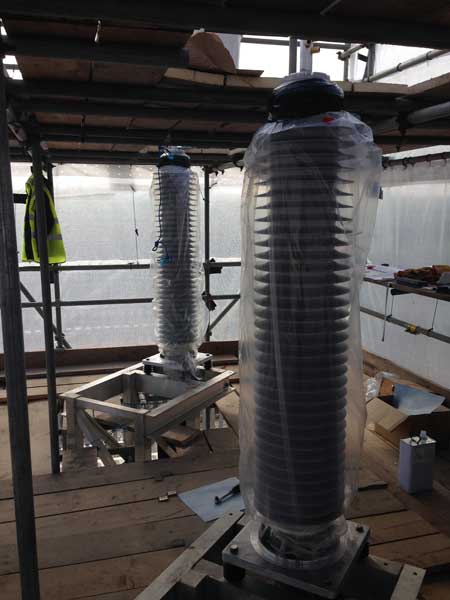
Pfisterer Cable Termination : ESS145C45 Cable Termination With Cold Fill Compound & Stress Cone Fitted Prior To Hollow Core Being Assembled 132kV.
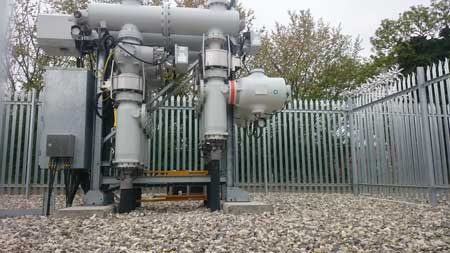
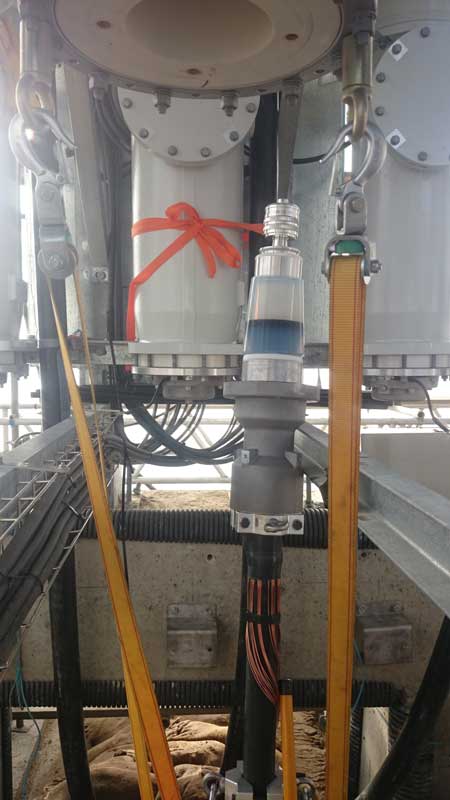
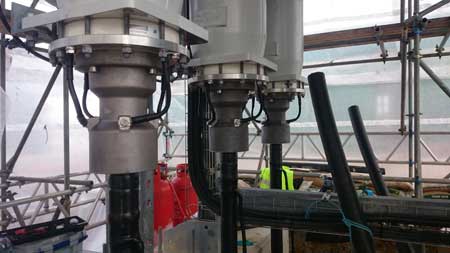
Pfisterer Connex Cable Termination : Size 5S High Voltage GIS Cable Termination Installed To ABB Passmo (Plug & Switch Switchgear) Unit. One Side Completed To 300sqmm Cable (right hand side) & 630sqmm Cable (left hand side). 132kV.
Pfisterer Connex Cable Termination : Size 5S High Voltage GIS Cable Termination Assembled Onto The Cable Prior To Installation. 132kV.
Pfisterer Connex Cable Termination : Size 5S High Voltage GIS Cable Termination Completed Installation. 132kV.
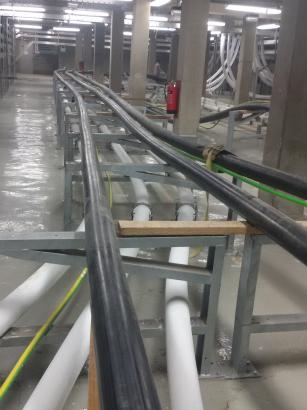
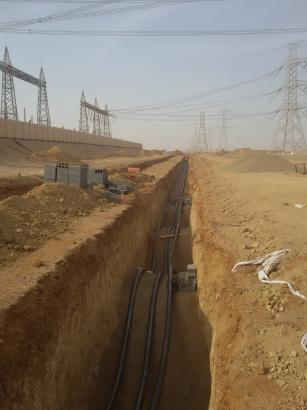
Snaking During Cable Pulling 110kv KAEC project – the high voltage power cable is installed undulating and underground to retain approximately 5 metre for each circuit for future use.
Subscribe now to our POWER NEWSLETTER– a monthly email circulation packed with news, projects, videos, technical tips, training information, promotions, webinars, career opportunities and white papers.
Includes access to our popular JOINTERS BLOGwith contributions from utility professionals, linesmen and cable jointers working on MV HV EHV cables and overhead lines typically at 11kV, 33kV, 66kV and up to 132kV.
INDUSTRIAL LABEL PRINTING SOLUTIONS When clear, durable and professional identification is required across control panels, cable systems, production facilities and industrial installations, print quality, reliability and ease of use are critical. Cembre industrial label printers are designed to support...
HIGH VOLTAGE JUNCTION BOXES & ENCLOSURES When high-voltage power distribution and cable termination are required, safety, enclosure integrity and long-term reliability are critical. HV Junction Boxes and Electrical Enclosures manufactured by Abtech are engineered for the safe distribution, cable termination and protection...




 Further Reading