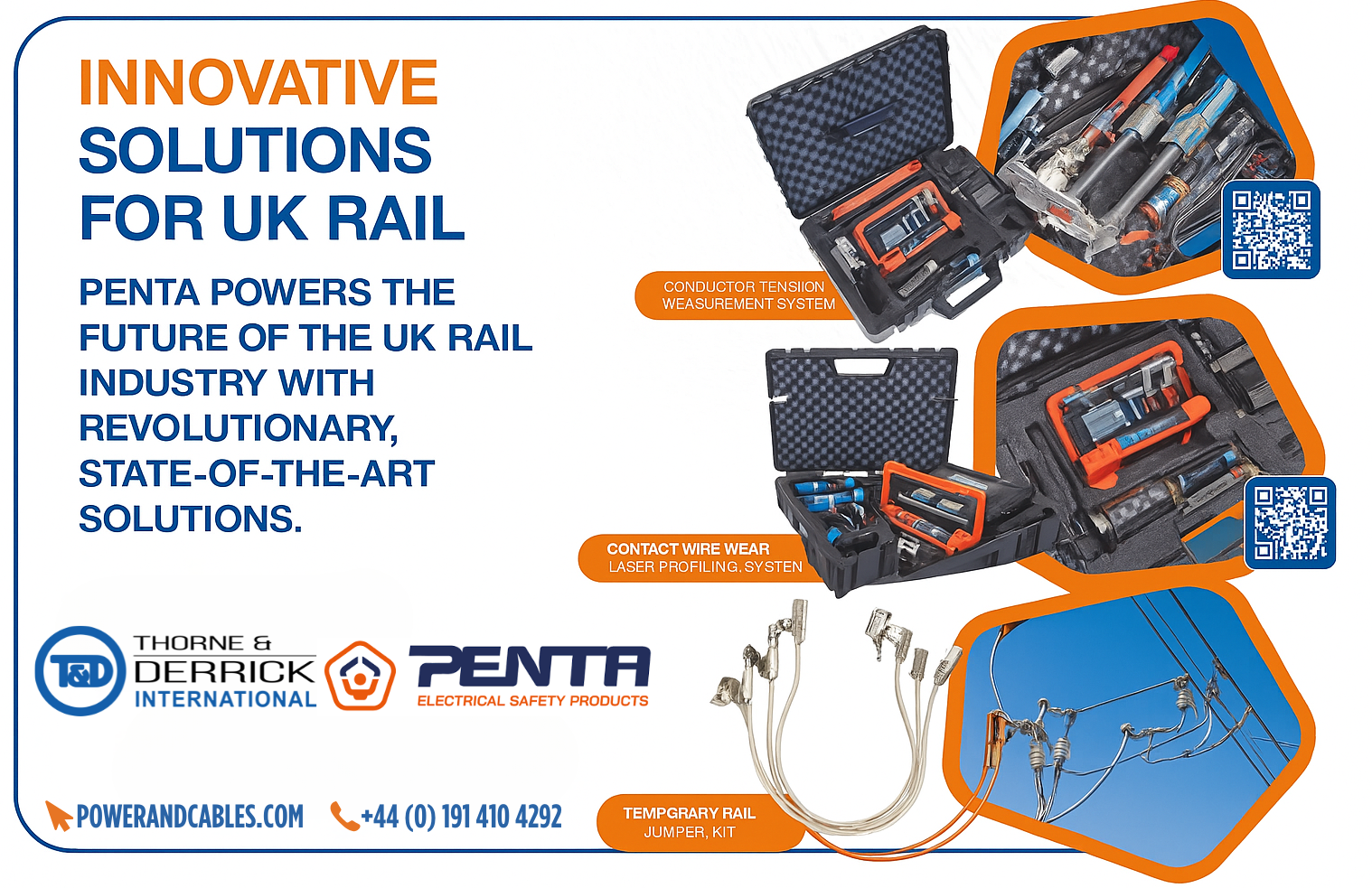
Ahead of Rail Live, PENTA was featured in the official Rail Live preview – a testament to their commitment to electrical safety and innovation in the UK rail sector.
As the UK rail network continues to expand and electrify in pursuit of greener, more sustainable transport, the safety of workers operating near high-voltage infrastructure has never been more important. Electrical safety equipment plays a critical role in ensuring that rail engineers, technicians, and maintenance personnel can carry out their work without compromising their wellbeing or the operational integrity of the network. One of the most critical aspects of this is the effective use of electrical safety equipment.
At Thorne & Derrick, we are proud to supply PENTA’s cutting-edge electrical safety solutions — trusted worldwide by major rail operators and utility companies.

For expert advice, technical support, or to request a quotation on PENTA Electrical Safety Products, contact Thorne & Derrick — the UK’s leading specialist distributor of electrical safety equipment for the rail industry.
Electrification of the UK Rail Network
A significant portion of the UK rail network is powered by electricity, primarily through overhead line equipment (OLE) and third-rail systems. These OLE systems typically support high-voltage – up to 25,000 volts AC on overhead lines and 750 volts DC in third-rail systems.
These systems are the backbone for greater transportation and reduced environmental impact. As such, they require careful monitoring and protection, not only for the smooth operation of the network but also for the safety of personnel and the public.
The Role of Electrical Safety Equipment
Reliable electrical safety equipment is vital for professionals exposed to high-voltage environments. This includes workers conducting routine inspections, maintenance, fault-finding, and emergency response.
One of the leading providers of such solutions is PENTA, a company renowned for its pioneering work in electrical safety systems. Their advanced electrical test and measurement devices are indispensable for workers operating near energised equipment. This unique solution is tailored for professionals engaged in maintenance, rescue operations, switching, pruning, and other activities in high-risk electrical environments.
A key advantage is the ability to address critical risk factors such as unplanned proximity to voltage sources, untagged work zones, or mistakenly energised circuits.
PENTA’s safety equipment is designed for day-to-day maintenance workers to safely address the risks and keep service disruptions to a minimum. They make the worksite safer by automating tasks like tension testing and voltage detection.
By introducing electrical test equipment indoors and outdoors, rail operators are better positioned to reduce workforce downtime and increase service safety. These devices are designed to stand up to harsh conditions and are tailored to ensure accurate, repeatable results under stress.
One device developed by PENTA for rail-specific use is the Overhead Line Tester Kit.
Designed to test conformity to international standards (specifically to Operational Safety in the Rail Industry (RIS-0703-NK Issue 01) and the British Standard BS EN 50110).
Key Products for the Rail Sector
-
Overhead Line Tester Kits – Designed for rapid voltage presence detection with multi-level alerts, visual indicators, and high-visibility displays
-
Temporary Earthing Devices – Ensure safe access to electrified infrastructure during maintenance
-
CTS Tension Meter – Provides real-time measurements of catenary wire tension to prevent failures and improve reliability
-
Smart Voltage Detectors – Enable safe, remote voltage presence testing with wireless functionality and data logging
These tools are crucial for both planned maintenance and emergency response, helping to minimise downtime, prevent accidents, and improve overall network reliability.
Safe operation of the rail system
The use of these systems supports the safe operation of services. Equipment such as circuit breakers, surge arresters, and grounding systems are designed to protect lives, infrastructure and expensive rolling stock from severe damage during electrical faults.
Real-time monitoring of electrical status helps to significantly reduce the risks associated with scheduled and unscheduled maintenance, allowing workers to complete tasks before serious failures create service disruptions or injuries.
The CTS Tension Meter provides precise, real-time measurements of tension in overhead catenary systems, ensuring that rail infrastructure meets the highest standards of safety and reliability, offering unmatched precision and ease of use for rail engineers and technicians.
The CTS Tension Meter has already garnered interest from key players in the rail industry, with several major rail networks adopting the technology to enhance both inspection and maintenance routines. By providing real-time, accurate data, the CTS allows operators to make informed decisions, helping them avoid costly disruptions and accidents caused by incorrect tension on the contact wire.
Regulatory framework & training
The UK’s Office of Rail and Road (ORR) mandates strict adherence to health and safety regulations, including the Electricity at Work Regulations 1989.
These laws require employers to ensure electrical systems are properly maintained and not to present danger. This includes a practical role to prevent all personnel working with or close to energised systems or who may accidentally encounter live equipment using proper equipment use, and emergency procedures.
Rail safety leaders also continue to reflect the importance of up-to-date equipment and following established safety protocols.
Embracing Electrical Safety innovation
With advancements in technology, the rail industry is seeing improvements in the reliability of voltage presence meters and fault detection systems. Smart systems now offer GPS location services, cloud-connected monitoring and automation tools. All powered by secure software platforms.
Not only reduce the risk of accidents but also improve the efficiency of maintenance and safety procedures. Innovations such as sensor-equipped gloves and IoT-enabled alerting kits that report deployment status in real-time – is a glimpse into how the future of rail safety is becoming both smarter and more connected.
The UK rail industry’s commitment to electrifying large stretches of the network to drive sustainability comes with several challenges. Providers like PENTA are helping to provide cutting-edge tools that address those challenges head-on – protecting the people that power the operational backbone of our rail system.
Contact Thorne & Derrick
Whether you’re planning overhead line maintenance, upgrading your safety protocols, or responding to a network emergency, we’ll help ensure your team is equipped with the most advanced, compliant, and reliable electrical equipment available.
We supply the full range of PENTA Solutions, including:
-
Voltage Detection Systems
-
Overhead Line Testing Kits
-
Conductor Wear & Tension Monitoring Tools
-
Temporary Earthing Equipment
-
Personal Protection Solutions

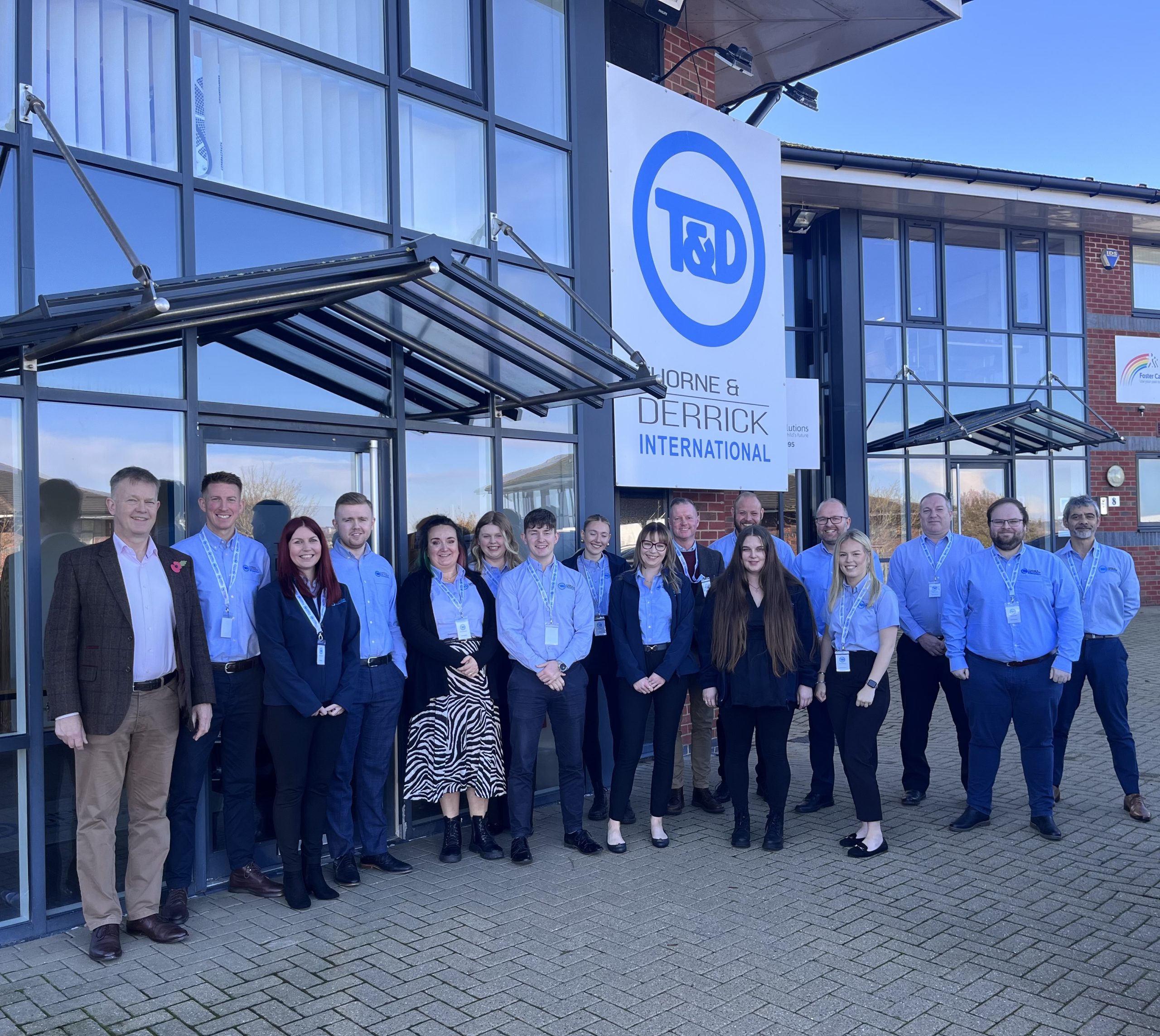
Thorne & Derrick Celebrates Local to Global over 40 Years
Thorne & Derrick International, a leading distributor of power systems, hazardous area equipment, and process heating solutions, is proud to celebrate its 40th anniversary this year.
Established in 1985 by Victor Thorne and Brian Derrick, the business started trading as Thorne & Derrick from premises in Brislington, Bristol. From the outset, the Company built a strong reputation, representing world-renowned manufacturers such as 3M Electrical, Band-It, and Cembre, supplying their market leading products to critical infrastructure projects and industries.
In 1988 expansion came with the acquisition of Reid Brothers (Glasgow), strengthening the Company’s presence in the strapping and load securing market.
A major milestone came in 1992, when Richard Derrick began operating in the Northeast of England working from a home office in Fenham, Newcastle. Initially Richard focused on selling Electrical Trace Heating solutions from Raychem, but after a move to Gear House in Gateshead, the Northern business expanded into the LV and HV power market. After 23 years, the office relocated to the current Northern headquarters at Lumley Court, Chester-le-Street which is the engine room of the company’s sales and marketing activity today.
In 2015, Reid Brothers was purchased from Thorne & Derrick International, in a management team buyout and is still thriving today.
Meanwhile, after 31 years in Brislington, Bristol, significant business growth forced a relocation in 2016 to Whitchurch, Bristol, where it continues to operate as the Company’s central warehouse and administration centre, coupled with a very strong Export and UK sales department.
Over four decades, Thorne & Derrick International has grown from its initial team of 6 to over 30 staff and from a first order of just £500 in August 1985, the Company is now on track to deliver over £20 million turnover in the very near future.
From the 1980s onwards, the Company has played an important role in serving the Oil & Gas, Process and Petrochemical sectors, and that has been central to its growth. As these markets continues to change, the business has expanded its product range in support, ensuring continued relevance and service excellence.
“As Managing Director, I’m incredibly proud of the team we’ve built over the years. Our strong focus on investing in young talent through apprenticeships has not only helped shape skilled professionals, but has also fostered a culture of loyalty and dedication,” said Richard Derrick. “It’s rewarding to see so many of our people grow with the Company. Their expertise and commitment are at the heart of our continued success.”
The team of technical sales engineers, sourcing specialists and customer service advisors, deliver a single-source logistics solutions across the UK and internationally, supporting projects in more than 120 countries across five continents, offering rapid delivery and tailored supply strategies.
With global electricity demand predicted to more than double by 2050, Thorne and Derrick International are strengthening and extending their world class supply chain to support grid-scale projects to drive our sustainable energy future towards net zero through renewable energy, digitalisation and decarbonisation of industry.
Thorne & Derrick International are the UK’s leading distributors of High Voltage Power Cable Accessories and Hazardous Area Electrical supporting critical infrastructure across power, utilities, rail, construction, oil & gas, petrochemical and process sectors. With over 40 years of industry expertise, Thorne & Derrick International delivers trusted products, technical support, and tailored solutions to meet the evolving needs of the energy and industrial markets.
About Thorne and Derrick International
Thorne & Derrick International are UK based and are the leading specialist distributors of LV, MV and HV cable accessories and tooling from 600V to 132kV complemented by an extensive range of hazardous area certified electrical equipment (ATEX and IECEx) to provide compliant, safe and optimised power, heating and lighting. Thorne and Derrick International supports critical infrastructure projects across power, utilities, rail, construction, oil & gas, marine, and process industries. With over 40 years of industry expertise, Thorne & Derrick International delivers trusted products, technical support, and tailored solutions to meet the evolving needs of the energy and industrial process markets.
How to Install SPS 180 & SPS 193 Cold Shrink Cable Glands
To suit 3 Core SWA Armoured XLPE Cables, 3.6kV (3.3kV) to 36kV (33kV)
Reference Numbers: SPS 180(CS) and SPS 193(CS)
In this Post, we present a step-by-step installation guide for the SPS 180(CS) and SPS 193(CS) Cold Shrink ‘Bolt-On’ Type Cable Glands. These “top-hat” glands are designed to connect and gland 3-core armoured XLPE cables from 3.6kV to 36kV, providing a reliable and easy-to-install solution for Cold Shrink termination and are distributed by Thorne & Derrick.
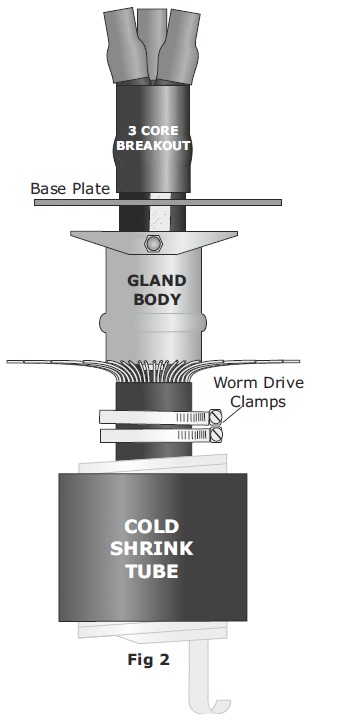
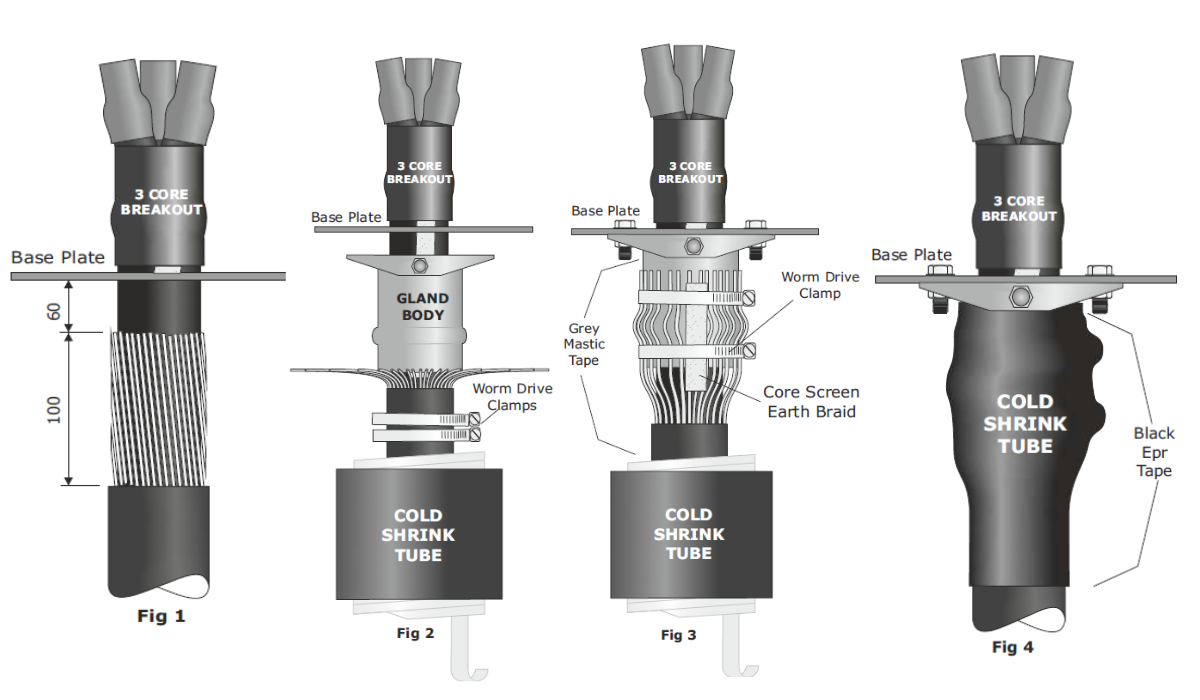
Note:- Fig 1 shows one possible cable gland configuration, in some situations it may be necessary to position the 3 leg heat shrink boot body below the gland plate to gain space within the cable box. If cable is non armoured, additional strain may be put on the heat shrink tube to ensure cable is supported by cable cleats to provide additional strain relief.
Step-by-Step Installation Guide
1. Cable Preparation
2. Armour Wires
3. Cable Gland Body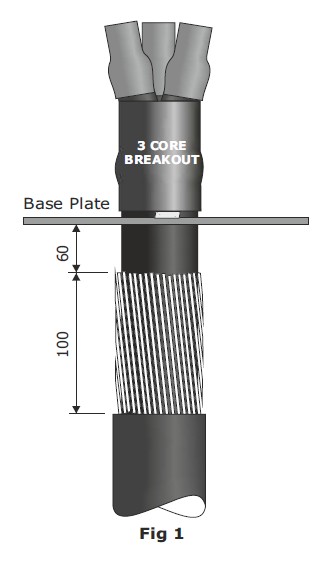
-
Slide the metal cable gland body over the cable.
Note: The cable gland body itself can, in most cases, be positioned after completing the cable termination.
For Steel Tape Armoured Cable:
Prepare to the same dimensions shown in Fig 1 and follow section 7 (see below).
Configuration Tip:
Fig 1 shows one possible configuration. In some cases, you may need to position the 3-leg boot body below the gland plate to gain space within the cable box.
Non-Armoured Cable Warning:
Additional strain may be placed on the shrink tube. Ensure the cable is supported by cable cleats to provide strain relief.
4. Final Connections
5. Bend Armour Back
6. Clamping
7. Cover Edges
-
Cover any sharp edges and the clamp buckles with PVC tape.
If Steel Tape Armoured:
Unwind the electrical tape below the bottom of the cable gland, re-wrap around the cable gland body, and secure with worm drive clamps.
8. Moisture Seal
This ensures that the cold shrink tube will recover properly onto the tape.
9. Apply Cold Shrink
10. Secure Ends
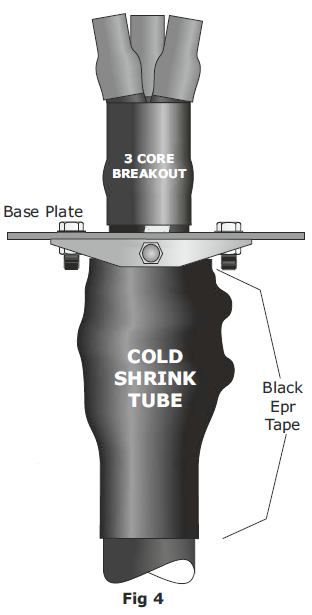
Figures for Reference
-
Fig 1: Base plate and initial configuration
-
Fig 2: Wire armour open-up
-
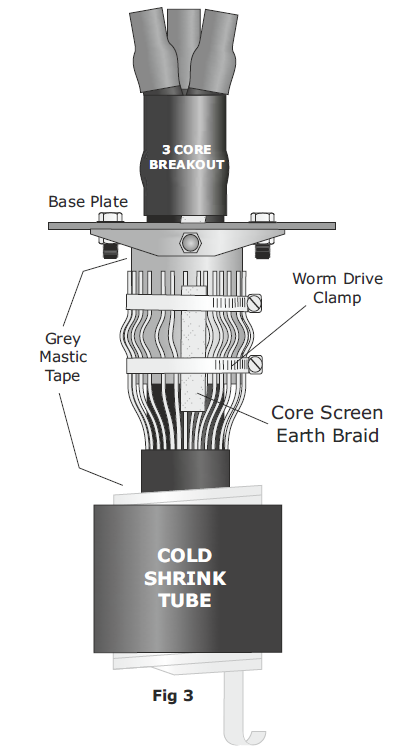
Fig 3: Clamp setup with screen earth braid
-
Fig 4: Final assembly with cold shrink and sealing tapes
Cable Glands Distributed from Stock by Thorne & Derrick | the 501/453 range of Universal Cable Glands manufactured by Hawke are suitable for the mechanical retention, glanding and termination of LV MV HV Power Cables with steel wire armour, steel wire braid or steel tape armour.


Shrink Polymer Systems heatshrink cable joints and terminations suit all types of MV-HV electrical cables (single or multi-core) with or without armour or lead sheaths – zero halogen and fire resistant cable joints are also available.
How Do I Select a Duct Sealing Solution?
 At Thorne & Derrick, we pride ourselves on working with industry leaders to deliver innovative, reliable, and compliant solutions to our customers. In this edition of Ask the Experts, Ian Joynson, Technical Specialist at Filoform, talks all things duct sealing — from common challenges in the field to the importance of long-term protection.
Filoform’s Ian Joynson shares expert guidance on what to consider when selecting the right duct sealing solution:
“Selection should start by understanding the specific application and what the seal needs to achieve. Consider:
➖ Are there cables present, and how many?
➖ Is water ingress an issue? If so, how much?
➖ Is fire protection required?
➖ Does the duct enter a building?
➖ Are gases or chemicals a concern?
The right solution should be chosen during the design phase, where sealing requirements can be aligned with the overall project scope.
Most specifications will demand resistance to water, gas, and sometimes fire or chemicals. Expected seal life is also critical — and any reputable manufacturer should be able to validate this.
Avoid over-engineering the seal design. Ultimately, a duct sealing solution that meets the specific needs of the application is the right solution.”
Thorne & Derrick is trusted distributor of Filoform duct sealing systems, supplying reliable and high-performance solutions to contractors, engineers, and project teams across the UK and internationally. Whether you’re sealing cable ducts in substations, renewable energy sites, or industrial facilities, we provide expert support and fast delivery to help you get the job done right.

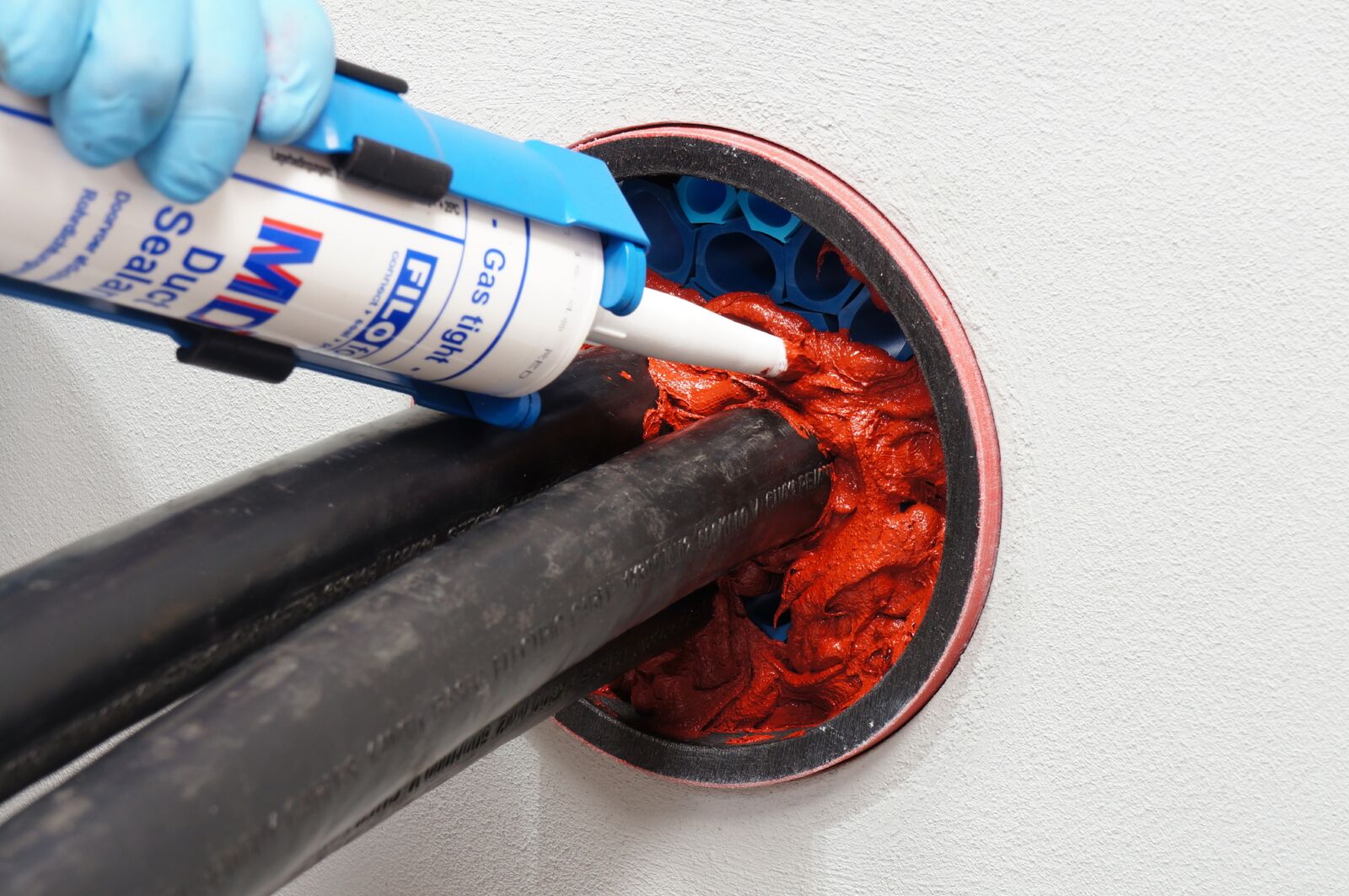
Duct sealing and sealing products manufactured by Filoform, including the Filoseal range, are installed to provide gas tight and watertight sealing for cable duct entries – protecting underground cables and substation ducting infrastructure against flood and migration of flammable and toxic gas hazards. Fire resistant version also available – suitable for sealing LV-HV power, telecoms and fibre optic cables.
Filoform manufacture and supply quality products and solutions to connect, seal and protect low, medium and high voltage underground cable networks.

Thorne & Derrick provide competitive prices and fast delivery from stock for the complete range of Filoform duct seals and cable joints.
View the complete range of Filoform products.

FiloSeal+HD Duct Sealing System
- Special thanks to Matt Page EV Business Development Manager at Lucy Zodion for the kind permission to republish.
BEYOND SPEED: FUTURE PROOFING EV INFRASTRUCTURE
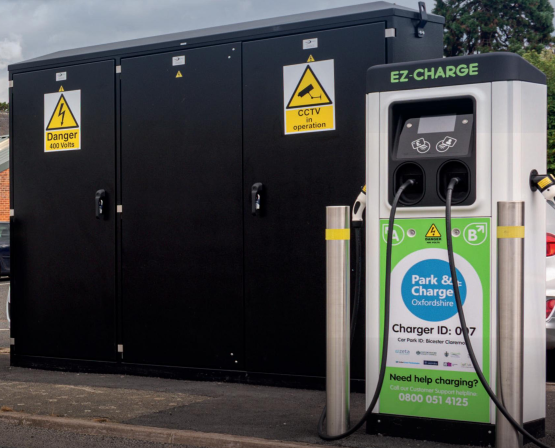
As a trusted distributor of Lucy Zodion EV Feeder Pillars, Thorne & Derrick are proud to support the delivery of safe, robust, and future-ready power distribution solutions for electric vehicle charging networks.
In the article below featured in EV & Renewables Supplement, Matt Page, EV expert at Lucy Zodion, explores the critical factors beyond deployment speed that define a successful EV infrastructure rollout.
Lucy Zodion manufacture a wide range of products suitable to provide Low Voltage Electrical Power Distribution for EV charge points – from distribution network operator (DNO) accredited cut-outs and isolators for on-street chargers, to feeder pillars for electrical vehicle charging.
Lucy Zodion’s EVIS (Electric Vehicle Infrastructure Solutions) range delivers pre-wired EV feeder pillars from 100A to 630A reducing time on site and streamlining installation.
Beyond Speed: How to Future-Proof Your Infrastructure
Discover how strategic planning, scalability, and long-term resilience are key to building a charging network that’s ready for tomorrow.
Conversations around EV infrastructure often focus on speed – how quickly can a charging station be deployed, and how fast it can charge a vehicle. While speed is important, it’s not the only factor that determines success. True future-proofing means designing charging infrastructure that is resilient, scalable and adaptable to changing demands and evolving technology.
Building for growth, not just now
Many charging hubs installed today will need to evolve as EV adoption increases. The latest figures from Zapmap show there are now over 75,000 public charge points in the UK our demand is expected to grow significantly and infrastructure that isn’t designed with scalability in mind will quickly become obsolete.
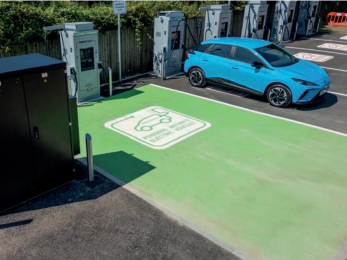
For example, at InstaVolt’s Camphill Village Trust charging site, the approach to power distribution was designed with long-term scalability in mind. The specialised our Main Supply Pillars powering the site’s 160kW chargers were built to support future expansion while maintaining a minimal footprint. Taking this kind of forward-looking approach can prevent costly redesign later on
Similarly, the Isle of Man’s phased EV rollout demonstrates how strategic planning can ensure charging infrastructure is deployed with future expansion in mind. A well-planned approach to power distribution means sites can scale up as EV adoption increases without requiring extensive retrofits.
Resilience is key
Reliability is just as critical as speed. A charging hub that experiences frequent outages due to inadequate electrical protection or environmental wear will create frustration for drivers and site owners alike. Key resilience-focused features to consider include:
- Earth leakage protection and residual current protection to ensure long-term electrical safety
- Surge protection to guard against power fluctuations
- Anti-condensation heaters and service lighting to protect internal components and improve maintenance access.
Integrating these features from the outset can help prevent operational disruptions, enhancing user confidence and reducing long-term costs.
The M7 Real Estate project delivered by Source EV – a joint venture between SSE Energy Solutions and Total Energy – highlights the benefits of durable, weather-resistant power distribution. In high-usage environments, ensuring electrical protection and ease or maintenance is crucial for long-term success.
Collaboration matters
Future-proofing isn’t just about the technology – it’s about the process. The most effective EV infrastructure projects take a holistic, end-to-end approach, Considering electrical distribution, space constraints and future adaptability from the start.
A strong example of this is the InstaVolt project, where power distribution was designed to allow flexibility for future transformer manufacturers equipment. Taking a collaborative approach with stakeholders ensures infrastructure remains adaptable to evolving industry requirements.
The road ahead
The shift to electric mobility is accelerating and infrastructure needs to keep up – not just with speed, but with smart, future-proofed design. Viewing EV infrastructure as an evolving system rather than a one-off installation can help ensure today’s investments continue to deliver value well into the future.
Incorporating scalable electrical systems, built-in resilience and cross-industry collaboration from the outset can help create charging networks that remain effective as demand and technology evolve. By planning with the long term in mind, we can ensure EV charging infrastructure stays ahead of demand, rather than struggling to catch up.
Compliance and standards
When specifying an EV feeder pillar, you need to make sure it is tested to the following standards:
- BS7671- IET Wiring Regulations – Covers the electrical installation of buildings, including the use of surge protection
- BS7671- IET Code of Practice for Electric Charging
- BS EN 61439 – Low Voltage Switchgear and Control Gear Assembly
Considering these key points will ensure that your EV feeder pillar is designed to deliver efficient and reliable power distribution for electric vehicle charging, contributing to a sustainable and greener future.