Arc Flash Protection
Thorne & Derrick Appointed Official Distribution Partner for UK Leading Arc Flash Clothing Manufacturer
July 29th, 2021
uploaded by Chris Dodds | Sales & Marketing Manager at Thorne & Derrick
Press Release | 1st August 2021
Thorne & Derrick International, based in the UK, are delighted to announce they have entered into an Official Distribution Agreement with ProGARM, the market-leading arc flash clothing manufacturer.
We have partnered with ProGARM to service and protect renewable, rail, oil/gas, data centre, battery storage, street lighting, smart-metering and utility workers.
“Together, we are leading an electrical safety awareness campaign to reduce preventable life-changing, life-threatening injuries by educating about risk – we will support clients to protect their workers through the everyday wearing of comfortable and practical arc flash workwear as a last line of defence against arc-related incidents. We can provide wearer-trial garments for you to field-test and experience the exceptional physical performance and market-leading protection that ProGARM clothing can provide to your workers,” says Chris Dodds (Sales & Marketing Manager with Thorne & Derrick).
“Everyday our customers face safety hazards, but arc flash is the most devastating and deadly electrical danger present in today’s workplaces – the explosive deafening and blinding fireball effects of an arc-flash blast can unleash metal-vaporizing temperatures.”
“Low voltage does not mean low-risk; a LV CNE 3 phase low voltage cable can pose greater risk than 33kV switchgear. We look forward to working closely with ProGARM to introduce their garments to our clients and launching our collaborative #protectinglives awareness campaign,” adds Chris.
➡ Contact us to arrange a personal visit, an online presentation or for a general conversation on how we can help with your electrical safety priorities. Arc-rated clothing. Wear it, it saves lives.


ProGARM Protective Clothing & Workwear With Next Day Delivery. High Quality, UK Manufactured Safety Wear & Arc Flash Protection Supplied by Thorne & Derrick

Pictured: Paul Hertherington (National Key Account Manager | ProGARM) during recent Technical Training & Product Training Day at Thorne & Derrick with Dave Tinning, Carl Cox, Chris Dodds & Jonny Hewitt.
PPE The Material Difference | Inherent v Treated Fabrics for Arc Flash Clothing & Protection
July 26th, 2021
Choosing the Right PPE for You
Arc Flash Clothing, PPE & Flash Protection Kits
In a world awash with baffling technical speak, we cut through the jargon to explain the difference between treated and inherent flame resistance and the considerations when weighing up which to buy when evaluating competing garments to protect against arc flash dangers.
The Big PPE Fabric Debate
If you’ve been browsing PPE catalogues searching for arc flash and flame-resistant (FR) workwear, you have probably noticed there are many ways to describe the nature of the fabrics the garments are made from.
The two main phrases used in descriptions of arc flash clothing are inherent fabrics and treated fabrics. So, what’s the difference? And why does it matter?
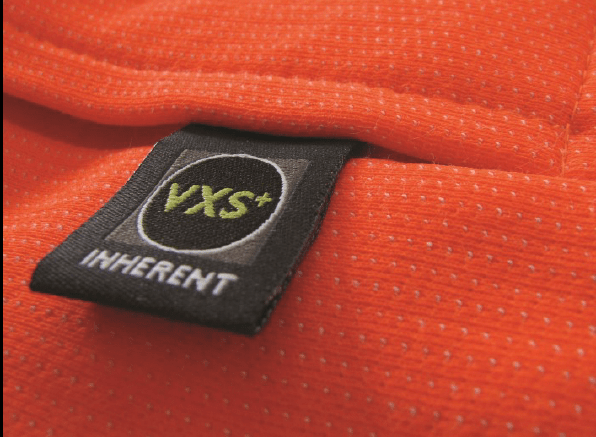
VXS Inherent Fabric | Arc Flash Clothing Fabric
PPE | Treated Flame-Resistant Fabrics
A fabric described as treated will be made from fibres which aren’t flame retardant by their nature, but have either had a chemical applied, or have been through a chemical process, to make them fire resistant by creating a chemical reaction when set alight which then extinguishes the flame.
PPE | Inherent Flame-Resistant Fabrics
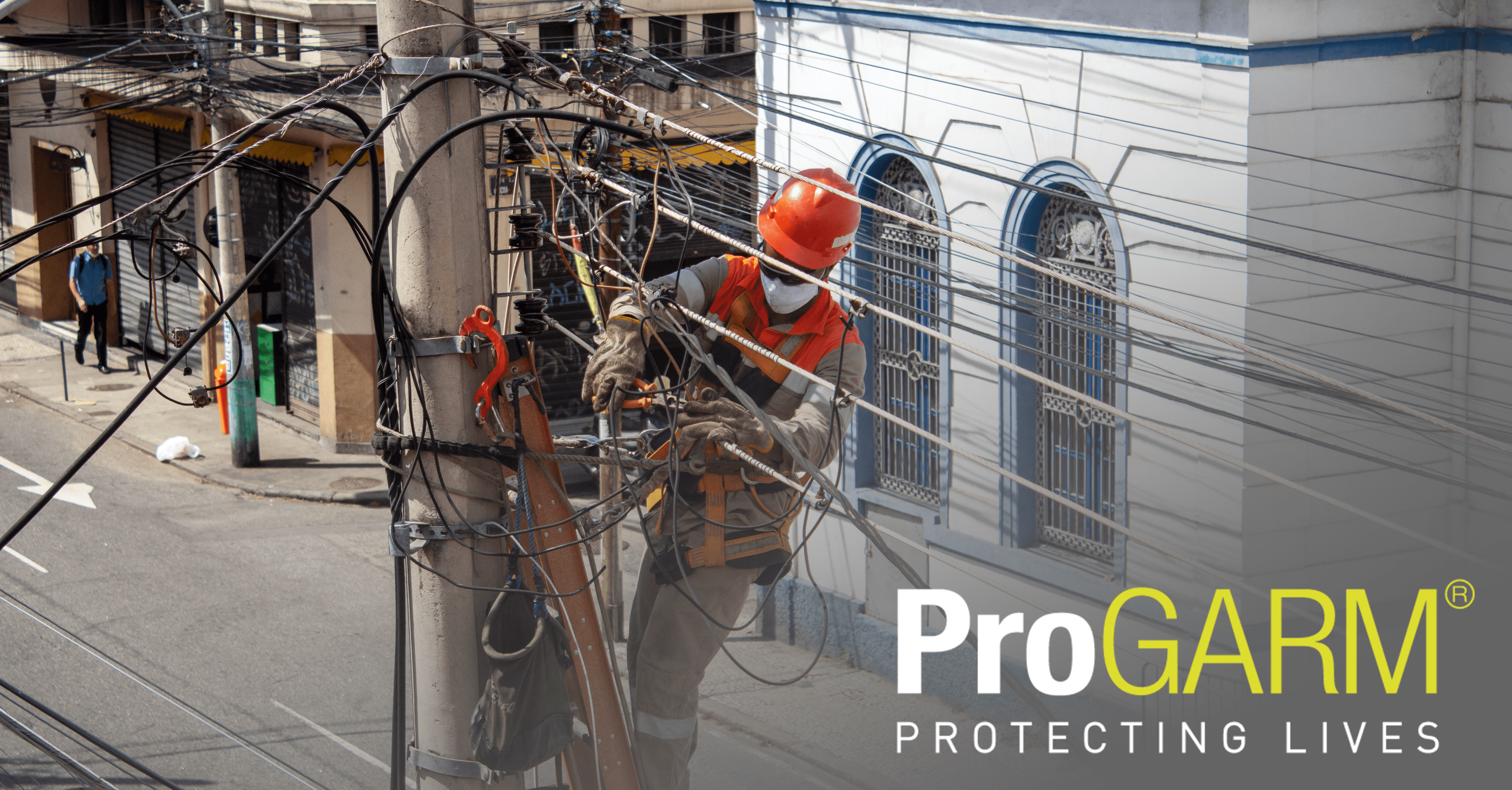
Protecting Utility Workers Carrying Out Maintenance, Repair & Operations on Overhead Lines & Underground Cables
If a fabric is inherently flame-resistant (also known as inherently fire-retardant), its ability to protect you from heat and flames comes from the polymer fibres of the fabric which, at normal oxygen levels, don’t ignite.
Pros & Cons of Inherent & Flame-Resistant Fabrics
Most of our ProGARM range of PPE is made using inherent fabrics because this makes it impossible for the flame resistance to degrade over time or be washed out altogether. These garments also don’t shrink when exposed to heat, helping to maintain critical air layers between the fabrics.
The advantage of treated fabrics is that they’re cheaper. However, this passes considerable responsibility to the employer to devise a system for wearers to monitor their garment’s wear and record its laundry cycles so the company knows when to replace the item due to degradation of the protective treatment.
VXS+ 100% INHERENT
ARC FLASH PROTECTION FABRICS
By manufacturing all ProGARM garments with our unique VXS+ inherent fabrics, we ensure they deliver durability, consistent protection and outstanding comfort.
In the past, many Flame Resistant Garments have suffered from reduced protection over time. Through normal washing, treated fibres gradually lose their Flame Resistant properties. With that decreasing level of protection your team members will be at greater risk of injury.
Treating fabrics can also leave them stiff and uncomfortable. Worryingly we hear of operatives deciding to wash treated garments multiple times to make them more comfortable before wearing them. Alternatively, they choose to keep wearing their older garments which have become more comfortable over time. Both of these practices leave your team exposed to a greater risk of injury.
Arc Flash PROTECTION. DURABILITY. COMFORT.
Electrical Safety & Arc Flash PPE
ProGARM ensures this isn’t the case with our unique 100% inherent VXS+ fabrics that offer superb protection for your team, as well as being durable and comfortable to wear.

VXS+ fabrics are manufactured with a combination of yarns which makes the garment inherently Flame Resistant. Compare VXS+ Fabrics with alternative fabrics and the differences are clear. As well as being 100% inherent, VXS+ fabrics make some of the most comfortable Arc Flash protective garments on the market. Through combining yarns in the manufacturing process, we can deliver fabrics that are flexible and comfortable, and from that create garments that are “as comfortable as pyjamas”.
As well as the ultimate protection, you also need garments that are durable. ProGARM garments are have been shown to last up to 70% longer than comparable garments used by our customers. Some non-ProGARM garments can also suffer from shrinkage and their colour fastness isn’t as resilient as it should be, resulting in faded high visibility workwear. VXS+ fabrics have been tested through more than 50 industrial washes to ensure the longevity of the garments. (The European standard only requires demonstrating colour fastness through 5 wash cycles.)
When you equip your team with ProGARM Arc Flash and Flame Resistant garments made from VXS+ Fabrics, you can be assured of durable protection and comfort that delivers protection throughout the life of the garment. That’s why every ProGARM garment is manufactured using VXS+ 100% inherent fabrics to offer the ultimate protection.
ProGARM is Pro-Choice
In developing our products, we’ve researched what’s important to our customers and fully appreciate that the decision between buying inherent or treated arc flash PPE isn’t an easy one when working with budget constraints and trying to keep their workforce safe.
That’s why we’ve been researching and developing treated garments. This gives you a choice without quite such a dilemma about the degree of safety compromise when making price-based decisions.
Our new coverall (available in four colour options) has been designed in a way that offers the cost saving advantages of being made from treated fabric, while also being robust enough to withstand up to 100 washes – lasting much longer than many competitor products, which are only tested up to 50 washes.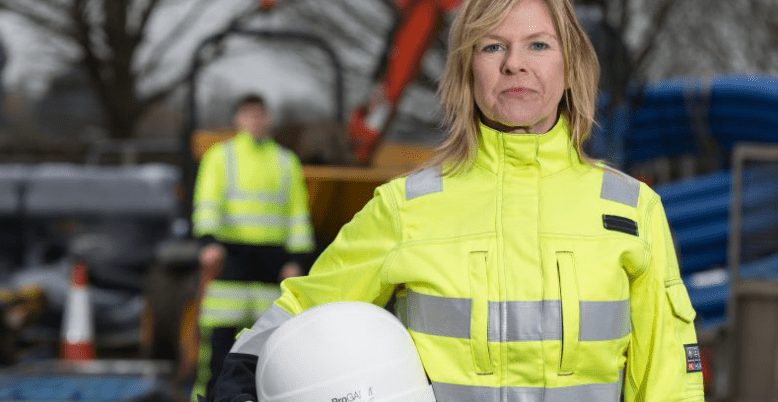
Electrical Safety STANDARDS
When it comes down to it, it doesn’t matter whether the fire protection in the fabric is inherent or added afterwards with chemicals. What you should make your decision based on is proof of standards.
We’re proud that all of our PPE clothing (not just our fabrics) meet EU Conformité Européenne (CE) standards and the new United Kingdom Conformity Assessed (UKCA) mark.
Our arc flash garments also hold EN certifications relevant to their intended purpose and/or industry. For example, all our garments conform to a minimum EN ISO 6330: 2012 DOMESTIC for washing, and some go further to meet the industrial washing standard (EN ISO15797: 2004 Industrial).
We go a step further too. Having achieved ISO9001 (Quality Management) and added Article 11B[KC3], all our supply chain partners meet the same standards. For us, there are no compromises on quality.
As well as electrical safety considerations, when developing our garments and fabrics, we always research what’s important to our customers. This helps us maintain our reputation for the best safety, quality and comfort standards.
Our independent testing looks at fading and shrinkage, as well as comfort of electrical PPE. And all our buttons, zips and press studs are made from the same military-grade plastics as NASA uses, so that they won’t melt and will still work if exposed to heat, flames or a high-voltage electric charge.
These decisions result in pioneering safety standards and mean that, when a casualty needs urgent medical attention following an incident, you will be able to unfasten and remove the clothing far more easily.
You’ll find a label on each of our electrical safety workwear products, outlining which European and UKCA certifications it meets[KC5] [LT6], along with garment care guidelines.
If you would like a chat with one of our arc flash experts to discuss your PPE requirements, give us a call on +44 (0)191 410 4292.
Further Reading
- Arc Flash | Don’t Let the Summer Sun Compromise Your Electrical PPE
- Arc Flash Risks In The Rail Industry
- Arc Flash Survivor Story – Jason Brozen
Arc Flash Learning & Resources

Thorne and Derrick are proud to be distributors of ProGARM arc flash coveralls and protection.
We can help – should you require arc flash calculators or advice on the type of clothing and protection available please do not hesitate to contact us.

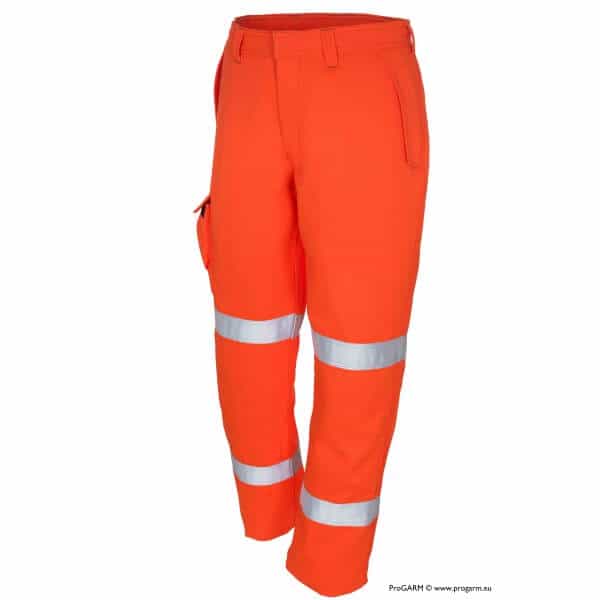
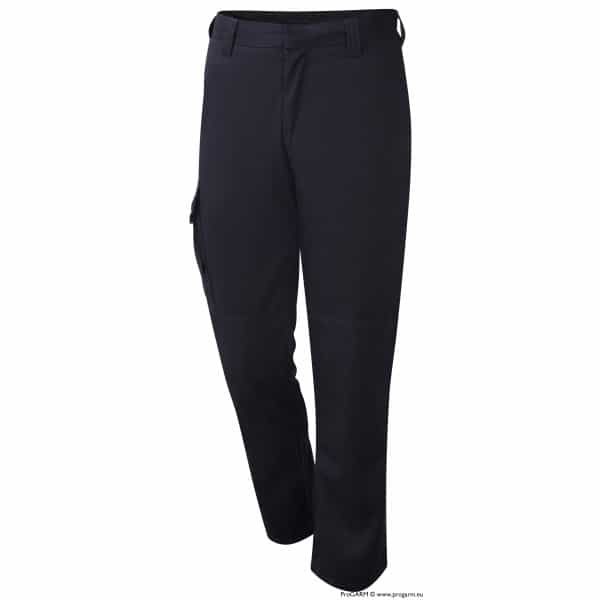



HSG47 | Avoiding Danger From Underground Services | An HSE Document
July 26th, 2021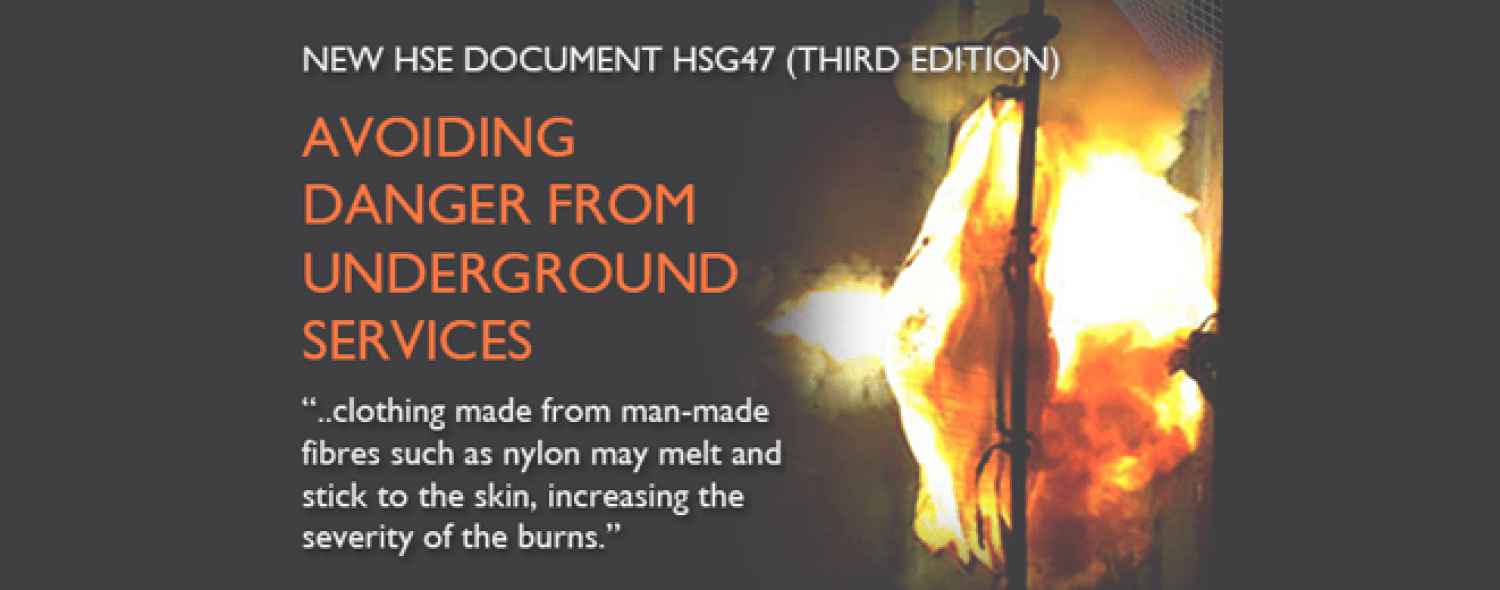 HSG47 | Avoiding Danger From Underground Services
A Document from Health & Safety Executive
HSE Health & Safety Executive issued the 3rd edition of their guidelines ‘HSG47 Avoiding Danger from Underground Services’ in 2014. Whilst the basic requirements are still the same, this third edition published in February 2014 brings the guidance up to date from the previously published version 14 years previously in 2000.
The document is freely available from the internet by searching on HSG47 2014. Recommendations regarding Protective Clothing against the hazards of Arc Flash Incidents can be found on Page 26 and two extracts are as follows:
“..clothing made from man-made fibres such as nylon may melt and stick to the skin, increasing the severity of the burns.”
“Advice on the suitability and performance of protective clothing should be available from reputable companies specialising in its supply.”
HSG47 (Third Edition) Summary Extract
This guidance is aimed at all those involved in commissioning, planning, managing and carrying out work on or near underground services. It will also be of use to the owners and operators of such services.
It outlines the potential dangers of working near underground services and gives advice on how to reduce any direct risks to people’s health and safety, as well as the indirect risks arising through damage to services.
It explains the three basic elements of a safe system of work during excavation:
- Planning the work
- Locating and identifying buried services
- Safe excavation
This third edition of HSG47 brings the guidance up to date, but the basic requirements remain the same.
(N.B. Extract taken from Page 1 of the document)
Why ProGARM?
Many garments within the ProGARM product range are now certificated to IEC61482 the European Standard for Arc Flash protective clothing and can offer the protection required for your workforce. Garments are tested to either the European Box test method or the US ATPV test method with some garments, including coveralls, offering certification to both test methods.
➡ See also the range of Electrical Safety Equipment
Awareness of Safety Guidance Ahead of Groundworks (HSG47)
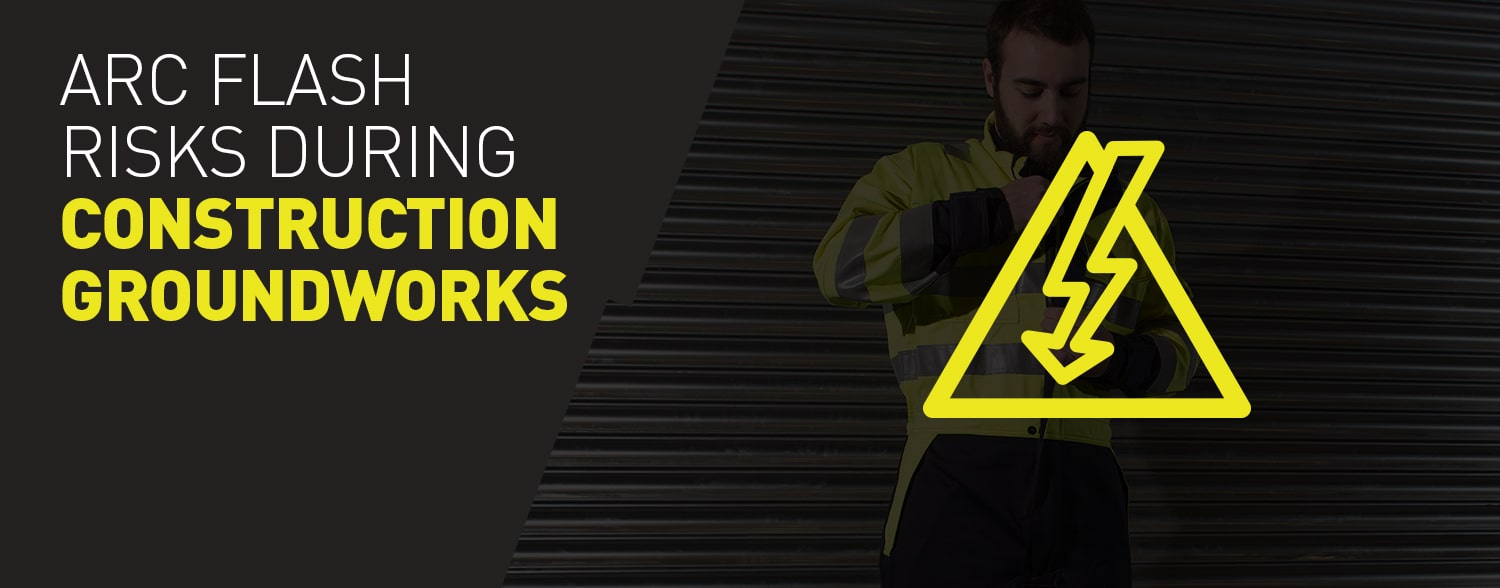
Arc Flash Risks During Construction Groundworks
HSG47 is the Health & Safety Executive’s issued guidance aimed at all those involved in commissioning, planning, managing and carrying out work on or near underground services.
It’s comprehensive in covering the three basic elements of safe systems of work through planning, locating & identifying buried services and safe excavation.

Coveralls | Switching Suits | Polo Shirts | Helmets | Gloves | Garments
The most recent third edition, released in 2014, brought guidance up to date, but still outlines the same potential dangers as those flagged in the first release in 1989.
ONLY 22% OF WORKERS AWARE OF HSG47 GUIDANCE
Yet ProGARM’s Arc Flash Survey in 2017 revealed a staggering 78% of respondents were still unaware of what the guidance included when it came to reducing the risks of Arc Flash incidents.
For three whole years of London’s Crossrail project, eight tunnelling machines were working to create the 42 km of new train tunnels.
We can only imagine the extensive degree of research and planning that must have gone into the location and re-siting of London’s complex array of underground services during this phase of the works to avoid such incidents.
But for every high-profile, major infrastructure project like this, with specialist civil engineers working to incredibly precise risk assessments and method statements, there will be hundreds more smaller scale projects taking place where work is not being carried out with the same levels of awareness, diligence or training.
At ProGARM, we may provide a last line of defence against an Arc Flash in the form of specialist PPE, but there’s no substitute for awareness and proactive steps to minimise the risks of them occurring in the first place.
➡ Thorne & Derrick | Specialist Distributors & Stockists of LV, MV & HV Cable Installation, Jointing, Substation & Electrical Equipment to the Rail industry.
Further Reading
- Arc Flash Risks In The Rail Industry
- Arc Flash Survivor Story – Jason Brozen
- The Arc Flash Risk in Electric Metering
Arc Flash Learning & Resources
Thorne and Derrick are proud to be distributors of ProGARM arc flash coveralls and protection.
We can help – should you require arc flash calculators or advice on the type of clothing and protection available please do not hesitate to contact us.
NEW PRODUCT LAUNCH | RIS-3279-TOM Tested Arc Flash Coveralls (Hi-Vis Orange) | ProGARM 4693
July 26th, 2021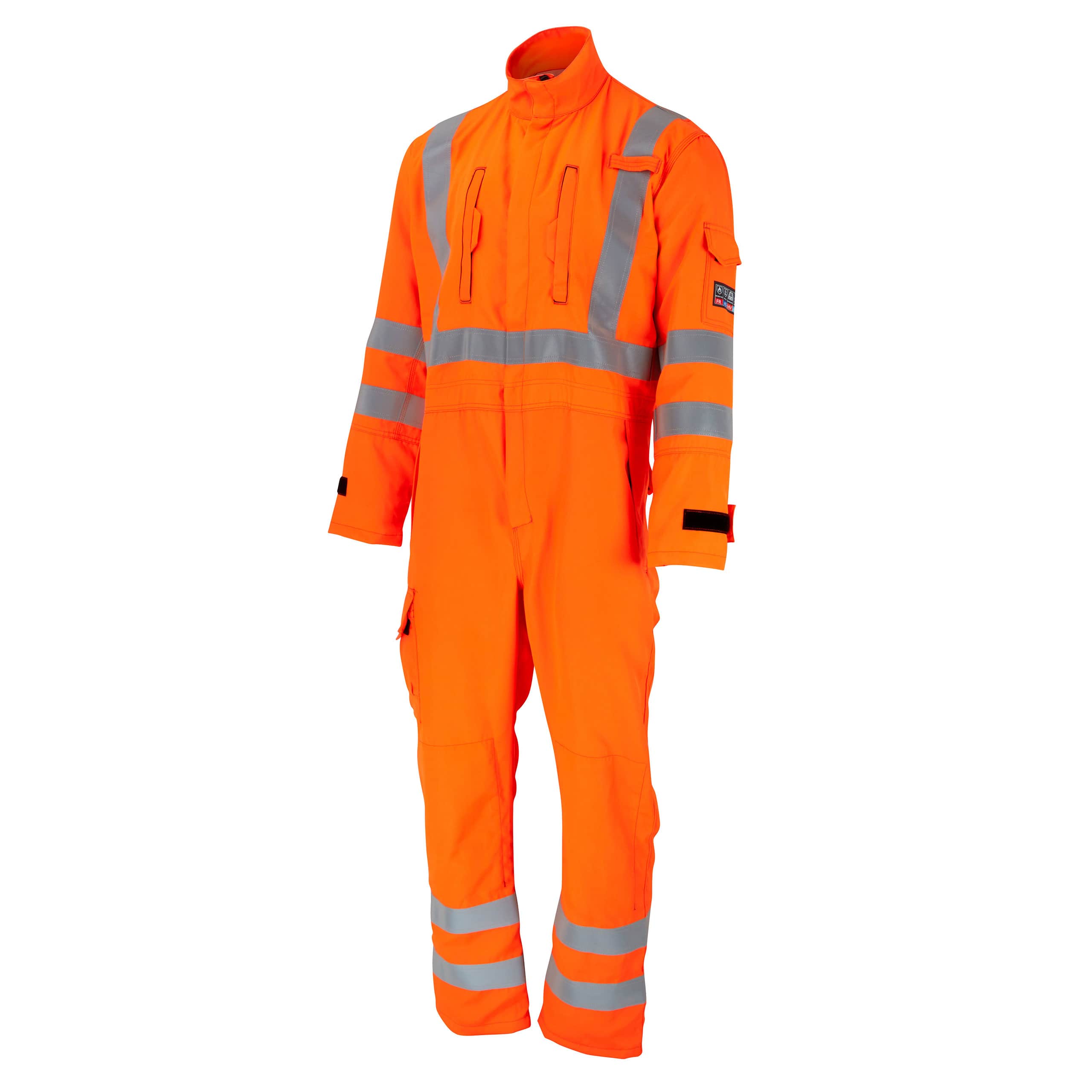
ProGARM 4693
RIS-3279-TOM Tested Arc Flash Coveralls
ProGARM’s Mission is to Lead with Innovation
Introducing the new addition to the ProGARM range of Arc Flash Clothing, lightweight and most comfortable high vis orange coveralls – standard style – ProGARM 4693, also available in ladies’ fit style – ProGARM 4694.
These arc flash coveralls feature the newest lightweight 240gms fabric, extremely breathable, designed with intention of achieving lightest and most breathable results.
Features & Benefits of Arc Flash Overalls
- Mandarin collar // Maximum neck protection
- Kneepad pockets // Wear with kneepads for extra comfort
- Chest pockets // Secure storage
- Gas monitor loop // Secure fixing point
- SafetyICON™ on arm // Visual EN Norm icon system
- 5cm FR AS reflective tape // Double stitched for longer life
- Phone Pocket on sleeve with flap // Safe and secure
- Cuff tabs with VELCRO® brand fasteners // Close fit around wrists
- Side access pockets with flaps // With entry inside coverall
- ThermSAFE™ plastic FR zippers // CE Certified
- Internal elastic 2 point adjustable waistband // Ensures close fit
- Double stitched side seams // Lifetime quality assurance
- Easy-Stretch™ side panels // Maximum wear comfort
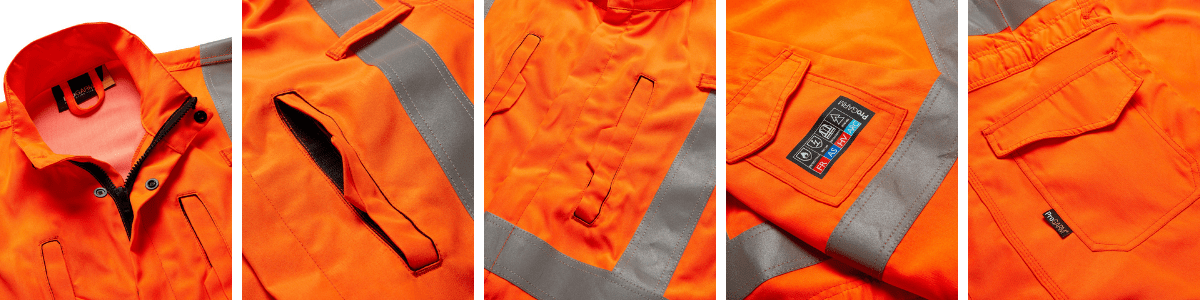
RIS-3279-TOM Tested Arc Flash Coveralls (Hi-Vis Orange) | ProGARM 4693
Arc Flash Coveralls
Specification
- Sizes: Small Regular leg, Medium Regular leg, Medium Tall leg, Large Regular leg, Large Tall leg, X Large Regular leg, X Large Tall leg, 2X Large Regular leg, 2X Large Tall leg, 3X Large Regular leg, 4X Large Regular leg
- Colour: Hi-Viz Orange
- Open ARC Test: ATPV=6.7 cal/cm², ELIM=6.2 cal/cm², ARC 2
- Box Test: 4KA, Class 1
- LOI: Not Applicable
- Protection Type: Antistatic, ARC Flash, Heat & Flame, Hi-Visibility, Railway
- Fabric: ProGARM VXS+ Inherent Woven Weave 240gsm
- Industry Sector: Industrial Electrical, Petrochemical, Rail, Utilities & Power Generation
- Type: Arc Flash Coveralls
- Collection: Hi-Visibility Orange Collection
ProGARM 4693 EN Standards
- EN 1149-5:2018: Pt. 5:2008 // Pt. 3:2004 // Charge Decay
- EN ISO 11611:2015: Class 1 // A1
- EN ISO 11612:2015: A1 // B1 // C1 // F1
- EN ISO 20471:2013: Class 3
- IEC 61482-2:2020: APC 1 // ELIM=6.2 cal/cm² // ATPV=6.7 cal/cm²
- RIS 3279: Issue 2
ProGARM for the Rail Industry | RIS-3279-TOM
What is RIS-3279-TOM?
RIS-3279-TOM (formerly known as GO-RT 3279) is a high visibility standard that only applies to the rail industry in the UK, as opposed to the EU-Wide nature of other EN standards. The aim is to ensure that rail workers on or near the trackside are sufficiently visible to trains approaching at speed or any other traffic.
High visibility clothing is the fundamental principle behind the UK Rail Industry Standard. This is based on the European Norm EN 20471:2013, and garments must comply to Class 2 High Visibility, the middle of a three class range. The standard states the following: ‘high visibility clothing worn by people on the lineside or on or near the line should conform to a single standard for the colour and luminance of background material and that this standard will accord with the detail contained within BS EN 20471:2013 high visibility clothing – Test methods and requirements (ISO 20471:2013).’
It is stated in the standard that: ‘the colour specific requirements within this standard conform to the range specified within BS EN 20471 clause 5.1.2.’ In order to confine this to a specific orange colour, and to prevent the selection of a colour at the red end of the spectrum, the precise chromaticity co-ordinates for the colour are specified as: Fluorescent orange, X:0.588, Y:0.371. with a luminance factor of at least 0.4. The accepted tolerance in colour is as laid out in EN 20471. However, there is no tolerance for the luminance factor.
Also stipulated in RIS-3279-TOM is the need of retro-reflective materials, with photometric and physical performance aligned with EN 20471.
Mentioned in RIS-3279-TOM is the accepted use of a mini vest where the nature of the work being carried out will not obscure the high visibility clothing, and thus reduce the surface area’ that is visible. The same applies to company logos; these are permitted where they do not compromise the surface area of background colour, and compensation may have to be made for this.
Arc Flash Coveralls
ProGARM 4693
Arc Flash Coveralls, from the ProGARM range of Arc Rated garments and clothing are used to protect against arc flash accidents as the last line of defence. Arc Flash PPE will not prevent incidents, and it is therefore vital that a comprehensive electrical safety plan for maintenance, repair and diagnostic procedures (involving energised LV, MV or HV electrical equipment) is also implemented.
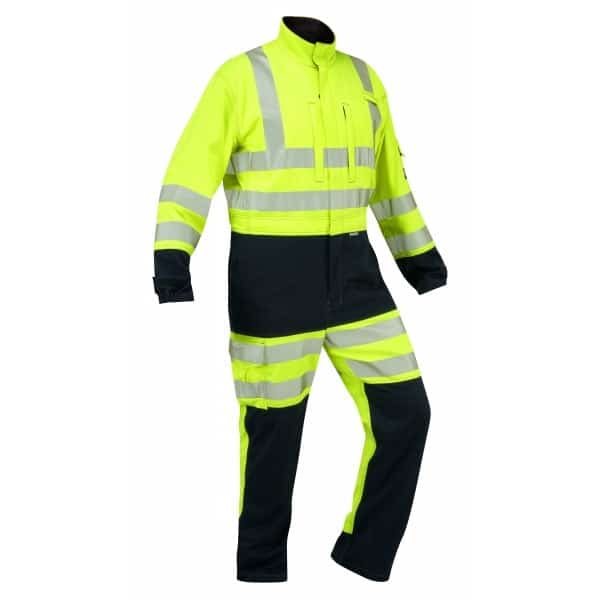
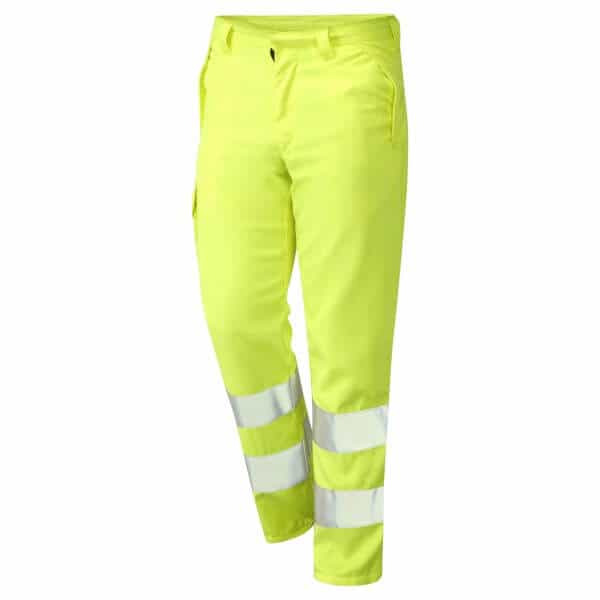
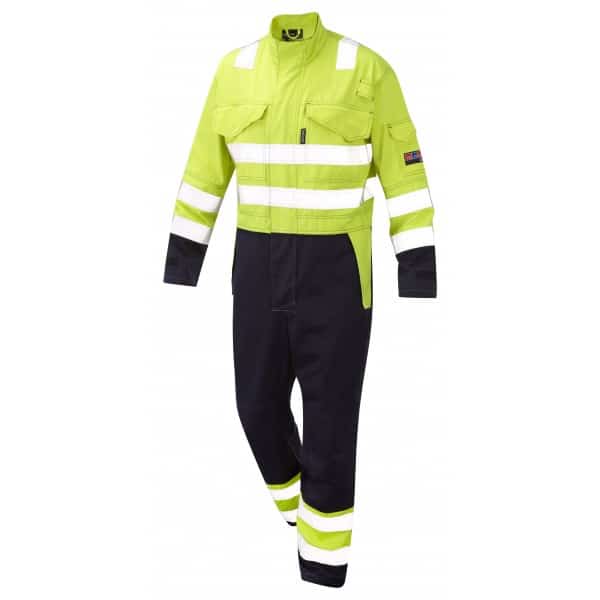
Thorne & Derrick distribute a range of arc flash coveralls to suit a range of requirements. Variations include ladies coveralls, designs for overhead linesmen, orange and yellow hi vis options and a wide range of sizes. Contact Thorne & Derrick with your specific PPE requirements and we will be happy to help.
The ProGARM range of Flame Resistant protective garments are designed for every-day wear and protection – the highly breathable clothing ranges are designed for comfort and safety without compromising the ability of the wearer to work productively, safely and unhampered by cumbersome garments prone to overheating.
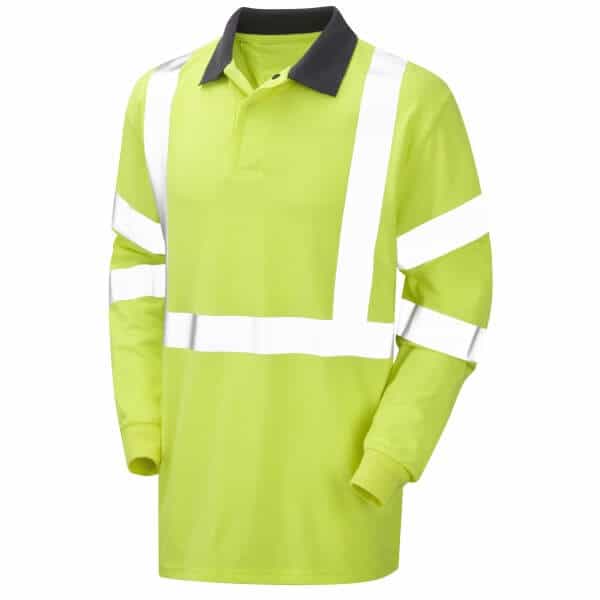
Other garments and protection products include Arc Flash Gloves, Arc Clothing, Arc Flash Suits and Arc Flash Helmets & Visors.
💡 Did you know? – While high voltage equipment does increase the likelihood and intensity of arc flash explosions, they can occur in any live electrical environment – even low voltage.
Further Reading
- Arc Flash | Don’t Let the Summer Sun Compromise Your Electrical PPE
- Arc Flash Risks In The Rail Industry
Arc Flash Learning & Resources
Thorne and Derrick are proud to be distributors of ProGARM arc flash coveralls and protection.
We can help – should you require arc flash calculators or advice on the type of clothing and protection available please do not hesitate to contact us.
Electrical Safety Products | PPE & Safety Workwear for Utility Workers
July 21st, 2021
Electrical Safety Products
Which personal protective equipment or electrical safety products are used for head protection? There are three different types of head protection that are commonly used:

- Industrial Safety Helmets (Hard Hats) – designed to provide protection against falling materials from a height or swinging objects.
- Industrial Scalp Protectors (Bump Caps) – designed to provide protection from hitting against static objects.
- Caps/Hair Nets – designed to protect against entanglement.
Tasks in which head protection might be needed include:
- Construction
- Building Repairs
- Working in Excavations or Tunnels
What are 3 types of personal protective equipment?
Personal protective equipment (PPE) is industrial safety products used by workers, contractors or visitors to protect their bodies from workplace hazards. PPE can be classified in the following categories, based on the type of protection offered by the equipment:
- Eye protection– for example, safety spectacles/goggles, eye shields, Face shields etc.
- Respiratory protection– for example, disposable, cartridge, half or full face masks.
- Working from heights– for example, harness and fall arrest systems.

Eye Protection
What are 5 types of PPE?
The 5 different types of PPE are:
- Face Shields
- Gloves
- Gowns
- Head Covers
- Masks
What are the safety equipments?
PPE is the safety equipment that provides protection to users against health or safety risks at work. This include industrial safety products such as safety helmets, gloves, eye protection, high-visibility clothing, safety footwear and safety harnesses.

Electrical Safety Footwear – Jointers & Linesmens Boots
➡ See also Electrical Safety Equipment and Arc Flash Clothing.
What are the types of safety?
OSHA listed five different types of hazards that affect most of the workplaces. These hazards can be found in every kind of industry and should be handled appropriately to keep workers from injury or health issues.
- Safety Hazards: Such hazards are dangerous conditions in a facility that can cause injuries, illness, or even fatality like spills, working from height, unguarded machinery, wiring issues, confined spaces, forklifts, and much more.
- Biological Hazards: These hazards are typical for those who work with animals, people, or infectious plant materials. People working in daycare centres, hospitals, and nursing homes can be exposed to blood-borne pathogens.
- Physical Hazards: Physical hazards include environmental factors that can cause harm to workers even without direct contact. Radiation, sunlight exposure, working in extreme temperatures, and noisy environment are few examples of physical hazards.
- Ergonomic Hazards: Such hazards can be the most difficult to identify, but can easily cause strain and injury to the body. Employees can face ergonomic hazards if their workstations or chairs are not adjusted properly, if they are making repetitive movements in awkward position and other situations where the body and muscles are overstressed.
- Chemical Hazards: Any chemicals in the workplace could put individuals at risk. Some chemicals are even more harmful than others, but even common chemicals can cause skin irritation, serious illness, or breathing problems.

Further Reading
Arc Flash Learning & Resources
Thorne and Derrick are proud to be distributors of ProGARM arc flash coveralls and protection.
We can help – should you require arc flash calculators or advice on the type of clothing and protection available please do not hesitate to contact us.