Blog
OSM27-SEF NOJA Power Reclosers Surrounded By Snow
March 11th, 2021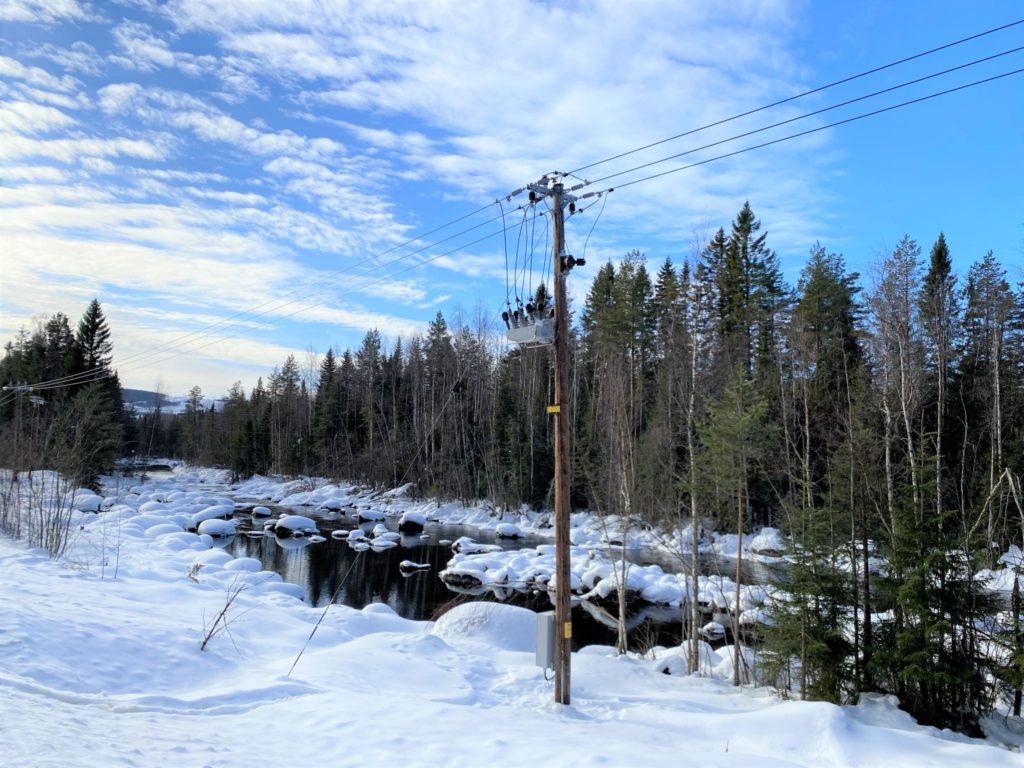
-
Special Thanks To Alex Veselov At Noja Power For The Above Image
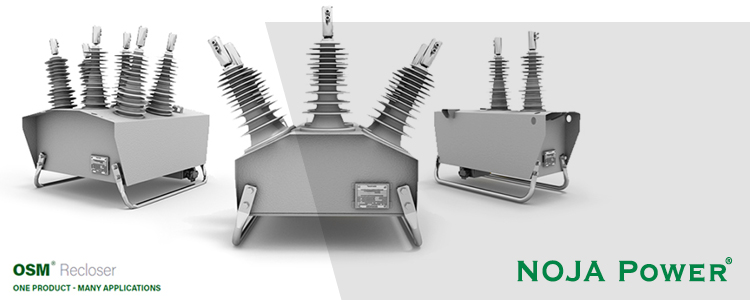
My partners in Sweden just shared some great pictures of OSM27-SEF NOJA Power Reclosers surrounded by nice winter nature. Swedish 20kV distribution network has isolated neutral and therefore very low earth fault currents. This is where a special SEF (Sensitive Earth Fault) version of OSM27 can help as it works from as little as 0.2 A fault currents. View the NOJA Power OSM Automatic Circuit Recloser 15kV 27kV 38kV download.
The OSM15, OSM27 and OSM38 automatic circuit reclosers incorporate vacuum interrupters inside solid dielectric insulated poles which are housed within the arc fault venting designed, stainless steel tank. This ensures maximum life and reliability with a fully insulated arrangement inside the long life housing.
NOJA Power

NOJA Power is a world leading manufacturer of Medium Voltage Electrical Equipment.
With more than 64,000 OSM units installed in over 92 countries, our SF6 Free equipment is essential to the future of electricity distribution.
We offer our customers integrated solutions using innovative products combined with unrivalled service and reliability world wide.
We specialise in Medium Voltage Outdoor Switchgear, covering applications such as overhead lines protection, substations, renewable, distributed generation connection & underground cable protection.

Thorne & Derrick
T&D are Specialist Distributors to UK Distribution Network Operators (DNO’s), NERS Registered Service Providers, ICP’s and HV Jointing Contractors of an extensive range of LV, MV & HV Jointing, Earthing, Substation & Electrical Eqpt – this includes 11kV/33kV/66kV cable joints, terminations and connectors for both DNO and private network applications.
Contact our UK Power Team for competitive quotations, fast delivery from stock and technical support or training on all LV-HV products.
All international sales enquiries can be serviced and supplied by our Export Power Team.
Key Product Categories: Duct Seals | Cable Cleats | Cable Glands | Electrical Safety | Arc Flash Protection | Cable Jointing Tools | Cable Pulling | Earthing | Feeder Pillars | Cable Joints LV | Joints & Terminations MV HV

High Voltage Enabling Works at Bryn Pica Eco Park Development
March 11th, 2021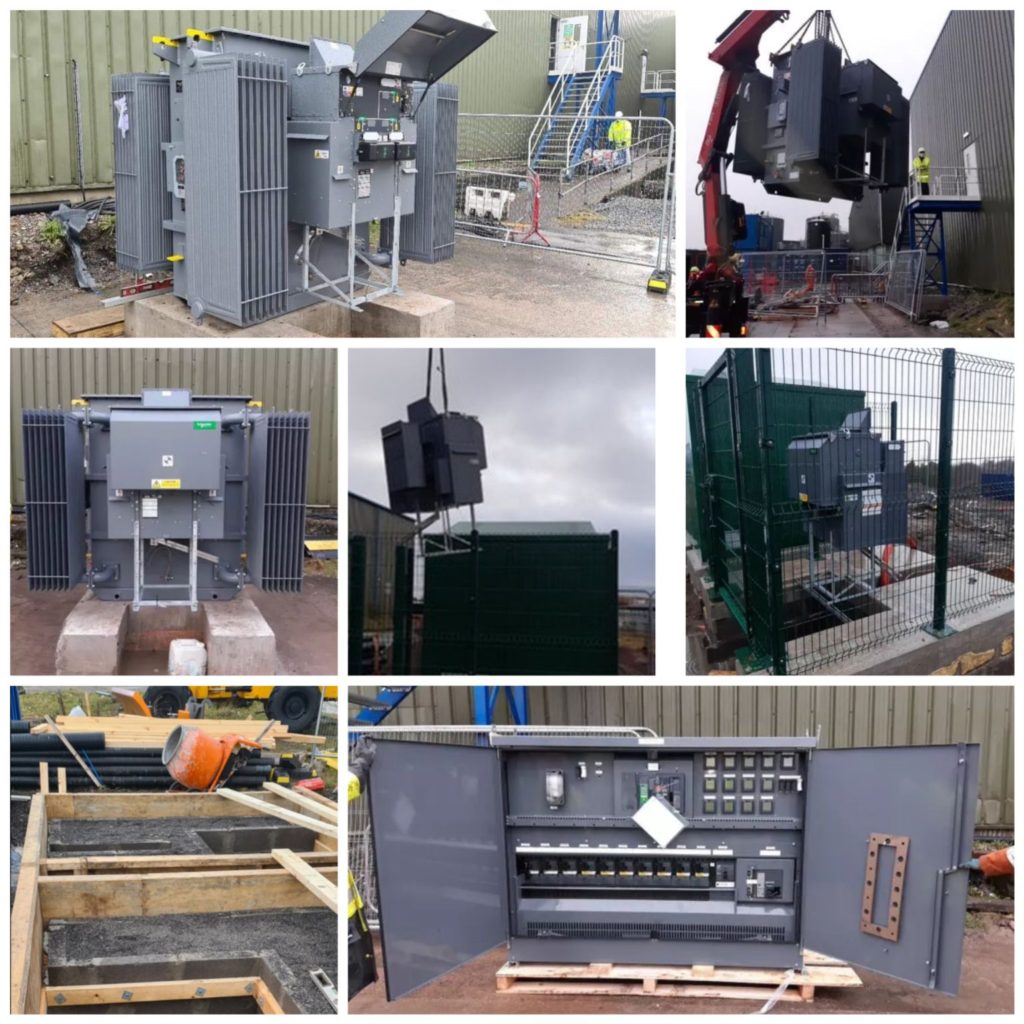
High Voltage Enabling Works at Bryn Pica Eco Park Development
High Voltage Enabling Works
-
Special Thanks To Tristian Jones For His Kind Permission To Republish
C&P’s high voltage company, C&P High Voltage Services have been busy this week completing the 1st phase of construction of a high voltage ring for the future development of a multi-million-pound Eco Park development for Rhondda Cynon Taf Council – the facility will be the first of its kind in the UK.
Once completed the electrical infrastructure will be extended into phase 2 to supply further factory buildings for future recycled materials production.
C&P High Voltage services division will provide enabling works which includes design, supply, install, test and commissioning for a 2MVA package substation, Ring Main Unit (RMU), HV cable system for a 2MVA package substation, Low Voltage (LV) cable system for Mattress recycling, visitor centre fence distribution board, feeder pillar to replace perimeter fence distribution board and Low Voltage (LV) cable transfers.
This week a smart feeder pillar was installed, along with a 2MVA transformer and RN2D close coupled RMU with VIP protection on the circuit breaker. This will allow for remote monitoring and operation through a BMS or website control platform.
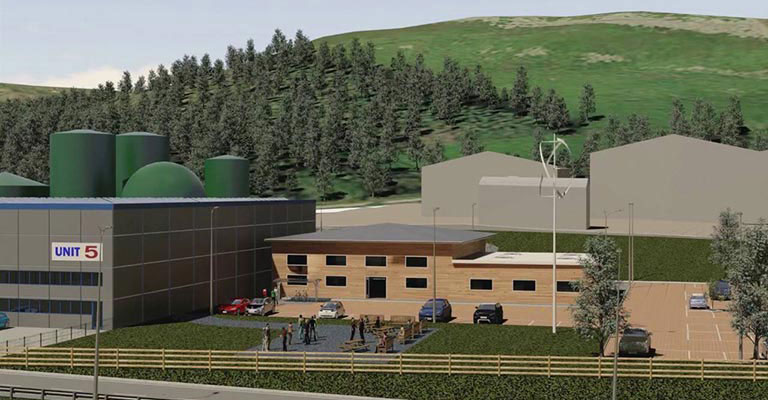
Eco Park Development – which would be the first of its kind in the UK
Over the past 18-months C&P has been rapidly expanding its high voltage services and maintenance activities, securing a number of critical projects and contracts across the UK.
David Demock, C&P’s High Voltage Engineering Director commented: “We are extremely pleased to partner with Rhondda Cynon Taf County Borough Council to deliver such an important phase for this prestigious project. We have been adding to our power engineering capabilities over the past few years which has assisted us to grow and offer clients such as Rhondda Cynon Taf Council even more value through our unique approach.
Using our own people, plant and highly experienced engineering solutions we are pleased that we can play a vital role in the development of the park. This will ultimately help to recycle more, protect the environment and create commercial opportunities and job creation in the Cynon Valley”.
About C&P High Voltage Services

C&P High Voltage Services provide a full range of high voltage electrical contracting services across a diverse range of customers. Their full turnkey high voltage engineering services cover design, installation, testing, commissioning, energisation, operation and maintenance for both new high voltage electrical installation and refurbishments for private networks up to and including 132kV.
High Voltage Services include:
• Design & Installation
• SAP Services
• Operation & Maintenance
• Jointing & Cable Installation
• Commissioning
• Fault Analysis & Management
• Voltages – 11kV, 33kV, 66kV, 132kV
• HV Testing up to 68kV – Substation, Transformer, Switchgear, Cables
• Consultancy & HV Safety
• Contestable New Electricity Connections
Thorne & Derrick
LV, MV & HV Jointing, Earthing, Substation & Electrical Eqpt
Thorne & Derrick International are specialist distributors of LV, MV & HV Cable Installation, Jointing, Duct Sealing, Substation & Electrical Equipment – servicing UK and global businesses involved in cable installations, cable jointing, substation, overhead line and electrical construction at LV, 11kV, 33kV and EHV.
THORNE & DERRICK Product Categories: Duct Seals | Cable Cleats | Cable Glands | Electrical Safety | Arc Flash Protection | Cable Jointing Tools | Cable Pulling | Earthing | Feeder Pillars | Cable Joints LV | Joints & Terminations MV HV
Sealing & Waterproofing | Denso Aids Installation Of Erskine Bridge Crash Barrier
March 9th, 2021
Sealing & Waterproofing
Densoband
Location: Glasgow, Scotland
Client: Transport Scotland
Contractor: Highway Barrier Solutions
Engineers: Scotland TranServe
Products: Densoband
Date: February 2015
Densoband™ has been chosen for use in the installation of new crash barriers on the A898 Erskine Bridge, Glasgow. The volume of traffic has greatly increased since the bridge was opened in 1971.
Consequently the existing barriers in the central reserve were not providing appropriate levels of protection to the bridge towers and cable anchorages against impact from the largest HGV’s. Similarly, nearside barriers needed replacing in this project. All of the new barriers were designed by Flint & Neil, specialist bridge consultants.
The work was carried out for Transport Scotland who appointed Highway Barrier Solutions (HBS) as Principal Contractor. Scotland TranServe is the Engineer who managed the work.
The Glasgow branch of Briggs Amasco, specialists in industrial roofing and surface waterproofing recommended the use of Densoband in the reinstatement of the road asphalt adjoining the steel posts of the new crash barriers. Densoband was used to form a flexible weatherproof seal on the vertical joint face between the asphalt and steel.
Working in conjunction with Scotland TransServe, Briggs Amasco applied all the asphalt reinstatement and Densoband. Densoband is approved by the Department of Transport in the Manual of Contracts 7th Edition for use in asphalt wearing course joints.
➡ T&D stock and distribute Denso products. See Denso Mastic Duct Seal
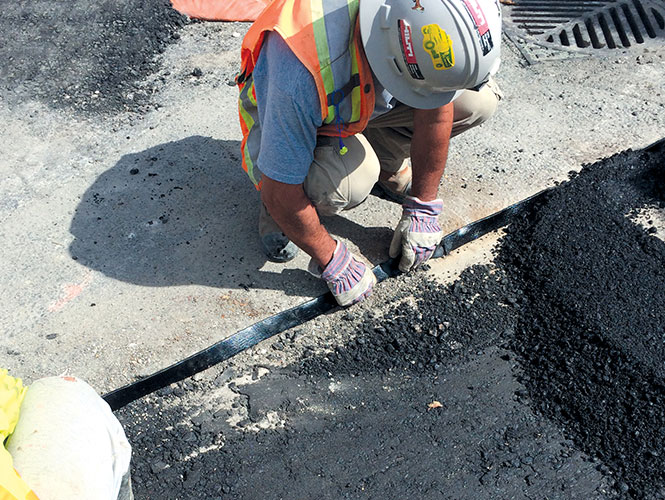
DENSOBAND – Sealing Joints In Highway Construction & Maintenance
Densoband
Densoband™ is a polymer modified bitumen compound in strip form, used for sealing joints between asphalt to asphalt, concrete and road castings in road construction and bridge expansion joints. It can also be used for airport runway joints and light railway/tram construction to form a flexible seal between the track and the surrounding asphalt.
Containing filler, a flow control additive and a root deterrent, Densoband forms a flexible watertight seal which allows for road movement from cyclic traffic load and thermal changes to prevent cracking and subsequent erosion.

ABOUT DENSO
Denso North America Inc. is a subsidiary of Winn & Coales International, a leading manufacturer of anti-corrosion coatings that include Protal liquid epoxies, Denso petrolatum tapes, mastics, primers, bitumen tapes, butyl tapes, hot applied tapes, and a full line of marine pile protection systems. Winn & Coales was originally established as a business in London, England, in 1883, and the first petrolatum tape manufactured in the UK was Denso tape, manufactured under license by Winn & Coales (Denso) Limited.
Denso tape was developed over 80 years ago for the “Long Life Protection” of buried steel pipelines against corrosion. The Denso SeaShield Marine Systems include fiberglass forms, epoxy grouts, underwater epoxies, injectable epoxies, petrolatum tape and wrap systems.
Further Reading
Sealing & Waterproofing of Cable Ducts Using Densoseal 16A | Thames Water Project
Denso Mastic Duct Seal | Densoseal 16A Sealing Cable Ducts
Denso Bore-Wrap | Prevent Coating Damage During Pipeline Installations


Thorne & Derrick are Specialist Distributors to the UK and international Construction industry to provide safe and reliable LV HV Electrical Cable & Power Distribution Systems up to 66kV – we are highly customer responsive and absolutely committed to providing a world-class service.
Contact our UK Power Team for competitive quotations, fast delivery from stock and technical support or training on all LV-HV products.
Key Product Categories: Duct Seals | Cable Cleats | Cable Glands | Electrical Safety | Arc Flash Protection | Cable Jointing Tools | Cable Pulling | Earthing | Feeder Pillars | Cable Joints LV | Joints & Terminations MV HV
Live Line Electricity Voltage Alarm | CATU ALED3
March 9th, 2021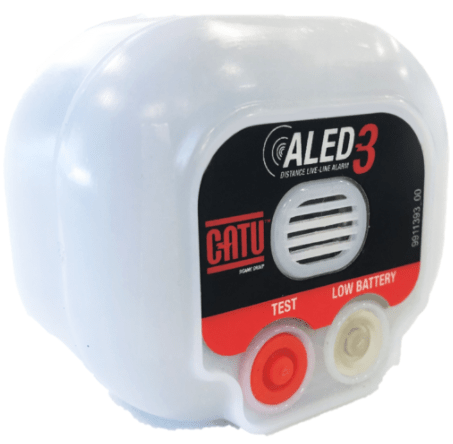
Electrical Safety Equipment
CATU ALED3
Live Line Electricity Voltage Alarm
ALED3 from CATU is a distance live line electricity voltage alarm for ensuring the safety of operators while they are working within live powered environments.
The alarm will warn workers of the presence of an electric field from1kV to 66kV using a sound as well as a visual warning.
The ALED3 is compact and lightweight with a built in antenna and can be worn on a helmet, on the arm, on the belt, on the body. This live line electricity voltage alarm features a 360° detection sensor depending on the position of the device.
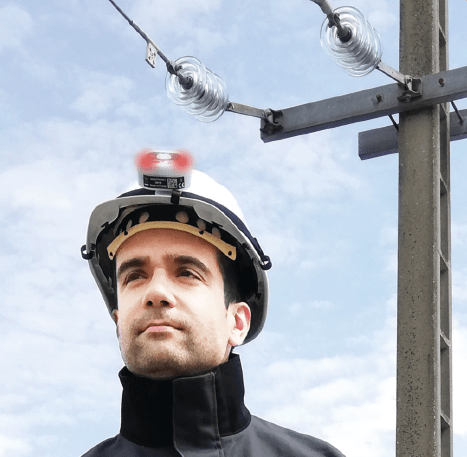
Live Line Voltage ALarm
ALED3 Features
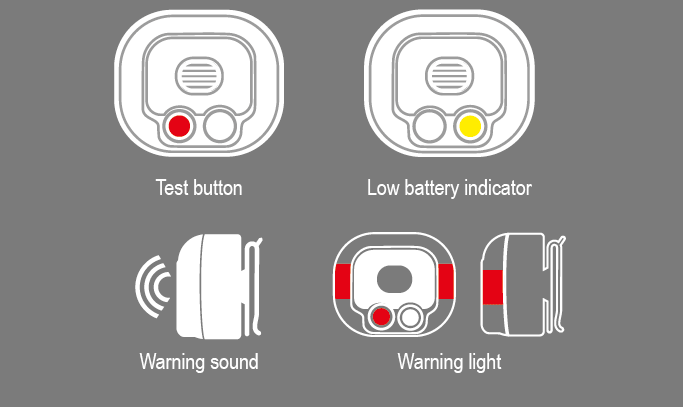
- The alarm is automatically triggered when the operator approaches an electric field and turns off when moved away from the source.
- 360º detection according to the positioning of the device which has multiple fixing possibilities (helmet, arms, belt, body).
- Compact and light with integrated antenna.
- Sound intensity: 75 dB
- Response time: < 1 s.
Live Line Electricity Voltage Alarm | CATU ALED3
CATU ALED3
Technical Specification
- Network voltage: 1-66 kV
- Frequency : 50-60 Hz
- Operating temperature: -5ºC / 45ºC
- Sound intensity: 75 dB
- Net weight: 85 g (including batteries).
- Dimensions: 66 x 56 x 39 mm.
- Protection index: IP64
- Power supply: 2 alkaline batteries AAA 1,5 V
- Standards: EN 61326-1: 2013 / EN 62311-1: 2008
- Marking: CE
| Distance | Phase/Earth | Phase/Phase |
| 1m | 1kV | 1.7kV |
| 2m | 2kV | 3.5kV |
| 3m | 5kV | 8.7kV |
| 4m | 10kV | 17.3kV |
| 4.5m | 14.5kV | 25.1kV |
| 5m* | 20kV | 34.6kV |
| 5.5m* | 27.5kV | 47.6kV |
| 6m* | 36kV | 62.4kV |
| Voltages given as an indication, obtained in laboratory conditions using single-phase voltage on a 2-metre bar at 1.5 metres from the ground. * Estimation based on trend line |
||
Blue LED signal lamps
CATU CD-129
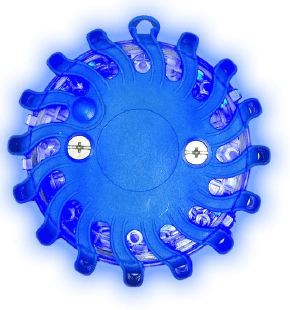 CATU CD-129 blue LED road flare signal lamps are used to alert and signal work on roads and railways. The LED signal lamps adhere to EN 61547 – IEC 61000-4-5:2014 and are supplied in a box which holds six 0.8 watt, 240 lumen LEDs and a 12V/24V car charger or 110V/220V wall charger.
When fully charged, the indicator light aside flares stop flashing and remain steady after 8 to 10 hours of usage. These blue LED signal lamps feature a simple start-up, several different lighting modes and are equipped with a magnet to enable the lamps to be fixed onto a metal surface.
CATU CD-129 have an impact resistant rating of IK07 and are waterproof to IP65.
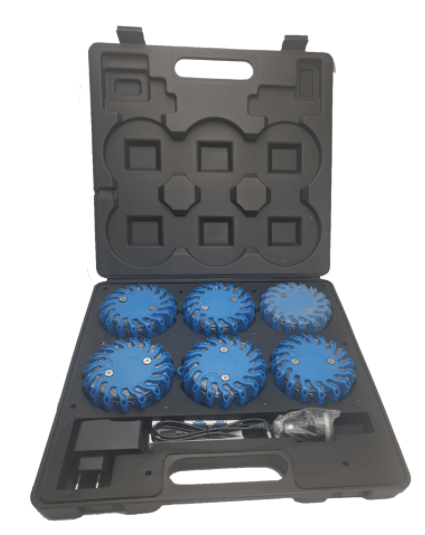
CATU CD-129 Blue LED Road Flare Lamps
T&D are the UK’s largest stockist of CATU Electrical Safety Equipment of products for underground, overhead line and substation safety at LV, MV and HV cable networks.
Insulating Gloves | Insulating Matting | Voltage Detectors | Arc Flash Clothing | Substation Safety | Portable Earthing LV MV HV
21st Century Costs of Underground Distribution
March 9th, 2021Underground Electric Distribution: The Cost of Going Underground Is Coming Down
By Mike Beehler | Mike Beehler & Associates
Special thanks to Martha Davis for permission to republish this article.
Advancements in material science, cable design, construction methods and emerging technologies are making underground electricity distribution more affordable than ever.
Traditional assumptions about the higher costs of underground transmission and distribution (T&D) networks are changing. Today, utilities can use modern technologies and improved installation methods to reduce the costs of underground cable systems.
These improvements cover several areas, including:
- Cable design and material selection
- Underground cable installation
- Construction and civil engineering
- Operations and maintenance
- Asset management and network reliability
Furthermore, modern underground cable systems can offer significant benefits over traditional overhead networks. Research and industry experience suggest that correctly installed and maintained underground cables can deliver a long service life.
Utilities are also reporting lower operating and maintenance costs over the lifetime of underground assets. As a result, underground distribution is becoming an increasingly attractive option for planners and engineers.
When evaluating underground networks, utilities must also consider wider benefits such as improved safety, greater resilience, reliability and visual appeal.
Material Science and Cable Design
Advancements in material science have transformed many aspects of electrical distribution networks. In particular, improvements in cable insulation and semiconducting materials help utilities extend cable service life and improve network performance.
Modern semiconducting shield materials feature smoother surfaces, which help reduce electrical stress within the cable. Additionally, semiconducting jackets provide continuous grounding and help dissipate overvoltages.
Improved insulation materials have also demonstrated longer service life under accelerated wet-ageing conditions.
These developments are changing expectations around underground cable performance.
“These enhancements contribute to underground cables that now are projected to last longer than the traditional overhead line,” said Brent Richardson, senior end-use marketing manager for Dow and an executive board member of the Power Delivery Intelligence Initiative (PDi2).
For example, a review of modern cable technology by Chatteron et al. at the Fall 2019 IEEE Power & Energy Society’s Insulated Conductors Committee meeting highlighted the potential for cable systems to last well beyond 100 years. This compares favourably with the average 50-year wood pole lifespan quoted by the North American Wood Pole Council.
Modern Cable Accessories and Installation
Cable design improvements can also reduce installation costs.
Stronger cable designs and larger reels allow contractors to install longer cable sections with fewer joints and terminations. Consequently, projects may require fewer manholes, less traffic management and less time handling cable.
“Stronger cable designs on larger reels cut civil design and construction costs by reducing the number of manholes needed, traffic control and public disruption, the number of joints and terminations, and cable handling costs,” noted Matt Raymond, division manager of Haugland Energy and a PDi2 associate member.
Traditional accessory designs relied heavily on installers preparing primary insulation in the field. Manufacturers could not routinely test these components before installation.
However, modern accessories use controlled, moulded stress-control components and undergo factory testing before delivery. These improvements help reduce installation time and simplify work in challenging site conditions.
Today’s cable joints and separable connectors also offer fully submersible designs. As a result, underground distribution networks can maintain power supplies during storm surges and flooding.
These features make modern cable accessories particularly useful in coastal areas and strategic undergrounding programmes that aim to improve network resilience and reduce restoration times.
3D Design and Underground Network Planning
Utilities are increasingly using 3D design models to improve the planning and construction of underground electricity networks.
These models link detailed engineering designs with complete material lists, helping engineers identify the components required for each project.
Furthermore, engineers can combine dimensionally accurate 3D equipment models with geographical mapping of roads and rights-of-way. This approach helps utilities plan underground infrastructure more efficiently.
Engineers also regularly assess and test new designs for:
- Pad-mounted transformers
- Switchgear
- Cable splices
- Cable joints and terminations
By continually reviewing these designs, utilities can improve their construction standards and identify further opportunities to reduce installation costs.

Low-cost cable installation in South Carolina. Source: Brian Hunter, regional manager of TT Technologies and associate member of PDi2.
Reducing Underground Cable Design Costs
Planners and engineers can reduce underground cable costs by reviewing material specifications, conductor connections and insulation requirements.
The following examples highlight three approaches that can reduce installation costs and improve cable performance.
1. Optimising copper content in medium-voltage cables
Reducing the amount of copper in concentric wire neutral conductors can lower cable costs and improve power transmission capabilities.
Cross-linked polyethylene (XLPE) also offers a higher maximum cable jacket temperature rating than the linear low-density polyethylene mentioned in the original article. This allows utilities to consider alternative conductor designs while managing the risk of overheating during system faults.
2. Using mechanical shear-bolt connectors
Range-taking shear-bolt conductor connectors offer an alternative to traditional compression connectors.
Unlike compression connectors, which often require different connector sizes and tools for different conductor cross-sections, mechanical shear-bolt connectors accommodate multiple conductor sizes.
Their set-screw design shears at a specified torque value. This helps installers achieve consistent connections, reduce installation time and remove conductor oxidation during installation.
These features can also help reduce common installation errors that contribute to overheating, particularly when using aluminium conductors.
3. Reviewing cable insulation thickness
Utilities that specify extra-thick cable insulation, such as 133% or higher, may be able to reduce costs by reviewing their insulation requirements.
The original article reports that field studies found 100% insulation systems can deliver comparable performance when engineers install suitable overvoltage protection.
For example, surge arresters can help protect cables at overhead-to-underground transitions, multiway intersections and circuit endpoints.
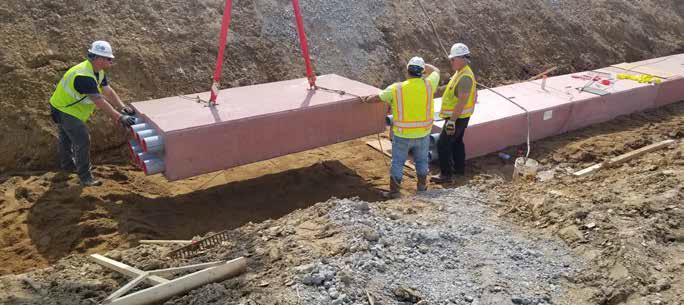
Precast duct bank installation. Source: Forterra.
Construction Costs and Installation Methods
The cost of installing underground electricity cables varies significantly depending on location, ground conditions and construction methods.
The original article reports installation costs ranging from approximately US$20 per foot in the southeastern United States to US$200 per foot on the West Coast.
Several factors influence these differences, including:
- Local regulations and planning requirements
- Population density
- Ground and soil conditions
- Labour availability and costs
- Installation methods and equipment
Utilities such as Dominion Energy, Florida Power & Light (FPL), Georgia Power, San Diego Gas & Electric (SDG&E), Pepco Holdings and WEC Energy Group have introduced strategic undergrounding or network improvement programmes.
These projects provide valuable insight into the costs and benefits of modern underground distribution.
WEC Energy: Strategic Undergrounding
WEC Energy provides an example of how utilities can combine undergrounding programmes with network automation.
The company targeted approximately 2,200 miles (3,541 km) of underground distribution cable while also installing automation equipment across 400 miles (644 km) of its network.
According to figures reported at the 2019 IEEE Insulated Conductors Committee meeting, undergrounding costs averaged approximately US$42 per foot.
WEC Energy used three main installation methods:
- Open-cut construction: 2%
- Ploughing: 50%
- Horizontal boring: 48%
These figures demonstrate how modern installation equipment and alternative construction techniques can improve efficiency.
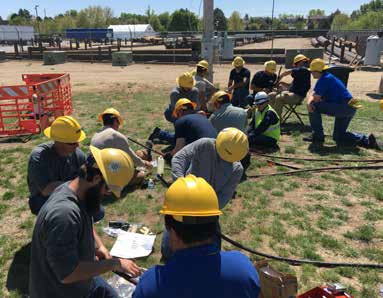
Installation skills training with immediate on-site factory-comparable testing and qualification. Source: IMCORP.
Improving Reliability Through Undergrounding
The original 2019 report also highlighted improvements in customer minutes interrupted (CMI).
WEC Energy expected to achieve a 2% improvement through network automation and a 16% improvement through strategic undergrounding.
Utilities consider several reasons when planning underground distribution projects. According to Martha Lachmayr, principal engineer at SDG&E, these include:
- Reducing outages caused by exposure to external damage.
- Improving the appearance of areas where franchise agreements require it.
- Reducing the risk of fallen power lines causing fires in high fire-threat districts.
These projects demonstrate how utilities can combine improved cable materials, installation methods, condition assessment and maintenance practices to reduce lifecycle costs.
Precast Duct Banks and Modern Construction
Utilities are also developing more efficient construction methods for urban underground networks.
For example, precast manholes, equipment pads and duct banks can reduce installation times and minimise disruption around construction sites.
“New developments in precast underground duct bank systems allow for burying utility lines more quickly and safely,” said Jeff Killin, vice president of engineered products for Forterra Inc. and a partner member of PDi2. “This means fewer crew members are needed in the trench and for less time, providing cost savings and reducing construction impacts.”
Traditional open-cut duct bank construction involves several stages. Contractors first install individual sections of PVC conduit, connecting each section with solvent cement. They then build formwork around the conduits before adding thermal backfill or concrete.
The concrete must cure before contractors can resume work in the surrounding area.
This process requires significant labour and time. Furthermore, adverse weather can delay construction.
Precast duct banks offer an alternative. Manufacturers supply prefabricated concrete sections with electrical conduits already installed.
Contractors can then position these sections directly at the project site without building traditional formwork or installing individual conduit runs.
Precast systems also remove the need for on-site concrete testing because certified manufacturing facilities complete and record quality checks before delivery.
As a result, utilities can reduce on-site labour, shorten installation schedules and minimise disruption.
Operations and Maintenance of Underground Cable Systems
Utilities must consider more than installation costs when evaluating underground electricity networks. They also need to assess the resources required to operate, inspect and maintain their assets throughout their service life.
From a lean-enterprise perspective, unnecessary maintenance activities can create significant waste. These activities may involve equipment procurement, planning, switching orders, dispatch and coordination between different work teams.
Consequently, utilities should consider technologies that reduce unnecessary maintenance work and improve asset performance.
Comparing Underground and Overhead Maintenance Costs
The original article compares maintenance costs across five geographically diverse investor-owned utilities:
- The United Illuminating Company
- Florida Power & Light
- Evergy
- Arizona Public Service
- Portland General Electric
Using publicly available utility information, FERC Form 1 reports and SEC 10-K filings, the research found that underground distribution maintenance costs per mile were three to seven times lower than overhead distribution maintenance.
This highlights the potential long-term financial benefits of underground cable systems.
Cable Testing, Condition Assessment and Asset Management
Although underground cable systems can offer lower operating costs, utilities can reduce maintenance expenditure further through proactive testing and condition assessment.
Cable failures can occur years or even decades after installation. However, industry studies suggest that many failures originate from installation or manufacturing defects.
“Over the last two decades, we have dissected thousands of field-installed substandard cables and accessories, and in nearly every case, there is evidence of a human or production anomaly precipitating the defect,” observed Ben Lanz, director of technology with IMCORP and an executive board member of PDi2.
Factory testing and field commissioning help identify defects before they cause network failures. For example, partial discharge testing can help engineers assess cable insulation and identify potential weaknesses.
“Once a failure occurs on aged cable, the fault location and repair process often create additional defects on both the subject and neighboring systems, thus dramatically increasing the cost of maintaining the system. Using 100% partial discharge testing at the factory and repeating this process in the field during commissioning can eliminate future operating and maintenance costs.”
When contractors repeat comparable testing during commissioning, they can identify installation defects before putting the cable system into service.
Utilities can also use modern fault indicators and cable fault-location techniques to reduce repair costs following excavation damage or extreme operating conditions.
Furthermore, engineers should check surge arrester positioning and assess neighbouring cable sections after a fault. These steps help identify additional defects and reduce the risk of further failures.
Extending the Life of Existing Cable Networks
Utilities do not always need to replace entire underground cable systems when individual components begin to deteriorate.
Instead, cable-condition profiling technology helps engineers identify weakened sections and prioritise repairs or replacements.
This approach allows utilities to focus maintenance budgets on the components that need attention rather