Blog
Electrical Workforce | Are There Problems In The UK Electrical Industry?
January 8th, 2020
The Electrical Workforce Ratio Guidance And Composition
-
Republished with the kind permission of Derek Thompson from Electrical Training Trust
SparkSafe Ltp has emerged from the Electrical Training Trust.
Established in 1998 by employers, Electrical Training Trust has championed the development of employer-Led Level 3 electrical apprenticeship training and adult worker upskilling.
Electrical Workforce Composition
We analysed eleven recent UK Public Sector construction projects with a combined value of circa £200 million to ascertain the composition of the electrical workforce.
The projects ranged in value from £500K to £60 million. Each of the projects is considered to be complex in scope as they:
- require significant coordination and cooperation with others
- make use of industrial pattern materials and techniques
- have an impact on the public
- involve professional design services
- require compliance with exceptional standards
- require a high-level health and safety management
SparkSafe workforce ratio guidance recommends a 50% minimum cohort of Qualified Electricians (QE) where complex electrical work is to be undertaken. None of the projects in the sample meets the proposed recommendations. Eight of the eleven projects are reported with a QE worker percentage between nil and 25%.
Summary of electrical work
- Three projects operated without a QE worker
- Four projects operated with a QE cohort of 15% or less
- One project (circa £30 million) relied on a 47% cohort of Apprentice Electrician (AE)
- The most significant value project (circa £60 million) was contingent on 75% of the electrical workforce operating below a QE licence level
Quality improvement and control measures are likely to be undermined when the model becomes over-reliant on disproportionate use of semi-skilled, under-qualified, or apprentice workers to carry complex and skilled tasks. Exceptions do exist. High-quality, close supervision, and other control measures may off-set the accumulation of defective work, reoccurring snagging lists, and latent defects. However, the trend, if unchecked, in this and other building service sectors, will continue to wither, an already ailing construction industry.
Historical toleration of this model has progressively shifted the Client prerogative to one of necessity and acceptance in terms of workforce composition in parts of the UK. Skilled labour shortages, lack of CPD drivers, and other demographic factors point to an industry that presently struggles to field a match fit team for industrial and commercial projects.
Extended supply chains and health and safety checks at the gate, have blurred Client insight into the occupational identity and qualitative make-up of the contractor’s workforce.
Nevertheless, projects are completed, commissioned, and eventually handed over.
So, what are the problems?
- A decline in quality and standards is widely reported throughout the industry. Clients are often forced to contend or accept failing and inconsistent standards by the industry to gain timely possession of their project.
- Failure to correct the problem means that it will become worse. The virtuous loop of sustainable skill training is replaced by a vicious circle which depletes the industry with a feed of semi-skilled and under-qualified workers.
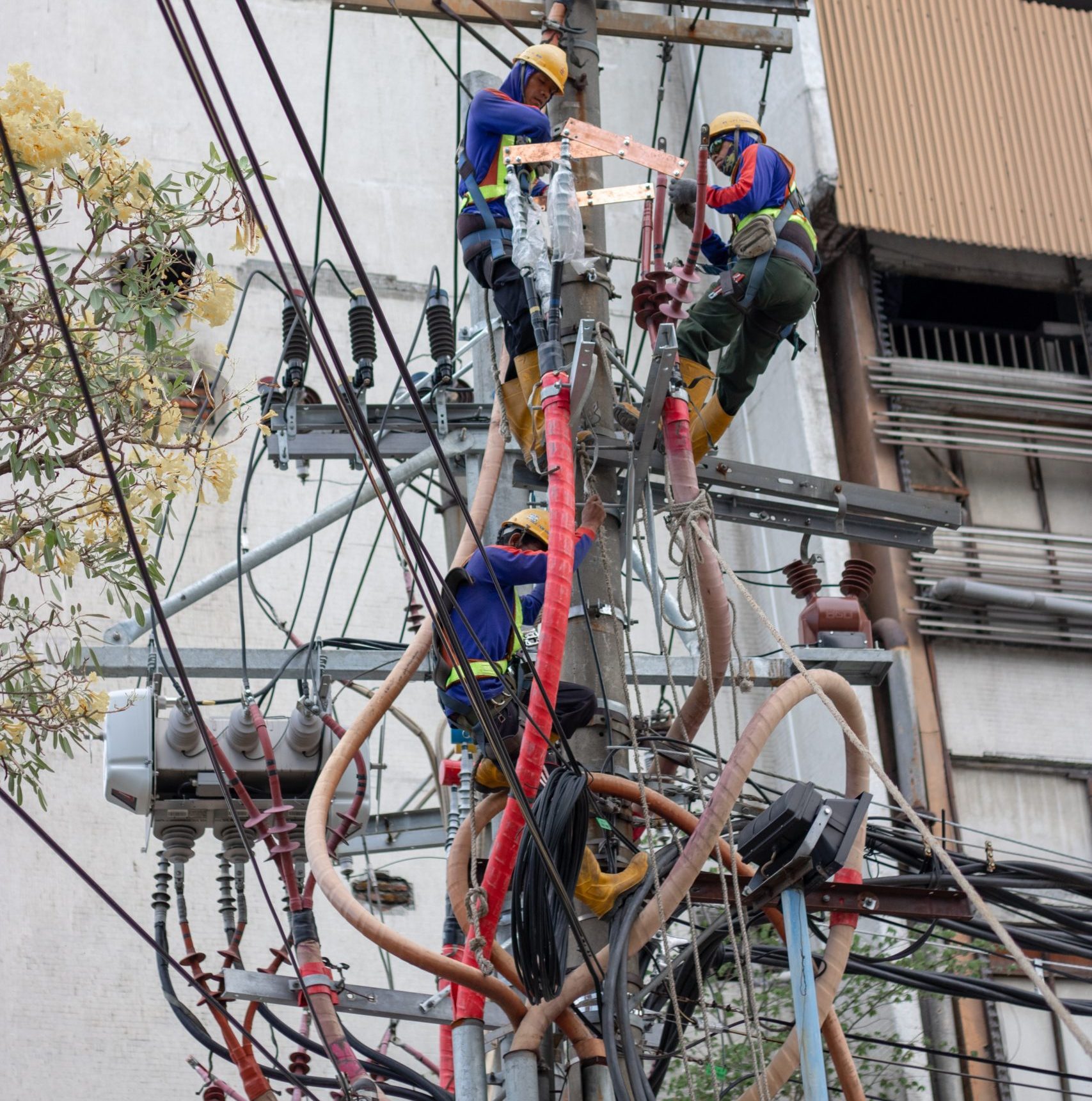
Photo : Electrical workers undertaking cable terminations by Hobi industri on Unsplash
Conclusion
The resolve of many responsible Electrical Contractors to maintain traditional standards has been eroded as other existing, and new enterprises adjust working practices to win contracts, build turnover and attempt to stay in business. Who could blame them! Discipline and restraint by the industry are poorly regulated. Insolvency and/or prosecution are the primary checks and balances for the UK electrical contracting industry.
Attempts at self-regulation have broken down as competitive instincts and market forces, compel the supply chain to find ways of getting around the national conventions of the industry. Industry-led, self-help efforts must continue. Responsible trade and industry bodies must be encouraged, supported and be subject to constructive criticism in their efforts to do the right thing. Nevertheless, the ultimate authority and influence over the behaviour and development of the industry is the Client.
The findings of our analysis flow from an absence of specification and scrutiny concerning the dynamics and composition of the contractor’s workforce ratio. A greater effort by specifiers and designers is usually placed on material specification. Whereas the competency of those who install those materials is often presumed and unchecked.
High spec materials and low-tech installers don’t make sense!
The striking imbalances across the sample projects are the immediate product of the industry, not the Client. However, by using their buying authority, responsible Clients can halt the decline, reinstate the virtuous loop, and help produce a much-needed win-win outcome for the UK going forward.
WORKFORCE RATIO GUIDANCE
Why was this developed?
Workforce ratio guidance aims to get the balance of manual electrical worker competencies right at site level. Client organisations and their professional representatives are often obliged to work on a trust basis regarding the flow and composition of an electrical contractor’s workforce. The issue of workforce composition and competency is often poorly defined or referenced in the specification and related documentation.
The number of “go-to” competent electrical workers in modern construction and maintenance contracts appears to have declined. Parts of the industry have become over dependant on under-qualified and unqualified electrical workers to meet tender budgets or overcome skills shortages. This shift means that the proportion of electrical competencies may not be matched to the requirements of the project.
We have produced the following ratio guidance as a quality improvement and social responsibility measure with the aim of stimulating productivity and performance. By including labour ratio competency requirements, specifiers will spur the industry towards sustainability in the construction industry.
Guidance on the Electrical Contractors Workforce Composition
Table 1 is aimed at addressing a typical complex multi-electrical service contract.
A Type Contract
| No. of Workers By Licence Type |
5 | 10 | 15 | 20 | 25 | 30 |
|---|---|---|---|---|---|---|
| QE | 2 | 5 | 7 | 10 | 12 | 15 |
| REW | 2 | 3 | 5 | 7 | 9 | 10 |
| AE | 1 | 2 | 3 | 3 | 4 | 5 |
We recommend that the electrical workforce should comprise of circa 50% Qualified Electricians (QE). A concession to make-up the balance of the required workforce by a mix and match approach from the Restricted and Apprentice Licence type should be made available. Note: A reasonable, contract-specific, pro-apprentice weighting should always be applied. We suggest that this should be not less than 20% of the required workforce.
Table 2 is offered in consideration of projects that are less complex regarding scope, value, coordination, risk and programme.
B Type Contract
| No. of Workers By Licence Type |
5 | 10 | 15 | 20 | 25 | 30 |
|---|---|---|---|---|---|---|
| QE | 2 | 3 | 5 | 6 | 8 | 9 |
| REW | 2 | 4 | 6 | 8 | 10 | 12 |
| AE | 1 | 3 | 4 | 6 | 7 | 9 |
This model indicates that circa one-third of the sub-contractors direct and indirect workforce should be fully qualified in line with the QE Licence type. A mix and match option similar to the A-Type concession is made available when it comes to determining the balance of the sub-contractors required workforce across the remaining Licence types.
Electrical EqUipment – Thorne & Derrick
Thorne & Derrick International are specialist distributors of LV, MV & HV Cable Installation, Jointing, Duct Sealing, Substation & Electrical Equipment – servicing UK and global businesses involved in cable installations, cable jointing, substation, overhead line and electrical construction at LV, 11kV, 33kV and EHV.
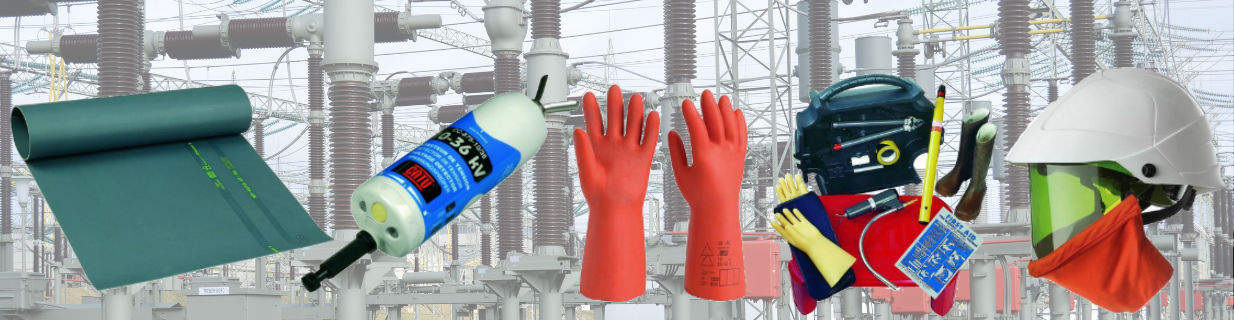
THORNE & DERRICK Product Categories: Duct Seals | Cable Cleats | Cable Glands | Electrical Safety | Arc Flash Protection | Cable Jointing Tools | Cable Pulling | Earthing | Feeder Pillars | Cable Joints LV | Joints & Terminations MV HV

Jointers blog
Subscribe now to our POWER NEWSLETTER– a monthly email circulation packed with news, projects, videos, technical tips, training information, promotions, webinars, career opportunities and white papers.
Includes access to our popular JOINTERS BLOGwith contributions from utility professionals, linesmen and cable jointers working on MV HV EHV cables and overhead lines typically at 11kV, 33kV, 66kV and up to 132kV.
15,000+ Subscribers. ➡ 
Electrical & Hybrid Vehicles | Improving Electrical Safety for the EV Industry
January 8th, 2020-
uploaded by Chris Dodds - Thorne & Derrick Sales | Marketing Manager

According to Mckinsey & Company under the current growth trajectory, EV producers could almost quadruple production in 2020, moving 4.5 million units, around 5 percent of the overall global light electric vehicle market.
This rapid increase in the number of electric and hybrid vehicles has introduced and imposed specific electrical safety regulations upon the EV industry.
For example in France, the electrical safety regulations are now codified according to UTE C 18-550 (♦) to provide clear legislative guidance on the responsibilities of the EV industry to prevent electrocution and electrical injury to workers.
Thorne & Derrick can support the implementation of electrical safety precautions with automotive manufacturers, dealership networks and garage repair specialists – products specifically designed to prevent electrocution of mechanics:
EV Safety Products
- PPE | Electric Arc Face Shields, Insulating Gloves & Undergloves
- Floor Protection | Insulating Matting
- LV Test & Measurement | Voltage Detection & Testers (12V to 1200V DC)
- LV Live Working Tools
- Lock Out Tag out & Warning Signs
- EV Electrical Vehicle Safety Catalogue
♦ UTE C 18-550 (Electrical safety instructions for operations on vehicles and motor vehicles with thermal, electric or hybrid motorization having on-board electrical energy).

Electrical Risk Prevention & Safety Kits for EV Industry
Thorne & Derrick stock and supply EV Kits for electrical risk prevention – contact us for further information or to place an order.
- CATU KIT-VE-S1 Obstacle Safety EV Kit
- CATU KIT-VEH EV Safety Signage Kit
- CATU KIT-VE-D EV Car Servicing & Breakdown Kit
- CATU KIT-VE-BCL Instruction Kit
- More Information

Safe Working On Electrical & Hybrid Vehicles
Catu Electrical Safety Equipment Stockists

Do you know that by 2030 electrical vehicle sales will represent 40% of the total sales in Europe & China? This impacts the maintenance approach and safety equipment requirements to enable the industry to work safely. Therefore, CATU as specialist manufacturers of Safety Equipment for the prevention of electrical risks has designed some dedicated kits including insulated tools for live operations, PPE for providing comfort of use and voltage detectors. Discover our complete solution set in the e-mobility brochure.
CASE STUDY
West Midlands Police approached Thorne & Derrick with a requirement for Electrical Safety Kits for forensic collision investigation at life changing and predominantly fatal road collisions. Training has been upgraded with vehicle examinations of electric / hybrid vehicles but no safety equipment had ever been provided. Thorne & Derrick rectified this EV safety shortcoming when the risk was identified by a new member of staff and the CATU KIT-VE-BCL has been adopted by the police force.

Based in the UK, Thorne & Derrick International are the largest Stockist Distributor of CATU Electrical Safety Equipment protecting workers on underground cables, overhead powerlines, switchgear and substations at LV, MV and HV.
Nexans Euromold 11kV Tee Connectors Terminating EPR & XLPE Cables Into Siemens Transformers
January 8th, 2020Images Courtesy of: Euan Palmer – Cable Technician at Prysmian Cables.
Cable Jointers: Euan Palmer, Alex Hope, David Barnes.


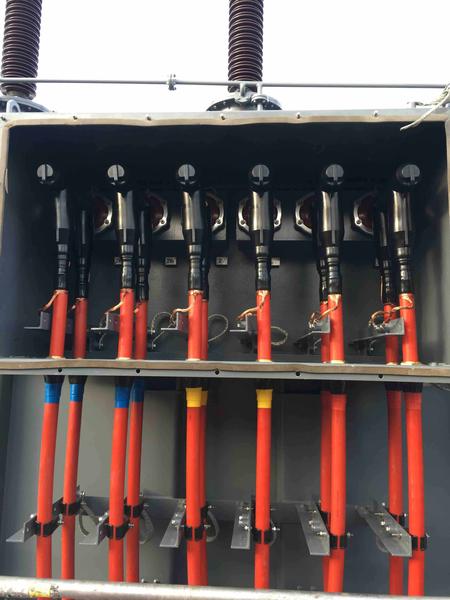
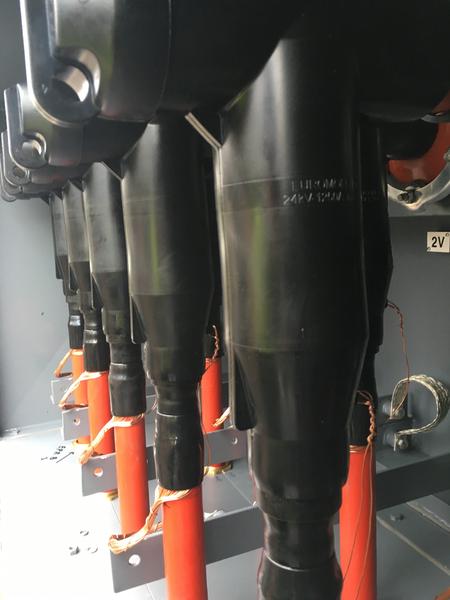
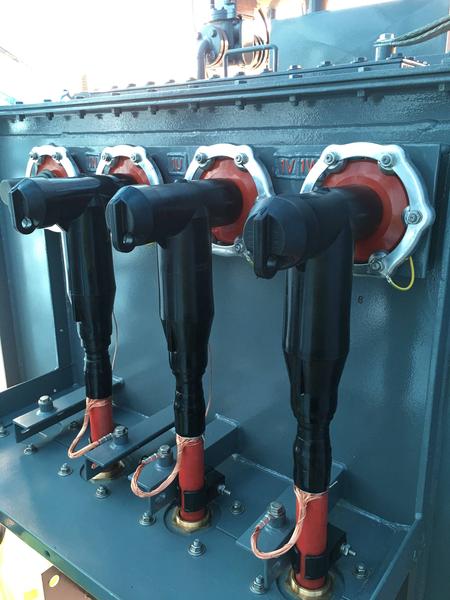
Nexans Euromold are world leaders in the manufacture of Screened Separable Connectors to enable the termination of medium voltage power cables onto outer cone bushings of electrical equipment including switchgear, transformers and motors.
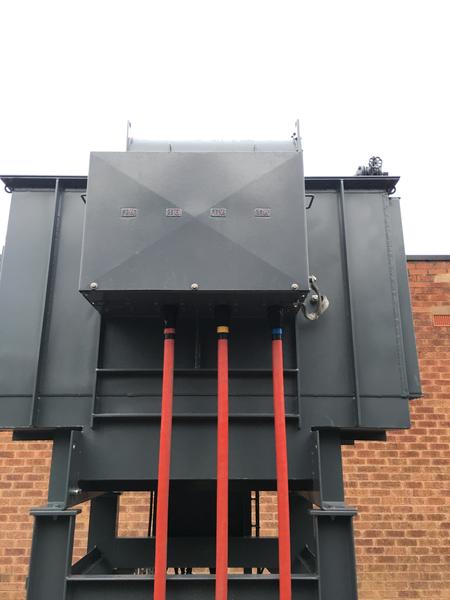
In this series of photographs, Nexans Euromold K440TB separable tee-connectors are shown terminating 11kV polymeric insulated cables into Siemens transformers – the 11kV single core cables include both Tratos (EPR) and Prysmian (XLPE) manufactured cables.
The medium voltage installation is located on Western Power Distribution (WPD) network, the electricity distribution network operator for the Midlands, South West and Wales.
Pictured : 12 x 11kV Nexans Euromold Separable T Connectors Terminating 11kV Single Core Power Cables (9x630sqmm XLPE & 3x630sqmm EPR cable).
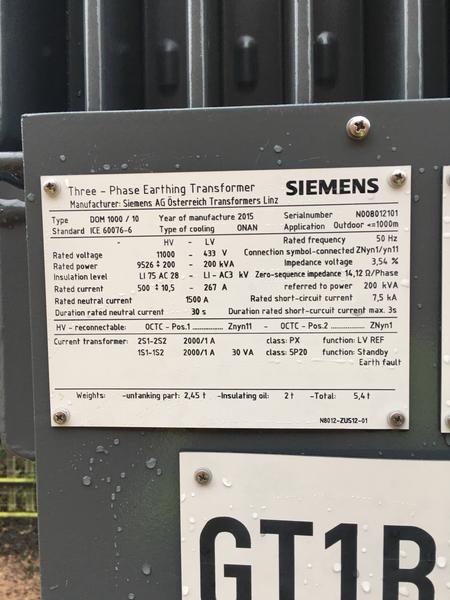
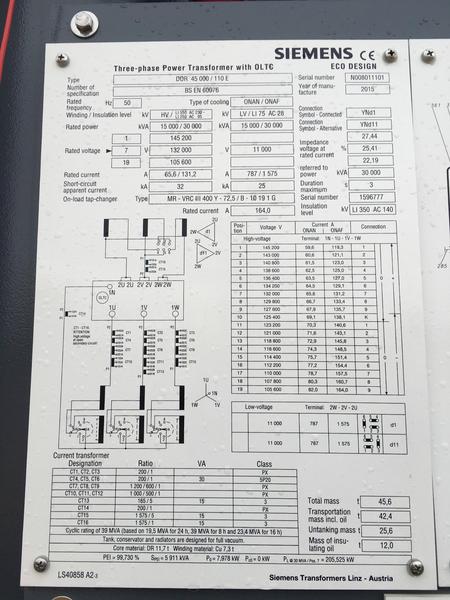
Siemens Three Phase Earthing Transformers , 11kV Outdoor
Manufacturer : STL – Siemens Aktiengesellschaft Österreich Transformers Linz
Since 1920, power utilities and industry have relied upon Siemens (STL) power transformers, reactors and earth-fault protection devices.
Thorne & Derrick
Nexans Main UK Stockist & Distributor
Contact us for Competitive Prices & Fast Delivery from Stocks for Heat Shrink, Cold Shrink & EPDM Rubber Connectors, Joints & Terminations up to 66kV.
Go to our Price List and contact us with your enquiries.
Heat Shrink Cable Accessories for 11kV Triplex Cables
Thorne & Derrick International are specialist distributors of LV, MV & HV Cable Accessories, Jointing, Substation & Electrical Equipment – servicing UK and global businesses involved in cable installations, jointing, substation, overhead line and electrical construction at LV, 11kV, 33kV, 66kV and EHV.
Stocking & Supplying | Duct Seals | Cable Cleats | Cable Glands | Electrical Safety | Arc Flash Protection | Jointing Tools | Cable Pulling Eqpt | Earthing & Lightning Protection | Feeder Pillars | Cable Joints LV | Joints & Terminations MV HV

Euromold MV HV | Cable Terminations, Connectors, Elbows & Joints
Jointers blog
Subscribe now to our POWER NEWSLETTER– a monthly email circulation packed with news, projects, videos, technical tips, training information, promotions, webinars, career opportunities and white papers.
Includes access to our popular JOINTERS BLOG with contributions from utility professionals, linesmen and cable jointers working on MV HV EHV cables and overhead lines typically at 11kV, 33kV, 66kV and up to 132kV.
15,000+ Subscribers. ➡
/div><
Thorne & Derrick Working With JDR Cables | MV Jointers Tool Sets
January 7th, 2020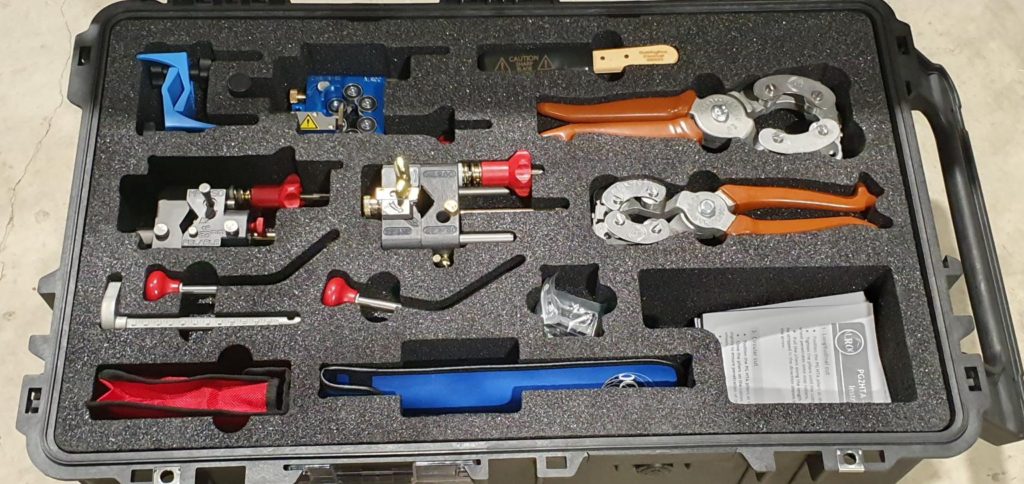
-
uploaded by Chris Dodds - Thorne & Derrick Sales | Marketing Manager
Thorne and Derrick, the UK’s Specialist Distributor of LV HV Jointing, Earthing, Substation & Electrical Eqpt have provided customised MV Jointers Tool Kits to JDR Cable Systems – JDR based in the UK are world leading cable manufacturers for high performance subsea and power cables for the renewable energy sector.
The Jointers Tool Kits are designed to provide their jointers with the specialist  tools needed to prepare inter array cables prior to the installation of joints, terminations or connectors to the highest standard – included in the customised tool sets are tools to enable the removal of the cable outersheath, insulation (XLPE) and semicon screens.
Housed in Peli Protector Cases – these are rugged crushproof and waterproof cases to provide protection to the tool sets when in transit.
JDR Cables has an impressive portfolio of Inter Array Cable Termination and Test work up to 66kV.
Using their own Approved Tools & Equipment to complete all aspects of the work scope allows JDR to guarantee  the quality and consistency of tooling.
Expertise comes from their in-house MV Jointers and Fibre Optic Technicians.
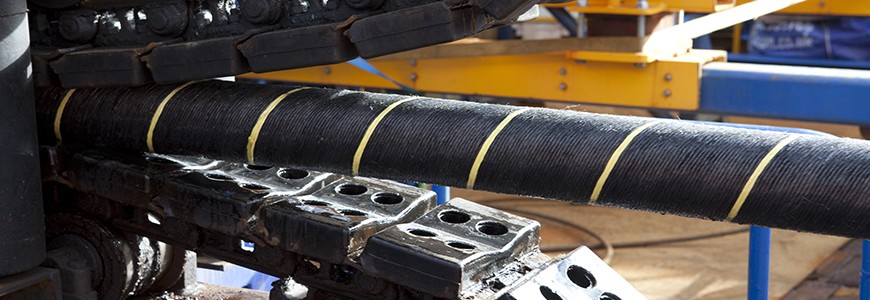
Field Services, part of JDR’s Renewable Energy Product and Installation Services group, supports the renewables industry; from project installation consultancy, to pre-commissioning, with full product life cycle support including repair and maintenance.

Market Leading Precision Engineered Cable Preparation Tools for Medium & High Voltage Power & IAC Cables
https://www.jdrcables.com/product-and-installation-services-4/

See how T&D support, supply and service the Renewable Energy industry.
LV, MV & HV Jointing, Earthing, Substation & Electrical Eqpt
Thorne & Derrick International are specialist distributors of LV, MV & HV Cable Installation, Jointing, Duct Sealing, Substation & Electrical Equipment – servicing UK and global businesses involved in cable installations, cable jointing, substation, overhead line and electrical construction at LV, 11kV, 33kV and EHV.
THORNE & DERRICK Product Categories: Duct Seals | Cable Cleats | Cable Glands | Electrical Safety | Arc Flash Protection | Cable Jointing Tools | Cable Pulling | Earthing | Feeder Pillars | Cable Joints LV | Joints & Terminations MV HV

THORNE & DERRICK | LV HV | Jointing, Earthing, Substation & Electrical Eqpt up to 66kV | Nexans Euromold | 3M Cold Shrink | Pfisterer Connex | Alroc Tools Stockists
Trace Safe | Which Trace Safe is Best for Your Application?
January 7th, 2020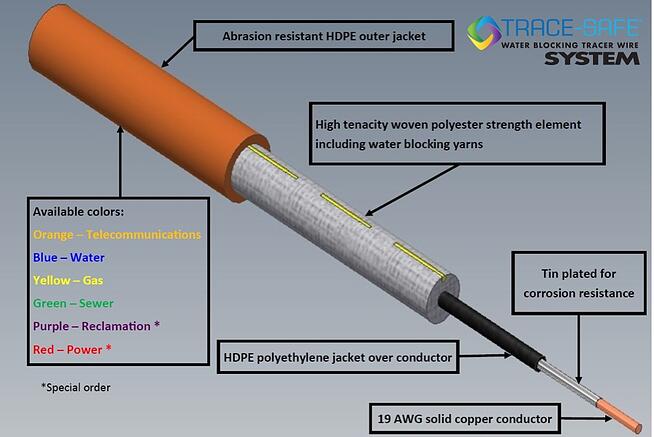
-
uploaded by Chris Dodds - Thorne & Derrick Sales/Marketing Manager
NEPTCO revolutionised the tracer wire market when it introduced Trace Safe, the world’s first tracer wire that incorporated water blocking technology to protect the solid copper conductor from water ingress. There are two distinct products that incorporate many of the same features but there are key differences.
While both products are available in all standard utility colors and have an HDPE outer jacket, water blocking yarns, HDPE wire insulation and a tin coating over the solid copper conductor; the key difference is the strength rating of each product.
Trace Safe gets its strength from the water blocking polyester core that surrounds the solid copper 19 AWG conductor.
The core is made from high tenacity polyester yarns, like those found in car tyres, that are treated with a super absorbent powder.
If the outer jacket is damaged, the super absorbent powders swell up like a baby diaper to prevent any moisture from meeting the solid copper conductor. This helps to ensure a long lasting reliable tracer wire.

Trace-Safe is the only water-blocking tracer wire on the market manufactured by NEPTCO
The amount of core material is the distinguishing difference between the 1800 lb. RT products and 600 lb. TST products. Less core material lowers the cost of the TST products but each product has distinct applications that it is best suited for.
The RT products have an overall rated strength of 1800 lb. and are ideal for horizontal directional drilling applications.
RT products can be attached directly to the drill shaft and pulled back along with the conduit and does not need to go inside the duct. The super tough jacket combined with the 1800 tensile strength means that RT Trace Safe can withstand the rigours and tensions generated during pull back.
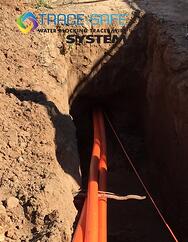
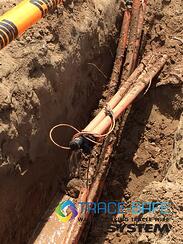
The TST products have an overall rated strength of 600 lb. and are ideal open trench, micro trench and nano trenching or can be pulled back alongside dielectric cables inside the duct.

Trace-Safe
Trace Safe is a system which use no strip wire connectors.
Each connector comes with a TST adapter so no matter which wire is used the same connectors will work in any situation.

Trace-Safe and TST adapter
So, which Trace Safe is best for you?
It depends on the application.
For directional drilling applications always choose the RT products, for everything else, the TST products.
For simplicity, some utilities prefer to stock only one wire and choose the RT products because of its universal utility.
However, others are more explicit and will only use RT for directional drilling situations.
Consider the application and be sure to always use the Trace Safe connectors to complete the system.
Further Reading
LV, MV & HV Jointing, Earthing, Substation & Electrical Eqpt
Thorne & Derrick International are specialist distributors of LV, MV & HV Cable Installation, Jointing, Duct Sealing, Substation & Electrical Equipment – servicing UK and global businesses involved in cable installations, cable jointing, substation, overhead line and electrical construction at LV, 11kV, 33kV and EHV.
THORNE & DERRICK Product Categories: Duct Seals | Cable Cleats | Cable Glands | Electrical Safety | Arc Flash Protection | Cable Jointing Tools | Cable Pulling | Earthing | Feeder Pillars | Cable Joints LV | Joints & Terminations MV HV