Blog
When Quality Matters: Early Indicators Of Error
September 3rd, 2019
-
Blog Written By BASEC | 8 of 10 Articles
Thorne & Derrick collaborate with BASEC to advocate the importance of electrical safety and educating industry stakeholders about specifying and buying accredited, tested and certified cables and cable accessories.
We would like to thank BASEC for allowing us to republish a selection of articles aimed to protect and inform the electrical sector – together we promote compliance with industry standards, specifications and ultimately confidence in end installations to provide LV MV HV Cable Quality.
In today’s market construction contracts can be very challenging in terms of the scope of works but equally in terms of risk management. Large amounts of cable are required for a range of applications, with various requirements for control, power supply and distribution.
No two cables perform the same role, as specific materials are required for installations dependent on environmental conditions, and achieving a consistent mix of materials for the same cable products can sometimes be difficult.
Contracts will typically be vetted by your legal department in conjunction with those working for all the parties involved in the project. It is, however, not uncommon for the risk profile to sit with you, the contractor, but this depends based on the specific terms and conditions you may have agreed. It is certain your risk management strategy starts with sound practices including appropriate planning and preparation, expertise in execution and, of course robust health and safety procedures.
Indemnity provisions will also typically feature within your contract or sub-contracts, which again serve to manage the risk. The costs of rectifying cable faults and the consequences of error can be hugely disproportionate to the sub-contract values, and this can pose a significant challenge should major faults arise, in a worst-case scenario.
Ensuring the products you specify and procure are to the highest levels of quality, safety and compliant with recognised industry standards is the first line of defence in terms of risk mitigation. Whilst any contracts must afford protection, prevention through the proper channels is far better than any cure.

Maintenance Engineers Checking Cable Installations
The responsibility for ensuring quality cable is specified and installed does not simply fall to the electrical installer. As a contractor, you too are responsible for cable installation, and you could be found liable for any faults that occur. This could, in turn, have a negative impact on your business and may even result in the loss of key customers.
While it is likely that your first concern when it comes to cables, is ensuring that they meet the relevant regulations and standards, simply specifying a cable that meets a recognised standard does not guarantee it will be suitable for the project or application. The materials may not be suitable for the conditions the cable will be installed into, which could result in the cable needing to be repaired or replaced shortly after installation.
The cost of buying cable is often a key consideration that makes specifying cheap cable tempting, but as with any item of importance, the cost of quality is almost always higher. Purchasing cheap cable that may not be compliant or suitable for application can create serious risks to health and safety. A further consideration in this decision can be the origin of the cable product.
A defect in a non-approved product is most likely to become evident during the installation or worse still, during commissioning or operation. Failures in cable can come in a range of guises, however sheath damage is probably the most common and this type of damage can occur during the manufacturing processes of spooling and un-spooling.
Other cause of failure could be related to mechanical damage, which is associated with movement of product, and, of course, faults within manufacturing or specification which can, in worst cases, render the product unusable. There are several obstacles involved in accessing and recovering a failed cable, that has already been installed, which is a far more onerous process than planning the original installation.
These obstacles can include things like, having to break or drill into concrete footings under which a problematic cable could be laid or having to access high ceilings or confined wall spaces as just a few examples.
Rectifying these sorts of issues can cost many times the value of the original purchase and installation in terms of the direct cost of gaining access alone.
Cable faults commonly arise from the use of poor-quality materials, right at the start of manufacturing process. These problems may not be detected, until it is too late, if at the product testing stages only specific characteristics are assessed.

Engineer Operating Plant Machinery
A clear way to manage risk is to insist on the use of certified products. When cable is independently tested by a third-party approvals and certification body like BASEC, all aspects of the cable make-up and materials are assessed as part of a three-year certification programme.
The cables are sampled from production and tested several times a year to ensure they maintain consistent levels of quality, but also to verify that they meet all of the required or relevant standards.
Cables are rigorously tested to determine their suitability for operation in challenging conditions, and performance is assessed through electrical, material, mechanical, chemical and fire testing. Assessing all of these criteria is essential to verifying cable quality because some cable products could pass certain tests but fail others.
The conductor resistance test is one of the most frequently required tests that all of the British, European and international standards mention. This test assesses the amount and quality of conductor material in a cable’s cores.
The purpose of this test is to verify that the cable’s current carrying capacity is in line with the rating for that product and that it will, ultimately, operate safely within the parameters specified in the installation.
This test, however, does not assess the performance of a cable when it is exposed to, expected or unexpected, environmental conditions such as flames, chemicals or extreme temperatures.
Testing a range of characteristics, therefore, provides a more accurate reflection of the quality and safety of a product, which also leads to confirming its suitability for the required application. BASEC certification is amongst the most diligent and rigorous in the market, designed to ensure that cable carrying the BASEC mark has been comprehensively tested.
The success of a construction project is often measured on completion, whether it has been delivered on time and to budget. Cable quality should be specified highly and sourced right at the start of the project, to ensure that time and money are onside. This will help to avoid the allure of a low price when budgets are dwindling at the end of the project. Using quality cable has the potential to save contractors a significant amount of time and money in the long term, if errors are detected early-on in the specification process.
Independent testing enables defects to be recognised before a cable product enters the supply chain and ends up in the hands of the installation team, ensuring that it will be safe and fit-for-purpose.
Even more importantly, third-party approved cable product certification provides assurance that cables will be safe in the event of an emergency. When approached from this perspective cable quality should be front of mind for specifiers and purchasers.
BASEC exists to promote quality cable throughout the world as is the preferred testing and certification partner to the worldwide cable industry. The BASEC mark can be relied upon by end users, when quality matters, it builds confidence in the product and manufacturing source for many years to come.
Cable Quality Seminar
BASEC run a number of FREE Cable Quality Seminar’s across the country suitable for anyone and everyone who is working to deliver projects which include cable installations.
Do not miss your opportunity to build your awareness of cable quality.
Middle East Electricity 2020, Dubai
THORNE & DERRICK
Thorne & Derrick are national distributors of LV, MV & HV Cable Installation, Jointing, Substation & Electrical Equipment – servicing businesses involved in cabling, jointing, substation, earthing, overhead line and electrical construction at LV, 11kV, 33kV, 66kV and EHV. Supplying a complete range of power cable accessories to support the installation and maintenance of low/medium and high voltage voltage power systems:
- Slip-on Cable Terminations
- Cold-shrink Cable Terminations
- Heat-shrink Cable Terminations
- Cable Joints – Heat & Cold-shrink
- Separable Connectors (Euromold)
- Surge Arresters & Switchgear/Transformer Bushings
Key Product Categories: Duct Seals | Cable Cleats | Cable Glands | Electrical Safety | Arc Flash Protection | Cable Jointing Tools | Cable Pulling | Earthing | Feeder Pillars | Cable Joints LV | Joints & Terminations MV HV

How To Write A Good Cable Specification
September 3rd, 2019
-
Blog Written By BASEC | 5 of 10 Articles
Thorne & Derrick collaborate with BASEC to advocate the importance of electrical safety and educating industry stakeholders about specifying and buying accredited, tested and certified cables and cable accessories.
We would like to thank BASEC for allowing us to republish a selection of articles aimed to protect and inform the electrical sector – together we promote compliance with industry standards, specifications and ultimately confidence in end installations to provide LV MV HV Cable Quality.
The easiest, low risk way to procure cables is to specify products that have proven their quality in similar projects. However, this may not always be possible as the end use may impose requirements that an established cable cannot meet.
If so, the next-best option is to insist that cables must meet relevant national or international standards, plus independent approval and certification requirements. By doing so, the onus of meeting the specification is placed upon the supplier.
A third option is to generate your own cable specification, which sounds efficient and attractive, but may have some pitfalls. This article discusses these alternatives and offers some useful guidelines for writing bespoke cable specifications. It applies to installations intended to conform to the likes of the UK IET Wiring Regulations but can be extended to other codes where relevant.
Standards and variations
Standards allow the issue of supply tenders which are manufacturer-neutral. The cable specification and tender can be kept simple by tying together the relevant standard and certification requirement, but nothing else.
For example, low smoke halogen free armoured cables for use in the UK may be easily specified by stating: “BS 6724, BASEC approved”.If a specifier decides instead to write out a detailed specification, they assume the risk of any omissions or modifications made.
It is therefore advisable to check existing standards using the same materials, voltage rating and performance characteristics in order to establish, for instance, appropriate insulation thicknesses as safety is paramount in cable design.
Also, it is sometimes tempting to over-specify products, including excessive detail that is already included in a related specification such as a standard.
By specifying conformity solely to the standard, all the construction, material detail and applicable testing listed in the standard are by default included and need not be repeated.Items which may need specifying are, where applicable, choice of insulation or sheathing materials (for example EPR or XLPE for medium voltage cable insulation), core colours (where alternatives are needed and allowed) or any other variable options which are often set out in the cable standard, for example fire performance.
Although some cable standards include an informative section on ‘what to state on your order’, which can be a useful guide for specification; it is recommended that you familiarise yourself with the cable standards you use so that you can better understand the stipulations, and keep the latest copies for ease of referencing them.

UK IET Wiring Regulations
Potential risks can arise when a cable standard does not clearly recognise precise construction and performance characteristics that may be required.
This can occur when standards set restrictions on the allowable constructions; for example, some medium and high voltage cable standards do not currently include low smoke halogen free sheath materials as an option, even though these materials have in some sectors become de facto minimum specifications.In these cases, it is tempting to make a short statement requiring such materials.
However, there is a danger of creating a specification that misses out key items and can create future problems unless four key conditions are met:
- All conflicting requirements are removed
- Changes are made to material definitions
- Correct applicable tests are listed
- Performance specifications are added
Confusion concerning fire resistant or circuit integrity cables is also widespread. Several fire tests may be applied to cables, but many have limited applicability. For example, BS EN 50200 and its variants, Annex E and BS 8434-2, which are common tests for small-scale fire alarm cables, have a maximum testing size limit of 20mm outer diameter (OD). These methods cannot be used for larger cables and alternatives tests such as IEC 60331-1 must be used.

Electrician in front of switchboard holding specification
By contrast, the Category F2 tests in BS 7846 fire resistant armoured cables are based on the protocols given in BS 6387, which also includes a 20mm OD limit, but are modified in the cable design standard to permit testing of larger cables.
Sometimes test parameters, such as the minimum 20mm OD limit in BS 8491, also called up by BS 7846 for higher fire performance cables, mean that some smaller cables such as mineral insulated cables cannot be formally tested even though they may meet the requirements of the test.
Nevertheless, specifying a test that cannot be applied to the cable in question can result in numerous difficulties.
With the arrival of fire performance requirements such as the Construction Products Regulation (CPR), which is mandatory for permanently installed cables in the European Union, end users have been empowered to better specify fire performance classes, such as given in the format Cca-s1a,d0,a1.
These classes are not included in British or European manufacturing design cable standards, although they are increasingly being included in national and local regulation and must be treated as additional specifications.
This may reduce the product choice because not every manufacturer of a given cable design will offer it with all fire performance classes, so the desired class may not be immediately available for the chosen cable.
Testing, Reporting & Approval
Specifying the testing, reporting and ongoing approval regime should be an integral part of the technical aspects of the cable.
End users or regulators in some sectors and territories often request original test reports as well as approval and quality management systems certificates.
BASEC’s view is that a valid, current BASEC approval certificate should be sufficient on its own, as this means that the manufacturer has completed full type testing to gain the BASEC certificate and is undergoing regular surveillance testing and factory visits.

Electrical Terminal Being Serviced By Technician
However, test reports, especially some fire test reports, do offer some additional information that may be used by specifiers for selection purposes, such as whether the cable was found to be close to pass/fail limits or had suffered some test failures.
Note that it is important to understand the test reports’ meaning before relying on them; for example, are any tests missing, and where was the testing undertaken? Seeking advice from an accredited testing and certification body on test reports can avoid problems later.
The British Approvals Service for Cables (BASEC) is a recognised sign of assurance of independent cable testing and approval. As an independent body, BASEC has for nearly 40 years been a mark of reassurance to those specifying cable.
Conclusion
Bespoke cable specification can be fraught with pitfalls unless the writer is highly experienced in cable standards and knows exactly what is wanted. If in doubt, always consult with experts to ensure trouble-free procurement.
It is usually best to consult specialist cable manufacturers or trade bodies, although an expert testing and certification body such as BASEC may be able to review your specifications in line with your requirements and application.
BASEC – British Approvals Service for Cables
As industry experts in CPR (Construction Products Regulation) testing BASEC has issued over 3,000 CPR classification reports, delivered through in-house laboratory equipment and by working closely with manufacturers to raise cable product classifications for higher fire performance characteristics.
The British Approvals Service for Cables (BASEC) is a recognised sign of assurance of independent cable testing and approval. As an independent body, BASEC has for nearly 40 years been a mark of reassurance to those specifying cable.
Cable Quality Seminar
BASEC run a number of FREE Cable Quality Seminar’s across the country suitable for anyone and everyone who is working to deliver projects which include cable installations.
Do not miss your opportunity to build your awareness of cable quality.
Middle East Electricity 2020, Dubai
How Do You Measure Fire Resistance?
The video below shows that electrical failures and malfunctions are leading sources of ignitions for fires.
In the event of a fire, the resistance class of your electrical cable is critical to how much and how quickly the fire could spread.
54.4% of fires caused by electricity with an average of 4 fatalities per day. Specifying BASEC cables can help you to achieve higher fire classifications through independent cable testing.
THORNE & DERRICK
Thorne & Derrick are national distributors of LV, MV & HV Cable Installation, Jointing, Substation & Electrical Equipment – servicing businesses involved in cabling, jointing, substation, earthing, overhead line and electrical construction at LV, 11kV, 33kV, 66kV and EHV. Supplying a complete range of power cable accessories to support the installation and maintenance of low/medium and high voltage voltage power systems:
- Slip-on Cable Terminations
- Cold-shrink Cable Terminations
- Heat-shrink Cable Terminations
- Cable Joints – Heat & Cold-shrink
- Separable Connectors (Euromold)
- Surge Arresters & Switchgear/Transformer Bushings
Key Product Categories: Duct Seals | Cable Cleats | Cable Glands | Electrical Safety | Arc Flash Protection | Cable Jointing Tools | Cable Pulling | Earthing | Feeder Pillars | Cable Joints LV | Joints & Terminations MV HV
End User Specification Of Approved Cable Products: Where Is The Value?
September 3rd, 2019
-
Blog Written By BASEC | 2 of 10 Articles
Thorne & Derrick collaborate with BASEC to advocate the importance of electrical safety and educating industry stakeholders about specifying and buying accredited, tested and certified cables and cable accessories.
We would like to thank BASEC for allowing us to republish a selection of articles aimed to protect and inform the electrical sector – together we promote compliance with industry standards, specifications and ultimately confidence in end installations to provide LV MV HV Cable Quality.
Specifying independently approved cable products, in projects, provides end users with confidence that the cable installed in their facilities meets the highest standards.
Quality and safety are key concerns for end users, who constantly depend on cables to perform essential activities throughout the day. If cable is damaged or faulty there is a direct impact on the end user.
This can result in the inability to ensure smooth running of operations or even, in the worst cases, the loss of power to facilities.
As a result, the cable may then need to be replaced or repaired, which could lead to significant costs for the facilities manager. Some of this cost may have to be absorbed by other parties who were involved with the specification of the unsuitable cable, for example contractors.
Specifying BASEC-approved cable in construction projects gives the end user a distinguishing factor – a marking on the cable itself, acting as a tool delivering the assurance that the cable installed is of the highest quality and has been independently tested to the relevant standards.
While the initial purchase cost may appear slightly higher than other cables, a cable costing a penny or two more could be the differentiator reflecting additional levels of quality.
Utilising a cable manufacturing source who has undertaken third-party independent testing, to test the properties and materials of a cable product, is an indicator that demonstrates their ongoing commitment to producing cable that is safe and fit-for-purpose.

Powering and maintaining smooth operations
As a member of any buying or purchasing team, assessing or comparing two products, attention should be given to weighing up the initial overall cost of a cable product versus the potential costs of managing an incident.
The costs incurred to rectify or compensate for damage or serious harm to users within the facility can be astronomical in scale.The additional cost, therefore, of specifying BASEC-approved cable at the very start of a project would be considered minimal in comparison.
End users, as well as the supply chain, also benefit from the knowledge, that when they see the BASEC mark, the cable specified and installed has met the prescribed standard or relevant regulatory requirements.

BASEC’s cable product approvals include testing for electrical, mechanical, material, chemical and fire & smoke performance to British, European, international and a range of customer-specific or local standards.
Cable design standards have been developed to ensure that cable products are suitable for their specific applications. Understanding the requirements for compliance, to known industry standards, in key applications, including cable use in MV HV power, utilities, transport and fire performance settings, provides end users with assurance that the cable products installed will be durable and long-lasting.

Electrical Installation
In regions or parts of the world where standardisation is less prevalent, there are few requirements for achieving compliance, meaning that there is also a higher risk involved in using non-approved products.
This only serves to further highlight the importance of obtaining independent testing to verify cable quality.BASEC’s comprehensive testing regimes include rigorous electrical, mechanical, material, chemical and cable fire testing to ensure that cable products perform in the toughest conditions.
While the independent nature, of a UKAS-accredited organisation, means that any tests performed are done so impartially.Cable sampling and testing at BASEC is more stringent than any other cable testing body, with cable manufacturers being required to submit samples in batches; with a clear targeting of cable products in order to obtain consistent levels of quality across manufacturer’s ranges.

Specify & check for quality cables
There is a great deal of long-term value in utilising a measure of cable quality. So why take the risk when it comes to your cable?When you can rest assured in the knowledge that BASEC is respected worldwide for its’ specialist service and commitment to cable industry.
It is this respect that leads the world’s most astute consultants and project managers to specify BASEC-approved cables for prestigious projects, some of which include the Shard, London UK and the Burj Khalifa, Dubai UAE.
BASEC – British Approvals Service for Cables
As industry experts in CPR (Construction Products Regulation) testing BASEC has issued over 3,000 CPR classification reports, delivered through in-house laboratory equipment and by working closely with manufacturers to raise cable product classifications for higher fire performance characteristics.The British Approvals Service for Cables (BASEC) is a recognised sign of assurance of independent cable testing and approval. As an independent body, BASEC has for nearly 40 years been a mark of reassurance to those specifying cable.
Cable Quality Seminar
BASEC run a number of FREE Cable Quality Seminar’s across the country suitable for anyone and everyone who is working to deliver projects which include cable installations.Do not miss your opportunity to build your awareness of cable quality.
Middle East Electricity 2020, Dubai
BASEC Why specify approved cable?
The video below shows why you should specifiy BASEC as your measure of assured compliance and safety. Substandard cable is everywhere and as an installer you are responsible if non-compliant cable is installed.The importance of good quality cable that is both compliant and safe cannot be understated.The BASEC mark is trusted around the world as a symbol of premium quality and achieving the BASEC mark is not easy. Testing, auditing and certification is to the most rigorous criteria in the industry and is becoming relevant to all international cable markets.
THORNE & DERRICK
Thorne & Derrick are national distributors of LV, MV & HV Cable Installation, Jointing, Substation & Electrical Equipment – servicing businesses involved in cabling, jointing, substation, earthing, overhead line and electrical construction at LV, 11kV, 33kV, 66kV and EHV. Supplying a complete range of power cable accessories to support the installation and maintenance of low/medium and high voltage voltage power systems:
- Slip-on Cable Terminations
- Cold-shrink Cable Terminations
- Heat-shrink Cable Terminations
- Cable Joints – Heat & Cold-shrink
- Separable Connectors (Euromold)
- Surge Arresters & Switchgear/Transformer Bushings
Key Product Categories: Duct Seals | Cable Cleats | Cable Glands | Electrical Safety | Arc Flash Protection | Cable Jointing Tools | Cable Pulling | Earthing | Feeder Pillars | Cable Joints LV | Joints & Terminations MV HV
Fire Testing Of Cables Is Important, But Not At The Expense Of Other Performance Characteristics
September 3rd, 2019
-
Blog Written By BASEC | 3 of 10 Articles
Thorne & Derrick collaborate with BASEC to advocate the importance of electrical safety and educating industry stakeholders about specifying and buying accredited, tested and certified cables and cable accessories.
We would like to thank BASEC for allowing us to republish a selection of articles aimed to protect and inform the electrical sector – together we promote compliance with industry standards, specifications and ultimately confidence in end installations to provide LV MV HV Cable Quality.
Learn why a comprehensive testing regime is essential to validate overall cable performance thanks to the latest BASEC blog installment.
Construction projects in the Middle East and Africa are rapidly on the rise, as there is significant commercial investment in the region. As development increases, care should be taken to ensure that effective product testing is undertaken, especially in relation to cable products.
Cable products in the region are required to operate in challenging conditions, enduring harsh sunlight, high temperatures and strong winds. These conditions may increase the likelihood of fire, which is a key concern for those responsible for developing regulations.
Many of these construction projects take place in locations with limited land area available, which leaves contractors with no choice but to build upwards, adding to the cost of development and requiring more technical construction techniques and better-quality materials.
As much of the infrastructure is relatively new, architects often specify the building materials used must meet the standards they are familiar with; including their local or the widely recognised British, European or international standards.
In many cases, specifiers will state that all installed product must also be certified or approved to these standards in order to evidence their quality. An easy way to verify quality is through product certification provided by an independent accredited testing facility.
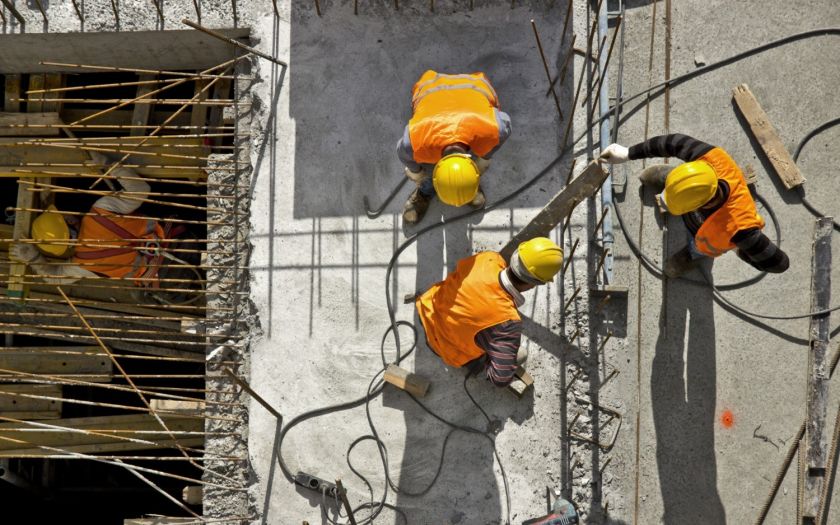
Engineers installing cable
Knowledge of proven quality standards and their application is an approach to specification which has led to a wide spread of standardisation throughout the region. There is, however, concern that those specifying the products may not be familiar with the real importance of why approved products must be used, and therefore their full benefit may not have yet been realised.
Cable quality is sometimes given less thought than other, more visible, construction materials or components that are used in the design and construction of a building. This can result in low quality cable product being installed, as it is considered last when much of the project budget has already been spent.
Poor quality or unsafe product comes with a danger, putting the people who live or work in the building at greater risk, if something were to go wrong. Many specifiers believe cable will be fit for purpose provided it meets the functional requirements of the specification. As offices, buildings and homes are full of cables, failing to source product that have been independently verified, to prove that the product is what is claims to be, could be a grave mistake.
Why do we need cable?
Cables may be visible or invisible, buried in trucking, walls or other hidden void spaces, taking the form of power cables, optical fibre cables or copper communication cables in many sizes and shapes. If cables are damaged or faulty, equipment and machinery will not function as it was designed to, resulting in an inability to complete essential tasks and increasing the potential risks that a failed electrical product poses to end users.
Most cables are designed and constructed using materials that are suitable for a specific application, for example: a fire alarm cable needs to be fire resistant. If an unsuitable cable was specified for installation with fire alarms, in the event of a fire the unfit product would burn and degrade.
The resultant damage to the cable could mean that the alarm would fail to alert the building occupants to the fire risk, ultimately meaning a higher potential chance for loss of life. In the same way, cables that are laid underground or outdoors will have different requirements to those specified for use inside buildings. For example, outdoor cables require additional braiding or water-resistant sheath linings and UV rating to avoid degradation of the outer sheathing.
Simply specifying a cable that meets a recognised standard does not guarantee it will be suitable for the project or application. It is encouraged therefore, to identify your requirements so that the right cable product and standards can be applied to meet the application criteria at the start of the specification process.
Types of cable testing
Fire cable testing demonstrates what happens when a cable sets alight and confirms whether it is capable of functioning during a fire. When cables burn, they may produce significant volumes of heat, smoke, toxic or corrosive fumes and falling flaming materials (known as burning droplets).
The volume and spread of these emissions can be critical to the further escalation of a fire scenario. The heat can cause items surrounding the source to ignite, while the smoke and corrosive gas can incapacitate those within the vicinity, impairing their senses, making evacuation difficult to undertake.
As cables are routed around a building, this can create a path that makes it easy for fire to spread quickly. Alongside the risks to life, some long term affects to sensitive electrical equipment can also be encountered.
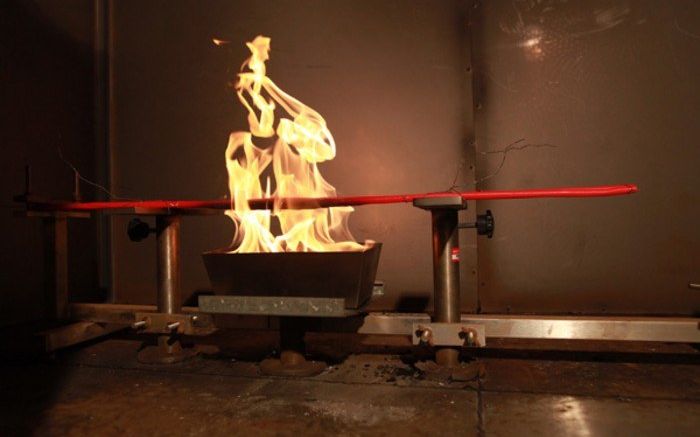
Single Flame Cable Test
While fire testing of cables is extremely important, a comprehensive testing regime should be adopted to validate overall performance. Testing is essential to ensure cables are fit for-purpose, will perform in challenging conditions and will not fault electrically, mechanically or otherwise which may spark and lead to fire.
Completing a range of tests provides a more robust and accurate indication of how a cable will perform during normal use as well as in emergencies. All cables should be tested for a wide range of characteristics to ensure they meet quality and safety standards, and relevant regulatory requirements.
Which other properties are important?
The below introductions will give you an insight into why testing additional performance characteristics, beyond fire testing, should give you confidence in your selected cable products.
Electrical testing assesses the performance of insulation, conductors and cable armour through the application of voltage and use of specialist laboratory equipment.
High voltage and insulation resistance tests are most frequently called up in standards, as these are designed to detect defects and ensure insulation quality is consistent across all cables. Conductor resistance testing is also essential as this assesses the amount and quality of the conductor material within the cable, ensuring that it will successfully carry the current it was designed to.
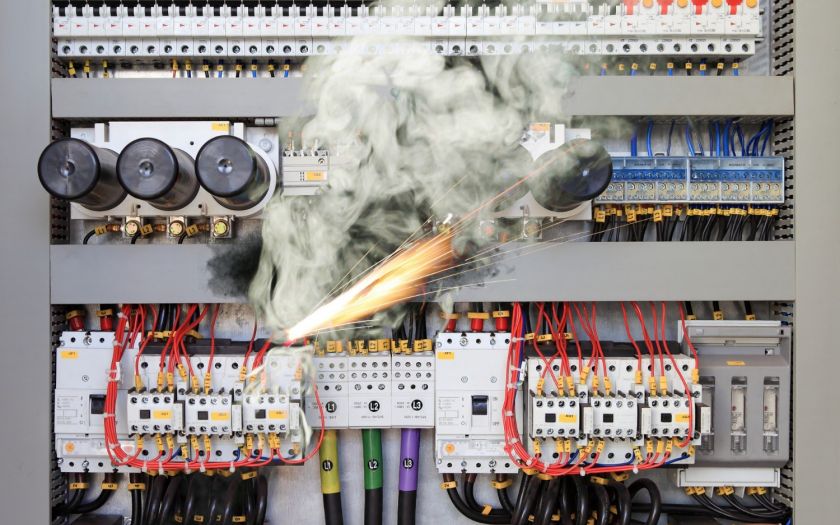
Overload Electrical Circuit Board
Mechanical testing assesses how well cables will perform in the environmental conditions it may have been specified for.
Flexing tests assess the operation of cable when subjected to regular movement and torsion throughout their lifespan, while abrasion, shrinkage and tensile strength tests are frequently called up by standards as conductors can be exposed during cable operation, which can pose a safety risk and danger.
In the same way, cold impact tests are conducted to check that cable can withstand bending and impact at low temperatures during installation and normal use.
Material testing assesses the durability and longevity of sheathing and insulation, by exposing cables to high temperatures over a sustained period.
Tests range from one hour to over six months in duration and simulate service conditions to understand the typical lifespan these cables are expected to exhibit.
Hot set tests are used to check a suitable level of cross-linking is present within various insulation and sheathing materials, while hot pressure tests check that materials are suitably resistant to indentation at elevated temperatures.
Chemical testing assesses how cable conductors and insulation react to exposure to chemicals.
Other tests check for corrosive and acid gas, pH and conductivity, and the presence of halogens, which may also form part of effluent testing when burning. They also assess oil and grease resistance as exposure to these substances can cause insulation to degrade and crack.
Common chemical tests also include the measurement of tin coating applied to conductors and the weight of zinc coating which is applied to armour wires. Checking these properties ensures that a suitable quantity of each material has been applied in the production of the cable.
Fire testing is important because it assesses how well cables perform in the event of a fire. Single flame testing is the minimum performance requirement called up in standards, and the purpose of this test is to measure flame spread characteristics of both materials and cable construction.
A vertical ladder test works in the same way but on a larger scale and applies to multiple cable lengths. Circuit integrity tests check that cables will continue to operate sufficiently well during a fire to supply power to emergency apparatus, while smoke emission tests measure the density of smoke produced.
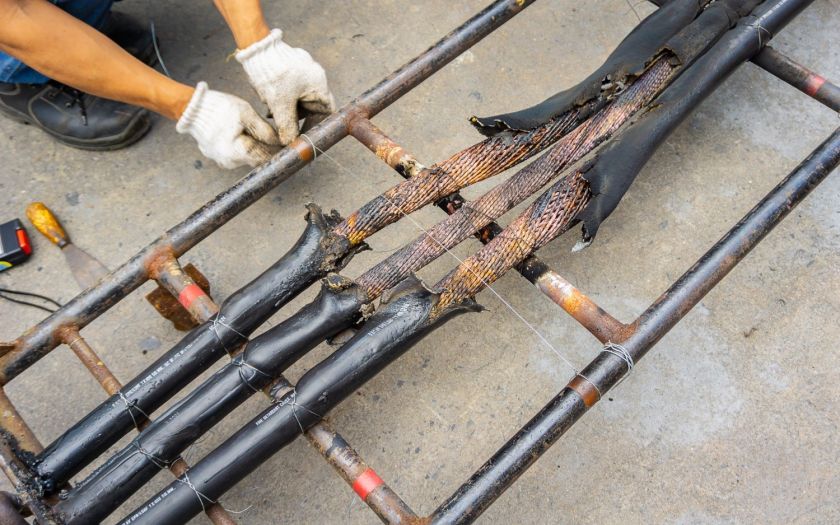
Burned Cable Ladder
Each of these testing criteria assess specific characteristics of cable performance and help to provide a more robust view of quality and safety. While cables may be appropriate in terms of their fire performance, this does not guarantee they will perform effectively when exposed to extreme temperatures or power surges.
It is therefore critical that a range of characteristics are known and quantified for the end user to specify correctly the right product for any given application.

Cable testing and building regulations
Cable performance should be integral to the tendering process for any building contractor and is often included within codes of practice and local, National and International regulatory requirements. While requirements vary between regions, the main objective is usually to ensure the health and safety of those who will be inhabiting the buildings. With new building codes having recently been published in Ghana1 and Nigeria2, building regulations continue to evolve around the world.
Whether a country has existing building regulations, or an organisation is seeking the additional peace of mind that independent testing provides, comprehensive testing of building components is recommended. Partnering with BASEC to help you deliver your commitment to quality and safety is your choice.
The Construction Products Regulation (CPR), for example, has required since July 2017 that all cables sold into Europe intended for permanent installation in a building or civil engineering work are CE marked, to validate compliance to the fire performance requirements of EN 50575.
The CPR awards a fire classification based upon how well cables have performed through a range of fire tests EN 50399, EN 60332-1-2, EN 61034-2 and EN 60754-2, with ratings ranging from classes Aca (the highest) to Fca (the lowest).
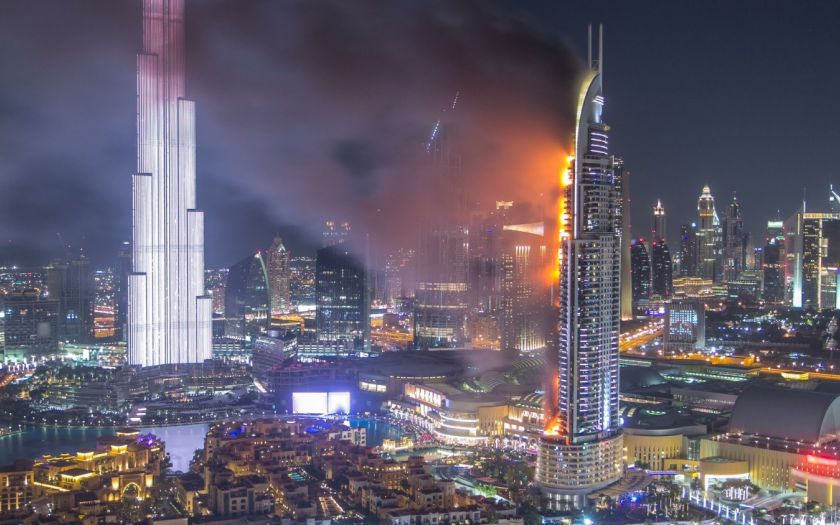
Dubai Tower Fire
As cables are safety critical items, quality and safety should be at the forefront of your mind when specifying and selecting the right cable for application.
Cable must be fit for purpose and manufacturers not only have a responsibility to themselves but also to the end user that the cable they manufacture will function as designed and has been independently approved and verified.
Cables can be simple or complex and minor changes to the design, material inventory or manufacturing process can significantly affect their properties, potentially causing them to no longer function as expected, either in normal use or extreme conditions, which can have a serious impact on life and property.
Failure of systems can have tragic consequences as the recent fires at The Address Tower in Dubai and Grenfell Tower in London have demonstrated.
BASEC is the preferred testing and certification partner to the worldwide cable industry. The mark of independently approved quality and safety is only awarded when cable products have been rigorously tested to meet the highest industry recognised standards. The BASEC name is synonymous with quality and safety and our independent cable certification and testing is trusted and respected around the world.
For over 45 years BASEC has been a mark of reassurance for those manufacturing, specifying and installing cable. Our comprehensive product testing approvals, stockists and control cable certification schemes provide purchasers and contractors with the peace of mind that the cable they install is compliant, safe, fit for purpose and will provide years of reliable service. To discuss your requirements, contact the team now.
1Construction Review Online
2Global Construction Review
The British Approvals Service for Cables (BASEC) is a recognised sign of assurance of independent cable testing and approval. As an independent body, BASEC has for nearly 40 years been a mark of reassurance to those specifying cable.
BASEC – British Approvals Service for Cables
As industry experts in CPR (Construction Products Regulation) testing BASEC has issued over 3,000 CPR classification reports, delivered through in-house laboratory equipment and by working closely with manufacturers to raise cable product classifications for higher fire performance characteristics.
The British Approvals Service for Cables (BASEC) is a recognised sign of assurance of independent cable testing and approval. As an independent body, BASEC has for nearly 40 years been a mark of reassurance to those specifying cable.
Cable Quality Seminar
BASEC run a number of FREE Cable Quality Seminar’s across the country suitable for anyone and everyone who is working to deliver projects which include cable installations.
Do not miss your opportunity to build your awareness of cable quality.
Middle East Electricity 2020, Dubai
How Do You Measure Fire Resistance?
Electrical failures and malfunctions are leading sources of ignitions for fires.
In the event of a fire, the resistance class of your electrical cable is critical to how much and how quickly the fire could spread.
54.4% of fires caused by electricity with an average of 4 fatalities per day. Specifying BASEC cables can help you to achieve higher fire classifications through independent cable testing.
THORNE & DERRICK
Thorne & Derrick are national distributors of LV, MV & HV Cable Installation, Jointing, Substation & Electrical Equipment – servicing businesses involved in cabling, jointing, substation, earthing, overhead line and electrical construction at LV, 11kV, 33kV, 66kV and EHV. Supplying a complete range of power cable accessories to support the installation and maintenance of low/medium and high voltage voltage power systems:
- Slip-on Cable Terminations
- Cold-shrink Cable Terminations
- Heat-shrink Cable Terminations
- Cable Joints – Heat & Cold-shrink
- Separable Connectors (Euromold)
- Surge Arresters & Switchgear/Transformer Bushings
Key Product Categories: Duct Seals | Cable Cleats | Cable Glands | Electrical Safety | Arc Flash Protection | Cable Jointing Tools | Cable Pulling | Earthing | Feeder Pillars | Cable Joints LV | Joints & Terminations MV HV
Top Dos And Don’ts – Cable Delivery, Pulling And Installation
September 3rd, 2019
Article by BASEC | Article 4 of 10
BASEC Cable Delivery, Pulling and Installation Guide
Correct cable handling is essential for a safe and reliable electrical installation. However, cables can suffer damage before they enter service.
In this article, BASEC explains the key dos and don’ts of cable delivery, pulling and installation.
Thorne & Derrick collaborate with BASEC to raise awareness of electrical safety and cable quality. Together, we encourage the use of independently tested and certified cables.
Our collaboration also promotes the correct selection of cable accessories and suitable installation equipment.
Furthermore, we thank BASEC for allowing us to republish this guidance as part of our cable quality article series.
Why Correct Cable Installation Matters
Electrical cables often remain hidden once installation is complete. Nevertheless, they play a vital role in distributing power and carrying control or communication signals.
Correctly specified cables can provide reliable service for many years. However, their performance also depends on careful handling and installation.
For example, excessive bending can damage cable components. Likewise, pulling cables with too much force can affect their construction.
Therefore, installers must consider the cable’s mechanical limits throughout the project.
How Can Cable Damage Occur?
Even high-quality cables can suffer damage during delivery or installation.
Common causes include:
- Excessive bending during handling.
- Incorrect cable drum sizes.
- Damage from sharp edges.
- Excessive pulling tension.
- High sidewall pressure around bends.
- Twisting during cable pulling.
- Water entering unsealed cable ends.
In addition, poor storage conditions can expose cables to unnecessary environmental stress.
As a result, installers should protect cables from delivery through to final termination.
The Cost of Damaged Cables
Cable installation damage can cause serious project delays.
For example, contractors may need to remove and replace damaged cable sections. Consequently, the project may require additional labour and materials.
Furthermore, damage may remain hidden until the electrical system enters service.
In these cases, faults can interrupt power supplies or affect control and communication systems.
Therefore, correct installation practices are essential for both safety and long-term reliability.
1. Cable Delivery and Cutting to Length
Safe cable handling begins before the cable arrives on site.
Manufacturers normally supply cables on suitable drums or reels. These provide support during storage, transportation and handling.
However, cutting cable to length can introduce additional risks.
Do: Use Suitable Cable Drums
When cutting cable to length, the supplier may transfer it onto a smaller drum.
Before doing so, the supplier should check the minimum permitted bending radius.
If the new drum has a small barrel diameter, the cable may bend too tightly.
As a result, the insulation, sheath or other cable components could suffer damage.
Don’t: Allow Cable Sheath Damage
Careless handling can also cause external scuffing.
For example, dragging cable across rough surfaces may damage its outer sheath.
Therefore, suppliers and installers should use suitable handling methods and inspect cables for visible damage.
2. Protect Cable Ends Against Water Ingress
Cutting a cable exposes the internal cable construction at its ends.
Consequently, moisture can enter if the installer leaves those ends unprotected.
Water ingress may affect cable performance and lead to additional installation problems.
Do: Fit Suitable Cable End Caps
Installers should protect exposed cable ends using suitable cable end caps.
These products help prevent moisture entering during storage, transportation and installation.
Furthermore, suitable end protection helps maintain the condition of the cable before jointing or termination.
Don’t: Leave Cut Cable Ends Exposed
Unprotected cable ends may allow water to enter the cable.
This is particularly important during outdoor installations or prolonged storage.
Therefore, installers should seal cable ends promptly and follow the manufacturer’s storage requirements.
3. Maintain the Correct Cable Bending Radius
Cable bending radius is one of the most important installation considerations.
Every cable has limits on how tightly it can bend. However, these limits vary according to cable construction and application.
For example, armoured cables and higher-voltage cables may require larger bending radii.
Do: Follow the Manufacturer’s Bend Radius
The cable manufacturer should provide the applicable minimum bending radius.
In addition, installers may need to consider two different values:
- Dynamic bending radius: The minimum radius during cable pulling or movement.
- Static bending radius: The minimum radius after installation, when the cable is no longer moving.
These values may differ. Therefore, installers must use the correct limit for each stage of the installation.
Don’t: Force Cables Around Tight Bends
Excessive bending can place mechanical stress on cable components.
For example, a tight bend may damage armour, insulation or screening layers.
Consequently, installers should assess the complete cable route before pulling begins.
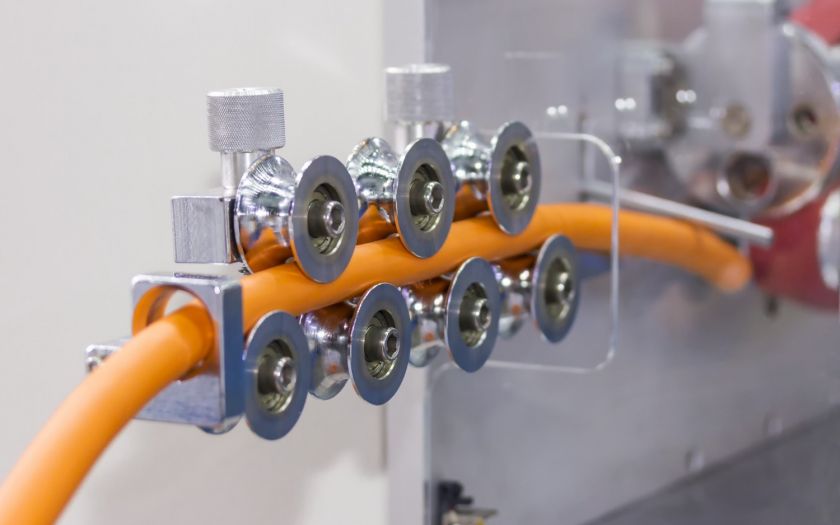
Where necessary, they should also use suitable guides and rollers to maintain the required bending radius.
Armoured Cable Bending Radius
Armoured cables require particular care because bending can affect their mechanical construction.
For example, forcing an armoured cable around a small roller can place excessive stress on the armour.
BASEC’s original guidance uses the example of a four-core armoured cable with an outside diameter above 40mm.
It suggests a bicycle wheel as a simple visual reference for the size of some cable bends. However, this is only an illustration, not an approved calculation method.
Always use the cable manufacturer’s specified bending radius.
4. Control Cable Pulling Tension and Sidewall Pressure
Cable pulling places mechanical forces on the cable.
Therefore, installers must control both pulling tension and sidewall pressure.
Excessive force can damage the cable even when the route appears suitable.
Do: Plan the Cable Pulling Route
Before installation, contractors should assess the cable route.
For example, they should identify bends, changes in direction and potential obstructions.
In addition, they must consider the maximum permitted pulling tension.
A properly planned route helps reduce unnecessary friction and mechanical stress.
Do: Use Suitable Cable Rollers
Cable rollers support cables during installation.
Furthermore, correctly positioned rollers help guide the cable around bends and along the route.
However, one roller may not provide a large enough bend radius.
Therefore, installers may need several rollers or guides to achieve the required cable curvature.
Don’t: Exceed the Cable’s Mechanical Limits
Excessive pulling tension can damage conductors and other cable components.
Likewise, high sidewall pressure can create problems where cables pass around bends.
Consequently, installers should use approved pulling calculations and suitable equipment.
Where required, tension monitoring helps operators keep the pulling forces within the specified limits.
5. Protect Screened and Fire-Resistant Cables
Screened cables require careful handling during installation.
For example, some fire alarm cables use screening and insulation systems that support their fire performance.
However, tight bends or damaged screening can affect the cable construction.
Do: Follow Fire-Resistant Cable Requirements
BASEC highlights screened cables covered by standards such as BS 7629-1.
Installers should follow the manufacturer’s bending radius and installation instructions.
Furthermore, the cable’s fire performance may depend on its tested construction and installation conditions.
Don’t: Damage Cable Screens
Kinks or sharp bends may affect the screening arrangement.
In addition, forcing a cable into an unsuitable accessory can introduce mechanical stress.
Therefore, installers should check the cable route and accessory compatibility before installation.
6. Monitor Cable Bending Radius During Installation
Maintaining the correct bending radius can be difficult on site.
For example, some bends may appear acceptable while containing a smaller, tighter section.
Consequently, visual checks alone may not identify every problem.
Do: Use Suitable Measuring Tools
Installers often use templates to check whether a cable meets the minimum bending radius.
These provide a simple visual guide. However, they may not identify every tight section.
For more accurate checks, contractors can use purpose-designed radius gauges.
As a result, they can assess cable bends more consistently.
Don’t: Rely Only on Visual Estimates
A bend may look suitable without meeting the required dimensions.
Therefore, installers should measure critical bends and compare them with the manufacturer’s requirements.
In addition, they should record any checks required by the installation specification.
7. Avoid Twisting During Cable Pulling
Incorrect pulling methods can introduce twists into a cable.
This is particularly important when installers pull cables in different directions from a common point.
Don’t: Introduce Cable Torsion
Some installation methods involve pulling part of a cable in one direction.
Installers then lay out the remaining cable before pulling it in the opposite direction.
However, this approach can introduce twists if the cable cannot rotate freely.
As a result, the cable may suffer mechanical damage.
What Is Cable Bird-Caging?
Bird-caging describes a form of cable deformation where armour wires or other stranded components spread apart.
For example, excessive twisting may cause the cable armour to distort.
Consequently, the outer sheath may split or suffer additional damage.
Therefore, installers should avoid methods that introduce uncontrolled torsion.
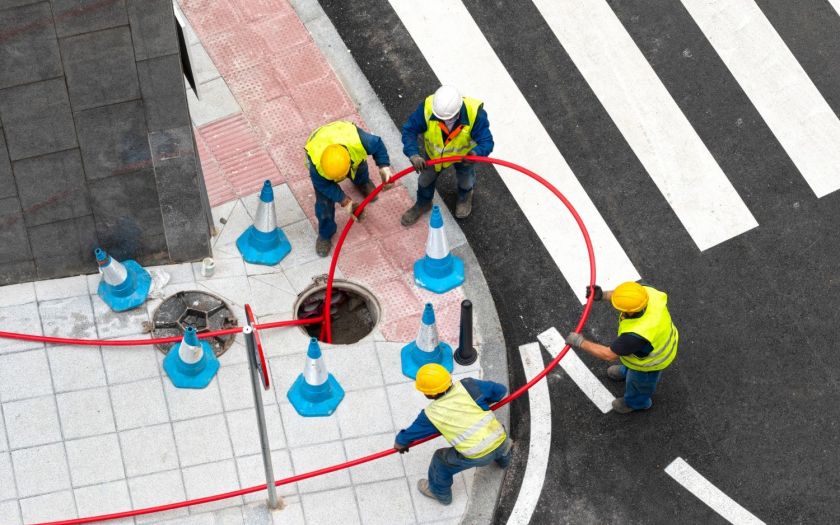
Workers pulling cable across pipes to supply energy to a neighbourhood
8. Use the Correct Cable Pulling Equipment
Suitable cable pulling equipment helps installers control cable movement.
Furthermore, the correct accessories can reduce friction and unwanted twisting.
Do: Use Suitable Cable Pulling Socks
Cable pulling socks provide a gripping connection for suitable cable pulling applications.
Depending on the arrangement, rotating pulling heads or swivels can also help manage cable rotation.
As a result, installers can reduce the risk of unwanted torsion during pulling.
Don’t: Restrict Cable Rotation
BASEC warns against pulling arrangements that prevent the cable from rotating when necessary.
For example, an unsuitable rope connection may restrict rotation and introduce twisting.
Furthermore, tension generated around bends can affect other sections of the cable route.
Therefore, contractors should choose pulling accessories that suit the cable and installation method.
Do: Monitor Cable Pulling Forces
For demanding installations, contractors may use tension-monitored cable winches.
These help operators control pulling loads and identify excessive tension.
In addition, correctly positioned rollers and guides support cable movement.
Consequently, the combined equipment can reduce installation risks when operators follow the approved method.
BASEC Cable Installation – Dos and Don’ts Summary
Successful cable installation depends on preparation, suitable equipment and careful handling.
For example, installers should check cable dimensions and mechanical limits before pulling begins.
Furthermore, they should protect cable ends and prevent unnecessary twisting.
What Should Cable Installers Do?
- Check the manufacturer’s minimum bending radius.
- Use correctly sized cable drums and reels.
- Protect cut cable ends against moisture.
- Plan the cable pulling route.
- Control pulling tension and sidewall pressure.
- Use suitable cable rollers and guides.
- Prevent uncontrolled cable twisting.
- Inspect cables for visible damage.
What Should Cable Installers Avoid?
- Using drums with unsuitable barrel diameters.
- Dragging cables across sharp or rough surfaces.
- Leaving cut cable ends exposed.
- Forcing cables around tight bends.
- Exceeding the permitted pulling tension.
- Using unsuitable pulling connections.
- Allowing cable armour to twist or deform.
- Ignoring damage identified during installation.
By following these principles, installation teams can reduce avoidable cable damage.
However, the final installation method must always follow the cable manufacturer’s requirements and the approved project design.
Conclusion – Successful Cable Delivery and Installation
Careful handling is essential throughout cable delivery, storage and installation.
For example, correct drum selection helps prevent excessive bending. Meanwhile, suitable end caps protect exposed cable ends.
In addition, well-planned pulling routes reduce the risk of mechanical damage.
Experienced installation teams should use suitable equipment, including tension-monitored cable winches, rollers and pulling socks.
As a result, contractors can improve installation quality and reduce costly delays.
Most importantly, the complete installation must remain within the cable manufacturer’s specified limits.
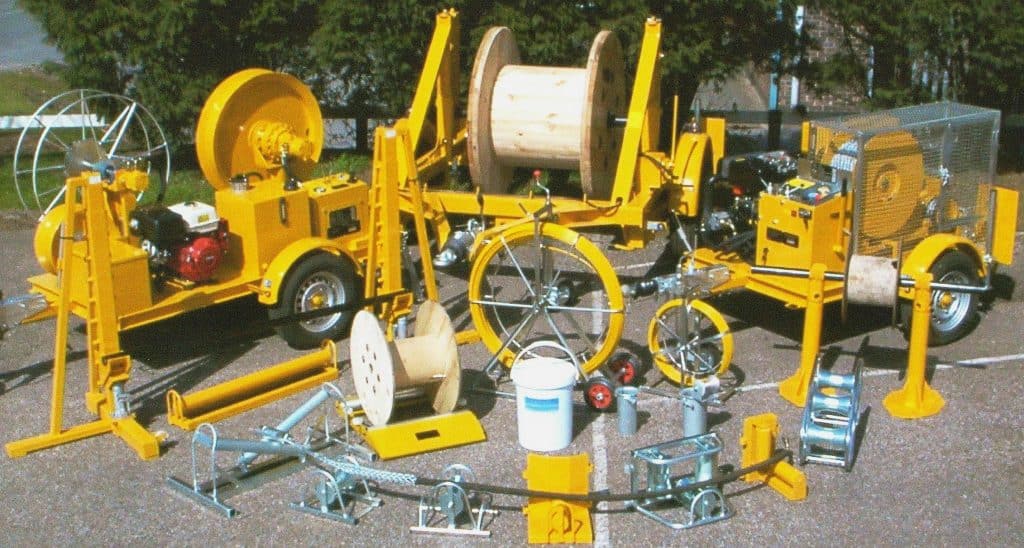
Cable Rollers | Drum Lifting Jacks | Duct Rods | Cable Socks | Cable Lubricant | Duct Seals | Cable Duct
About BASEC – British Approvals Service for Cables
BASEC is an independent cable testing and certification organisation.
Its work helps manufacturers demonstrate compliance with relevant cable standards and specifications.
In addition, BASEC provides testing and certification services linked to cable safety and performance.
As a result, specifiers and electrical contractors can use recognised certification information when selecting cables.
BASEC Cable Testing and Certification
BASEC has extensive experience in cable testing, including work linked to the Construction Products Regulation (CPR).
The original article reported more than 3,000 CPR classification reports.
Furthermore, BASEC works with cable manufacturers to assess product performance and relevant requirements.
These activities support greater confidence in cable quality.
BASEC Cable Quality Seminars
BASEC has also organised educational seminars on cable quality and compliance.
For example, these events have helped industry professionals understand product testing and certification.
However, the original article’s seminar information is historical. Therefore, readers should visit the BASEC website for current training and event information.
Middle East Electricity 2020, Dubai
Why Specify BASEC Approved Cables?
Independent cable certification provides additional assurance when selecting electrical cables.
For example, testing helps assess whether cable products meet relevant standards.
Furthermore, certification and ongoing assessment can support confidence in product consistency.
However, installers must still select the correct cable for the intended application.
Suitable handling and installation remain essential, even when the cable carries recognised certification.
BASEC Cable Quality Video
The following BASEC video explains the importance of specifying approved cable products.
In addition, it highlights the role of independent testing and certification within the electrical industry.
Thorne & Derrick – Cable Installation Equipment
Thorne & Derrick supply specialist electrical equipment for LV, MV and HV cable installation projects.
Our product range supports contractors working on underground cables, overhead lines, substations and electrical infrastructure.
In addition, we supply accessories for power networks operating at 11kV, 33kV, 66kV and other suitable voltage levels.
Consequently, customers can source cable pulling, jointing and installation equipment for a wide range of applications.
MV and HV Cable Accessories
Our range includes specialist products for cable jointing and termination applications.
- Slip-on cable terminations.
- Cold shrink cable terminations.
- Heat shrink cable terminations.
- Heat shrink and cold shrink cable joints.
- Separable connectors, including Nexans Euromold.
- Surge arresters and electrical equipment bushings.
Furthermore, Thorne & Derrick support customers with product selection and availability enquiries.
Key Cable Installation Product Categories
- Cable Pulling and Laying Equipment
- Cable Cleats
- Cable Duct Seals
- Cable Glands
- Electrical Safety Equipment
- Arc Flash Protection
- Cable Jointing Tools
- Earthing and Lightning Protection
- Electrical Feeder Pillars
- LV Cable Joints
- MV and HV Cable Joints and Terminations
For product information, technical advice or availability, contact Thorne & Derrick.