Blog
IEC 61482-2 | Arc Flash Clothing & Protection Standard (Version EN-IEC 61482-2: 2020)
March 22nd, 2023
EN-IEC 61482-2: 2020 Protective clothing against the thermal hazards of an electric arc
EN IEC 61482-2:2020 Supersedes IEC 61482-2:2009
IEC 61482-2 Standard is an International Electrotechnical Commission standard regarding live working – protective clothing against the thermal hazards of an electric arc. This part of EN 61482 specifies requirements and test methods applicable to materials and garments for protective clothing for electrical workers against the thermal hazards of an arc flash.
Electric shock hazards and other effects like noise, light emissions, pressure rise, hot oil, the consequences of physical and mental shock or toxic influences are not covered by this standard. Protection of eyes, face, head, hands, and feet against electric arc hazard fall outside the scope of this standard.
EN IEC 61482-2 includes two methods for testing. Garments can be certified according to one of the test methods or to both test methods.
What is an electric arc?
Electric Arc and the Arc Flash created is an extremely dangerous and least understood hazard of electricity. It occurs as a result of extreme discharges of voltage or electrical current from equipment including switchgear, transformers and heavy electrical equipment. The Arc generates a high level of energy for a very short span of time (up to 1 second). The intense heat can create temperatures as high as 19,000°C and it also produces electric shock, force and large quantities of thermal radiant energy.
What is the Risk?
In any situation where your employees are working with electricity, an Arc Flash can occur and as such the maximum energy of default circuits in any electrical installation must be able to be determined. The risks of an electric Arc exposure are:
- Electrocution – potentially fatal
- Extremely high levels of Radiant Heat
- 1st, 2nd or 3rd Degree burns – 3rd Degree burns cause permanent damage
Arc Testing Methods
EN-IEC 61482-1-1:2019 supersedes IEC 61482-1:2009 – “Open Arc Test Method”
USA Arc Flash Test Method
The Open Arc Test Method (ATPV test and garment test) determines the Arc Rating Arc Thermal Protection Value (ATPV level), ELIM (incident energy limit) or Energy Break Open Threshold (EBT) of flame-resistant material (Method A) and clothing (Method B). The basic principle is that the ATPV of the garment must be higher than the Arc Flash energy level as calculated. The “Open Arc” test method is the same as the original North American method for measuring the Arc Thermal Performance Value (ATPV) as used in ASTM F1959. The Arc Rating is expressed in cal/cm² (calories per centimetre square).
EN-IEC 61482-1-2:2015 – “Box Test Method”
European Arc Flash Test Method
In the Box Test Method, materials and clothing will be tested using two methods: the material box test method and the garment box test method.
The material box test method is used to measure and determine material response to an arc exposure when tested in a flat configuration. A quantitative measurement of arc thermal performance is made by means of the energy transmitted through the material. During this test, a fabric sample is exposed to an electric arc produced by a 4kA or 7kA short circuit. In this test, the arc does not last any longer than 500ms. The amount of heat transmitted through the sample is measured during and after the test.
Based on the resulting data and a Stoll curve, the length of time it would take to cause the onset of second-degree burns is subsequently determined. Samples are also assessed for after-flaming, hole formation, melting, etc.
The garment box test method is used to test the function of the protective clothing after an arc exposure (i.e., no heat flux will be measured). This test must be conducted on a complete garment. In doing this, the objective is not to determine the energetic value, but to assess the garment after exposure to an electric arc for defects in the seams, fastenings, and other closures.
The garments are tested and evaluated in two classes in the same test:
- APC1 (Arc protection class) protects against electric arc of 4kA (arc energy 168 kJ)
- APC2 protects against electric arc of 7kA (arc energy 320 kJ)
The standard requires the following:
- A garment must have at least an ELIM value of 3,2 cal/cm2 (130 kJ/m2), or else an ATPV or EBT value of 4 cal/cm2 (167.5kJ/m2) according to IEC 61482-1-1 or APC1 when tested according to EN IEC 61482-1-2
- Garments must be sewn with inherently flame-resistant threads
- If a garment has a higher rating of arc protection on the front than on the back, the garment’s torso, sleeves, and legs must be made using the arc-rated material; the back of the garment can have a lower arc rating
- Garments must have no exposed external metal (i.e., any internal metal or melting parts are to be covered inside to avoid contact with the skin)
- The garment label must show the lowest ATPV or class if the garment is comprised of different panels of material; more detailed information about areas of the garment with varying levels of protection may be provided on the garment’s label or in the manufacturer’s instructions pertaining to use
- The protective clothing material must have some minimum tensile, tear, and burst resistance and minimum dimensional stability (e.g., for wear and tear associated with cleaning)
- The garments must cover the entirety of the wearer’s body. For example, jacket and trousers must be worn together with other personal protective equipment (PPE), including a helmet with a protective visor, protective gloves, and protective footwear (i.e., work boots) to achieve the correct level of protection. Layering is very important and will increase protection (e.g., if you wear flame-retardant underwear beneath your flame-retardant garments, you are better protected).
ARC FLASH PPE & ELECTRICAL SAFETY
Main UK Stockists & Distributors of Electrical Safety Products
Thorne & Derrick provide Electrical Safety Equipment to substation engineers, cable jointers, overhead linesmen and utility workers with PPE and electrical safety equipment including insulating gloves, voltage detectors, insulating matting and portable earthing to ensure worker safety when carrying out maintenance on LV-HV switchgear, substations, cables and electrical equipment.

We protect substation engineers, asset managers, SAPS, cable jointers, overhead linesmen and utility workers with PPE and safety equipment: this includes insulating gloves, voltage detectors, insulating matting and portable earthing to ensure worker safety when carrying out repair and maintenance on LV-HV switchgear, transformers, substations and turbines.
All our Cable Connection & Energisation Accessories including Medium & High Voltage joints, terminations, connectors and cleats are tested to the latest international standards and supporting ranges of professional cabling tools are stocked to reduce incident, accident and downtime to plant and people.
Safe Working on Electrical Installations by DEHN | Earthing & Short-Circuiting Devices
March 21st, 2023
Earthing & Short-Circuiting Devices Electrical Safety
Safe Working on Electrical Installations
Earthing and Short-Circuiting Devices
Save you life during work on electrical installations
When working on electrical installations, it is crutial that the five safety rules are observed.
Earthing and short-circuiting at the work location is the key element of these rules. It ensures a de-energised state for the duration of the work in case of interference voltages, atmospheric overvoltages or accidental re-connection.
Thorne & Derrick provide an extensive range of electrical safety equipment including insulating gloves, voltage detectors, insulating matting and portable earthing to ensure worker safety when carrying out maintenance on LV-HV switchgear, substations, cables and electrical equipment.

Electrical Safety Products for LV MV HV Cables, Conductors, Substations & Earthing
Five Safety Rules
In Accordance with EN 50110-1 (DIN VDE 0105-100)
- Disconnect completely
- Secure against re-connection
- Verify that the installation is dead
- Carry out portable earthing and short-circuiting
- Provide protection against adjacent live parts
The installation must be disconnected completely and secured against re-connection first. After testing and verifying with a voltage detector that the installation is dead, the earthing and short-circuiting device is connected to the earthing system. Then, it is connected to the parts to be earthed using an earthing stick. The earthing and short-circuiting device should be visible from the work location.
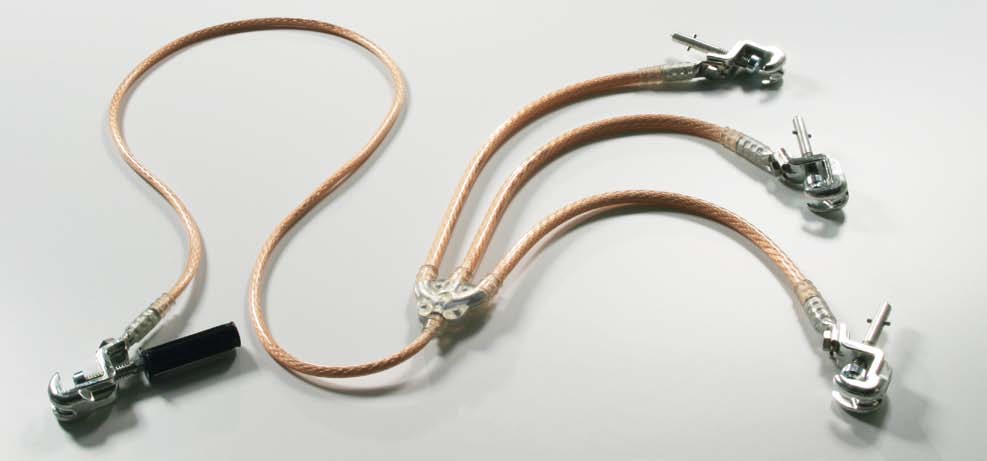
Electrical safety Equipment From DEHN
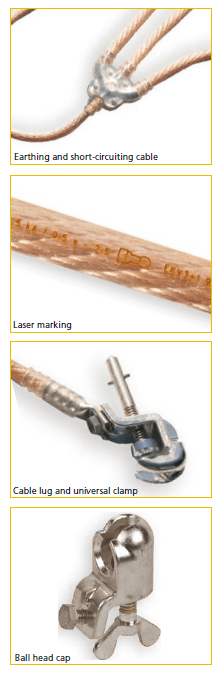 Short-circuiting cable
The transparent node unit and cables ensure easy visual inspection and allow the user to immediately detect signs of damage and corrosion. The cables and the connection element are fixed, thus preventing this connection from becoming loose even in case of the dynamic load of short-circuit currents. The cables are particularly robust and available with a cable crosssection up to 150 mm².
Laser marking
The new laser marking on the short-circuiting cable ensures permanent marking with the most important product information – directly on the product.
Universal clamp
We have clamps for every application: For fixed ball points with a diameter of 20 mm and 25 mm and flat clamps for copper bars. The PVC-sheathed cable lug ensures protection against twisting and damage.
Ball head cap
Ball head caps are available as rigid and adjustable ball head caps. A ball head cap that can be rotated by 4 x 90° allows the earthing and short circuiting device to be used in the most favourable position. The connection between the fixed ball point and the ball head cap ensures an extremely high degree of short-circuit strength.
Earthing and short-circuiting devices are produced in a standard-compliant and proven manner and are extensively tested in our test laboratories.
In-house production of all components ensures maximum quality and safety in terms of function and handling. With earthing and short-circuiting devices from DEHN you are always on the safe side.
Earthing and short-circuiting configurator
Easy online configuration of earthing and short-circuiting devices
Safe working on electrical installations is only ensured if the earthing and short-circuiting device is configured correctly. Thus, the selection of the earthing and short-circuiting device is always the first step. The new earthing and short-circuiting configurator makes selection easy:
- The intuitive menu navigation allows quick selection of the right earthing and short-circuiting device for your application.
- Precise and perfectly harmonised selection of the connection elements and earthing and short-circuiting cables.
- The variant number allows to clearly identify the finished product and order it at a later date.
- You may also use the Part No. of your previous orders for configuration.
- The selected product can be added to the shopping cart, sent via e-mail or printed.
- The technical data on the product are directly linked – online and thus always up to date.
➡ New earthing and short-circuiting configurator
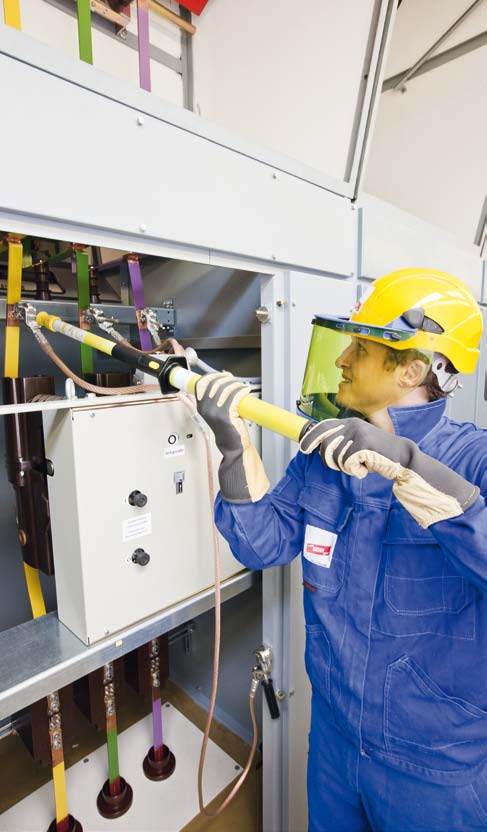
Earthing and short-circuiting device in 8 steps
- Selection mode
First select
a. Product view or
b. System view
Select the product view if you already know which cable cross-section and clamps are to be used. In the system view the parameters of the switchgear installation are entered, for example the maximum short-circuit current and the type of earthing. Whether product or system view – both solutions lead to a technically sound earthing and short-circuiting device. - Basic structure
Define the basic structure of the earthing and short-circuiting device. - Phase cable end cross-section
Select the phase cable end cross-section of the short-circuiting cables. - Earth cable end cross-section
Decide whether the earth cable ends should have the same cable cross-section or a reduced cable cross-section. - Phase cable end equipment
Select the shaft type and connection element to be used on the phase cable end. - Earth cable end equipment
Select the operation and connection element for earth cable ends. - Earthing stick
Optional earthing sticks are available as accessory in different lengths and versions. - PDF of your selection
You can print the result of your selection, add it to the shopping cart or send it via e-mail. You may certainly return to your selection to make changes.
DEHN
DEHN are committed to the protection of workers and material assets. The energy and the spirit of innovation of more than 1,400 employees are reflected in their developments and innovative products in the field of lightning protection, surge protection and safety equipment.
The continuous growth of the DEHN group reflects their strong commitment to lightning protection, surge protection and safety equipment. The company’s global network of 11 subsidiaries and numerous sales partners passes on know-how and distributes high-quality products that are produced at their headquarters.
DEHN ensure that your buildings and installations are protected during operation, maintenance and repair. Their focus is particularly on wind energy, photovoltaic, process industry, traffic and communication solutions. You can be assured: DEHN protects.
ELECTRICAL SAFETY PROVIDERS
We protect substation engineers, asset managers, SAPS, cable jointers, overhead linesmen and utility workers with PPE and safety equipment: this includes insulating gloves, arc flash clothing, voltage detectors, insulating matting and portable earthing to ensure worker safety when carrying out repair and maintenance on LV-HV switchgear, transformers, substations and turbines.
All of our Cable Connection & Energisation Accessories including Medium & High Voltage joints, terminations, connectors and cleats are tested to the latest international standards and supporting ranges of professional installation tools are stocked to reduce incident, accident and downtime to plant and people.
Copper Terminal Lugs | NEW Range of Electrical Connectors from Cembre
March 16th, 2023
Copper Terminal Lugs
Copper Terminal Lugs by Cembre
Cembre has introduced two new terminals DR-NST into the existing DR-N copper terminal range for high quality and reliable LV & MV electrical connections:
Cembre DR16-10N-NST (Conductor Size 16mm2)
Cembre DR25-10N-NST (Conductor Size 25mm2)
The Cembre DR-N series of cable lugs are manufactured from electrolytic copper tube Cu-OF CW008A conform to UNI EN 13600.
Which are the main features?
- the annealing process optimizes the structural features of the material allowing an easier crimping and it guarantees the use of the electrical connector even with mechanical solicitations of various nature;
- the barrel entrance of the lug is chamfered to allow an easier and correct conductor insertion and its length facilitates precise positioning in the crimping tool die;
- cable lug dimensions are according to DIN 46235
UL listed for US and CANADA per UL486A-486B up to 35kV.
Cable cutting and crimping tools manufactured by Cembre are used to cut or crimp most types of low, medium and high voltage cables including EPR, PILC, XLPE, PVC insulated cables with copper or aluminium conductors, lead sheath, steel wire armour (SWA) or wire braid.
- Cembre Tools
- Mechanical Tools
- Ratchet Tools
- Hydraulic Tools Cable Cutters | Hydraulic Crimping Tools
- Battery Operated Tools
- Crimping Tools | Hydraulic Pressheads
Cembre tools are used for cutting and crimping underground cables or overhead lines to support the installation of LV-HV power cables and conductors into switchgear, substations, transmission and distribution networks – tools are the highest quality for the compression of connectors, lugs and joints in high voltage electrical cable installations in both indoor and outdoor locations from LV up to 33kV.

Cembre HT131-C Cable Crimping Tool | the industry leading and most extensively used hydraulic crimping tool for the connection and compression of electrical connectors, lugs and splices up to 400sqmm. This new model, self contained, robust and sturdy, will accept all semi-circular slotted dies, common to most 130 kN tools. The Cembre HT131-C tool features a double speed action: a fast advancing speed for rapid approach of the dies to the connector and a slower more powerful speed for crimping. For ease of operation and comfort of the operator the tool head can be fully rotated through 180 degrees. The built-in safety valve will by-pass the oil supply when the maximum pressure is reached, and the pressure release system can easily be operated at any stage of compression.

Stockists & Suppliers for the Cembre range of Electrical Connectors & Tools
Earth Bars | Wallis Earth Bar Software (WEBS)
March 6th, 2023Earth Bar Software
Copy & Video Courtesy of Andrew Trew | Marketing Administrator (AN. Wallis)
Copper earth bars provide a convenient common earthing point for electrical installations that require an earthing and lightning protection system, so why not send your earth bar enquiries to a company that has given blood, sweat (and a lot of) tears to a piece of software that truly breaks new ground in the world of earth bars.
Below is a 30-second video that shows the new Wallis Earth Bar Software (WEBS) creating:
· A 6-way earth bar
· Adding 2 disconnecting links
· Increasing the bar size from 50x6mm to 75x6mm
· Changing material of the hard-drawn plain copper bar to hard-drawn tinned copper bar
· Changing the base from Black PVC to Galvanised Steel to just feet
All topped off with a nice twirl at the end to give you a full 360-degree view of the earth bar.
This video only scrapes the surface of what this software can produce, and it is worth mentioning again that the below earth bar and its variations were completed well within 30 seconds! Ready to be sent to our customer for their approval. This is an internal piece of software that is used by AN Wallis staff daily to send the drawings that this software can produce for approval.
Send your earth bar challenge to Thorne & Derrick and let us amaze you with a full plan and side view upon completion along with an instant quote for your earth bar.
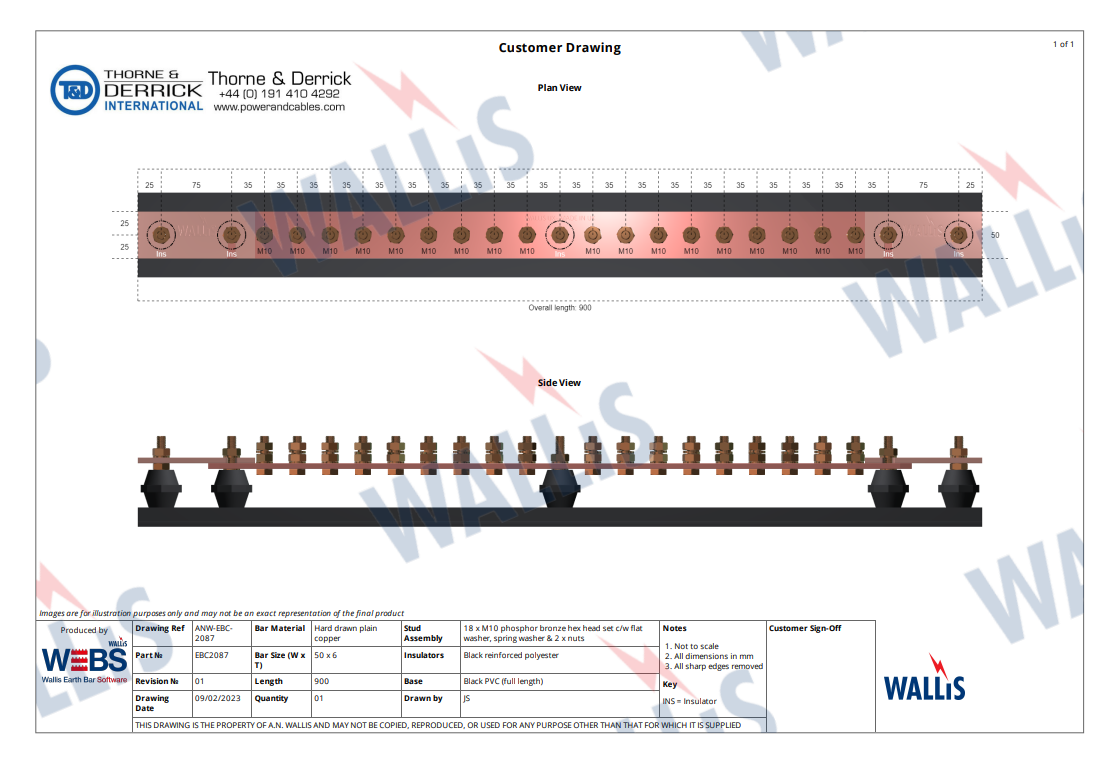
Earth Bar | Design & Specification & Manufacture Service
Pictured | Last month this project required 3 batches of 14 units of an earth bar with 18-way termination points and twin disconnection links for an OEM application in the industrial noise control sector. AN Wallis WEBS software was utilised to generate the above graphic concept of the finished manufactured earth bar. You can download the earth bar file here.
Further Reading
- Earth Bars | High Specification Copper Earth Bars for Lightning Protection Systems
- Correct Termination Of A Cable Lug Onto An Earth Bar | AN Wallis Guide

Earth Rods | Earth Tapes | Copper Earth Plates | Copper Earth Mats
THORNE & DERRICK are national distributors of LV, MV & HV Cable Installation, Jointing, Duct Sealing, Earthing & Electrical Equipment – we service UK and global businesses involved in cable installations, substation, overhead line and the installation of medium/high voltage cable joints and terminations at LV, 11kV, 33kV and HV.
Contact us for 3M Electrical, ABB, Alroc, AN Wallis, CATU Electrical, Cembre, Centriforce, CMP, CSD, Elastimold, Ellis Patents, Emtelle, Euromold, Filoform, Lucy Electric & Zodion, Nexans, Pfisterer, Polypipe, Prysmian, Roxtec, Sicame, WT Henley.
Foam Fails | Compliant Duct Sealing Systems for Substations & Electrical Networks
March 2nd, 2023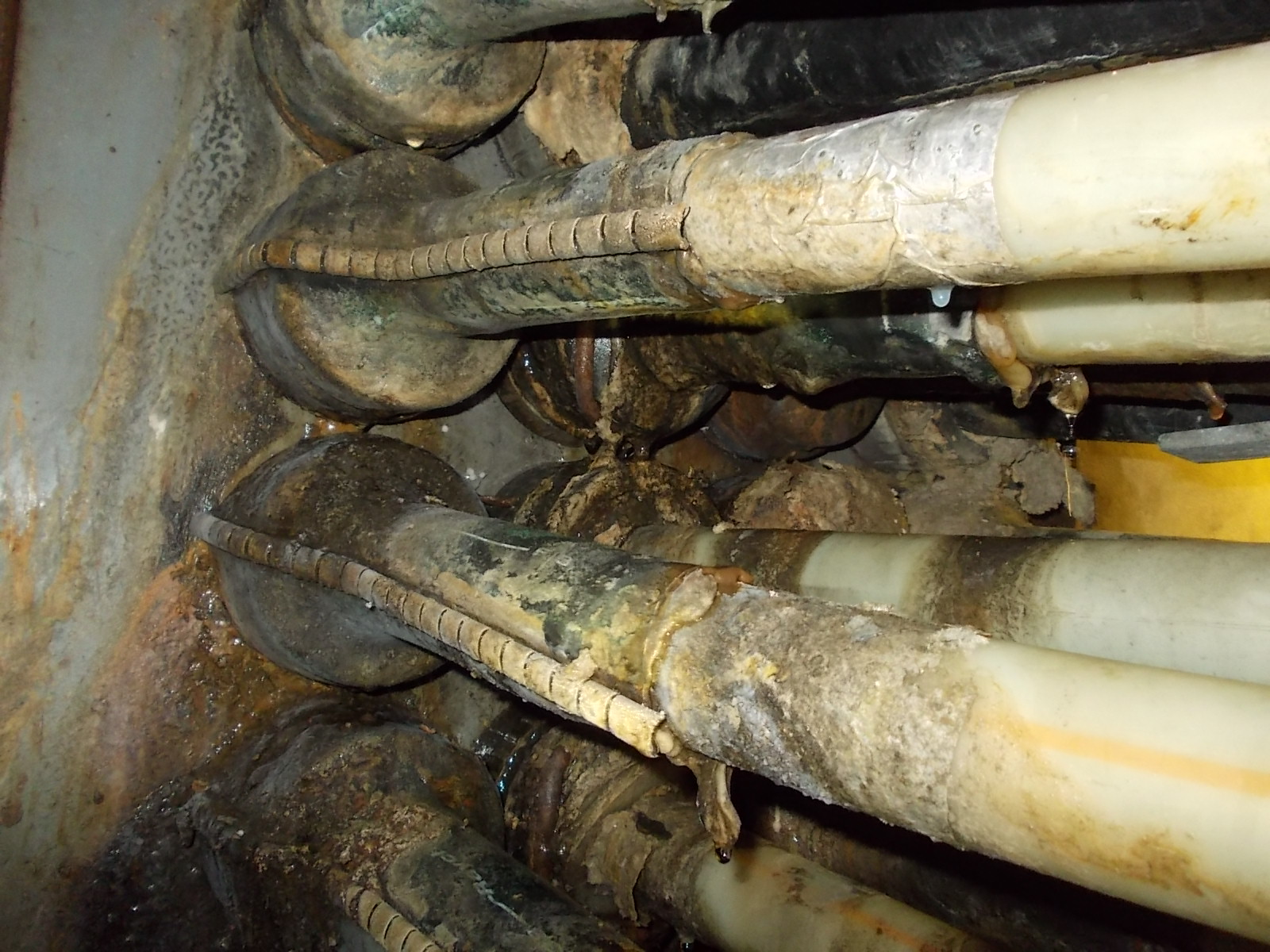
Duct Sealing Systems
Competitive Prices | Large Stocks | UK & Exports Sales | Technical Support | Site Survey & Demonstrations | Sealing Cables & Pipes
Most UK utilities have banned the use of expanding foam as a measure to effectively seal cable ducts against water ingress, gas migration or fire spread. Failure to correctly and safely seal cable ducts can inflict catastrophic damage to LV MV HV Electrical Distribution Networks, Substations and Power Supply.
Failure to correctly and effectively seal cable ducts can inflict catastrophic damage to LV-HV electrical distribution networks, substations and power supply. View below our complete ranges of Duct Sealing Products including cable transits to provide a watertight seal and defence against flood damage to low, medium and high voltage cable ducts with additional protection against harmful flammable gas migration and fire spread.
Contact Thorne & Derrick for largest UK stocks of several leading brands of Cable & Pipe Sealing Systems adopted by both electric (UK DNO Approved) and water (WIMES Specification) utilities. Call us with your Enquiry.
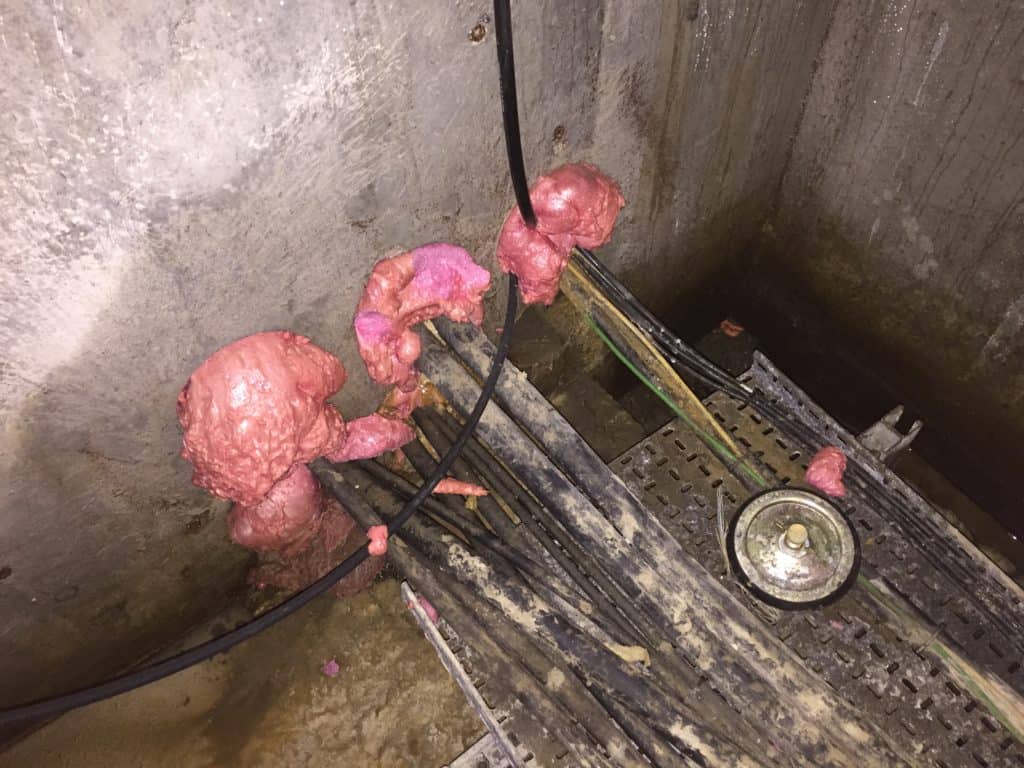
Expanding foam spray is effectively banned for sealing cable ducts in electrical and water utility sectors – the soft large cell structure will inevitably break down overtime and fail to provide adequate protection against water ingress or flooding into substations or buildings