With Kind Permission of: Edvard Csanyi (Editor-In-Chief & Electrical Engineer at EEP)
Author: Anne Thyssen (DTU Electrical Engineering, Center for Electric Power and Energy (CEE), Technical University of Denmark)
33kV & 66kV Models
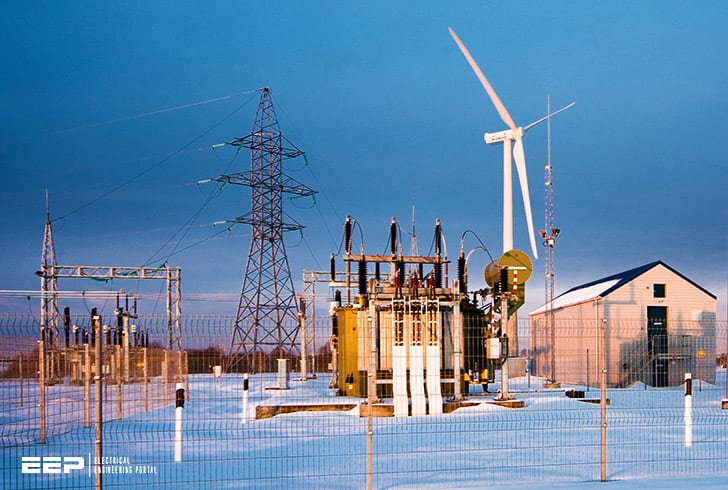
A generic wind farm with a 33kV collection grid is compared to a wind farm with a 66kV collection grid in Powerfactory. As the collection grid voltage is different in the 33kV and the 66kV wind farm the same wind turbine transformer cannot be used as the high voltage level of the transformer will be different.
To be able to make a good comparison between the two wind farms, it has been decided to use the 33kV wind farm’s wind turbine transformer as base component and only change the high voltage level of the transformer in the 66kV wind farm.
Model design
The 33kV wind farm is built in Powerfactory using standardised components based on an existing project library provided by Siemens Wind Power.
The 66kV wind farm is a modified version of the 33kV wind farm where the size of high voltage cables, the wind turbine transformers and substation transformers are changed to fit the 66kV level in the collection grid.
Hence, both wind farms have the same layout which is shown in Figure 1.
Figure 1 – Layout of wind farm as designed in Powerfactory
All the wind turbines consist of a generator, filters and a transformer. An example of a wind turbine is shown in Figure 2 representing wind turbine AA01.
The layout of the wind farms, in terms of number of wind turbines in an array, number of turbines connected to each substation and the length of the cables, has been predetermined using a standardised model provided by Siemens Wind Power.
It is assumed that this layout is a well representative model of a real offshore wind farm.
Figure 2 – Layout of wind turbine AA01 in Powerfactory. All wind turbines in the model are designed in a similar way.
The point of common coupling (PCC), the location where the public network is entered, is chosen to be after the sea cable and land cable at the PCC busbar.
At PCC the results of all load flow simulations carried out are recorded as generally up until PCC the wind farm operators are accountable for the losses and only the power delivered after PCC is paid for.
The overall specifications of the two wind farms are summaries in Table 1.
Table 1 – General Information About 33kV & 66kV Wind Farm
Total wind power plant capacity
183.6 MW
Total number of wind turbines
51
Size of wind turbines
3.6 MW
Number of substation transformers
2
Size of substation transformers
180 MVA
Size of wind turbine transformers
4 MVA
Length of cables between wind turbines in the internal grid
The wind turbines modelled in Powerfactory consist of a static generator connected to a turbine transformer and a harmonic filter.
The wind turbines modelled are the Siemens 3.6 MW.
It is equipped with a full-size converter, which control the behaviour of the wind turbine as seen from the grid side, and can therefore be modelled as a static generator in Powerfactory.
The wind turbine has an apparent power of 4 MVA with a power factor of 0.9.
The turbines are modelled with PV control and the capability curve of the Siemens 3.6 MW turbine have been specified in the Powerfactory model.
➡ Please Note: For the simulations conducted in Powerfactory, the harmonic filters are only of interest in term of their active and reactive power consumption.
When running a load flow, the turbine filters produce 0.08 MVAr reactive power, hence, affecting the reactive power capability of the high voltage wind farm and consume 0.4 kW of active power.
A harmonic filter is also connected at the point of common coupling. This harmonic filter consumes 1.4 MW, hence, increasing the active power loss while it produce 27 MVAr reactive power also affecting the reactive power capability of the wind farm.
As the harmonic filters will affect the results of the simulations, they are kept as components in the wind farm and the exact same harmonic filters used in the 33kV wind farm are duplicated into the 66kV wind farm.
Thorne & Derrick International are specialist distributors of LV, MV & HV Cable Installation, Jointing, Duct Sealing, Substation & Electrical Equipment – servicing UK and global businesses involved in cable installations, cable jointing, substation, overhead line and electrical construction at LV, 11kV, 33kV and EHV.
Stockists of MV Cable Accessories up to 66kV for Power & Inter-Array Cables (IAC)
Reducing Slips, Trips & Falls With Tidi-Cable Steel Cable Hooks
Accidents are expensive: but is it safety, or housekeeping that will make the change?
Slips, trips and falls on the same level (excluding falls from height) accounted for 31% of all UK workplace accidents in 2018 according to RIDDOR 2017/2018 (Reporting of Incidents, Diseases and Dangerous Occurrences Regulations).
These accidents are extremely expensive to both companies and the individuals who get injured, causing days off work and expensive insurance claims. A list of all UK workplace accidents can be found here.
Using the 80/20 rule, the main focus should be to reduce these common accidents.
Let’s look at common causes of workplace accidents, and find some quick, free or low costly cable hook solutions to prevent this unnecessary evil.
Preventing Slips
Slips often happen due to wet or slippery floors. Wet and slippery floors can sometimes be easily tackled by small adjustments in the work environment. For example, a change in the cleaning regime proved one company to reduce its slips by 80%.
Think small adjustments; choose a convenient time to clean the floors when most employees are behind their desks, workstations or worksites in the field, rather than cleaning floors at 7:45 am, just before all employees arrive to work, or just before the shift change. Have a door mat for all entry points, it’s cheap and effective.
Simple slip prevention includes using the correct type of slip-resistant footwear. Remember, if footwear is supplied as personal protective equipment (PPE), it must be supplied free of charge to employees.
The decision to involve the affected employees in choosing the right shoes, will help the employees understand the issues and will promote positive change.
Also, consider age and construction of buildings, whether there is evidence of leaking roofs, if walkways are exposed to the elements, or whether there is a potential for water, mud, ice or other substance build-up.
The most important factor in slip accident prevention is to have decent grip at all times. In a food industry plant this method reduced slipping accidents up to 60%.
Having arrangements for routine cleaning and dealing with accidental spills is normal practice in every company. Where floors cannot be kept clean and dry, again, slip-resistant footwear can prevent accidents.
How To ‘Tackle’ Trips
Trips are often caused by uneven floor surfaces and obstacles, or trip hazards. These can be prevented by design and good housekeeping regimes.
Keeping the workplace clean and organised is the clear prevention message. Are there any trip hazards in corridors and walkways or in the entire industrial work environment?
Think of tripping hazards such as cables, tools, hoses, boxes, pallets, or other objects that could cause a potential tripping accident.
Removing these hazards can be done by tying them up next to the walkways, or re-routing these items away from the walk spaces.
Quick solutions to remove hazardous obstructions from the work floor vary, from cable tie-wraps, steel wires, welding anodes and ‘S’ shaped cable safety hooks.
Steel S Shaped Hooks
Cable Hooks For Safe Cable Support, Suspension & Management
Tidi-Cable Products are a simple cable support range of products designed to suspend hoses, wires, cables and ropes. Tidi-Cable steel cable hooks are used by most of the major oil and gas and construction companies and enable employees to adhere to their housekeeping and safety policies.
Tidi-Cable Steel Hooks are designed to be fire resistant and help to manage LV-HV power cables, as well as welding cables, extension cords and hoses. The simple Steel S Hooks and Figure of 8 Hooks are simple, effective products that enable the users to fix cables to hand rails, fences and scaffolding.
Tidi-Cable’s Steel S Hooks come in various different sizes including:
TCS003 – 235mm length, small hook internal diameter 55mm, large hook internal diameter 72mm, max. load 10kg
TCS004 – 235mm length, small hook internal diameter 55mm, large hook internal diameter 72mm, max. load 20kg
TCS005 – 310mm length, small hook internal diameter 55mm, large hook internal diameter 90mm, max. load 30kg
TCS006 – 415mm length, small hook internal diameter 64mm, large hook internal diameter 115mm, max. load 55kg
The cable hooks are made from galvanised steel and coated in a highly visible powder coated orange. For special projects, Tidi-Cable are able to ‘own brand’ and colour any products to the customers specification.
Checking Your Walkways
Check for suitable walkways. Are they in the right place? Are they being used? Are they available for use? What tasks are taking place on the walkway? Are some tasks preventing the employee from seeing where he or she is going?
Lessons:Walkways must be safe to walk over at all times. Confronted with tasks carrying loads of tools or boxes in hand, employees should have the confidence that you and your co-workers have housekeeping elements embedded in their work operation.
This can be done by well described company policies and procedures, which should be implemented through company campaigns and brought into the company culture by training for all employees.
By keeping walkways safe and clean, employees’ experience free walkways with no clutter. Well-marked and obstructed repair sites will have better visibility during construction, maintenance or turnaround activities.
Do you already have enough policies and procedures, but still want to improve the bottom line by safe work attitude adjustment? Try to apply a teach-by-example approach.
For example, a refinery with many contractors, different job requirements and safety policies may pressure the workers to cut corners by not following these company guidelines and procedures.
Tidi-Cable Heavy Duty Cable Management Products
Keeping Walkways Safe & Clean
Slips, trips and falls put pressure on families, cost money, and hurt the bottom line. Could all of this be avoided? Lost time injuries by slips, trips and falls are often simple to prevent and can improve the companies’ incident ratings in the short term.
Housekeeping simply improves the workplace for others, who can in their turn dedicate time to focus on their core jobs and appreciate not having to sort their cables and hoses out in the end. A benefit is that hoses and cables do not wear as fast by-passing traffic, resulting in fewer spills.
Adequate Site Signage
All workplaces have dangers and risks, from taps that run with scolding hot water to big open floor spaces on construction sites. One of the easiest ways to inform stakeholders of the risks is to always put up adequate signage warning of any dangers. More information can be found on the signage requirements Health and Safety (Safety Signs and Signals) Regulations 1996 here.
Improving Essential Housekeeping Elements
It is not just good enough to have a walkway; it must be kept clear, no obstructions and no trailing wires. Employees and cleaners need to have “see it, sort it” attitude to ensure these and other work areas are kept clear. Safety is everyone’s responsibility in any workplace and has been for decades, however there is still much to be done to change the ‘not my responsibility’ culture all over the world.
Is the cleaning regime effective? Are there enough storage bins on the facility? Have you described this standard type of working in your company?
Lessons:Keep it clear, remove cables and hoses and work in a clean environment by suspending obstructions with tie-wraps or hooks from the work floor. This will not only improve the lifecycle of these tools and cables, but it will significantly reduce the number of tripping points.
Applying good housekeeping to keep walkways clean and clear helps employees and contractors understand that your company applies high safety standards by tackling direct causes of the highest incident rate; slips, trips and falls.
Steel Tidi-Cable Hooks
Design & Maintenance Of The Workplace Environment
When assessing the quality of your safety regime, ask the following questions:
Is the floor suitable and safe for the workers?
Is it fitted correctly and properly maintained?
Are walkways wide enough and do they have no unexpected level differences?
Are stairs suitable?
Is there adequate signage warning people of hazards?
Are solid handrails available at every stair case?
Do environmental factors such as good lighting conditions also fall in the category of good housekeeping? Is there enough light for employees to identify hazards?
Tidi-Cable 8 Hooks
Lessons: Floor openings used for maintenance or repair should be well‐marked. Make sure lighting is sufficient and that slopes, unbalanced variations in floor levels, and steps are clearly visible.
Keep walkways and work areas clear of obstructions. Blunt objects in walkways should be well marked and have soft padding.
Slips and trips are not only unpleasant, but are costly to the bottom line. Use common sense to review risks. Discuss “What if’s…”, and find low cost solutions.
It leaves us with the question; should housekeeping be an essential part of your safety department when it comes to preventing the most likely type of accidents on your work floor?
Shutdowns & Turnarounds
With an ever increasing need for cost control and management of project complexities, the significance of every decision made by a TAR manager during the planning and execution stages of these events is continuously imperative.
As the current oil price downturn has widened refining margins and set owners smiling from ear to ear, the realities are still the same for the shutdown manager.
In this interview, IQPC speak with a Shutdowns and Turnarounds veteran, André Bokma, Turnaround Coordinator at Neste.
The interview confronts the growing difficulties of finding the right people for the job, and how the simple, graphical visualisation of the turnaround process can really swing the balance between success and failure.
Steel Cable Hooks | Power Cable & Trailing Cable Support | BS7671 Regulations
Thorne & Derrick International are specialist distributors of LV, MV & HV Cable Installation, Jointing, Duct Sealing, Substation & Electrical Equipment – servicing UK and global businesses involved in cable installations, cable jointing, substation, overhead line and electrical construction at LV, 11kV, 33kV and EHV.
Transformer Bunds | Bunds for oil-filled transformers manufactured from steelwork on reduced lead time and at competitive prices from Thorne & Derrick | Contact us with your requirements | Stock, Service & Product Support
How Can We Help?
Thorne & Derrick can provide design and manufacturing services for Transformer Bunds with optional oil filters, drain valves, filter systems and ancillaries in both mild and galvanised steel (painted or unpainted) – innovative, efficient, safe and cost-effective solution for protection against leakages of insulating liquid to BS EN 61936-1:2010.
Sealing Transformer Bunds (TX) | Failure to correctly and effectively seal cable ducts with a compliant system can inflict catastrophic damage to LV-HV electrical distribution networks, substations and power supply. View below our complete ranges of Duct Sealing Products including cable transits to provide a watertight seal and defence against flood damage to low, medium and high voltage cable ducts with additional protection against harmful flammable gas migration and fire spread.
BS EN 61936-1:2010
Power Installations Exceeding 1kV a.c. Common Rules
The following information and clauses concerning transformer bunds is extracted from BS EN 61936-1 : 2010.
Transformer Bunds
8.8 Protection Against Leakage of Insulating Liquid & SF6 Gas
8.8.1 Insulating Liquid Leakage & Subsoil Water Protection
8.8.1.1 General
Measures shall be taken to contain any leakage from liquid-immersed equipment so as to prevent environmental damage. National and/or local regulations may specify the minimum quantity of liquid contained in an equipment for which containment is required. As a guideline, where no national and/or local regulations exist, containment should be provided around liquid immersed equipment containing more than 1,000 litres (according to IEEE 980: 2,500litres).
8.8.1.2 Containment for indoor equipment
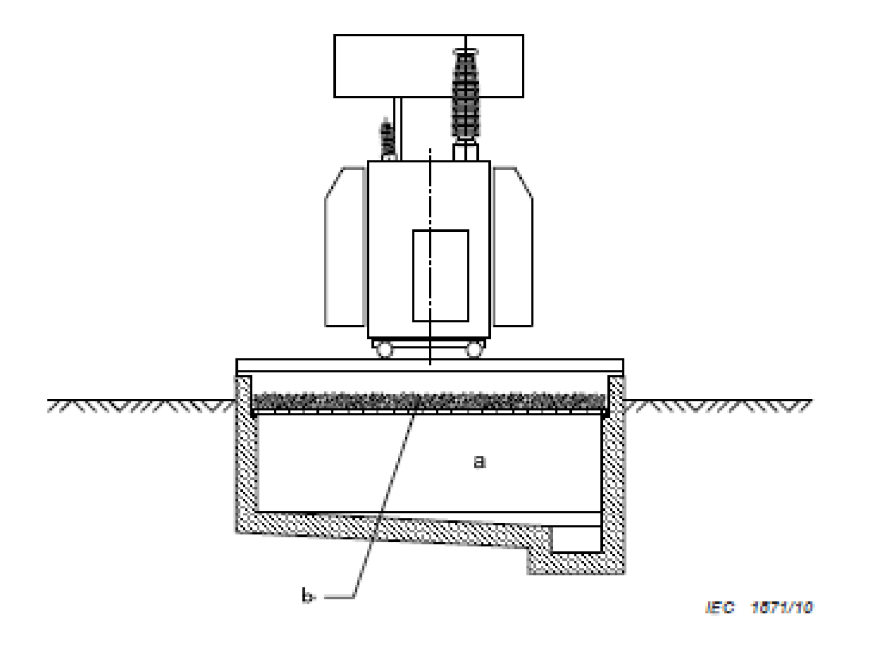
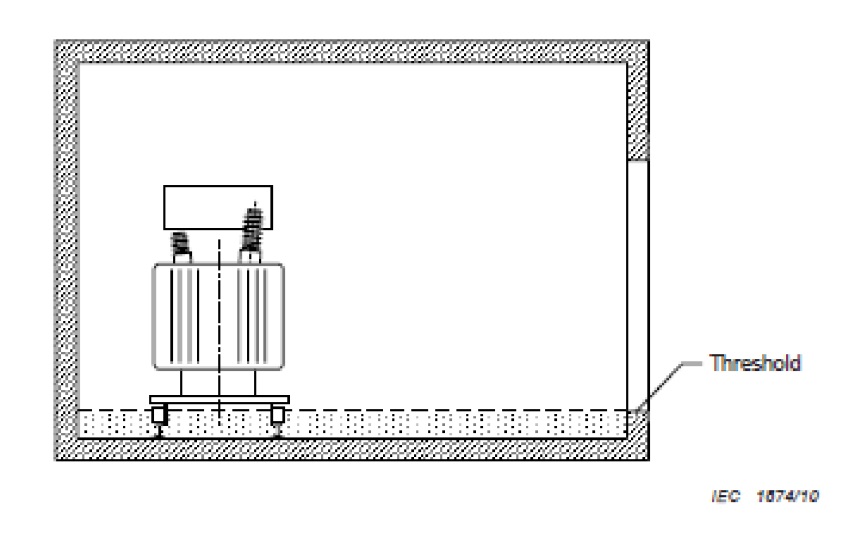
In indoor installations, spills of insulating liquid or transformer oils may be contained by providing impermeable floors with thresholds around the area where the equipment is located or by collecting the spilled liquid in a designated holding area in the building (see Figure 11).
The volume of the insulating liquid in the equipment as well as any volume of water discharging from a fire protection system shall be considered when selecting height of threshold or volume of the holding area.
8.8.1.3 Containment for outdoor equipment
The quantity of insulating liquid in equipment, the volume of water from rain and fire protection systems, the proximity to water courses and soil conditions shall be considered in the selection of a containment system.
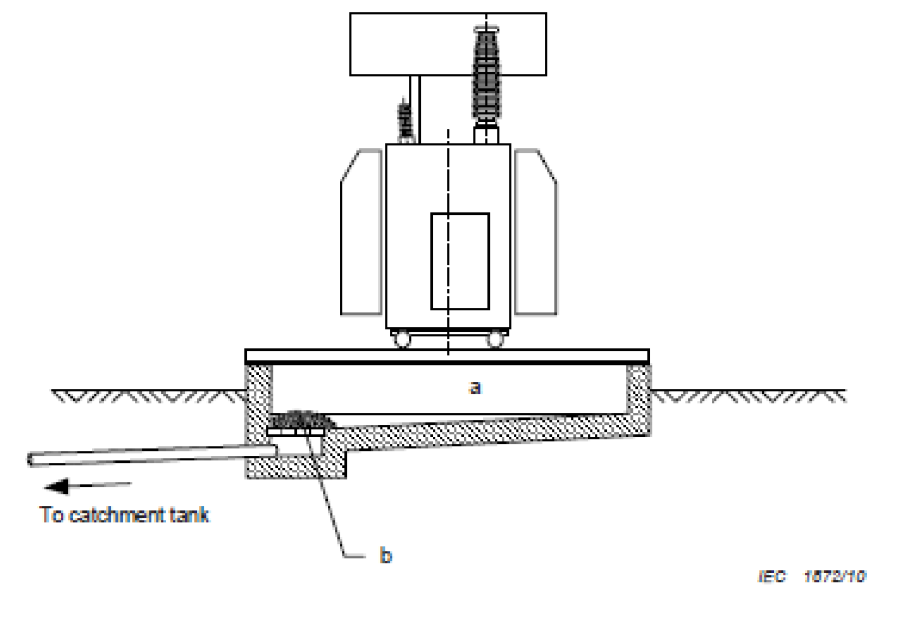
NOTE 1:Containments (sumps) around liquid immersed equipment, including 11kV transformers, and/or holding tanks (catchment tanks) are extensively used to prevent escape into the environment of insulating liquid from equipment.
Containments and holding tanks, where provided, may be designed and arranged as follows:
tanks;
sump with integrated catchment tank for the entire quantity of fluid (Figure 8);
sump with separate catchment tank. Where there are several sumps, the drain pipes may lead to a common catchment tank; this common catchment tank shall then be capable of holding the fluids of the largest transformer (Figure 9);
sump with integrated common catchment tank for several transformers, capable of holding the fluids of the largest transformer (Figure 10).
The walls and the associated pipings of sumps and catchment tanks shall be impermeable to liquid. The capacity of the sumps/catchment tanks for insulating and cooling fluids shall not be unduly reduced by water flowing in. It shall be possible to drain or to draw off the water.
Transformer Bund
A simple device indicating the level of liquid is recommended.
Attention shall be paid to the danger of frost.
The following additional measures shall be taken for protection of waterways and of ground water:
the egress of insulating and cooling fluid from the sump/tank/floor arrangement shall be prevented (for exceptions, see 8.8.1.1);
drained water should pass through devices for separating the fluids; for this purpose, their specific weights shall be taken into account.
NOTE 2: For outdoor installations, CIGRE Report 23-07 [30] recommends that the length and width of the sump is equal to the length and the width of the transformers plus 20 % of the transformer’s height (including the conservator) on each side. IEEE 980 recommends that spill containment extends a minimum 1,500 mm beyond any liquid-filled part of the equipment.
♦ IEEE 980-2013 – IEEE Guide for Containment and Control of Oil Spills in Substations.
NOTE 3: Examples for the automatic draining of water and separating of liquids is given in CIGRE Report 23-07 and IEEE 980.
State and regional laws and regulations shall be taken into account.
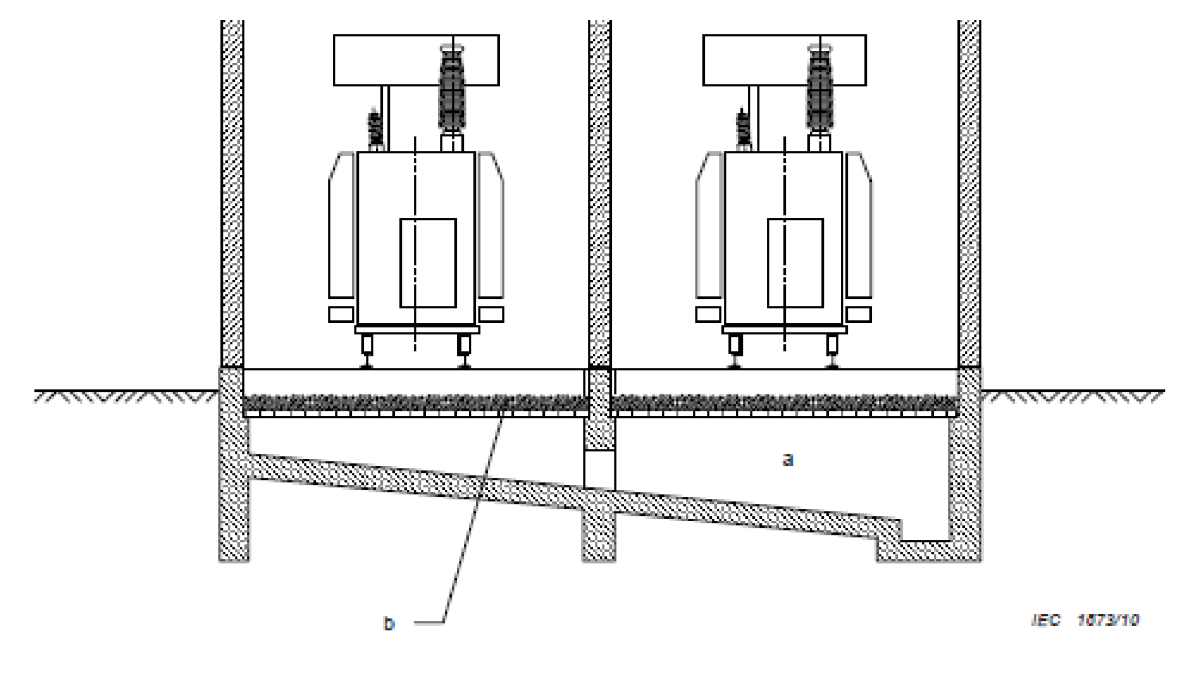
Figure 8 – Sump With Integrated Catchment Tank
Key
a) Containment: the entire quantity of fluid of the transformer plus rain water
b) Gravel layer for fire protection see B.7-2
NOTE : In addition, the water from the fire-extinguishing installation arty) should be considered.
Figure 9 – Sump With Separate Catchment Tank
Key
a) Containment: minimum 20 % of the fluid from the transformer
b) Gravel layer for fire protection see B.7-2
Figure 10 — Sump With Integrated Common Catchment Tank
Key
a) Containment outdoor: the entire quantity of fluid of the largest transformer plus rain water Containment indoor the entire quantity of fluid of the largest transformer
b) Gravel layer for fire protection see 8.7.2
NOTE:In addition, the water from the fire-extinguishing installation if any should be considered.
Figure 11 – Example For Small Transformers Without Gravel Layer & Catchment Tank
NOTE : The dotted area denotes the volume of the entire quantity of insulating fluid of the transformer spilled on the floor.
Thorne & Derrick distribute the most extensive range of 11kV Cable Jointing, Terminating, Pulling & Installation Equipment – we service UK and international clients working on underground cables, overhead lines, substations and electrical construction at 11kV and up to and EHV transmission and distribution voltages.
Smart Transformers | 415/11kV | Manufactured In UK
uploaded by Chris Dodds - Thorne & Derrick International Sales & Marketing Manager
Transformers
415V 11kV
Powerstar, UK manufacturer of leading-edge smart energy solutions, has announced a new partnership with Thorne & Derrick Internationalto help bolster its smart transformersoffering for energy conscious businesses, allowing them to improve their existing medium/high voltage (MV HV) infrastructures, maximise efficiencies and reduce electricity consumption and costs with a solution that enables real-time asset monitoring to assess performance and operation.
The partnership will facilitate knowledge sharing between the two companies and enable them to collaboratively promote the range of fit-for-purpose solutions and services available to I&C customers, such as Powerstar SO-LO range of 11kV transformers, a super low loss amorphous core smart transformer with remote monitoring capabilities.
Ideal for a wide range of organisations in both the private and public sector, including manufacturing, petrochemical, telecoms, retail, healthcare and leisure, Powerstar SO-LO provides a cost-effective way to reduce energy costs by maximising efficiencies on the HV electrical power side with a super low loss amorphous core.
Additionally, the remote monitoring functionality, which brings LV – 11kV distribution transformers in line with the modern expectations of connected technology, allows constant monitoring of the asset’s performance, helping to avoid critical errors and avoid operational downtime. This can be particularly beneficial for businesses who own or operate solar (PV) where any downtime can have costly ramifications.
The collaboration will be underpinned by the exemplary customer service offered by both companies to support and inform organisations on how they can further improve their HV infrastructure through customised recommendations such as the implementation of smart transformers, and other complementary services, as well as technologies, that are ‘Industry 4.0’* ready.
Dr. Alex Mardapittas, Chief Executive Officer at Powerstar, commented: “We are proud to partner with the renowned HV Electrical Equipment Distributor Thorne & Derrick. The partnership will heighten the visibility of smart transformers and enable a wide variety of organisations to learn how they can modernise their HV infrastructure.”
Chris Dodds, Sales and Marketing Manager at Thorne & Derrick, added: “Powerstar SO-LO transformers are UK manufactured, online, smart technology transformers with amorphous core and integrated remote monitoring capabilities – with reduced core losses by up to 75% when compared to traditional CRGO transformers this range of LV/11kV transformers improve and inform scheduled maintenance and minimise outage risks associated with grid supply voltage.”
“Thorne & Derrick look forward to developing existing relationships and presenting the full portfolio of Powerstar Transformersup to 11kV to new clients.”
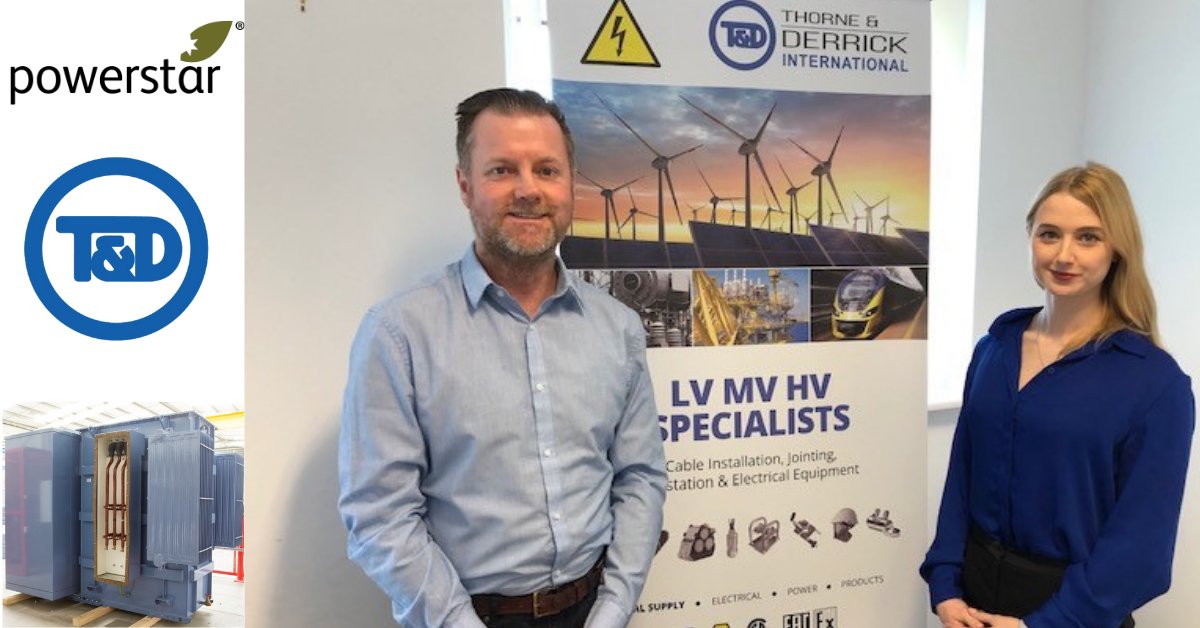
Photo caption: (L-R) Chris Dodds of Thorne & Derrick meeting with Lindsay Brownless (Head of Commercial and Marketing at Powerstar) recently at T&D’s offices in Durham, UK.
Manufactured & Designed In UK | Short Lead Time | Transformers LV 11kV
Thorne & Derrick distribute the most extensive range of 11kV Cable Installation & Electrical Distribution Equipment – we service UK and international clients working on underground cables, overhead lines, substations and electrical construction at 11kV and up to and EHV transmission and distribution voltages.
uploaded by Chris Dodds - Thorne & Derrick Sales & Marketing Manager
Ellis Patents Cable Cleats
Ellis Patents Basket Tray Clip
Ellis Patents, the leading manufacturer of cable cleats and clamps, have launched a cable basket tray clip that provides a strong and reliable means of securing low and high voltage cables with high fault levels to the increasingly popular cable management solution when used in conjunction with its heavy duty trefoil cable cleats – manufactured in Type 316L Stainless Steel for excellent corrosion resistance in industrial and hazardous area installations including medium/high voltage substations.
The Ellis Patents cleat clip means cable basket tray can now compete with traditionally stronger cable management solutions such as cable ladder and cable tray on this kind of cable installation.
Richard Shaw, managing director of Ellis Patents said: “the idea for the Ellis Patents clip came about while we were carrying out testing with Cablofil to look at the performance of its basket tray in short-circuit scenarios.
“At the time there was no proven means of safely securing heavy duty cleats to basket so that they would be guaranteed to stay in place in the event of a short-circuit. And with demand for basket tray growing significantly we decided to look at a way of delivering a fixing accessory that would do exactly this.”
The resulting product, the basket tray clip is manufactured in 316L stainless steel and has been tested for use with Ellis Patents Vulcan, Emperor and Alpha trefoil cable cleats.
The cable cleat clip simply snaps in to position on the basket wires and the cable cleats are then secured to it using a standard set screw and flange nut.
Thorne & Derrick International are specialist distributors of LV, MV & HV Cable Installation, Jointing, Duct Sealing, Substation & Electrical Equipment – servicing UK and global businesses involved in cable installations, cable jointing, substation, overhead line and electrical construction at LV, 11kV, 33kV and EHV.
klauke ekm60unv – universal cutting, crimping & punching tool The Klauke EKM 60 UNV is a versatile battery powered hydraulic universal tool engineered that can be used as a battery powered cable crimping tool and battery operated cable cutting tools that comes...
INDUSTRIAL LABEL PRINTING SOLUTIONS When clear, durable and professional identification is required across control panels, cable systems, production facilities and industrial installations, print quality, reliability and ease of use are critical. Cembre industrial label printers are designed to support...

















 HV Electrical Equipment Distributor Thorne & Derrick. The partnership will heighten the visibility of smart transformers and enable a wide variety of organisations to learn how they can modernise their HV infrastructure.”