Uploaded By Chris Dodds – Thorne & Derrick Sales & Marketing Manager
Cable Sheath Stripping Tool
Remove Outer Sheath & Jacket From High Voltage Cables
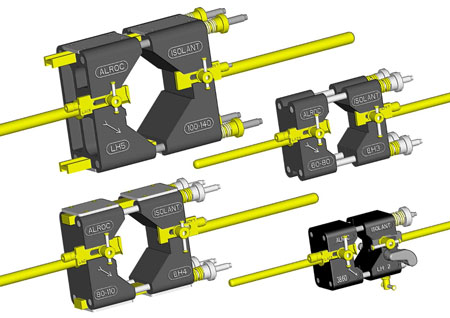
Alroc DMSR/80-160 cable jointing tools are used by jointers to remove the outer sheath and aluminium/lead shield from HV & EHV cables with outside diameters 80-160mm
Integral insulation screen detection is provided by successively performing a longitudinal and circular cut.
Alroc DMSR/80-160 cable jointing tool has an embedded mechanical dial gauge allowing the jointer to score the aluminium shield without cutting and causing cable damage.
The Alroc cable tool provides safe and precise cable cutting by the HV-EHV Jointer – a longitudinal cut ensures the cable screen is correctly scored without damaging the cable layer and setting up the thrust to prevent screen damage caused by the cable cutting blade.
The video demonstrates removing outer sheath from the EHV Extra High Voltage cable and the ability to switch from longitudinal cut to circular cut without removing the jointers tool from the cable.
A sound alerts when the tool blade is touching the aluminium/lead shield – the Alroc DMSR/80-160 cable jointers tool allows for very fine tuning and precision of the cutting depth, with a screen thickness capacity of 11mm / 0.433in and a diameter range of 80-160mm / 3.150-6.299in.
Thorne & Derrick International are specialist distributors of LV, MV & HV Cable Installation, Jointing, Duct Sealing, Substation & Electrical Safety Equipment – servicing UK and global businesses involved in cable installations, cable jointing, substation earthing, overhead line and electrical construction at LV, 11kV, 33kV and EHV.
Uploaded By Chris Dodds – Thorne & Derrick Sales & Marketing Manager
Cable Stripping Tool
Remove LC Longitudinally Corrugated Copper Tape Shield From High Voltage Cables
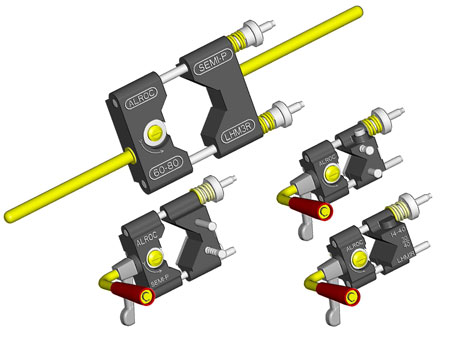
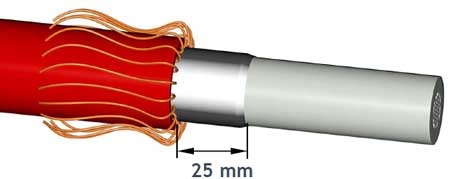
Alroc PF3/06 cable jointing tools are used by cable jointers to remove the copper tape shield from MV-HV medium/high voltage power cables.
The video demonstrates removing LC shield without scoring into the semi-conductive screen layer below the copper tape shield – the Alroc PF3/06 cable jointers tool features grooved bushings so that the cable cutting blade sits on the highest point of the LC shield.
The scoring depth is set to .3 mm to guarantee reliable cutting without accidental screen cutting or deep scoring.
Thorne & Derrick International are specialist distributors of LV, MV & HV Cable Installation, Jointing, Duct Sealing, Substation & Electrical Safety Equipment – servicing UK and global businesses involved in cable installations, cable jointing, substation earthing, overhead line and electrical construction at LV, 11kV, 33kV and EHV.
Uploaded By Chris Dodds – Thorne & Derrick Sales & Marketing Manager
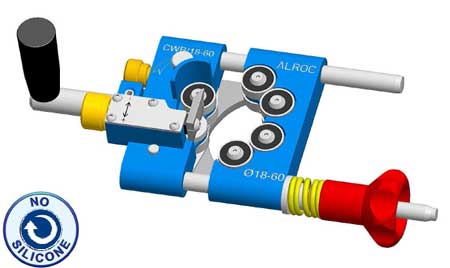
Alroc CWB18-60
Remove Bonded Semicon Screen From 11kV 33kV Power Cables
The new Alroc CWB/18-60-FEP cable jointers tool removes both the bonded semi-conducting screen without requiring lubrication while also creating a chamfer in a clean and reliable medium/high voltage cable preparation process – extensively used by jointers to prepare 11kV/33kV cables prior to the installation of MV HV Cold Shrink & Heat Shrink Joints and Terminations.
Contact T&D for Alroc tools and also a complete of cable jointing tools suitable for cable insulation removal and “easy-peel” screen stripping.
With a multitude of jointing tools available from several manufacturers, T&D decided to ask an industry expert in the jointing and terminating of MV, HV and EHV cables for an impartial and considered review of the new jointing tool manufactured by Alroc.
“Having used all types of jointing tools during my years this is by far the best and most consistent tool available. Alroc CWB/18-60-FEP has a working range of 18-60mm over the semi-conductive screen effectively covering 99% of all 11kV and 33kV MV HV power cables. The cable jointing tool design is based on rollers so no grease is needed for the cable peeling process.”
“The cutting blade can be used to chamfer the leading edge for pre-moulded HV cable terminations. Finally, the finish is another level” comments Karl McFadden (Cable Systems Application Engineer at Pfisterer).
The “Blue Tool” from Alroc creates a smooth finish to the insulation screen reducing sanding requirements by the jointer for bonded screen diameters up to 60mm. Operate using a consistent rhythm when turning the Alroc CWB/18-60 tool to achieve a smooth and clean finish without waves or “ghost-marks”.
Thorne & Derrick International are specialist distributors of LV, MV & HV Cable Installation, Jointing, Duct Sealing, Substation & Electrical Safety Equipment – servicing UK and global businesses involved in cable installations, cable jointing, substation earthing, overhead line and electrical construction at LV, 11kV, 33kV and EHV.
Alroc AMF5 55-160 tool can be used on HV-EHV cables with an outside diameter range of 55-160mm and is designed to make the removal of high voltage polymeric cable insulation (XLPE) simple and efficient with significantly reduced sanding required by the cable jointer using a lower grit abrasive.
Alroc AMF5 55-160 is a motorised HV-EHV underground cable peeling tool used in conjunction with the Alroc BMFD/50-160 tool when chamfering HV cables – the jointing tool will perform a cable chamfer but not pencilling of high voltage power cables.
Tools also available to remove bonded screens from 11kV/33kV cables with XLPE insulation.
Cable Tool Capability
Diameter55-160mm
Bonded Semicon Thickness Capacity 3mm
Remaining Length Of The Semicon 80mm
XLPE Cable Insulation Thickness 35mm
Tool Guiding Ball Bearings (No Silicone Required)
Associated Cable Jointing Tools
Alroc DMSR /80-160 High Voltage Outer Cable Sheath Stripping Tool
Alroc CHN4/50-110 NS High Voltage XLPE Insulation Tapering Tool
Alroc GR I-R TE – High Voltage Bonded Semicon Scraping Tool
T&D are leading stockist for the complete range of Alroc Cable Tools for removing cable sheath, insulation and screen from LV, HV, HV and EHV power cables.
Alroc AMF5 55-160 NSCF Cable Jointing Tool
Here in the video the Alroc jointing tool is shown preparing and shaving the semicon screen on a 400kV 2500sqmm EHV cable with polymeric XLPE type insulation.
♦ Bonded Semiconductor Removal – the semicon screen is removed in a controlled and steady preparation (16 wheels rolling around the cable) effectively shaping the cable round over the XLPE insulation. A constant diameter over the XLPE insulation is achieved preventing the tool blade from digging or cutting into the insulation.
♦ XLPE Insulation Removal – the back-iron enables the cable jointer to set the pitch of the tool thus making the rotation of the cable tool easy when removing the high voltage XLPE cable insulation.
Alroc Part Number
Cable Diameter
Tool Capacity
Cable Dimensions
Tool Packaging
Bonded Semicon Thickness Capacity
Remaining Length Of The Semicon
XLPE Insulation Thickness Capacity
Guiding
Length
Width
Height
CAMF4/40-90-BBCF
40 – 90mm / 1.575 – 3.543in
2.5mm / 0.098in
55mm / 2.165in
35mm / 1.378in
By Ball Bearings
460mm / 18.110in
155mm / 6.102in
150mm / 5.906in
Case
CAMF5/55-160-BBCF
55 – 160mm / 2.168 – 6.299in
3mm / 0.118in
80mm / 3.150in
35mm / 1.378in
By Ball Bearings
700mm / 27.559in
255mm / 10.039in
180mm / 7.087in
Case
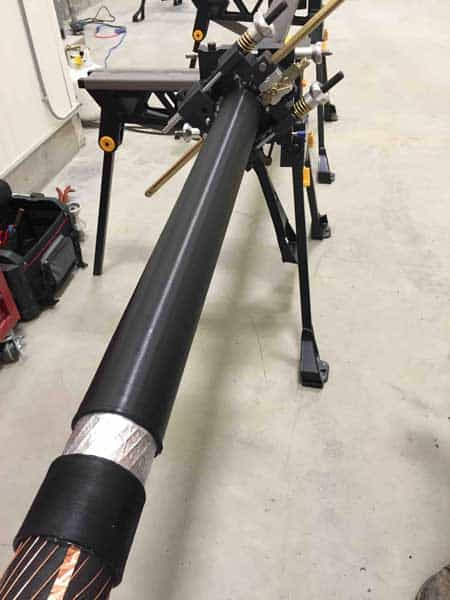
Image : Goodbye Glass. Jimmy Nicklin (HV EHV Jointer) – the Alroc AMF5 55-160 tool removes the need for HV jointers to “glass” the outer conductive sheaths as the highly precision engineered cable jointing tool provides accurate stripping of cables in a motor controlled rather than manual process.
XLPE Cables HVDC
The design and construction of the transmission grid of the future with overhead transmission lines and underground cable required to meet future demand of electricity supply has led to the development by ABB of XLPE DC cables rated higher than 500kV.
The EirGrid East-West Interconnector (EWIP) links the high-voltage power grids of Ireland and Great Britain by means of an HVDC Light interconnection. The interconnector enables Ireland to import and export power to and from Britain, thereby creating a more competitive home market and reducing consumer prices.
ABB were responsible for delivering the entire solution – including design, engineering, type testing, manufacture, civil works, cable pulling/laying, cable jointing, trenching, installation and commissioning. The video shows the loading of the high voltage cable for the project EirGrid East West Interconnector (EWIP) that took place in April 2012 in Karlskrona, Sweden.
Image: ABB. 525kV DC XLPE Cable Insulation – Extra High Voltage EHV
Thorne & Derrick International are specialist distributors of LV, MV & HV Cable Installation, Jointing, Duct Sealing, Substation & Electrical Safety Equipment – servicing UK and global businesses involved in cable installations, cable jointing, substation earthing, overhead line and electrical construction at LV, 11kV, 33kV and EHV.
Uploaded By Chris Dodds – Thorne & Derrick Sales & Marketing Manager
Cable socks, sometimes called cable stockings or cable grips provide an efficient method of supporting cables for pulling and laying into open-trench or duct – this includes LV Low Voltage, MV Medium Voltage or HVHigh Voltage cables.
The correctly sized cable sock can be used to pull in short lengths of cable by hand (e.g. fault repairs prior to jointing).
Cable socks are re-usable tools (subject to inspection before re-use) and are not confined to cable applications but basically can be used to support or pull any cylindrical object within their grip and load carrying capacity.
Standard cable socks are manufactured from high tensile galvanised and stainless steel wire rope or Kevlar.
A skilled, hand woven construction process, coupled with individual product inspection throughout manufacture ensures a high quality product for reliable and long lasting application.
UK DNO’s generally specify according to their Engineering Standards that all pilot and telephone, LV, 11kV, 20kV, 33kV, 66kV and 132kV cables shall normally be pulled in using a correctly sized cable socks which are securely fixed to the cable. More difficult pulls may require the use of a pulling eye attached directly to the cable conductors, which has been installed by the manufacturer – cable rollers shall always be used when pulling cables.
LV MV HV
Further information on the main ranges according to voltage application for underground power cable pulling or overhead line stringing can be found here:
The Working Load (WL) of a cable sock depends on the Factor of Safety (FOS)applied to the Minimum Breaking Load.
For example, where the operational risk is considered to be normal, it is recommended that a FOS of 5 be applied, for high risk operations a FOS of at least 10 should be considered.
The Approximate Breaking Loadstated on any certification, the recommended Factors of Safety, and any implied or stated fitness for purpose, are all only applicable when the cable socks are new and unused.
There are many factors that the person using the cable sock must take into consideration when trying to calculate a safe working load as it is impossible to guarantee a suitable safety factor when there are many variables which change from cable pulling application to application.
In addition, before using any cable sock, the user must carry out a full assessment of its suitability for the proposed application, and the level of operational risk involved, including taking account of:
size of the cable sock, in relation to the size and shape of the gripped cable
stability of the cables when gripped
grip surface of the cable
anticipated path of movement, including possible obstructions
resistive force of the cables being pulled
minimum-breaking load (MBL) of the cable sock
condition of the cable sock
suitability and compatibility of any cable pulling attachments used
environment / operating conditions
When selecting the cable sock users must allow for a 20% variance in break loads and, if there is ‘twist’ in the cable, a suitable swivel link must be used.
When the correct cable sock is selected, cable installation through cable ducts, conduits and trenches is made considerably easier. The cable sock adds little to the overall diameter of the cable and ‘free passage’ is normally available through sheave blocks and pipes.
Cable socks can often be used on a ‘new for old’ cable replacement by applying two grips on a ‘back-to-back’ basis with a solid link or swivel in between grips, allowing the old cable to be used to pull through the new replacement.
Swivel links can be used to allow for reduced torque build-up induced by the cable pulling equipment and inherent lay in the cables themselves, whether LV, MV, HV or EHV. Lace up cable socks can be applied anywhere along the cable length, preventing overloading of the cable.
To prevent winched cable pulls exceeding the maximum tension force of the cables, a cable sock fitted with a swivel can be used to connect the bond to the cable and a dynamometer used to check that the maximum pulling tension for the cable is not exceeded.
When pulling cables by mechanical cable winch, the load-limiting device must be used to ensure that the pulling tension applied to the cable does not exceed the manufacturers specified maximum permissible tensions. The pulling of cables by direct and unmonitored mechanical means (e.g. hitched to a vehicle, Land rover winch) is not permitted.
Several UK DNO’s including Northern Powergrid, specify in their Policy for the Installation of Distribution Power Cables that cable pulling by winch shall only be carried out where there is a serviceable and accurate dynamometer calibrated in kgs.
Pulling Overhead Power Line Conductors Using Cable Socks
According to the Ericsson Universal Cable Handbook the most critical moment in the pulling out operation is when the cable end and cable sock passes through the line roller or suspension clamp. To make the pulling out easier the cable end should be “sectioned down” at the end before the cable sock is applied.
Between 150 – 200 mm/core is enough, see figure below.
This will make the end smoother and more flexible when it passes the cable pulling devices.
If a cable sock of Kevlar is used this is more important as it is soft and does not form a natural cone the same as a galvanised steel cable sock. The cores can also be cut with a knife to avoid sharp edges which will simplify the pulling even more.
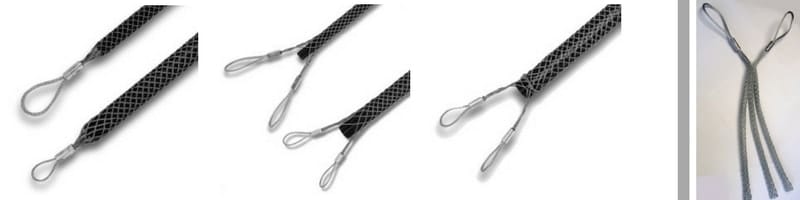
Double Eye Socks – standard support sock, with double eye. Available in single or double weave.
Lace Up Socks – cable sock for fitting at points along the length of a cable.
Open Ended Socks – socks designed to enable two cables, hoses or ropes to be connected for pulling or supporting purposes.
Single Eye Socks (Triple Weave) – high strength cable socks with heavy duty shoulders, for stringing or pulling-in non-insulated conductors on long, high voltage transmission lines, or other high load applications.
Single Eye | Double Eye | Lace Up | 11kV 33kV Triplex Cable Socks
Note : Cable socks must not to be used as primary lifting devices.
Thorne & Derrick International distribute the most extensive range of Cable Pulling & Cable Laying Equipmentto enable the installation of low, medium and high voltage power cables into underground trench or duct – products also supplied for fibre optic blowing, subsea trenching, offshore umbilical installations and pulling armoured cables onto cable tray.
Contact us for 3M Electrical, ABB, Alroc, AN Wallis, CATU Electrical, Cembre, Centriforce, CMP, CSD, Elastimold, Ellis Patents, Emtelle, Euromold, Filoform, Furse, Lucy Electric & Zodion, Nexans, Pfisterer, Polypipe, Prysmian, Roxtec, Sicame, WT Henley.
klauke ekm60unv – universal cutting, crimping & punching tool The Klauke EKM 60 UNV is a versatile battery powered hydraulic universal tool engineered that can be used as a battery powered cable crimping tool and battery operated cable cutting tools that comes...
INDUSTRIAL LABEL PRINTING SOLUTIONS When clear, durable and professional identification is required across control panels, cable systems, production facilities and industrial installations, print quality, reliability and ease of use are critical. Cembre industrial label printers are designed to support...