Blog
Ellis Patents Engineer Change In Cable Management Market
May 11th, 2021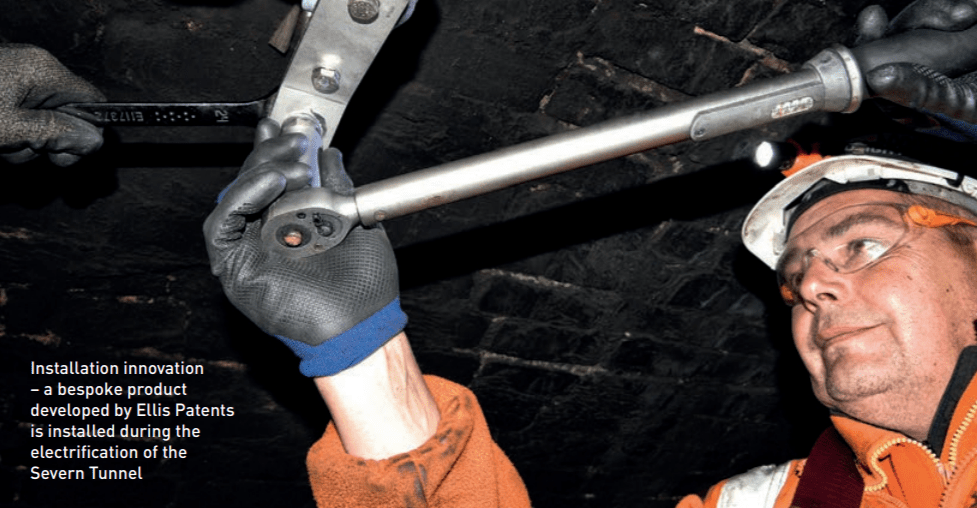
The following article has been republished from Ellis Patents, whereby Managing Director Danny Macfarlane discusses the rapid technological development in the cable management market.
According to Macfarlane, one key change this has led to is that standard product ranges now form the backbone of a far more flexible product offering. He talks to ECN.
When I first joined Ellis Patents in 2003, we very much had standard product ranges, which specifiers selected from according to their project requirements,” says Danny. “We still have these ranges today, and the likes of our Emperor and Vulcan+ cable cleats remain our bestsellers, but alongside them we have a slew of new, innovative products that have been developed as a result of a major shift in the way the market operates; which in itself has been enabled by technological development.”

Ellis Patents Vulcan, Atlas & Emperor Cable Cleats
In the last few years alone Ellis Patents has designed, developed and manufactured a completely new product for a major Siemens offshore wind project; solved installation headaches with bespoke solutions for Balfour Beatty; and consigned a major health and safety issue for National Rail to history with a product that went on to win a number of innovation awards.
The Siemens job was the first of these projects, with the company going to Ellis Patents with a need for a new product during a live project situation. The challenge was to develop a way of feeding, and then restraining, seven 117mm diameter cables along a specified route within a fabricated structure that featured a significant number of twists and turns.
Ellis Patents Cable Guide Clamp
The Cable Guide Clamp that was designed, developed and manufactured in response not only solved Siemen’s problem, it also secured an order that wouldn’t have been won had the company been relying solely on its standard product offering. And Ellis Patents didn’t stop with that one project, the Cable Guide Clamp has since been developed into a full range that regularly secures orders from around the world.

Ellis Patents Cable Guide Clamp
The Ellis Cable Guide Clamp is designed to be installed in place of rollers along the HV cable route where the cable length is pushed and pulled through to its final destination.
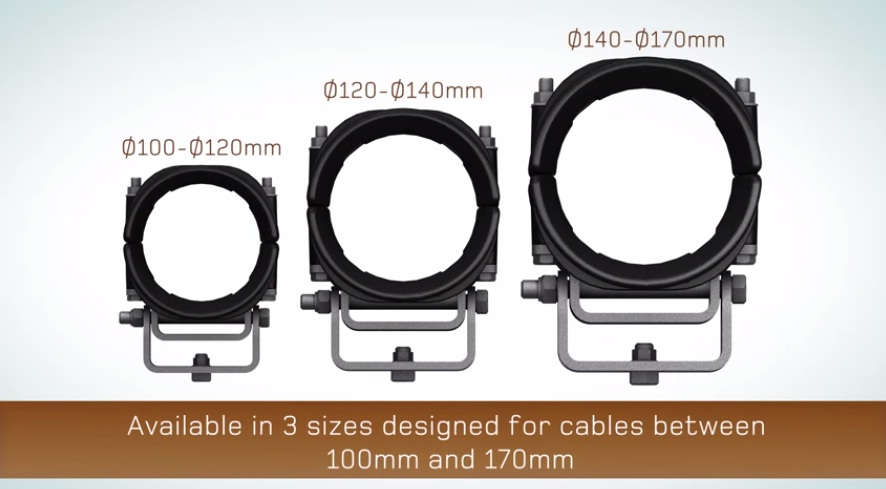
“Our ability to deliver these innovative bespoke solutions, some of which were done in live project situations, is something we’re immensely proud of,” says Danny.
“But without the technology we simply wouldn’t have been able to turn our ideas into fully functioning products in such pressurised, time-sensitive situations.
“Traditionally, creating a production ready prototype would have required the development of injection moulding tools, which involved significant investment in time and resource, and typically took six to eight weeks to manufacture. And once received only small changes to the tools were feasible, meaning any major alterations could add another six to eight weeks to the already lengthy process.
“Now, thanks to 3D CAD and rapid prototyping 3D printing, we can take products from an idea in a brainstorm to a fully functional, production ready prototype in less than a fortnight – something we have done on a number of occasions. And it’s a combination of the growing availability of rapid product development technology and ever-growing levels of in-house engineering expertise amongst manufacturers that has led to such significant change in the market.”

Siemens, for example, didn’t go to Ellis Patents with its complex installation issue because it saw the company as solely a manufacturer of standard products. It was because Ellis had the in-house expertise and technological capacity to solve its problem within the confines of an extremely tight time frame. And it’s this kind of expertise that is playing an ever more important role in the cable management market – in particular amongst those manufacturing cable cleats.
“Projects are often far from straightforward and installation and maintenance issues regularly arise, so having the people and the in house technology to be able to solve problems; firstly on paper and then with an adapted or wholly bespoke product; is now as important as that strong standard product range”, concludes Danny.
THORNE & DERRICK
Thorne & Derrick are national distributors of LV, MV & HV Cable Installation, Jointing, Substation & Electrical Equipment – servicing businesses involved in cabling, jointing, substation, earthing, overhead line and electrical construction at LV, 11kV, 33kV, 66kV and EHV. Supplying a complete range of power cable accessories to support the installation and maintenance of low/medium and high voltage power systems:
- Slip-on Cable Terminations
- Cold-shrink Cable Terminations
- Heat-shrink Cable Terminations
- Cable Joints – Heat & Cold-shrink
- Separable Connectors (Euromold)
- Surge Arresters & Switchgear/Transformer Bushings
Key Product Categories: Duct Seals | Cable Cleats | Cable Glands | Electrical Safety | Arc Flash Protection | Cable Jointing Tools | Cable Pulling | Earthing | Feeder Pillars | Cable Joints LV | Joints & Terminations MV

Cable Strikes | Gas and Electric Service Strikes
May 11th, 2021
Cable Strikes
Utility Strike Avoidance Group
USAG have published a range of documents to assist industry understanding of the root cause and contributory factors behind specific incidents. The aim is to improve industry standards and reduce the number of cable strikes.
Cable damage is usually caused by excavating machines – hand held tools such as pneumatic drills, crowbars, pins, picks and forks also expose workers to potential sources of danger when digging around underground cables.
The next in the series is a safety alert thanks to Highway England regarding a series of cable strikes to a 20mm gas pipe and a low-voltage electric cable.

Series of Service Strikes
Background to the Incident
In May of 2020, a 20mm gas pipe and a low-voltage electric cable were struck in Wardington and on the M40 J11 improvement works respectively.
In August 2020, another low-voltage electric cable was struck on the M40 J11 improvement works. Investigations into these incidents revealed that all Fusion processes were followed:
- Prior to works being undertaken, utility drawings were made available.
- PAS 128 survey of the area was undertaken including the Ground Penetrating Radar (GPR) and Electro-Magnetic Locating (EML) surveys.
- A permit to dig was issued and the gang was briefed on the work to be carried out.
- The gangs were experienced and deemed competent.
- Works were supervised and service locators were on-site.
- All hand tools were insulated.
- All services were shallow (< 300mm).
Considerations
Utility drawings can be inaccurate and out of date, and so alone are not to be relied on.
Utilities should be installed as per industry standards, which include depths of over 450mm with proximity warning aids including coloured tape to identify utility types and surrounding the service in a bed of peashingle – none of these services struck complied.
Key Findings and Action Taken to Prevent Reoccurrence
- The Junction 11 package of works obtained their PAS 128 data for their permit to break ground system from an external source rather than from the established Fusion PAS 128 team. It was not mandated by Fusion to have to use this team. It has now been mandated that all PAS 128 surveys required for Fusion sites, will now be managed by the Fusion PAS 128 team and follow the same stringent analysis and assurance process.
- Further investigation of the PAS 128 data – i.e. interpretation of utility drawings and other information available when on site conducting the Electro-Magnetic Location (EML – CAT&Genny) surveys, showed the external supplier interpreted the information differently to the Fusion PAS 128 team. Although people with the appropriate training are deemed competent, it should be recognised that those with more experience are more likely to interpret information with a higher degree of accuracy.
- The absence of street furniture and other equipment is not a reliable indication of a lack of underground cables and caution must be exercised at all times whilst breaking ground and digging.
➡ Thorne & Derrick distributes Insulated Tools for the Rail & Utilities industries manufactured to British Standard BS 8020-2011.
Protecting Cables Against Strikes & Restoring Power Post-Strike
Thorne & Derrick have been distributors for 3M Electrical since 1985 and can provide a range of reliable and easy to install Cable Repair Products – this includes Scotch Tapes, Scotchcast Joints and Cold Shrink Tubes to provide effective re-instatement of cable sheath jackets on all types of LV MV HV cables in onshore and offshore locations with safe or hazardous area workplace classifications.

Cable Repair Products
Our range of cable protection covers manufactured by Centriforce provide underground utility protection of LV MV HV cables including Tapetile (11kV) and Stokbord (33kV 66kV 132kV) – contact us to discuss Cable Damage Prevention Products including Dectamesh, the underground detectable warning tape for alerting excavators of the presence of buried cables and to prevent potentially lethal accidents during excavation.
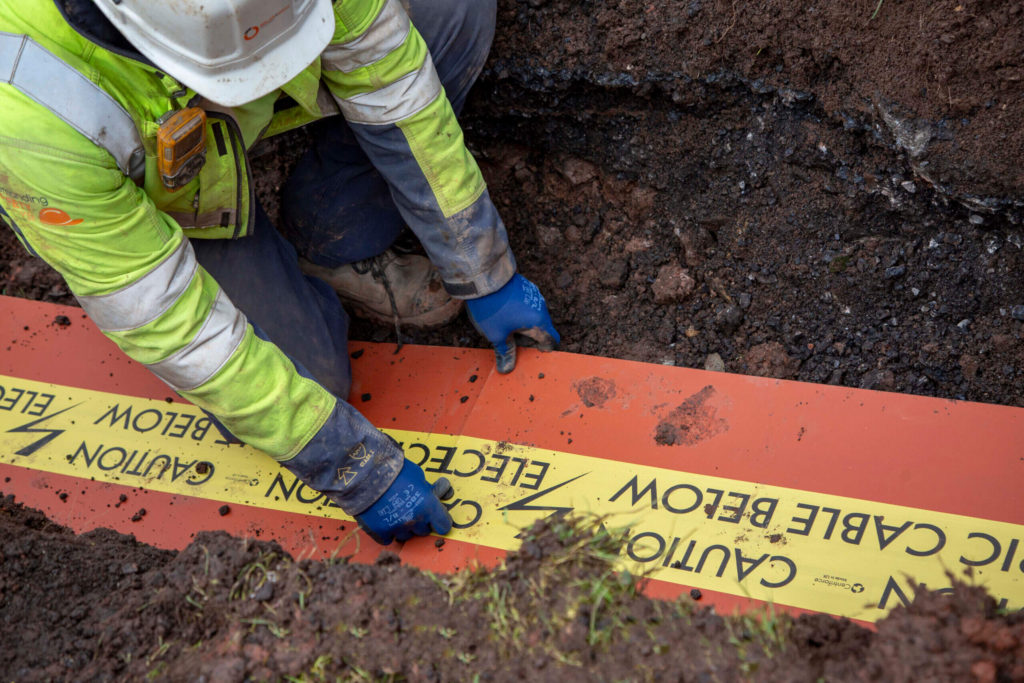
Stokbord
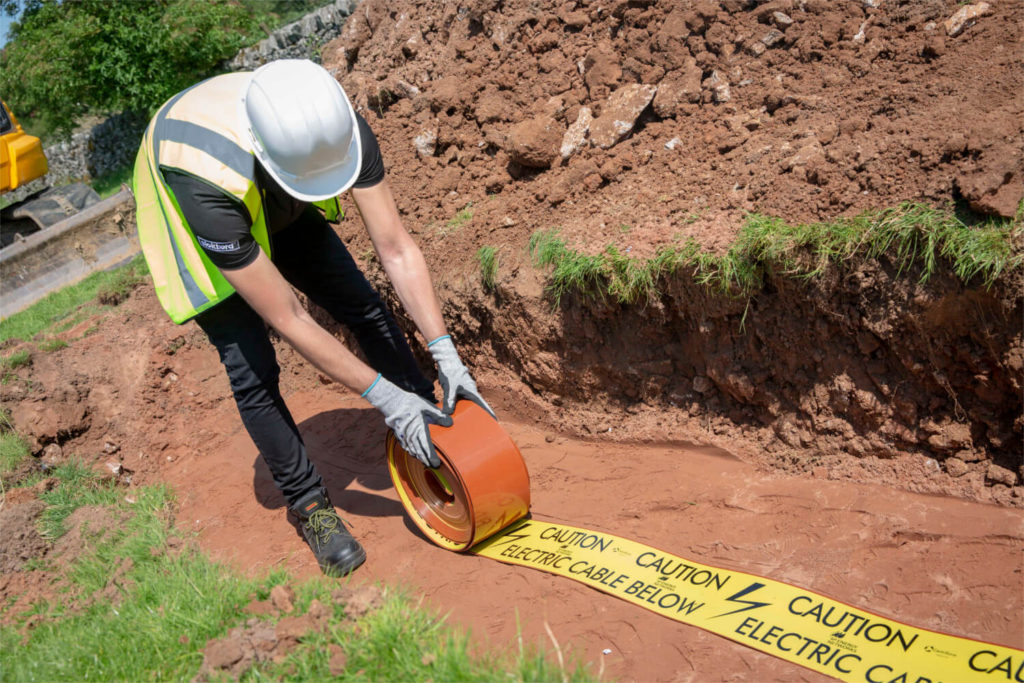
Tapetile
Cable Strikes | How To Support LV to 33kV Electricity Cables
May 11th, 2021
Cable Strikes
Utility Strike Avoidance Group
USAG have published a range of documents to assist industry understanding of the root cause and contributory factors behind specific incidents. The aim is to improve industry standards and reduce the number of cable strikes.
Cable damage is often caused by excavating machines – hand held tools such as pneumatic drills, crowbars, pins, picks and forks also expose workers to potential sources of danger when digging around underground cables.
The next in the series is a safety alert thanks to Highway England regarding incidents caused by contractors incorrectly supporting power cables.
Incident Overviews
Below are some case studies and a useful guide on how to support exposed LV to 33kV cables spanning your excavation, supplied by SP Energy Networks.
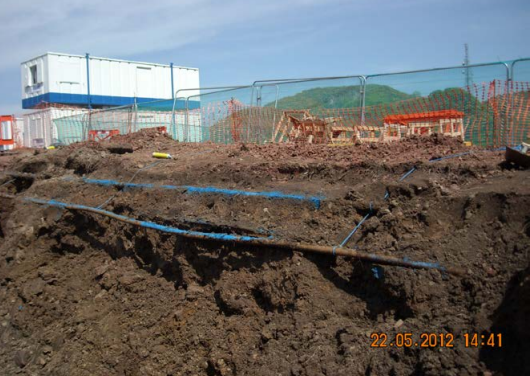
The above image highlights a situation which could easily be avoided if the correct planning processes had been implemented at the pre-construction phase of the project.
The task for the contractor was to expose the utilities and excavate a further 3 metres past the electrical network, leaving the low voltage (PILC) cable supported with rope at two locations.
The inadequate level of support of the electrical network at this location is not acceptable to ScottishPower; the contractor was advised to backfill the exposed cable with caution.
Given the ongoing mechanical excavations, lack of cable support and that contact with the electricity network was a possibility the contractor was advised to contact SP Energy Networks Customer Connections department to progress a cable deviation to remove the hazard.
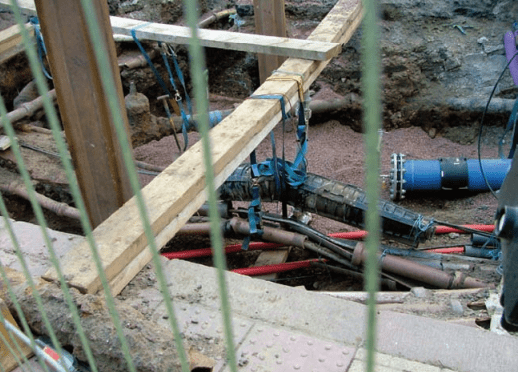
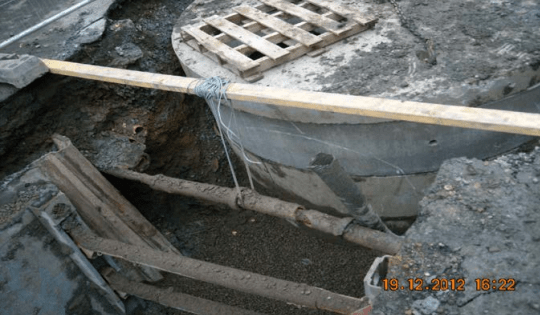
The above image demonstrates how NOT to support an electricity cable.
The contractor has gone some way to supporting the Low Voltage cable in the correct way by using sturdy batons and ratchet straps, however the weakest part of the electrical network are the LV cable joints.
ScottishPower would recommend that exposed cables with joints should not be supported in this situation at any time due to the probability of the weight of the joints pulling the cables out of the joint connections. To carry out support of electrical cables a method statement and a safe system of work will be required by ScottishPower prior to works being undertaken.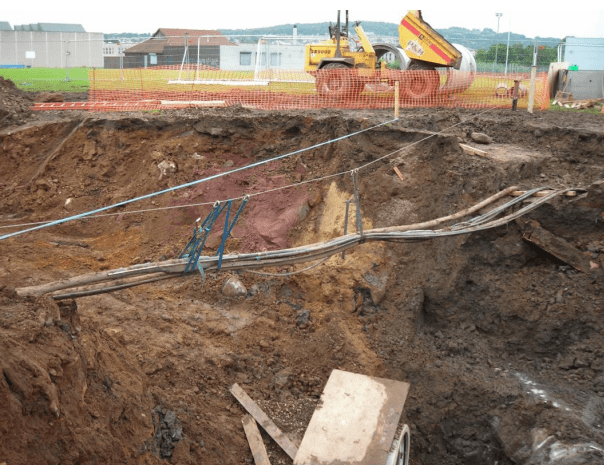
The contractor has gone some way to supporting the underground network cables by using ratchet straps, however in this situation the cables are all bunched together and have sagged. The weakest part of the electrical network in this situation are the cable joints with the added weight of the exposed cables.
ScottishPower would recommend that exposed cables with joints should not be supported in this manor due to the probability of the weight of the joints/sag on the cables pulling the cables out of the joint connections. Every excavation has different dimensions to consider prior to carrying out work to support the electrical cables.
A method statement and a safe system of work will be required by ScottishPower prior to support works being required on the electrical network.
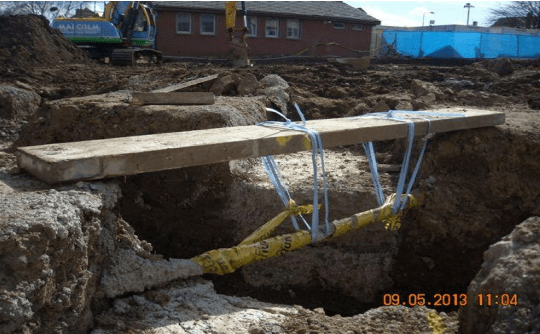
 The above image highlights a situation which clearly highlights the incorrect method of supporting a live underground electrical cable.
The inadequate level of support of the electrical network at this location was not acceptable to ScottishPower; the contractor was advised to support the exposed cable with caution to the correct ScottishPower requirements.
Given the ongoing mechanical excavations and the lack of adequate support, contact with the electricity network was a possibility the contractor was advised to contact ScottishPower EnergyNetworks Customer Connections department to progress a cable deviation to resolve the situation.
➡ Thorne & Derrick distributes Insulated Tools for the Rail & Utilities industries manufactured to British Standard BS 8020-2011.
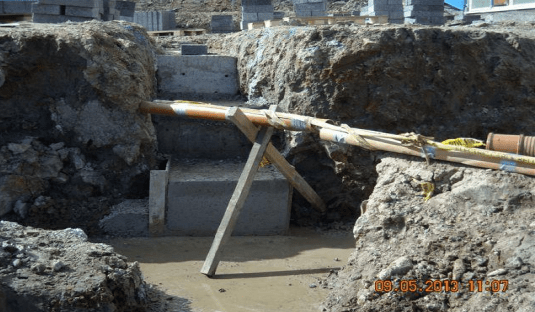
The above image highlights a near miss situation which could have been easily avoided if the correct processes were implemented at the planning stage of the project, as opposed to attempting to rectify the avoidable situation at the construction phase.
On this occasion the project to construct an extension to an existing building had started, SP EnergyNetworks were contacted and advised the main contractor that the existing low voltage underground cable traversing through the foot print of the proposed extension would require to be deviated.
Further advice was delivered, highlighting that the existing cable should not be constructed over. The advice given was not adhered to and the contractors proceeded to excavate and install concrete foundations around the existing underground electrical network.
This course of action left the cable unprotected and open to the elements, the cable being concreted over at various locations and being supported in an unprofessional manor. During operations to excavate the foundations of the extension the electrical cable was damaged, fortunately on this occasion no injuries occurred to the operatives.
The above image demonstrates how not to support electricity cables.
The above image highlights a near miss situation which could easily have be avoided if the correct processes had been implemented at the planning stage of the project, as opposed to attempting to rectify the avoidable situation at the construction phase.
On this occasion the contractor progressed with the project despite being advised that a cable deviation would be required, and that the underground electrical network was not to be constructed over.
The contractor’s decision to progress construction placed operatives in danger which resulted in the low voltage cable being damaged. Despite the cable being damaged, excavations continued with the cable being exposed, covered in concrete and supported at various locations.
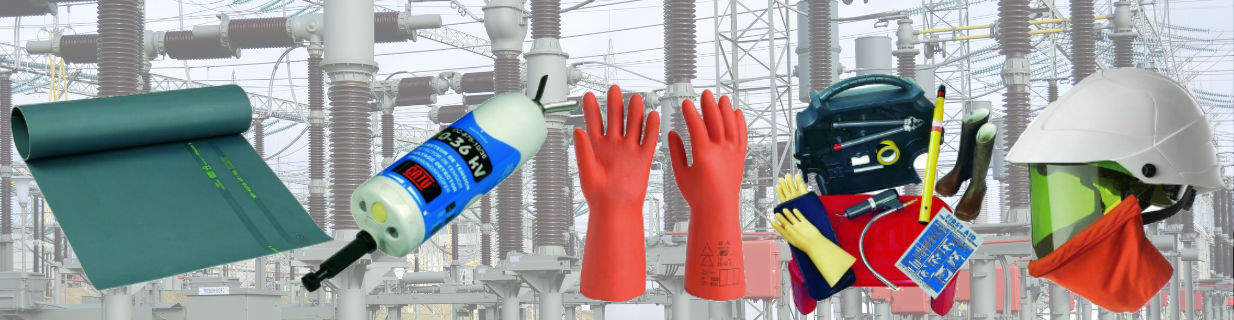
LV MV HV Voltage Detectors | Portable Earthing | Insulating Sticks | Insulating Gloves | CATU Electrical Safety Equipment
RAMS Generic Guidance For Supporting/Exposing/Operating Around SP EnergyNetworks Underground Distribution Electrical Cables:
33KV – High Voltage – Low Voltage Cables:
- Ensure all machine operators/site traffic drivers/operatives/visitors are made aware of all cable routes on construction site at initial site induction.
- Prior to works commencing, works area should be marked/highlighted (install signage at excavation location) to ensure all operatives are aware of the presence of the underground electrical network in the works area, this information also to be promoted continually throughout the remainder of the onsite works. (Task specific tool box talk also required prior to works commencing to ensure everybody understands the scope of works to be undertaken around the underground electrical network, their collective/individual roles to be clearly defined ensuring the required task is completed in a safe environment)
- Procure SP EnergyNetworks cable records (UMV System: Utility Map Viewer)
- Excavations as per HSG47 hand excavate to uncover all electrical cables/utilities in vicinity of proposed works.
- Supporting cables: If excavation length on electrical cables exceeds 1.2m cables will require to be supported.
- Install split cable ducting (150mm) around all exposed cables (for protection purposes only)
- No sudden movement of cables to take place. (minimum movement when placing split ducting around all cables)
- Provide substantial support beam above the cables, spanning across the exposed cable excavation, caution when placing/removing support beam. Ratchet straps are to be utilised to support the split ducted cables from the beam above.
- Ratchet straps to be of sufficient size/quality to support the weight of the split ducted cable, and are to be tensioned until they hold the ducted cables weight only, prevent any over strain on the ducted cables. Ratchet straps to be placed at 1m intervals.(Please note: no rope/string to be used to support underground cables)
- Once the ducted cables are sufficiently supported with the ratchet straps/supporting beam the hand excavation shall continue to clear 500mm beneath the existing cables. (Ensure the ducted cables will not sag at any exposed length of the cable)
- Cable records indicate no joints on cables at locus of proposed excavations, however if cable joints are located, excavation works to cease immediately and SP EnergyNetworks to be contacted for further guidance.
- Great care to be taken when installing the drainage pipe/other, that contact with the electrical network is avoided.
- Great care to be taken when installing/removing shoring/drag boxes etc that contact with the electrical network is avoided
- Caution to be taken when backfilling excavation around the existing cables, backfill to underside of cable, remove split ducting, sand cables with 150mm of sand, install marker tape.
- Continue to backfill with caution.
No SP EnergyNetworks cables to be supported at any time without SP EnergyNetworks authorisation. Contractors proposing to support the underground electrical network are to produce a risk assessment – method statement to formalise the advice described above to demonstrate to SP EnergyNetworks that risk assessments/method statements/safe systems of work will be implemented to ensure a successful conclusion to this stage of the project. The risk assessment/method statement shall be passed to SP EnergyNetworks for review/approval prior to excavation/supporting cable works commencing on site.

Cable Hangers | Cable Ducting | Cable Protection | Electrical Safety Equipment
Protecting Cables Against Strikes & Restoring Power Post-Strike
Thorne & Derrick have been distributors for 3M Electrical since 1985 and can provide a range of reliable and easy to install Cable Repair Products – this includes Scotch Tapes, Scotchcast Joints and Cold Shrink Tubes to provide effective re-instatement of cable sheath jackets on all types of LV MV HV cables in onshore and offshore locations with safe or hazardous area workplace classifications.
Cable Repair Products
Our range of cable protection covers manufactured by Centriforce provide underground utility protection of LV MV HV cables including Tapetile (11kV) and Stokbord (33kV 66kV 132kV) – contact us to discuss Cable Damage Prevention Products including Dectamesh, the underground detectable warning tape for alerting excavators of the presence of buried cables and to prevent potentially lethal accidents during excavation.
Stokbord
Tapetile
Cable Strikes | Excavator Struck 11kV Overhead Power Lines
May 11th, 2021
Cable Strikes
Utility Strike Avoidance Group
USAG have published a range of documents to assist industry understanding of the root cause and contributory factors behind specific incidents. The aim is to improve industry standards and reduce the number of cable strikes.
Cable damage is often caused by excavating machines – hand held tools such as pneumatic drills, crowbars, pins, picks and forks also expose workers to potential sources of danger when digging around underground cables.
The next in the series is a safety alert thanks to Highway England regarding incidents caused by contractors incorrectly supporting power cables.
A Striking Reminder
Incident Overview
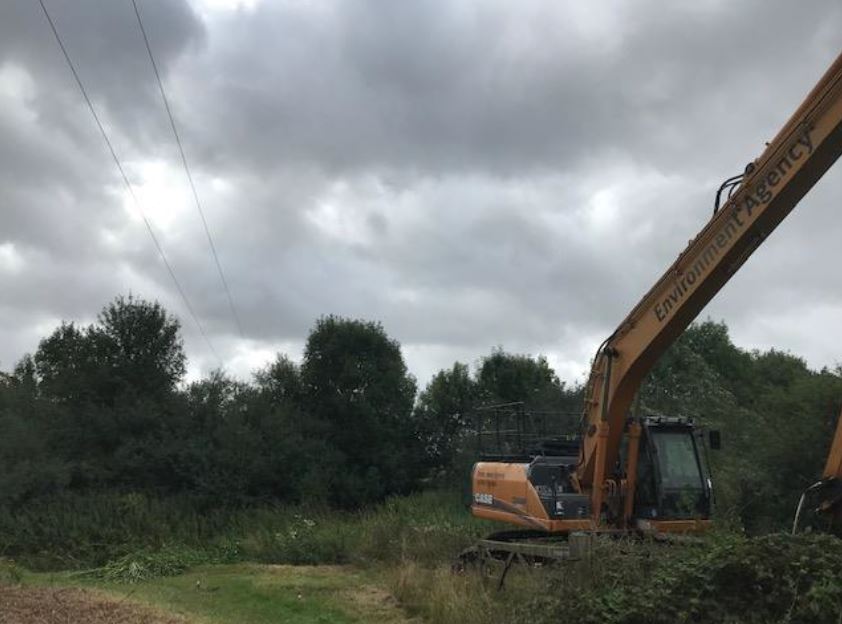
Critical and immediate safety action from the Deputy Director Health, Safety & Wellbeing
During river maintenance work a 21 tonne long reach excavator fitted with a weed cutting attachment, came into contact with an uninsulated overhead electricity cable rated at 11,000 Volts / 11kV. Fortunately no one was injured and the utility company repaired the damaged cable that day. Due to the potential consequences this has been classified a Safety Critical Incident. We have reported this dangerous occurrence to the Health and Safety Executive, who have been in contact with us about the matter.
The initial facts point towards the importance of implementing our established control measures.
The full facts and lessons learned will emerge in the review that has begun. However, the incident is an important reminder of the significant hazard presented by overhead powerlines. I am therefore reminding colleagues who undertake, supervise or manage work involving mobile plant and equipment of the key precautions that must be taken when travelling under or working near overhead powerlines.
Operations Managers must:
Brief those members of their teams who plan, supervise and undertake tasks involving mobile plant and equipment, and remind them to:
- Obtain up to date services information from statutory utility providers before the work commences
- Include the information on services in the Pre-Construction Information and/ or site pack for the activity
- Provide information on services and other hazards on a single map or plan of the site
- Implement all of the control measures specified in the risk assessment before the works proceed
- Carry out a pre-start briefing so that risks, controls and method of work are communicated to colleagues undertaking the task
- When plant is operating within 15 metres of overhead power lines, ascertain the voltage and height of the cables. This information is essential in determining exclusion zones, stand-off distances and for setting of height limiter devices
By close of business on 15 September 2020 all Operations Managers must:
Please note Safeguard is not being used to issue actions due to reliability problems (we shall shortly be moving Group Actions to Airsweb).
As an interim measure;
Confirm that the action is completed and that the appropriate personnel have been briefed as requested by using the voting buttons on the notification email.
Remember; taking these actions could prevent a colleague being hurt or seriously injured – This action was approved by the review team on 8 September 2020
To support this action, active monitoring suggestions include:
- Check if services information is included in site packs
- Ask site teams if they know the voltage and height of the overhead power lines they are working near or travelling under
- Check quality of site maps and plans to see if hazard information is included
Cable Strikes | Cable Hangers | Cable Ducting | Cable Protection | Electrical Safety Equipment
Protecting Cables Against Strikes & Restoring Power Post-Strike
Thorne & Derrick have been distributors for 3M Electrical since 1985 and can provide a range of reliable and easy to install Cable Repair Products – this includes Scotch Tapes, Scotchcast Joints and Cold Shrink Tubes to provide effective re-instatement of cable sheath jackets on all types of LV MV HV cables in onshore and offshore locations with safe or hazardous area workplace classifications.
Cable Repair Products
Our range of cable protection covers manufactured by Centriforce provide underground utility protection of LV MV HV cables including Tapetile (11kV) and Stokbord (33kV 66kV 132kV) – contact us to discuss Cable Damage Prevention Products including Dectamesh, the underground detectable warning tape for alerting excavators of the presence of buried cables and to prevent potentially lethal accidents during excavation.
Stokbord
Tapetile
Why Large Offshore Wind Farms Should Double Their Intra-Array Voltage
May 11th, 2021
-
Reproduced with kind permission of Mane - Worldwide Recruitment Specialists.
Offshore Wind Farms
Offshore wind farms are now the biggest contributor of green energy to the National Grid. But the cost of installing and running them is problematically high – and the race is on to solve that problem as the 2050 net-zero deadline looms closer.
Could pumping up the intra-array voltage from 33kV to 66kV be the answer?
A Carbon Trust study found that increasing to either 48kV or 66kV would cut costs and increase yields over the life cycle of a wind farm. Of the two, 66kV brought the bigger benefits.
While 33kV is the most practical choice for wind farms at present, it means the power has to be stepped up to a much higher voltage like 110kV at an offshore substation for transmission in the UK. This generates massive costs in cabling and substations, which are often remote and difficult to access.
Higher voltage array technology should not only cut these costs but also boost efficiency by preserving more of the energy the wind farms generate.
The Carbon Trust predicts that switching to 66kV could reduce the cost of offshore wind power by 1.5%. To encourage this, it launched a competition to fast-track the development of 66kV cables, “The Race for 66kV”, awarding funding to three winning companies, Prysmian, Nexans and JDR.
Phil de Villiers, the Carbon Trust’s Head of Offshore Wind, said higher voltages could increase transmittable power by over 100%, and also make it possible to develop much larger arrays with more turbines per array.
Developers are already showing interest, including major players like Eon, RWE Innogy, ScottishPower Renewables, Dong, Statkraft, Vattenfall, SSE, and Statoil.


See how T&D support, supply and service the Renewable Energy industry.
Thorne & Derrick are Specialist Distributors to the UK and international Offshore Wind & Renewable industry to provide safe and reliable LV HV Electrical Cable & Power Distribution Systems up to 66kV – we are highly customer responsive and absolutely committed to providing a world-class service.
Contact our UK Power Team for competitive quotations, fast delivery from stock and technical support or training on all LV-HV products.
Key Product Categories: Duct Seals | Cable Cleats | Cable Glands | Electrical Safety | Arc Flash Protection | Cable Jointing Tools | Cable Pulling | Earthing | Feeder Pillars | Cable Joints LV | Joints & Terminations MV HV