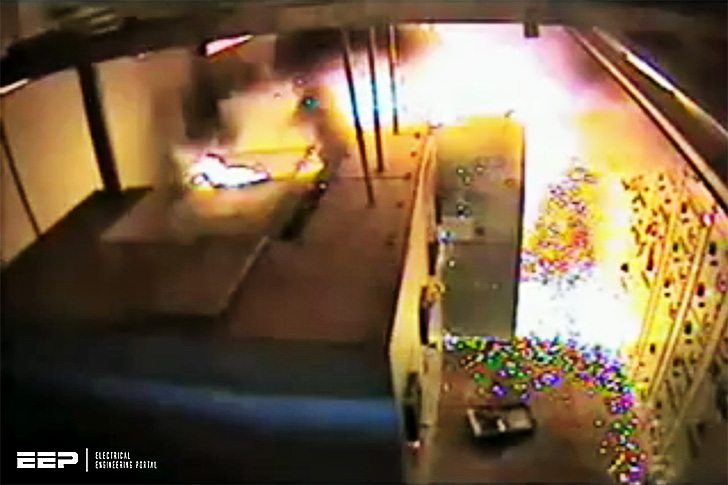
Arc Flash – The Electrician’s Insidious Companion Image: Safety Management Services, Inc.
Arc Flash
Blog Written By Patrick Mynett
CEO / High Voltage Specialist at HV Training and Consulting Pty Ltd
Thorne & Derrick International would like to thank Pat Mynett for allowing us to publish his article Arc Flash – The Electrician’s Insidious Companion.
Pat is CEO at HV Training and Consulting Pty Ltd and is a High Voltage Specialist.
In 2014, Pat Mynett decided there was room in the market for another RTO to provide quality electrical training. Especially from a person with recent industry experience, whose main interest was in the electrical safety of workers and the welfare of the plant. Arc flash safety training was a glaring omission in the industry so he developed, wrote and registered a nationally accredited arc flash course for those who work in an arc flash hazard zone.
This is Part 2 in a series of 3 articles about the dangers of arc flash – over the course of these articles we have discussed the definitions, dangers, statistics, causes, prevention and protection against arc flash.
Your insidious companion is always lurking there in the background, looking to pounce on people who take short cuts, ignore rules or do not understand how to ban him from the worksite. If your insidious companion pays you a visit you may receive serious burns or pass on to the next world. Do not let this happen to you.
What is an uncontrolled Arc Flash?
A type of electrical explosion that results from a low-impedance (Short Circuit) connection to earth or another voltage phase in an electrical system.
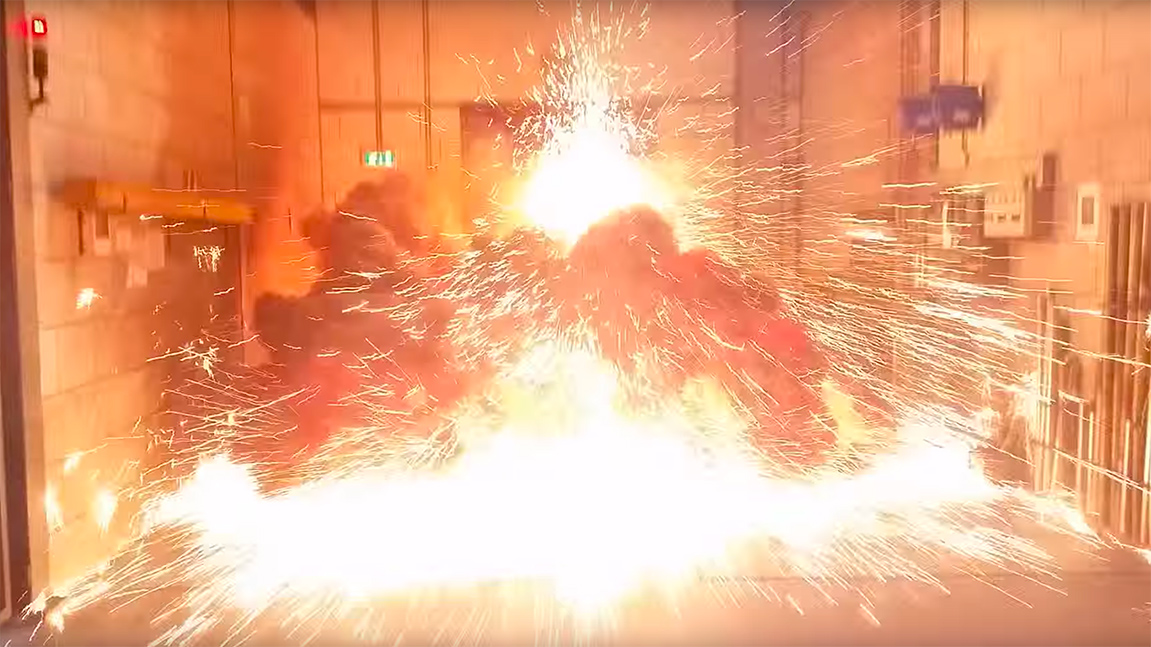
It is the light and heat produced from an electrical arc supplied with Sufficient Electrical Energy to cause fatalities, serious injury, substantial damage, fire, or worse.
What is Sufficient Electrical Energy
In rough figures, a 125kVA transformer 400V (LV) supply would have a fault current capacity of over 3600amps. This just gives an illustration of the current available at the transformer LV terminals.
At the main switchboard this could have dropped considerably, depending on the impedance of the mains, but will always significantly exceed the switchboard load rating.
Padmount transformers can be 20 times the capacity of the above example.
Severity of an arc flash
The severity of an arc flash depends on the amount of fault current available and the duration (Time) the fault is on the system. The system’s voltage is only significant at LV where the volt drop across the arc can be up to 60% of the Low Voltage, so it appears to the protection as a high impedance fault, which therefore clears slowly.
This delay may mean the difference between serious and fatal burns. The careless worker is therefore completely dependent on the distance from and size of, the feeding transformer and most importantly, the switchboard and protection design, commissioning and ongoing maintenance (including tripping batteries) being done correctly.
Overcoming Arc Flash Hazards
Energy received from an arc flash
The energy produced by an arc flash and the energy received from an arc flash are two different things. The energy received from an arc flash is measured in Incident Energy (cal/cm2) depends on the distance from the arc flash. The further you are away from the arc flash source the less the incident energy.
What events can cause an arc flash?
An arc flash initiated when the system is static, no movement of system devices. These events can be caused through vermin (rats, mice, etc.) and hot joints. These events generally occur without injury to personnel as no work is being carried out in the vicinity. However, these events can and do cause significant damage to equipment.
An arc flash initiated when there is movement in the system.
The movements can be;
working live,
operator error,
closing, opening and racking of circuit breakers,
operating switches/isolators live,
inappropriate operation of switchgear,
trying to operate damaged switchgear,
dropping tool/ equipment on live conductors/busbars,
circumventing interlocks etc.
When arc flash events are due to movement, fatalities or significant injuries can occur, as well as major damage to equipment.
What can you do to protect against an arc flash incident?
Do not take short cuts!
Do not work live!
Do not operate faulty equipment!
Get an understanding of arc flash, its causes, its hazards and how to mitigate the hazards!
Know when it is not safe to proceed with the work!
Know the correct PPE to select and wear!
Get training in arc flash hazards and mitigation!
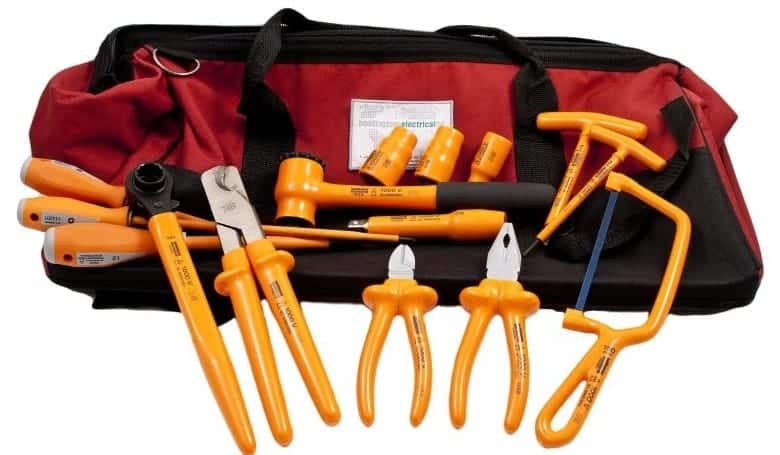
arrow: Protecting Cable Jointers & Electrical Engineers When Working Live On Cables & Switchgear – comprehensive ranges of insulating matting and insulated tools.
Training to recognise Arc Flash Hazards
Now there is training available for people who work at the coal face and operate electrical equipment. This arc flash training imparts the knowledge to recognise, risk assess, mitigate, select the correct PPE for arc flash hazards and know when it is not safe to proceed with the work.
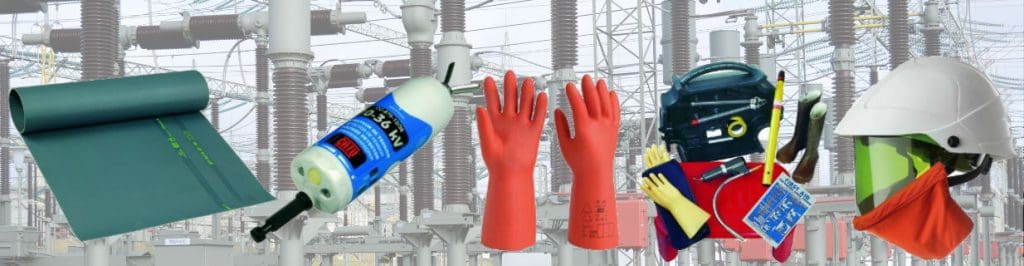
Wearing the correct type of PPE when working in an arc flash environment is imperative. If an arc flash occurs, without PPE you may not go home for a long time or you may not go home at all.
T&D distribute the most extensive range of LV, MV & HV Cable Jointing, Terminating, Pulling & Installation Equipment – we service UK and international clients working on underground cables, overhead lines, substations and electrical construction at LV, 11kV, 33kV and EHV transmission and distribution voltages.
Thorne & Derrick invite you to join LinkedIn’s largest LV-HV Electrical Discussion Group : Low & High Voltage Power, Cabling, Jointing & Electricals. Discussion subjects include cable installations, cable jointing, substation, overhead line and electrical construction at LV, 11kV, 33kV and EHV. Network, engage and promote your profile, company or products with over 10,000 influencers.
Arc Flash Learning & Resources
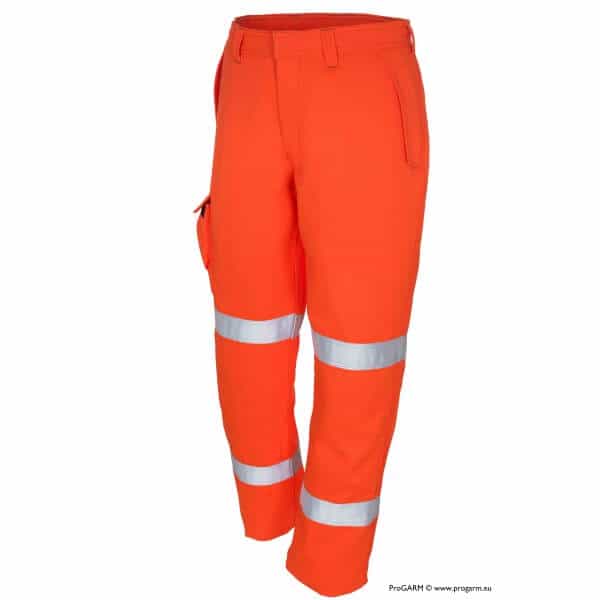
Thorne and Derrick are proud to be distributors of ProGARM arc flash coveralls and protection.
We can help – should you require arc flash calculators or advice on the type of clothing and protection available please do not hesitate to contact us.
“30,000 Arc Flash Incidents per year” Source: ISHN
Arc Flash
Blog Written By Patrick Mynett
CEO / High Voltage Specialist at HV Training and Consulting Pty Ltd
Thorne & Derrick International would like to thank Pat Mynett for allowing us to publish his article Introduction To Arc Flash.
Pat is CEO at HV Training and Consulting Pty Ltd and is a High Voltage Specialist.
In 2014, Pat Mynett decided there was room in the market for another RTO to provide quality electrical training. Especially from a person with recent industry experience, whose main interest was in the electrical safety of workers and the welfare of the plant. Arc flash safety training was a glaring omission in the industry so he developed, wrote and registered a nationally accredited arc flash course for those who work in an arc flash hazard zone.
This is Part 1 in a series of 3 articles about the dangers of arc flash – over the course of these articles we have discussed the definitions, dangers, statistics, causes, prevention and protection against arc flash.
An electric arc occurs whenever a circuit breaker, switch or isolator (Device) is opened and when there is current is flowing in the circuit. However, most devices under normal operating conditions are designed to control the arc when opening or closing.
An arc flash may occur when the arc is uncontrolled and there is sufficient energy released to cause harm or damage.
Arc flashes occur both at high voltage and at low voltage. There is little discrimination, low voltage arc flashes injuries are just as damaging at high voltage injuries.
An arc flash is the light and heat produced from an electrical arc supplied with sufficient electrical energy to cause substantial damage, harm, fire, or injury.
What is sufficient electrical energy, lets look at two situations, firstly a domestic situation and then a commercial, industrial or mining situation.
A domestic situation: In most domestic dwellings, even though the risk of electric shock is present, the risks of an arc flash are only minor, as there is normally insufficient energy to cause a serious arc flash. The main switch / main circuit breaker is normally quite a distance from a transformer. The distance and smaller cables sizes results in much higher circuit impedance and lower fault current.
A commercial, industrial or mining situation: This is a different story, as the results of an arc flash can be catastrophic. The main switch / main circuit breakers may be only a few meters from a transformer, fed by busbars or large cables. This results in extremely low impedance and very high fault currents.
What can initiate an Arc Flash?
There are many things that can initiate an arc flash, they can be divided into two groups.
Group 1: An arc flash when the electrical system is static and
Group 2:An arc flash when there is movement in the electrical system
Group 1: An arc flash can occur and be caused by items such as vermin, hot joints etc. In these cases, there can be substantial damage to equipment, but injury to people is extremely rare. Vermin avoid areas when people are around.
Group 2: An arc flash can occur and be caused or initiated by items when there is movement in the system, such as closing or opening of circuit breakers, switches or isolators, applying earths, opening enclosures, dropping tools, inappropriate use of tools etc.
This is where the majority of arc flash injuries occur.
Arc flash can be caused by; switching devices being operated that are faulty or damaged, circuit breakers racked when closed, isolators opened on load, applying earths to energised conductors, closing a switch onto an earthed conductor, inadvertent contact through working close to live conductors, dropping tools onto live conductors, drilling into enclosures and the drill contacts an energised conductor.
Many of these causes are due to human error, working live, complacency, lack of training, lack of maintenance, taking short cuts etc.
Who are the people that get hurt
from an Arc Flash?
Nearly all arc flash injuries occur to people in two distinct groups.
Electrical workers and non-electrical workers.
Injuries to electrical workers make up the majority of arc flash injuries. They are the people that generally operate electrical switchgear, work on or close to energised conductors.
Injuries to electrical workers occur due a to lack of understanding, lack of training, complacency and ignoring or short cutting safety rules. There is tremendous pressure on electrical workers to keep electricity supply on when working on or close to energised conductors.
This pressure is applied by people who do not have any understanding of electrical hazards. Legislation in Australia only allows work on or close to energised conductors under strict conditions. Yet many electrical workers still work on or close to energised conductors.
Non- electrical workers who operate industrial switchgear is the other group where arc flash injuries occur.
There are many non-electrical workers in industry that switch industrial electrical low voltage loads on and off.
There are some that operate high voltage switchgear to create an isolation point for non-electrical work. Most of these non-electrical workers would not know what an arc flash is.
How many people get hurt in Australia
through Arc Flash and what can we learn in the UK?
Arc flash injury statistics are hard to acquire and quantify. In many cases this is due to arc flash injuries recorded at electrical injuries.
About three years ago figures were obtained from one Australian state’s hospitals on the number of people admitted with serious electrical (arc flash) burns. When these figures are extrapolated out to cover all of Australia. On average (30) thirty people each year get admitted to hospital with arc flash burns and (1) one fatality occurs every two years.
These figures can be backed up by the fact that in NSW/QLD and WA for the three months ending in November 2018, there was one fatality and 7 people who received serious burns.
In 2014 two fatalities occurred in WA.
It is unfortunate, that many arc flash injuries do not get reported and in some cases the information gets suppressed due to legal reasons.
The UK has 3 times the population of Australia, so it can be reasonably assumed that the numbers of injuries in the UK are 3 times greater.
90 people hospitalised and 1.5 fatalities each year.
What are the costs from an Arc Flash?
There are human costs and financial costs.
Human costs: It is not just the injury, it’s the trauma of recovery (burns take a long time to heal and scar for life), the family trauma (living with someone who is in constant pain and disfigured), loss of income (many burns victims never return to work). The divorce rate of burn victims is extremely high.
Financialcosts: Loss of supply can be from an hour to several weeks. A single piece of equipment may only be damaged and easily replaced or a whole switchboard/transformer etc. may be damaged beyond repair. The costs can be from a few dollars up to millions of dollars. I would suspect that arc flash incidents cost Australian industries many millions of dollars each year.
In Conclusion
Arc flash is a real and present hazard.
Yet, it is often ignored or given the pretence to comply by industry.
The majority of electrical workers do not have an understanding of Arc Flash or its hazards, if they did we would not have the number of arc flash injuries that we do have at present. Arc flash training is available, but few companies take it up due to the lack of understanding of the subject.
arrow: Protecting Cable Jointers & Electrical Engineers When Working Live On Cables & Switchgear – comprehensive ranges of insulating matting and insulated tools.
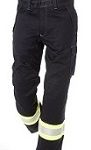
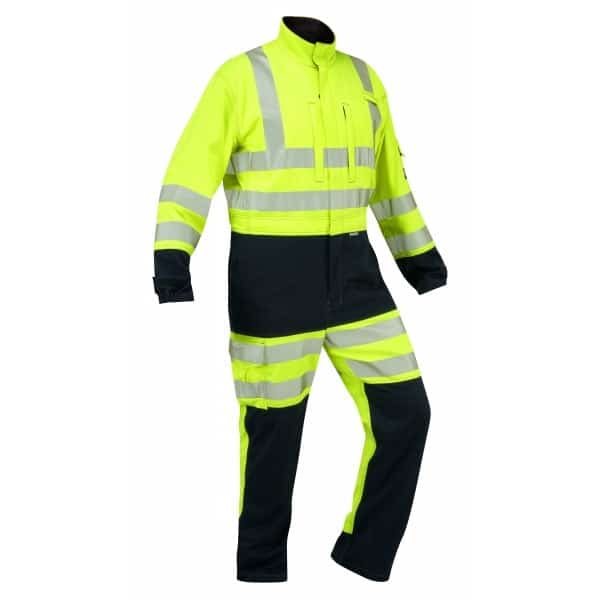
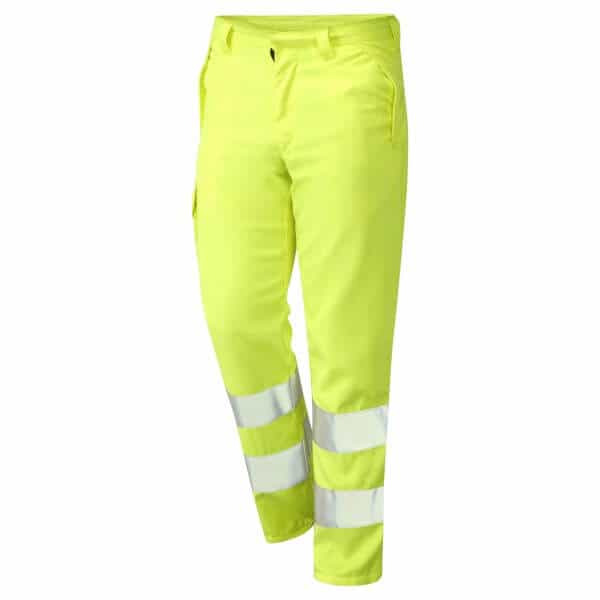
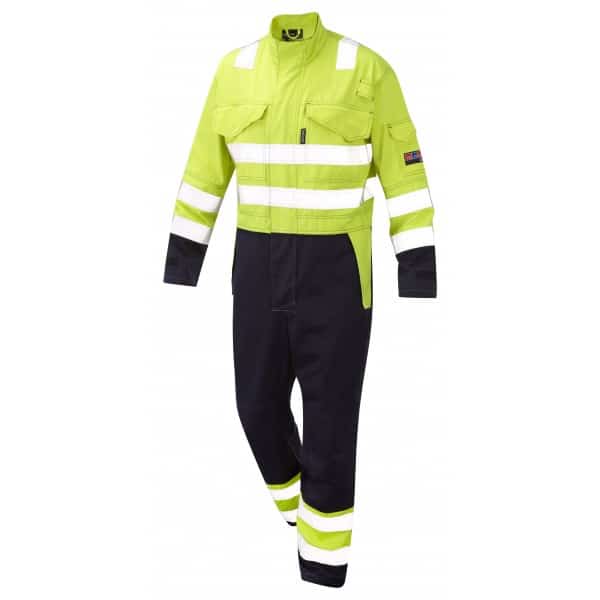
Enhanced and effective arc flash protection is safely achieved by wearing layers of protective clothing and garments manufactured from inherent fibres and which feature specific Arc Flash resilient components. Without the correct high-quality garments arc protection levels will be compromised.
T&D distribute the most extensive range of LV, MV & HV Cable Jointing, Terminating, Pulling & Installation Equipment – we service UK and international clients working on underground cables, overhead lines, substations and electrical construction at LV, 11kV, 33kV and EHV transmission and distribution voltages.
Thorne & Derrick invite you to join LinkedIn’s largest LV-HV Electrical Discussion Group : Low & High Voltage Power, Cabling, Jointing & Electricals. Discussion subjects include cable installations, cable jointing, substation, overhead line and electrical construction at LV, 11kV, 33kV and EHV. Network, engage and promote your profile, company or products with over 10,000 influencers.
Arc Flash Learning & Resources
Thorne and Derrick are proud to be distributors of ProGARM arc flash coveralls and protection.
We can help – should you require arc flash calculators or advice on the type of clothing and protection available please do not hesitate to contact us.
CEO / High Voltage Specialist at HV Training and Consulting Pty Ltd

"Every worker can go home at night after a day at work"
Thorne & Derrick International would like to thank Pat Mynett for allowing us to publish his article Overcoming Arc Flash Hazards.
Pat is CEO at HV Training and Consulting Pty Ltd and is a High Voltage Specialist.
In 2014, Pat Mynett decided there was room in the market for another RTO to provide quality electrical training. Especially from a person with recent industry experience, whose main interest was in the electrical safety of workers and the welfare of the plant. Arc flash safety training was a glaring omission in the industry so he developed, wrote and registered a nationally accredited arc flash course for those who work in an arc flash hazard zone.
This is Part 3 in a series of articles about the dangers of arc flash – over the course of these articles we have discussed the definitions, dangers, statistics, causes, prevention and protection against arc flash.
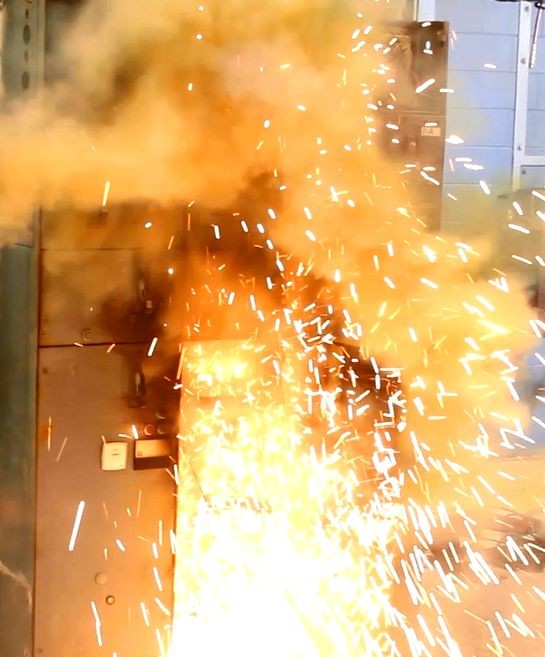
An arc flash can cause minor injuries, third degree burns and potential death as well as other injuries including blindness, hearing loss, nerve damage and cardiac arrest. Fatal burns can occur when the victim is several feet from the arc. Serious burns are common at a distance of 10 feet – arc flash can generate heat 4 times greater than the surface of the sun.
The Energy In An Uncontrolled Arc Flash
Arc Flash is the result of a breakdown in insulation which in turn causes an excessive flow of current between phase and earth, phase to neural or phase to phase. This current flow may be thousands of amps, that is why arc flash fault current is measured in kilo Amperes (kA).
The energy released from an arc flash is governed by the systems voltage, the generation capacity available, the impedance to the source and the time the fault is on the system.
Arc flash is made up of molten metal, plasma, intense heat, intense light, gas, intense sound, and pressure waves, all released in milliseconds.
Arc Flash Energy In Perspective
To get some idea of the energy that can be released: a 415 volts system with 5000 amps/ 5kA of fault current flowing for 500 milliseconds or 2500 amps/2.5kA flowing for 1 second, it would have a similar energy release as one stick of explosive.
A 200kVA transformer’s fault current at the 415-volt terminals can be up to 6170 amps.
A 100kVA transformer’s fault current at the 415-volt terminals can be up to 3085 amps.
Both having the capacity to produce the energy shown in the paragraph above.
How Is The Energy From An Arc Flash Measured?
Firstly, the energy at the arc flash source, is different from the energy received from an arc flash. It all depends on where you stand. So, the energy received depends on the distance to the arc flash source.
The energy received from the arc flash is called Incident Energy.
It is measured in calories per centimetre squared, (cal/cm2).
Incident Energy is:The amount of energy impressed on a surface, a certain distance from the source, generated during an electrical arc event.
So What Actions Can Initiate An Arc Flash
You will notice that all of the below, are actions that happen very frequently but only a very few ever initiate an arc flash. They are not normally the cause, there is usually other contributing factors,
1: Opening or closing a circuit breaker 2: Racking a circuit breaker in or out (see picture below) 3: Working live 4: Opening or closing a switch 5: Opening or closing an isolator 6: Dropping tools 7: Testing 8: Replacing parts
What Initiates & What Causes An Arc Flash
Are Different In Many Cases
Because the initiating actions, are actions that are all part of normal operations carried out frequently by many electrical workers, very little thought is given to the action itself.
Just as an example: A circuit has been modified. (AS/NZS 3000 specifies the circuit must be tested before re-energisation) yet many ignore this testing. The circuit breaker is closed without thought and there is a fault with the modification. The closing of the circuit breaker initiates an arc flash at the modification. If the circuit breaker has not been maintained, it may not clear the fault as per the trip settings time, it may not clear the fault at all, or another arc flash may occur at the circuit breaker.
Initiation Causes
1: Closing a circuit breaker – Closing onto a short circuit, the circuit breaker is under rated
2: Racking a circuit breaker in – Racking in a closed-circuit breaker onto a load
3: Closing a switch – Closing onto a short circuit and the upstream protection is incorrect
4: Opening an isolator – Opening an isolator with load on the circuit
5: Dropping tools – Working in a live switchboard with uninsulated tools
6: Testing using a non-rated multimeter with the settings on the wrong function
7: Replacing parts – Long tails make contact with live parts
8: Working live ignoring legislation, such as peer pressure not to turn the supply off
➡ Protecting Cable Jointers & Electrical Engineers When Working Live On Cables & Switchgear – comprehensive ranges of insulating matting and insulated tools.
Causes Can Often Be Traced To Human Performance
Let’s look at some human performance issues.
Not concentrating, “I’ve always done it this way,” rushing to finish the job, taking short cuts, ignoring standard procedures, lack of knowledge etc.
One of the biggest issues with arc flash, is the lack of knowledge. Most electrical workers have heard of arc flash and have some idea of the results but have little understanding of arc flash hazards and mitigation of the hazards.
A few years ago, it was taken as an occupational hazard that electrical workers would occasionally get injured or die from exposure to an arc flash. This should not be the case today as arc flash is now a recognised foreseeable occupational hazard.
Where Do We Stand Under Law?
Australian Health and Safety law is quite specific about occupational hazards.
Australian Model Work Health and Safety Regulations: Chapter 3 General Risk and Workplace Management
34 Duty to identify hazards
A duty holder, in managing risks to health and safety, must identify reasonably foreseeable hazards that could give rise to risks to health and safety.
35 Managing risks to health and safety
A duty holder, in managing risks to health and safety, must:
(a) eliminate risks to health and safety so far as is reasonably practicable; and
(b) if it is not reasonably practicable to eliminate risks to health and safety—minimise those risks so far as is reasonably practicable.
As arc flash is now a foreseeable occupational hazard, so there is a duty to manage these hazards. Yet many companies choose to either ignore or play lip service to arc flash hazards.
Understanding Arc Flash Comes From Quality Training
Training workers is one area where little is happening.
Some large companies consider a familiarisation session of one hour as adequate training.
To cover training adequately takes 5 to 7 hours to cover what is required. Training should include; what arc flash is, Legislation & Standards, definitions, incident energy, causes of arc flash, PPE selection and requirements, arc flash risk management.
Enhanced and effective arc flash protection is safely achieved by wearing layers of protective clothing and garments manufactured from inherent fibres and which feature specific Arc Flash resilient components. Without the correct high-quality garments arc protection levels will be compromised.
T&D distribute the most extensive range of LV, MV & HV Cable Jointing, Terminating, Pulling & Installation Equipment – we service UK and international clients working on underground cables, overhead lines, substations and electrical construction at LV, 11kV, 33kV and EHV transmission and distribution voltages.
Thorne & Derrick invite you to join LinkedIn’s largest LV-HV Electrical Discussion Group : Low & High Voltage Power, Cabling, Jointing & Electricals. Discussion subjects include cable installations, cable jointing, substation, overhead line and electrical construction at LV, 11kV, 33kV and EHV. Network, engage and promote your profile, company or products with over 10,000 influencers.
Arc Flash Learning & Resources
Thorne and Derrick are proud to be distributors of ProGARM arc flash coveralls and protection.
We can help – should you require arc flash calculators or advice on the type of clothing and protection available please do not hesitate to contact us.
WJCPC are specialist LV HV Cable Termination & Jointing contractors with over 20 years experience in the High Voltage Electrical Industry covering the utilities, renewable energy, rail, data centre and general industry sectors – UKPN competent for LV & HV Termination and Jointing Of Cables, Confined Spaces, Substation Entry and Cable Fault Finding.
In the following post Ben Jacomb, Director of WJCPC, highlights several shortcomings and the dangerous consequences of clients failing to carefully vet and selectively employ Competent Cable Jointers.
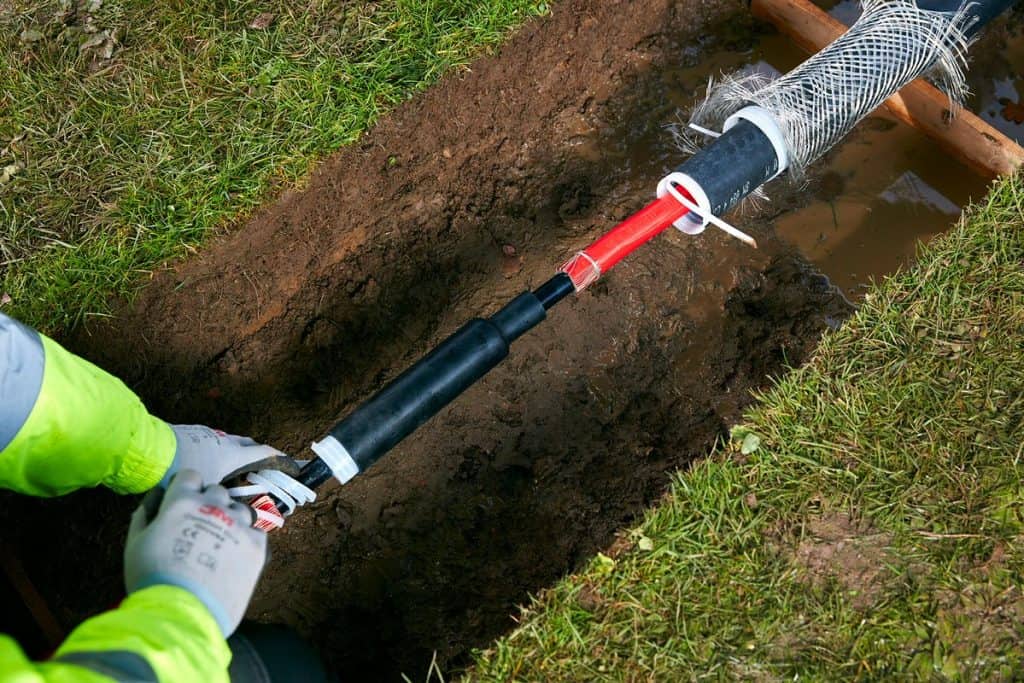
WJCPC were asked to attend site to remove a total of 16 incorrectly specified and installed cable glands and install correct type brass glands. Due to the cable termination being a larger diameter to permit the existing and replacement cable glands to be changed WJCPC had to carefully remove the anti-track heat shrink (red insulation) from the heat shrink terminations.
After first inspection WJCPC were unsatisfied with the cable jointing technique undertaken to remove the semi conductive layer from the MV cable: this was done by using a semi-con stripping tool, the semi conductive layer is semi bonded so the stripping of the layer should be stripped by using a depth knife and the ringing of the stress control point by a soft file.
Any marks left in the XLPE insulation by the Jointer will influence the magnetic fields inside the MV cable and should be removed by emery cloth to leave a smooth finish eliminating any voids. If the heat shrink tube is shrunk on top of a void there will be moisture and where there is moisture there will be arcing, burning and then failure.
If the semi conductive layer is not removed correctly at the crucial point discharges occur and can damage the medium voltage cable and safe operation of the power network.
Below are WJCPC’s site observations.
Incorrect cable gland installed
The cable installed is a 11kV single core power cable with XLPE insulation and 120sqmm stranded copper conductors (16sqmm earth wires) – the original cable glands installed were 50mm plastic glands which are over-sized and incorrect for the cable diameter consequently failing to provide adequate mechanical retention.
Also, due to the cable being a backup supply from generators the vibrations will evidently loosen the cable gland until it is effectively and dangerously removed from the gland plate of the cable box which will then allow the cable to move around within the termination box – this could potentially loosen the cable termination connection.
This could do serious damage within the generator.
New 40mm brass cable glands were installed to the correct specification and that corrective action by WJCPC now has eliminated any vibration and loosening of the connection issues.
Observations
Ensure that when ordering jointing materials that manufacturers recommendations and specifications are met to eliminate incorrect installations.
Incorrect Cable Gland Installed
Over-Crimped Cable Lugs
All 16 of the site 11kV cable terminations had been over compressed or “crimped” due to the Jointer using an incorrect crimping die set.
Over compression of the cable lugs caused a distinct gap between the cable lugs and the cable insulation.
Incorrect Cable Lug Compression
Correct Cable Lug Compression
Choose a manufacturerproviding crimp tooling die set and lugs matched to work together to give assured crimping performance.
Each lug should be clearly marked with a reference on the barrel or palm which enables the user to verify that the lug selected is the correct size and type for the conductor. The manufacturer’s name or logo also allows the correct die set and crimp tool to be selected from their recommended list.
Prepare the conductor by stripping the insulation back so that, when assembled, it cannot be trapped in the barrel of the lug. The strip length should be equal to that of the barrel. Take care to avoid damage to the conductor strands during the stripping operation. Exposed conductor strands should be cleaned to remove any particles of insulation.
Fully insert the conductor into the barrel. If an inspection hole is provided, check the conductor is fully inserted.
Crimp the lug in accordance with the manufacturer’s instructions. Pay careful attention to the positioning of the die on the barrel and, if multiple compressions are required, the sequence in which they are made.
Marking on cable lug shows it is correct for the conductor type and size.
The marking on the cable lugs show the correct die set was used.
No insulation is trapped in the cable lug barrel.
Excess grease is removed from insulation and lug.
If an inspection hole is provided, the conductor has been fully inserted
It is NOT to be over-compressed causing excessive flash or burrs, which are detrimental to the performance of the joint.
It is NOTunder-compressed, as this is detrimental to the performance of the joint.
If any doubt exists, samples should be produced for test purposes.
Poor Cable stripping
of semi conductive layer
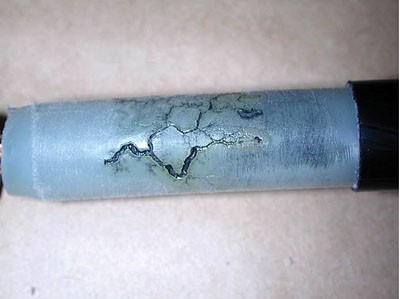
The semi conductive layer of the MV cable has been stripped by a stripping tool and on one occasion the stripping tool has impeded past the manufacturer’s requirements for their insulation diameter which will cause a void within the cable termination – the void could cause a hotspot and potential flash over which will render the connection irreparable.
The semi conductive layer is semi bonded (easy peel) so the semi conductive layer should be removed using a specialist Jointers tool or depth knife – here the semi con layer has been removed from the cable using a bonded semi-con layer stripping tool and it has left a poor finish to the XLPE insulation.
Even if the semi con layer is bonded type then the cable jointer should use 3 stage emery cloth ( 80, 120, 240 grit) to sand out any ridges and voids and then clean down the cable with a non- conductive cleaning cable wipe.
Poor Stripping By The Jointer Of The Semicon Layer Of The MV Cables
The XLPE insulation finish on easy peel type cables should be a nice smooth finish without ridges, undulations or jagged surfaces.
The semi con round off point should be a perfect finish as this is the most crucial point of the cable termination – if this is not perfectly smooth and the void filler mastic is not installed properly this can affect the stress relief from electrical fields.
It is essential this is undertaken by the Jointer with due care and attention.
Below is a photo of potential damaged caused by above non-conformances.
Missing earth strands from cable
On 50% of the cables WJCPC found missing earth strands. This will degrade the earthing protection for that cable.
Missing Earth Strands From Cable
Poor outer sheath strip
The outer sheath on occasions was poorly removed and not stripped according to the manufacturers jointing instruction – this may affect the damp seal which is installed on the outer sheath and the cable terminations measurements may come out of sync and affect the electrical connections durability.
Poor outer sheath strip
Conclusion
After full inspection WJCPC found that poor Jointing and sub-standard workmanship without quality control had introduced serious and potentially catastrophic operational issues into the medium voltage cable and power system network.
WJCPC recommend that a survey onsite is conducted to check more cable terminations as they suspect this will be a continuous issue onsite – using a thermal camera and partial discharge tester can help determine any cable terminations that need to be looked at and maybe pick some at random to strip down and visually inspect.
Due widespread concerns about industry workmanship, lack of Jointer training and declining standards, WJCPC can provide an audit service to visually audit jointers and ensure they are completing their termination to the manufacturers jointing instruction – this may not eradicate Jointer incompetency but it will contribute to a reduction in the volume of poorly installed cable joints.
There is also another process you can introduce and this is a step-by-step photo sequence of the termination installation at its crucial stages – this does not take long and captures the poorly installed cable joints or terminations before they are energised.
➡ Please Note:The cable glands WJCPC have changed and the re-termination of the cables will not be guaranteed by WJCPC due to the terminations not being installed to the manufacturers instructions. WJCPC have terminated them to their best ability but only as a temporary measure to allow the generators to be commissioned.
WJCPC strongly advise these cables are removed and new cable and new terminations installed immediately.
HV Cable Terminations
Thorne & Derrick distribute the most extensive range of HV Cable Terminations & Joints to suit 11kV/33kV medium and high voltage power cables, including indoor cold shrink and heat shrink terminations, outdoor pole-mounted terminations or separable connectors for gas insulated equipment applications.
HV High Voltage Cable Joints | Cable Terminations | Cable Connectors | MV HV 11kV 33kV
Joint | Terminate | Connect Medium & High Voltage Cables MV HV
THORNE & DERRICK are national distributors of Cable Installation, Jointing, Substation & Electrical Safety Equipment MV HV – we service UK and global businesses involved in cable installations, cable jointing, substation, overhead line and electrical construction at LV, 11kV, 33kV and EHV.
Contact us for 3M Electrical, ABB, Alroc, AN Wallis, CATU Electrical, Cembre, Centriforce, CMP, CSD, Elastimold, Ellis Patents, Emtelle, Euromold, Filoform , Furse, Lucy Electric & Zodion, Nexans, Pfisterer, Polypipe, Prysmian, Roxtec, Sicame, WT Henley.
Invitation
Thorne & Derrick invite you to join LinkedIn’s largest LV-HV Electrical Discussion Group : Low & High Voltage Power, Cabling, Jointing & Electricals.
Discussion subjects include cable installations, cable jointing, substation, overhead line and electrical construction at LV, 11kV, 33kV and EHV. Network, engage and promote your profile, company or products with over 10,000 influencers.
IEEE 1584
Arc Flash Standard
Special thanks to Rebecca Frain CMgr FCMI Tech IOSH (Managing Director – Electrical Safety UK Ltd) for allowing Thorne & Derrick to publish her interview with Jim Phillips regarding the new IEEE 1584 2018 Edition.
What Is IEEE 1584?
IEEE 1584, published by the IEEE Standards Association, is A Guide for Performing Arc-Flash Hazard Calculations.
This guide provides mathematical models for designers and facility operators to apply in determining the arc-flash hazard distance and the incident energyto which workers could be exposed during their work on or near electrical equipment.
By Rebecca Frain
This week I had the opportunity to interview Jim Phillips regarding the new IEEE 1584-2018 Standard and what to expect with some of the new changes. In addition to being Associate Director for Electrical Safety UK and founder of Brainfiler.com, Jim is also Vice-Chair of IEEE 1584 and International Chair of IEC TC 78 – Live Working.
IEEE 1584 – IEEE Guide for Performing Arc Flash Hazard Calculations was first published in 2002 and is the standard that defines the equations and methods used in many of the arc flash software packages used for arc flash risk assessments. The second edition was published towards the end of 2018 and is a real game changer.
RF: A question many of us have is why did it take 16 years to publish the second edition of this standard?
JP: It has been a long journey. The timeline had many phases during this epic project. The first couple of years were spent developing a test plan and raising money from contributors for this enormous (and expensive) project. This was followed by preliminary tests that we call “Scouting Tests” These were used to help define the direction of the entire testing program.
After the preliminary tests, it took several more years for the project team to complete the main arc flash tests and develop the new model. That phase of testing was completed in 2012 and included over 1800 new arc flash tests. Quite an accomplishment. The 2002 edition of the standard was based on around 300 tests.
After the testing and model development phase, the IEEE 1584 working group created a model review task group to review and validate the new model. This took several more years of effort. During that time there was lots of fine tuning to further improve the accuracy. We completed it all in 2016 when it was now time for the formal balloting process. An interesting side note, the new standard passed on the very first ballot – we were all amazed. However, there were also over 1000 comments from the balloters that we had to address. Needless to say, this took some time to resolve. The second edition of this landmark standard was finally published on November 30, 2019
RF: What has changed with the 2018 edition?
JP: (laughs). It’s actually easier to answer the question “What did not change?” The standard still has the same title. With only a few exceptions, just about everything else is very different. This means what you previously knew about the IEEE 1584 standard can be tossed out.
RF: What is the single biggest change?
JP: That one is easy. The introduction of electrode configurations. The 2002 Edition had only two configurations: 1) An arc flash in an enclosure and 2) An arc flash in open air. Both were based on the test electrodes in a vertical configuration.
There are now five different electrode configurations: Vertical electrodes in an enclosure (VCB) and in air (VOA) which are the same as the 2002 standard but we also have horizontal electrodes in an enclosure (HCB) and in air (HOA) and vertical electrodes in an enclosure terminating in an insulating barrier (VCBB). The idea is the new configurations provide greater flexibility for modeling actual equipment.
RF: How does that affect the risk assessment?
JP: Depending on where the arc flash occurs and the type of equipment, the orientation of the electrodes, can affect the trajectory of the plasma and incident energy that reaches the worker. There is some guidance provided in the 2018 Edition of the standard.
RF: I assume there are other big changes?
JP: Yes. There are adjustments for different enclosure sizes. The enclosure size can have quite an effect on the incident energy. If an arc flash occurs in a smaller enclosure, the arc energy is more focused resulting in greater incident energy reaching the worker. If the enclosure is larger, the energy is not as focused and less energy reaches the worker. As a result, the tests included new enclosure sizes and the development of an enclosure size correction factor for the calculations.
RF: Anything else?
JP: The standard now uses interpolation and extrapolation to fine tune the results and provide better accuracy. There is also a new more detailed calculation for determining the minimum arcing current during an arc flash. The past standard simply used a fixed 85 percent value to determine the minimum.
The new equations are much more complex including a thirteenth-degree polynomial with thirteen coefficients that are selected based on the voltage and electrode configuration. (I hope I didn’t scare anyone away with that comment) The good news is the software takes care of the difficult math for us. The list of changes goes on.
RF: How does this all affect the results from previous studies?
JP: I have a series of worksheets that I developed and use to illustrate the calculations and compare with the 2002 edition. Some calculation results are similar to 2002. However, some can be quite different. It has quite a bit to do with the electrode configuration and other factors such as enclosure size.
RF: Does this change way arc rated clothing and PPE is selected?
JP: The overall risk assessment process is the same as before. i.e. Arc rated clothing and PPE are selected with an arc rating sufficient for the calculated incident energy. However, the difference is with the incident energy calculations using IEEE 1584. The calculations and modeling have changed dramatically.
Arc rated protective clothing is based on the standards: IEC 61482-1-1 and IEC 61482-2. There are a few other IEC standards for arc flash protection as well. These standards are from the IEC TC 78 Committee that has a group of highly knowledgeable and talented experts from around the globe all working towards developing and maintaining product standards for greater worker safety.
RF: We are looking forward to hearing more about the 2018 Edition of IEEE 1584 on September 24 at the upcoming International Arc Flash Conference in Manchester.
JP: Thank You Becky! I am looking forward to it. See you soon!
Arc Flash International Conference -Manchester Airport Tuesday 24th September
Company Profile
Electrical Safety UK Ltd
Electrical Safety Management is our core business. We provide expert consultancy and advice for blue chip organisations across Europe concerned with the safe management of risk associated with all electrical work activities. ESUK provide a multi-faceted holistic approach including a full electrical safety management program, project management and policy documentation all bespoke to the client’s requirements including fully accredited and bespoke training courses and personnel assessment programmes.
Here at Electrical Safety UK, our team delivers a range of professional services to customers in a variety of Market sectors. The team prides itself on the quality of the services it delivers to companies at the heart of manufacturing, engineering, energy, food production and education in the UK and Europe.
ESUK Services include:
1 Electrical Safety Management – Specialist consultancy and advice concerned with the safe management of risk associated with all electrical work activities. ESUK offer a multi-faceted approach including a full electrical safety management program, full project management and policy documentation bespoke to a client’s requirements.
2 Electrical System Studies – ESUK are the UK’s foremost exponent of Arc Flash Technology and carry out a wide range of power system studies, including Fault Level Analysis to IEC and ANSI standards, Protection Coordination, and complex Arc Flash Risk Assessments.
3 Training – ESUK offer both accredited and bespoke training courses including City & Guilds, IOSH, Safety Pass Alliance, Energy and Utility Skills. ESUK are also registered with the EEIAS and CIPD for recognition and accreditation of bespoke training courses.
Thorne & Derrick International are specialist distributors of LV, MV & HV Cable Installation, Jointing, Duct Sealing, Substation & Electrical Equipment – servicing UK and global businesses involved in cable installations, cable jointing, substation, overhead line and electrical construction at LV, 11kV, 33kV and EHV.
klauke ekm60unv – universal cutting, crimping & punching tool The Klauke EKM 60 UNV is a versatile battery powered hydraulic universal tool engineered that can be used as a battery powered cable crimping tool and battery operated cable cutting tools that comes...
INDUSTRIAL LABEL PRINTING SOLUTIONS When clear, durable and professional identification is required across control panels, cable systems, production facilities and industrial installations, print quality, reliability and ease of use are critical. Cembre industrial label printers are designed to support...