Blog
What Is An Arc Flash Study?
July 30th, 2021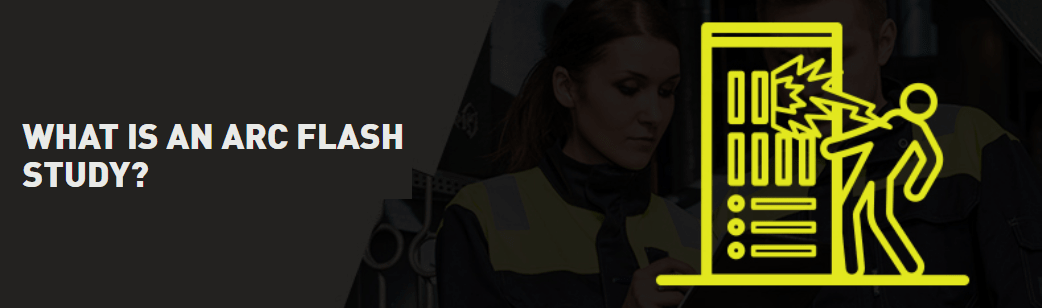
Arc Flash Protection

ProGARM Arc Flash Clothing, Garments & Electrical PPE
An Arc Flash Study is a risk assessment of a workplace environment that determines Arc Flash hazards. An expert in electrical safety conducts an assessment to ensure that a company understands the risks their workplace poses to their team and how to protect against them. Assessment providers may also offer training to increase your team’s awareness and options for periodic reviews.
WHAT DOES AN ARC FLASH STUDY INVOLVE?
How big would the bang be? That is the central question that an Arc Flash study seeks to answer. Only by knowing this can you adequately protect your team against the Arc Flash risks of their working environment.
An Arc Flash study will identify areas of low risk, as well as those at high risk of an Arc Flash incident. This allows you to tailor your Arc Flash protection strategy accordingly. The study will also assess the potential severity of injury at a given distance and locate the protection boundary at which there is a severe danger of second-degree burns.
There are many facets to a successful Arc Flash assessment and generally, they are adapted to fit your specific industry and requirements. They can include Arc Flash calculations, fault level studies and comprehensive site surveys.

WHO NEEDS TO CARRY OUT AN ARC FLASH STUDY?
Companies in the UK are not currently obliged to perform Arc Flash assessments on their sites. This is in stark opposition to the USA, where there is more awareness about the dangers of Arc Flash incidents. An Arc Flash study may be optional, but the positive impact on safety within your organisation is likely to be significant.
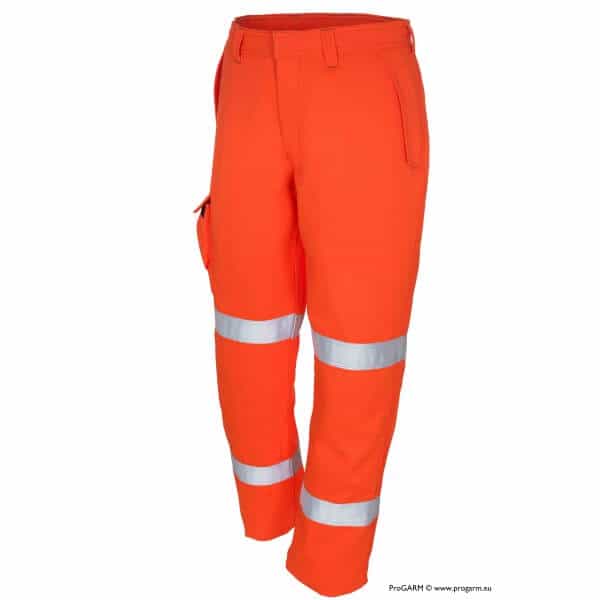
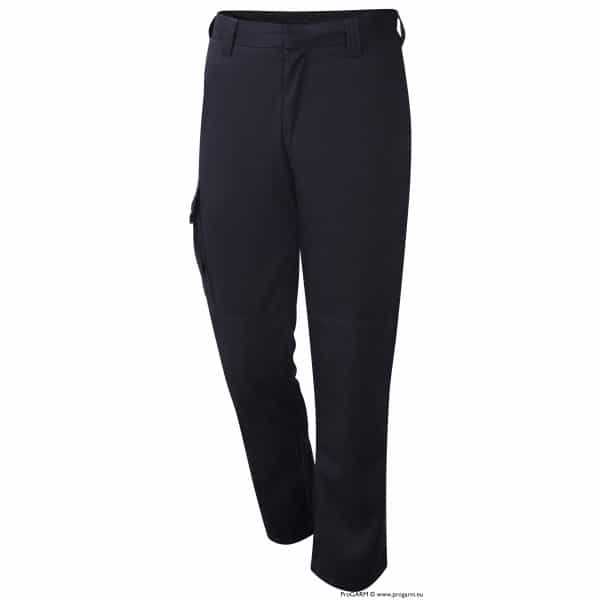
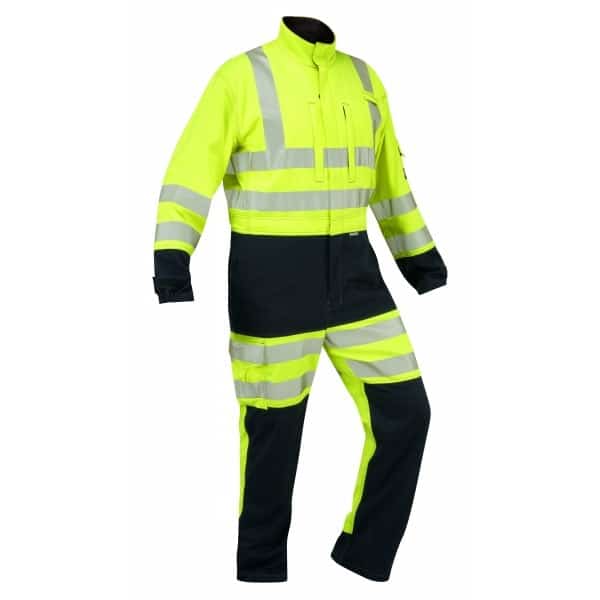
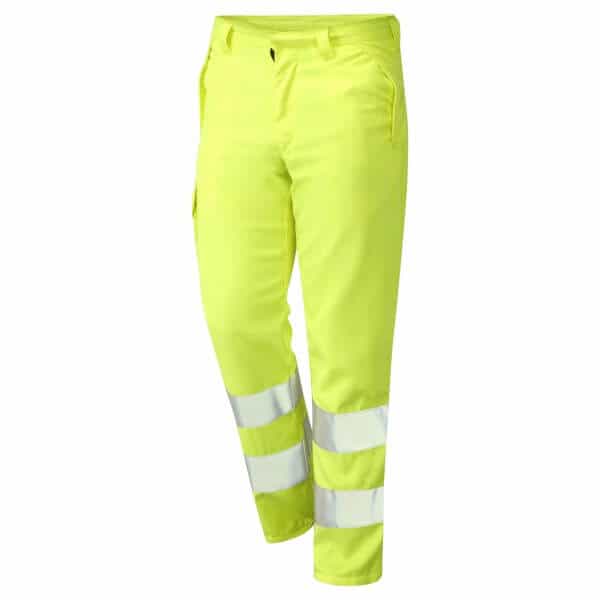
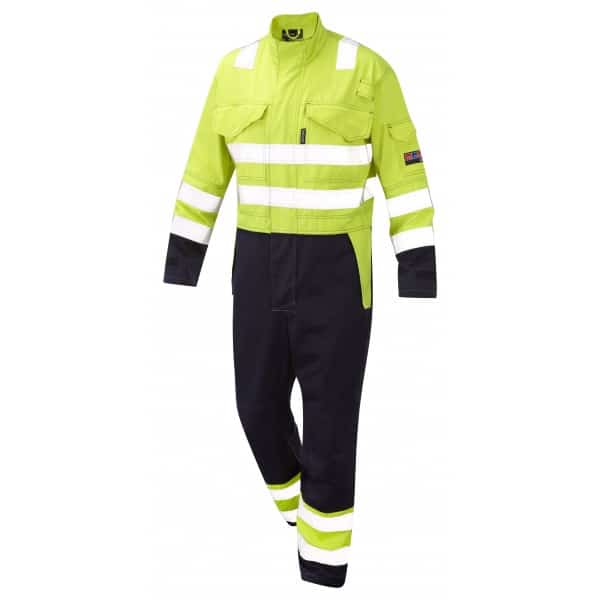
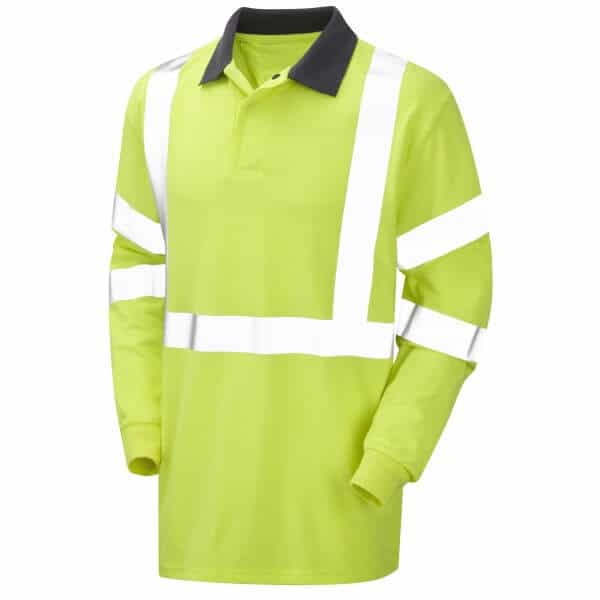
Arc Flash protective clothing is vital to protect your team should they be at risk. An Arc Flash study will highlight what level of protection is needed, allowing you to make an informed decision about your team’s Arc Flash protective clothing requirements. Arc Flash garments are available from specialist Arc Flash and non-specialist suppliers – we believe that when lives are at stake that you should trust a specialist. All garments that are rated for Arc Flash protection conform to EN Standards, but not all Arc Flash garments are created equal.

➡ See also our range of Electrical Safety Equipment
Take a look at what it takes to create a ProGARM garment and explore how our garments protect your team, the quality and durability of our arc flash clothing and how the comfort and design of our garments contribute to protecting your team.
Thorne & Derrick distribute a range of arc flash coveralls to suit a range of requirements. Variations include ladies coveralls, designs for overhead linesmen, orange and yellow hi vis options and a wide range of sizes. Contact Thorne & Derrick with your specific PPE requirements and we will be happy to help.
The ProGARM range of Flame Resistant protective garments are designed for every-day wear and protection – the highly breathable clothing ranges are designed for comfort and safety without compromising the ability of the wearer to work productively, safely and unhampered by cumbersome garments prone to overheating.
Other garments and protection products include Arc Flash Gloves, Arc Clothing, Arc Flash Suits and Arc Flash Helmets & Visors.
Further Reading
- Arc Flash Protection Hoodie with FR Protection | ProGARM 5530
- Arc Flash Clothing Standards | EN Standards for Arc Flash Protection
- Arc Flash Protection | A Whitepaper on Clothing & Garment Selection
- Arc Flash Survivor Story – Jason Brozen

💡 Did you know? – While high voltage equipment does increase the likelihood and intensity of arc flash explosions, they can occur in any live electrical environment – even low voltage.
Arc Flash Learning & Resources

Thorne and Derrick are proud to be distributors of ProGARM arc flash coveralls and protection.
We can help – should you require arc flash calculators or advice on the type of clothing and protection available please do not hesitate to contact us.




Understanding Arc Flash | Core Body of Knowledge for the Generalist OHS Professional
July 30th, 2021Republished by Kind Permission of The OHS Body of Knowledge – The OHS Body of Knowledge (OHS BoK) is the collective knowledge that should be shared by generalist OHS professionals to provide a sound basis for understanding the causation and control of work related fatality, injury, disease and ill health (FIDI). This knowledge can be described in terms of its key concepts and language, its core theories and related empirical evidence, and the application of these to facilitate a safe and healthy workplace. The OHS BoK has been developed for the Australian OHS context but has international application.
Source is Australian Institute of Health and Safety
Uploaded by Chris Dodds | Sales & Marketing Manager at Thorne & Derrick UK
Authored by | Brett Cleaves, Director, Engineering Safety Pty Ltd
Peer Review by | Vanessa Garbett, Team Leader, Electrical Installation Safety, Energy Safety Victoria, Australia
Acknowledgements to | The Australian Institute of Health and Safety (AIHS) financially and materially supports the OHS Body of Knowledge as a key requirement of the profession. The Australian OHS Education Accreditation Board influences, supports and monitors the OHS Body of Knowledge.
Second Edition, 2019
The Understanding Arc Flash Document includes a content page as follows:
Table of Contents
A1 Introduction
A1.1 Some electrical terms
A2 The extent of the problem
A3 Understanding arc flash
A3.1 Electrical arcs
A3.2 Arc faults, arc flash and arc blast
A3.3 Impact of arc flash
A3.4 Arc flash and nature of work
A4 Risk assessment
A5 Legislation and standards
A5.1 Legislation
A5.2 Standards
A6 Control of arc flash hazards
A6.1 Elimination
A6.2 Substitution
A6.3 Engineering controls
A6.4 Administrative controls
A6.5 Personal protective equipment (PPE)
A6.6 Resilience of controls
A7 Implications for OHS practice
A8 Summary
List of Figures
Figure A1 Arc flash and arc blast
Figure A2 Electrical work and arc flash
Figure A3 Prevention and mitigation of arc flash hazards
List of Tables
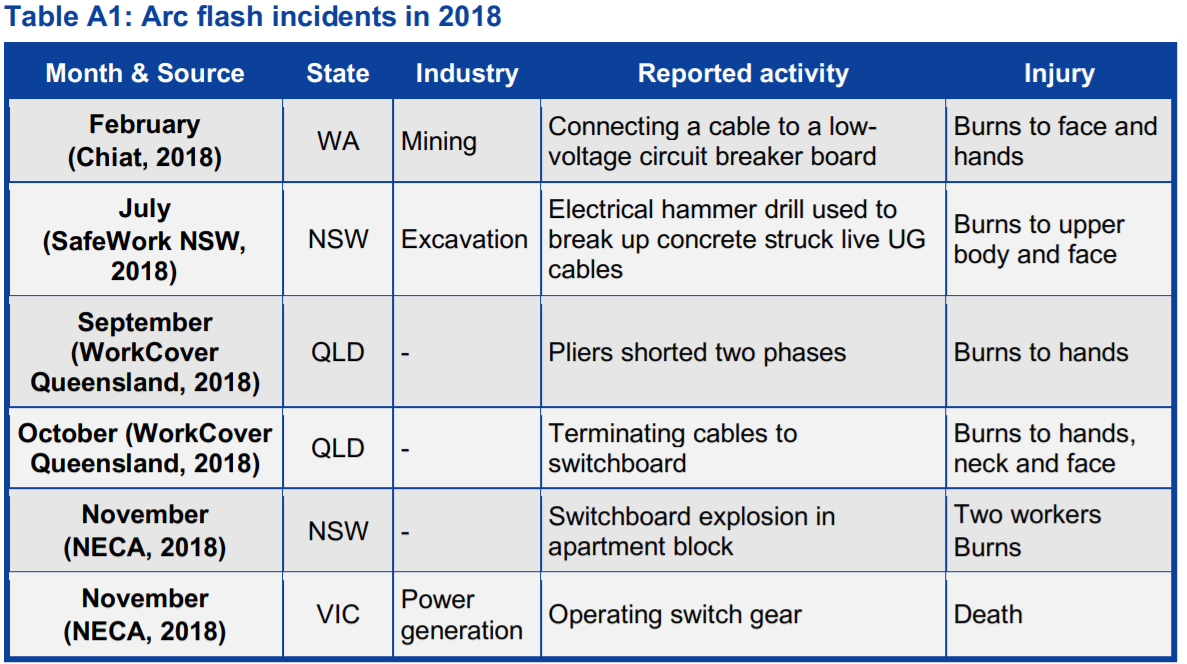
Table A1 Arc flash incidents in 2018
Table A2 Risk factors for arc flash
Table A3 Control options for arc flash
Table A4 Examples of impact of organisational context on implementation of arc flash controls
Abstract
This appendix to the OHS Body of Knowledge Chapter ‘Physical Hazards: Electricity’
focuses on the electrical hazard of arc flash from the perspective of the generalist OHS
professional. After defining relevant terms, examining the incidence of arc flash injuries and
reviewing relevant legislation and standards, it considers options for control of arc flash and
implications for OHS practice.
A1 Introduction
The OHS Body of Knowledge chapter Physical Hazards: Electricity presents information required by generalist OHS professionals to enable them to better understand the nature of electricity as a hazard, how it can harm the human body and the standard control measures.
The chapter emphasises the severity of potential consequences of an electrical incident, noting that several deaths by electrocution occur in workplaces across Australia every year. This appendix focuses on one particularly dangerous type of electrical hazard – arc flash – the consequences of which can range from inconsequential to severe burns and death as well as power outages, fire and significant property damage.
While arc flash is associated with electrical work, and may be considered a specialist topic, all workplaces have electricity and so arc flash hazards are of pervasive relevance. With the introduction of metal clad switchboards from the mid-20th century came the practice of switchboard arc flash containment and testing, and it was not until the 1980s that arc flash hazards were first quantified.
Consequently, knowledge of arc flash hazards, the risk factors and the mechanism of injury causation is still evolving. The dynamic nature of this knowledge is reflected in the existence and use of different standards and terminology across countries and organisations; this inconsistency can present problems for generalist OHS professionals working with electrical personnel to implement a risk management approach to minimising arc flash.
To Receive Your Free Copy
of the Full Report
Please Email
[email protected]
Meet the Author, Brett Cleaves BE(Elec)
Director, Engineering Safety Pty Ltd
Email: [email protected]
Since starting as a cadet with BHP in 1993, Brett has worked in steel mills, mines and electrical utilities, executing a range of duties in maintenance, engineering, governance, production and project management.
He developed a strong commitment to electrical safety, and received BlueScope awards for leadership and engagement. In 2013, Brett established Engineering Safety through which he provides project management services for a range of electrical companies together with general advice on electrical safety to industry.
At the leading edge of hazard identification, assessment and control for arc flash in Australia, Brett is a strong advocate for the need for knowledge of arc flash to evolve to provide clarity on the most appropriate practices and controls.
A Transcript | Arc Flash Survivor Story by Jason Brozen
July 29th, 2021Read the original story here: Arc Flash Survivor Story – Jason Brozen
Jason Brozen’s Arc Flash Survival Story
In this interview, Jason Brozen shares his experience of surviving an arc flash incident while working on electrical equipment. He explains what happened, the injuries he suffered and the physical and emotional challenges he faced during recovery.
His story also highlights the importance of following safe working procedures, planning electrical work properly and never taking unnecessary risks.
Working on Live Electrical Equipment
Jason describes the work he was carrying out before the incident:
“You know, I ended up working on a big piece of gear, 2500 amp. It was a hotel and we got dispatched to install a new circuit for some pool equipment, a 200 amp breaker. We had to fit it in a spot that was sized for a 200 amp breaker.
Inside that space there’s a GE piece of equipment. They coat the bus bar in tape from the factory, so I spent a lot of time meticulously cutting that tape off while it was hot, with no gear on. I’d done it before successfully, so I got through that process.
However, I did call my boss to say, ‘Man, this is pretty precarious here. We might want to shut it off.’ He didn’t encourage me to shut it off. Now, as a boss and someone who works as a project manager, I encourage my guys to shut it off.”
Why an Arc Flash Can Happen at 208V
Jason explains that the incident occurred in a 208V section of the electrical equipment. This challenges the misconception that a substantial arc flash cannot occur at this voltage.
“So, fourth section, it’s 208, which really kind of squashes the industry-wide misconception that you can’t have an arc flash of any substantial value in 208.
This wasn’t even in the main section; it was in a branch section. The 2500 amp gear had a transformer really close by, a 500 kVA transformer. It was a four-section piece of GE gear, pretty standard in the industry, with a 2500 amp main plus a bunch of branch sections.
I needed to install a 208 breaker in one spot. On that specific spot, I just took the above and below pieces of dead front off instead of removing the whole dead front because I thought that would be safer.
As you can see in the pictures, a lot of the heat rolled up and that acted as a shield. There’s no doubt it would have burned my face off at that point, but it’s a standard thing that most guys do.
They’ll take a breaker out of a box, inspect it and turn it on and off a couple of times. Then they’ll fit it into the gear, stick in that driver and bolt the thing in. They’ll do it hot, every single day, and 99% of the time they’re successful at it.”
The Moment the Arc Flash Happened
Jason recognised what was happening as soon as the arc flash occurred. He had seen footage of similar incidents and understood the potential consequences, but that knowledge did not prevent the accident.
“The second the arc flash happened, I knew what was going on. Most electricians who have been in the field for a long time have YouTubed arc flash and seen all the nasty videos of arc flash events they can possibly see.
I’d been deep in FP70. I understood it and knew better than doing what I was doing.
Anyway, I knew what was going on. The arc flash was happening and I could feel it. As soon as the noise stopped, because I can only describe it as noise, it was an explosion. It was just a millisecond, but as I said before, everything slows down.
When the noise stopped, all the lights were out and the room was filled with smoke. I couldn’t see.”
Escaping the Electrical Room
After the explosion, Jason’s first concern was whether he was on fire. He explains how he managed to leave the room and assess his injuries.
“The very first thought was, ‘Am I on fire?’ I’d seen so many different videos from different vendors showing arc flash clothing and arc-rated workwear, with mannequins on fire from head to toe.
That was my first thought: ‘Oh my God, am I on fire?’ So I just started doing the vertical drop-and-roll type thing.
Then I saw a door and a light crack open. Somebody from the hotel management had opened the door because they heard what was going on. The fire alarms were all going off. Once I saw that, I was able to exit the room.
Afterwards, I gathered my thoughts and looked at my hands. There was a bathroom, so I wanted to see what my face looked like. I just assessed the damage.
I’m not a real panicky guy. I don’t flip out with accidents and stuff, although I’m sure there was a level of shock, of course.”
The Extent of Jason’s Injuries
Initially, Jason did not realise how serious his injuries were. What he thought might take a couple of months to recover from eventually involved skin grafts, a coma, intensive care and seven months away from work.
“Honestly, after the accident I thought, ‘Yeah, that’s pretty bad.’ I was looking at my hands, but I thought a couple of months. I never thought I’d need skin grafts, be in a coma and be sick in ICU for two weeks, or be off work for seven months.
I never in a million years would have thought that.
The thing with burns is that first- and second-degree burns hurt, but third-degree burns don’t. They burn your nerves. Parts of my hands hurt, and they’re really tight because the burn just shrinks everything up.
My face was really tight and a little painful, but it was 40 degrees out, so it was pretty cool. It felt okay.
As you saw on the video, I started making calls. I called my boss and said, ‘You need to get out here now! I blew this up. It’s really bad. I’m injured. You need to mobilise and get somebody here. It’s bad.’
I’m sure there was a level of panic in my voice because he later told me that I sounded pretty panicked.”
Emergency Treatment and Time in Hospital
Jason contacted his family and emergency services before paramedics took him to hospital. He then describes the initial treatment and the procedures he underwent.
“I tried to call my wife, but I couldn’t get hold of her. I called her mum and said, ‘Look, I’m on my way to the hospital. I got burnt pretty bad. I’m going to KU Med.’
As you saw, the fire department worked on me there and carted me off to the hospital.
Really, the last thing I remember at the hospital was triage. They were cutting my clothes off, getting IVs set up and cutting that ring off. Then it’s gone. They put me out and gave me something, and I was out.
That’s when they debrided the burns. You always hear stories about people being wide awake while they’re being scrubbed, but that wasn’t my experience. They put me out.
My expectation is that they would put anybody out, although I’ve heard stories where they don’t. Debridement means they wire-brush and scratch off all the dead skin they can. They worked on my face, shaved my head and put me in a room.
They put me in a coma for two, three or four days, something like that. I remember coming to towards the end of that period, probably after two or three days.”
The Physical and Emotional Challenges of Recovery
Jason explains that some of the most difficult parts of recovery were not necessarily the injuries themselves. Hospital treatment, loss of independence and the emotional impact of relying on other people created challenges that many arc flash survivors do not discuss.
“The stories you won’t hear from most arc flash guys are the PTSD stories. For example, you’re in a hospital bed, it’s a nurse change and there’s nobody around. I’ve got a 105-degree temperature and I’m about to crap on myself, but there’s nobody to help me.
You’re just like, ‘Hey.’ There’s no button. You’re calling out, and you end up having an accident.
Those are the stories you don’t hear about. You also don’t hear enough about the people who can’t work in that field anymore. We talk about those things later, but anyway, that’s part of the experience.
I remember coming to and having a bad fever. Infection is almost 100% guaranteed with burns because it’s essentially an open organ. They’re open sores, so you catch stuff. Especially if guys jump into ponds or stop, drop and roll in the dirt.
My hospital stay was largely me being high on painkillers. They gave me a feeding tube because they didn’t want me eating, and they were feeding me through that. I also had IV fluids and a tube stuck in me so I could urinate into a bag. It was pretty uncomfortable.”
Skin Grafts, Surgery and Rehabilitation
Jason’s treatment involved surgery and skin grafts. He describes the process of removing damaged skin, grafting replacement skin and beginning rehabilitation.
“After a couple of weeks, you’re ready. They got me into surgery. I’m going to say I had surgery on the fourth or fifth day because the skin starts dying, so they have to go pretty quickly.
They cut the skin off my legs and put that new skin on there, then staple it on.
They were also trying some new things. They put my hands in bandages like this so they would stretch, and you’re in there for days like that.
Probably around day six, they unbandaged me. I’ve got pictures of that. That was the day they unbandaged me.
Almost immediately, they start getting you into therapy. They also trim excess skin that isn’t sticking. Every day you’re in there, they’re snipping pieces of skin off that are hanging up or haven’t attached.
It’s still raw, too. Every day involved that process. When I first started recovering, I could barely move my hands. They were really swollen, and I couldn’t bend them.
Recovery in hospital was only part of it because the real work continued for months afterwards.”
Living with the After-Effects of Burns
Even everyday activities became difficult after the accident. Jason recalls the discomfort of dressings sticking to his skin and the loss of independence during his recovery.
“One thing I can tell you is that they use a yellow, Vaseline-covered kind of canvas. A Baxter band, I think maybe that’s the name of it. Unfortunately, my skin grew into it because they had it on there.
Part of my worst memories in hospital is sitting under a sink and having to tear this off a burnt hand. It was stuck in my skin and had already healed in there. It’s probably my worst memory of being in there.
Another vivid memory of being in hospital was having nurses come in and wipe your butt. Your hands are so badly injured that you can’t even take care of yourself. You can’t take a leak on your own.
When they finally pulled the catheter out, that was another memorable moment. It was brutal. That is brutal.
From the hospital onwards, there were so many things to deal with. I was trying to button shirts and put pants on. I couldn’t drive, and I was stuck at home. You were pretty much a burden.”
Burn Injuries and the Impact on Family Life
Jason explains that his burns affected around 14% of his body. Although the injuries mainly involved his hands and face, the recovery process had a significant impact on his everyday life and family.
“Again, this was just 14%. It was my hands and face. My legs hurt from the graft site, which was super painful, but that wasn’t permanent.
It was worse on my hands, just the graft sites. The burns stopped at my wrists, just past my watch on each side, and then there was my face.
My face didn’t need a graft. It was largely deep second-degree burns, with a few small areas of more severe damage. My hands were completely burnt. I had second-degree burns on my palms and third-degree burns on the backs of my hands.
The burns required skin grafts across the entire backs of my hands. It was pretty intense, and I wouldn’t recommend it.
I went right back to doing what I was doing. The accident didn’t scare me out of the field. However, some guys aren’t that lucky. They can lose a lot.
One of the things I tell people is that you don’t expect to need nurses to wipe you or help you get dressed. I had a wife and two kids, and I still do.
When you lose the ability to support your family, speaking as a man, that’s a killer. It’s not just a physical injury. It’s a mental and emotional injury as much as anything.”
PTSD, Depression and Returning to Work
Jason highlights the long-term psychological effects that an arc flash incident can have. In particular, he explains how losing the ability to work and support a family can create challenges beyond the physical injuries.
“You can carry PTSD with you from explosion injuries. However, if you can’t go back to work and you’re just sitting around, depression is a major deal when you’ve been injured and can’t return to work.
You can’t get away from an arc flash. It’s too fast. It’s instant. You get burned, and you’re done. It’s an instant thing. It’s an instant mistake that you can’t change.”
Jason’s Message to Electrical Workers
Despite the severity of his injuries, Jason returned to work in the electrical industry. His final message is a reminder to plan every job properly, follow the agreed safety procedures and never make exceptions when it comes to safety.
“So I’m Jason Brozen. I got arc flashed over 10 years ago, and the one point I’d tell you is: don’t be me.
Plan your work. Work your plan. Follow through with that plan and do not make exceptions on anything when it comes to safety.”
Jason’s Message on LinkedIn
Jason also shared a photograph of the watch he was wearing when the accident happened. Alongside the image, he explained how quickly an arc flash can change someone’s life and affect their family.
“Recently I have had a lot of exposure to my arc flash story. One thing that is misunderstood is how intense the instant heat is. Here is a picture of my watch that I was wearing.
An arc flash only takes a split second to ruin your life and possibly your family’s. Do not take chances. You have the right and responsibility to turn it off. If not for you, do it for your family, your employer and your customer.”
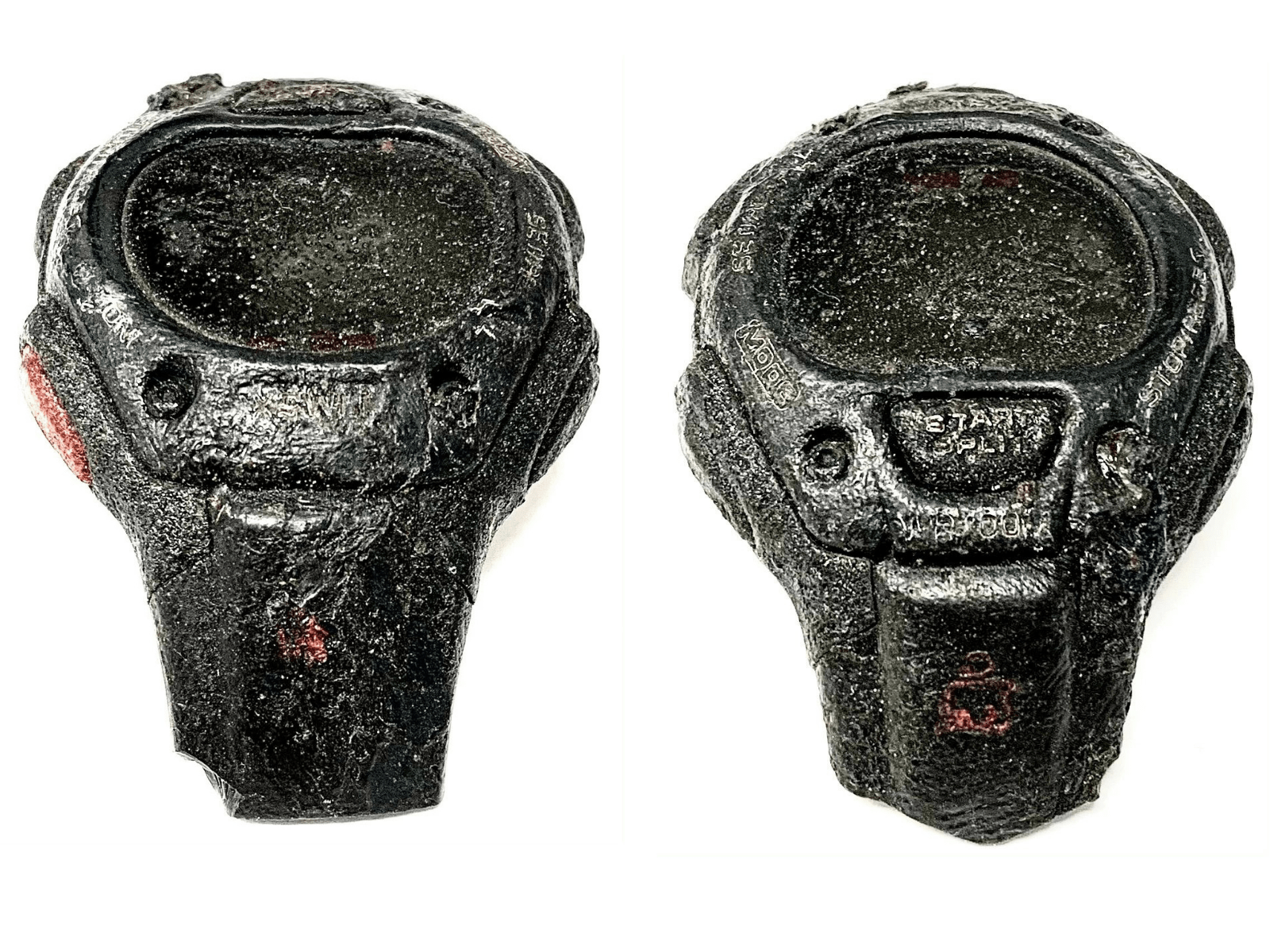
The watch Jason was wearing when the accident occurred.
ProGARM – The Arc Flash Specialists

Arc Flash Protection |
Arc Clothing |
Polo Shirts |
Jackets |
Coveralls |
Trousers |
Helmets |
Gloves
Thorne & Derrick distribute a range of lifesaving arc flash protective clothing from ProGARM. ProGARM is a leading UK manufacturer of Flame Resistant and Arc Flash clothing, garments and workwear.
As national distributors of LV, MV & HV cable installation, jointing, substation and electrical equipment, Thorne & Derrick support UK and international businesses involved in cable installation, jointing, substations, overhead lines and electrical construction. Our customers work across LV, 11kV, 33kV and EHV applications.
ProGARM explains its approach to arc flash protection:
“At ProGARM our mission is protect lives through the manufacture and supply of exceptional quality Arc Flash and Flame Resistant Clothing. Being the only specialist Arc Flash protection manufacturer in the UK we focus on providing the best protection possible to those who work at risk of Arc Flash on a daily basis with our inherent, specialist garments and industry-leading innovation.
Supporting Utilities, Power Generation, Rail & Petrochemical industries we work with Thorne & Derrick to educate, inform and supply those who work at risk everyday allowing us to keep protecting lives throughout the UK & beyond.”
Arc Flash Learning & Resources
Thorne & Derrick are proud distributors of ProGARM arc flash coveralls and protective clothing.
We can help. If you need arc flash calculators or advice about the clothing and protection available, please contact our team.
ProGARM Arc Flash Protective Clothing

Closing Thought – statistics show that between eight and ten arc flash accidents occur in the UK every week. Protect yourself. Contact us to learn how.
RIS-3279-TOM Standard | Hi Vis Protective Clothing Against Arc Flash for the UK Rail Network
July 29th, 2021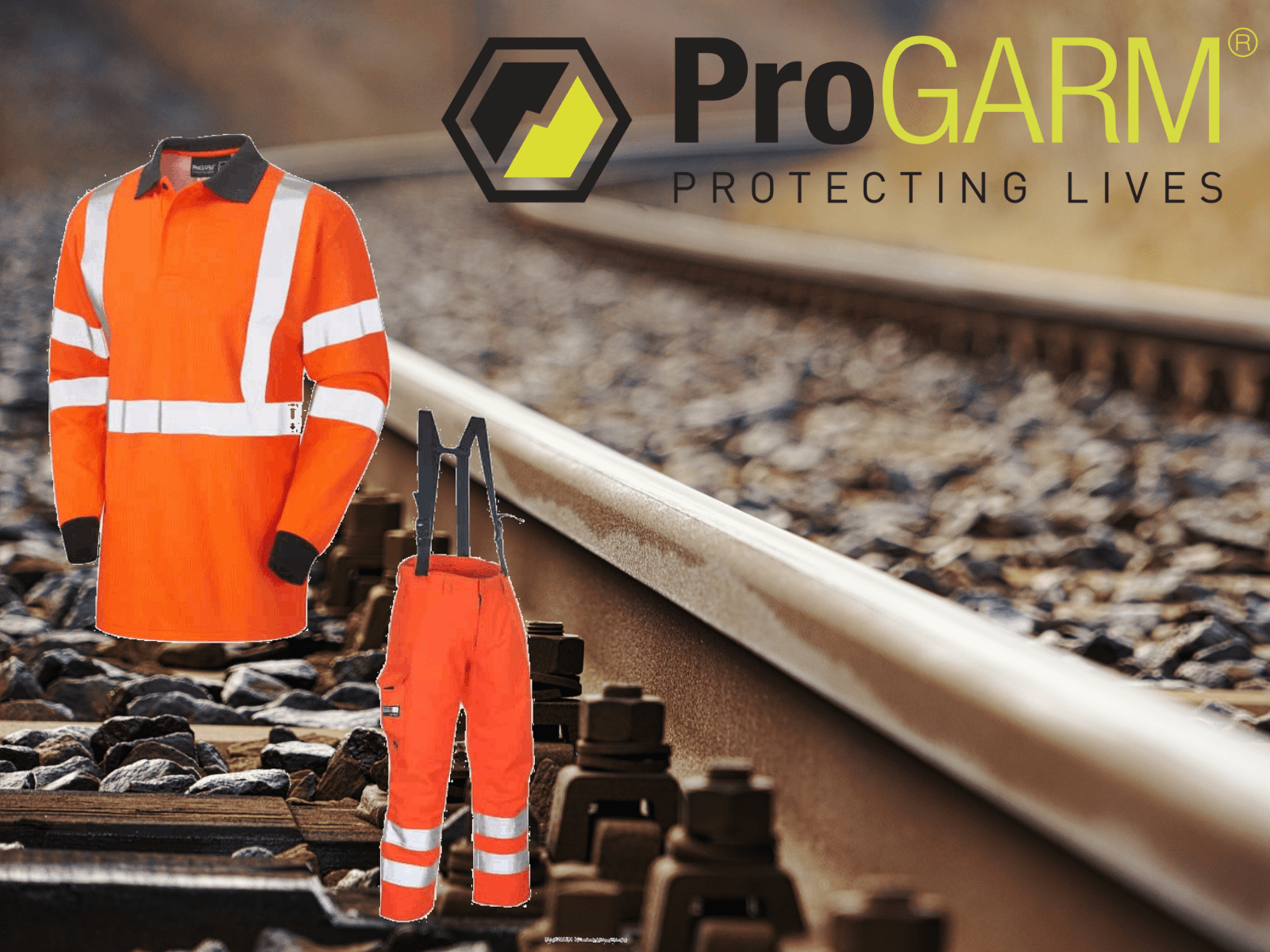
Hi Vis Protective Clothing
Protecting Workers Against Arc Flash Risks Using Clothing & Garments
RIS-3279-TOM Standard
Arc flash risks are becoming more widely recognised as a specific cause for concern to those working in the rail industry, over and above general electrical incidents, although there is still work to do on raising awareness of the Arc Flash risks in the rail industry.
An Arc Flash incident can occur any time people are working with electrical components. For the rail industry there are particular risks around working with electrical services and also when breaking ground.
WHAT IS RIS-3279-TOM?
RIS-3279-TOM (formerly GO-RT 3279) is a high visibility standard that only applies to the rail industry in the UK, as opposed to the EU-Wide nature of other EN standards. The aim is to ensure that rail workers on or near the trackside are sufficiently visible to trains approaching at speed or any other traffic.
The background fabric, retro-reflective material and design of the garment must meet the requirements of the European standard for Hi-Visibility clothing EN ISO 20471, with fluorescent and reflective areas meeting a minimum of Class 2, based on a classification system from Class 1 to Class 3.
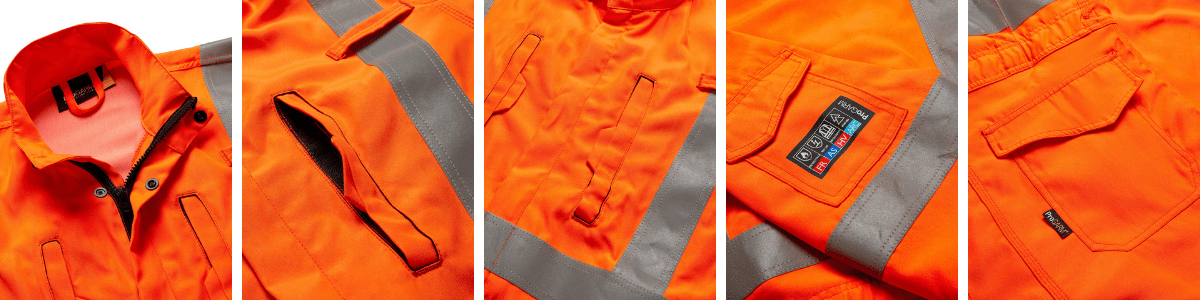
RIS-3279-TOM Tested Arc Flash Coveralls (Hi-Vis Orange) | ProGARM 4693
SUMMARY OF THE RIS-3279-TOM STANDARD
High visibility clothing is the fundamental principle behind the UK Rail Industry Standard.
This is based on the European Norm EN 20471:2013, and garments must comply to Class 2 High Visibility, the middle of a three class range. The standard states the following: ‘high visibility clothing worn by people on the lineside or on or near the line should conform to a single standard for the colour and luminance of background material and that this standard will accord with the detail contained within BS EN 20471:2013 high visibility clothing – Test methods and requirements (ISO 20471:2013).’
Stated in the standard is that: ‘the colour specific requirements within this standard conform to the range specified within BS EN 20471 clause 5.1.2.’ In order to confine this to a specific orange colour, and to prevent the selection of a colour at the red end of the spectrum, the precise chromaticity co-ordinates for the colour are specified as: Fluorescent orange, X:0.588, Y:0.371. with a luminance factor of at least 0.4. The accepted tolerance in colour is as laid out in EN 20471. However, there is no tolerance for the luminance factor.
Also stipulated in RIS-3279-TOM is the need of retro-reflective materials, with photometric and physical performance aligned with EN 20471.
Mentioned in RIS-3279-TOM is the accepted use of a mini vest where the nature of the work being carried out will not obscure the high visibility clothing, and thus reduce the surface area’ that is visible. The same applies to company logos; these are permitted where they do not compromise the surface area of background colour, and compensation may have to be made for this.

Cable Trough – Network Rail Approved Elevated Trough LV HV S&T Power Cables
ARC FLASH RISKS SOLUTIONS: ESPECIALLY FOR RAIL
A wide range of our personal protective clothing is available in orange high viz, conforming to the new 2018 RIS railway specification.
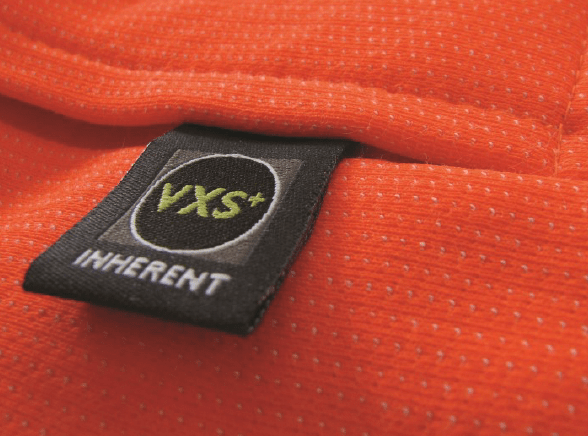
All of our clothing is lightweight and breathable, ensuring worker comfort while also providing protection when workers are subject to Arc Flash risks. We use a variant of our VXS+ fabric which is tested to European standards, and all garments display an at-a-glance SafetyICON label so it’s easy to see what protection is offered.
Our orange high viz trousers and coveralls are available in male and female versions to ensure the best fit and maximum comfort. We have also designed waterproof salopettes, polo shirts and two jackets in the regulation orange high viz. Two types of helmet with visor are available, depending on the voltage.
💡 Did you know? – While high voltage equipment does increase the likelihood and intensity of arc flash explosions, they can occur in any live electrical environment – even low voltage.
Further Reading
- Arc Flash Risks In The Rail Industry
- NEW PRODUCT LAUNCH | RIS-3279-TOM Tested Arc Flash Coveralls (Hi-Vis Orange) | ProGARM 4693
- Arc Flash | Don’t Let the Summer Sun Compromise Your Electrical PPE
Arc Flash Learning & Resources
Thorne and Derrick are proud to be distributors of ProGARM arc flash coveralls and protection.
We can help – should you require arc flash calculators or advice on the type of clothing and protection available please do not hesitate to contact us.
Thorne & Derrick International supply arc flash clothing and protection equipment including coveralls, gloves, helmets, face shields and general head-to-toe PPE is used to protect against flashover – complete range of insulating matting is also available for worker protection when exposed to energised electrical switchgear and transformers.
Typical applications include LV, HV & EHV cable jointing and terminating, fuse pulling, switchgear commissioning, racking circuit breakers, electrical switching and live working on medium and high voltage electricity networks.
T&D are national distributors LV, MV & HV Cable Installation, Jointing, Substation & Electrical Equipment – we service UK and global businesses involved in cable installations, cable cleating, cable jointing, substation, overhead line and electrical construction at LV, 11kV, 33kV and EHV.
Since 1985, T&D have established an international reputation based on SERVICE | INTEGRITY | TRUST.

Electrical Safety Equipment & Cable Accessories for the Maintenance of Low, Medium & High Voltage Power Systems
Thorne & Derrick Appointed Official Distribution Partner for UK Leading Arc Flash Clothing Manufacturer
July 29th, 2021
uploaded by Chris Dodds | Sales & Marketing Manager at Thorne & Derrick
Press Release | 1st August 2021
Thorne & Derrick International, based in the UK, are delighted to announce they have entered into an Official Distribution Agreement with ProGARM, the market-leading arc flash clothing manufacturer.
We have partnered with ProGARM to service and protect renewable, rail, oil/gas, data centre, battery storage, street lighting, smart-metering and utility workers.
“Together, we are leading an electrical safety awareness campaign to reduce preventable life-changing, life-threatening injuries by educating about risk – we will support clients to protect their workers through the everyday wearing of comfortable and practical arc flash workwear as a last line of defence against arc-related incidents. We can provide wearer-trial garments for you to field-test and experience the exceptional physical performance and market-leading protection that ProGARM clothing can provide to your workers,” says Chris Dodds (Sales & Marketing Manager with Thorne & Derrick).
“Everyday our customers face safety hazards, but arc flash is the most devastating and deadly electrical danger present in today’s workplaces – the explosive deafening and blinding fireball effects of an arc-flash blast can unleash metal-vaporizing temperatures.”
“Low voltage does not mean low-risk; a LV CNE 3 phase low voltage cable can pose greater risk than 33kV switchgear. We look forward to working closely with ProGARM to introduce their garments to our clients and launching our collaborative #protectinglives awareness campaign,” adds Chris.
➡ Contact us to arrange a personal visit, an online presentation or for a general conversation on how we can help with your electrical safety priorities. Arc-rated clothing. Wear it, it saves lives.

ProGARM Protective Clothing & Workwear With Next Day Delivery. High Quality, UK Manufactured Safety Wear & Arc Flash Protection Supplied by Thorne & Derrick

Pictured: Paul Hertherington (National Key Account Manager | ProGARM) during recent Technical Training & Product Training Day at Thorne & Derrick with Dave Tinning, Carl Cox, Chris Dodds & Jonny Hewitt.